

Key Takeaways
Treat Trump’s near-normal vote as evidence of a polarized system, not an electoral glitch
The pattern mattered more than the shock. Donald Trump seemed so unsuitable for the presidency that his 2016 victory looked like a rupture. Yet the vote largely followed familiar partisan lines: he won men and white voters at rates close to previous Republican nominees, and 80% of white born-again Christians backed him. Hillary Clinton won the popular vote by nearly three million, while a narrow shift in three states could have changed the Electoral College result.
Look beneath the candidate. The deeper question is not only how Trump won, but why he remained competitive despite voters’ doubts about his qualifications. Klein’s answer is that partisan identity had become powerful enough to pull an extraordinary candidate into ordinary voting patterns. The system, not just the people in it, needs explaining.
What's striking is the distinction between an event's spectacle and the machinery that produces its result. Systems analysis shifts attention from a single candidate's traits to the incentives that make those traits electorally survivable. That is useful well beyond elections: institutions often absorb shocks without changing their underlying behavior. Still, a stable aggregate pattern can hide consequential local changes. The Electoral College made small shifts in a few states decisive, and the movement of white voters without college degrees mattered. Normal-looking totals do not mean nothing unusual happened; they suggest the unusual outcome was enabled by durable political structures.
Do not mistake midcentury bipartisan calm for an innocent golden age
Party overlap had a price. In 1950, prominent political scientists complained that the parties were too ideologically mixed to give voters clear choices. Democrats and Republicans could disagree within their own parties and cooperate across them. But this apparent moderation rested partly on Southern Democrats, or Dixiecrats, who defended segregation and one-party rule while supplying votes to the national Democratic coalition.
Realignment followed civil rights. Southern leaders used their power in Congress to block racial equality, while national Democrats accommodated them to advance other priorities. When the national party embraced civil rights, that alliance weakened. Conservative Southerners increasingly moved into the Republican Party, and the parties sorted into clearer ideological camps. Less polarization had meant less open party conflict, but it had also meant preserving profound injustice.
The historical correction matters because political calm is not a reliable measure of political health. A system can appear cooperative because those harmed by its bargains lack power to disrupt them. That insight complicates easy calls to restore an earlier consensus: the relevant question is not simply whether elites reached agreements, but who was excluded from the negotiation and who paid for stability. At the same time, the account resists treating every consequence of polarization as progress. Parties can make injustice visible while also making compromise harder. Political alignment can clarify moral choices and intensify conflict at once.
Notice when party labels fuse race, faith, place, and temperament
Many identities can become one. Political identity increasingly overlaps with racial, religious, geographic, cultural, and psychological identities. Political scientist Lilliana Mason calls this fused partisan identity a mega-identity: party membership becomes a signal about many parts of a person’s life, not merely a preference about policy. When these identities point in the same direction, a political dispute can feel like a threat to an entire way of being.
Small cues can create real bias. In psychologist Henri Tajfel’s experiments, boys were randomly divided into groups based on trivial or invented preferences. They still favored their assigned group, sometimes choosing to widen the gap between groups even when it reduced everyone’s reward. Cross-cutting identities can soften this effect by giving people meaningful ties across political lines. When divisions stack neatly together, those bridges are less common.
The account shows why political conflict can feel disproportionate to the policy question on the table. A disagreement about a program can also register as a judgment about one’s community, status, and character. This helps explain why presenting a technically sound compromise may not resolve a conflict that is doing identity work. The concept also suggests a practical diagnostic: look for identities that cross-cut party boundaries, rather than assuming that shared policy positions are the only basis for trust. One caution is that identities do not dictate behavior. Their effects depend on which ones are activated and how institutions frame the stakes.
Treat your certainty as suspect when your group identity is at stake
Reason often serves belonging. Solomon Asch’s line-matching experiments found that people sometimes gave an obviously wrong answer when a group unanimously gave it first. In a separate study, students’ views of a welfare policy shifted more with their party’s endorsement than with the policy’s actual generosity. These findings show how group cues can influence judgments even when the question seems straightforward.
Information does not automatically correct bias. Dan Kahan’s research found that people with stronger math skills were better at solving a neutral problem, but more likely to reach the politically convenient answer when the same numbers concerned gun policy. He calls this identity-protective cognition: unconsciously resisting information that threatens a valued group or a person’s standing within it. Greater knowledge can supply better arguments for a prior commitment, not just better tests of it.
This account replaces the flattering picture of reasoning as a private truth-finding machine with a more social one: judgment also helps people remain legible and accepted to groups they value. That does not make evidence useless. It means evidence alone may fail when accepting it carries a social cost. The useful response is not blanket distrust of expertise, but attention to incentives: who is rewarded for changing their mind, and who risks isolation by doing so? There is also a limit to the experiments. A laboratory choice or survey response cannot capture every condition under which people revise beliefs, especially when trust and consequences differ.
Read demographic change as a status shock, not just a census trend
Change can feel like loss. In 2013, a majority of U.S. infants under one year old were nonwhite. Census projections in the book anticipated that non-Hispanic white people would cease to be a majority around 2045. Experiments cited by Klein found that even brief exposure to news about a coming majority-minority population could move white participants toward more conservative views, including on issues not directly tied to race.
The meaning of change is political. Barack Obama’s presidency became a symbol of a more diverse country, while Donald Trump’s promise to restore a familiar past appealed to voters who felt cultural or political status slipping. This is not the same as saying every conservative reaction is explicitly racist. The argument is that perceived group threat can shape attitudes and be mobilized by politicians, including where people describe their concern in economic or cultural terms.
The distinction between material hardship and perceived status loss is analytically useful. Political messaging can make broad change feel personal, even when a specific policy offers no direct economic benefit. That helps explain why prosperity alone may not settle conflicts rooted in belonging or recognition. The discussion also demands care: demographic projections are estimates, racial categories change, and a response to perceived threat is not proof of a person’s motive. Taking status anxiety seriously should mean understanding how it is activated, not validating claims that equality itself is an injury. That distinction allows empathy without abandoning scrutiny of power.
Media rewards the stories that make political identities feel endangered
More choice widened the attention gap. The internet made political information abundant, but it also made entertainment and niche interests abundant. Research by Markus Prior found that, in this high-choice environment, people’s interest in political news predicted their political knowledge more strongly than education did. The politically curious could learn more; the uninterested could avoid politics altogether.
Attention favors identity conflict. Newsrooms compete for audiences through ratings, clicks, and shares. Outrage and vivid group clashes travel well, so coverage can spotlight the most inflammatory figures rather than the most representative ones. Studies cited in the book found that politically engaged people often exaggerated how many members of the opposing party belonged to certain groups. Exposure to opposing political voices on Twitter also increased polarization in one experiment. Media does not merely describe political reality; its choices help shape what feels important.
The central media insight is not simply that audiences live in bubbles. A more powerful mechanism is selective attention: people choose what to consume, and institutions learn which material keeps them watching and sharing. That makes an information-rich environment compatible with poor understanding. It also complicates the popular fix of forcing exposure to opposing views. Exposure without trust or constructive contact can prompt rebuttal rather than curiosity. Still, the media system is not one actor with one motive, and audience response is not fully predictable. The useful question is how coverage incentives reward certain forms of attention, and which voices those incentives repeatedly leave out.
Campaigns win more by activating enemies than persuading the undecided
The persuadable middle shrank. Campaign strategist Matthew Dowd estimated that true independents who might vote for either party had fallen from about 22% of voters to 7%. Campaigns increasingly focused on turning out people already inclined to support them. This is negative partisanship: political behavior driven substantially by dislike or fear of the opposing party, rather than enthusiasm for one’s own.
Weak parties cannot always stop polarizing candidates. Primaries reward candidates who can mobilize highly committed voters, and online fundraising makes it easier to turn anger or attention into donations. In 2016, Republican leaders who had denounced Trump ultimately endorsed him once the choice narrowed to him or Clinton. Party identity and fear of the alternative proved stronger than their earlier objections. Candidates have reason to energize their base, even when doing so deepens hostility.
The shift from persuasion to mobilization changes what political competence looks like. A campaign can succeed by strengthening existing loyalties and making the opponent frightening, even if it fails to appeal beyond its coalition. This explains why consistency and broad popularity are not always the qualities that win a primary. It also highlights a tension in electoral reform: party insiders may screen out reckless candidates, but their authority can itself seem undemocratic. The problem is not solved by simply preferring elites or primary voters. Any gatekeeping design needs legitimacy, transparency, and a way for voters to remove leaders who misuse that power.
When compromise stops paying, constitutional rules turn conflict into paralysis
The American design relies on restraint. A president and Congress can claim separate electoral mandates, and each branch can obstruct the other. Juan Linz argued that presidential systems are vulnerable when such conflicts lack a clear resolution. In the United States, cooperation once depended heavily on informal norms and parties with overlapping coalitions. As those conditions weakened, the formal rules became more confrontational.
Old tools gained new force. After Justice Antonin Scalia died in 2016, Senate Republicans refused to consider President Obama’s Supreme Court nominee, Merrick Garland, on the ground that voters should decide the next appointment. The filibuster, once rarely used, became routine: the Senate recorded 218 cloture votes in 2013-2014, compared with fewer than one per year on average from 1917 to 1970. The debt ceiling offers another dangerous lever, because failure to raise it could threaten payment of government obligations.
The systems argument is strongest when it explains why behavior once considered extraordinary becomes strategically rational. A rule does not enforce moderation by itself; if restraint is costly and obstruction is rewarded, actors can follow the rules while damaging the institution. That distinction shifts reform from blaming individual hypocrisy to examining predictable incentives. Yet changing rules also shifts power, and no design can eliminate conflict in a divided society. The goal is not to make politics frictionless. It is to prevent ordinary competition from creating avoidable crises, while preserving accountability for decisions that genuinely require public consent.
A diverse coalition restrains escalation; geographic advantage can reward it
The parties face different pressures. Democrats rely on a coalition spanning racial, religious, and ideological groups, which requires candidates to make broader appeals. Republicans draw more heavily from a white, Christian, conservative base and can often prioritize ideological unity. Klein argues this gives the Democratic coalition more internal friction, while the Republican coalition can more readily organize around a shared identity and threat.
The electoral map magnifies the difference. The Senate gives equal representation to states with very different populations, and the Electoral College can award the presidency to the popular-vote loser. These structures give rural and less populous areas greater weight than their share of the population. Republicans can therefore win governing power without consistently winning more votes nationwide. That weakens the pressure to broaden their appeal, while Democrats must often reach beyond their most liberal voters.
This is an argument about asymmetric incentives, not simply about which party behaves better. A coalition that must bargain across internal differences can be constrained by pluralism, while a party with structural advantages can face less electoral pressure to adapt. That framework helps explain why polarization need not produce mirror-image parties. It should not be treated as a permanent description: coalitions change, and Democrats also face incentives to perform identity conflict for their own voters. Electoral advantage can explain strategic behavior without excusing it, and institutional reform should be evaluated by whether it improves fair representation, not merely which side gains.
Reform institutions for conflict, then invest attention where influence is real
Do not try to erase disagreement. Klein argues polarization can represent previously suppressed conflicts, including the struggle over civil rights. The aim should be a system that can govern amid deep division. He proposes removing dangerous traps such as the debt ceiling, making elections more representative through measures such as ranked-choice voting and multimember districts, and reconsidering rules that let a minority block governance indefinitely.
Manage personal attention, too. Identity mindfulness means noticing when political content activates defensiveness or group loyalty before reacting. Klein also recommends strengthening local political ties. The book describes Erik Hagerman, who withdrew from national political news while restoring damaged land for his community. The example is extreme, but it illustrates a broader point: local officials are easier to reach, and local problems can be more concrete than the national conflicts that dominate attention.
The proposed shift from depolarization to resilience is a valuable reframing. It avoids treating justice-driven disagreement as a defect and asks instead whether institutions can channel conflict without producing paralysis or crisis. The personal advice complements that institutional view: awareness of emotional triggers can create room for choice, while local participation offers a more tangible form of civic agency. Neither level is a complete answer. Local politics can also exclude and polarize, and institutional reforms can create new incentives or imbalances. The practical standard is iterative: reduce predictable harms, broaden participation, and keep checking whether a repair is working for people beyond its intended beneficiaries.
Analysis
The book’s central achievement is to make polarization legible as a system rather than a mass outbreak of individual irrationality. Its narrative moves from the apparent oddity of Trump’s 2016 victory to the historical sorting of parties, then into social psychology, media incentives, electoral strategy, and institutional design. Across those scales, the same mechanism recurs: identities shape choices, institutions reward some choices, and the resulting political environment strengthens those identities. This feedback model connects voter behavior to elite strategy without claiming that either side acts from a single motive.
The historical account is especially important because it refuses to treat midcentury cooperation as a neutral benchmark. Party overlap provided room for compromise, but it also protected a Southern order built on racial exclusion. That makes the book’s position more demanding than a simple plea for civility: greater conflict can expose injustice, while unchecked identity competition can corrode democratic accountability. The question becomes not whether politics should be polarized, but which conflicts need representation and which institutional arrangements turn disagreement into zero-sum warfare.
The evidence is strongest when experiments demonstrate how easily group cues affect judgment, and when long-run electoral patterns show parties becoming more aligned by identity. The causal claims about media, demographic threat, and partisan institutions are harder to isolate, since those forces reinforce one another and change together. The argument also gives substantial attention to Republican asymmetry, while acknowledging that the same human and media mechanisms operate across coalitions. That is analytically defensible, but readers should distinguish the general mechanism from the unequal ways parties respond to it.
The book’s prescriptions appropriately favor correction over final solution. Institutions are not static, and reforms can produce incentives their designers did not anticipate. Its most durable contribution is therefore a diagnostic habit: ask what a political actor is rewarded for doing, which identities a conflict activates, and who is missing from the apparent consensus. That approach makes both political blame and political repair more precise.
Review Summary
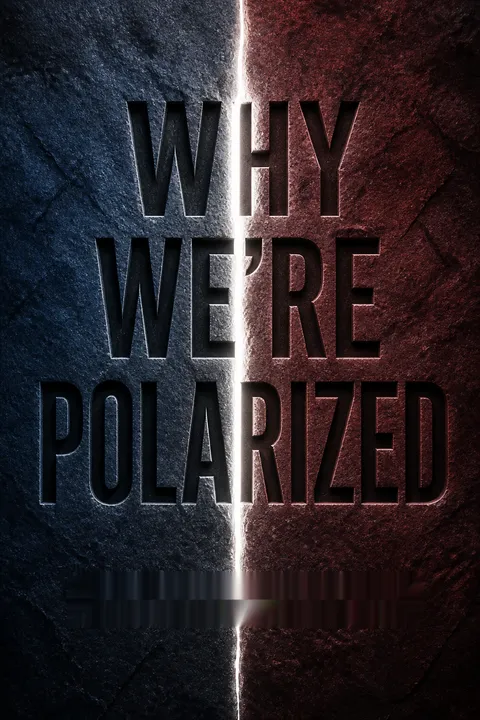
Why We're Polarized offers an insightful analysis of American political polarization. Klein explores historical, psychological, and systemic factors contributing to the divide, emphasizing identity politics and feedback loops. Readers appreciate Klein's thorough research, clear writing, and balanced approach, though some note his liberal bias. The book explains how polarization affects media, elections, and governance, proposing solutions while acknowledging their limitations. Many reviewers found the book thought-provoking and relevant, praising its explanation of complex issues. Some critics desired more discussion on economic factors and solutions to polarization.
People Also Read







Glossary
negative partisanship
Opposition-driven party loyaltyPolitical behavior shaped chiefly by dislike or fear of the opposing party, rather than positive attachment to one’s own. A voter may feel lukewarm about a preferred candidate yet vote, donate, or volunteer because the alternative seems dangerous. The concept helps explain why people can vote consistently for a party while feeling little affection for it.
sorting
Aligning views with partyThe process by which people with similar political views or social identities increasingly cluster within the same party. Sorting can heighten conflict between parties even if individuals do not change their views. Klein distinguishes it from opinion change: a population may hold the same range of views but become more divided by party affiliation.
mega-identity
Several identities fused by partyA partisan identity that becomes linked to other social identities, including race, religion, geography, culture, and lifestyle. Because the identities align, a political disagreement can feel like a threat to several parts of a person’s self-conception at once. The term describes how party membership can signal much more than a preference about policies.
identity-protective cognition
Reasoning that protects belongingA pattern in which people unconsciously resist or reinterpret information that threatens a valued group identity or their standing within that group. It can lead people to scrutinize evidence unevenly, accepting congenial claims and challenging threatening ones. The concept explains why more information or stronger reasoning skills do not necessarily produce political agreement.
tribal epistemology
Truth judged by group loyaltyAn information environment in which claims are evaluated less by shared standards of evidence than by whether they support a group’s values and are endorsed by its trusted leaders. The term describes a breakdown in common factual reference points. Competing groups may come to treat opposing institutions and sources as inherently illegitimate.
identity mindfulness
Noticing activated political identitiesA practice of paying attention to which identities political messages activate, and how those identities shape emotional and intellectual reactions. The purpose is not to suppress strong feelings or abandon political commitments. It is to notice when group loyalty or perceived threat is steering a response, so that a person can choose whether and how to act.
Tajfel's minimal-group experiments
Tests of bias from trivial groupsA series of social psychology experiments in which participants, including schoolboys, were assigned to groups based on arbitrary or meaningless distinctions. Participants often favored their assigned group and disadvantaged outsiders, even when there was no material benefit and sometimes when the choice reduced total rewards. The studies demonstrated how little it can take for group categorization to produce bias.
FAQ
What's Why We're Polarized about?
- Focus on Political Polarization: The book examines the deepening divide in American politics, focusing on how identities shape political behavior and attitudes.
- Identity Politics: Klein discusses the merging of political identities with other social identities, creating a "mega-identity" that influences political interactions.
- Systems Thinking: It emphasizes understanding the systems in place that drive political decisions and behaviors, rather than just individual actors.
Why should I read Why We're Polarized?
- Insightful Analysis: The book provides a comprehensive analysis of factors contributing to political polarization, essential for understanding contemporary American politics.
- Framework for Understanding: It offers a framework for understanding how identities shape political behavior, crucial for navigating today’s political landscape.
- Relevance to Current Events: Given the current political climate, the book is timely and relevant, helping readers make sense of societal chaos and division.
What are the key takeaways of Why We're Polarized?
- Polarization is Systemic: Klein argues that polarization is embedded in the political system, with feedback loops between political identities and institutions exacerbating divisions.
- Identity Shapes Politics: The merging of various identities into political identities creates a "mega-identity," leading to increased hostility toward out-groups.
- Understanding Motivated Reasoning: Individuals often engage in motivated reasoning, interpreting information to align with their political identity, distorting facts and reducing openness to opposing views.
How does Ezra Klein define "identity politics" in Why We're Polarized?
- Universal Engagement: Klein argues that all individuals engage in identity politics, as identities shape political views and actions.
- Weaponization of Identity: The term is often used to dismiss marginalized groups' concerns while ignoring dominant groups' identity-based motivations.
- Omnipresence of Identity: Identity is a fundamental aspect of human interaction and cannot be ignored in political discussions.
What role does media play in polarization according to Why We're Polarized?
- Media as a Polarizing Force: Media outlets often cater to specific political identities, reinforcing divisions and creating echo chambers.
- Outrage as a Business Model: The media landscape thrives on outrage and conflict, incentivizing outlets to amplify divisive narratives.
- Impact on Public Perception: Media presentation can distort public perception of opposing parties, increasing animosity and misunderstanding.
How does Why We're Polarized explain the relationship between identity and political behavior?
- Identity as a Driving Force: Political behavior is heavily influenced by identity, shaping perceptions, motivations, and actions.
- Feedback Loops: Political identities create feedback loops that reinforce polarization, making individuals less open to opposing viewpoints.
- Collective vs. Individual Reasoning: Reasoning is often a collective process influenced by group dynamics, leading to groupthink.
What are the best quotes from Why We're Polarized and what do they mean?
- “Politics uses us for its own ends.”: This suggests that political systems manipulate individual identities for their purposes, leading to polarization.
- “The more engaged you are, the more polarized you become.”: Increased political engagement often leads to stronger partisan identities, entrenching divisions.
- “An identity is questioned only when it is menaced.”: Threats to one’s identity can provoke defensive reactions, highlighting the psychological dynamics in political identity.
How does Why We're Polarized address the concept of motivated reasoning?
- Definition of Motivated Reasoning: Klein explains it as the tendency to interpret information in a way that aligns with preexisting beliefs and identities.
- Impact on Political Discourse: Motivated reasoning contributes to polarization by making it difficult to engage with opposing viewpoints.
- Consequences for Democracy: It undermines democratic discourse by eroding trust in institutions and increasing hostility between groups.
How does Ezra Klein suggest we manage polarization in Why We're Polarized?
- Understanding Systems: Klein advocates for a systems-based approach to understanding and addressing polarization.
- Encouraging Cross-Group Dialogue: Fostering dialogue between different political identities can help bridge divides and reduce animosity.
- Reforming Political Institutions: Political institutions need reform to reduce incentives for polarization, such as changes to electoral systems and media regulations.
What is the significance of identity in Why We're Polarized?
- Central to Political Behavior: Identity is central to understanding political behavior, as individuals align political beliefs with social identities.
- Identity as a Mobilizing Force: Identities can be mobilized for political action, influencing voter turnout and engagement.
- Impact on Policy Preferences: Identity shapes policy preferences, complicating bipartisan efforts and fostering division.
How does Why We're Polarized relate to current events?
- Reflection of Contemporary Issues: Klein connects themes to current events like populism, social media impact, and debates over immigration and race.
- Implications for Future Elections: Polarization will likely shape future elections and political movements, emphasizing the need for awareness and action.
- Call to Action: Klein encourages readers to engage with the material and consider their roles in the political system.
What are the implications of polarization for democracy as discussed in Why We're Polarized?
- Threat to Democratic Norms: Polarization poses a significant threat to democratic norms, eroding trust in institutions and increasing hostility.
- Legitimacy Crisis: There is potential for a legitimacy crisis, where one party's control is seen as illegitimate by the other.
- Need for Adaptive Governance: Reforms are necessary to ensure democracy can thrive in a polarized environment, adapting governance structures accordingly.

Download PDF
Download EPUB
.epub digital book format is ideal for reading ebooks on phones, tablets, and e-readers.








