

Key Takeaways
Treat adolescence as a cross-species apprenticeship, not a teenage defect
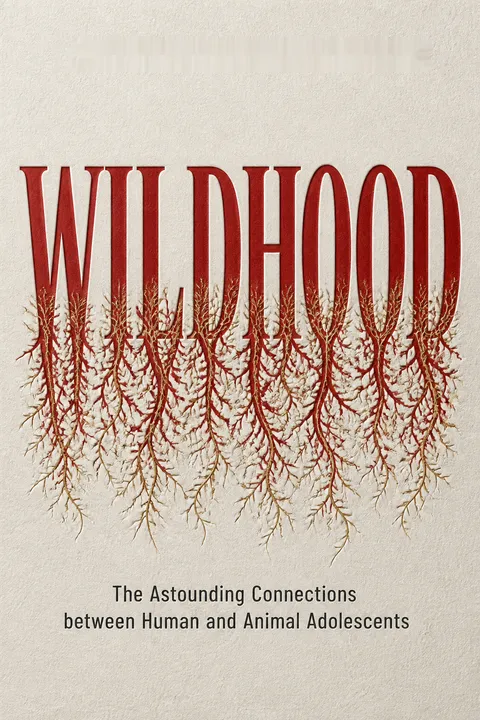
Growing up takes practice. The authors call the transition from childhood to mature adulthood “wildhood”: a period defined by experience and learning, not a fixed age. Puberty is the hormonal process that makes reproduction physically possible; adolescence is the broader behavioral journey toward adult competence. Even the adolescent sea otters in California’s shark-filled Triangle of Death show the mix: they approach danger, flee from harmless kayaks, play, and practice feeding. Across species, the journey turns on four challenges: staying safe, finding a place in a group, communicating sexual interest, and learning to provide for oneself.
A shared inheritance. The book follows four animals through these tests: Ursula the penguin, Shrink the hyena, Salt the whale, and Slavc the wolf. Their lives differ enormously, but their learning challenges reveal why adolescence is not simply a human flaw to endure. It is a necessary stage in becoming capable.
The comparative frame is valuable because it makes adolescent behavior intelligible without reducing it to either bad character or a single brain-development story. Developmental science often separates biology, family, and culture into distinct explanations; wildhood instead asks how they interact in real environments. The comparison has limits: a whale’s courtship and a human’s consent, for instance, are not interchangeable experiences. The four challenges work best as a map of recurring developmental tasks, not as proof that every species, or every young person, follows the same route.
Let young people meet manageable danger before the world chooses for them
Experience is risky training. When Ursula leaves her parents, she enters the ocean without having fed herself or encountered a leopard seal. In some years, only about 40 percent of young king penguins survive the early period away from home. The authors call inexperienced young animals “predator-naive”: they may not recognize danger, or know how to respond when they do. Experience can correct that ignorance, but the learning itself can be dangerous.
Training changes the odds. In a salmon experiment, fish raised without predators fared worst after release. Fish that saw and sensed cod behind a barrier did better, while those that encountered predators directly developed the strongest defensive group behavior. The lesson is not to throw adolescents into danger. It is to let them practice with guidance, peers, and room to recover from mistakes.
This resembles scaffolded learning in education: novices gain competence when challenges exceed their current ability slightly, while support prevents a mistake from becoming catastrophic. The salmon findings also show why shielding someone from every threat can leave them unprepared. But risk is not distributed fairly. A “manageable” challenge for one young person may be an unacceptable danger for another, depending on health, resources, and surroundings. The useful question is not whether adolescents should take risks, but which skills a challenge teaches, who bears its cost, and what safety net is present.
Learn to interrupt danger before it reaches the point of attack
Predators follow a pattern. The book describes the “Predator’s Sequence,” the usual steps by which a hunter finds and kills prey: detect, assess, attack, and kill. The earlier stages leave more room for prevention. Prey may hide, stay still, avoid dangerous places, or join a group. A flock or school can confuse a hunter because it is harder to track one individual among many similar-looking animals. Standing out can have the opposite effect, a risk the authors call the “oddity effect.”
Make pursuit costly. Some animals advertise that they are alert, fit, or hard to catch. Gazelles bounce conspicuously; kangaroo rats drum their feet. These “signals of unprofitability” can make a predator choose another target. Fear also teaches: a frightening encounter can create lasting avoidance. Yet when threats disappear, defenses may fade, a pattern called island tameness.
The sequence offers a practical threat-assessment model: prevention is usually easier before a threat becomes an active confrontation. That logic appears in fields such as cybersecurity, where limiting exposure and detecting intrusions early can matter more than responding after damage is underway. Still, the prey-predator analogy must be used carefully when applied to human relationships. A bully, exploiter, and physical attacker present different risks, and their motives are not reducible to animal hunting. The framework is most useful as a prompt to recognize warning signs and choose safer surroundings, not as a complete explanation of human harm.
Notice inherited advantages before calling a social contest merit-based
Status is not earned equally. In spotted hyena clans, a cub’s rank largely follows its mother’s. The offspring of a queen receives better food, stronger protection, and powerful social connections. Shrink, a low-ranking male born to a low-ranking mother, starts with poor odds. Meregesh, the queen’s son, begins near the top. Their differences are built into the social system before either cub can compete on his own.
Circumstances matter too. The Ngorongoro Crater offered about 219 potential prey animals per square kilometer in one study, compared with roughly 3.3 in the nearby Serengeti. That abundant environment gave Shrink a chance to survive. His persistence and social skill also helped: he repeatedly sought nursing from Queen Mafuta, who eventually accepted him. He gained nutrition, protection, and allies, then rose in status. Individual effort mattered, but it did not erase the advantages he had to overcome.
Shrink’s story offers a sharp distinction between ability and opportunity. In sociology, this resembles the difference between individual achievement and the social capital that opens doors: networks, security, and early resources can make later success easier to pursue. The story also avoids a fatalistic conclusion. Shrink’s initiative mattered, and a surprising alliance altered his prospects. Yet one exceptional rise should not be mistaken for evidence that entrenched hierarchies are fair. Social mobility can be real while remaining rare, costly, and dependent on circumstances beyond an individual’s control.
Treat exclusion as a real injury, then build allies and exits
Social rank has consequences. The authors describe a “Social Brain Network,” a set of connected brain regions that helps animals interpret faces, voices, memories, and social threats. In social species, losing standing can mean less access to food, safety, and companionship. The authors connect this descent to “social pain,” the distress associated with rejection or exclusion. In studies of adolescents, social exclusion engages brain systems also involved in physical pain, though that does not make the experiences identical.
Isolation is not the only response. Shrink developed friendships through repeated “friendship walks” with other hyenas. Allies can reduce victimization and help someone keep a place in a group. The book distinguishes bullies who display dominance, target difference to enforce conformity, or redirect their own fear and aggression. It also warns that social media can make evaluation feel constant, a strain it names “assessment overload,” and proposes protected times and places free from ranking.
The account helps explain why advice to “stop caring what people think” often misses the point: belonging is a basic social need, not merely vanity. Research on social support likewise finds that reliable relationships can buffer stress and improve resilience. The animal comparisons do not establish that social rejection and physical injury are the same, nor that every bullying episode has the same motive. They do encourage better questions: who is excluded, who can intervene, and can a young person leave the setting? Support should include individual allies and changes to the group conditions that sustain bullying.
Teach the conversation around sex, not only its mechanics
Physical readiness is not social readiness. Many animals wait after puberty before mating. During that interval, they observe and practice courtship: how to show interest, interpret another’s signals, and respond to uncertainty. Salt, the humpback whale, likely learned from older whales and their songs before becoming a suitor’s focus. Male humpbacks can spend years learning their vocal repertoire, while female whales choose whether and how to engage in competitive courtship groups.
Desire requires communication. In fruit flies, a male may tap a female to begin courtship, but more than half of these initial approaches stop there. The authors use these studies to emphasize that courtship involves signals of interest and disinterest, not automatic behavior. They also describe coercion through force, persistent harassment, or intimidation. Animal behavior does not determine human ethics: human consent must be affirmative, conscious, and freely given.
This focus broadens sex education from anatomy and risk prevention to the interpersonal skills that make intimacy respectful: expressing intentions, noticing hesitation, and accepting refusal. It also counters the assumption that biological desire makes behavior inevitable. The comparison with animal courtship is illuminating but cannot supply a moral rulebook; humans have language, power structures, and ethical obligations that other species do not share in the same way. The strongest implication is practical: teach communication directly, including how coercion can operate without physical force, rather than leaving young people to infer the rules from peers or media.
Make independence a practiced launch, not a cliff-edge test
Leaving home is a process. The authors call an animal’s move from its birth territory “dispersal.” Before Slavc the wolf set off across Europe, his pack had helped him practice hunting and communication. Ursula’s first departure was far less prepared. Other species rehearse independence through short excursions, time away from parents, or guided exploration. Such “informed dispersal” gives young animals useful knowledge before they face unfamiliar territory alone.
New places change the risk. Slavc crossed roads and a freezing river, became lost in the Dolomites, and eventually found a new home near Verona. A dispersing mountain lion called PJ entered Santa Monica, where unfamiliar streets and a crowded courtyard ended in his death. These stories show why readiness is not just a personal trait. Roads, safe crossings, mentors, food, and the behavior of local people all shape whether a launch succeeds.
The idea of a practiced launch fits transitions beyond leaving home: first jobs, higher education, and migration all require learning unfamiliar systems while managing new risks. Rehearsal and mentoring can make those transitions less abrupt. At the same time, a safe transition is not solely the responsibility of the young person or family. PJ’s story makes the built environment visible: wildlife crossings and planned urban spaces can prevent encounters from becoming fatal. Independence is better understood as supported participation in a new world than as a test of whether someone can manage without help.
Teach food skills while support remains available to catch early failures
Feeding yourself takes expertise. Finding food is a central test of adulthood in the wild, and even experienced predators often fail. The book estimates that lions and wolves miss about four hunts out of five; tigers and polar bears may fail nine out of ten attempts. Young animals initially rely on easier prey. Slavc began with foxes before improving at hunting deer. Ursula and her peers spent months developing the diving and foraging skills needed to catch fish and krill.
Help can build independence. Parents may demonstrate, bring practice prey, or guide young animals toward food. Some species receive support after leaving home, a pattern called “extended parental care.” When orphaned young mountain lions began starving, a wildlife team left food for one survivor until she could hunt on her own. The support mattered because it bridged the gap between need and growing competence.
Food is a useful lens for understanding self-reliance because it makes abstract competence concrete: planning, locating resources, evaluating risk, and recovering from mistakes. The chapter also challenges the false choice between total dependence and abrupt self-sufficiency. In human settings, practical instruction and temporary material support can work together, especially when young people face poverty or unstable housing. The analogy has boundaries: wildlife interventions are limited and often focused on survival, while human support involves rights, institutions, and long-term relationships. Still, the principle holds: assistance can enable agency when it is paired with opportunities to practice.
Measure adulthood by accumulated competence, not birthdays or departure dates
There is no single launch moment. Slavc did not become an adult simply by leaving home. He had to stay safe, find food, navigate new social territory, and eventually form a partnership. The authors define maturity through growing competence across those challenges, rather than through age, physical size, or one legal milestone. A young person may be independent in one area and still learning in another.
The world shapes the outcome. The book’s four animal stories end differently: Ursula’s later life is unknown, Shrink eventually died, Salt became a long-lived whale with many descendants, and Slavc found a mate and helped reconnect wolf populations. Their varied outcomes make a final point: preparation and persistence matter, but so do resources, relationships, and the environment into which someone grows. The purpose is not to make every adolescent follow one route, but to understand what support and practice each route requires.
Competence is a more flexible measure of adulthood than age alone, particularly when education, employment, family duties, and independence unfold on different schedules. Developmental models increasingly treat transitions as uneven rather than as a single threshold. The framework also guards against blaming individuals for outcomes shaped by unsafe neighborhoods, inadequate resources, or exclusion. Its caution is that “competence” can become another narrow standard if defined only by self-sufficiency. Human adulthood also includes interdependence: the ability to contribute, seek help, and participate responsibly in a community.
Analysis
Wildhood’s most useful move is to replace the stereotype of adolescence as a uniquely human malfunction with a developmental account grounded in comparative biology. The four recurring tasks, safety, social position, sexual communication, and self-reliance, give readers a memorable structure while the stories keep the argument from becoming a checklist. Ursula’s launch into predator-filled water, Shrink’s rise through a hyena hierarchy, Salt’s learned courtship, and Slavc’s dangerous dispersal each make a different competency vivid.
The book is strongest when it treats experience as necessary but costly. Adolescents need opportunities to test judgment, yet their biological and social vulnerabilities make unstructured exposure dangerous. Its animal examples support a practical middle path: preparation, peer learning, mentors, and support that responds to actual conditions. This applies not only to parents but to schools, cities, and institutions that shape the risks young people face.
The comparative method also requires restraint. Similar behavior across species can suggest shared evolutionary pressures, but it does not prove that animal motivations match human feelings. Nor does an evolved behavior become ethically desirable simply because it occurs in nature. The authors explicitly recognize this distinction when discussing sexual coercion and hierarchy. Their framework is most persuasive as a source of questions and design principles, not as a direct template for human society.
A further strength is its attention to unequal starting points. Shrink’s story demonstrates that family status and resources shape opportunity, while his persistence and alliance-building show that outcomes are not completely predetermined. Taken together, the book presents maturity as both personal development and an ecological achievement: people grow through practice, but the availability of safe places, relationships, and material support determines which lessons they can afford to learn. That combination resists both blame and fatalism.
Review Summary
Wildhood explores adolescence across species, drawing parallels between human and animal development. Readers found the book fascinating, insightful, and well-researched, praising its unique perspective on the challenges faced during the transition to adulthood. Many appreciated the book's organization around four key areas: safety, status, sex, and self-reliance. While some felt certain sections could have been more in-depth, overall the book was highly recommended for parents, educators, and anyone interested in biology or animal behavior. The accessible writing style and engaging animal examples made complex concepts relatable and thought-provoking.
People Also Read









Glossary
Wildhood
cross-species path to maturityThe authors’ term for the developmental period between childhood and mature adulthood across animal species. Wildhood is defined by the experiences and skills required to become an adult, not by a particular age or physical milestone. Its central challenges are safety, social navigation, sexual communication, and self-reliance.
predator-naive
inexperienced with dangerA wildlife biology term for an animal that lacks experience recognizing predators and responding to them. Young animals leaving parental protection may be predator-naive even when they are physically large or have heard warnings. The term describes inexperience, not foolishness, and helps explain why new environments can be unusually dangerous.
Predator’s Sequence
four stages of a huntA model of the usual stages by which a predator hunts: detecting prey, assessing which target is easiest or most worthwhile, attacking, and killing. The authors use the sequence to show why prey have more opportunities to avoid harm before an attack begins, through concealment, vigilance, group behavior, or signals that discourage pursuit.
predator inspection
approaching danger to learnA behavior in which prey approach or observe a predator to gather information about a threat. It is especially common among adolescent and young adult animals, and it can be dangerous. If the animal survives, the encounter can improve future recognition of predators and may also alert the predator that it has been noticed.
signals of unprofitability
warnings of costly pursuitBehaviors or displays that communicate to a predator that an animal is alert, fit, or difficult to catch. Examples in the book include gazelles bounding, kangaroo rats drumming their feet, and some birds singing during escape. Such signals can reduce a predator’s advantage or encourage it to choose another target.
Social Brain Network (SBN)
network for social judgmentThe authors’ name for connected brain regions involved in processing social information and guiding behavior. The network helps an individual interpret faces, body language, voices, memories, emotions, and social threat. It supports decisions about relationships and group position, and the authors emphasize its heightened importance during adolescence.
assessment overload
relentless social evaluationThe authors’ term for the strain created when adolescents face nearly continuous ranking and judgment across school, relationships, and digital platforms. They describe it as a mismatch between social systems adapted to periodic evaluation and modern environments where comparison can continue through social media long after the school day ends.
maternal rank inheritance
offspring inherit maternal rankA social pattern in several animal species, especially spotted hyenas, in which offspring receive a position in the group based largely on their mother’s rank. The inherited position brings advantages such as access to food, protection, and social connections. It demonstrates how status can be passed on rather than earned through individual competition.
loser effect
one loss predicts more lossesThe tendency for an animal that loses a social or physical contest to be more likely to lose subsequent contests. The authors connect this pattern to behavioral and brain changes that can make low-status animals less likely to challenge others. Repeated defeats can reduce participation and help turn a temporary setback into a lasting disadvantage.
dispersal
leaving the birth territoryThe process by which an adolescent or young adult animal separates from its birth territory and begins independent life elsewhere. Dispersal may happen suddenly or after gradual practice, and some animals remain near their families. It requires learning to find food, avoid danger, and form relationships in unfamiliar surroundings.
extended parental care
support after leaving homeResources, protection, or guidance that animal parents continue to provide after offspring have begun living independently. Support may include food, territory, introductions to other animals, or protection during a difficult transition. Its value depends on the conditions: it can improve survival, but too much assistance may delay the development of independent skills.
About the Author
Other books by Barbara Natterson-Horowitz

Download PDF
Download EPUB
.epub digital book format is ideal for reading ebooks on phones, tablets, and e-readers.








