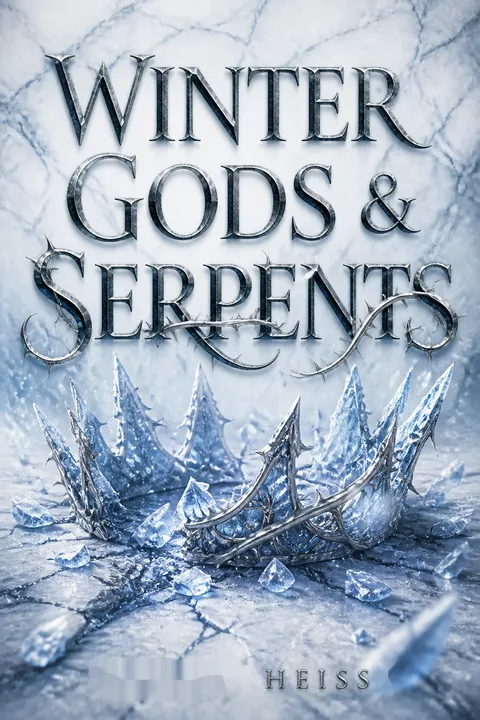


Plot Summary
Nightmares at Myrdur
Snowlin Krigborn,1 an exiled princess living among the ruins of her destroyed homeland, interrogates an Isjordian soldier who has crossed into Myrdur. He reveals that his company is searching the forbidden lands, and her friend Cai4 warns that the others killed themselves rather than be captured. The news revives Snowlin’s1 dread of her father, King Silas,6 and the night Adriatian soldiers killed her mother,12 brother,10 and sister.11
Her nightmares blur past and present until she runs to the forest, where Alaric,7 her guardian and the closest thing she has to a father, finds her. Snowlin1 refuses to hide again. When Isjordian soldiers arrive at Fernfoss during the autumn festival, she recognizes the moment her exile is ending.
The opening binds political danger to Snowlin’s bodily memory: an incursion into Myrdur does not merely threaten territory, it reopens the scene of her family’s deaths. Her flight into the forest offers temporary relief, but Alaric’s warning makes clear that retreat has become another form of captivity. Snowlin’s decision to return is therefore not simple courage or uncomplicated vengeance. It is an attempt to reclaim agency in the only place where her losses were made permanent.
The Price of Myrdur
Back in Isjord, Snowlin1 faces the father6 who exiled her after the attack and visits the graves of her mother Serene,12 her brother Eren,10 and her sister Thora.11 At a private meeting, Silas6 reveals why he summoned her: he has agreed to marry her to Adriata’s king in exchange for peace, trade, and a blood oath granting her Myrdur.
If she refuses, he threatens Alaric7 and the ruined homeland she has sworn to protect. Snowlin1 accepts, not from faith in the bargain but because marriage will put her inside the kingdom whose people killed her family, close to both her enemies and the political machinery she means to undermine. Her grief becomes a plan with a price attached.
Silas turns kinship into statecraft, treating Snowlin’s marriage and the dead homeland as interchangeable instruments. Her acceptance is neither surrender nor a straightforward triumph: it binds her to the very people she holds responsible while giving her access to power. The grave visit gives the bargain its emotional cost. Snowlin is not pursuing Myrdur as an abstract possession; she wants to answer a promise made to the dead, even as that promise risks making revenge the only future she can imagine.
A Guard from Night
In Adriata, General Kilian Castemont2 argues against reducing Snowlin’s1 status, insisting that the treaty must not make her a prisoner before she becomes queen. His brother Malik5 supports the match because Adriata is suffering storms, failing harvests, and attacks from the dark sea, and the agreement may reopen trade routes.
A memory from years earlier shows Kilian2 meeting Snowlin1 as a child at a gathering in Eldmoor, where her sharp confidence stayed with him. Now he and Malik5 are chosen to guard her until the wedding. Their arrival in Tenebrose puts Kilian2 beside the princess he remembers, though she greets him as an enemy and he still sees the feared hybrid his people once tried to kill.
Kilian’s perspective complicates the treaty before the romance begins. He recognizes that Adriata’s desperate need has made Snowlin a political solution, while his defense of her courtly standing does not erase his inherited fear of what she represents. The childhood memory adds a private thread beneath his public duty: he has carried an impression of Snowlin longer than she has carried any of him. Their pairing begins with unequal knowledge, mutual suspicion, and a bargain neither controls alone.
The General's Broken Pride
Snowlin1 enters Winter Court meetings despite her father’s6 preference for keeping her ornamental and out of military affairs. When General Gabriel Olsen mocks her, she challenges him to a duel, using information gathered with Nia3 to exploit his drinking, secrets, and weakened condition. She disarms him without killing him, then secures a captain’s position and permission to oversee border trials.
The victory gives her an official route through Isjord’s cities and access to military records. She begins cultivating dissatisfied officials, including Freja,14 Gabriel’s abused wife, while Cai4 and Alaric7 keep her informed from outside the court. Snowlin1 has gained room to maneuver, but each public victory also makes Silas6 watch her more closely.
The duel is both an act of self-definition and an entry into the very institution that once punished Snowlin for failing to manifest magic. She wins through observation, strategy, and restraint, not supernatural power, thereby exposing the court’s assumption that authority belongs naturally to men like Gabriel. Her new post brings leverage, but it also turns survival into a performance under Silas’s scrutiny. The cost of being underestimated is useful only until the people in power revise their estimate.
Kirkwall's Bloody Ledger
At Kirkwall’s border trials, Snowlin1 discovers that Lord Esbern has been taking bribes, helping Adriatian crossers evade punishment, and supplying Silas6 with information. When Esbern arrives and challenges her authority, she kills him and appoints Sebastian to replace him, then presents records of the lord’s crimes to Silas.6
Kilian,2 arriving with Adriatian officers to plead for captured people, sees Snowlin’s1 brutality firsthand and learns she is the princess he is meant to marry.
She allows an Isjordian man to cross to Adriata but separates him from his pregnant Adriatian lover, Amerie,15 leaving her in Isjord. Her decisions save some lives and inflict others, making Kilian2 question whether justice and retaliation have become indistinguishable to her.
Kirkwall makes Snowlin’s methods impossible to dismiss as mere bluster. She can identify corruption and use law to remove a powerful official, but she also treats punishment as something she controls personally, with consequences for people caught inside her decisions. Kilian’s first clear view of her exposes the gap between the propaganda of a monster and the human political actor before him. It does not make her gentle; it makes the moral accounting harder.
A Storm at Grasmere
At Grasmere, Snowlin1 finds Solarya’s ships returning with rotting fish instead of trade goods, a clear sign that relations with Silas6 are collapsing. She suspects the missing shipments and growing attacks are connected, but before she can learn more, mercenaries ambush her party in the forest.
Cai4 uses his hidden wind magic to protect the soldiers, while Snowlin,1 feverish and injured, pursues two fleeing Solaryans and kills them before they can expose him. Two soldiers die and another is badly hurt. Silas6 meets her at Tenebrose and orders her to remain inside the castle. Snowlin1 refuses to be caged, but the attack confirms that she is being targeted and that her father’s6 plans reach beyond the border trials.
The ambush shifts the story from court maneuvering to a wider, less legible conflict. The blocked trade is a public symptom, while the mercenary attack suggests a hidden campaign whose participants and objectives remain unclear. Snowlin protects Cai’s identity at the cost of killing people who might have been useful sources. Her father’s confinement order repeats the childhood logic of control, yet the danger is now real enough that freedom and exposure cannot be separated.
The Bird in Casmere
During a patrol in Casmere, Snowlin1 intervenes when a town bailiff beats and confines his daughter, claiming she consented to the abuse. She wounds him, lets the girl choose whether to kill him, then kills him herself when the girl cannot. Snowlin1 arranges for the girl to be taken to Freja14 in Modr, where she can begin again.
The priest Murdoc recognizes Snowlin1 and accuses her of defying the order of the world, exposing a history between them that leaves her shaken after he departs. Kilian2 sees both her violence and her care, and later learns that Murdoc once imprisoned Snowlin1 for supposed exorcisms. The encounter reveals how often her cruelty is shaped by memories others cannot see.
Snowlin’s rescue of the girl is not a clean conversion from vengeance to compassion. She still decides the bailiff’s fate, but she refuses to leave the abused girl inside the place where the violence occurred. Her insistence on removing the girl from the cage, rather than merely opening it, expresses a practical understanding of trauma: escape requires a new environment as well as a choice. Murdoc’s return shows that Snowlin’s own history of confinement remains active beneath her control.
A Child Named Serene
Snowlin1 visits Amerie,15 now living in Isjord with her infant daughter, whom she names Serene after Snowlin’s murdered mother.12 The name unsettles the others, but Snowlin1 accepts it and lets the baby hold her finger. Amerie15 has chosen separation from her husband because she fears their mixed-blood child would be rejected in Adriata.
Snowlin1 understands the choice as a painful attempt to protect the child, not as a punishment she can undo. At the same time, Nia’s3 effort to help Snowlin1 sleep and release the spirits of her family triggers a rupture between them. Snowlin1 feels Nia3 has decided what she needs without trusting her with the truth, and she turns away from the friend who has become her family.
The baby’s name joins the living to Snowlin’s dead without pretending that grief can be resolved by tribute. Amerie’s choice is painful precisely because it is protective, a sacrifice made under prejudice rather than freely desired. Snowlin recognizes the same logic she has lived under: other people making decisions in the name of survival. Nia’s intervention comes from care, but the rupture reveals that care without consent can feel like another form of control.
The Oars Turn
Snowlin1 builds influence through Freja,14 who inherits Modr after Gabriel’s death, and through officials who resent Silas’s6 rule. At Brisk, she and Kilian2 discover Adriatian workers secretly recruited by Silas6 and an uncontrolled magical explosion caused by one of them. Kilian2 sees the cruelty of the training system and later helps Snowlin1 through an inflicted agony that she suppresses with physical pain.
Their growing intimacy includes a night trapped together by a magical mist, where they share warmth and truths, but Snowlin1 will not abandon her revenge. She reveals that a blood bargain with Silas6 binds him to grant her Myrdur when she marries the Adriatian king. Kilian2 understands she intends to take Isjord from within.
The ship metaphor that guides Snowlin’s politics becomes operational: she does not need to defeat every official if she can turn enough positions in the court. Yet the emotional bond with Kilian complicates her strategy. He sees the cost of her self-punishment and begins to understand that her violence is not uncomplicated pleasure, while she sees his compassion without mistaking it for absolution. The blood bargain makes her political ambition concrete, but it also ties her future to a marriage she expects to end in blood.
The Autumn Queen's Warning
In Arynth, Queen Moriko16 of Hanai secretly meets Snowlin1 and reveals that Silas’s6 agents have searched several kingdoms, including Myrdur, for fragments of an ancient relic. Moriko16 believes Silas6 intends war and asks Snowlin1 to refuse the Adriatian treaty, but Snowlin1 will only promise to help if his plans truly threaten the realm.
She secures Moriko’s16 support for the Lord of Brisk, strengthening her growing alliance inside Isjord. Snowlin’s1 investigation also points to Melanthe, Silas’s6 supposedly dead crafter, and to a secret camp where Verglasers are being exposed to mirkroot. Silas’s6 scattered maneuvers now appear connected, though no one yet knows what the relic can do.
Moriko supplies the first coherent political map of a conspiracy that had seemed like disconnected disturbances. Her intervention matters because she offers Snowlin alliance without assuming obedience: Snowlin refuses to become another ruler’s instrument, even when their interests overlap. The relic’s mystery widens the stakes beyond Isjord and Adriata, while the evidence of Silas’s agents shows that information itself has become a weapon. Snowlin must decide whether her private revenge can remain separate from the threat to the wider realm.
Sam Pays the Price
Silas6 reveals that Sam8 has been passing information to Solarya and has him brought before the court in chains. Snowlin1 begs Silas6 to stop, but Renick13 kills the general8 while she is held back. Before dying, Sam8 tells her to defeat Silas6 without becoming an agent of destruction herself.
Snowlin1 hides her grief behind a cold performance, then retaliates against Renick13 by killing his wife and son and taking his daughter, Fiona, as leverage. She forces Renick13 to swear a blood oath of allegiance. At the same time, Snowlin1 poisons Silas’s other children10 and uses the antidote to threaten him. She has gained another court ally, but the price of power is becoming harder to distinguish from the damage she inflicts.
Sam’s death is the cost of Snowlin’s long effort to work through Silas’s court. His final request resists the logic that has sustained her: retaliation may defeat an enemy while reproducing the conditions that made her one. Snowlin cannot absorb that counsel in the moment; she converts grief into leverage against Renick and Silas. The oath and poison secure power, yet their coercion raises the central question of whether she can seize the system without inheriting its methods.
The Temple's Blood Map
At the Isline temple, Snowlin1 faces an ancient veil that recreates the night her family died, then finds the Solaryan mercenaries searching the surrounding village. They capture her and beat her, demanding information about the piece of the relic Silas6 has taken from them. Snowlin1 escapes, kills her captors, and returns with her clothes soaked in blood.
Their leader’s account confirms that the relic is divided into pieces hidden across kingdoms. The temple’s markings refer to a woman, chains, and souls, while Moriko’s16 tracking stones and Melanthe’s craft connect the searches. Snowlin1 begins to understand that Silas6 is gathering fragments of a divine sceptre, but she does not yet know the full scale of what he intends to release.
The temple turns the story’s supernatural clues into a physical ordeal. Snowlin’s past is not merely remembered; the veil forces her to experience it again, making the search for truth a struggle against her own nervous system. The Solaryans confirm that the relic is real and contested, but their fragmentary knowledge does not make its purpose safe or clear. Her escape demonstrates skill and resilience, while the blood on her clothes reveals how easily survival still requires violence.
The Uncle's Confession
After Snowlin1 reaches Adriata and weds Kilian,2 her uncle Aryan20 abducts her and boasts that he sent the false prophecy that led Adriata to attack Isjord. He wanted Serene12 removed so he could take her place beside Silas,6 and he used the massacre to eliminate Snowlin’s siblings10 and clear his path to power.
Aryan20 also explains Silas’s6 true goal: assemble the fragments of Aurora’s sceptre and command its imprisoned guardian to destroy rival kingdoms. Snowlin1 understands that her family’s deaths, the treaty, and her own usefulness to Silas6 all belong to the same design. Aryan20 stabs her and throws her from a tower into the sea, believing he has ended the last obstacle to his ambition.
The revelation converts a history of political fear into a personal betrayal: the massacre was not simply a response to prophecy but a scheme arranged by someone inside Snowlin’s family. The sceptre gives Silas’s dispersed campaigns a single terrifying purpose, while Aryan’s ambition explains why the attack was engineered at all. Snowlin’s apparent death makes the cost of her refusal immediate. She has uncovered the truth, but knowledge alone cannot protect her from the people who built the trap.
A Queen Returns
Kilian2 believes Snowlin1 dead, then recognizes her warning song in a bouquet of lilies and understands that her disappearance may be part of a larger move. While Isjordian forces march toward Adriata, Snowlin1 survives the fall and returns to Olympia, the hidden kingdom her father6 believed destroyed.
Alaric7 greets her as its queen, and she orders him to warn Hanai about Silas’s6 hunt for the sceptre and prepare Olympia’s forces to intervene. She has already secured the ships Silas6 lost and bound several Isjordian lords to her with blood oaths. The story ends with Snowlin1 alive, her marriage to Kilian2 still binding them, and both kingdoms moving toward war without knowing what she will do next.
Snowlin’s return reverses the apparent finality of the tower without erasing its cost: Kilian is left grieving, while she must decide how to wield the hidden power of a kingdom. Her song and the lilies function as a message he can recognize, linking their intimacy to the political strategy she has built. The ending does not resolve the romance or the war. Instead, it brings private betrayal, royal succession, and the threat of the sceptre onto one battlefield.
Analysis
Winter Gods & Serpents makes political power feel intimate by showing how kingdoms enter the body: through scars, forced marriages, inherited fear, and the expectation that children become weapons. Snowlin’s1 central conflict is not simply whether revenge is justified. She knows the cost of her anger, yet she also knows that restraint has repeatedly left the powerful unchallenged. Her campaigns against Silas6 therefore carry a real contradiction: she seeks freedom for herself and her people through bargains, threats, and violence that resemble the systems she opposes.
Kilian2 complicates that contradiction because he is both a representative of the people who harmed Snowlin1 and a person capable of seeing her beyond the propaganda. Their intimacy does not erase history. It makes history harder to evade. He cannot undo what Adriata did, and affection cannot absolve him by itself; Snowlin’s1 distrust is not a misunderstanding to be cured by romance. Their connection instead forces each of them to recognize a human being where political identities once seemed complete.
The novel’s repeated images of cages, weapons, scars, and mist give psychological states a material form. Snowlin’s1 self-inflicted pain is a way to interrupt emotional overload, while the magical veils turn buried trauma into a landscape she must cross. The divided sceptre enlarges that pattern to the scale of nations: a power meant to preserve balance is being sought by rulers who want control. In the ending, Snowlin1 survives but does not reach peace. She returns to Olympia with allies and authority, while Kilian2 believes her dead and the kingdoms edge toward war. Survival gives her a new position, not a clean release from grief, love, or the consequences of vengeance.
Review Summary
Winter Gods & Serpents has received mixed reviews, with praise for its complex world-building, morally gray characters, and engaging plot twists. Many readers enjoyed the enemies-to-lovers romance and the fierce, vengeful protagonist Snowlin. However, criticisms include grammatical errors, pacing issues, and excessive length. Some found the book difficult to follow due to its complex magic system and political intrigue. Despite these flaws, many readers were captivated by the story and eagerly anticipate the sequel, highlighting the book's potential as an underrated fantasy series.
People Also Read

Characters
Snowlin Krigborn
The exiled heirSnowlin is the daughter of Isjord’s king and an Olympian queen, raised as a political experiment and left with deep scars after her family’s destruction. She relies on training, sharp humor, and careful observation to survive people who underestimate her. Her nightmares and self-inflicted pain show how strongly she believes she must carry her losses alone. She wants justice for Olympia and a future for Myrdur, but her methods can make care and punishment difficult to separate. Snowlin is both a strategist and a wounded young woman, suspicious of tenderness yet hungry for connection. Her central struggle is whether she can pursue power without becoming the instrument of harm that shaped her.
Kilian Castemont
The night-born guardKilian is an Adriatian general and Empath, trained to read emotional shadows and raised under a demanding soldier’s discipline. He begins with inherited fear and prejudice toward Snowlin1, whom his people have been taught to regard as dangerous. His instinct is to control what he cannot understand, but his growing care for her forces him to confront the difference between protecting someone and deciding for them. Quiet, observant, and more tender than he first appears, Kilian also struggles to trust his own emotions. His attraction to Snowlin1 is intensified by the political history between their peoples, making intimacy feel inseparable from guilt and danger.
Nia
The steadfast sisterNia is Snowlin’s1 closest friend, an Adriatian Umbra who can manipulate shadows and move across great distances. Her past has taught her to conceal her origin and distrust the people who once controlled her life. She is practical, compassionate, and unusually attentive to what Snowlin1 refuses to say. Nia’s wish to ease Snowlin’s1 nightmares sometimes leads her to act without permission, exposing the tension between care and autonomy. She also wants to understand her own magic rather than keep defining herself by what others did to her. Her bond with Snowlin1 is chosen family, strong enough to endure anger but not exempt from hurt.
Cai
The loyal wind-wielderCai, also known as Caiden, is an Olympian Zephyr and one of Snowlin’s1 oldest friends. He uses wind magic with formidable skill, but his most important role is emotional: he distracts Snowlin1 from spiraling thoughts and keeps watch when she will not admit she needs help. His teasing manner hides grief for his lost people and a fear of losing the family he has made with Snowlin1 and Nia3. He supports Snowlin’s1 plans while trying to keep her alive, a balance that becomes harder as her vengeance deepens. His intimacy with her is rooted in loyalty rather than romance.
Malik Castemont
The candid EmpathMalik, usually called Mal, is Kilian’s2 younger half-brother and commander of Adriata’s Empaths. He reads emotional shadows but is more compassionate than the people who trained him expect. Mal jokes easily, resists cruelty, and often sees the human cost of political decisions before others do. His sympathy for Snowlin1 does not blind him to her violence, but it makes him question the stories his kingdom tells about her. He also provides a bridge between her circle and Kilian’s2, while navigating the pressures of a dangerous military role and worry for his sick stepmother.
King Silas Krigborn
The winter tyrantSilas rules Isjord through military calculation, fear, and the conviction that other lives are pieces in his larger designs. He values power and control, and he expects his children and officials to serve those ends. His treatment of Snowlin1 makes her both a source of shame and a potential weapon in his eyes. He can present himself as a patient politician, but his threats and punishments reveal how quickly his restraint becomes coercion. Silas is not simply cruel for cruelty’s sake; he believes that domination is the surest path to survival and greatness, a belief that makes him especially dangerous to those he claims to protect.
Alaric Drava
The guardian who raised herAlaric is an Olympian general, Snowlin’s1 guardian, and the person she recognizes as her true father. He took responsibility for her after the attack and gave her training, shelter, and a family beyond Isjord’s court. His advice is often wiser than she wants to hear, especially when he warns that revenge may deepen rather than heal her wounds. Alaric’s dry humor and practical affection help ground Snowlin1, while his own grief over failing to protect her family remains largely unspoken. He represents a form of care that does not require possession, though even his protectiveness can collide with Snowlin’s1 need to choose for herself.
Samuel Raşar
The loyal generalSamuel, whom Snowlin1 calls Sam, is a Solaryan Glare and one of Isjord’s most experienced generals. He was close to Snowlin’s mother12 and remains one of the few people in court who treats Snowlin1 as a person rather than a political asset. He is measured, affectionate, and wary of the dangers created by her plans. His history with Alaric7 adds a quiet strand of lost love to his loyalty. Sam’s support gives Snowlin1 access to military knowledge, but his own principles sometimes put him in conflict with the king he serves.
Elias Venzor
The Venzorian captainElias is the son of Venzor’s powerful lord and a captain in Silas’s6 army. He remembers Snowlin1 from childhood and approaches her with warmth that differs from the court’s suspicion. Their attraction develops amid his loyalty to Isjord, his arranged betrothal to Fren, and Snowlin’s1 need for information. Elias is gentle where Snowlin1 expects manipulation, which makes her both trust and test him. He wants to be more than a pawn in his father’s and king’s arrangements, but his sense of duty complicates every choice.
Eren Krigborn
The lost elder brotherEren is Snowlin’s1 older brother and the former heir to Isjord. Remembered as dutiful, thoughtful, and unusually gentle for a prince raised under Silas’s6 expectations, he gave Snowlin1 his sword and a sense of protection that persists after he is gone. His training and his care for Thora11 shaped Snowlin’s1 understanding of courage. In her memories, Eren is both a beloved sibling and a measure of what she believes she failed to save.
Thora Krigborn
The younger sisterThora is Snowlin’s1 younger sister, remembered as affectionate, sincere, and vulnerable to the cruelty of the royal household. She and Snowlin1 relied on one another when the adults around them failed to protect them. Thora’s kindness stayed with Snowlin1, even as their shared childhood included fear and abuse. Her memory represents the life Snowlin1 believes she abandoned when she ran, shaping both her guilt and her determination to punish those responsible.
Serene Skygard
The murdered Olympian queenSerene is Snowlin’s mother1, an Olympian queen and a powerful Aura whose marriage to Silas6 joined two kingdoms under tense conditions. Snowlin1 remembers her as loving and gentle, though the political pressures of her marriage and the destruction of her homeland left her carrying grief of her own. Her final insistence that Snowlin1 live becomes a promise that shapes her daughter’s1 choices. Serene’s memory is both refuge and wound, a source of affection inseparable from Snowlin’s1 guilt.
Renick Salazar
The Bruma commanderRenick commands Isjord’s Verglasers and once trained Snowlin1 and her siblings. He is a disciplined, authoritarian soldier who treats pain as a tool for obedience. His loyalty to Silas6 and confidence in the hierarchy make him a powerful figure at court. Snowlin’s1 history with him is marked by fear and defiance, while his methods help explain why she learned to turn vulnerability into a weapon.
Freja Olsen
The reluctant court allyFreja is the daughter of Modr’s lord and the wife of General Gabriel Olsen. Beneath her controlled appearance, she longs to escape a marriage and social order that treat her as property. She shares Snowlin’s1 dislike of Isjord’s restrictions on women, but she is more cautious about voicing it. Snowlin1 recognizes her as a potential ally and gives her room to develop the authority others deny her.
Amerie
The exiled young motherAmerie is an Adriatian woman captured while crossing the Highwall, pregnant by an Isjordian man. Her loyalty to her husband and fear for their child shape the difficult choices she makes. Snowlin1 initially punishes her for crossing, then offers her a safer home in Isjord when Amerie decides the child may face less prejudice there. Amerie’s story gives the political conflict a domestic cost: borders can separate families even when those families have done no harm.
Moriko Uzumi
The strategic autumn queenMoriko rules Hanai with the discipline of a general and the patience of a tactician. She has known Alaric7 since the Ater battles and respects his judgment. Moriko suspects Silas6 is building toward war and seeks Snowlin’s1 cooperation, but she meets her as a political equal rather than a subordinate. Her measured approach contrasts with Snowlin’s1 instinct for direct confrontation, though both understand that a threat ignored can become a catastrophe.
Penelope
The brave young attendantPenelope is a young red-haired servant whose father once guarded Snowlin’s family1. She chooses to attend Snowlin1 despite the rumors that frighten other servants, and her quick wit helps soften the castle’s hostile atmosphere. Penelope is loyal without being timid, willing to scold Snowlin1 and ask questions others avoid. Her connection to both Snowlin’s1 past and the hidden history of the court makes her more than a household helper.
Cerelia Krigborn
The queen dowagerCerelia is Silas’s mother6 and a former queen of Isjord, raised in Venzor’s political world. She understands court power and the importance of royal bloodlines, but her sense of duty can place dynastic survival above individual lives. Her history with Snowlin’s mother12 and granddaughter is complicated by old choices and unspoken resentments. Cerelia carries the authority of a generation that helped shape the present court, even as its younger members challenge her legacy.
Caius Arynth
The cautious old lordAlbius, Lord of Arynth, is an elderly Verglaser and one of the few Isjordian officials who treats Snowlin1 with steady respect. He remembers her brother Eren10 fondly and shares stories that restore pieces of Snowlin’s1 lost family history. His quiet support makes him an important ally, though his decisions are shaped by the danger of openly opposing Silas6. He values continuity and judgment over spectacle.
Aryan Krigborn
The ambitious royal uncleAryan is Silas’s brother6 and a senior presence in the Isjordian court. He resents the family arrangements that placed Serene12 beside Silas6 and views the royal children through the lens of succession and power. He is adept at hiding personal motives behind political language. His long-standing bitterness toward Snowlin1 and her mother12 makes him an unpredictable presence in the family’s already dangerous court.
Plot Devices
Blood oaths
Power purchased with lifeA blood oath makes a promise magically binding, with a person’s life at risk if they break it. Snowlin1 uses the custom to secure her father’s6 promise of Myrdur and later to recruit Isjordian officials. The oaths turn ordinary political bargains into physical stakes: loyalty is not merely spoken but attached to blood, land, and future action. They also reveal Snowlin’s1 growing willingness to use the same coercive structures that once controlled her. Their power makes every agreement consequential, but does not make it morally clean.
The zgahna
A mist that exposes fearThe zgahna is a magical mist associated with Olympia and its restless spirits. It calls to Snowlin1, signals danger, and can blur the boundary between memory and present experience. Other magical barriers, including crafter veils, make it difficult to cross borders, hide people, and enter temples. These layers of mist and concealment support the novel’s central uncertainty: characters can sense that something is wrong long before they can identify its cause. The magic externalizes disorientation without making every vision trustworthy.
The divided sceptre
A relic linking rival kingdomsClues in temples, tracking stones, and the actions of Silas’s6 agents point to fragments of an ancient sceptre hidden across several kingdoms. The relic is associated with Aurora, a powerful guardian bound to it, and Silas6 hopes to use it as a weapon. Because each fragment is located in a different land, the search connects the apparent subplots of border raids, secret camps, Melanthe’s return, and failed trade. The device transforms scattered political tension into a shared danger. Its full power and outcome remain unresolved at the end of the book.
Poisoned lilies
A warning hidden in a flowerLilies of the valley appear in places struck by misfortune, and their poisonous nature gives them a double meaning: they signal danger while also offering a tool for revenge. Snowlin’s1 childhood song about poisoned flowers becomes a clue Kilian2 uses after he believes she has died. The flowers also connect the story’s recurring language of beauty and harm. Their delicate appearance hides lethal force, much as Snowlin’s1 cultivated charm can conceal anger, grief, and strategic intent.
The prophecy
Fear used as political leverageA prophecy about three hybrid children and the destruction of the realm helps drive Adriata’s attack on Isjord. The prophecy is treated as divine certainty, even though the children appear powerless, and it gives political fear the authority of fate. Later revelations expose how rulers and factions exploit prophecy to justify decisions they already want to make. The device does not settle whether prophecy is true; instead, it shows how belief in a prediction can create the violence it claims merely to prevent.
FAQ
Synopsis & Basic Details
What is Winter Gods & Serpents about?
- A Princess's Vengeful Return: Winter Gods & Serpents follows Snowlin Edlynne Skygard, the exiled hybrid princess of Isjord and last royal of fallen Olympia, as she is summoned back to her tyrannical father's court after twelve years. Haunted by the massacre of her family and kingdom, Snowlin plots a meticulous revenge against those who wronged her, including her own father and the Adriatian kingdom.
- Political Intrigue & Hidden Agendas: The narrative weaves a complex web of political machinations, as Snowlin navigates a court rife with betrayal and shifting alliances. Her return is tied to a strategic marriage alliance between Isjord and Adriata, forcing her into a dangerous game where she must outwit kings, generals, and even her supposed allies to achieve her goals.
- Identity, Trauma, & Survival: At its core, the story is a deep dive into Snowlin's psychological landscape, exploring themes of trauma, identity, and the blurred lines between victim and monster. Her journey is one of survival and self-discovery, as she grapples with her past, her unique heritage as an 'ybris,' and the profound cost of vengeance.
Why should I read Winter Gods & Serpents?
- Complex Anti-Heroine Analysis: Readers seeking a protagonist who defies traditional heroic archetypes will find Snowlin compelling. Her motivations are deeply rooted in trauma, leading to morally ambiguous choices and a ruthless pursuit of justice that challenges conventional notions of good and evil.
- Rich World-Building & Magic System: The novel presents a vibrant world of Numen, populated by diverse Aura (magical humans blessed by gods) and intricate political structures across various kingdoms. The unique magic system, from elemental powers to spiritual abilities like empathy and shadow manipulation, adds depth and intrigue to the conflicts.
- Psychological Depth & Emotional Resonance: Beyond the action and political schemes, the story offers a profound exploration of human emotion, memory, and the lasting impact of trauma. The internal struggles of characters, particularly Snowlin and Kilian, provide a raw and unflinching look at pain, love, and the difficult path to healing.
What is the background of Winter Gods & Serpents?
- A World of Divine Blessings & Ancient Laws: The realm of Numen is shaped by eight prime gods who bestowed magic upon humans, creating the Aura. Ancient laws, like the prohibition of mixing Auran bloodlines, underpin societal structures and fuel conflicts, as seen with Snowlin's 'ybris' heritage.
- The Fall of Olympia & Its Lingering Curse: The central historical event is the massacre of Olympia, orchestrated by King Silas. This act of war, driven by his desire for power and hybrid Aura, left the land of Myrdur cursed with restless spirits (zgahna) and created deep-seated animosity between Isjord and Adriata, setting the stage for the current political climate.
- Technological & Cultural Nuances: Despite the fantasy setting, the world features elements like printing houses, advanced forging (Adriatian black steel), and distinct cultural practices (Isjord's eternal winter traditions, Adriata's spiritual reverence for the moon and night). These details add texture and realism to the fantastical elements, influencing character interactions and plot developments.
What are the most memorable quotes in Winter Gods & Serpents?
- "Patience is the virtue of the dead.": This opening line immediately establishes Snowlin's character and the relentless, impatient drive for vengeance that defines her. It foreshadows her refusal to wait for justice and her active pursuit of her enemies.
- "There are two deaths in this realm, one that will hurt and one that will really, really hurt. Pick wisely.": Spoken by Snowlin during an interrogation, this quote encapsulates her ruthless pragmatism and her mastery of psychological torture, highlighting her transformation into a formidable and terrifying figure.
- "You cannot light the world on fire for light either, Princess. Everyone can be happy, you are just choosing the path of unhappiness at the expense of your soul.": Kilian's poignant observation to Snowlin reveals his deep understanding of her internal conflict and the self-destructive nature of her revenge, emphasizing the novel's exploration of trauma and healing.
What writing style, narrative choices, and literary techniques does Wendy Heiss use?
- First-Person Limited & Shifting Perspectives: The primary narrative is from Snowlin's first-person perspective, offering intimate access to her thoughts, trauma, and complex motivations. However, the narrative occasionally shifts to Kilian's first-person perspective (Parts II and IV), providing crucial counterpoints and revealing his internal struggles, enriching the emotional depth and interpretive possibilities.
- Sensory-Rich & Visceral Prose: Heiss employs vivid, often visceral, sensory descriptions, particularly around Snowlin's trauma and the magical elements. The "smell of burnt flesh and screams," the "metallic sting of blood," and the "razor-sharp pain dulling across my palms" immerse the reader directly into Snowlin's experience, making her psychological torment palpable.
- Symbolism & Metaphorical Language: The novel is rich with recurring symbols and metaphors that deepen its themes. "Cages" and "chains" represent Snowlin's feeling of entrapment and her struggle for freedom, while "serpents" and "vipers" symbolize the treacherous court and its inhabitants. The repeated motif of "fire" and "ice" reflects the contrasting natures of Isjord and Adriata, as well as Snowlin's internal conflict between burning rage and emotional numbness.
Hidden Details & Subtle Connections
What are some minor details that add significant meaning?
- Penelope's Eldmoorian Heritage: The revelation that Penelope is "part Eldmoorian" and her father was a crafter (Chapter 37) is a subtle but significant detail. It explains her unusual sensitivity to magic and her ability to detect craft veils, hinting at a deeper connection to the magical world and potentially foreshadowing her future role beyond a mere servant. This background also explains why she's not entirely surprised by Snowlin's 'ominous' qualities.
- The Octa Virga's Eight Pieces: Uncle Aryan's detailed explanation of the Octa Virga (Chapter 43) reveals it's broken into eight fragments, each guarded by a kingdom. This directly links to the "Eight souls part her living. Eight souls guarded to keep her from living" prophecy Snowlin finds in the temple (Chapter 40), suggesting the weapon's fragments are tied to the fate of a powerful being, possibly Aurora, and that Snowlin's own life is intertwined with this ancient magic.
- Kilian's "Bad Knee": Kilian's casual mention of his "bad knee" from tripping over a cliff while chasing Mal (Chapter 38) is a small detail that humanizes him and subtly foreshadows his protective nature towards his brother. It contrasts with his otherwise stoic demeanor and hints at a deeper, more vulnerable side beneath his kingly facade, making his later actions for Snowlin more impactful.
What are some subtle foreshadowing and callbacks?
- Snowlin's "Uselessness" as a Weapon: Snowlin's repeated self-identification as "useless" and her father's dismissal of her lack of magic (Chapter 1) subtly foreshadows her true power. Her "uselessness" becomes her greatest weapon, as she is underestimated by her enemies, allowing her to move unseen and strike from unexpected angles, subverting the traditional expectation of a magical protagonist.
- The "Children of the Forest" Song: The seemingly morbid nursery rhyme Snowlin hums and sings ("For three burning suns and moons, the dark blight celebrated all afternoons...") (Chapter 7, 17) is a direct callback to the tale of children poisoning their enemies with lily of the valley. This foreshadows Snowlin's use of poison against Moreen and her children, and later, the widespread poisoning of Adriata, revealing her meticulous planning and ruthless execution of vengeance.
- Kilian's "Steel Tongued" Nickname: Kilian's Darsan nickname, "Dahaara" (steel tongued), is introduced early (Chapter 18) and subtly foreshadows his unwavering honesty and bluntness, especially with Snowlin. It contrasts with her own mastery of lies and facades, setting up their dynamic where he consistently sees through her deceptions, forcing her to confront her truths.
What are some unexpected character connections?
- Albius Arynth's Connection to Eren: Lord Albius's deep affection and mentorship of Eren (Chapter 12) is an unexpected connection that humanizes a seemingly minor court figure. He reveals Eren's true character and even inscribed Snowlin's name on Eren's sword, highlighting a hidden layer of loyalty and respect within the treacherous Winter Court, and providing Snowlin with a trusted ally.
- Samuel Raşar's Past with Alaric: The revelation of Samuel and Alaric's close friendship and shared past in Solarya (Chapter 5) is a surprising connection. It explains Samuel's immediate trust and paternal care for Snowlin, deepening his role beyond a mere general and setting up his tragic sacrifice as a personal loss for Snowlin, rather than just a political one.
- Moreen's Role in Olympia's Fall: The subtle hints that Moreen actively aided the Adriatians in the attack on Olympia (Chapter 42) are unexpected. Snowlin's confrontation reveals Moreen's deeper villainy beyond petty court rivalries, exposing her as a direct accomplice in the massacre and adding another layer to Snowlin's personal vendetta against her.
Who are the most significant supporting characters?
- Penelope, The Unwitting Spy: Beyond a mere servant, Penelope becomes Snowlin's crucial informant within the castle. Her innocent curiosity and Eldmoorian heritage allow her to gather vital intelligence on court secrets, General Moregan's activities, and even Melanthe's past, making her an indispensable, albeit often terrified, asset to Snowlin's machinations.
- Albius Arynth, The Honorable Lord: Lord of Arynth emerges as a significant ally, not just due to his position but his genuine character. His respect for Olympia, his mentorship of Eren, and his willingness to form a blood oath with Snowlin (Chapter 35) make him a rare figure of integrity in Silas's court, providing Snowlin with a crucial foothold in her plan to dismantle Isjord from within.
- Melanthe, The Resurrected Crafter: Melanthe, Silas's dark crafter, is a pivotal supporting character whose mysterious return from Caligo (Chapter 27) and connection to the Octa Virga quest significantly escalates the stakes. Her unique abilities and her past as the daughter of a Grand Maiden make her a formidable, unpredictable force, directly impacting Snowlin's understanding of her father's true ambitions.
Psychological, Emotional, & Relational Analysis
What are some unspoken motivations of the characters?
- Silas's Fear of Irrelevance: Beyond mere power, Silas's relentless pursuit of the Octa Virga and hybrid Aura is subtly motivated by a deep-seated fear of his kingdom's decline and his own legacy fading. His obsession with "divine weapons" and "eternalness" (Chapter 25) hints at a profound insecurity about his mortality and the transient nature of his rule, driving his extreme actions.
- Nia's Self-Punishment & Avoidance: Nia's reluctance to fully embrace her Adriatian heritage and her healing magic (Chapter 26) is an unspoken motivation rooted in her past trauma as a slave. Her desire to "bury to forget" (Chapter 26) and her initial refusal to learn magic stem from a deep-seated need to distance herself from the pain inflicted by her own people, even if it means suppressing parts of herself.
- Kilian's Guilt-Driven Protection: Kilian's intense protectiveness of Snowlin, even before he admits his love, is subtly driven by his kingdom's complicity in the Olympia massacre. His repeated attempts to shield her from harm and his willingness to sacrifice for her (Chapter 36) are unspoken acts of atonement, a desperate need to rectify the "wrong" his people inflicted upon her and her family.
What psychological complexities do the characters exhibit?
- Snowlin's Performance of Cruelty: Snowlin often performs exaggerated cruelty and indifference, particularly when confronting her enemies or discussing her vengeful plans. This is a psychological defense mechanism, a "mask of weakness" (Chapter 45) to hide her profound pain and vulnerability. Her internal monologues often contradict her outward bravado, revealing a deeply fractured self struggling to reconcile her trauma with her desire for justice.
- Kilian's Emotional Suppression: Kilian, as an Empath, exhibits a complex psychological struggle with his own emotions and those of others. His "steel tongued" demeanor and stoicism are a form of self-preservation, a learned suppression to avoid being overwhelmed by the intense emotions he can perceive. His journey is about breaking through this self-imposed barrier, allowing himself to feel and express love, even if it means vulnerability.
- The Cycle of Abuse & Its Perpetuation: The novel subtly explores how trauma and abuse perpetuate a cycle of harm. Renick, a victim of Silas's cruelty, becomes a torturer himself. Snowlin, deeply scarred by her past, struggles with her own capacity for cruelty, often mirroring the tactics of her abusers. This complexity highlights the psychological toll of violence and the difficulty of breaking free from its patterns.
What are the major emotional turning points?
- Samuel's Sacrifice: Samuel's death (Chapter 36) is a pivotal emotional turning point for Snowlin. It shatters her carefully constructed facade of emotional detachment, forcing her to confront the raw pain of loss and the direct consequences of her actions. His dying words, urging her to "wage no destruction, honour my request. Give peace with no fear," challenge her vengeful path and introduce a new moral dilemma.
- Kilian's Confession of Love: Kilian's confession of love (Chapter 32, 36) marks a significant emotional shift for both characters. For Snowlin, it forces her to acknowledge her own buried feelings and the terrifying vulnerability that comes with them. For Kilian, it's a breaking of his emotional barriers, a full embrace of desire over duty, and a profound commitment that redefines his purpose.
- Nia's Revelation of Her Past: Nia's confession of her past as a slave and the source of her metal hands (Chapter 26) is a powerful emotional turning point in her relationship with Snowlin. It deepens their bond through shared vulnerability and mutual understanding of trauma, leading to Snowlin's apology and a renewed commitment to their friendship, highlighting the healing power of truth and forgiveness.
How do relationship dynamics evolve?
- Snowlin & Kilian: From Enemies to Forbidden Lovers: Their relationship undergoes the most dramatic evolution, starting as adversaries bound by political necessity and mutual distrust. Through shared vulnerability, intellectual sparring, and unexpected moments of tenderness, their dynamic shifts to a deep, forbidden love. This evolution is marked by Kilian's persistent attempts to break through Snowlin's emotional walls and Snowlin's gradual acceptance of intimacy, culminating in a tragic romance.
- Snowlin & Her Father: A Dance of Defiance & Control: The dynamic between Snowlin and Silas is a constant power struggle. Initially, Snowlin is a pawn, but she systematically subverts his control, turning his own tactics against him. Their relationship evolves from one of victim and abuser to a complex game of wits, where Snowlin actively provokes and outmaneuvers her father, culminating in her ultimate checkmate.
- Snowlin & Her Allies: Forging Chosen Family: Snowlin's relationships with Nia and Cai evolve from childhood companionship to a fierce, unwavering chosen family. Their loyalty is tested by Snowlin's ruthless methods and emotional distance, but ultimately, their bonds deepen through shared trauma and mutual support. The addition of characters like Albius and Samuel expands this circle, demonstrating the power of loyalty and found family in a treacherous world.
Interpretation & Debate
Which parts of the story remain ambiguous or open-ended?
- The Nature of Snowlin's "Emptiness": While Snowlin claims to "feel nothing" and that her emotions "just...left me" (Chapter 25), the narrative often shows her experiencing intense emotions, particularly anger, pain, and moments of joy or tenderness. This ambiguity leaves readers to debate whether her "emptiness" is a literal psychological state, a coping mechanism, or a profound disconnect from her own emotional reality, making her a truly unreliable narrator of her own feelings.
- The Octa Virga's True Power & Purpose: The exact nature and full capabilities of the Octa Virga remain somewhat ambiguous. While described as a "divine weapon" that can "erase all life" (Chapter 43), its precise mechanism and the extent of Aurora's sentience within it are not fully detailed. This leaves room for debate on whether Silas truly understood its power or if his ambition would have led to an unforeseen catastrophe beyond his control.
- The Fate of Snowlin's Soul: Kilian often questions Snowlin's soul, suggesting her actions might condemn her to "seven hells" (Chapter 17). The ending, while a strategic victory, leaves her personal fate open-ended. Readers can debate whether her ultimate sacrifice and the pain she endures lead to a form of spiritual redemption, or if her soul remains "soiled" by the path she chose, leaving her forever haunted by her choices.
What are some debatable, controversial scenes or moments in Winter Gods & Serpents?
- Snowlin's Torture of Prisoners: Snowlin's brutal methods of interrogation and punishment, such as severing hands and displaying bodies on pikes (Chapter 12), are highly controversial. Readers may debate whether these actions are justifiable given her past trauma and the ruthlessness of her enemies, or if they simply perpetuate the cycle of violence, turning her into the very "monster" she despises. This challenges the reader's sympathy for the protagonist.
- The "Blood Oath" with Renick Salazar: Snowlin forcing Renick, her childhood torturer, into a blood oath of allegiance (Chapter 37) is a morally complex moment. While it serves her strategic goals, it raises questions about the nature of justice and forgiveness. Is it true justice to enslave an abuser, or does it merely reflect Snowlin's own descent into the tactics of her enemies? This scene forces readers to confront the blurred lines between right and wrong.
- The "Poisoning" of Adriata: Snowlin's long-term, systematic manipulation and weakening of Adriata through environmental sabotage (Chapter 44) is a controversial strategic choice. While framed as a means to an end (forcing the agreement and weakening the kingdom for her takeover), it involves inflicting suffering on innocent civilians. This raises ethical questions about collective punishment and whether the ends justify such devastating means, even in a war for justice.
Winter Gods & Serpents Ending Explained: How It Ends & What It Means
- The Checkmate: A Pyrrhic Victory: The ending of Winter Gods & Serpents is a strategic triumph for Snowlin, but a deeply personal tragedy. She successfully orchestrates her father's downfall, reclaiming Myrdur and positioning herself to take over Isjord. Her final act of stabbing Kilian, her beloved, is the ultimate sacrifice to fulfill her blood oath and trigger the war that will allow her to seize power. This "checkmate" is a pyrrhic victory, as she achieves her goals at the cost of her own happiness and the love she found.
- The Cost of Vengeance & Lost Love: Snowlin's journey culminates in the devastating realization that her relentless pursuit of vengeance has cost her the very thing that offered her solace: Kilian's love. Her final words to him, "I will kill you and then me, and I will not die, king of the damned, before I harvest all life out of this land," signify her commitment to her destructive path, even if it means sacrificing herself and her newfound connection. The ending emphasizes that while revenge can be achieved, it rarely brings true healing or happiness.
- A New Beginning, Forged in Pain: Despite the tragic personal loss, the ending also signifies a new beginning for Olympia and Snowlin's reign. She has secured Myrdur, dismantled her father's power, and positioned herself as a formidable queen. Her final moments, being captured by her father's soldiers, leave her fate ambiguous but imply a continuation of her struggle. The meaning is that true power and leadership are often forged in immense pain and sacrifice, and that even in victory, the scars of the past remain. The "heartache gone with it" suggests a final, painful detachment, allowing her to fully embrace her role as the "ruin" she promised to be.
The Auran Chronicles Series

About the Author
Other books by Wendy Heiss

Download PDF
Download EPUB
.epub digital book format is ideal for reading ebooks on phones, tablets, and e-readers.








