

Plot Summary
Prologue
Thirteen years before the battle at Highwall, the young Adriatian prince Kilian2 meets Eren Krigborn6 beside a forbidden bay. Eren6 tells him that Snowlin,1 his sister’s friend and a princess of Isjord, is being trained brutally by her father.10
Kilian2 has already decided he wants to marry her, even though she is human and he is an Obscur who could live for centuries. Eren6 warns that she may not be the woman Kilian2 imagines, then takes him to watch her play with her black morph, Memphis. Kilian2 secretly feeds the creature a little of his magic and asks it to protect Snowlin.1
The prologue makes devotion precede knowledge. Kilian’s attachment begins not with intimacy but with reports, letters, and a decision to share Snowlin’s mortal life. That choice is tender, but it also carries the book’s central danger: he constructs a future for someone he has barely met. Eren’s warning, that Kilian must not hate Snowlin if she differs from his hopes, quietly anticipates how easily love can become projection. Memphis’s oath gives the attachment a practical consequence, planting a promise of protection that will outlast the childhood scene.
The Thunderbird at Highwall
Adriata is losing ground to Isjordian forces when Malik3 raises the dead to defend Highwall. Winged Zephyrs arrive through Cai’s8 portals, and then lightning tears open the sky above the battlefield. Snowlin,1 whom everyone believed dead, emerges from the blast with black markings on her face and power no one knew she possessed.
She freezes Prince Aryan and kills him after learning that her siblings may still be alive. Malik3 recognizes the girl he once knew, but Snowlin1 meets Kilian’s2 embrace with a dagger and calls Adriata a land she has no intention of protecting forever. She leaves him with a white flower, proof that she has secretly shaped the disasters his people blamed on monsters and fate.
The return turns the battlefield into a collision of political history and intimate betrayal. Snowlin’s power saves Adriata from immediate defeat, but her flower exposes that the kingdom’s suffering has already been manipulated by her. She is not simply a hidden weapon; she has been acting with purpose while others built stories about her death. Kilian’s relief cannot restore the trust she has lost, and Malik’s recognition makes the change more painful: the person they mourned has returned, but she no longer belongs to their memories of her.
The Queen Behind the Mist
Snowlin1 returns to Taren, Olympia’s concealed capital, and orders her soldiers to seal the gates while the Crafter Visha9 repairs the barrier around Adriata. Her allies learn that she has already held the Adriatian council responsible for approving the attack thirteen years earlier. She names the ten councillors in her dungeons and insists that she needs Adriata’s sceptre piece before her father10 can claim it.
General Larg questions her authority, while Lazarus declares himself her loyal subject. When Kilian2 arrives, she calls him her husband,2 then drives a blade into his side as he embraces her. Alone afterward, Snowlin1 collapses in a corridor, scrubbing his blood from her hands until her knuckles split.
Snowlin’s new sovereignty is built through both statecraft and terror. She distinguishes between people who harmed her and a population she might still choose to protect, but she initially uses the same instruments her father used against her: confinement, threat, and pain. The blood on her hands matters because the violence is not emotionally neutral. Kilian’s touch unsettles her precisely because it reaches the person she has trained herself to hide. Her collapse reveals that command has not made her invulnerable; it has merely given her more ways to avoid asking for care.
A Bargain in Nightfall
Kilian2 and his brother Malik3 visit Olympia, where Snowlin1 is torturing the imprisoned councillors and demanding Adriata’s sceptre piece. She wants Kilian’s2 help finding Thora5 and Eren,6 the younger siblings Aryan claimed were alive. Kilian2 will help, but he also requires Snowlin1 to resume her Adriatian duties and spend each night beside him.
She accepts because finding her siblings matters more than resisting his terms. Their bargain binds their hands with a painful mark. Snowlin1 continues to threaten Kilian2 and his family, while he refuses to let her turn every encounter into a clean exchange of power. The arrangement forces them into daily proximity before either can decide what their past means.
The bargain turns an old marriage certificate into an active instrument of negotiation. Each character uses the language of terms because direct vulnerability feels more dangerous. Snowlin seeks her siblings, while Kilian seeks continued access to the woman he has never stopped loving. Neither need is equal in kind, and the bargain deliberately obscures that imbalance. Their forced nights therefore expose what their public threats conceal: attachment has survived betrayal, but neither character yet knows whether that survival is love, habit, guilt, or a new form of captivity.
A Bed Between Enemies
Snowlin1 arrives in Kilian’s2 bedroom expecting to treat their shared nights as another part of the bargain. Instead, his warmth and attention stir memories of the violence she endured as a child. She leaves before dawn in panic, unable to explain why his presence feels both dangerous and calming.
Kilian2 sees her distress and begins giving her space, but Snowlin1 tests his limits by taking Larg’s young stepchildren and hiding them in their own house. Kilian2 searches through the night, finds the sleeping children, and releases them without retaliating. Later, an attack in Amaris brings Snowlin1 face to face with Adriatian soldiers who want her dead. Kilian2 kills them when her old terror returns, then stays back when his magic frightens her.
This stage makes trauma a force that changes the meaning of ordinary gestures. A bed, a hand, or a familiar scent can activate both desire and panic because Snowlin’s body learned closeness under coercive conditions. Kilian’s restraint after the Amaris attack is more important than his violence during it: he recognizes that protection can become another invasion if he decides for her what she can endure. Snowlin’s game with the children is cruel, but it is also a test of whether Kilian will punish her for crossing a line. He chooses their safety over revenge.
The Book Under Fire
Silas’s10 agents stage explosions in Amaris while an Umbra and two altered Canes enter a library and steal a metal-bound volume. Snowlin1 kills the attackers, protects an elderly woman and child, and retrieves the book before Isjord can take it. Its pages look blank to Kilian2 and the Adriatian council, but Snowlin1 can read the hidden writing, which describes routes to the heavens.
The discovery links Silas’s10 hunt for the Octa Virga to an old record by Esmeray. At the same time, Snowlin’s seal strains as she uses more magic, and her nightmares sharpen. She refuses Kilian’s2 medicine and retreats into her dungeons, where she continues punishing the people who signed the order against her family.
The book makes knowledge itself a contested form of inheritance. Snowlin can read what trained priests cannot, suggesting that her suppressed power has always been present even when other people denied it. Yet the revelation does not simply empower her: it increases the stakes while her seal and sleep deteriorate. Her choice to refuse comfort and return to the dungeons shows how control remains her preferred response to fear. The rescued civilians offer a brief counterexample. Snowlin can protect strangers without surrendering her anger, even if she does not yet understand that this capacity contradicts the monster she believes herself to be.
A Mother's Last Offering
Snowlin1 drinks a memory potion alone, hoping to find a clue to her missing siblings, and relives an episode in which her uncle used a woman disguised as her mother to torment her. The experience nearly kills her. Kilian2 and Alaric7 reach her and pull her back, while Kilian2 breaks their bargain for a night so she can remain in Olympia.
Later, with Kilian2 grounding her in a shared dream, Snowlin1 sees the night her mother Serene died and finally remembers her face. Serene appears long enough to give her the siblings’ essence for a tracking spell, then asks Kilian2 to help her pass on. Snowlin1 resists, but her mother leaves, and Snowlin’s1 grief becomes real rather than buried beneath revenge.
The vision changes grief from an abstract grievance into a relationship Snowlin can remember. Serene’s final gift makes the search for Thora and Eren possible, but the emotional cost is that Snowlin must stop treating her mother as a wound that can be kept open indefinitely. Kilian’s role is not to erase the past; he stays present while Snowlin experiences it. The distinction matters. Her first genuine mourning does not make her forgiving or healed, but it gives her a feeling she had denied herself: sorrow for the person she loved, rather than only fury at the person she lost.
Ryuu's Sceptre Lost
Snowlin1 and Kilian2 join Moriko,13 Hanai’s queen, at the sacred tree of Ryuu after signs point to a sceptre piece hidden there. Magic cannot function inside the protected ground, so they fight the intruders with steel. A huge green beast16 attacks, kills Hanai’s soldiers, and carries away the chest containing the piece with help from masked figures.
Kilian2 is badly wounded when he shields Snowlin1 from the creature.16 She freezes his wounds to keep him alive, then helps Moriko13 treat him. The attack confirms that Silas10 has a creature16 capable of breaching ancient protections, and the loss leaves the allies unsure how many pieces he already controls.
The failed recovery transforms the sceptre hunt from a race between courts into a problem of confronting an unknown kind of life. Snowlin and Kilian can fight together when magic is taken away, but their success still depends on risk and sacrifice. Kilian’s injury forces Snowlin to care for him through concrete acts rather than threats, and her fear at seeing his blood exposes how little her revenge has insulated her from attachment. The missing piece also destabilizes their strategic confidence: they are no longer merely tracking Silas. They must learn what his beast is and why ordinary rules cannot contain it.
The Exile Beyond the Mist
Snowlin1 and Kilian2 seek Oryn,14 a banished Ybris who has survived for centuries inside the lethal Danic mountains. Kilian2 uses his Obscur magic to make a passage through the dark veil, and the group finds Oryn14 living beside a fire that keeps the mountain’s magic at bay. Oryn14 recognizes Snowlin’s seal and explains that he once tried to create a way for Ybrises to control their power.
He also describes an old safeguard for the sceptre pieces: a Crafter’s veil, a dangerous creature, and a Ybris guardian. Oryn14 returns to Olympia after years of isolation, bringing his knowledge but warning that the old design may be tied to something more dangerous than a simple hiding place.
Oryn’s rescue complicates the book’s idea of exile. He has survived outside society, but survival has not erased his need to belong; he chooses to return only when Snowlin offers protection without demanding that he become useful first. His account also reframes the sceptre pieces as a system designed to resist human ambition, not just objects hidden behind locks. The three-part defense links craft, animal life, and unstable magic. Snowlin’s place in that structure is still unclear, which makes knowledge both a resource and a threat.
Aurora in the Archives
Kilian2 and Snowlin1 secure an alliance with Solarya’s rulers, Magnus and Cora, and search their vast library for records on the white-flamed guardian. They learn that Aurora was trapped inside the Octa Virga after falling in love with Vas,16 an unblessed man who later became a celebrated slayer of sea monsters.
Esmeray’s coded diary names Vas,16 connecting the hidden records to the beast16 stalking Silas’s10 campaigns. The alliance also reveals that Silas10 has already taken Solarya’s sceptre piece and used a green, shape-changing creature16 to breach its protections. Snowlin1 and Kilian2 leave with new leads, but no reliable method for defeating a guardian or stopping the creature16 that retrieves the pieces.
The archive turns a political object into a relationship with a history of its own. Aurora is not merely a weapon waiting to be used; she is a being whose imprisonment followed love, betrayal, and divine punishment. That history warns Snowlin that power can be misused even when its original purpose was protection. The discovery of Vas’s name also shifts the beast from a tactical mystery toward a personal one. The alliance gives the protagonists more information, but it cannot offer certainty. Knowledge can explain the danger without making it manageable.
The Princess Returns to Isjord
Snowlin1 returns to Isjord disguised as a prisoner rescued from Adriata, hoping to learn what Silas10 knows and search for her siblings. Her father10 welcomes her with a show of concern, while she invents names and a story to keep him from discovering her loyalties. He restores her position as a captain and assigns her to Demir,16 a young general whose heartbeat and magic feel wrong to her.
Snowlin1 also learns that Silas10 has isolated his court and forced public prayer across Tenebrose. When Reuben kidnaps and tortures her, she lets him believe he has the advantage until Demir16 and Elias arrive. Silas10 punishes Reuben, strengthening Snowlin’s1 cover while she studies the strange bond between Demir,16 Melanthe,11 and her father’s10 plans.
Snowlin’s return is a performance staged for an audience that taught her how to perform. She uses the appearance of weakness to make Silas underestimate her, even accepting pain to preserve the cover. Yet the strategy is psychologically costly because her father’s attention still touches the child who wanted his care. His new tenderness cannot be trusted, but it is not emotionally meaningless to her. The forced prayers reveal that Silas is not simply seeking a weapon; he is trying to manufacture legitimacy and divine favor. Demir’s unnatural presence suggests that the most dangerous threat may already be inside the court.
The Beast at the Ball
Kilian2 sneaks into Isjord and joins Snowlin1 at Silas’s10 anniversary ball under the guise of a foreign emissary. While they dance, she recognizes that Demir16 has no heartbeat and confronts him with the name Vas.16 His injured palms match the wounds she gave the green beast,16 confirming that he can change shape.
Silas10 has used Demir16 to locate and retrieve sceptre pieces, while Melanthe’s11 magic strengthens him. Kilian2 and Snowlin1 escape through the forest with Visha,9 then travel to Brogmere. There, Mal3 and Snowlin1 use a tracking spell to find Thora5 and Eren6 on White Bridge. The trail leads them to a shielded forest, where the siblings have been hidden from the world for years.
The ballroom’s polished social performance gives way to a recognition Snowlin earns through attention to bodily detail. Demir’s missing heartbeat matters more than his explanations, and the wounds on his hands connect a courtier to the monster that has been shaping the war. Meanwhile, Kilian’s decision to enter Isjord places himself inside the danger rather than asking Snowlin to carry it alone. Their flight turns the relationship into practical cooperation. Finding the siblings does not end the danger, but it changes the objective from searching for ghosts to reaching living family.
Three Siblings in the Forest
Snowlin1 and Mal3 find Thora5 and Eren6 living behind a vast magical shield on White Bridge. The siblings are alive but bound to the land by a spell that traps their magic. When Magi healers approach, Snowlin1 refuses to leave them behind and unleashes enough power to shatter the shield. She kills hundreds of the soldiers who surround them, then loses control as the seal on her back opens.
Kilian2 and Visha9 bring her back before her magic overwhelms her, while Eren6 and Thora5 reunite with Alaric7 in Olympia. Snowlin1 also learns that Kilian2 had loved her since their childhood meeting, and that he had concealed their first encounter while pretending to be her enemy in Isjord.
The rescue is a victory measured in reunion and cost. Snowlin finally reaches the siblings she has spent years imagining, but she does so by exposing the very power she once hid to keep Silas from using her. Her choice is protective, not purely retaliatory, yet hundreds die in its wake. The discovery that Kilian loved her before the war unsettles her account of their past without erasing his deception. Both facts remain true: he protected a childhood promise, and he helped create the political machinery that destroyed her family.
A Family, and a Forgery
Back in Olympia, Snowlin1 struggles to live among the siblings she thought dead and the friends who have become her family. She finds comfort in Thora5 and Eren,6 but their different memories of the attack reveal how much each survived alone. Snowlin1 burns Murdoc, the priest who abused her and her siblings, only to discover that revenge does not remove his hold on her.
Meanwhile, Kilian2 reveals that his signature on the order against Snowlin’s1 family was forged. Mal3 signed it as a frightened child and Kilian2 took the blame to protect him. Snowlin’s1 anger turns toward the brother3 she has come to love, and she leaves Kilian2 without a clear answer about whether she can still trust him.
This turning point refuses the easy logic that revenge heals trauma or that love cancels guilt. Snowlin kills the person who taught her to equate pain with control, but her grief and self-injury persist. The forged signature shifts the moral center of the marriage: Kilian did not authorize the attack, yet he maintained a lie that made Snowlin hate herself for wanting him. Mal’s childhood responsibility complicates judgment further. The truth does not deliver clean innocence. It forces Snowlin to decide whether she can distinguish the person who harmed her from the person who concealed the harm.
Cori's Last Battle
As Isjord’s attacks intensify, Cori,15 the young leader of Kvan, joins the defense and dies fighting beside the other Olympians. Snowlin1 reaches her after the battle and cannot bring herself to punish Cori’s15 guardian, who had been responsible for keeping her safe. Kilian2 later discovers that the Foglings are changing because dead Isjordian soldiers in Myrdur are becoming the creatures.
Snowlin1 learns that Silas’s10 forces are breeding more beasts and that the war is already transforming the land around them. At Cori’s15 funeral, the city lays flowers on her coffin, though Cori15 hated them. Snowlin1 finally weeps, held by Kilian2 as her people carry the child’s small boat down the river.
Cori’s death makes the cost of leadership intimate and irreparable. Snowlin cannot undo the promise she made to protect her, and refusing to punish the guardian does not restore the child. The funeral’s flowers are painfully specific: the community’s loving gesture misses Cori’s own preference, exposing how grief often turns the dead into symbols for the living. The revelation about the Foglings gives the war a feedback loop. Every Isjordian death may create another creature to attack Olympia, making victory harder and mourning part of military strategy.
A Beast Made of Heaven
Snowlin1 and Kilian2 investigate the green beast16 after it survives injuries that should kill it. At sea, they discover that Silas10 planned to trade such creatures to the unblessed in exchange for their rare metal. Snowlin1 kills one with an anima accissor, a weapon made from elements of several realms, and realizes that the beast16 can regenerate unless struck by the right steel.
Their inquiries reveal that Silas10 has gathered smiths, Crafters, and materials for war. Meanwhile, Snowlin1 learns that she carries the blood of Zephyr, the first guardian of lightning, making her both Aura and a heavenly guardian. She refuses to accept divine destiny as an excuse for the gods’ past indifference, but takes the hidden sceptre piece at Valda.
The beast’s resistance forces the allies to revise what counts as possible. It is not merely an unusually durable animal; it is a product of laws the gods were believed to have made unbreakable. Snowlin’s revelation at Valda mirrors that instability in her own identity. Being of heaven does not reassure her, because she has experienced divine silence as abandonment. Her refusal to become a convenient instrument of cosmic repair is psychologically coherent: she distrusts any authority that names her purpose without asking what she wants.
The Lake's Impossible Choice
Snowlin,1 Kilian,2 Mal,3 and Thora5 enter Roto’s hidden realm through the lake at Astrid, seeking the Adriatian sceptre piece. The water god tests Snowlin1 by showing her Kilian2 bound and apparently dead, then offers her a choice between the sceptre and his return. She chooses Kilian.2
Roto ejects them from his realm, and Kilian2 appears lifeless in the lake until he wakes in Snowlin’s1 arms. The near loss strips away the last defense between them. They admit their love openly, and Kilian2 asks her to marry him before the gods. Snowlin1 accepts, though she fears that the heavens will reject a union between an Obscur and a guardian-blooded Ybris.
Roto’s test makes the romance a decision with a measurable cost. Snowlin gives up the object she has pursued for much of the book, not because the war no longer matters, but because Kilian is no longer an acceptable sacrifice. Her choice is not a cure for her revenge or distrust. It is evidence that she has begun to value a future beyond retaliation. Kilian’s proposal follows the same movement: he asks for a shared life rather than assuming that an old promise gives him a claim to her.
A Wedding Before War
Snowlin1 and Kilian2 marry in the moon gardens, with Atlas conducting the ritual before their friends and family. The smoke first disperses, but then white roses bloom, the sun appears beside the moon, and snow falls in spring, signs that the gods have accepted their union.
Their golden wedding bands replace the bargain’s binding mark. Celebration is short-lived. Silas10 attacks Olympia again, while Melanthe’s11 Crafters seek the hidden sceptre pieces and a pregnant Melanthe11 becomes central to the scheme.
Snowlin1 learns that Urinthia12 helped revive Melanthe11 to secure an heir, and that Silas10 plans to use an armour made from anima accissor to wield the sceptre. The newly married couple prepare for war while refusing to surrender their family to fear.
The wedding’s blessing does not resolve the political conflict; it gives the couple a chosen bond amid systems that have repeatedly used marriage, bloodline, and fate as instruments of control. The celestial signs answer Snowlin’s fear that the gods would reject them, but they do not make the gods morally trustworthy. The immediate return of war keeps the scene from becoming an escape from consequence. Their marriage is less a reward than a commitment to face danger without disguising the cost or claiming that affection can undo what has already happened.
The Hostage at Highwall
Silas’s10 forces advance on Highwall, and he arrives with Demir,16 Melanthe,11 and Snowlin’s1 captured allies. He demands the sceptre pieces and Snowlin1 in exchange for their lives. Snowlin1 recognizes the bargain as a trap but sees that her friends have already chosen to risk themselves for her. She hands over the pieces and steps toward her father,10 hoping to buy time for Kilian2 and the others.
Silas’s10 side releases the captives, then Melanthe11 uses her magic to sever the bindings around them, killing Nia4 and several other allies as they cross to safety. Kilian2 watches Snow1 disappear into enemy hands. The choice saves none of the people she meant to protect, and leaves him facing the loss she feared most.
The hostage exchange inverts Snowlin’s old survival logic. She once believed that controlling every variable could prevent loss; here, she knowingly gives up the most valuable object and herself because her friends’ lives seem to depend on it. The betrayal is especially brutal because the captives’ deaths occur at the moment they appear to be saved. Her action is courageous, but the scene refuses to make courage victorious by default. It leaves both lovers with a consequence that neither sacrifice nor devotion can immediately repair.
The Walls Begin to Fall
After Snowlin1 is taken, Mal3 remains in Isjord, surrounded by soldiers who have treated him as a prisoner. A sudden earthquake tears through Tenebrose. Walls and windows break, the guards lose their footing, and the castle’s carefully ordered corridors become a ruin. Amid the panic, Mal3 hears Snowlin’s1 voice carrying a strange, old song through the damaged halls.
The shaking does not yet reveal whether she has escaped or what she is doing, but the sound suggests that the surrender has not ended the struggle. The story stops with Mal3 listening as the city’s defenses collapse, leaving Snowlin,1 Kilian,2 and the remaining allies separated in the middle of a war that has just grown larger.
The closing shift to Mal changes the reader’s position from Snowlin’s decision to the uncertainty it creates for everyone left behind. The earthquake is concrete political consequence: walls that once defined safety are failing, just as the old boundaries between realms and powers have repeatedly failed. Snowlin’s song becomes an unresolved signal rather than an explanation. The ending withholds victory, defeat, and even the immediate status of the central couple, turning the novel’s final image into a rupture in the structures that have contained the conflict.
Analysis
The novel’s central conflict is not simply between Snowlin1 and Silas,10 but between inherited definitions of what she is and the choices she makes under pressure. Her father10 calls her a weapon; the gods call her a guardian; her people call her queen. Each label promises a purpose, yet none accounts for the child who learned to equate love with vulnerability and pain with control. Her eventual willingness to protect others does not erase her violence or make her innocent. It shows that she can act beyond the role her father10 designed for her.
Kilian’s2 love is likewise complicated. He has chosen Snowlin1 for years, but concealment and unilateral protection repeatedly make his devotion resemble another form of control. Their relationship changes when he stops treating endurance as proof of love and begins accepting that Snowlin1 must make her own decisions, even when those decisions hurt him. Their reunion does not undo the past. It gives them a way to acknowledge it without reducing either person to a villain or a victim.
The sceptre plot extends these personal struggles into a political and cosmic scale. The gods’ laws are powerful, but their silence has allowed humans to weaponize belief, family, and divine inheritance. Snowlin’s1 anger at heaven is therefore not merely rebellion. It is a demand that authority answer for the people it abandons. Yet the final crisis shows that even courage and sacrifice cannot guarantee rescue. By ending with Snowlin1 captured, Nia4 dead, and the walls of Isjord collapsing, the book refuses the comfort of a finished victory. Its deepest question remains whether power can be used to protect without repeating the violence that first created it.
Review Summary
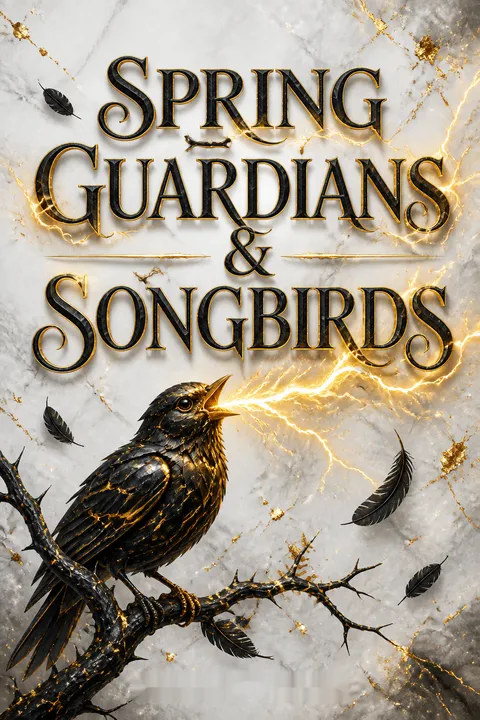
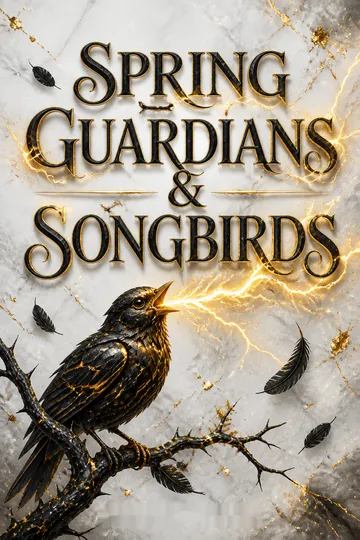
Spring Guardians & Songbirds receives mostly positive reviews, praised for its complex characters, intricate plot, and emotional depth. Readers appreciate the development of side characters and the balance between romance and fantasy elements. The book is noted for its improvements over the first installment, with intense action and plot twists. Some criticize the pacing and world-building as confusing. The main characters, Snowlin and Kilian, evoke strong reactions, with their relationship and individual arcs central to the story. The cliffhanger ending leaves readers eager for the next book.
People Also Read

Characters
Snowlin Skygard
The storm-forged queenSnowlin is a princess raised under Silas Krigborn’s10 brutality and later becomes queen of hidden Olympia. She is sharp, strategic, and often funny in ways that disguise how little she trusts comfort. Her early survival strategy is to turn pain into control: she punishes enemies, hides grief, and treats affection as a weakness others can exploit. Yet she repeatedly protects children, friends, and civilians, even when she refuses to call that kindness. Her conflict is not simply whether she will become powerful, but whether she can choose what power is for. The skies and lightning answer her emotions, making self-command a practical as well as psychological necessity.
Kilian Castemont
The devoted Night KingKilian is Adriata’s Obscur king, a man whose mastery of darkness is matched by his fear of what it can do. He first becomes attached to Snowlin1 as a child and carries that devotion into adulthood, but his willingness to disguise himself and conceal the past makes his love difficult for her to trust. He is protective, observant, and capable of terrible violence, yet he often tries to restrain himself around Snowlin1 because he knows his power can trigger her fear. His central tension is between wanting to save her and respecting her choices. He is a ruler accustomed to responsibility, but Snowlin1 forces him to confront the difference between care and control.
Malik Castemont
The death-commanding brotherMalik is Kilian’s2 younger brother, an Empath who can raise the dead and read emotional currents. He hides grief and exhaustion behind jokes, flirtation, and conspicuous drinking, while his military role makes him responsible for the lives of others. His bond with Kilian2 is deeply loyal but complicated by their father’s abuse and the burden Malik carries for decisions made while he was young. He becomes Snowlin’s1 partner in the search for her siblings, treating her both as family and as someone whose judgment he can challenge. His growing closeness to Thora5 unsettles his usual defenses and draws him toward a kind of trust he has rarely risked.
Nia Drava
The queen's trusted spyNia is Snowlin’s1 closest friend and a skilled infiltrator who has spent years gathering intelligence across kingdoms. She is perceptive and capable, but her history of abuse makes trust a hard-won choice rather than a natural assumption. Her loyalty to Snowlin1 does not prevent her from forming attachments elsewhere, especially with Moriko13. Nia often helps translate the emotional truths that Snowlin1 refuses to name, though she is not merely a guide to her friend’s feelings. Her own conflict centers on separating the family that harmed her from the family she has chosen. She is strategic, protective, and more resilient than the fear she carries.
Thora Skygard
The returning younger sisterThora is Snowlin’s1 younger sister, held apart from her family for years and shaped by captivity, fear, and an instinct to make herself small. She is direct, curious, and more observant than people expect. Heights and unwanted touch unsettle her, while books and careful conversation give her safer ways to approach the world. Her bond with Snowlin1 mixes relief, affection, and the difficulty of meeting a sister who has changed while they were separated. Thora’s relationship with Malik3 begins through secrets and mutual recognition rather than easy flirtation. She brings a different kind of courage to the family: the willingness to admit fear without allowing it to define every choice.
Eren Skygard
The lost elder brotherEren is Snowlin1 and Thora’s5 older brother, raised to inherit Isjord and separated from his sisters during the attack that shattered their family. He is thoughtful and protective, with a complicated relationship to his magic and to the decisions made during their childhood. Eren’s instinct is often to mediate, but he can also be firm when his sisters’ anger threatens to consume them. He sees Snowlin1 as both the little sister he once protected and the queen who has built a kingdom without him. His presence forces all three siblings to compare memories that were formed in different kinds of danger, without pretending that reunion restores the years they lost.
Alaric Drava
Snowlin's steadfast guardianAlaric raised Snowlin1, Nia4, and others in the aftermath of the family’s destruction. He is a battle-scarred leader whose affection usually appears through practical care, blunt correction, and an insistence that Snowlin1 remain accountable to her people. He understands that her violence was learned, but he does not pretend it is harmless. His loyalty is profound, though his secrecy about Snowlin’s1 ancestry becomes a source of personal hurt. Alaric embodies a difficult form of care: he offers protection and guidance, yet his protective silence sometimes denies Snowlin1 the truth she needs to understand herself. He is both a father figure and a political authority whose choices have consequences.
Caiden, called Cai
Snowlin's oldest friendCai is Snowlin’s1 closest male friend and an Olympian general who has guarded Myrdur for much of his life. He carries the grief of a ruined city and the knowledge of what happened to his people, but he often hides pain behind dry humor and a refusal to be fussed over. His loyalty to Snowlin1 is enduring, though he does not simply agree with her. He calls her back from isolation and challenges the way she uses violence to manage distress. Cai’s relationship with Eren6 grows from mutual respect and attraction, giving him a future beyond the ruined streets he has spent years protecting.
Visha Delcour
The guarded Dark CrafterVisha is a powerful Dark Crafter, Snowlin’s1 ally, and a reluctant heir within the Delcour witching line. Quiet, observant, and easily irritated, she approaches magic as both knowledge and risk. Her visions guide her actions, but she rarely explains them fully because she fears changing the future she sees. Visha is loyal to Snowlin1 while remaining entangled in her mother’s12 choices and the fate her family has assigned her. Her precision with seals, tracking spells, and protective craft makes her indispensable, yet she is not comfortable being treated as a tool. Her story concerns the tension between inherited duty and the right to choose whether to accept it.
Silas Krigborn
The conquering Winter KingSilas is Snowlin’s1 father and the ruler of Isjord, a strategist who treats family, religion, and war as instruments of rule. He trains children through cruelty and measures people by their usefulness to his ambitions. His public effort to restore faith conceals a desire to acquire divine power and remake the balance between realms. Silas is dangerous not simply because he commands armies, but because he understands how fear and belief can be organized into political force. He can display affection when it serves his purposes, which makes his tenderness difficult to distinguish from manipulation. His relationship with Snowlin1 is shaped by the damage he inflicted and the power he still hopes to command through her.
Melanthe Delcour
The ambitious witchMelanthe is a Delcour witch with a gift for summoning and an appetite for influence. Her alliance with Silas10 gives her access to the war he is preparing, while her magic helps track the scattered sceptre pieces and strengthen the forces around him. She is proud and difficult to intimidate, but her choices are tied to love, family, and the future she hopes to secure. Snowlin1 recognizes in her a dangerous blend of personal loyalty and political ambition. Melanthe’s connection to Visha9 and Urinthia12 turns the conflict into a family dispute within the coven as well as a struggle over the realm.
Urinthia Delcour
The embattled Grand MaidenUrinthia leads Red Coven and is Visha’s9 mother. A political thinker who values the safety of her coven, she has learned to survive by bargaining with powerful people rather than confronting them directly. Her choices can be difficult to distinguish from betrayal, particularly when the safety of her family is at stake. Urinthia’s history with Silas10 and the Delcour line places her between private love and public responsibility. She is neither a simple ally nor a simple enemy, but a ruler attempting to keep a threatened community intact while other powers close in.
Moriko
The Autumn QueenMoriko rules Hanai and becomes an ally in the struggle over the sceptre. She is controlled, politically astute, and slow to trust, preferring practical cooperation to declarations of sentiment. Her love for Nia4 reveals a gentler private self, though she remains protective and sometimes unsure how to express care without controlling the situation. Moriko’s knowledge of the Ater battles and her willingness to share Hanai’s resources make her important to the coalition. She acts as a counterweight to Snowlin’s1 impulsiveness, reminding the group that rulers must think beyond personal revenge.
Oryn
The banished Ybris scholarOryn is an old Ybris who has spent centuries in the Danics, where the dangerous magic once meant to imprison him became a kind of home. He studies the history of Ybrises and the methods used to hide the sceptre pieces. His isolation has made him cautious, but not indifferent to others who have been punished for what they are. Oryn helps Snowlin1 and Kilian2 understand the old safeguards and the danger of her seal. He is also a reminder that survival outside society can become its own form of belonging, even when it began as exile.
Cori
Kvan's young leaderCori becomes leader of Kvan while still young, carrying authority with a mixture of confidence, curiosity, and vulnerability. She trusts Snowlin1 and wants to help defend Olympia, even when the adults around her try to keep her away from danger. Her quick intelligence and candid presence make her more than a symbol of youth. Cori represents a community trying to rebuild while its children are drawn into a war they did not create. Her bond with her guardian and her friendship with Snowlin1 show the tenderness that can exist inside a kingdom organized around survival.
Demir, also known as Vas
The immortal beast's human faceDemir enters Isjord’s court as a young general whose origins and heartbeat do not fit the stories he tells. He is controlled, charming when useful, and fascinated by Snowlin’s1 intelligence. His connection to Silas’s10 hunt for the sceptre makes him a danger concealed in human company. As Vas, he carries a much older history involving Aurora and the unblessed lands. He is driven by grief and a desire to overturn the fate imposed on him, but his methods turn that longing into a threat to everyone around him.
Driada
Kilian and Malik's motherDriada is the mother17 of Kilian2 and Malik3, a gentle and increasingly fragile woman who is treated with deep loyalty by both sons. Her friendship with Snowlin’s mother1 connects the two families across the political divide. Driada’s warmth offers Snowlin1 a glimpse of the motherly care she missed, though Snowlin1 often resists receiving it. Her memory and health make family bonds feel vulnerable rather than secure. She serves as a quiet counterpoint to the violent rulers around her, showing how tenderness can persist without power.
Penelope
The irrepressible young CrafterPenelope, often called Pen, is a young red-haired woman who works closely with Snowlin1 and begins training as a Crafter. She is outspoken, funny, and unusually willing to challenge the queen when others retreat. Her growing connection to the Delcour family gives her new possibilities and obligations. Penelope also notices details others miss, including the ways Snowlin’s1 distress affects her body. Beneath her jokes is a strong desire to be useful and included, especially in a household where danger and secrecy often leave little room for ordinary youth.
Calandra
Guardian of CaelumCalandra guards the gates of Caelum and serves Nubil. She is composed and formal, accustomed to being treated as a divine authority. Her meeting with Snowlin1 brings the ancient history of the Elding bloodline into the present and forces the gods’ own account of events to face Snowlin’s1 anger.
Macaria
The violet witchMacaria is an elder witch connected to Red Coven and the Delcour line. She can foresee possible outcomes and is willing to make severe choices in the name of family and survival. Her decisions are shaped by the cost of losing her daughter and by a belief that secrets can preserve lives. Snowlin1 distrusts her for the role she plays in the larger plot, but Macaria also carries knowledge that no one else can offer.
Plot Devices
The Octa Virga
The divided divine weaponThe Octa Virga is a sceptre holding Aurora, a white-flamed guardian whose power can affect the balance of realms. Elder Crafters split it into pieces and hid them behind layered protections, including veils, creatures, and Ybrises. Silas10 hunts the pieces to command the guardian, while Snowlin1 and her allies try to secure enough of them to prevent his plan. The sceptre’s history connects divine power to love, punishment, and human ambition. It is not simply a weapon: whoever controls it can turn an old act of containment into a new catastrophe.
The bargain marks
Oaths made visibleWhen Snowlin1 and Kilian2 make a bargain, black bands appear on their hands and enforce the terms they have accepted. The marks make private promises physically consequential, restricting what each can do and punishing attempts to break the agreement. They also provide a recurring image of how the pair use contracts to avoid speaking plainly about love, fear, or trust. Other bargains in the story carry similar weight, binding rulers and allies to duties that may become painful. The device turns language into a force that can be seen, tested, and eventually released.
Snowlin's seal
A gate on her powerA Crafter’s seal on Snowlin’s1 back channels much of her immense magic away, keeping her from being overwhelmed by it. She can draw on only part of that power, and pushing past the seal risks physical pain, loss of control, and danger to those around her. The seal helps explain why her magic remained undetected and why her abilities do not behave like ordinary elemental powers. It also gives the plot a concrete measure of her struggle with self-command: each opening makes her more powerful, but leaves her less certain she can stop herself.
The zgahna
Olympia's living borderThe zgahna is a vast magical mist that conceals Olympia and protects its people from outsiders. It reacts to magic, memory, and the presence of those who approach, making it both a political barrier and an active force in the story. Snowlin1 can command parts of it, while Crafters search for ways to weaken or cross it. The mist hides an entire kingdom, but it cannot keep the past outside forever. As enemy forces learn to approach it and the land itself begins to change, the boundary that once guaranteed safety becomes a source of uncertainty.
Anima accissor
Steel that kills the divineAnima accissor is a rare weapon made from materials gathered across kingdoms and realms. Unlike ordinary steel, it can damage beings whose magic would otherwise let them regenerate, including the unnatural beasts Silas10 deploys. The weapon’s history connects human metalworking to divine conflict, and its components become essential when the allies realize that strength and ordinary magic are not enough. Snowlin’s1 sword carries this property, though the meaning of its construction is revealed only gradually. The weapon offers a possible answer to Silas’s10 monsters, but securing enough material and finding a capable smith remain major obstacles.
The Auran Chronicles Series


About the Author
Other books by Wendy Heiss

Download PDF
Download EPUB
.epub digital book format is ideal for reading ebooks on phones, tablets, and e-readers.








