

Plot Summary
Prologue
For five years, Cerys has endured a bone prison, its walls covered in drawings she once mistook for masks. When her young daughter, Rohesia, visits, Cerys recognizes her green eyes and reaches toward her, only to see the gold circlet marking Roh as an isruhe, a despised outcast.
Cerys’s old hope curdles into fury. She tells Roh that every cyren wears a mask, while knowing that the drawings on her walls conceal a truth her daughter is not yet ready to hear.
The prologue makes motherhood both the story’s wound and its first mystery. Cerys’s love for Roh is immediate, but the circlet transforms that love into anger at the world that has shaped her daughter. The drawings become a record of a mind others call broken, yet the prologue hints that Cerys’s apparent madness may preserve knowledge the prison cannot erase. Her warning about masks also establishes the novel’s central problem of perception: Roh has inherited a history in which nearly every identity, allegiance, and official story conceals something beneath it.
The Road Beyond Saddoriel
Roh leaves the underground cyren territory of Saddoriel with a crown of bones, a map, and seven moons to claim three birthstones that will secure her right to rule. She chooses the human musician Odi, her estranged friend Harlyn, and Jaktaren warriors Yrsa and Finn as companions, but their journey begins in argument.
Finn resents taking orders from a former bone cleaner, while Harlyn still feels betrayed by Roh. Odi reminds her that his freedom remains unfulfilled, even as Roh insists she needs him on the quest. The group’s route leads from a barren shore toward the gilded plains, where Roh hopes to find someone her imprisoned mother mentioned. She secretly carries a sea-drake egg taken during an earlier trial.
Roh’s new authority arrives before she has earned anyone’s trust. She has won the right to pursue the crown, but that victory does not erase the lie that fractured her friendship with Harlyn or the coercion that keeps Odi beside her. Her companions turn leadership into a daily negotiation rather than a title she can simply claim. The concealed egg sharpens this contradiction: Roh asks others for loyalty while withholding the most dangerous fact about their journey. The open landscape offers freedom from Saddoriel’s confines, yet the company carries its old hierarchies and injuries with them.
The Prison Dagger
After the company climbs the broken path beside the Five Daughters waterfalls, Yrsa spots a gold shape following them offshore, a sign that the creature Roh fears has not given up its pursuit. On the plains, armed humans ambush the travelers. Their talismans block the Jaktaren’s deathsongs, and chemical gags weaken the captives’ magic.
The attackers search the packs and find a quartz dagger, not the egg Roh fears they will discover. Their leader, Deodan, interrogates Roh about the weapon, then orders the group released and fed. The dagger belonged to a dead water warlock outside Cerys’s cell, but Roh cannot explain how it came to be in her belongings. Deodan recognizes its significance and asks why a songless cyren carries it.
The ambush reverses the company’s assumptions about power. The Jaktaren are trained hunters, yet their songs cannot overcome talismans, and their captors possess an unfamiliar magic that the cyrens were taught had vanished. Roh’s fear for the hidden egg shows how secrecy has become a survival tactic, but the dagger reveals that not every concealed object is hers by choice. The prison’s dead warlocks, previously part of Saddoriel’s scenery, suddenly exert force beyond its walls. Deodan’s questions make history an active danger, and Roh’s lack of knowledge leaves her unable to distinguish a clue from a trap.
Wings in the Dirt
Deodan identifies Cerys’s repeated carvings as wings, not masks, and explains that the design once served as a sign of trust between cyrens and water warlocks. He reveals that his people survived the Scouring of Lochloria by changing, and offers to guide Roh’s company toward Akoris. His knowledge unsettles Roh, especially when he recognizes her childhood lullaby as an old enchantment.
Before they leave, Yrsa discovers Roh’s sea-drake egg and realizes it explains the creature shadowing them. She keeps the secret, fascinated by the rare ancestor of her own vipers. Roh accepts Deodan’s escort, although Finn objects, and the group sets out on horseback with a guide whose motives remain uncertain.
The wing sign turns Cerys’s compulsive wall carvings into a message that outlived the relationship they once represented. Deodan offers a route forward, but his help also exposes how much of Roh’s education has been built on omissions. Even the lullaby she associated with childhood has a political and magical history. Meanwhile, Yrsa’s decision to protect the egg creates the first deliberate bond of confidence between Roh and one of her companions. That trust is narrow and conditional, but it gives Roh a glimpse of the loyalty she claims to deserve rather than merely demands.
Panthers at Dusk
As Deodan leads the group across the plains, a pride of giant teerah panthers scatters their horses. One panther slashes Harlyn’s arm, and Roh binds the wound while Deodan uses his stored magic to drive the animals away in a towering waterspout. With the horses and supplies scattered, Harlyn’s fever worsens overnight.
Deodan takes her to hidden healers in a cave while Roh, Odi, Finn, and Yrsa follow through an enchanted waterfall passage that bars the Jaktaren. The healers close the wound but cannot promise Harlyn will regain full use of her arm. The group rides hard toward Akoris. At its gates, the Arch General Adriel greets Roh wearing the Mercy’s Topaz, the first birthstone she must obtain.
The panther attack makes Roh’s decisions costly in a way arguments cannot soften. Harlyn’s injury forces Roh to care for the friend she has hurt, without knowing whether the care will be enough to repair their bond. Deodan’s healing network also reveals that his influence reaches beyond a human settlement, though he keeps its larger purpose concealed. The journey’s arrival at Akoris offers relief, then immediately replaces physical danger with political dependency: the stone Roh needs rests on Adriel’s chest. Her quest has reached its first destination, but not a place where she controls the terms.
Akoris After Dark
Adriel delays Roh’s request for the topaz, ordering five days of prayer before he will decide how she may earn it. At the first communal meal, healer Incana warns Roh that the soup contains a drug that loosens inhibitions. Roh avoids it, but her companions eat and become disoriented, so she leads Odi and Finn back to their quarters while Deodan retrieves Harlyn and Yrsa.
The next morning, Roh spares them the shame of hearing what they said while drugged. Incana later signals her allegiance to Deodan by drawing half a wing in spilled salt, and Roh completes it. She now has an ally inside Adriel’s monastery, but the nightly drugging continues to make the Akorians easier to control.
Akoris presents coercion as communal devotion. Its citizens gather willingly, yet drugs shape their speech and behavior while religious authority supplies the appearance of consent. Roh’s first response is practical: she avoids the soup, protects her companions, and conceals their vulnerability afterward. Incana’s secret signal shows that resistance must also operate inside the rituals themselves. The episode challenges Roh to notice not only obvious cruelty but the quieter systems that make people governable. Her restraint matters here: she chooses not to exploit her companions’ drugged confessions, refusing to imitate the Arch General’s method of turning private weakness into power.
Bones in the Arena
When Adriel forbids guests from entering a set of lilac doors, Roh and Finn later slip inside and solve a mechanism that opens onto Akoris’s vast library. Roh searches its volumes for the laws and history she was denied in Saddoriel. She discovers that Adriel’s family has held the Arch General’s office for generations, while the books on the tournament Delja once won are missing.
Soon afterward, Adriel stages the execution of a human accused of distributing protective talismans. Ten Akorian singers use a death chorus to reduce him to bones. Roh recognizes the horror behind the bone structures of her own home and vomits. She begins to understand that becoming queen means confronting what cyren society has taught her to accept.
Roh’s library search and the execution belong to the same education: one exposes the history that has been withheld, the other makes its human cost impossible to ignore. The inherited office and missing tournament records suggest that power controls not only people but the archive through which people understand power. The death chorus then breaks the abstraction of cyren history. Roh has handled bones as ordinary materials, but seeing a living human destroyed forces her to connect her work, her home, and her people’s violence. Her nausea is not weakness; it is the first bodily refusal of a moral inheritance she had previously treated as normal.
The Topaz’s Price
After five days of prayer, Adriel summons Roh to his private oratory and implies that she can obtain the topaz by sleeping with him. He kisses her without consent and threatens to make the quest harder if she refuses. Roh slashes his face and chest with her talons, then leaves without the birthstone. She knows the attack gives Adriel a reason to retaliate, but she refuses to trade her body for political progress.
Her companions back her, including Harlyn, whose friendship with Roh is only beginning to mend. Adriel announces the Rite of Strothos as the test for the gem. Roh does not know what the rite entails, but accepts because leaving Akoris without the stone would endanger her claim and consume the time she needs for the remaining two.
Adriel’s proposal reduces the political bargain to its bodily reality: he expects Roh’s ambition to make her available to him. Her refusal protects her autonomy, but the resulting violence gives him new leverage over her quest. The scene also tests whether her companions understand the difference between strategic compromise and coerced submission. Their support helps Roh resist the instinct to blame herself for the consequences of Adriel’s actions. The Rite becomes a weaponized consequence of her refusal, yet accepting it is still her choice. The distinction matters: Roh cannot control the system, but she can decide what she will not surrender to it.
The Hollow’s Vines
Adriel sends Roh into a temple pool poisoned with Strothos, a drug that suppresses her water magic and floods her mind with visions. Vines seize her underwater while she relives fears of losing her friends, becoming like Cerys, and never knowing her own history. The quartz dagger cuts through the vines, and Roh uses it to reach the Mercy’s Topaz.
She surfaces with the stone set in her crown, but her hair has been cut short in the struggle. Once away from the worshippers, she washes herself in the sea and tells her companions the truth about the egg. Harlyn returns her embrace. Roh has won the stone, but the visions leave her shaken and newly aware that the rite’s effects may not have ended.
The rite makes Roh’s inner life the terrain of a political trial. The visions combine genuine memories with manufactured fears, so survival depends on distinguishing what has happened from what she dreads. The dagger, previously a historical puzzle, becomes a practical means of escape, while cutting her hair marks a rejection of the identity the vines try to impose. Her victory is therefore not simply retrieval of a gemstone. By confessing the egg’s existence afterward, she also stops using secrecy as her sole defense. Harlyn’s returned embrace offers no instant absolution, but it gives their fragile relationship a chance to continue.
A Song on the Dunes
Still recovering from the rite, Roh learns from the bone-cleaner apprentice Jesmond that the Council of Seven Elders is coming to Akoris and that someone has challenged her. Before the council arrives, Roh retreats to the dunes with Harlyn and Jesmond. There, she sings several clear notes for the first time, and a small lilac flower grows from the sand.
The moment offers a glimpse of the deathsong she has feared she may never find, though Roh cannot yet explain what happened. Deodan then sends word that Delja and the council are approaching. The challenge will be announced at a formal feast, where Roh must face a contender before she can continue toward the other birthstones.
The first notes arrive not in a temple or under a judge’s eye, but in a private moment of rest beside Harlyn. That setting separates Roh’s emerging magic from the death chorus she witnessed and feared. The flower offers a small, ambiguous sign of life rather than the spectacle of destruction she associates with cyren power. Yet the challenge notice interrupts this discovery before Roh can understand it. Her progress is real but incomplete, and the timing forces her to carry a new possibility into another test of public legitimacy.
Orson Takes the Crown’s Test
At the feast, Adriel names Orson, Roh’s closest friend from the bone-cleaning workshop, as her challenger. Roh had hoped to repair their friendship, but Orson’s cold expression makes clear that Roh’s earlier betrayal still governs their relationship.
After the announcement, Roh meets her mentor Ames, who admits he hid the quartz dagger in Roh’s pack to draw Deodan’s attention and help her survive. Ames refuses to explain everything, though he reveals that Cerys once competed in the same tournament as Delja.
Roh now understands that the challenge is not only a contest for the crown: the winner returns to Saddoriel, while the loser is banished. Orson’s choice forces Roh to confront the possibility that winning may cost her the friend she wanted to recover.
Orson’s challenge turns Roh’s private guilt into a public contest with material consequences. The friendship has already been damaged by Roh’s deception; now the rules make reconciliation inseparable from the possibility of defeating Orson. Ames’s confession compounds the problem by revealing that trusted adults have managed Roh’s life through concealment, even when they believe they are protecting her. His partial explanations deepen rather than resolve her uncertainty. Roh must enter the challenge without the comfort of complete knowledge, and without pretending that a victory can restore the past unchanged.
Warlocks Beneath Akoris
Following Deodan through Akoris, Roh and Finn discover a concealed gathering of warrior warlocks planning to exploit coming terror tempests and attack cyren territories. Their leader is Deodan’s mother, the Warlock Supreme, who wants to reclaim what her people lost. Deodan interrupts her plan by putting Roh’s fate to a vote: the clan can seize the topaz and begin rebellion, or let Roh face her challenge.
The vote narrowly favors releasing Roh and Finn. Outside, Roh condemns Deodan for risking their lives to force the decision. He admits he wanted to test his clan’s willingness to choose a future without bloodshed. The challenge is now hours away, and Roh knows a larger war may follow whichever side wins.
Deodan’s revelation makes his earlier assistance look less like uncomplicated kindness and more like a calculated political experiment. He forces his clan to declare whether revenge or a possible alliance matters more, but Roh and Finn bear the immediate risk without consenting to that test. The vote gives Deodan evidence of support for restraint, not proof that the warlock threat has disappeared. Roh’s anger is therefore justified even though the outcome frees them. The scene complicates the idea of trust: a person may pursue a less violent future while still using others as instruments to reach it.
The Death Riddle
At sundown, Roh and Orson face three riddles before the Council of Seven Elders and the people of Akoris. Pythons coil around Roh during the first question, but she identifies bones as the answer. Drugged incense disrupts her concentration during the second, which Orson wins by answering charcoal. For the final riddle, Roh studies three bowls and recognizes poison in one.
She pours it into the bowl holding a fish, killing it, and answers death. The judges declare her the winner. Orson must leave all cyren territories, and her mother’s desperate grief makes the cost immediate. Roh does not pursue her, restrained by Ames and Harlyn, and watches Orson enter the passage that carries her into exile.
The contest rewards more than cleverness: it puts bodily threat, chemical impairment, and personal history into the same arena. Roh’s answer about bones draws on the work that once defined her as lowborn, while her final answer depends on noticing a concrete clue rather than submitting to abstract wordplay. Yet the victory cannot be clean. Orson’s banishment gives Roh the crown’s next step at the cost of a friendship and a family’s presence. Restraint becomes another test of authority: Roh cannot undo the ruling, but she must decide whether to make matters worse by defying it.
The Irons Name
After the challenge, Delja tells Roh that she and Cerys entered the ancient Dawning together and won as friends. Cerys then sought sole rule, used her deathsong to kill members of the council, and attacked Delja and her brother Marlow before Delja stopped her. Ames later reveals that Cerys’s family name was Irons and that Eadric, the dead warlock whose dagger Roh carries, was her father.
He explains that Cerys grew up among warlocks in Lochloria. The Council leaves Akoris through a hidden portal, while Zokez cuts Roh’s arm and Finn punches him for it. Roh tells Delja that warlocks are preparing terror tempests, but Ames dismisses the warning. She decides to leave Akoris before anyone can stop her.
The revelations reframe Roh’s identity without simplifying it. Cerys was not born a legendary monster; she was Delja’s close friend before ambition and violence divided them. Roh’s family name and warlock parentage give her a history, but not the certainty she wants, since both Ames and Delja still withhold parts of the past. The hidden portal also shows that the council possesses mobility denied to Roh during her quest. Her choice to depart rather than wait for permission marks a change from seeking recognition within existing rules to taking responsibility for what she has learned.
The Egg Hatches
Roh leaves Akoris with Harlyn, Odi, Yrsa, Finn, and the sea-drake egg. She has Adriel’s fields of drug plants burned, weakening his hold over the Akorians, and Deodan catches up with the company, asking to join them and warning that the warlocks may attack when the terror tempests return. Roh agrees to honor the debt she owes him for saving Harlyn, though she remains wary of his motives.
By the Endon River, the egg has gone cold and Roh believes the drakeling is dead. Grief breaks through her restraint, and she sings a full, unmistakable deathsong. As the melody ends, the shell cracks and a hatchling with golden eyes emerges, giving Roh both a new power and a new responsibility.
The ending ties Roh’s emerging magic to grief rather than ambition. She does not sing to impress a council or complete a test; she sings because she believes she has failed a living creature she chose to protect. The hatchling’s arrival answers that grief with possibility, not certainty: Roh now has a rare animal to care for, while the threat of war remains unresolved. Her decision to let Deodan return is similarly provisional. She keeps her word without pretending trust has been restored. The story closes on an earned beginning, as Roh becomes more capable of acting without knowing exactly what her choices will cost.
Analysis
The novel treats political legitimacy as something more demanding than winning a contest. Roh has secured the right to pursue the throne, but each territory tests whether she can recognize the people and histories that cyren power has excluded. In Akoris, she sees how ritual can disguise coercion: drugs make citizens compliant, religious language gives authority a sacred face, and the death chorus turns a human being into the raw material of a public spectacle. Roh’s physical revulsion marks a break with the habits that made such violence seem ordinary.
Her most persistent conflict is between care and control. She wants to protect Odi, Harlyn, and the others, yet repeatedly makes decisions for them and conceals the risks she has created. The egg concentrates this contradiction. Roh takes it impulsively, hides it, and fears what its discovery will cost, but her attachment to it becomes a responsibility she cannot delegate. Her companions’ trust grows not because she becomes flawless, but because she begins to disclose what she has hidden and accept the consequences of her choices.
The history of Cerys and Delja shows how friendship can be damaged when intimacy becomes entangled with power. Their shared victory did not prevent ambition from turning one friend against the other, and Roh’s own conflict with Orson echoes that history without simply repeating it. Roh wins the challenge, but the banishment of Orson makes victory morally incomplete. The book refuses to equate winning with repairing harm.
Finally, the novel reframes magic as a relation to the world rather than a weapon alone. Roh’s first full deathsong comes from grieving the egg she believes she has lost, not from a desire to dominate. That song does not settle her claim or prevent the coming threat. It gives her a new capacity and leaves the consequences of using it to her. Her emerging queenship is therefore defined less by inherited purity than by whether she can hear people her society taught her to ignore.
Review Summary
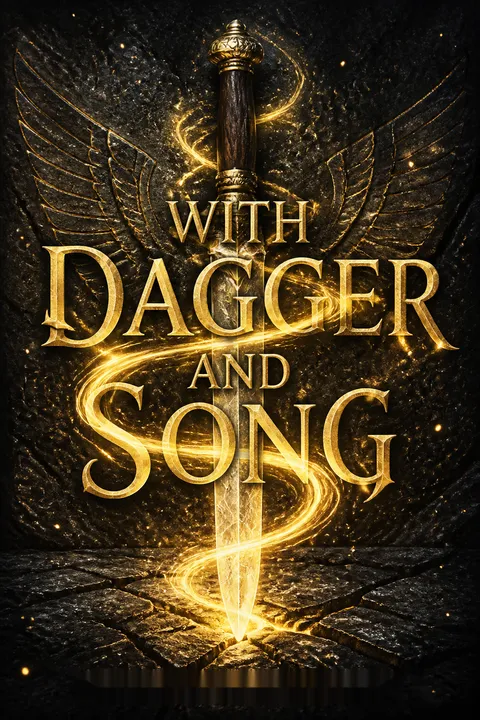
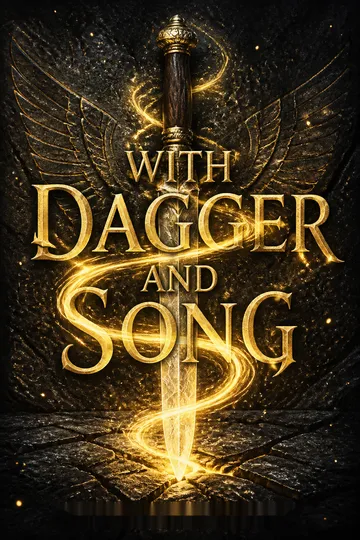
With Dagger and Song continues Roh's journey as she faces new challenges to claim her crown. Readers praise the character development, intricate world-building, and unexpected plot twists. Many found it even better than the first book, with engaging relationships and high stakes. The story explores themes of betrayal, forgiveness, and self-discovery. While some felt the pacing slow at times, most were captivated by the immersive writing and eagerly anticipate the next installment. Overall, it's a highly recommended fantasy adventure with complex characters and a richly detailed world.
People Also Read



Characters
Rohesia
The bone-cleaner heirRohesia, usually called Roh, is a seventeen-year-old cyren raised among the bone cleaners of Saddoriel. She is a gifted artist and practical problem-solver, but years of being treated as lesser have taught her to hide vulnerability behind stubbornness and secrecy. Her ambition to rule is partly a desire to escape the station assigned to her, and partly a belief that she can change the laws that have harmed her and those around her. Roh is loyal, though her habit of making unilateral choices strains that loyalty. Her journey presses her to distinguish authority from control, and to ask whether the traditions she inherited deserve her allegiance.
Cerys
The imprisoned motherCerys is Roh’s mother, held for centuries in Saddoriel’s bone prison and widely known by the fearsome title Elder Slayer. Her cell walls are crowded with repeated drawings that Roh cannot initially interpret, while Cerys’s visits with her daughter are clouded by long isolation and an unstable mind. Beneath that disorientation is a fierce attachment to Roh and a history entangled with the founding powers of cyren society. Cerys’s story raises difficult questions about what imprisonment does to a person, what history chooses to remember, and whether a parent’s love can survive the damage caused by secrecy.
Harlyn
Roh’s wounded sister-friendHarlyn is Roh’s longtime friend and fellow bone cleaner, a sharp-tongued cyren who loves playing the lute despite the law against learning human instruments. Her anger at Roh’s betrayal comes from the importance she places on loyalty and the history they built with Orson. Harlyn is brave, impulsive, and more emotionally perceptive than her sarcasm suggests. She can defend Odi and care for Roh even while furious with them, but forgiveness does not come easily or without boundaries. Her music and injured arm make visible how much identity can depend on a beloved skill, and how recovery may require patience rather than willpower alone.
Odi
The hunted human musicianOdi is a human pianist and composer from the Isle of Dusan, trapped among cyrens after his musical talent made him a target. Chronic pain in his hands threatens the art that gives him purpose, while the fate of his stepbrothers remains a constant worry. Odi is observant and compassionate, but his patience has limits: he challenges Roh when she treats his freedom as secondary to her quest. His perspective exposes the violence that cyren society normalizes, and his music offers a form of power that does not depend on magic or weapons. He wants safety, autonomy, and the chance to return to a life that still feels like his own.
Finn Haertel
The hostile Jaktaren heirFinn is a highborn Jaktaren, a skilled warrior trained to track, fight, and protect cyren interests. He begins the journey convinced that Roh’s lowborn status makes her unfit to command him, and his contempt often hardens into open hostility. His loyalty to the warrior guild and its ledger shapes his view of humans, even as experience complicates those inherited beliefs. Finn is proud, disciplined, and guarded about his family, but his fear of enclosed spaces reveals a vulnerability his martial competence cannot erase. He expects leadership to be earned through capability, and gradually has to confront the possibility that his own prejudices have made him a poor judge of it.
Yrsa Ward
The skilled Jaktaren slingerYrsa is a Jaktaren warrior whose sling, fieldcraft, and steady judgment make her one of the company’s most capable travelers. She is separated from her partner, Piri, when she joins Roh’s quest, but treats her duty as binding even when the journey becomes dangerous. Yrsa has a special interest in unusual creatures and brings both practical expertise and curiosity to the group. Her calm presence helps keep arguments from becoming fractures, though she is not simply neutral: she can defend Roh, challenge Finn, and protect her own secrets. She offers Roh support without pretending that trust is automatic.
Deodan
The plains chieftainDeodan is a battle-ready chieftain who commands the human settlement in the gilded plains and wields unfamiliar water magic. He can heal, fight, and guide travelers through dangerous country, but he rarely explains his intentions before acting. His concern for human life distinguishes him from many cyrens, while his political loyalties remain complicated by his people’s history and their desire for justice. Deodan believes a different future may be possible without repeating past atrocities, yet his willingness to gamble with Roh’s safety makes his principles difficult to trust. He is generous with practical help and guarded with personal truth.
Delja
The former cyren queenDelja is the former queen of Saddoriel, a winged descendant of the goddesses whose authority still carries weight in other cyren territories. She is poised and politically perceptive, but years of rule have left her tired and marked by choices she cannot undo. Her history with Cerys gives her a personal understanding of how intimate loyalty can become entangled with power. Delja wants Roh to become a different kind of ruler, though her offers of guidance are limited by what she believes she can safely reveal. She represents both the prestige of inherited authority and its capacity to leave old wounds unresolved.
Orson
The estranged childhood friendOrson grew up with Roh and Harlyn in the bone-cleaning workshop, where she was often the steady, reassuring member of their trio. She is attentive to other people’s feelings and has long served as a source of emotional security for her friends. That role does not make her passive: Orson has her own pride, resentments, and ambitions, which Roh and Harlyn may not fully understand. Her relationship with Roh is shaped by a betrayal that strikes at the trust on which their shared childhood rested. Orson’s presence forces Roh to reckon with the harm she caused rather than treating friendship as something automatically recoverable.
Ames
The cryptic mentorAmes trained Roh, Harlyn, and Orson in the bone-cleaning workshop and has often acted as Roh’s mentor and guardian. He knows far more about cyren history than he is willing to share, offering warnings and partial truths instead of explanations. His protectiveness is real, but it can become controlling when he decides that secrecy is safer than letting Roh make informed choices. Ames values endurance and discipline, yet his methods leave Roh feeling managed rather than trusted. Their relationship contains affection, authority, and growing frustration.
Adriel
The controlling Arch GeneralAdriel rules Akoris as Arch General and wears the Mercy’s Topaz, the birthstone Roh needs for her claim. Immaculately dressed and practiced in public ceremony, he presents himself as a servant of the goddesses. His authority rests on managing access to the gem, directing religious rituals, and shaping what Akorians are allowed to know. Adriel is attentive to appearances and skilled at turning delay into leverage. His polished manner makes it difficult to separate genuine belief from political performance, while his power over the monastery ensures that Roh cannot treat him as a mere obstacle.
Incana
The dissenting healerIncana is an Akorian healer who treats Harlyn’s wound and understands the dangers of the drugs distributed through the monastery’s meals. She works within Adriel’s territory but does not share the glazed compliance of many around her. Incana is cautious about what she says and where she says it, using small gestures to communicate with people she trusts. Her medical knowledge gives Roh practical help, while her quiet resistance reveals that opposition to Adriel exists even among those who appear to serve his institutions.
Jesmond
The opportunistic apprenticeJesmond is a young bone-cleaner apprentice in Saddoriel, sharp-eyed and unusually well informed about rumors circulating through the lair. She is curious, ambitious, and quick to turn a dangerous situation into an opportunity for future influence. Her humor and self-confidence conceal a useful instinct for listening and gathering information. Jesmond admires Roh’s ascent but does not pretend to be selfless, and her presence reconnects the journey to the ordinary lives and political gossip left behind in Saddoriel.
The Warlock Supreme
The warlock clan leaderThe Warlock Supreme leads the hidden warrior-warlock clan based near Akoris and commands loyalty through a history of loss and adaptation. She believes her people were wronged and is prepared to use force to reclaim what they lost. Her conflict with Deodan is not simply about family authority: it reflects two competing responses to historical violence, revenge and negotiated change. She is stern, strategic, and unwilling to mistake restraint for justice.
Eadric
The lost warlock ancestorEadric is a figure in water-warlock history whose quartz dagger carries significance for his people. Stories of his actions survive among the clans, where he is remembered as one of their early warriors. The dagger’s path from his hand into the bone prison links distant history to Roh’s present journey.
Zokez Rasaat
The resentful highbornZokez is a highborn cyren who resents Roh’s rise and regards her lowborn origins as an insult to Saddoriel. He is proud of his family’s status and quick to turn political disagreement into personal contempt. His hostility reflects the entrenched class prejudice Roh must face among her own people.
Plot Devices
The three birthstones
A crown measured in trialsRoh must obtain three birthstones held in separate cyren territories to secure her claim to the throne. Each stone is connected to the crown of bones and to a different quality valued by cyrenkind. The Mercy’s Topaz, held by Akoris’s Arch General, guides its bearer when they are lost, but possession requires Roh to pass political and physical tests. The seven-moon limit keeps every delay consequential, while the search for the remaining stones pushes Roh into places where her assumptions about cyren rule are challenged. The quest turns succession into a journey through competing versions of history and authority.
The quartz dagger
A key carried as a clueThe quartz dagger appears to be an object from the bone prison, where it once rested in the hand of a dead water warlock. Its distinctive design matches the wing symbols Cerys carved into her cell, linking Roh’s family history to the surviving warlock clans. The dagger is not merely evidence of an old alliance: it can open a hidden entrance connected to the mirror pools and serves Roh during the Rite of Strothos. Its presence in Roh’s pack is arranged by Ames, who hopes it will lead her to Deodan. The weapon makes a concealed history physically useful while raising questions about how much Roh’s protectors have decided on her behalf.
The sea-drake egg
A secret with a pulseRoh steals a sea-drake egg during an earlier trial and carries it through the plains without telling her companions. Its presence explains why a powerful creature shadows the group, and its discovery draws Yrsa into a secret alliance with Roh. The egg also exposes the difference between taking responsibility for a living thing and merely possessing it: Roh has no knowledge of how to care for a drakeling, yet its survival becomes emotionally important to her. When the shell grows cold, Roh’s grief breaks through the restraint that has kept her deathsong dormant. The egg’s fate turns a concealed burden into the trigger for a new beginning.
Strothos vines
A trial that enters the mindThe rare vines used in the Rite of Strothos produce a drug that suppresses cyren magic and overwhelms the user with visions. Adriel uses the substance in the temple pool to make Roh face fears and memories while the vines physically restrain her underwater. Later, the same drug appears in Akoris’s incense and contributes to Roh’s difficulty concentrating during the challenge. Its effects may persist beyond the ritual, leaving Roh uncertain whether her new sensations come from her own nature or from what she inhaled. The drug is both a tool of political coercion and a source of genuine psychological danger.
The mirror pools
Hidden routes through historyEach cyren territory has a mirror pool connected to the original Pool of Weeping in Saddoriel. The pools serve as sites for the First Cry ritual, but they can also act as portals for rulers and council members. A war beacon beside each pool can signal danger and open routes for armies. Roh learns about this system only after enduring a long and perilous journey that the council could have bypassed, revealing that access to knowledge and movement is politically unequal. The pools also give Deodan access to powerful water magic, tying the warlocks’ historical role to the infrastructure cyren rulers still use.
Curse of the Cyren Queen Series
About the Author
Other books by Helen Scheuerer




Download PDF
Download EPUB
.epub digital book format is ideal for reading ebooks on phones, tablets, and e-readers.








