


Plot Summary
Prologue
Aboard Blaine the Mono, the sentient train demands riddles and threatens to kill its passengers if they cannot satisfy it. Roland1 refuses to be hurried, then offers a bargain: the ka-tet will pose riddles as they race toward Topeka, and Blaine must spare them if even one stumps it.
The machine accepts, hungry for a contest it has not experienced in centuries. As Roland1 begins, he turns to the past that made him a gunslinger, a lover, and a leader whose choices will decide whether his friends survive the journey.
The riddle contest makes survival depend on more than knowledge. Blaine can retrieve facts instantly, but Roland hopes its intelligence has become a trap: the machine's need to be challenged may expose a weakness that raw computation cannot repair. Roland's calm bargaining also reveals how he leads. He does not offer comfort or pretend the odds are good; he creates a rule the ka-tet can act within. The frame gives his history urgency, since every memory is being told while the train races toward a lethal endpoint.
Exiled Before the War
At fourteen, Roland1 catches his mother22 Gabrielle22 with Marten,20 his father's21 adviser, and is maneuvered into an early trial of manhood. He defeats his teacher23 Cort23 by using his hawk, David, rather than the weapon expected of him, but the victory cannot keep him safe in Gilead. His father,21 Steven Deschain,21 reveals that Marten20 has already marked him for death and sends him east with Cuthbert Allgood3 and Alain Johns.4
Under false names, the boys are to count Mejis's supplies for the Affiliation, while their fathers hope distance will protect them from the approaching war against John Farson.19 Roland1 leaves with guns, orders, and no real understanding of the danger waiting in the quiet Barony.
Roland's first victory is also his first lesson in the limits of victory. He earns his weapons through ingenuity, yet the adult world immediately turns that achievement into a reason to hide him. His father's decision is protective, but it also treats a child as a political asset whose safety depends on obedience and concealment. Roland enters Mejis already divided between the discipline of a gunslinger and the unfinished needs of a boy. That division will make both his love and his judgment vulnerable.
The Glass on Coos Hill
Susan Delgado,2 a sixteen-year-old horseman's daughter, is sent by her aunt12 Cordelia12 to Rhea of the Coos,11 a feared witch, to be examined for Mayor13 Hart Thorin's13 proposed arrangement. The bargain promises Susan's2 family the return of land and horses in exchange for her bearing Thorin13 a child.
Rhea11 humiliates her with an invasive examination, declares her honest, and grants a delay until the Reaping Fair before Thorin13 may claim her. Hidden in Rhea's11 hut is a glass sphere that glows pink and shows distant scenes. After Susan2 leaves, Rhea11 uses a silver charm to plant a command in her mind: once she loses her virginity, she must cut off all her hair.
Susan's bargain is presented as practical, but its terms expose how economic insecurity can make consent difficult to separate from coercion. She agrees because the land belonged to her family and because her aunt invokes the dead father's memory. Rhea's examination turns that pressure into bodily humiliation, then gives Susan a temporary reprieve that seems like mercy. The hidden command reveals a different kind of power: Rhea does not need to own Susan's choices if she can place instructions inside them. The sphere makes private vulnerability available to someone watching from afar.
A Kiss on the Great Road
Returning alone from Rhea's11 hut, Susan2 meets Roland,1 travelling under the name Will Dearborn.1 He walks her toward Hambry, listens as she explains the coming arrangement with Thorin,13 and warns her that the town's new guards, Eldred Jonas,10 Clay Reynolds,17 and Roy Depape,18 seem dangerous. Susan2 tells him to pretend they have never met if they encounter each other in public.
At the edge of town, she kisses him before sending him away. The next evening, the boys attend a welcome dinner at Mayor's House, where Roland1 learns that Susan2 is to become Thorin's13 gilly. Jealousy turns his earlier tenderness into a cutting judgment, and Susan2 leaves the encounter hurt and angry.
The first kiss establishes a bond before either young person has the maturity or freedom to manage it. Susan sees Roland as a courteous stranger, then as a possible escape from a future she has accepted for material reasons. Roland's alias lets him approach her, but it also makes intimacy depend on concealment from the start. At the dinner, his jealousy distorts his perception of her bargain: instead of seeing the pressures that shaped it, he judges the visible choice. His error matters because it makes love a source of shame before it becomes a source of courage.
Guns in the Travellers' Rest
At the Travellers' Rest, Sheemie,9 the inn's kind but simple-minded worker, spills a bucket of drink over Depape.18 The gunman demands that Sheemie9 lick his boots, and the saloon falls silent as the boy kneels. Cuthbert3 interrupts with his slingshot, shoots Depape's18 hand, and holds him at bay even after Reynolds17 gets behind him with a gun.
Alain4 puts a knife to Reynolds's17 throat, while Roland1 arrives behind Jonas10 and forces the leader to lower his weapon. Sheriff Herk Avery makes both groups exchange apologies rather than start a feud. Jonas10 outwardly accepts the settlement, but the boys' unexpected skill convinces him to investigate who they really are.
The saloon confrontation turns the boys' reputation into a weapon before they understand the cost of being noticed. Cuthbert's humor draws attention, but his accurate shot and Alain's restraint keep Sheemie alive. Their actions also expose the difference between official authority and actual power: Avery can impose a temporary truce, while Jonas decides whether to honor it. The rescue binds the boys to Sheemie and makes their hidden training visible. From this point, their cover is not simply a disguise; it is a fragile performance that Jonas is motivated to test.
The Drop Has Too Many Horses
The boys begin their census among Hambry's fishermen, then turn to the ranches and the Drop. Susan2 meets Roland1 in secret and helps him see what the ranchers' false reports conceal: far more horses are grazing than the Affiliation has been told. Her father, Pat Delgado, had kept records of the stock, and Susan's2 memories of his work make the lie impossible to dismiss.
Roland1 also learns that Pat's final ledger pages have been torn out. The discrepancy suggests that Hambry's powerful landowners are hiding supplies rather than merely protecting their property. Susan2 now sees that the strange friendliness shown to the boys is part of a wider deception, and that her father's death may not have been an accident.
The horse count gives the romance a political consequence. Susan's knowledge is not incidental local color; it corrects the false numbers that Roland's official mission was designed to collect. Her father's missing records turn grief into evidence, but not proof, leaving her caught between loyalty to people she has known all her life and the possibility that they betrayed him. The secret becomes dangerous precisely because ordinary work reveals it. Counting, an apparently passive task, forces the young characters to decide whether seeing the truth obliges them to act.
Oil Beneath the Derrick
Susan2 guides Roland1 into Citgo, the abandoned oilpatch she once explored with her father. There they find oil still moving through an old pipeline, along with ox tracks and wheel ruts leading from the refinery ruins. Behind pine branches, they discover silver tankers fitted with new wooden wheels and filled with crude oil.
The barrels are intended for Farson's19 machinery, which the Affiliation believes cannot operate. Roland1 realizes the fuel may let Farson's19 forces revive those weapons and destroy the Affiliation's army. Susan2 identifies signs of Reynolds's17 boots near the hidden cargo, confirming the Big Coffin Hunters' role. Their discovery makes the lovers' secret investigation part of the war's central supply line.
The abandoned machinery is not merely a relic of a vanished civilization. The tankers show that the past can be made operational again when someone finds the missing resource. Roland's strategic insight depends on Susan's local knowledge, while her discovery of her father's trail connects the political conspiracy to personal loss. The threat is therefore both material and intimate: oil can power a war, and the men moving it may have helped remove the one person who could have exposed them. Their romance now carries intelligence that could affect an entire army.
Love Breaks the Contract
During a fitting at Mayor's House, Thorin13 corners Susan2 in a sewing room and gropes her, treating the arranged bargain as permission to take what he wants. She leaves shaken and furious, then rides to the willow grove where Roland1 finds her. This time, when she asks him to love her, he does, and they begin an affair that contradicts her promise to Thorin.13
Afterward, Rhea's11 planted command takes hold: Susan2 sleepwalks to a stream and tries to cut off her hair with a sharp stone. Roland1 wakes and stops her before she can injure herself seriously. His hypnosis reveals Rhea's11 influence but meets a wall of pink light where the witch's11 whispered instructions should be.
Susan's decision to be with Roland is not a simple rejection of duty. Thorin's assault reveals that the bargain has already become a system of access without care, while Roland offers a relationship she can choose for herself. Yet the choice does not make her free of consequence. Rhea's command reaches into Susan's unconscious and turns the body into contested territory. Roland can interrupt the act, but he cannot yet remove its source. Their love is both agency and exposure.
The Pink Spell Returns
Roland1 uses hypnosis to recover the scene Susan2 cannot remember: Rhea11 touched her hair beneath the Kissing Moon and ordered her to cut it after losing her virginity. Susan2 recalls seeing the pink glass in Rhea's11 hut, and Roland1 understands that the witch's11 knowledge comes from a powerful object, not ordinary gossip. Meanwhile, Rhea's11 letter reaches Cordelia,12 and the aunt's12 suspicions grow.
Jonas10 investigates the boys' quarters at the Bar K, urinates on their clothes, destroys their family pictures, kills their carrier pigeons, and leaves an obscene message. Cuthbert,3 furious at Roland's1 secrecy and romantic distraction, strikes him, then accepts Roland's1 apology when he sees how far their mission has been compromised.
The pink blank in Susan's memory is a concrete limit on what the lovers can know about their own experience. It shifts suspicion from human surveillance to a supernatural instrument, while Rhea's letter makes private conduct vulnerable to public leverage. Jonas's vandalism is not simply cruelty; it is an attempt to provoke the boys into revealing their weapons or abandoning caution. Cuthbert's punch briefly breaks the group's trust, but his willingness to listen repairs it. The ka-tet becomes stronger not because conflict disappears, but because Roland accepts correction.
A Ka-Tet Reformed
In a graveyard meeting, Susan2 apologizes to Cuthbert3 and Alain4 for disrupting their fellowship, and they welcome her as part of it. She helps them plan to destroy the hidden oil and draw Farson's19 men toward Eyebolt Canyon, where the thinny can trap them. Sheemie9 will carry firecrackers and messages, while Susan2 uses her access to prepare more explosives.
Roland1 admits their fathers sent them to Mejis mainly to get them out of danger, not to uncover a conspiracy. The group also realizes Rhea's11 glass can spy on Susan2 and that she may have learned the lovers' secret. Their plan now depends on secrecy, local knowledge, and trust between people who have different reasons to fear the coming Reaping.
The graveyard transforms Susan from the object around which the boys have argued into a participant in their decisions. Her welcome is practical as well as emotional: she knows the land, the people, and the routes their plan requires. The mission also changes shape. The boys were sent away to be protected, but they now choose to risk themselves because the threat reaches beyond their assigned duty. The ka-tet is not a family by blood or rank. It is a negotiated willingness to share danger and responsibility.
Reaping's Treason Trap
On the eve of Reaping, Jonas's10 men murder Mayor13 Thorin13 and Chancellor15 Rimer,15 then frame the three young gunslingers. At dawn, Sheriff Avery and rancher Fran Lengyll16 lead an armed party to the Bar K, where they surprise Roland,1 Cuthbert,3 and Alain4 before the boys can act. The men accuse them of treason and the murders, handcuff them, and take them toward Hambry.
Roland1 recognizes that Jonas10 has used the authorities and local loyalties to turn the townspeople against them. Though the charges are false, the sight of the posse makes resistance too dangerous. At Seafront, Jonas10 has also secured Susan,2 while the town prepares for a Reaping Day stripped of its usual festivities.
The accusation works because Jonas understands that political power is not only the ability to use violence, but the ability to make violence look lawful. The boys are captured under the banner of civic order, while the real conspirators control the evidence and the story. Reaping's cancellation sharpens the town's anger, leaving people hungry for a ritual explanation of their fear. The posse's betrayal also narrows the ka-tet's options: the boys cannot rely on the community they came to protect, and Susan must act without them.
Susan Takes the Sheriff's Gun
Susan2 wakes late at Seafront to news that Roland1 and his friends are accused of murder. Sheemie9 helps her reach the jail, where she enters disguised beneath an oversized serape and sombrero. When Deputy Dave tries to stop her, Susan2 shoots him; she then kills Sheriff Avery when he attacks her.
The violence horrifies her, especially because Dave had once been a decent boy she knew, but she takes the keys and frees Roland,1 Cuthbert,3 and Alain.4 The escape leaves the four of them and Sheemie9 fugitives, with no safe return to ordinary life. Susan's2 grief has become action, and the group rides out before the town can close around them.
Susan's rescue is a point of no return because it forces her to use violence in the name of the people she loves. She does not become comfortable with killing; she is shaken by the deaths, particularly Dave's, and understands that necessity does not erase moral cost. Sheemie matters because he trusts her judgment and helps her move through a world that has declared the prisoners guilty. The escape changes their status from investigators protected by a mission to fugitives whose survival depends on one another.
Citgo Goes Up
The ka-tet reaches the oilpatch and uses Sheemie's9 stolen firecrackers to ignite the leaking crude around Citgo's machinery. Explosions tear through the derricks, sending burning metal into the air and destroying the source of Farson's19 fuel. Roland,1 Cuthbert,3 and Alain4 then ride toward Hanging Rock, where Jonas's10 men are gathering the tankers for the westward journey.
The blast announces their attack and draws the enemy's attention, but it also creates the cover they need to strike. Susan2 and Sheemie9 are separated from the gunslingers during the pursuit. Behind them, the oilpatch becomes a towering fire, while ahead the three boys face a force many times their number.
The sabotage turns the enemy's hidden supply line into a weapon against itself. It is a tactical success, but not a clean victory: the explosions reveal the ka-tet's position and increase the urgency of every choice that follows. The plan depends on firecrackers, old fuel, and local knowledge rather than the formal military strength the boys lack. Their separation from Susan and Sheemie underscores the cost of action. Once the oil burns, there is no return to quiet investigation.
The Bonfire Takes Susan
While Roland's1 party fights toward Eyebolt Canyon, Rhea11 uses the wizard's glass to find Susan.2 She and Jonas's10 allies bring the captive girl back to Hambry, where Rhea11 and Cordelia12 persuade a frightened crowd that Susan2 helped murder the Mayor13 and betrayed the town. On Reaping Day, the townspeople paint Susan's2 hands red and bind her to the bonfire as the ritual's chosen victim.
Roland,1 still caught in the glass's vision, sees the crowd throw fuel around her and hears her final declaration of love. The light goes out of the sphere only after the fire has taken her. He has won the battle's opening, but the glass has made him witness the loss he could not prevent.
The bonfire reveals how communal ritual can be redirected into public violence. The townspeople's grief over the murdered Mayor and canceled fair gives Rhea a ready-made crowd, while Cordelia supplies the intimate accusation that makes Susan an acceptable target. Susan's death is not caused by a single villain alone; it is enabled by institutions, rumor, fear, and a crowd that wants its familiar festival restored through sacrifice. Roland's vision makes knowledge itself cruel: he sees the event clearly but cannot intervene.
Eyebolt Canyon's Last Door
At Hanging Rock, Roland,1 Cuthbert,3 and Alain4 ambush the gathered riders, killing Jonas,10 Depape,18 Lengyll,16 and other leaders before the scattered men can organize. Roland1 takes the wizard's glass, but its vision of Susan's2 execution overwhelms him. The surviving pursuers regroup and chase the three gunslingers toward Eyebolt Canyon.
There, Cuthbert3 and Alain4 set fire to the powder trail beneath the brush barricade, while the boys climb a narrow path above the canyon floor. Smoke and flame drive the soldiers forward into the thinny, the unstable boundary that consumes those who enter it. The three escape, carrying the glass and their grief, but the friends who left Mejis together are no longer emotionally the same.
The canyon plan converts a weakness in the landscape into a decisive defense, but the victory is morally and emotionally costly. The gunslingers survive by directing their pursuers into a force they cannot control or fully understand. Roland's possession of the glass brings victory and trauma together: the object that helps him defeat Farson's men also gives him an unobstructed view of Susan's death. His grief is not a pause in the quest. It becomes part of the burden he carries toward the Tower.
Blaine's Riddle Game
Back aboard Blaine the Mono, Roland's1 account ends as the train continues its suicidal run. Blaine solves the riddles from Roland's1 memory and Jake's7 book, then rejects Eddie's5 deliberately foolish jokes as unworthy. Eddie5 realizes that the machine's contempt for nonsense is its blind spot, and keeps forcing it to answer jokes it cannot process.
Blaine's systems begin to fail; Eddie5 fires Roland's1 revolver into the exposed circuitry, killing the train's controlling intelligence. Its engines die, and the Barony Coach coasts into a violent crash at Topeka. The ka-tet survives, though shaken and bruised, and climbs through an emergency exit into the daylight of a world that resembles Kansas but is not theirs.
Eddie wins by using the quality he once treated as a defense against humiliation: humor. Blaine's power rests on speed, recall, and a belief that every question has a proper answer. Eddie's jokes break that frame, forcing the machine to confront a kind of meaning it cannot rank or dismiss. The victory also revises Roland's judgment of Eddie. The gunslinger's apology after the crash acknowledges that intelligence can take forms his discipline has overlooked.
The Plague's Other Kansas
At the Topeka station, the travelers find two bodies and a newspaper dated June 1986. Jake7 reads that a superflu has killed millions, emptied hospitals, halted trains, and left the country to collapse. The report describes a Kansas unlike Eddie's5 New York or Jake's,7 and Roland1 concludes they have crossed through a thinny into another version of their world.
Outside, road signs confirm the place is Kansas, but the traffic is abandoned and the people are gone. The realization changes their aim: the Path of the Beam has vanished, and they must find it again before the same damage spreads across other worlds.
The newspaper transforms a familiar American landscape into evidence of parallel catastrophe. The disaster is both specific, dated, reported, and intimate, since Eddie and Jake recognize the world but not its history. Roland interprets the dead Kansas as a warning about the weakening Tower: the thinny is not merely a passage, but a symptom of reality losing its boundaries. The group must now navigate without the Beam's visible guidance, carrying the possibility that their own homes may be vulnerable.
Charlie Waits in Gage Park
The ka-tet crosses Gage Park, where the zoo's animals lie dead and the gardens have gone untended. In the rose garden, Jake7 discovers Charlie the Choo-Choo, the real little train from the children's book that frightened him before he was drawn into Roland's1 world. The sight confirms that objects and stories can cross between worlds, not just people.
The group also finds a modern wheelchair in the station parking lot, and Eddie5 helps Susannah6 leave behind the old, cumbersome chair she has used since losing her legs. Jake's7 discovery turns his private fear into shared evidence, while Susannah6 gains a practical measure of independence.
The living children's attraction and the dead zoo create a sharp contrast between play and catastrophe. Charlie's presence shows that a story can be a map of a real place, not merely an invention, which makes Jake's imagination an instrument of knowledge. The wheelchair changes the group's physical balance: Susannah can move with greater ease, but the gift arrives in a landscape where the systems that made it are gone. The park binds wonder to loss without allowing either to cancel the other.
The Rose and the Thinny
Walking east on Interstate 70, the group enters the shimmering thinny and crosses it in uneasy stretches, using bullets from Roland's1 old guns as makeshift earplugs against its sound. They camp among abandoned cars and see a vast glass palace rising ahead.
Eddie5 dreams of a bulldozer threatening the rose in a New York vacant lot, while Roland1 fears the rose may be connected to the Tower itself. At dawn they find the highway crowded with dead traffic and follow the road toward the palace. Their journey is no longer guided by the Beam, but the repeated images of roses, trains, and the Tower suggest the worlds remain linked.
The thinny makes travel a bodily ordeal, turning the collapse of reality into nausea, vibration, and disorientation. The rose dream gives that vast crisis a small, vulnerable focus: one living flower in a vacant lot may matter as much as an entire world. The glass palace ahead offers beauty without reassurance, echoing the danger of the Wizard's glass. The ka-tet's progress depends on trusting images they cannot yet interpret, while refusing to treat wonder as proof of safety.
The Wizard Behind the Curtain
At the Green Palace, the travelers find red shoes suited to each of them and a glass gate patterned after the colors of Maerlyn's Rainbow. When they click their heels together, the black central bar breaks and the gate opens. Inside, a huge throne and colored pillars surround a hidden control room where the wounded Tick-Tock Man has followed them.
A smiling sorcerer appears as the Wizard of Oz, but Roland1 recognizes him as the man in black20 who has pursued his quest. The sorcerer tries to frighten the ka-tet away from the Tower; they refuse and continue along the Beam, carrying the knowledge that this world's stories can disguise real threats.
The Oz imagery turns recognition into a test: the travelers must distinguish a reassuring performance from the power hidden behind it. The shoes offer a route forward, but the gate's central black bar and the damaged control room show that passage is never simple escape. The Wizard is not an answer to their journey; he is another manipulation laid across it. Their refusal matters because they now choose the Tower with a clearer sense of the stories and illusions that can divert them.
Analysis
Wizard and Glass uses a story inside a story to make memory an active danger. Roland1 recounts Mejis while Blaine races toward Topeka, so the past is never safely finished: every recalled choice is told under a deadline, with the machine's demand for riddles echoing the book's larger question about whether knowledge can protect anyone from consequence. The novel's strongest tension is between love and obligation. Roland's1 attachment to Susan2 is real and sustaining, but his failure is believing that private happiness can exist outside the political world that surrounds it. Susan's2 choices are likewise constrained by poverty, family pressure, and male entitlement, yet she repeatedly acts with more practical courage than the trained gunslingers expect. The town's Reaping ritual shows how communal grief can be redirected into scapegoating, while the thinny and the Wizard's glass make visible the breakdown of boundaries between worlds, memory, and desire. Eddie's5 defeat of Blaine is a counterpoint to Roland's1 history: humor, dismissed as foolishness, proves to be a form of intelligence the machine cannot absorb. By the end, the ka-tet survives, but survival is not restoration. Their shared path continues with grief and knowledge added to it, and Roland's1 pursuit of the Tower remains both a duty to the worlds and a danger to the people he loves.
Review Summary
Wizard and Glass, the fourth book in Stephen King's Dark Tower series, is a polarizing entry. It focuses on Roland's backstory, revealing his first love and the events that shaped him. Many readers appreciate the character development and world-building, while others find it slow-paced and detracting from the main quest. The book is praised for its vivid characterization, unsettling atmosphere, and exploration of destiny. Despite mixed opinions, it remains a crucial part of the series, providing insight into Roland's motivations and obsession with the Dark Tower.
People Also Read


Characters
Roland Deschain
The relentless young gunslingerRoland is the son of Steven Deschain21 and a newly tested gunslinger, sent east with Cuthbert3 and Alain4 to keep him away from political danger. He is disciplined, observant, and capable of great tenderness, though he often mistakes emotional control for sound judgment. His devotion to the Dark Tower gives his life direction, but his first love2 forces him to confront needs that do not fit neatly inside duty. He respects skill and loyalty more readily than wit, which can make him slow to recognize the value of other people's strengths. His central conflict is not whether he can love, but whether he can love without pretending that love exempts him from consequence.
Susan Delgado
The horseman's daughterSusan is a capable rider, Pat Delgado's daughter, and Cordelia's12 niece. Her family has lost legal claim to its land and horses, leaving her vulnerable to a bargain arranged with Mayor13 Thorin13. She is practical and proud, but not untouched by longing; she wants a life she can choose rather than one assigned by money, kinship, and custom. Her attraction to Roland1 grows alongside her suspicion of Hambry's powerful men. Susan's courage is not fearlessness. She often recognizes danger before she knows how to escape it, and her loyalty to her father remains a moral measure even when the people around her use his memory to control her.
Cuthbert Allgood
The laughing marksmanCuthbert is Roland's1 oldest friend, an observant gunslinger's apprentice with a gift for the slingshot and a habit of turning fear into jokes. His humor can irritate the solemn Roland1, but it also helps him read social situations and act under pressure. He is loyal to the ka-tet and protective of those who are bullied, yet he can become jealous when Roland's1 choices threaten their shared purpose. Cuthbert's intelligence often arrives sideways, through improvisation rather than formal analysis. He wants to be taken seriously without surrendering the playfulness that makes him useful, and his friendship with Roland1 is strong enough to survive painful disagreement.
Alain Johns
The quiet touch-readerAlain is the steady, broad-shouldered third member of Roland's1 original trio. He is less verbally agile than Cuthbert3 and less commanding than Roland1, but his patience and sensitivity make him an essential reader of people and danger. Alain's touch gives him access to impressions others miss, though it is neither infallible nor under perfect control. He tends to mediate rather than dominate, and he often sees the emotional cost of a conflict before his friends acknowledge it. His loyalty is not passive: when Roland's1 judgment falters, Alain speaks plainly, even when the truth is painful.
Eddie Dean
The joke-sharp gunslingerEddie is a New Yorker drawn into Roland's1 quest, a former addict whose quick wit can conceal both shame and intelligence. He loves Susannah6 fiercely and often uses humor to keep fear from controlling a room. His jokes are not merely decoration: they let him notice patterns that more solemn minds dismiss. Eddie can be impulsive and defensive, especially when he feels underestimated, but his courage grows through responsibility to the ka-tet. He learns to trust Roland1 without surrendering his right to challenge him, and he becomes increasingly willing to use his mind as deliberately as Roland1 uses a gun.
Susannah Dean
The resilient second voiceSusannah is Eddie's5 partner and a resourceful member of the ka-tet, carrying the history of both Odetta Holmes and Detta Walker within her identity. She is politically alert, emotionally perceptive, and capable of meeting Roland's1 authority with humor or resistance. Her mobility has been shaped by the loss of her lower legs, but she refuses to let others reduce her to that loss. Susannah's affection for the group is fierce and practical: she protects, questions, and steadies them. She understands that survival requires both strength and the ability to read what people are not saying.
Jake Chambers
The observant boy from New YorkJake is an eleven-year-old New Yorker whose intelligence appears in close observation, quick memory, and an instinct for the meaning of objects. He is younger than the others but often sees what adults overlook, from flaws in a machine's behavior to the significance of a children's book. His bond with Roland1 is filial without being simple; he admires the gunslinger while remaining capable of questioning him. Jake is frightened by the dangers of Mid-World, yet curiosity keeps him moving. He turns books, riddles, and details from home into practical tools for the ka-tet.
Oy
The loyal billy-bumblerOy is Jake's7 small, intelligent companion, a billy-bumbler with a limited but expressive vocabulary. His attachment to Jake7 is immediate and enduring, and he often senses danger before the humans do. Oy is more than a mascot: his presence changes how the ka-tet cares for one another, especially Jake7, and his courage repeatedly becomes consequential. He responds to affection, fear, and humor with a clarity that exposes the emotional state of the people around him. His simple loyalty offers the group a form of companionship untouched by rank or strategy.
Sheemie Ruiz
The underestimated helperSheemie works at the Travellers' Rest, where others mistake his cognitive limitations for a lack of judgment. He is cheerful, generous, and unusually good at keeping confidences, though he cannot reliably deceive people. His friendship with Cuthbert3, Alain4, and Roland1 begins when they protect him from Depape18. Sheemie responds to kindness with fierce loyalty, and he is often more perceptive about trust than those who consider themselves clever. His eagerness to help grows from gratitude, but also from a genuine desire to belong.
Eldred Jonas
The exiled coffin-hunterJonas leads the Big Coffin Hunters and serves the interests of John Farson19 in Mejis. He is experienced, patient, and skilled at reading weakness, but beneath his theatrical manner lies the bitterness of a man who was sent west after failing to become a gunslinger. He prefers calculated pressure to open violence, using local officials and social fears to shape events. Jonas is proud of his survival and suspicious of anything that threatens his control. His resentment toward the gunslinger's tradition makes Roland's1 presence personal as well as political.
Rhea of the Coos
The spiteful hill witchRhea is an isolated, aging witch who lives on Coos Hill with a malformed cat and a snake. She delights in gossip, humiliation, and glimpses of other people's private failures. Her appetite for control disguises itself as wisdom and practical counsel, especially when young women are brought to her for judgment. Rhea is both cunning and deeply vulnerable to resentment; she interprets resistance as an insult that must be punished. Her knowledge of magic and human weakness makes her dangerous, but her vanity and obsession can distort her sense of what she controls.
Cordelia Delgado
Susan's anxious auntCordelia raised Susan2 after Pat Delgado's death and fears that she and her niece2 will lose their home and security. She is practical, socially watchful, and strongly motivated by money and status, though she can mistake those motives for family duty. Cordelia uses her brother's memory to persuade Susan2 to accept Thorin's13 arrangement, then struggles to control the consequences of that choice. Her need to preserve her position makes her susceptible to powerful people and to stories that confirm her fears.
Hart Thorin
The aging MayorThorin is the Mayor of Hambry, a vain and politically malleable man nearing the end of his authority. He enjoys public attention and the appearance of power, but depends heavily on Chancellor15 Rimer15 and others to manage the Barony's affairs. His interest in Susan2 reflects entitlement more than affection. Thorin is not a master strategist; he is a man whose appetites and insecurities make him useful to people with stronger plans.
Olive Thorin
The lonely Mayor's wifeOlive is Thorin's13 long-suffering wife, a warm and observant woman whose public courtesy conceals deep loneliness. She has spent years watching her husband13 turn toward younger women while she maintains the dignity expected of a Mayor's wife. Olive notices more than the men around her assume, and her instincts about danger are sharpened by knowing how power operates inside her own household. Her kindness is not weakness; she can make decisions under pressure when the people she cares about are at risk.
Kimba Rimer
The Chancellor of ledgersRimer is Hambry's Chancellor and Minister of Inventory, a thin, ambitious official who tracks the Barony's resources and manages its political arrangements. He prizes the trappings of authority and believes himself more sophisticated than the people around him. His polished manner hides a calculating nature. Rimer is central to the town's uneasy alliance with Farson19, though he prefers to exercise influence through other people rather than expose himself directly.
Fran Lengyll
The ranchers' spokesmanLengyll owns the Rocking B and leads the Horsemen's Association. He presents himself as a loyal supporter of the Affiliation and a practical benefactor to the young counters. His place in Hambry gives him access to livestock, landowners, and public opinion. Lengyll's blunt rancher's manner can make him seem trustworthy, but he is adept at using his standing to direct other people's choices.
Clay Reynolds
The cloaked gunmanReynolds is one of Jonas's10 oldest associates, a quiet gunman who wears a cloak and thinks more carefully than Depape18. He is dangerous because he can wait, observe, and follow orders without the need to perform for a crowd. His loyalty to Jonas10 is tempered by caution, and he recognizes when a situation has become more dangerous than expected. Reynolds's disciplined exterior hides a practical concern for his own survival.
Roy Depape
The red-haired enforcerDepape is the most impulsive of Jonas's10 three men, quick with a gun and eager to humiliate anyone he sees as weak. He prizes sexual conquest and public dominance, which makes him easy to provoke and hard to trust. His cruelty toward Sheemie9 shows how he uses power when he believes there will be no consequence. Depape's speed makes him dangerous, but his appetite for attention often leaves openings for people more disciplined than he is.
John Farson
The rebel called Good ManFarson is a revolutionary leader whose movement threatens the Affiliation and its old order. He speaks in the language of equality and change, but his forces are associated with violence and the recovery of dangerous technology. He remains distant from the action in Mejis, which makes him more rumor than ordinary presence. To Roland1 and his father21, he represents a political threat whose reach extends beyond the battlefield.
The Man in Black
The hidden sorcerous powerThe Man in Black is an elusive figure connected to Farson's19 cause and to Roland's1 larger pursuit. He uses shifting appearances, theatrical humor, and supernatural knowledge to unsettle those around him. His interest in the conflict at Mejis is not limited to its political outcome. He treats people as pieces in a longer game, yet his confidence can make him underestimate the choices they are willing to make.
Steven Deschain
Roland's gunslinger fatherSteven is a seasoned gunslinger and the father of Roland1. He is protective, perceptive, and willing to send his son1 away from the center of danger, even when that choice is painful. Steven understands more about the political collapse than he can fully explain to a fourteen-year-old. He passes on both practical caution and the weight of inherited responsibility. His relationship with Roland1 is shaped by love, discipline, and the knowledge that neither can guarantee the other's safety.
Gabrielle Deschain
Roland's troubled motherGabrielle is Roland's1 mother, a woman caught between her marriage, her son1, and the influence of Marten20. Roland's1 memories of her combine tenderness with shame and uncertainty. Her quiet distress leaves a lasting mark on how he reads love, betrayal, and forgiveness.
Cort
The uncompromising trainerCort is the brutal, exacting instructor who trains young gunslingers, including Roland1, Cuthbert3, and Alain4. He values discipline, alertness, and the ability to act under pressure, and he does not indulge excuses. His teaching shapes the boys long after they leave his training yard.
Plot Devices
Maerlyn's Rainbow
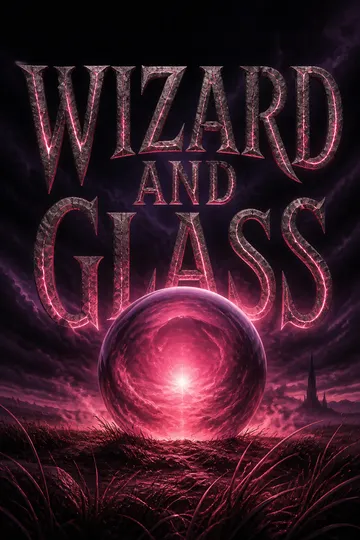
A window that corruptsThe Wizard's glass is a magical sphere that can reveal distant people and places, sometimes with more detail than its viewer can bear. Rhea11 uses it to watch private lives, and its pink glow is tied to a hidden command that blocks Susan's2 memory. Jonas's10 interest in the sphere connects the local conspiracy to Farson's19 larger ambitions. The glass can also draw Roland1 into visions that overwhelm his ability to act in the present. Its power is not neutral: it shows what its user wants, magnifies obsession, and exacts a cost from those who keep looking.
The Thinny
A wound between worldsA thinny is a place where the boundaries of existence have worn almost through. It makes a grinding, warbling sound that can distort thought, weaken the body, and lure people toward it. The thinny in Eyebolt Canyon is known to swallow animals and is dangerous to anyone who approaches its shimmering surface. Roland's1 group turns that danger into a defense against Farson's19 pursuing force, while the later Kansas thinny becomes a passage into a different version of the travelers' world. It embodies both a route between worlds and the damage caused by the failing Tower.
The Game of Castles
A model of hidden warCastles is a strategy game in which armies approach through cover, and a player who moves too soon can expose a vulnerable flank. Roland1 uses it to explain the standoff between the Affiliation's young counters and Jonas's10 conspirators. Both sides hide what they know, watch for the other to break cover, and prepare to strike when the moment is right. The game helps the boys understand why Jonas10 delays open conflict and why their own patience matters. It also becomes a metaphor for their emotional life: love, suspicion, and loyalty can all push a person into the open before it is safe.
The Beam and the Tower
A road through failing worldsThe Path of the Beam is a route of cosmic force that leads toward the Dark Tower, the structure Roland1 believes holds the worlds together. The ka-tet's journey depends on finding and following this path, but the Beam is difficult to see and can be interrupted by thinnies. Roland's1 story of Mejis shows that his pursuit of the Tower began as an inherited obsession and became bound to personal loss. The Beam gives the series a physical direction while raising a larger question: whether duty to the whole world can justify the sacrifices demanded of individual lives.
Big-Bangers
Small sparks, vast destructionBig-bangers are crude fireworks that produce powerful explosions when their fuses are lit. Sheemie9 obtains them for Susan2, who hides them in graf barrels before they are delivered to the boys. Roland's1 group uses the explosives to ignite oil leaking through Citgo and to begin the destruction of Farson's19 hidden fuel supply. The devices are simple and unreliable compared with the old machinery they help destroy, but their availability lets the young characters act without an army or sophisticated weapons. Their small scale makes the resulting fire feel both accidental and carefully earned.
FAQ
Synopsis & Basic Details
What is Wizard and Glass about?
- A Quest Interrupted by Memory: Wizard and Glass is the fourth book in Stephen King's Dark Tower series, primarily serving as a lengthy flashback within the larger narrative. It follows Roland Deschain and his ka-tet (Eddie Dean, Susannah Dean, and Jake Chambers) immediately after their escape from Blaine the Mono.
- A Journey Through the Past: Trapped on a runaway monorail, Roland proposes a riddle contest to save their lives. The bulk of the book unfolds as Roland tells his companions the story of his youth in the Barony of Mejis, his first love with Susan Delgado, and the tragic events that shaped him into the last gunslinger.
- Confronting Personal History: The narrative explores themes of love, loss, betrayal, and the harsh realities of Roland's world as he recounts his experiences with political intrigue, a powerful wizard, and the sacrifices he made on his path to the Dark Tower.
Why should I read Wizard and Glass?
- Deepens Roland's Character: The novel provides essential backstory for Roland Deschain, revealing the origins of his relentless quest and the profound personal losses that drive him. Understanding his youth in Mejis is crucial to appreciating his later actions and motivations.
- Expands the World of the Dark Tower: Readers gain a rich understanding of Mid-World before it "moved on," exploring its culture, politics, and the subtle decay already setting in. The contrast between the vibrant past and the desolate present enhances the series' scope.
- A Standalone Epic Within the Series: While part of a larger saga, the Mejis flashback functions as a compelling, self-contained epic romance and tragedy, showcasing King's storytelling prowess beyond the immediate quest narrative.
What is the background of Wizard and Glass?
- Mid-World's Decline: The story is set in Mid-World, a dimension parallel to our own, experiencing a slow, entropic decay. This decline is evident in crumbling infrastructure, mutated creatures, and the fading of old ways and technologies, providing a backdrop of pervasive melancholy and impending doom.
- Political Intrigue in Mejis: The Barony of Mejis, though seemingly a peaceful backwater, is embroiled in a conspiracy involving local leaders (Mayor Thorin, Chancellor Rimer, the Horsemen's Association) who are secretly aligning with John Farson, the "Good Man," an enemy of the Affiliation Roland serves.
- The Shadow of the Dark Tower: While not physically present in the flashback, the Dark Tower is the ultimate goal that looms over Roland's life, influencing his choices and ultimately demanding immense sacrifice, even in his youth.
What are the most memorable quotes in Wizard and Glass?
- "Go, then—there are other worlds than these.": This iconic line, first spoken by Jake in The Gunslinger and repeated here, serves as a powerful reminder of the vast multiverse and the interconnectedness of King's fictional worlds, underscoring the potential for passage and peril between them.
- "Charyou tree.": An Old People's phrase meaning "Come, Reap," this term becomes a chilling motif associated with harvest, death, and the dark, ancient rituals of Mid-World, particularly during the tragic events of Reaping Day in Mejis.
- "Bird and bear and hare and fish.": This seemingly simple phrase, part of a children's rhyme and later a hypnotic trigger, symbolizes the fundamental elements or guardians of the world's Beams, representing a deeper, often unseen, order or power that influences events.
What writing style, narrative choices, and literary techniques does Stephen King use?
- Frame Narrative Structure: The primary technique is a frame story, where the present-day ka-tet's journey on Blaine the Mono provides the context for Roland's extensive flashback to his youth in Mejis, creating layers of time and perspective.
- Evocative World-Building: King employs rich, sensory descriptions to bring Mid-World to life, blending elements of a Western, fantasy, and post-apocalyptic setting, using archaic language ("ka," "ka-tet," "sai") and unique slang ("cullies," "stuffies," "thinny") to create a distinct cultural texture.
- Psychological Depth and Symbolism: The narrative delves deeply into the characters' internal states, particularly Roland's, using dreams, premonitions (Alain's touch), and symbolic objects (the glass ball, the red shoes) to explore themes of fate, love, loss, and the nature of reality itself.
Hidden Details & Subtle Connections
What are some minor details that add significant meaning?
- The "Oy Daily Buzz" Newspaper: This seemingly nonsensical newspaper found in the glass palace sentry-box contains fragmented phrases like "Blaine is a pain," "charyou tree," and "baked turkey cooked goose," directly referencing events and jokes from the ka-tet's recent past, suggesting the palace is a manifestation of their shared experiences and subconscious.
- The Takuro Spirit Car: Among the familiar American car models in the Topeka train station parking lot, Eddie spots a "Takuro Spirit," a make and model unknown in his world. This subtle detail confirms that this version of Topeka is not their specific reality, reinforcing the idea of parallel worlds and the thinness of reality.
- The Red Shoes' Appearance: The sudden appearance of the red shoes on the highway, perfectly sized for each member of the ka-tet (including Oy), is presented without explanation, highlighting the direct intervention of unseen forces (implied to be related to the Wizard of Oz narrative) guiding their path and providing the means to enter the glass palace.
What are some subtle foreshadowing and callbacks?
- The Thinny's Sound as a Saw: Jake's description of the thinny's sound reminding him of a street musician playing a saw subtly connects the decay of Mid-World to elements from the characters' home world, hinting at the interdimensional nature of the breakdown and the thinness between realities.
- Roland's Mother's Belt: The belt woven by Roland's mother, intended as a peace offering but becoming a bloodstained symbol of tragedy, is a callback to the complex, often destructive, nature of family relationships and gifts in Roland's past, foreshadowing the painful revelations about his mother's fate.
- The Wizard's Gate Bars: The description of the glass gate bars containing tiny, living creatures resembling fish, birds, horses, etc., directly foreshadows the nature of the Wizard's Glass and its ability to capture or reflect aspects of the world, linking the gate to the magical object Roland seeks.
What are some unexpected character connections?
- Sheemie's Connection to the Ka-tet: Sheemie, the simple-minded boy from Hambry, develops a deep, almost intuitive connection with Roland's ka-tet, particularly Cuthbert and Susan. His ability to sense their needs, risk his life for them, and even seemingly know their plans (like Susan's escape or their need for the firecrackers) suggests a bond that transcends ordinary friendship, perhaps tied to his unique nature or sensitivity in Mid-World.
- Cordelia Delgado and Eldred Jonas: The brief, unsettling flirtation between Susan's aunt Cordelia and the ruthless regulator Eldred Jonas is an unexpected connection that highlights the moral decay in Hambry's upper class and Cordelia's desperation, adding a layer of personal betrayal to the larger political conspiracy.
- Olive Thorin's Unexpected Aid: The Mayor's seemingly meek wife, Olive, provides crucial assistance to Susan's escape, revealing a hidden strength and resentment towards her husband's actions. Her connection to Susan, born of shared pain and humiliation, is a surprising alliance against the men who have wronged them both.
Who are the most significant supporting characters?
- Susan Delgado: As Roland's first love, Susan is arguably the most significant supporting character, driving the emotional core of the flashback and profoundly impacting Roland's development. Her courage, tragic fate, and connection to the conspiracy make her central to the story.
- Eldred Jonas: The leader of the Big Coffin Hunters, Jonas serves as the primary antagonist of the Mejis flashback. His cunning, ruthlessness, and past as a failed gunslinger make him a formidable foe, representing the dark side of Mid-World's decline and the dangers Roland faces.
- Rhea of Coos: The witch of the Coos is a key figure in the Mejis plot, possessing the Wizard's Glass and manipulating events through dark magic and hypnosis. Her obsession with the glass and her cruelty towards Susan make her a potent symbol of the corrupting influence of power.
Psychological, Emotional, & Relational Analysis
What are some unspoken motivations of the characters?
- Roland's Need for Absolution: Beyond the stated quest for the Tower, Roland's relentless drive is fueled by an unspoken need for absolution for the deaths he has caused, particularly his mother's. His telling of the Mejis story is a form of confession, seeking understanding and perhaps forgiveness from his new ka-tet.
- Jonas's Desire for Validation: Eldred Jonas, a failed gunslinger exiled from Gilead, is driven by a deep-seated need for validation and power. His willingness to align with Farson and orchestrate the downfall of the Affiliation's representatives in Mejis stems from his bitterness and desire to prove his worth after his past failures.
- Cordelia's Fear of Poverty: Cordelia Delgado's seemingly cruel actions towards Susan are largely motivated by a desperate fear of poverty and social decline after her brother's death. Her focus on securing financial gain through Susan's arrangement with Thorin overrides her familial affection, highlighting the harsh economic realities of their world.
What psychological complexities do the characters exhibit?
- Roland's Emotional Compartmentalization: Roland exhibits a complex psychological state marked by emotional compartmentalization. He can be deeply loving (with Susan, his ka-tet) yet ruthlessly focused on his quest, often suppressing or delaying processing trauma, leading to moments of intense emotional breakdown when these compartments fail.
- Susan's Blend of Innocence and Strength: Susan displays a compelling mix of youthful innocence and surprising inner strength. Despite being manipulated and facing horrific circumstances, she maintains a core of resilience and moral clarity, capable of both deep love and decisive action (like killing Avery and escaping).
- Rhea's Obsessional Madness: Rhea's psychological state deteriorates into pure obsession driven by the Wizard's Glass. Her descent into madness is marked by paranoia, cruelty, and a complete loss of self, illustrating the destructive power of the artifact and the fragility of her own mind.
What are the major emotional turning points?
- Roland and Susan's First Kiss: Their unexpected kiss on the road back from the Coos is a pivotal emotional turning point, igniting a passionate connection that challenges Susan's predetermined fate and introduces a powerful, complicating force into Roland's life and mission.
- The Revelation of Susan's Arrangement: Roland's discovery of Susan's role as Thorin's gilly is a devastating emotional blow, shattering his idealized view of her and forcing him to confront the harsh realities of her world and the sacrifices she has made, leading to his initial coldness towards her.
- Roland's Accidental Matricide: The climax of Roland's flashback, where he mistakenly kills his mother, is the most traumatic emotional turning point, leaving him with profound guilt and shaping his identity as a haunted, solitary figure driven by penance for this ultimate sin.
How do relationship dynamics evolve?
- The Ka-tet's Deepening Bond: The shared experience of hearing Roland's painful story and facing the illusions in the glass palace strengthens the bond between Roland, Eddie, Susannah, and Jake, transforming them from companions on a quest into a true ka-tet, bound by shared trauma and understanding.
- Roland and Susan's Tragic Love: Their relationship evolves from a chance encounter into a passionate, forbidden love affair. Despite the external pressures and their predetermined paths, they find solace and connection in each other, only for their love to end tragically, leaving a lasting impact on Roland.
- Cuthbert and Alain's Loyalty Tested: Cuthbert and Alain's relationship with Roland is tested by his obsession with Susan and his seemingly reckless decisions. Their loyalty is strained by fear and frustration, but ultimately, their deep friendship and understanding of Roland's nature prevail, reaffirming their bond even in the face of tragedy.
Interpretation & Debate
Which parts of the story remain ambiguous or open-ended?
- The True Nature of the Wizard's Glass: While revealed as a piece of Maerlyn's Rainbow, the full extent of the glass's powers and its ultimate purpose remain somewhat ambiguous. Its ability to show past, present, and potential future, and its seemingly malevolent sentience, are hinted at but not fully explained.
- The Extent of Rhea's Power: Rhea's abilities are shown to be significant (hypnosis, scrying, perhaps even influencing events), but the source and limits of her power, particularly without the glass, are not entirely clear. Her connection to the Old People and her seemingly supernatural resilience are left open to interpretation.
- The Fate of Flagg: The creature calling itself Flagg disappears after Tick-Tock's death, leaving his true identity and connection to the larger forces opposing Roland (like the Crimson King) open-ended. His role as a deceiver and manipulator is clear, but his ultimate goals remain mysterious.
What are some debatable, controversial scenes or moments in Wizard and Glass?
- Roland's Decision to Prioritize the Tower Over Susan: Roland's choice, revealed in the glass, to prioritize his quest for the Tower over a life with Susan and their child is a central, often debated, point. Readers grapple with whether this was a necessary sacrifice for the greater good or a tragic, cold-hearted decision driven by obsession.
- The Graphic Depiction of Susan's Death: The detailed and brutal description of Susan's burning on the bonfire is a controversial scene due to its violence and the tragic end of a beloved character, sparking debate about its necessity and impact on the narrative.
- The Nature of Roland's Matricide: The scene where Roland kills his mother is highly controversial, raising questions about fate, free will, and the extent of the glass's manipulation versus Roland's own actions. The ambiguity of whether it was truly Rhea or his mother, and the glass's role in the deception, fuels debate about Roland's culpability.
Wizard and Glass Ending Explained: How It Ends & What It Means
- The Glass Reveals the Past: The book concludes with Roland, Eddie, Susannah, and Jake entering the glass palace, confronting a false wizard (Flagg), and then being pulled into the Wizard's Glass itself. The glass forces them to witness the most traumatic event of Roland's youth: his accidental killing of his mother, Gabrielle, who was seemingly manipulated by Rhea into attacking him.
- A Choice and a New Path: Inside the glass, Roland is shown a vision offering him a choice between a life with Susan (who is revealed to have been pregnant with his child) and his quest for the Tower. He chooses the Tower, understanding it is his ka, but the vision also reveals the tragic fates of his friends Cuthbert and Alain, and Susan's death on the bonfire, orchestrated by Rhea and the townspeople.
- Return to the Beam and Renewed Purpose: Ejected from the glass, the ka-tet finds themselves back on the Path of the Beam, having processed Roland's trauma and reaffirmed their commitment to the quest. The red shoes, symbols of their journey through the Oz-like illusion, are left behind. The ending signifies their acceptance of their shared destiny, the heavy cost of Roland's path, and their renewed focus on reaching the Dark Tower, despite the pain and loss revealed by the glass.
The Dark Tower Series



About the Author
Other books by Stephen King



Download PDF
Download EPUB
.epub digital book format is ideal for reading ebooks on phones, tablets, and e-readers.








