

Key Takeaways
Treat writing as a sequence of solvable decisions, not a talent test
The finished page hides the work. A polished article can look effortless, but it is built through manageable stages: developing an idea, gathering material, finding focus, organizing, drafting, and revising. Pulitzer Prize-winning journalist Tom Hallman’s drafts of a single story revealed the process in public. His early version had promise and gaps; later versions improved its structure, character, and language. The lesson is not that every writer must follow an identical routine, but that excellence rarely arrives fully formed.
Diagnose the stage before it. Hart’s “First Law of Writing Improvement” says a problem visible in one stage usually began in the stage immediately before it. A confused draft may reflect weak organization; disorganized notes may reflect unfocused reporting; unfocused reporting may reflect an underdeveloped idea. This turns “I can’t write” into a more useful question: which decision needs attention?
The method reframes difficulty as information rather than evidence of incapacity. That resembles troubleshooting in engineering: when a system fails, inspect its inputs and prior steps instead of blaming the final output. The sequence also makes writing easier to teach because a coach can target a specific bottleneck. Its limitation is that creative work rarely moves in a straight line. Drafting can expose a better idea, and research can change the plan. The process works best as a map for returning to, not a conveyor belt that forbids backtracking.
Turn a broad topic into a testable claim before collecting facts
A subject is not an idea. “A look at logging” names a topic but offers no reason to read. Hart distinguishes a topic from a causal claim that says something about how the world works. A theme statement is a brief, private sentence that captures the main point and helps guide the work. It may change as evidence accumulates.
Make the claim earn its place. When Oregon’s spotted-owl crisis prompted editors to commission roughly thirty-five separate stories, the resulting series covered many related subjects but lacked a unifying idea. A sharper claim, such as the crisis shifting political power from rural to urban communities, would have directed reporting toward evidence that could test it. Hart’s investigation of a fabricated speech attributed to Chief Seattle also shows why a first explanation should remain provisional: the evidence pushed him beyond an easy accusation toward a more nuanced claim about belief and ignored facts.
A testable claim gives research a boundary and makes writing an act of inquiry rather than a warehouse for facts. It also creates productive tension: the writer begins with a position but must remain willing to revise it. That distinction matters because a hypothesis can organize evidence, while a fixed belief can bend evidence to protect itself. The useful question is not simply, “What supports this claim?” but also, “What would make it less convincing?” That question strengthens both reporting and argument.
Report like a novelist, combining testimony, records, and observation
Reality supplies the raw material. Hart argues that every writer, including a novelist, needs details grounded in a recognizable world. Émile Zola visited coal mines while preparing to write about miners, gathering the sights, sounds, and conditions that made his fictional setting convincing. Reporting is not limited to journalists; a business writer may examine records, while a fiction writer may observe a place or listen closely to how people speak.
Triangulate what happened. Hart groups raw material into three kinds: what people say happened, records that document events, and what the writer directly observes. A personal essay about pedestrian danger, for example, could bring together a near collision, a police chief’s observations, and statistics on fatal crashes. Before research begins, plan whom to contact, what to examine, and in what order. An experienced guide, sometimes called a “rabbi” in newsrooms, can point toward useful sources and background.
Combining testimony, documents, and firsthand observation gives a piece more than one route to credibility. The approaches also correct one another: a source may misremember, a record may omit lived experience, and an observation may be too limited to represent a pattern. This is a form of triangulation, the broader practice of comparing different kinds of evidence. The mix should fit the assignment, however. A short internal memo may not need sensory description, while a narrative profile cannot rely on statistics alone.
Outline the argument before polishing the opening line
Give the material a route. After reporting, review the notes, identify the important points, refine the theme, and arrange the material before drafting. Hart recommends a “jot outline,” a brief list of key topics or scenes in the order they might appear. It is deliberately simple, not a school-style outline packed with nested headings. Even a few minutes spent making one can prevent repetition, detours, and a draft that fades after its opening.
Start with direction, not decoration. The first sentence is difficult partly because it points readers toward the whole piece. Hart advises writers to begin with a clear statement of the central idea, then find the opening that best serves it. A lead can summarize a report or draw readers into a story, but either way it should orient them toward the substance. If the opening is not ready, write the body first and return to it.
A short outline is valuable because it externalizes structure. Once the sequence is visible, the writer no longer has to hold every fact and every possible arrangement in working memory. This can free attention for judgment and phrasing. The danger is treating the outline as a contract. In exploratory essays, unexpected connections may appear during drafting, and a rigid plan can suppress them. A useful outline should make the next step clearer while remaining easy to change.
Draft with momentum, then edit with skepticism
Separate invention from inspection. Hart describes two different mental jobs. A first draft benefits from speed, risk-taking, and forward motion; revision benefits from patience, fact-checking, and scrutiny. Trying to perform both at once can leave a writer endlessly adjusting the opening instead of discovering what the piece has to say. If a fact or quote is missing, mark the gap and continue when possible.
Let the rough version be rough. A writer can freewrite, following ideas without stopping to correct every sentence, or use a practical trick suggested by writing coach Don Fry: darken the screen while drafting so it is harder to keep revising earlier lines. Hart also recounts psychologist Ivan Vaughan using medication that sped his thinking for composition, then editing when its effects had passed. The point is not to imitate that medical circumstance, but to recognize that generative and critical attention can work better in separate passes.
The distinction resembles divergent and convergent thinking. One mode expands possibilities; the other selects, tests, and improves them. Asking a single moment of attention to invent and judge can create needless friction. Still, speed should not override ethical or factual safeguards. In high-risk writing, uncertainty about a claim may require checking it before the draft can responsibly proceed. The practical principle is to defer low-stakes polishing, not to defer the standards that protect accuracy and people.
Give sentences force by naming actors and choosing live verbs
Put action in the sentence. Hart’s strongest sentences make clear who did what. Active constructions often accomplish this directly: a person or thing acts, a verb carries the action, and an object receives it. This also makes responsibility easier to see. “The committee delayed the report” identifies an actor; “the report was delayed” may conceal one.
Prefer motion to verbal padding. Specific action verbs usually carry more energy than linking verbs such as “is,” or nouns made from actions. A sentence that says a thief broke into a house is more direct than one saying the thief gained entry. Phrases such as “there were” can also postpone the real subject. They are not always wrong, but revising them may reveal a clearer, more active sentence. Force is not loudness; quiet writing can be powerful when its actions are precise.
Sentence agency has consequences beyond style. Naming the actor helps readers understand causation and makes it harder for institutions to hide behind passive constructions. Yet passive voice can be useful when the actor is unknown, irrelevant, or less important than the person affected. A universal ban would make prose awkward and could falsely suggest certainty about responsibility. The better editing question is not “Is this passive?” but “Does this sentence hide an actor readers need to know?”
Cut every word that does not earn its place
Brevity begins with focus. A long sentence is not automatically cluttered, and a short one is not automatically clear. The test is whether each element advances the point. Hart shows how a crowded lead about a bus crash can be tightened by placing the central human consequence first, then moving useful but secondary facts into the next paragraph. Cutting works when it clarifies priority, not when it merely reduces the word count.
Hunt familiar forms of excess. Look for repeated meanings, automatic adverbs, unnecessary modifiers, and noun phrases that turn simple actions into abstractions. “Currently” may add nothing when the verb already locates the action in the present. A “crisis situation” often needs only “crisis.” Sentences overloaded with unrelated facts also become harder to follow. A practical revision is to ask of every phrase: what meaning would disappear if it were removed?
Editing for brevity is an exercise in attention. Removing redundancy makes the remaining information more visible, much as clearing a crowded interface helps users find the control they need. But compression has a cost when it strips away context, qualification, or necessary distinctions. “Concise” should not become shorthand for “thin.” The goal is to remove words that do not serve the reader while protecting the details that make a claim accurate, humane, and intelligible.
Translate your expertise into the reader’s shared vocabulary
Meaning lives with the reader. Hart’s model of communication begins with a simple fact: words are symbols, and their meaning depends on a reader’s experience. A specialist may use a term everyone in the field understands but leave a general audience stranded. Instead of naming a measurement unfamiliar to most readers, give a comparison or practical equivalent that makes its scale imaginable.
Supply the missing bridge. Readers also need context and answers to predictable questions. A claim that a factory produces a million board feet is incomplete if the time period is missing. An unfamiliar legal term may need a short definition, an example, or both. Hart recommends checking readability as one rough diagnostic, while warning that a formula cannot judge meaning or quality. Reading aloud can expose tangled sentences and pronouns whose references are unclear.
This approach treats clarity as a relationship, not a property that a writer can declare for a sentence. The same language can be transparent to insiders and opaque to everyone else. That makes audience knowledge part of the reporting problem: the writer must discover what readers already know and where they need help. Readability scores can flag needless complexity, but they cannot detect false simplicity, missing assumptions, or an unfair explanation. Human readers remain essential tests.
Choose report or scene according to what readers need
Form follows purpose. A report primarily conveys information, often moving through topics or ranking facts by importance. The inverted pyramid is one report structure: it places the central news first, followed by progressively less essential details. A story primarily recreates experience through scenes, characters, and action. Many useful forms mix the two, shifting between vivid episodes and explanatory sections.
Make significance visible. A feature may open with a scene, then use a “nut graf,” an early paragraph explaining the larger point and why it matters. Paragraphs can group related thoughts, create emphasis, and guide transitions. Endings deserve the same care as openings: a conclusion can echo an early image, complete a story’s arc, or deliver a final line with weight. These devices are not formulas. They are choices that help readers know what is happening and why to stay with it.
The distinction between report and story is useful because it separates two readerly rewards: understanding what happened and experiencing what it was like. Many strong works provide both. A scene can make an abstract issue vivid, while explanation prevents vividness from being mistaken for proof. The choice also depends on urgency and audience. Readers seeking immediate instructions may prefer a direct report; readers trying to understand a person or conflict may need scenes and time to interpret them.
Make readers feel through observed detail, not emotional labels
Move between the specific and the general. Hart’s “ladder of abstraction” describes movement from particular people and objects toward broad categories and ideas. Abstract claims can explain significance, but concrete details help readers picture an experience. A profile of an older couple leaving a longtime home becomes moving through particulars such as a worn watch, a familiar breakfast routine, and a carefully kept workshop, rather than through the writer announcing that the moment is sad.
Choose details that do work. A telling detail can establish mood, reveal character, build a scene, or support a theme. Anecdotes add small arcs of action, while vignettes offer brief, vivid glimpses. Metaphors can connect an unfamiliar subject to something recognizable, but overuse makes prose feel showy. Direct quotes are most useful when they reveal character, authority, or a distinctive way of speaking, not when they merely repeat information.
Concrete detail gives readers material from which to infer an emotion, rather than asking them to accept the writer’s verdict. That invitation can make a scene feel more credible and leave room for a reader’s own response. Selection remains crucial: vividness alone does not make a detail relevant, and emotionally charged examples can distort the scale of a larger problem. The most effective detail is both sensory and accountable to the piece’s larger meaning.
Let your natural voice emerge through plain, rhythmic language
Sound is part of meaning. Readers hear patterns even on the page. Sentence length, word sounds, punctuation, and paragraph breaks shape pace and emphasis. Hart recommends reading drafts aloud to catch clumsy rhythms and repeated sentence patterns. Parallel phrasing can make related ideas easier to grasp, while a short sentence after a longer passage can sharpen a point.
Be distinct without showing off. Voice is the recognizable personality in a writer’s language; tone changes with the subject and occasion. Hart warns against imitating a famous writer, inflating ordinary language, and leaning on clichés or occupational jargon. A relaxed first draft can help a writer sound more like a person than an institution. Revision then removes stale phrasing while preserving the natural cadence that suits the material.
Voice is less a costume than a pattern of choices repeated across subjects: what a writer notices, how directly the writer speaks, and what kinds of rhythms feel natural. Reading aloud makes those choices audible and gives revision a practical test. There is a tension, however, between natural speech and effective prose. Everyday conversation includes repetition and digression. The aim is not transcription, but a written voice that retains human presence while respecting the reader’s attention.
Treat mechanics as credibility tools, not the whole craft
Small errors have large effects. Readers may treat misspellings, faulty agreement, or confusing punctuation as evidence that a writer has been careless with facts, too. A style guide helps maintain consistency, but Hart warns against obeying a rule when it produces confusing language. He calls unsupported rules passed through editorial habit “snake rules,” including bans on starting sentences with “and” or splitting infinitives.
Keep learning in public. Mastery comes from regular practice, analytical reading, feedback, and revision, not a single credential or moment of arrival. Hart describes writers who began with short articles for specialized magazines and improved through repeated work and editing. Comparing a submitted draft with its edited version can reveal what changed and why. Mechanics matter, but they serve larger aims: accurate meaning, a readable voice, and a piece that does its intended job.
This closing principle guards against two opposite mistakes: treating grammar as irrelevant and treating correctness as the whole definition of good writing. Mechanics create trust and prevent avoidable confusion, while structure, insight, and human detail determine whether a piece is worth reading. The book’s strongest account of mastery is therefore cumulative. Writers improve by making work, seeing how it lands, and learning from specific revisions. That model makes expertise less mystical and more available, without pretending that craft has a final checklist.
Analysis
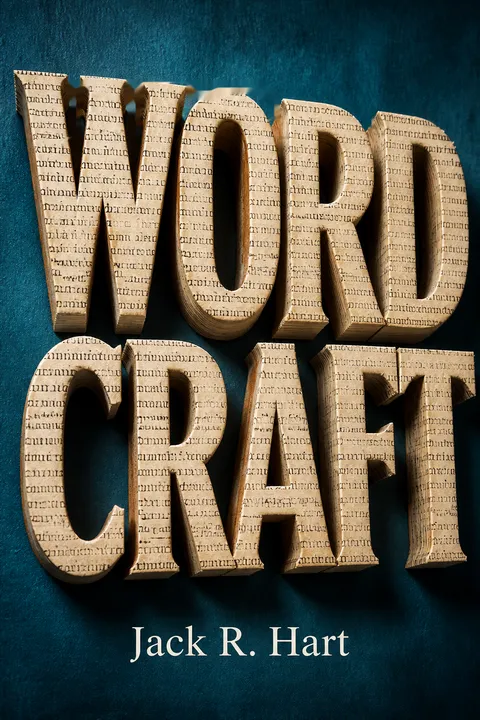
Wordcraft is both a practical manual and an argument against the romantic myth of effortless writing. Its central move is to relocate quality from innate talent to a sequence of decisions that can be examined, taught, and improved. The organization reflects that claim: idea development, reporting, structure, drafting, and polishing lead into sentence-level choices, then into voice and ongoing practice. The result is a useful bridge between the writer’s internal process and the reader’s experience.
The book’s most powerful connective idea is that language choices are not merely decorative. A focused claim determines what evidence matters. Reporting determines what details are available. Structure shapes what readers notice. Verbs assign agency, paragraphing creates relationships, and concrete description gives abstract claims a human scale. This makes the manual more coherent than a catalogue of style tips: each craft decision contributes to a chain from thought to understanding.
Hart’s newsroom examples keep advice grounded in real constraints such as deadlines, incomplete information, editing, and reader impatience. The reach extends beyond journalism because the underlying questions apply to reports, essays, business writing, and narrative nonfiction. Its focus on clarity and directness can also be misread as a demand for uniformly short or simple prose. The book’s more nuanced position is that form should match purpose: complexity is justified when it clarifies, detail when it illuminates, and style when it rewards attention.
The model is strongest when treated as flexible rather than mechanical. Ideas change during research; structure can be discovered in drafting; voice may resist tidy rules. Hart’s practical sequence remains valuable because it makes revision diagnosable, not because every project must proceed in exactly the same order. The lasting lesson is that good writing is an act of attention: to evidence, to form, to language, and to the reader who must make meaning from it.
Review Summary
Wordcraft by Jack R. Hart receives mostly positive reviews (4.13/5), praised for its practical guidance on clear writing, particularly its focus on structure, organization, and the writing process. Readers appreciate the abundant examples and accessible explanations. However, several reviewers note the book's heavy journalism focus limits its applicability to other genres. Some criticize prescriptive grammar rules and textbook-like reading. The companion book "Storycraft" is frequently mentioned, with debate over reading order. Most recommend it for nonfiction writers, especially beginners and intermediates seeking concrete writing techniques.
People Also Read





Glossary
theme statement
one-sentence central claimA brief, private sentence expressing the main point a piece of writing will explore. Hart recommends shaping it as a clear assertion, often one that identifies a subject, an action, and its consequence. It guides research and organization, but it can be revised when evidence or drafting reveals a better focus.
Blundell chain
causal idea mapA brainstorming method associated with writing coach Bill Blundell. The writer places an initial claim at the center of a page, then draws arrows to possible consequences, counteractions, or further effects. Each link suggests questions to investigate. The chain is a generator of reporting leads, not proof that its predicted causal sequence is true.
jot outline
brief ordered point listA deliberately simple list of the main topics or scenes a writer plans to cover, arranged in a useful sequence. It is made after reviewing and sorting material but before drafting. Unlike a detailed formal outline, it stays short enough to provide direction without locking the writer into a rigid structure.
inverted pyramid
most important information firstA report structure that begins with the most important information and follows with details in descending order of importance. It helps readers grasp the central news quickly and allows editors to cut from the bottom with less risk of losing essential facts. Hart presents it as one reporting form, not a universal structure for all writing.
nut graf
early paragraph explaining significanceAn explanatory paragraph, usually placed near the beginning of a feature or news story, that clarifies the larger point and why it matters. It may answer questions raised by an opening scene or anecdote. The paragraph helps readers understand the value of continuing and gives the writer a clear organizing focus.
ladder of abstraction
scale from specific to generalA model of language ranging from concrete particulars, such as one person in one place, to increasingly broad categories and abstract ideas. Specific details help readers visualize and feel an experience; general statements connect that experience to larger meaning. Effective writing moves between levels rather than remaining entirely abstract or narrowly particular.
journalese
institutional news languageA conventional style of news language marked by stock phrases, clichés, specialized syntax, and wording that differs from ordinary conversation. Hart argues that it can make journalism sound impersonal and obscure meaning. The term also illustrates a broader problem: occupational language can distance any writer from readers who do not share its habits.
Flesch-Kincaid readability score
estimated reading grade levelA readability measure calculated from features such as sentence and word length, with results often expressed as a school grade level. Hart presents it as a rough diagnostic for complexity, not a measure of intelligence, meaning, or literary quality. Readable language may address sophisticated subjects; the score cannot determine whether writing is accurate or engaging.
First Law of Writing Improvement
trace problems one stage backHart’s principle that a difficulty visible at one stage of writing usually originates in the immediately preceding stage. Trouble drafting may point to weak organization; disorderly notes may point to unfocused reporting; poor reporting may point to an undeveloped idea. The principle gives writers a practical way to diagnose problems instead of simply trying harder at the keyboard.
About the Author
Other books by Jack R. Hart

Download PDF
Download EPUB
.epub digital book format is ideal for reading ebooks on phones, tablets, and e-readers.








