

Key Takeaways
A top preparedness score can hide a country that cannot execute
The warning felt distant. On New Year’s Eve 2019, Sanjay Gupta and filmmaker Francis Ford Coppola discussed reports of a mysterious illness in Wuhan over drinks in Belize. The threat seemed remote. Within months, hospitals were overwhelmed and daily life had been upended. The United States had ranked first in the 2019 Global Health Security Index, scoring 83.5 out of 100, yet that rating did not translate into an effective response.
Readiness is more than a score. New Zealand scored only 54, but recorded few cases and deaths during the pandemic’s first months. By mid-September 2020, the United States had more than 6.5 million confirmed cases and nearly 200,000 deaths. Rankings can identify resources and plans on paper, but cannot guarantee timely decisions, public trust, or coordination under pressure.
What's striking is the gap between a system's inventory and its performance under stress. A preparedness index can count plans, laboratories, and resources, but a crisis tests whether those pieces connect quickly and earn cooperation. The distinction resembles the difference between possessing a fire plan and successfully evacuating a crowded building: the latter depends on practice, communication, and clear authority. Rankings remain useful as diagnostic tools, but become dangerous when treated as proof of safety. The more consequential question is not whether a country looks prepared in advance, but whether its institutions can recognize failure and adapt in real time.
Act before certainty arrives, because invisible spread compounds delay
Symptoms came too late. Early US planning relied heavily on influenza assumptions, where visible illness helps identify who is spreading infection. COVID could spread before symptoms appeared, or without symptoms at all. That difference made symptom-based detection and isolation inadequate. The book describes this as a central early error: officials were responding to a familiar illness model while the actual virus was circulating silently.
Delay multiplied the damage. South Korea moved quickly to test suspected cases, identify contacts, isolate people, and provide treatment. The United Kingdom had limited testing and abandoned community tracing early in March 2020. A Columbia University analysis cited in the book estimated that action just one or two weeks earlier could have prevented more than half of US cases and deaths. The estimate is model-based, but it illustrates how timing can matter as much as the intervention itself.
Under uncertainty, waiting for perfect evidence can feel cautious while functioning as a decision to accept uncontrolled risk. The useful alternative is not panic, but proportionate action that can be revised as evidence improves. Testing, transparent warnings, and temporary contact limits are examples of measures that preserve options: they buy time to learn while reducing exposure. The hard part is explaining why action is warranted before outcomes are certain. Acknowledging uncertainty openly, while stating what evidence would change the plan, can make precaution seem reasoned rather than arbitrary.
Fund the unglamorous infrastructure before a crisis makes it priceless
The rehearsal exposed the gaps. In 2019, the US government ran Crimson Contagion, a pandemic exercise involving a respiratory virus spreading from China. The simulation revealed confusion over who was in charge, uncertainty about supplies, and poor coordination across federal, state, and local agencies. Those problems reappeared during COVID. The exercise’s scenario was not an exact forecast, but it showed that the system had not resolved basic operational questions.
Preparation costs less than improvisation. Robert Kadlec, who led the preparedness office, estimated that about $10 billion could have strengthened readiness, roughly $30 per person. During the pandemic, his office spent $35 billion, and Congress provided another $23.6 billion, while the broader costs of lost lives and livelihoods were far greater. Preparedness also faces a political obstacle: when prevention works, the disaster that did not happen is hard to see.
Preparedness suffers from a visibility problem. A hospital bed, stockpile, or trained public health team can look wasteful when unused, even though its value lies precisely in preventing visible catastrophe. This makes readiness hard to defend through ordinary political incentives, which reward immediate, observable results. Exercises help by turning abstract risk into operational questions: who decides, who supplies, and who pays? But rehearsal has value only if institutions act on what it reveals. A recurring exercise with unresolved findings is closer to theater than preparation.
A novel virus punishes experts who force it into familiar categories
Old comparisons misled. At first, many experts treated the new coronavirus like SARS or seasonal influenza. But COVID combined traits that made those analogies unreliable: it could spread before symptoms appeared, transmit through airborne particles, and affect organs beyond the lungs. The virus enters cells through ACE2 receptors found in several tissues. That helps explain the varied effects reported in the book, including lung injury, blood clots, neurological problems, and persistent symptoms after the initial infection.
The pathogen has no plan. SARS-CoV-2 is an RNA virus that reproduces by using a host cell’s machinery. Copying errors can create variants, some of which spread more efficiently. The book also explains that many emerging infections originate in animals, but the precise origin of COVID remained unresolved in its account. Novelty calls for surveillance and humility, not a confident guess based only on the last outbreak.
The episode illustrates a general danger in expert reasoning: expertise supplies useful analogies, but those analogies can become blinders when a case combines unfamiliar features. The corrective is disciplined comparison, asking both what resembles the known disease and what does not. The biology also matters because a virus does not adapt with intention. Random changes that aid replication can become common, so human behavior and viral evolution interact without either side having a plan. That makes monitoring essential, while cautioning against stories that portray every new variant as a purposeful enemy.
Vaccines teach immunity, but trust and access turn science into protection
A fast response had long roots. Within days of the virus’s genetic sequence becoming available in January 2020, vaccine teams began work. The mRNA approach was not invented overnight: researchers had spent decades learning how to deliver genetic instructions safely. The vaccine prompts cells to make a piece of the virus’s spike protein, teaching the immune system to recognize it. It does not contain live coronavirus, and the mRNA does not alter a person’s DNA.
Speed still required scale. In late 2020, early phase 3 trial results for the Pfizer-BioNTech and Moderna vaccines showed more than 90 percent efficacy against symptomatic disease, exceeding the FDA’s stated 50 percent threshold for consideration. Manufacturing required new equipment, raw materials, and coordination. Vaccination was not an instant off switch: protection takes time, and uneven uptake leaves opportunities for transmission and new variants.
The vaccine story shows how basic research becomes public protection only when several systems align: scientific knowledge, clinical testing, manufacturing, distribution, and public confidence. The platform’s adaptability is a major strength, but technical success cannot compensate for unequal access or low trust. Communication matters because people judge interventions through both evidence and the institutions presenting it. That does not mean every concern is equally supported; it means accurate explanations must be accessible, candid about uncertainty, and responsive to real questions. A breakthrough is an achievement in capability, not a guarantee of collective benefit.
Judge exposure by what you do, where you are, and what you bring
Risk has several parts. Gupta’s practical model asks people to consider what they do, where they are, and what they bring. Activities shape contact with other people’s air; location affects how much virus is circulating and whether a setting is indoors; personal health conditions can change the consequences of infection. These factors move over time, so a decision that seemed reasonable in one place or month may not be reasonable in another.
Numbers need interpretation. A 0.5 percent fatality risk can sound like a one-in-200 chance of death, or a 99.5 percent chance of survival. Both are mathematically correct, but they prompt different reactions. The book also describes optimism bias, false confidence in personal control, and confirmation bias. Even identical twins with similar health conditions had sharply different COVID outcomes, a reminder that individual prediction has limits.
This framework usefully separates hazard from exposure and vulnerability. A single headline number collapses those dimensions, while a personal risk assessment asks how they combine in a specific situation. It also makes clear that risk tolerance is partly shaped by choice: someone able to work from home has options unavailable to an essential worker. Individual advice should therefore avoid treating every person as equally free to reduce exposure. The model cannot remove uncertainty, but it can make assumptions visible, which is often the first step toward a decision that is both safer and fairer.
Build health reserves, but do not mistake fitness for immunity
Good health helps, but guarantees nothing. Ahmad Ayyad was a fit, athletic 40-year-old when COVID put him on a ventilator for 25 days. He survived after losing 60 pounds and sustaining heart and lung damage. His story counters the assumption that only older or visibly unwell people face serious illness. At the same time, chronic conditions can increase risk: the book reports that obesity was associated with higher odds of intensive care and death.
Strengthen the foundations. Gupta recommends nutritious food, regular movement, adequate sleep, and attention to stress. He suggests about 22 minutes of moderate activity daily as one accessible target. He also cautions against miracle supplements: no pill or food has been shown to simply boost immunity. Health habits support the body’s systems, but they cannot guarantee protection from infection or replace public health measures.
The health advice is strongest when framed as improving resilience, not assigning responsibility for disease. Chronic illness is shaped not only by individual choices, but also by food access, work, income, and the conditions of daily life. Ahmad’s case makes the complementary point: fitness is not armor against an unfamiliar pathogen. A useful public health message should hold both ideas at once. Healthy routines can improve baseline capacity, while good care and community protections remain essential. Otherwise, prevention language risks turning structural vulnerability into a personal failing.
Turn pandemic lessons into household routines before the next alert
Readiness belongs at home too. Gupta organizes practical preparation through P.R.O.O.F.: Plan ahead, Rethink and rewire risk, Optimize health, Organize family, and Fight for the future of us. Household steps include keeping basic medicines and supplies available, maintaining an emergency fund, completing advance health directives, and choosing health coverage with potential ongoing care in mind. These measures turn an abstract threat into tasks a family can complete before a crisis.
Care includes recovery. Some people experience long-lasting symptoms after infection, including fatigue, breathing problems, and cognitive difficulties. The book calls this post-acute COVID-19 syndrome, or long-haul COVID, and emphasizes how uncertain its diagnosis and treatment remained. Families can help by taking persistent symptoms seriously and seeking coordinated care across medical specialties. Preparation also means protecting mental health, maintaining social connection, and recognizing that children may need academic, social, and emotional support.
The framework’s strength is that it distributes preparedness across institutions, bodies, and households rather than leaving it to emergency stockpiles alone. Household planning is most useful when it lowers the number of decisions that must be made under pressure. Advance directives and a modest supply of essential items are not predictions of disaster; they are ways to preserve agency if circumstances deteriorate. The framework also resists a narrow definition of recovery. A person may be out of acute danger yet still need support, a distinction that matters for families and health systems alike.
Treat outbreaks abroad as local threats, because contagion ignores borders
Geography changes outcomes. During the 2014 Ebola outbreak, patients treated in specialized US hospitals survived, while more than half of infected people in West Africa died. The virus was the same; access to prepared care differed. COVID made a related point at global scale. By spring 2021, the book reported that high-income countries, representing 16 percent of the world’s population, had received most vaccine doses, while low-income countries had received less than 1 percent.
A false ending can be costly. India appeared to have COVID under control in early 2021, then suffered a devastating surge after gatherings resumed, warnings went unheeded, and vaccine coverage remained low. The story shows why local success is fragile when the pathogen keeps circulating elsewhere. Surveillance, medical capacity, and fair access to vaccines are not charity detached from self-interest. They are part of shared protection.
The global argument is not merely moral; it is epidemiological. A pathogen moves through networks of travel, trade, and human contact, so protection concentrated in wealthy regions remains incomplete. The Ebola contrast also shows that outcomes reflect institutions and access, not only the organism’s severity. Still, solidarity is not automatic: states have incentives to secure supplies for their own populations first. Durable cooperation therefore requires planning and production capacity, not appeals to goodwill alone. The book’s strongest conclusion is that security must be measured across the connected system, not at the border of one nation.
Analysis
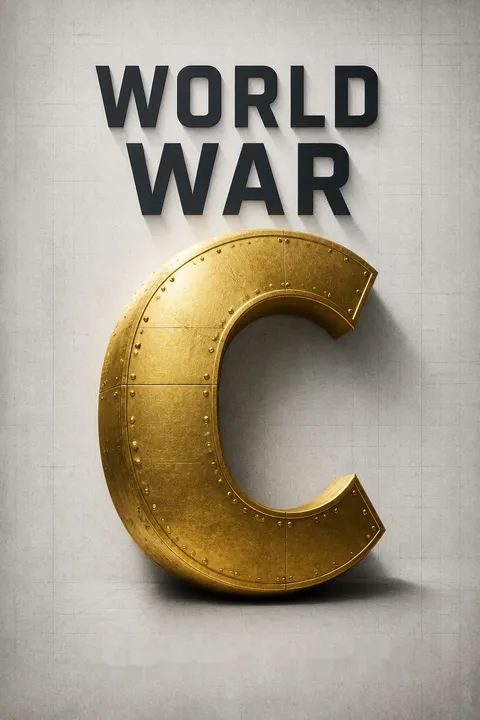
World War C moves from the shock of a global outbreak to a practical argument about preparedness. Its narrative strength comes from alternating intimate losses with institutional failures. A young nursing student dying alone, a healthy athlete fighting for his life, and a surgeon grieving colleagues make the pandemic legible as human experience. The accounts of Crimson Contagion, failed testing, and political interference then show that tragedy was not simply the consequence of a mysterious virus. It was also shaped by decisions, incentives, and capacities that could have been different.
The book’s central contribution is its insistence that pandemic readiness is not one thing. It involves early detection, flexible science, reliable public communication, health care capacity, family planning, individual health, and international cooperation. Its P.R.O.O.F. framework translates that broad argument into memorable categories. The biological chapters help readers understand why COVID defied familiar expectations, while the risk chapter offers a usable way to think beyond binary labels such as safe and unsafe.
The account is also a 2021 snapshot, written while scientific knowledge and the pandemic itself were changing. Some early estimates, predictions, and explanations were provisional, and contested questions, including the virus’s origin, remained unresolved. That temporal limit matters: the book is most useful as a record of how uncertainty, institutional habits, and public behavior interacted, rather than as a final manual for every future outbreak.
A further tension runs through its advice. People are urged to optimize health and make careful choices, but the book also documents how unequal income, race, work, and access to care shaped exposure and outcomes. Individual preparation cannot repair weak public systems or unequal access to treatment. The most persuasive reading holds personal agency and collective responsibility together: households can prepare, but governments must fund capacity, communicate honestly, and cooperate across borders. Pandemic readiness is not a promise of invulnerability. It is the ability to notice a threat, learn quickly, and reduce avoidable harm before delay becomes the dominant policy.
Review Summary
World War C by Sanjay Gupta offers a comprehensive look at the COVID-19 pandemic, combining scientific explanations, personal experiences, and advice for future preparedness. Readers appreciate Gupta's accessible writing style and balanced approach to complex issues. The book covers the virus's origins, vaccine development, and strategies for risk assessment and health optimization. While some find certain sections repetitive or outdated, many consider it an essential read for understanding the pandemic's impact and preparing for future health crises.
People Also Read


Glossary
P.R.O.O.F.
five-part readiness planGupta’s framework for preparing individuals and societies for future pandemics. The letters stand for Plan ahead, Rethink and rewire risk, Optimize health, Organize family, and Fight for the future of us. Its scope ranges from household routines and personal risk judgments to public health preparation and global cooperation.
Crimson Contagion
US pandemic response exerciseA 2019 US government simulation of a respiratory pandemic originating in China. The exercise exposed weak coordination, unclear authority, and uncertainty about supplies and funding. Its scenario was not an exact forecast of COVID, but the operational problems it surfaced resembled difficulties that emerged during the real pandemic.
The Lost Month
early 2020 response delayGupta’s label for February 2020, when the United States had a crucial opportunity to prepare for widespread COVID transmission but did not act decisively enough. The phrase emphasizes delays in testing, public communication, and mitigation while the virus was spreading, including before infected people showed symptoms.
Epidemic Preparedness Index
country outbreak-readiness measureA model developed by Metabiota using historical outbreak data from countries around the world. It allows users to describe a hypothetical pathogen, including its location, transmissibility, and severity, then examine possible spread. The model was intended to help organizations anticipate health and economic effects, including supply chain disruption.
Sentiment Index
measure of public dreadA Metabiota measure designed to estimate how frightening a pathogen would seem to the public, using a score from 0 to 100. The score could inform estimates of economic disruption, since people’s responses to an outbreak affect business closures, travel, and other activity in addition to the pathogen’s biological effects.
post-acute COVID-19 syndrome (PACS)
persistent symptoms after COVIDA term used for ongoing or newly appearing health problems after the initial phase of COVID infection. Reported symptoms include fatigue, breathing difficulty, cognitive problems, and heart or digestive complaints. The book describes the condition as varied and poorly understood at the time, with no single established diagnostic test or standard treatment approach.
FAQ
1. What’s World War C: Lessons from the Covid-19 Pandemic and How to Prepare for the Next One by Sanjay Gupta about?
- Comprehensive pandemic analysis: The book examines the origins, spread, and impact of COVID-19, blending scientific insights, policy critique, and personal stories for a holistic view.
- Lessons for the future: Gupta introduces the P.R.O.O.F. framework to help individuals and societies prepare for future pandemics, emphasizing surveillance, vaccine development, and public health strategies.
- Focus on human and societal impact: The narrative highlights the emotional toll, societal disruptions, and inequalities exposed by the pandemic, stressing the need for collective action and empathy.
2. Why should I read World War C by Sanjay Gupta?
- Expert perspective: Gupta combines his experience as a neurosurgeon and medical correspondent to make complex science accessible and relatable, enriched by firsthand accounts.
- Timely, actionable lessons: The book offers critical analysis of pandemic successes and failures, providing practical advice for individuals, families, and governments.
- Broad, relevant scope: It covers virology, immunology, public health policy, social behavior, and the fight against misinformation, making it relevant for a wide audience.
3. What are the key takeaways from World War C by Sanjay Gupta?
- Predictable yet unheeded pandemic: Despite warnings, many countries were caught off guard due to underfunding, poor coordination, and political interference.
- Asymptomatic spread and human behavior: COVID-19’s silent transmission and the importance of effective, empathetic communication were critical factors in the pandemic’s trajectory.
- Vaccines are vital but not enough: Rapid vaccine development was a triumph, but ongoing vigilance, public health measures, and global cooperation remain essential.
4. How does Sanjay Gupta explain the origins and early spread of COVID-19 in World War C?
- Unclear origins: The book explores both natural spillover (from bats via an intermediary animal) and lab leak theories, acknowledging ongoing uncertainty.
- Early cover-up and misinformation: Gupta details how Chinese authorities delayed global awareness, hindering early response efforts.
- Silent global spread: Evidence suggests COVID-19 was spreading internationally before official recognition, with a critical “Lost Month” allowing the virus to gain a foothold.
5. What does World War C by Sanjay Gupta say about the nature of viruses and COVID-19 specifically?
- Viruses as ancient life-forms: The book explains how viruses have shaped evolution and health, with COVID-19 being a highly infectious RNA virus.
- Unique features of COVID-19: Its spike protein binds tightly to human ACE2 receptors, enabling asymptomatic spread and multisystem illness.
- Rapid mutation and variants: COVID-19 mutates quickly, leading to new variants that challenge control efforts and require ongoing adaptation.
6. How does World War C describe the development and importance of COVID-19 vaccines?
- mRNA technology breakthrough: Gupta highlights how decades of research enabled rapid development of Pfizer and Moderna vaccines using mRNA to train the immune system.
- Record-speed development: Vaccines were tested and authorized quickly due to prior research and global collaboration, without skipping safety steps.
- Addressing vaccine myths: The book debunks common misconceptions and emphasizes that vaccines greatly reduce severe illness and death, even as variants emerge.
7. What is the P.R.O.O.F. framework for pandemic preparedness in World War C by Sanjay Gupta?
- Plan ahead: Invest in surveillance, stockpiles, and coordinated response plans to avoid being caught off guard.
- Rethink and rewire risk: Understand and manage risk perception, recognizing that people respond differently to the same data.
- Optimize health and organize family: Prioritize sleep, nutrition, exercise, mental health, and family routines to build resilience.
- Fight for the future of us: Advocate for global health equity, vaccine access, and policies that protect everyone.
8. What does Sanjay Gupta advise about optimizing personal and family health in World War C?
- Remake metabolism and nutrition: Emphasizes a plant-based diet rich in fruits and vegetables to reduce inflammation and boost immunity.
- Nurture the microbiome: Recommends consuming diverse fermented foods and prebiotics to support gut health and immune function.
- Move, sleep, and manage stress: Regular exercise, quality sleep, and stress reduction are vital for a resilient immune system.
- Family organization: Suggests a ten-point checklist for families, including medical checkups, health insurance, emergency funds, and advance health directives.
9. How does World War C by Sanjay Gupta address misinformation, digital literacy, and vaccine hesitancy?
- Distinguishing misinformation and disinformation: The book explains the difference and the dangers of both, especially in the context of public health.
- Checking sources and digital literacy: Gupta advises using unbiased tools, cross-referencing facts, and being aware of emotional manipulation and personal biases.
- Combatting vaccine hesitancy: Emphasizes education, respectful communication, and leveraging trusted social circles to promote vaccination, following the mantra “share; don’t shame.”
10. What does World War C reveal about the global nature of pandemics and the importance of vaccine equity?
- Outbreaks anywhere threaten everywhere: Gupta stresses that infectious diseases do not respect borders, making global cooperation essential.
- Vaccine inequity: The book highlights disparities in vaccine access, with wealthy countries vaccinating rapidly while low-income countries lag behind.
- Moral and practical obligation: Advocates for equitable vaccine distribution to protect vulnerable populations and prevent the emergence of dangerous variants.
11. What were the main failures in the U.S. pandemic response according to World War C by Sanjay Gupta?
- Delayed and flawed testing: Early CDC test kits failed, and testing capacity was insufficient, allowing silent spread.
- Political interference and mixed messaging: Scientific reports were altered, risks downplayed, and public health experts sidelined, undermining trust.
- Lack of preparedness and coordination: Despite high preparedness rankings, the U.S. lacked stockpiles, clear leadership, and supply chains for critical equipment.
12. What are the most memorable quotes from World War C by Sanjay Gupta and what do they mean?
- On hubris and failure: “Hubris was the cause of death in this autopsy.” —Dr. Robert Kadlec, highlighting overconfidence and complacency in the U.S. response.
- On global interconnectedness: “An outbreak anywhere in the world is an outbreak everywhere in the world.” —Emphasizes the need for international cooperation.
- On antiscience threats: “Antiscience is right up there with things that we build a lot of infrastructure to wall off, like nuclear proliferation, global terrorism, and cyberattacks.” —Peter Hotez, underscoring the danger of misinformation.
- On empathy and communication: “People will forget what you said, people will forget what you did, but people will never forget how you made them feel.” —Maya Angelou, quoted to stress the importance of empathy in leadership and messaging.
About the Author



Download PDF
Download EPUB
.epub digital book format is ideal for reading ebooks on phones, tablets, and e-readers.








