

Plot Summary
Island Without Water
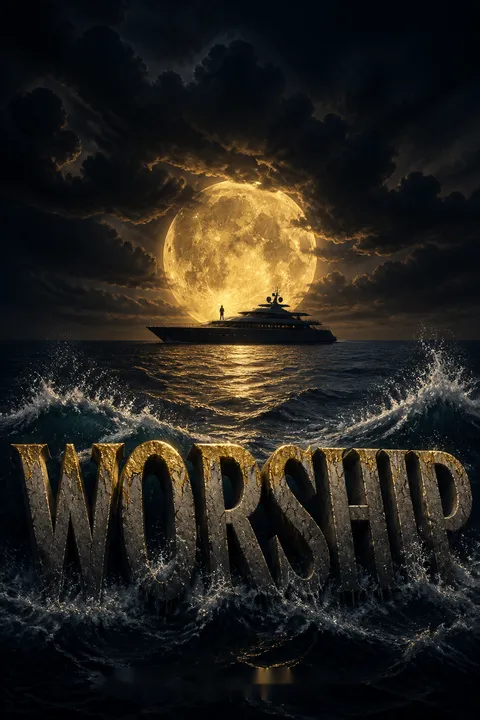
After his engagement to socialite Lana Ellison collapses, artist Vance Rayne takes a Caribbean cruise alone. On a snorkeling excursion, he drinks too much, sleeps through the group’s departure, and wakes on a tiny island with no fresh water. At midnight he swims toward a yacht, desperate and afraid of what brushes his leg beneath the waves.
Its owner, Luke, mistakes him for an attacker, strikes his forehead with a scotch bottle, and knocks him overboard. When Vance calls for help, Luke throws him a life preserver, hauls him aboard, gives him water, and tends the bleeding cut. Neither man knows the other well enough to name what begins between them, but Luke’s attention lingers.
The story makes rescue morally untidy from the start: Luke harms Vance before he helps him, so care arrives inseparable from danger. Vance’s isolation is partly accidental, but it also echoes the loneliness left by his broken engagement. His decision to swim toward an unknown vessel shows a practical courage sharpened by need. Luke, meanwhile, is accustomed to control, yet his first instinct is defensive violence. The bandage becomes an intimate counterweight to the bottle: the same stranger who wounded Vance must now be trusted to make him safe.
The Captain's Other Face
Once clean and rested, Vance catches Luke watching him on the yacht’s outdoor deck, and their guarded attraction turns physical. They share a night of sex, a joint, and brief confidences, but Luke withholds his name and refuses Vance’s invitation to take control in return. At daylight, Luke arranges for Vance to rejoin his cruise and sends him off with only a handshake.
Vance remains in Grand Cayman to paint three murals, including one carrying the image of a green eye. On the flight home, he hears Luke’s voice on a passenger’s tablet and learns that his nameless captain is Luke McDowell, a nationally famous pastor. The discovery transforms a private encounter into a dangerous secret.
Their first intimacy is shaped by unequal knowledge. Vance offers his body and curiosity openly; Luke accepts closeness while concealing the public identity that could make the night consequential. His refusal to give a name protects him, but it also leaves Vance carrying the emotional weight alone. Vance’s choice to stay and paint in Cayman gives longing a concrete outlet, turning memory into an image. The eventual revelation of Luke’s status does not merely add celebrity glamour. It exposes the scale of the institution pressing against his private life.
Lessons in Silence
The memories behind Luke’s secrecy reach back to age eleven, when he voiced support for boys loving boys and his father told him to keep such views from Evermore’s public. The lesson was not that his instinct was evil, but that the congregation’s approval mattered more than speaking plainly. At sixteen, two church mentors lead him through a prayerful program intended to purge temptation and prepare him for ministry.
Those experiences help explain the adult who can preach before millions while refusing to name his own desire. In 2016, Vance begins following Luke’s public accounts after discovering his identity, and Luke starts watching Vance’s posts. Their silent attention becomes the first contact neither man can dismiss as chance.
Luke’s conflict is not presented as a simple struggle between faith and desire. He has been taught to treat public reputation as a spiritual responsibility, so self-denial can feel like service rather than fear. His father’s warning and the later program bind vocation to concealment before Luke has the power to question either. Social media gives him a low-risk form of contact, but its visibility also makes every gesture measurable. Watching Vance becomes both longing and surveillance: Luke can approach the relationship while still pretending he has not crossed into it.
A Road Back East
While Luke is in Washington for church and political work, Vance sends him explicit images and paintings through Instagram. Luke watches, struggles with the risk of being exposed, then asks for Vance’s address and drives through the night to his cabin in New Jersey. Their reunion becomes a second sexual encounter, more intimate because they now know each other’s identities.
Vance asks whether Luke has been with a man before; Luke admits the answer is no and insists he is not bisexual. They talk about faith, judgment, and the church’s power to define acceptable lives. Before leaving, Luke calls the night a mistake, then admits he lied and kisses Vance again. Vance asks him to call if he ever needs help.
The drive is Luke’s first deliberate move toward Vance, and its secrecy makes the choice both brave and fragile. Vance refuses to treat Luke’s lack of a label as proof that the desire is unreal, but he also understands that desire cannot erase the institution Luke serves. Their debate about God and judgment reveals different forms of vulnerability: Vance risks being rejected by a man he loves, while Luke risks the identity that organizes his whole life. The promise of a future call offers care without demanding a public declaration.
One Call, Then Nothing
Fourteen months later, Luke calls Vance from a private sleep pod while traveling in Japan, shaken by something he cannot bring himself to explain. Vance leaves a crowded bar and walks home with him on the line, honoring the promise to stay even when Luke cannot speak. Vance eventually falls asleep, and the call ends. He keeps hoping Luke will reconnect, but Luke does not.
Around New Year’s, Luke shares his location from a Manhattan hotel. Vance hurries there, only to watch Luke spot him and retreat into the stairwell. By morning, Luke has changed his phone number. Vance is left with no explanation, only the knowledge that Luke reached for him when frightened and then shut the door again.
The phone call fulfills the emotional promise of the cabin scene in an imperfect but meaningful way. Vance gives Luke companionship without extracting a confession, showing that intimacy can consist of sustained presence rather than disclosure. Yet the failed reunion exposes the limits of that care: Luke’s impulse to seek Vance coexists with an equally strong need to disappear. Sharing a location briefly opens a path between them, but Luke’s retreat turns access into another form of uncertainty. The silence hurts because it follows genuine trust, not because the connection was imaginary.
The Mural Door Opens
In January 2019, Luke goes on a promising date with Megan Mason, a charitable foundation executive who shares his interest in adoption. He tests a more conventional future with her, but later tears apart the Vance painting hanging above his bed.
Meanwhile, Vance is drifting through casual relationships and work when Luke’s assistant, Pearl, offers him a mural commission at Evermore. Vance learns that Luke bought his painting and arranged a striking Janis Joplin-themed townhouse for him, complete with an upstairs art studio.
He accepts the job despite fearing the emotional cost and leaves his New York co-op temporarily in a colleague’s hands. The commission gives the men a professional reason to meet again, while making clear that Luke has not managed to erase Vance.
Megan represents a plausible life built around mutual kindness and shared plans, not a villain or a simple substitute for Vance. Luke’s effort to pursue that future is genuine, but destroying the painting shows how badly he has mistaken suppression for resolution. Vance’s commission similarly carries two meanings: paid work and a chance to see Luke again. The furnished studio is an act of attention disguised as hospitality, revealing how Luke communicates through arrangements when direct speech feels too risky. Art preserves what both men have tried to put away.
Kneeling at the Threshold
Vance arrives in San Francisco and finds that the townhouse’s rooms, records, and attic studio have been arranged around Janis Joplin, whose music he loves. At Evermore, however, Luke greets him like a hired artist, praising his work while keeping their history out of sight. Vance goes to Luke’s home afterward, where their strained reunion gives way to a confrontation.
Luke admits he did not know Vance was coming and offers to pay him anyway and ship his sculpture back, effectively asking him to leave. Vance refuses. Rather than accept another careful dismissal, he takes Luke by the shirt and pulls him down to his knees. The novel ends at that physical reversal, before Luke can answer.
The final gesture reverses the roles established on the yacht. Luke once controlled the setting, the information, and the terms of departure; now Vance refuses to let professional courtesy conceal the personal stakes. The townhouse’s thoughtful details suggest Luke’s tenderness, while his public performance at Evermore demonstrates how quickly he retreats behind authority. Vance’s refusal is not a guaranteed cure for Luke’s fear. It is a demand that the truth of their relationship enter the room. Ending before Luke responds preserves the central conflict rather than resolving it cheaply.
Analysis
Worship links desire to the problem of who gets to interpret a person’s life. Luke has inherited a powerful religious institution, but his difficulty is not simply that faith and sexuality conflict. It is that he learned early to experience concealment as responsible service. His father’s warning and the later corrective program teach him that private feeling can be tolerated only if it stays out of public view. That lesson helps him lead with confidence while leaving him almost unable to ask for care openly.
Vance offers a contrasting ethic. He does not demand that Luke adopt a label or abandon his vocation; he asks him to stop calling their connection a mistake. His openness is generous, but the novel does not present patience as limitless. Vance’s return to San Francisco puts his livelihood, artistic independence, and emotional steadiness at stake. His final refusal to leave exposes the cost of treating Luke’s fear as the only need that matters.
The book also makes art a form of evidence. A painted eye, a canvas Luke hangs above his bed, and a mural commissioned for a church all carry feelings that Luke’s public language cannot safely express. Yet art is not a magical substitute for confession. Luke can buy the work, build the studio, and arrange a meeting without admitting what those gestures mean. The story ends when Vance interrupts that pattern. His demand is embodied rather than resolved, leaving the next question open: whether Luke can meet intimacy without hiding behind the role that has taught him to hide from himself.
Review Summary
Worship received mixed reviews, with an average rating of 3.93 out of 5. Many readers praised the intense chemistry between the main characters, Luke and Vance, and the forbidden romance aspect. The book was noted for its steamy scenes and emotional depth. Some critics felt there was too much sex and not enough plot development. Readers were divided on the pacing and character development. Despite mixed opinions, many expressed eagerness for the sequel. The cliffhanger ending left readers wanting more of Luke and Vance's story.
People Also Read










Characters
Vance Rayne
Restless queer sculptorVance is a New York artist who makes sculptures and murals, supports himself through commissions, and values frankness over polished appearances. His childhood with a financially struggling mother taught him to be resourceful and attentive to other people’s needs. He is sexually open, physically confident, and often uses humor to soften moments that might otherwise expose how much he cares. Luke’s secrecy frustrates him, but Vance is not interested in forcing a label or a public performance. His deeper challenge is learning how to offer patience without making himself endlessly available to someone who may retreat. Art gives him a way to preserve experience, but it cannot substitute for the person he wants.
Luke McDowell
Pastor in private conflictLuke is a wealthy, media-famous pastor who leads Evermore, a vast church with political and charitable influence. Careful, disciplined, and skilled at managing appearances, he treats self-control as both a personal virtue and a duty to the people who depend on him. His early lessons at church taught him that public approval could outweigh honest expression, leaving him practiced at dividing his private feelings from his public role. He is compassionate in concrete ways, from tending Vance’s wound to organizing support for others, but kindness does not make him emotionally transparent. His attraction to Vance challenges the boundaries he has built around faith, vocation, and the life he believes he must protect.
Pearl Myers
Loyal operations anchorPearl is Luke’s perceptive assistant, a warm and energetic presence in the tightly managed world around Evermore. She notices shifts in Luke’s mood and treats him as a person rather than only as a public figure. Her professional competence gives her access to the decisions that shape his days, and she helps connect his interest in art with the mural project. Pearl’s loyalty is practical, not deferential: she looks for ways to support Luke while respecting his privacy.
Megan Mason
Thoughtful possible partnerMegan leads a charitable foundation and meets Luke through a carefully arranged dinner. Curious, kind, and perceptive, she asks about his work without reducing him to his fame. Her inability to have children and hope to adopt give their conversation an honest intimacy, and her willingness to share that vulnerability makes a conventional future seem possible. Megan is not merely a symbol of respectability; she has her own values and a grounded understanding of service.
Arthur McDowell
Father of the pulpitArthur is Luke’s father and a celebrated leader of Evermore. Charismatic and practiced in public life, he raises Luke inside a church where reputation and tradition carry enormous weight. His response when young Luke expresses support for same-sex love teaches his son to separate private conviction from public speech. Arthur’s influence is significant not only because of his authority, but because Luke admires the vocation he inherits.
Luke's mother
Quiet family witnessLuke’s mother belongs to the family world surrounding his upbringing and is someone he expects his father to consult after the incident at church. Her limited presence underscores how much of Luke’s moral education is shaped by the institution and the men entrusted with it.
Vance's mother
Artist's first homeVance’s mother raised him through poverty and gave him the support that helped him become an artist. His memories of her reveal his tenderness beneath his swagger, especially his awareness of the small sacrifices she made to provide for him. She remains an emotional measure of care and loyalty in his adult life.
Lana Ellison
Former socialite fiancéeLana is Vance’s former fiancée, a Manhattan socialite whose decision to end their engagement precedes his cruise. Her absence shapes his first days in the Caymans and helps explain why he travels alone, though the story focuses on Vance’s life beyond that relationship.
Plot Devices
The anonymous yacht encounter
A night without identitiesThe yacht gives Luke and Vance temporary distance from the institutions and histories that usually define them. Luke can conceal his name, while Vance meets him as a stranger rather than as a famous pastor. The island rescue creates practical dependence before attraction develops, and Luke’s later refusal to identify himself turns that intimacy into an unresolved question. When Vance learns who the captain is, the same night acquires new stakes.
Instagram and location sharing
Digital signals across silenceSocial media lets Luke watch Vance from a distance and gives Vance a way to test whether Luke will respond. Their explicit exchanges lead to the New Jersey reunion, while later location sharing briefly allows Vance to find Luke in Manhattan. These tools make contact immediate but not secure: views, messages, and coordinates can reveal desire without guaranteeing honest conversation or lasting access.
Vance's art and murals
Private feeling made visibleVance’s paintings and sculptures hold details that the men struggle to communicate directly. His Cayman murals preserve traces of the yacht encounter, while Luke’s purchase of a Vance painting makes private longing part of his home. The Evermore mural commission then creates a credible professional reason for Vance to return to Luke’s world. Art serves as memory, message, and work, though it cannot resolve the conflict it makes visible.
About the Author
Other books by Ella James

Download PDF
Download EPUB
.epub digital book format is ideal for reading ebooks on phones, tablets, and e-readers.








