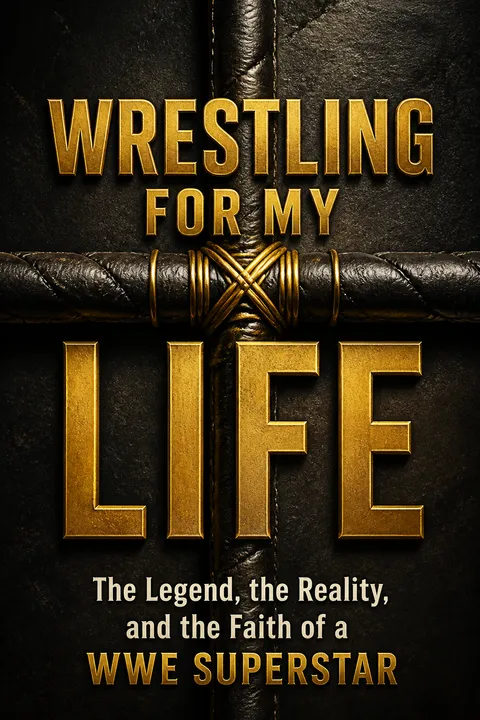


Key Takeaways
Let family, not applause, decide whether a career was worth having
The first ending failed. Michaels retired in 1998 after severe back injuries, but felt bitter about how his career ended and had little outside the ring to anchor him. In 2010, after losing to The Undertaker in a match that made his retirement binding, he felt something different: gratitude for wrestling and peace about leaving it behind. His wife and children had become more important to him than another title or the crowd’s approval.
Success moved home. Michaels’s final farewell focused on returning to his family. His children once assumed wrestling was his most important commitment because it occupied so much of his life. He came to judge his legacy by whether they felt loved, guided, and prepared for adulthood.
The contrast between the two retirements shows how a demanding career can become both a source of identity and a trap. Research on role transitions often points to the value of having meaningful roles beyond work, especially when a central role ends abruptly. Michaels’s family gave him a destination beyond the ring. That standard is personal, not universal: family is not everyone’s primary source of meaning, and devotion can become another form of pressure. The useful question is whether the people closest to a person experience their priorities as care, not merely hear them described that way.
Treat the harm your family can see as evidence your excuses are failing
A child named the problem. At a Friday pizza night, Michaels was so fogged by pills that his toddler son imitated him by pretending to sleep and saying that Daddy was tired. Michaels had been taking as many as 30 to 35 pills a day, then reduced his use to weekends and treated that reduction as proof he was doing well. His son’s words made the cost visible: his behavior was shaping the family, not just harming him.
A promise was not enough. Michaels had repeatedly vowed to stop, including before his son was born, then found reasons to delay. A call from friend Kevin Nash pushed him to face the issue, but the deeper change began when he admitted he did not want to keep living that way and asked God to change him. He does not describe himself as an addict, so the story is about his experience, not a diagnosis.
The scene works because it punctures self-justification with an observation from someone who has no stake in protecting the adult’s self-image. In behavior change, feedback from trusted relationships can reveal consequences that private intentions obscure. Still, a memoirist’s conclusion that he could have stopped does not establish whether he met clinical criteria for addiction. Dependence, compulsive use, and harmful use are not identical. The practical lesson is narrower and stronger: reduced frequency is not proof of recovery when the behavior continues to injure health, trust, or family life.
Let support invite change, but leave the decision genuinely yours
Rebecca modeled a different life. Michaels grew up attending church but understood religion mainly as a set of duties, not a personal relationship with God. His wife, Rebecca, renewed her commitment to faith and did not try to argue him into conversion. She prayed, encouraged him to read, and let him see the steadiness faith brought her. She also set a boundary when his pill use threatened their family, leaving briefly with their baby rather than pretending the problem was harmless.
A community gave him a next step. After reading a Bible and books about fatherhood, Michaels sought a Bible study and met Keith Parker, who explained what becoming a Christian meant to him and guided him through a prayer of commitment. Michaels describes his conversion in April 2002 as his own decision, supported by people who offered care, honesty, and practical guidance.
This account presents support as neither rescue nor passivity. Rebecca’s example created an alternative Michaels could choose, while her boundary made the consequences of inaction plain. The distinction resembles motivational interviewing, a counseling approach that supports a person’s own reasons for change instead of relying on pressure. That does not mean every partner should wait quietly or that faith is a universal solution. The broadly useful pattern is to combine compassion with clear limits, then connect someone to dependable people and concrete next steps.
Bring your best gift into imperfect places where people need it
He returned with reservations. After becoming a Christian, Michaels wondered whether wrestling could fit his new convictions. Some church friends worried that WWE would expose him to his old temptations. He initially declined an offer to return, then accepted after prayer and reflection. He believed his wrestling ability was a gift, and that he could use his platform without returning to his former lifestyle.
His conduct carried the message. Michaels told the truth about his knowledge of the controversial Montreal match, even though he had previously stayed quiet. Back in WWE, he prayed before matches, spoke openly about his faith, and became someone colleagues could approach with spiritual questions. He also brought his family on the road when possible, making his changed priorities visible to coworkers. In his view, the workplace itself became a place to serve rather than a place to flee.
Michaels’s choice challenges the idea that meaningful work must happen inside an explicitly virtuous institution. A person can sometimes serve others most effectively within the imperfect setting where existing skills and relationships already create influence. The complication is real: participation can also lend legitimacy to a workplace or storyline that conflicts with one’s values. Private conviction cannot settle that question alone. The stronger version of the principle is to examine specific practices, set limits in advance, and judge the role by both its contribution and its compromises.
Let setbacks test your trust, not dictate your definition of faith
Obedience did not prevent loss. Michaels and Rebecca built a 20,000-square-foot children’s party business, but managing it became too burdensome and they closed it. They moved to a ranch while their house and business property were for sale. The house took two years to sell, and the business building remained unsold for more than four years, costing the family five figures a month.
The hard outcome challenged his expectations. Michaels had believed that doing the right things would lead to visible blessings. Instead, he experienced financial stress, anger, and doubt while choosing not to return to full-time wrestling for income. He says that he and Rebecca felt provided for, but he does not claim the building sold or the losses disappeared. For him, the trial changed what trust meant: continuing to act on his values without assuming that good choices guarantee easy results.
The unsold building gives the memoir unusual weight because it resists a tidy prosperity narrative. The story does not show obedience producing a quick financial reward; it shows the family carrying a costly unresolved problem while making sense of it through faith. That meaning can support resilience, but it should not be confused with evidence that every setback is divinely planned or that endurance is always the right financial strategy. Trust is most credible when it coexists with practical assessment, shared decision-making, and permission to acknowledge real loss.
Set your standards by conviction, not by every crowd’s verdict
The audience disagreed about the rules. When Michaels returned as a Christian, he told WWE he would avoid flirtatious storylines and routine profanity. He also chose to participate in a storyline that used God as a character, later calling the idea foolish but explaining that he did not believe it mocked his own faith. Fans and Christian critics judged those choices differently, while WWE generally accommodated his requests.
Conviction still needed correction. Michaels once agreed to say a curse word in a promo, reasoning that it was only acting. His mentor Keith Parker challenged him, and Michaels later called to apologize. The episode shows that a personal standard is not simply permission to do whatever feels acceptable. Michaels tried to distinguish his own character from his performance, but also accepted correction when a trusted person pointed out a gap between his stated commitments and his behavior.
The story illustrates a difficult feature of moral life: actions are public, but intentions are private, and observers do not share one standard for interpreting them. Choosing whose judgment matters can protect a person from endless approval-seeking. Yet conscience can become self-exemption if it has no outside checks. Parker’s challenge supplies that check without replacing Michaels’s agency. A useful balance is to clarify principles before a high-pressure choice, invite criticism from trustworthy people, and remain open to evidence that a supposedly harmless compromise has effects beyond the actor’s intent.
Build small routines that survive after the spiritual high fades
Motivation came and went. Michaels found it easy to read Scripture when his new faith felt exciting. Later, he sometimes had to get out of bed and read even when he would rather sleep. He describes a simple morning routine with Rebecca: time for reading, conversation, and exercise. He also admits he did not read the Bible every day, and that missing a day did not make him a failed Christian.
The routine protected what mattered. Michaels and Rebecca kept their Tuesday Bible studies even when WWE considered moving him to Tuesday-night SmackDown. He understood that the change might cut his contract offer from $1 million to $500,000, but chose not to give up the practice. His example makes discipline less about perfect streaks than about returning to a practice and protecting it when work or convenience competes for the time.
The account treats discipline as a structure for living by considered priorities when emotion is unreliable. That is consistent with behavioral research showing that repeated routines can reduce the number of decisions needed to begin an activity. Michaels’s admission of missed days is just as important as his routine: perfectionism can make a lapse an excuse to quit altogether. The tradeoff over his wrestling schedule also shows that a ritual becomes meaningful through what a person is willing to protect, not through frequency alone.
Call emotional honesty strength, not a failure of manhood
Physical toughness had a cost. Michaels once treated wrestling through a crushed back, torn knee, broken ribs, and other injuries as proof of manhood. Looking back, he sees much of that pride as foolish because it worsened his body. His understanding of strength shifted toward mental and emotional endurance: admitting fear, accepting guidance, and staying present through conflict rather than hiding behind bravado.
Responsibility became a different test. Michaels connects courage to his faith and to the biblical figure Joshua, whose new leadership role frightened him by comparison. He also describes leading his family through financial strain instead of escaping the pressure, and letting himself be silly during outings with his daughter. These ordinary acts mattered more to him than proving he could endure another painful match.
Michaels’s account separates toughness from invulnerability. That distinction aligns with contemporary understandings of emotional regulation: strength can include naming distress, seeking support, and continuing to act responsibly without denying pain. His wrestling injuries are a caution against confusing visible endurance with good judgment. Still, the language of warriorhood can preserve the very pressure to perform masculinity that the chapter questions. The more durable measure is whether courage protects people and commitments, not whether it conforms to a heroic image.
Pass on practical guidance, then become someone else’s safe harbor
His own path was built by mentors. Trainer Jose Lothario taught Michaels to wrestle and helped him find his first opportunities. Other veterans offered feedback and showed him how to perform. After becoming a Christian, Keith and Priscilla Parker helped him understand Scripture, prayer, and the habits of a new faith. Michaels emphasizes that they cared about the person behind the celebrity, making it possible to ask vulnerable questions.
Guidance became service. Michaels later led a Bible study for boys from single-parent homes, a group he stayed connected to through high school and, for some, college. He also encouraged younger wrestlers to maintain interests outside the sport, advice he had not received himself. His account argues that mentorship is practical: teach what experience has clarified, make room for questions, and protect confidence rather than turning someone’s needs into gossip.
The strongest mentors in this story provide more than expertise. They offer a relationship in which mistakes can be discussed without turning vulnerability into a status loss. That combination is central to effective apprenticeship and psychological safety in teams. Michaels also shows how guidance can travel across domains: wrestling veterans taught performance, while church mentors taught practices for daily life. The challenge is to avoid treating one mentor’s experience as a universal script. Good guidance builds another person’s judgment instead of making them dependent on the guide.
Translate love into forms your closest people can actually feel
Good intentions were not enough. Rebecca supported Michaels through years of pill use and did not rely on constant nagging. She prayed, modeled the faith she wanted for herself, and set a firm limit when their child’s well-being was at stake. Michaels later recognized how much work she carried: raising their children, managing finances, and keeping the household functioning while he traveled.
Care became more specific. After reading Gary Chapman’s The Five Love Languages, Michaels understood that Rebecca experienced practical help as a powerful expression of love. He might have assumed a gift or a romantic gesture would communicate affection; for her, doing a household task could matter more. The lesson is not that one chore fixes a marriage. It is that care becomes more credible when it responds to what the other person actually experiences as support.
This section usefully shifts love from private feeling to observable responsiveness. Relationship research often distinguishes caring intentions from a partner’s sense of being understood; the latter depends on attention to that person’s needs and interpretation. The love-language framework can prompt a helpful conversation, but it should not be treated as a validated personality test or a fixed classification. People’s preferences vary by context. The more reliable practice is to ask, notice what lands, and revise rather than assuming that one’s preferred gesture must communicate care.
Forgive without pretending the injury never happened
The feud became a real wound. Michaels and Bret Hart had once shared hopes for wrestling, but their relationship collapsed around the Montreal Screwjob, a match whose outcome was secretly changed so Michaels won Hart’s championship. They did not speak for more than a decade. In 2009, Michaels apologized and accepted responsibility for his part; Hart also acknowledged his own role in the conflict.
Reconciliation did not erase history. Their public handshake and embrace were partly planned, but the embrace was genuine. They did not become best friends, yet they kept communicating and took part in shared appearances. Michaels presents forgiveness as release from bitterness, not a claim that the original injury was harmless or that trust must instantly return. He connects that experience to the forgiveness he believes he received from God.
The reconciliation distinguishes forgiveness from reconciliation, two ideas often collapsed into one. Forgiveness can change a person’s relationship to resentment; reconciliation requires some form of mutual engagement, and trust may remain limited. Here, repair became possible because both men acknowledged responsibility and chose contact, but that sequence cannot be demanded from someone who has been harmed. The memoir’s account is strongest when treated as one successful path, not a timetable. A sincere apology opens a door; it does not create an obligation to walk through it.
Analysis
This memoir’s central subject is not wrestling, but the conversion of a public identity into a life that can continue after public attention ends. The ring offers an unusually sharp metaphor because its stories are knowingly performed, yet their consequences are real. Michaels’s character could be arrogant while the man beneath it struggled with shame, loneliness, and drug use. The line between performance and self was porous enough to make him compelling to fans, and dangerous enough to make the wrestler’s identity feel like his only refuge.
The narrative is most persuasive when change appears through ordinary consequences rather than declaration. A toddler imitates an incapacitated father. A wife draws a boundary. A friend confronts him. A mentor offers concrete practices. Colleagues observe whether his behavior changes. These scenes make transformation relational and testable. The book’s faith language interprets that transformation as salvation, but the observable story also involves accountability, family support, renewed routine, and a different use of time. Readers need not share its theology to recognize those mechanisms. The memoir also avoids a simple reward structure. Michaels retires despite financial uncertainty, and the business property remains an expensive burden. That unresolved loss complicates any promise that conviction guarantees success. At the same time, the claim that faith explains his recovery remains a personal account, not proof that the same path will work for everyone. Addiction, recovery, and spiritual belief take varied forms.
The book’s most transferable insight is that a second life is built by changing what receives attention: less applause, more family; less toughness as display, more emotional responsibility; less self-protection, more service. The wrestling career is not dismissed. It is reinterpreted as a gift that matters, but no longer gets to define the whole person.
People Also Read


Glossary
angle
Wrestling storylineIn professional wrestling, an angle is a planned storyline or dramatic setup that shapes a feud, match, or character development. Michaels uses the term for proposals such as making his career the stake in a rematch with The Undertaker. Angles are scripted entertainment, even though the physical risks and injuries in the ring can be real.
cutting promos
Delivering wrestling speechesA promo is a wrestler’s spoken performance, usually delivered to a camera or audience, to establish character, provoke a reaction, or build interest in a match. Michaels describes learning to speak directly to fans and later adapting to WWE writers, who supplied general points while he shaped the delivery.
heel
Villainous wrestling characterA heel is a wrestler presented as a villain or antagonist, someone audiences are encouraged to boo. The role often relies on arrogance, cheating, or provocation. Michaels explains that playing a heel meant intentionally stirring strong reactions, while recognizing that some fans carried those feelings beyond the fictional character.
baby-face
Heroic wrestling characterA baby-face is a wrestler presented as a hero or good guy, typically someone audiences are encouraged to support. The term contrasts with heel. Michaels recalls learning that an unknown baby-face had to perform with visible enthusiasm and emotion even before the crowd cared about him.
The Kliq
Close wrestler friend groupThe Kliq was the nickname for a close group of wrestlers including Michaels, Kevin Nash, Scott Hall, Sean Waltman, and Triple H. The group shared friendships and influence within WWE. Michaels acknowledges that outsiders sometimes viewed it as politically powerful, while he recalls it as a circle that shaped careers and supported members through difficult moments.
Montreal Screwjob
Disputed championship matchThe Montreal Screwjob refers to the 1997 match in Montreal in which Bret Hart’s championship loss to Michaels was secretly arranged to occur before Hart agreed to the finish. Hart was leaving WWE and had resisted losing the title to Michaels. The incident damaged their relationship and became one of wrestling’s most enduring controversies.
born again
Christian conversionIn the Christian usage Michaels encounters, being born again means entering a new spiritual life through accepting Jesus Christ as Lord and Savior. He had heard the phrase growing up but did not understand it as a personal act of faith. His conversion in 2002 followed Bible study, reading, and guidance from a church mentor.
new creation
Life changed through faithMichaels uses the biblical term new creation to describe more than forgiveness for past wrongdoing. It means a person’s identity and conduct begin to change through Christian faith, with further growth continuing over time. He does not claim that becoming a Christian makes someone perfect; rather, it begins an ongoing process of learning to live differently.
Download PDF
Download EPUB
.epub digital book format is ideal for reading ebooks on phones, tablets, and e-readers.








