

Key Takeaways
Use breath and bodily attention to reach the story your intellect edits out
Start with the whole body. Herring’s central claim is that memorable writing draws not only on thought, but also on sensation, emotion, and the body’s stored experience. Breath offers a practical way to return to the present: notice its rhythm, including the small pauses between inhaling and exhaling, before beginning to write. The aim is not to force inspiration, but to become attentive enough to hear what is already there.
A snowstorm made the lesson physical. On a residency in Oregon, Herring pressed ahead toward Portland’s famous bookstore despite worsening snow, until her car spun into a drift. The failed trip exposed how often she mistook sheer determination for progress. Back at the cabin, yoga and stillness helped her see that writing, like living, sometimes requires loosening control.
The book’s most distinctive move is to treat writing as an embodied activity rather than a contest of ideas. This aligns with a broad finding from cognitive science: thinking is influenced by bodily state, attention, and emotion, not produced by abstract reasoning alone. Breath can therefore serve as a simple attention anchor before a difficult scene. The claim that the body stores stories should be read as a compelling metaphor, not a precise account of memory storage. Physical sensations can cue recollection, but they do not independently verify what happened. That distinction preserves the value of embodiment without asking it to replace reflection or evidence.
When writing stalls, find the fear beneath the next unwritten scene
Risk is often inward. Herring argues that authentic writing asks a writer to approach material that feels exposing, not simply to reveal private facts. A story needs something at stake for its maker as well as its characters. Questions such as why this story matters now, and what the writer is avoiding, can reveal the energy that sustains a longer project.
A block can be investigated. Rather than treat writer’s block as an outside force, identify the next scene or decision, then ask what makes it uncomfortable. Herring finds that resistance often rises near the heart of a story. Her advice is to stay with the work and the feelings it brings up, instead of waiting for inspiration to return. This does not mean forcing disclosure; the writer can choose what remains private and what is shaped for readers.
This framing turns a vague problem into a workable question: what is the next step, and what makes it difficult? That resembles exposure-based approaches to fear, where manageable contact with an avoided situation can reduce its power. The analogy has limits. Emotional material can be destabilizing, and persistence is not always the safest or most productive response. Writers dealing with trauma may need distance, support, or a different subject. The useful principle is not to push through every boundary, but to distinguish ordinary creative discomfort from a signal that more care is needed.
Ask better questions before deciding what your story means
Stay open to surprise. Herring connects humility with curiosity: the writer should not pretend to know in advance what a character, image, or memory means. In prewriting, questions can open paths that a fixed plan would close. A writer might follow a character’s odd behavior by asking what need it serves, rather than immediately labeling it as foolish or cruel.
Observe, then reflect. As a child, Herring admired Harriet the Spy’s habit of recording what she noticed and then considering what those observations meant. She also describes holding up a toy donkey in class and asking students to look beyond the obvious object to the arm holding it, the room, and the people nearby. The exercise shows how quick labels can narrow attention before a story has had room to develop.
Curiosity is a disciplined alternative to premature certainty. In research, good questions often matter as much as early answers because they determine what evidence becomes visible. The same is true in fiction: a character’s behavior may have several plausible causes, and the writer’s job is to explore them before settling on one. Yet curiosity needs boundaries. Not every real person’s private life is material to be collected, and observation can become intrusion. The writer’s freedom to imagine is strongest when paired with respect for the difference between noticing someone and claiming to know them.
Give characters bodies, motives, and shadows, not just biographies
Build inward and outward together. A character’s job, appearance, and favorite objects are not a substitute for motive. Herring urges writers to ask what the character believes, wants, fears, and needs, then show how those inner pressures shape visible behavior. The body matters too: pain, posture, fatigue, and sensory limits affect how a person moves through a scene.
Make room for contradiction. Herring uses the Jungian term “shadow” for traits, impulses, or desires a person hides from their preferred image of themselves. Fiction gains depth when a writer can recognize difficult motives without endorsing harmful actions. While struggling to write a male narrator, Herring tried a scene focused on a man’s love and attention rather than a generalized idea of masculinity. Specific human detail helped the character become an individual, not a category.
The emphasis on motive counters a common weakness in fiction: characters who function as arguments instead of people. Social psychology likewise shows that behavior changes with context, incentives, and perceived threat, which makes simple labels such as good or bad poor explanations. Empathy can help a writer imagine those pressures without excusing their consequences. The added challenge is to avoid treating self-knowledge as sufficient preparation for representing another person’s experience. Research, listening, and attention to cultural context remain necessary, especially when writing across differences in race, gender, class, or history.
Let landscapes and inherited silences supply stories, then research what you cannot know
Place is more than scenery. A landscape shapes vocabulary, habits, weather expectations, and the characters who could plausibly live there. Herring contrasts Phoenix’s heat and dry climate with places where snow, rain, or wind structure daily life. Writers can draw on the familiar by noticing local details, or travel somewhere unfamiliar and recover the beginner’s question: what is that?
The past can enter through fiction. Herring began a novel partly from her unresolved feelings about her quiet Southern grandmother. A voice and an image led her toward a fictional character whose life diverged from the known family history. The writing helped her imagine the grandmother as a person with choices and constraints. Herring also invites writers to attend to ancestral and historical stories, including those carried by silence, while treating research and respect as part of the work.
This account makes setting active: climate and landscape shape what characters notice, what they fear, and what feels ordinary. That approach has an ecological dimension, since human lives are embedded in material environments rather than merely staged against them. Inherited silence can also motivate historical fiction, but imaginative connection is not proof of access to another person’s experience. The distinction between a documented family story and a fictional transformation matters. Careful research, acknowledgment of uncertainty, and attention to whose testimony is available can turn an evocative premise into responsible representation.
Slow down until one precise detail carries the whole scene
Choose, do not catalogue. Herring calls the practice of narrowing attention “sensory withdrawal”: temporarily attend to one channel or detail so the scene becomes clearer, rather than piling on every sensation at once. A writer might focus first on what a character hears, then decide which sounds belong in the finished passage. The goal is precision, not the literal removal of the senses.
A single object can hold a memory. Instead of telling readers that a grandmother was loving, Herring suggests building an image from a particular object and its place in family life. The reader can then make an emotional connection through the detail. When stuck, she also recommends writing several sentences about each sense in the scene. This gives the writer time to inhabit the moment and discover material that summary would skip.
Selection is a cognitive and artistic act: attention makes some details salient and leaves others in the background. A carefully chosen object can invite a reader to participate by supplying associations from their own experience. This is why a scene with fewer details can feel more vivid than an exhaustive inventory. There is no universal formula for how much description is enough, however. A spare style may clarify one scene but flatten another. The writer must judge each detail by its function: does it deepen character, tension, setting, or emotional meaning?
Build a daily relationship with writing, not a fantasy of publication
Practice is the dependable part. Herring asks writers to treat writing as an ongoing relationship rather than a task postponed until retirement, ideal circumstances, or sudden inspiration. Skills grow through repeated work, reading, and engagement with other writers. She also stresses that craft matters: an emotionally powerful draft still needs structure, clear sentences, and revision if it is to reach readers.
Separate effort from outcome. Publication, reviews, and market trends are largely outside a writer’s control. Herring compares a goal such as publication to a ladder: it may help someone begin, but it should not dominate the work once they sit down. Her own years of writing before publication convinced her that the practice can matter even when the hoped-for recognition does not arrive. The daily question is not whether the work guarantees success, but whether it is being done.
This distinction resembles the difference between process goals and outcome goals in performance psychology. A writer can control time spent drafting or revising more directly than an editor’s decision or a reader’s response. Process goals support learning because they keep attention on actions that can be adjusted. Still, advice to make time can sound easy to people facing caregiving, disability, or economic pressure. A sustainable practice must fit actual circumstances. Consistency need not mean a large daily word count; it can mean protecting a modest, repeatable appointment with the work.
Let the first draft discover the story, then revise its shape
Separate discovery from shaping. Herring describes prewriting as a receptive stage for questions, freewriting, and first drafts. Revision is more active: the writer evaluates what has emerged, develops structure, and sharpens language. Neither stage is sufficient alone. Unshaped exploration may remain private journal material, while polished sentences without an underlying discovery can feel lifeless.
Re-see before you edit. Herring calls revision “revisioning,” meaning a fresh imaginative view of the material, not merely correcting punctuation. She recommends setting an early draft aside, then returning to reconsider its point of view, setting, characters, or structure. A novel of hers began in omniscient narration and eventually found a different form through multiple first-person voices. Craft choices create what John Gardner called the “fictive dream,” the reader’s absorbed experience of a story world; changing the viewpoint can change that experience entirely.
The separation between generating and evaluating material is useful because judgment can interrupt exploration, while unfiltered generation rarely produces a finished work by itself. Revision brings both modes into contact. This resembles iterative design: make a provisional version, inspect how it works, and rebuild around what the test reveals. The advice to put a draft away can help loosen attachment, but revision is not always a dramatic restart. Some projects need structural reconstruction; others need careful line edits. The right scale of change depends on what the draft is trying to become.
Release finished work through solitude, grief, and deliberate stillness
Endings can feel like loss. Herring describes finishing a novel and feeling unexpectedly empty when its characters seemed to leave. She interprets this as grief for a sustained imaginative relationship, not as evidence that something has gone wrong. A small ritual, such as setting aside time to acknowledge the project, can mark the transition and help the writer stop clinging to it.
Make room between projects. Herring uses “kumbhaka,” a yogic term associated with the pause in breathing, as a metaphor for the interval between active work and the next beginning. Stillness here is not laziness; it is time to absorb what a project has taught and let attention settle. The book’s view of impermanence applies to both the writer’s life and the work: a completed manuscript can be cared for, then released from the writer’s control.
The transition after a long project resembles the end of an intense collaboration: routine and attention have been organized around a world that is now complete. Naming the resulting grief can make the experience less isolating. Creative research also recognizes incubation, the period in which stepping away can allow ideas to reorganize without deliberate effort. But stillness should not become another rule that every writer must follow. Some people regain momentum by beginning a small new exercise; others need rest. The value lies in noticing the transition instead of treating it as failure.
Analysis
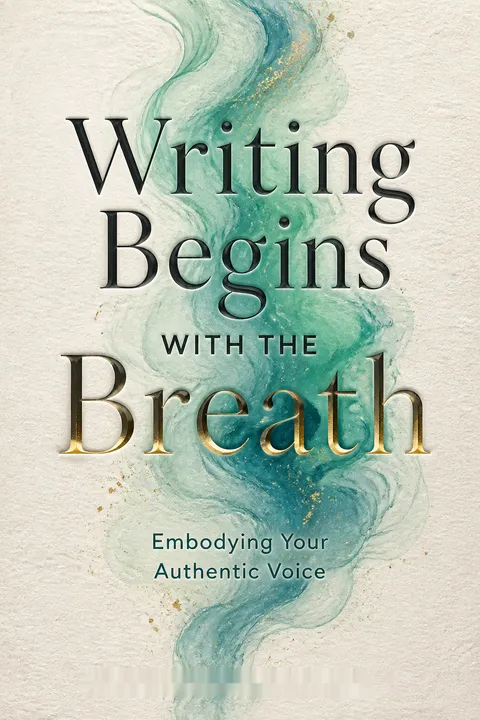
Writing Begins with the Breath is a process guide that joins creative-writing instruction to yoga, mindfulness, and the author’s experience as a teacher and counselor. Its structure moves from the writer’s inner stance, through the practical work of making stories, to the quiet interval after a project ends. The book’s argument is not that bodily awareness replaces craft. It is that craft cannot fully shape material the writer has not yet been willing to notice. Breath and sensation are entry points into attention; curiosity and empathy widen what can be imagined; revision makes the discoveries communicable.
The Oregon snowstorm is an effective opening because it turns the thesis into an event. Herring’s determination to reach a bookstore becomes a vivid example of how forceful intention can obscure immediate evidence. That episode also establishes the book’s central tension: writers need persistence, but persistence without responsiveness becomes its own form of avoidance. The strongest practical advice follows from this tension. Stay with difficult scenes, but remain observant enough to distinguish creative resistance from a genuine need for distance.
The book’s notable contribution is its insistence that a writer’s life and writing process are related without being identical. The writer draws on personal experience, place, family history, and imagination, then transforms those materials through character, viewpoint, and form. This model encourages emotional honesty while making room for fictional invention. It also supports a more generous account of authorship: publication is one possible result, not the sole measure of whether the practice matters.
Some claims require careful interpretation. The notion that the body contains stored stories can describe how sensation prompts memory, but it should not be treated as scientific proof that bodily impressions are always accurate. Likewise, empathy helps writers imagine motives, but it does not grant automatic authority to represent other communities. The book is most persuasive when its spiritual language is read as a practice of attention rather than a universal theory. Its durable lesson is concrete: notice more, judge later, shape what you discover, and leave enough room for the work to surprise its maker.
Review Summary
Writing Begins with the Breath combines Eastern spiritual practices with Western writing techniques to offer a unique approach to the creative process. Many readers found it helpful for connecting mind and body during writing, though some felt it was too focused on meditation. The book provides exercises and insights on overcoming writer's block, finding authentic voice, and viewing writing as a spiritual practice. While some readers thought it lacked concrete writing advice, others appreciated its emphasis on self-exploration and mindfulness as part of the writing journey.
People Also Read




Glossary
Deep writing
Embodied, exploratory writingHerring’s term for writing that draws on more than conscious thought. It engages bodily sensation, emotion, memory, observation, and imagination, then shapes that material through craft. Deep writing asks the writer to remain present with uncertainty and difficult material long enough for discoveries to emerge, rather than forcing a predetermined answer or outcome.
Sensory withdrawal
Focused sensory attentionA practice of narrowing attention to one sense, object, or detail instead of responding to every available stimulus. Herring uses it to help writers distinguish significant details from clutter and to remain with a scene long enough to develop precise imagery. It does not mean eliminating sensation; it means selecting what to attend to.
Shadow
Hidden parts of the selfA Jungian term Herring uses for traits, desires, and feelings a person has pushed outside their preferred self-image. The shadow is not automatically evil; it may include qualities suppressed by family or culture. In writing, recognizing these disowned parts can help a writer understand complex character motives without excusing harmful behavior.
Fictive dream
A reader’s story immersionJohn Gardner’s term, discussed by Herring, for the absorbed experience a work of fiction creates for its reader. Clear structure, vivid characters, and consistent details help sustain that experience. Confusing language, implausible continuity, or characters without depth can interrupt it, drawing the reader’s attention away from the imagined world.
Revisioning
Seeing a draft anewHerring’s expanded idea of revision as imaginative reconsideration, not just correction of grammar or punctuation. The writer returns to a draft with fresh attention and may change its viewpoint, setting, structure, or central character. Earlier material is treated as a stage of discovery, even when little of its original wording remains.
Kumbhaka
A pause between breathsA yogic term associated with the pause or retention in the breathing cycle. Herring applies it metaphorically to the interval between completing one writing project and beginning another. This pause offers space to release the finished work, absorb the experience, and allow attention to settle before a new project takes shape.
FAQ
1. What is "Writing Begins with the Breath" by Laraine Herring about?
- Holistic approach to writing: The book explores how writing is not just an intellectual activity but an embodied, emotional, and spiritual practice.
- Integration of body and mind: Herring emphasizes the importance of connecting with the body and breath to access authentic, "deep writing."
- Process over product: The book guides writers to focus on the process of writing, self-awareness, and personal growth rather than just the end result.
- Practical exercises: It offers a blend of writing prompts, body-based exercises, and reflective practices to help writers overcome blocks and find their true voice.
2. Why should I read "Writing Begins with the Breath" by Laraine Herring?
- For writers at all levels: Whether you’re a beginner or seasoned writer, the book provides tools to deepen your writing practice and reconnect with your creative self.
- Unique integration of yoga and writing: Herring’s background in yoga and counseling brings a fresh, embodied perspective to the writing process.
- Addresses common writing struggles: The book tackles issues like writer’s block, self-doubt, and the challenge of finding an authentic voice.
- Encourages personal transformation: Readers are invited to use writing as a path to self-discovery, healing, and personal evolution.
3. What are the key takeaways from "Writing Begins with the Breath"?
- Writing is embodied: Authentic writing arises from the integration of body, mind, and spirit, not just the intellect.
- Breath as a foundation: Conscious breathing grounds writers in the present moment and helps access deeper layers of creativity.
- Process is central: Focusing on the writing process, rather than just the product, leads to more meaningful and sustainable writing.
- Self-awareness and acceptance: Embracing vulnerability, risk, and self-compassion are essential for authentic expression.
4. How does Laraine Herring define "deep writing" in "Writing Begins with the Breath"?
- Beyond intellect: Deep writing is not just about clever ideas or technical skill; it emerges from the writer’s full being.
- Rooted in the body: It involves tuning into bodily sensations, emotions, and breath to access stories stored in the body’s memory.
- Authentic and vulnerable: Deep writing requires risk, honesty, and a willingness to explore uncomfortable or hidden parts of oneself.
- Transformative process: It is a journey of self-discovery that can lead to healing, integration, and personal growth.
5. What is the role of breath in Laraine Herring’s writing method?
- Anchor to the present: Breath helps writers stay grounded and present, reducing anxiety and mental chatter.
- Bridge to authenticity: Conscious breathing connects the mind and body, allowing authentic stories to surface.
- Tool for overcoming blocks: Breath-based exercises are used to move through resistance, fear, and creative stagnation.
- Metaphor for writing flow: The natural rise and fall of breath mirrors the ebb and flow of the writing process.
6. What are the main concepts and themes explored in "Writing Begins with the Breath"?
- Risk and vulnerability: The necessity of taking emotional risks and embracing discomfort in writing.
- Authenticity and voice: Finding and trusting one’s unique voice through self-inquiry and body awareness.
- Humility and curiosity: Approaching writing with openness, humility, and a willingness to be surprised.
- Empathy and acceptance: Cultivating empathy for oneself and one’s characters, and accepting imperfection and change.
- Relationship and process: Viewing writing as an ongoing relationship that requires nurturing, patience, and commitment.
7. How does Laraine Herring suggest writers overcome writer’s block in "Writing Begins with the Breath"?
- Reframe the block: Herring suggests that it’s not the writing that is blocked, but the writer who is blocking the writing, which empowers the writer to take action.
- Stay with discomfort: She encourages writers to remain present with uncomfortable emotions or resistance, using breath and body awareness.
- Use body-based exercises: The book offers physical postures and breathing techniques to release tension and stimulate creativity.
- Journal and freewrite: Prompts and freewriting exercises help writers explore fears and obstacles, making them less intimidating.
8. What practical exercises and tools does "Writing Begins with the Breath" provide?
- Body Breaks: Short, accessible yoga-inspired exercises to ground the body and open creative channels.
- Touchstones: Writing prompts and journaling exercises at the end of each chapter to deepen self-awareness and craft.
- Sensory focus: Practices that engage the five senses to enrich description and presence in writing.
- Character and story development: Exercises for exploring character motivation, point of view, and emotional depth.
9. How does "Writing Begins with the Breath" address the relationship between body, mind, and writing?
- Body as story source: Herring posits that the body holds memories and stories that the mind alone cannot access.
- Integration for authenticity: True voice and deep writing arise when the body, mind, and spirit are in harmony.
- Physical awareness: The book encourages writers to notice bodily sensations, posture, and breath as part of the creative process.
- Healing and transformation: Writing becomes a tool for healing past wounds and integrating fragmented parts of the self.
10. What is Laraine Herring’s advice on the writing process versus the writing product?
- Emphasize process: Herring urges writers to focus on the act of writing itself, rather than obsessing over publication or external validation.
- Let go of outcomes: She teaches that attachment to specific results leads to suffering and creative paralysis.
- Practice and perseverance: Consistent, mindful practice is more important than immediate success or perfection.
- Celebrate impermanence: Each writing session is unique; good and bad days are both part of the journey.
11. What are some of the best quotes from "Writing Begins with the Breath" and what do they mean?
- “Deep, authentic writing does not come from the intellect, as one might expect. Deep writing comes from our bodies, from our breath, and from our ability to remain solid in the places that scare us.”
- This quote encapsulates the book’s core message: true writing is embodied and requires courage to face discomfort.
- “The writing is not blocking you. You are blocking the writing. This is a very empowering reframing.”
- Herring reframes writer’s block as something within the writer’s control, encouraging agency and self-compassion.
- “To write what we are given to write, we must disappear.”
- This quote speaks to the surrender of ego and control, allowing the writing to flow through the writer without interference.
- “Writing is an art that requires work. A writer’s training is ongoing, lifelong learning.”
- Herring emphasizes the importance of continual practice and humility in the writing life.
12. How does "Writing Begins with the Breath" help writers integrate writing into their daily lives and personal growth?
- Daily practices: The book encourages small, regular writing and body-based practices to make writing a natural part of life.
- Self-reflection: Through journaling and mindful exercises, writers gain insight into their patterns, strengths, and areas for growth.
- Balance and integration: Herring teaches how to harmonize the creative and analytical aspects of writing, as well as life’s demands.
- Writing as transformation: The process is framed as a journey of self-discovery, healing, and ongoing evolution, not just a means to an end.
Download PDF
Download EPUB
.epub digital book format is ideal for reading ebooks on phones, tablets, and e-readers.








