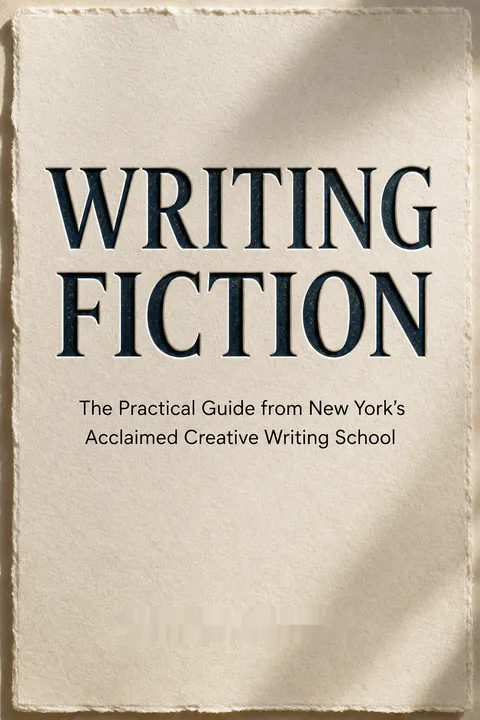


Key Takeaways
Turn ordinary observations into fictional seeds, then let imagination reshape them
Notice what catches. A story can begin with a remembered embarrassment, an overheard exchange, a news item, a place, or even a stray word. The seed need not resemble the finished story. Victor Hugo reportedly developed The Hunchback of Notre Dame from a word he noticed carved into a cathedral wall. The practical lesson is to collect possibilities before judging them. Keep notes, because ideas multiply once attention turns outward.
Transform the raw material. Personal experience offers emotional knowledge, not a requirement to reproduce events exactly. Fiction can rearrange facts to sharpen suspense, shape, irony, or meaning. A tiny frustration, such as a failed attempt to reach technical support, might become the pressure that pushes a character into a larger crisis. Write what genuinely holds your interest, then invent freely enough to make it matter to someone who was not there.
What's striking is that the method treats attention as a creative skill, not a rare gift. Collecting fragments resembles fieldwork: observations accumulate before a pattern becomes visible. That approach also protects writers from the trap of assuming that only extraordinary lives produce worthwhile stories. The caution is that fictionalizing a real person can still expose or misrepresent them, especially when recognizable details survive. Imagination expands a seed, but ethical judgment should shape what gets planted and shared.
Give every major character a want strong enough to cause trouble
Desire creates movement. A character becomes dramatically useful when something matters enough to pursue. The object can be modest, such as recovering an empty purse, or enormous, such as revenge or escape. Its importance comes from how intensely the character wants it. Without desire, even striking descriptions can leave a story inert. A pair of children exploring a mansion, for instance, needs a reason to keep moving, such as becoming trapped and needing to get out.
Build a person, not a label. Give central characters histories, flaws, habits, and traits that pull in different directions. A character may act generous in one situation and petty in another, but the contrast should feel rooted in a recognizable personality. Readers can accept surprising behavior when the story has planted signs of that possibility. A protagonist should also have some capacity for change, even if the final change is partial or refused.
Desire gives characterization a useful test: instead of listing qualities, place the person under pressure and see what they choose. This resembles motivation-based models in psychology, where goals organize attention and behavior. Contradiction adds realism because people serve several needs at once, including status, safety, affection, and autonomy. Yet complexity should not become a checklist of quirks. A character feels dimensional when details alter choices or relationships, not merely when the biography grows longer.
Build plot around one question, then make each event cause the next
Find the central question. The major dramatic question is the story's central uncertainty, usually answerable with yes, no, or an honest maybe. It grows from the protagonist's goal and the obstacles that block it. In Raymond Carver's Cathedral, a withdrawn narrator faces a visit from his wife's blind friend. The story asks whether this encounter will change the narrator's closed way of seeing and living.
Make pressure accumulate. A beginning introduces the disturbance, necessary background, and central question. The middle links events through cause and effect while obstacles intensify. At the end, crisis brings tension to its peak, climax answers the central question, and consequences hint at what the answer means. A random stroke of luck rarely satisfies as much as an outcome produced by the protagonist's choices. The question raised must match the answer delivered.
A central question gives readers a reason to keep updating their expectations. This is close to the logic of a mystery or a scientific hypothesis: each new event changes what seems possible. Cause and effect make the fictional world legible without making it predictable. The model is a guide, not a demand that every story resemble a conventional thriller. A quiet story can sustain tension through a character's changing understanding, while an experimental structure can still give events meaningful relationships.
Choose a viewpoint that controls what readers know and whom they trust
Viewpoint shapes experience. Point of view determines who tells the story, whose perceptions reach the reader, and how close the narration feels. First person offers intimacy but limits the story to what its narrator can know. Third-person single vision stays near one character while allowing a narrator to shape the prose. Multiple viewpoints widen the picture, while omniscient narration can enter many minds. Objective narration reports observable action and dialogue without revealing thoughts.
Make a clear contract. In The Great Gatsby, Nick Carraway tells Gatsby's story as an involved observer, not as the protagonist. His distance lets readers see Gatsby through someone else's judgments. A viewpoint choice affects sympathy, suspense, tone, and the facts available to the audience. Once the story establishes a perspective, careless switches into another character's private thoughts can break the reader's trust. Deliberate shifts can work, but they should create an effect rather than look accidental.
Viewpoint functions like a camera with a conscience. It does not simply determine where information appears; it guides which people seem credible, vulnerable, or opaque. Research on perspective-taking suggests that encountering another person's inner life can change how readers interpret behavior, and fiction can exploit that shift with precision. Still, no viewpoint is automatically fair or truthful. A close narrator may invite empathy while concealing harm, so writers should consider not only access, but also the blind spots that access creates.
Use sensory specifics to make imagined places feel physically inhabited
Give the reader a body. Description is more than visual inventory. Sound, smell, taste, and touch can make a setting immediate, as can the bodily sensations attached to fear or grief. In Amy Tan's description of a home above a Chinese bakery, smells of cooking, the sounds of a parent preparing for work, and the sequence of a locked door make the place feel lived in.
Choose details that work. Specific nouns and active verbs usually do more than stacks of general adjectives. A precise object can suggest a character's habits, class, or mood. A telling detail is one chosen fact that carries more meaning than its size suggests. Let the viewpoint character's feelings color what they notice, and cut description that pauses the story without enriching it. Fresh comparisons can help, but familiar clichés and muddled metaphors pull readers out of the scene.
Sensory detail is a form of cognitive scaffolding: it gives readers concrete cues from which to build an imagined environment. The strongest details do double duty, creating atmosphere while revealing the observer. That economy resembles good visual design, where a few well-chosen features orient attention better than exhaustive rendering. More detail, however, is not always more vivid. Selectivity matters because readers need room to complete the picture themselves, and too much description can turn immersion into a guided tour.
Save full scenes and dialogue for moments that change the relationship
Put important moments onstage. Summary compresses time and reports what happened; scene lets readers experience an event as it unfolds. Dialogue is especially useful when a confrontation, revelation, or decision changes a character or relationship. In Lorrie Moore's story about a mother learning that her baby has a tumor, the child repeatedly plays with a light switch as the doctor speaks. The scene's small action sharpens the mother's fear and the doctor's composure.
Make speech selective. Real conversations wander, repeat, and stall. Fictional dialogue should keep some of that texture while focusing on what matters. Characters can speak indirectly, evade a question, or say one thing while meaning another. That underlying meaning is subtext. Use gesture and action to deepen the exchange, but avoid overloading every line with directions, forced exposition, or elaborate speech tags.
Dialogue is a social action, not simply a delivery system for information. A pause, evasive answer, or mismatched gesture can reveal a power imbalance more efficiently than an explanatory paragraph. This overlaps with pragmatics, the study of how meaning depends on context and implication. The useful restraint is to avoid treating every exchange as a verbal duel. Ordinary conversation can establish intimacy or rhythm, but a scene earns its space when the interaction changes what someone knows, wants, or can safely say.
Make setting constrain choices, not merely decorate the backdrop
Place changes possibility. Setting includes both time and location, from the historical era to the room where a scene occurs. It shapes how characters travel, work, speak, and relate to one another. In Flannery O'Connor's A Good Man Is Hard to Find, the grandmother persuades her family to take a remote dirt road. The road's isolation and roughness help make the ensuing danger possible. A story that works unchanged in any place may not yet be using its setting fully.
Control story time. Writers speed through routine and slow down moments that deserve attention. A dinner may be summarized; a crucial confession may unfold in a scene. Weather, season, and time of day can affect both the action and the emotional atmosphere. Flashbacks can supply necessary history, but they need clear links to the present action so readers do not lose their bearings.
Setting is most powerful when it operates as a system of affordances: it permits certain actions, blocks others, and changes their cost. This is a useful bridge between literary craft and environmental psychology, which examines how surroundings shape behavior. A storm or a cramped room is not automatically meaningful, though. If weather merely mirrors emotion in an obvious way, the setting becomes a caption. Stronger settings create practical friction and emotional resonance at once.
Find the story's theme in its draft, then revise toward its center
Theme is a unifying idea. It need not be a moral, a lesson, or a solution to a social problem. It can be a subject the story examines, such as the way desire distorts judgment. A writer may begin with a character or event and discover the theme by noticing recurring images, tensions, or choices. In Cathedral, a blind guest helps a sighted but emotionally withdrawn narrator experience a different kind of understanding.
Use theme as a revision tool. Once a likely theme appears, it can help identify what belongs. Repeated images or scenes that reinforce the story's central concern may deepen its resonance; unrelated material may be cut or reshaped. The theme should remain implicit in the story's actions and details, not be forced into speeches explaining what readers must think. Readers may reasonably find meanings the writer did not intend.
Theme can be understood as a pattern readers infer from repeated choices, images, and consequences. That makes revision an act of pattern recognition as much as polishing. The writer's interpretation can give a draft coherence, while ambiguity leaves readers room to participate. The balance is delicate: a story without a discernible center may feel arbitrary, but a story that overexplains its thesis can feel like an illustrated argument. A useful theme creates connections without closing off interpretation.
Draft without judgment, then revise with distance and a scalpel
Separate making from judging. The book distinguishes hard time, when words are put on the page, from soft time, when the writer thinks, observes, researches, or lets a problem simmer. Both belong to the work. A first draft's job is to exist, not to prove the writer's talent. Freewriting can loosen the mind when a blank page or a stubborn scene brings progress to a halt.
Revise in layers. Let a draft cool before editing so its sentences feel less inevitable. First reconsider the large structure: characters, goals, plot, viewpoint, and theme. Then attend to sentence rhythm, word choice, grammar, and excess. Reading aloud can expose awkward sounds and dull stretches. Save earlier drafts, since a drastic cut may remove something valuable. Revision is not merely correction; it can reveal what the story is actually trying to become.
Separating generative and evaluative modes reflects a broader principle in creative work: producing options and selecting among them require different kinds of attention. The writer who edits each sentence while inventing may narrow the field too early. Distance helps restore judgment, while reading aloud makes language available to the ear as well as the eye. Yet endless revision can become avoidance. A draft needs enough scrutiny to improve, and a stopping rule based on diminishing returns can protect the writer's next project.
Pursue publication like a business, but do not make it writing's only reward
Finish before you pitch. Publication requires both a strong piece of writing and a practical plan for placing it. A compelling idea is not a substitute for a completed story or novel. Writers can research magazines or agents, study the work those outlets publish, and prepare concise, professional submissions. An agent may help sell a book and negotiate terms, but legitimate agents earn through commissions, not upfront reading fees.
Expect uncertainty. Rejection is common and may say as much about fit or an editor's capacity as about a manuscript's quality. Keep records, submit thoughtfully, and continue writing other work rather than making each response a verdict on a career. Classes, writing groups, and professional communities can provide feedback and company. Publication may bring opportunities, but the book warns against treating fiction as a dependable path to wealth or status.
The business frame is valuable because it turns vague hope into manageable tasks: finish, research, submit, track, and protect one's rights. It also keeps writers alert to scams that prey on the desire for a shortcut. The necessary nuance is that publishing advice changes with technology and markets, so durable principles matter more than any single submission convention. A career can support creative ambition, but external recognition remains too volatile to serve as the only measure of whether writing is worthwhile.
Analysis
This handbook's central argument is practical and humane: fiction is an imaginative art, but it is also a craft composed of choices that can be learned, tested, and revised. Its strongest organizing insight is that the elements are not separate boxes. Character desire generates plot; viewpoint governs access and sympathy; description carries the pressure of consciousness; setting changes what actions are possible; theme emerges as those choices begin to echo. The repeated use of Raymond Carver's Cathedral makes that interdependence visible. The story's apparent shift in a narrator is not a trick of plot alone. It depends on what he notices, what he misunderstands, whom he dismisses, and what the encounter asks him to do.
The book is also unusually candid about the labor surrounding inspiration. Ideas are abundant, but finished fiction requires scheduled work, tolerance for ungainly drafts, and a willingness to remove pages that helped the writer discover the story but do not help the reader experience it. Its division between free invention and critical revision is a useful account of creative cognition: divergent thinking generates possibilities, while convergent thinking chooses and shapes them. The two modes need cooperation, not simultaneous control.
Some advice is intentionally presented as craft guidance rather than universal law. A plot centered on one answerable question is an excellent diagnostic for many stories, but experimental fiction may organize itself through voice, image, or associative movement instead. Likewise, sensory specificity and dialogue are tools, not quotas. Their value depends on what the story is trying to make perceptible. The book's lasting contribution is therefore less a formula than a set of questions: What does this character want? What changes? Whose experience governs the page? Which detail earns its place? What pattern has the draft revealed? Those questions help writers replace vague dissatisfaction with decisions they can actually make.
Review Summary
Gotham Writers' Workshop Writing Fiction receives high praise from readers as a comprehensive guide for aspiring writers. Reviewers appreciate its clear explanations, practical exercises, and insights from multiple authors. Many consider it essential reading for both beginners and experienced writers. The book covers various aspects of fiction writing, from character development to publishing advice. While some find certain sections repetitive or outdated, most readers value its in-depth analysis of literary techniques and its motivational approach to the craft of writing.
People Also Read






Glossary
major dramatic question
story's central uncertaintyThe central question that organizes a story around its protagonist, goal, and conflict. It can usually be answered with yes, no, or a qualified maybe by the ending. The question creates suspense, helps determine which events matter, and gives the conclusion a clear responsibility: answer the uncertainty the story has taught readers to care about.
POV contract
viewpoint rules for readersThe expectations established by a story's point of view. The chosen perspective determines whose perceptions and thoughts are available, how reliable the narration seems, and how close the reader feels to events. A story that abruptly violates its established viewpoint can disrupt trust, unless the shift is deliberate and serves a clear artistic purpose.
telling detail
detail that carries meaningA specific feature that conveys the essence of a person, place, or emotional situation with unusual economy. A telling detail does more than make a picture vivid: it can suggest history, character, mood, or theme. Writers may discover which details matter most during revision, after a fuller draft reveals what continues to resonate.
subtext
meaning beneath spoken wordsThe underlying meaning in dialogue that differs from, or exceeds, the literal words being spoken. Characters may avoid a subject, disguise an emotion, or communicate through implication. Subtext creates tension and depth because readers interpret the gap between speech and intention, often using gesture, context, and the relationship between speakers.
hard time and soft time
writing and reflective workHard time is the period spent directly writing, whether by hand or at a computer. Soft time is the less visible work of thinking, observing, researching, or considering a story away from the page. Both are parts of the writing process. Soft time can help ideas develop or loosen a problem that feels stuck.
The Abyss
writer's emotional lowThe name the book gives to a sudden emotional collapse that can interrupt a writer's work, producing discouragement, loneliness, or loss of confidence. It recommends staying connected to other people, maintaining basic health, and using physical activity and supportive writing communities as ways to help withstand the isolation of creative work.
the three C's
crisis, climax, consequencesA compact description of a common story ending. Crisis is the point of maximum tension, climax is where that tension breaks and the central dramatic question receives its answer, and consequences suggest what the resolution means. The final consequences may be briefly shown or left for readers to infer.
round character and flat character
developed and limited charactersA round character is presented with enough complexity to feel lifelike and to surprise readers in a convincing way. A flat character is defined by a limited role or a small number of traits. Flat characters are useful for minor parts; giving every incidental figure extensive development can distract from the story's central characters.
FAQ
What's Writing Fiction about?
- Comprehensive Guide: Writing Fiction is a detailed guide that covers the essential elements of writing fiction, such as character, plot, point of view, and dialogue.
- Gotham Writers’ Workshop: Authored by the faculty of this renowned New York creative writing school, the book combines practical exercises with theoretical knowledge.
- Craft and Creativity: It aims to nurture writers by providing clear, direct, and applicable lessons to help them grow, regardless of their starting point.
Why should I read Writing Fiction?
- Learn from Experts: Written by experienced writers and teachers, it offers valuable insights and techniques for both beginners and seasoned writers.
- Hands-On Exercises: The book includes numerous exercises that encourage readers to apply what they learn immediately, enhancing the learning experience.
- Comprehensive Coverage: It covers a wide range of topics essential for fiction writing, ensuring a well-rounded understanding of the craft.
What are the key takeaways of Writing Fiction?
- Understanding Fiction: Fiction is defined as "a made-up story told in prose with words alone," highlighting the challenge of engaging readers through written language.
- Character Development: Emphasizes creating dimensional characters with desires and complexities, crucial for driving the plot.
- Plot Structure: Outlines the significance of plot, including the major dramatic question and the necessity of conflict to create tension.
What are the best quotes from Writing Fiction and what do they mean?
- Dual Purpose of Fiction: "A good piece of fiction will satisfy one or both of these needs extremely well," indicating that successful stories resonate through entertainment and meaning.
- Empowerment in Writing: "The ability to write—to write with excellence—is in your hands," suggesting that with guidance and practice, anyone can develop their writing skills.
- Show, Don’t Tell: Encourages writers to illustrate emotions and actions through vivid descriptions rather than simply stating them, enhancing reader engagement.
How does Writing Fiction define character?
- Core of the Story: Characters are described as "the core of a story," essential for driving the narrative and engaging readers.
- Desire as Motivation: Every character should have a strong desire, serving as a driving force for the plot and helping readers connect with their journey.
- Complexity and Depth: Encourages creating complex, multi-dimensional characters, avoiding stereotypes to ensure they feel real and relatable.
How does Writing Fiction suggest structuring a plot?
- Clear Structure: Emphasizes having a clear beginning, middle, and end, with each section serving distinct functions in the narrative.
- Conflict and Tension: Discusses the necessity of escalating conflict, leading to a climax that resolves the main dramatic question.
- Cause and Effect: Events should be linked by cause and effect, ensuring each action leads logically to the next for a cohesive story.
What techniques does Writing Fiction recommend for writing dialogue?
- Realistic Sounding Dialogue: Dialogue should sound natural and reflect how people actually speak, avoiding overly formal language.
- Use of Tags and Actions: Advises using speech tags and incorporating physical actions to enhance dialogue, providing context and emotional depth.
- Purposeful Dialogue: Dialogue should serve a purpose, whether it’s character development, advancing the plot, or revealing conflict.
How does Writing Fiction define theme?
- Unifying Idea: Theme is described as a unifying idea that holds all elements of a story together, serving as the foundation for plot, characters, and setting.
- Not a Message: Distinguishes theme from a moral or message, focusing on exploring aspects of life rather than delivering a lesson.
- Example of Theme: Uses Goodnight Moon to illustrate theme, suggesting it’s about the simplicity and peace of sleep, resonating on a deeper level.
What advice does Writing Fiction give about character development?
- Motivation is Key: Characters should have clear desires and motivations that drive their actions, creating relatable and dynamic characters.
- Complexity and Depth: Encourages developing characters with contrasting traits, making them more complex and realistic.
- Show, Don’t Tell: Advises showing character traits through actions, dialogue, and thoughts, engaging readers and allowing them to draw conclusions.
How can I improve my revision process according to Writing Fiction?
- Take a Break: After completing a draft, stepping away allows you to return with fresh eyes and a clearer perspective.
- Read Aloud: Reading your work aloud helps catch awkward phrasing and improve narrative flow.
- Focus on Big and Small Elements: Pay attention to both overarching elements like theme and plot, and finer details like grammar, ensuring a polished final product.
What role does setting play in Writing Fiction?
- Grounding the Reader: Setting provides context, grounding readers in a specific time and place, enhancing the reading experience.
- Influencing Characters and Plot: Setting can affect character behavior and plot development, adding realism to the story.
- Symbolic Significance: Setting can reflect themes and emotions, enhancing the mood and atmosphere of the narrative.
How does Writing Fiction address the importance of voice?
- Narrative Voice: The voice of the narrator is crucial in guiding the reader, and should be consistent and reflect the narrator's personality.
- Types of Voice: Discusses various types of voice, like conversational or formal, aligning with the story’s tone and characters’ perspectives.
- Finding Your Voice: Encourages developing a unique voice through practice and experimentation, making a story stand out and resonate with readers.
Download PDF
Download EPUB
.epub digital book format is ideal for reading ebooks on phones, tablets, and e-readers.








