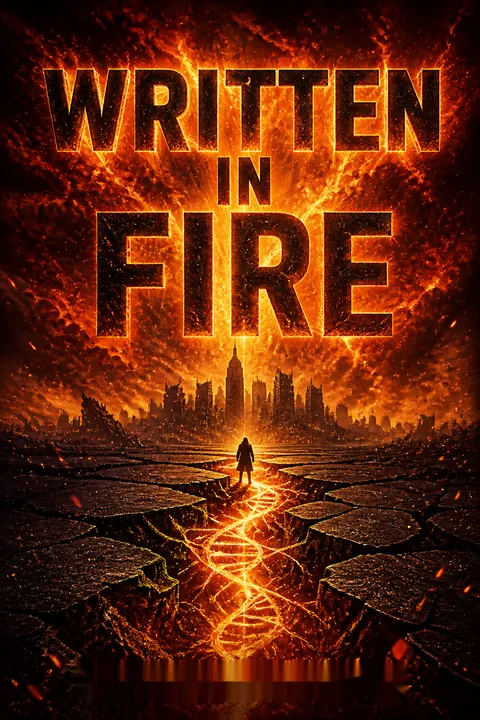


Plot Summary
Prologue
Dr. Abraham Couzen remembers every sensation with unnerving precision, but after injecting himself with a serum designed to create brilliance, memory becomes only one instrument in a mind flooded with new abilities. He reads the movements of a Manhattan crowd, predicts how strangers will collide, and calculates how easily he could kill a passerby.
The power frightens him even as it enthralls him. Then he realizes that armed people are watching. Couzen has crossed a human boundary, but his first experience of the other side is not godlike freedom. It is the knowledge that others have come to take him.
Couzen's transformation establishes the novel's central danger before its human stakes fully emerge: expanded ability is not the same as wisdom, safety, or social belonging. His new mind converts people into readable patterns and potential threats, a shift that makes extraordinary perception feel both intoxicating and isolating. The scene also gives the serum a bodily cost, with panic and bleeding accompanying his sudden power. The watchers matter because brilliance does not arrive in a neutral world. Couzen's discovery immediately becomes an object of pursuit, and the opening asks whether a gift can remain a gift once frightened institutions and movements decide to control it.
Couzen Becomes Something More
Two weeks after a virus massacre leaves seventy-five thousand soldiers dead, former DAR agent Nick Cooper sees a lynched teenager hanging above a Manhattan street. The boy's death sharpens Cooper's urgency: he believes the research of scientist Abraham Couzen could make ordinary people brilliant and remove the fear dividing the country.
Cooper and researcher Ethan Park reach Couzen just as DAR agents move to arrest him. Couzen suddenly overwhelms four trained officers, including Cooper's former partner Bobby Quinn, then escapes through a panicked Grand Central crowd.
Cooper recognizes that the older man is using several distinct gifts, not one. Ethan concludes Couzen must have taken their experimental serum. The discovery transforms their search: they are no longer pursuing a vulnerable scientist, but someone dangerously powerful.
The lynched teenager gives the political conflict an intimate, irreversible cost before the story turns to theories about genetic fairness. Cooper's response is shaped by accumulated failure: he has hunted threats in the name of public safety, yet the violence he encounters keeps widening. Couzen's sudden combat skill makes the serum's promise inseparable from its risk. The same research that might reduce fear between groups has produced an individual beyond ordinary restraint or prediction. Cooper's pattern-reading gift helps him recognize the change, but it cannot prevent Couzen's escape. Expertise buys him understanding, not control.
Vincent's Door to Haven
Cooper and Ethan search for Vincent Luce, Couzen's former partner, and find his apartment wrecked by neighbors who discovered he was brilliant. Cooper beats the men responsible, then tracks Vincent to Madison Square Garden, now a guarded refuge where gifted residents sleep in locked cubicles and families are separated.
Vincent resents Couzen for treating his musical gift as an object of fascination, but identifies a secret laboratory in the South Bronx. He also reveals that Couzen had recently shown him the facility.
Cooper and Ethan head there hoping to recover the serum research before the crisis worsens. Vincent's account makes the pursuit personal: the scientist they hope to save has hurt someone he loved, while the refuge offers safety that already resembles imprisonment.
Vincent's story complicates the idea that shared marginalization automatically creates solidarity. Couzen's desire to understand brilliance has made him attentive to gifts but inattentive to the people who carry them. Vincent's anger is not a rejection of the cause; it is a refusal to be reduced to evidence for it. Meanwhile, the Haven's locked sleeping quarters expose the unstable boundary between protection and confinement. Cooper sees both the immediate brutality of ordinary citizens and the institutional impulse to manage gifted people as a population. The laboratory lead therefore comes with a moral question: whether a discovery can repair a society when its makers have failed one another.
Shannon Bets on Soren
Shannon, a gifted operative once allied with terrorist leader John Smith, accepts a mission from Erik Epstein to capture Smith before the government attacks New Canaan. On a light-rail train, Smith contacts her through a teenage follower carrying a remote detonator.
The boy has been implanted with explosive nanites, and Smith threatens to destroy the crowded car if Shannon moves against him. She counters with a video of Soren Johansen, Smith's closest friend, whom Cooper captured and Epstein's people have treated.
Shannon cannot know whether Soren matters enough to change Smith's calculation. Smith eventually orders the boy off the train, sparing the passengers. Shannon has saved them, but the encounter confirms that Smith's movement has traded its former claims of equality for an openly catastrophic war.
Shannon's confrontation is a test of whether intimacy can exert leverage against ideology. Smith knows her history and anticipates her tactics, while she gambles that his attachment to Soren has not been erased by strategic ambition. The threatened passengers make the choice concrete: Shannon must protect strangers without giving Smith the violence he wants to provoke. Her success saves lives but does not restore trust between former allies. The scene also shows how Smith recruits the young by making self-sacrifice feel sacred. His movement's most dangerous resource is not merely weaponry, but its ability to make a teenager experience obedience as moral purpose.
A Militia Finds Its General
After a bombing nearly kills new president Gabriela Ramirez, Secretary of Defense Owen Leahy urges her to keep dismantling the military's computer systems, fearing another attack like the one that destroyed the White House.
In Wyoming, retired special-operations soldier Luke Hammond joins thousands gathering outside New Canaan after his sons die in the December 1 massacre. He wants revenge, but also refuses to accept the gifted enclave's separation from America. Leahy secretly visits retired General Samuel Miller and offers no equipment or official support, only a promise that the military will not stop a civilian invasion.
Miller accepts. He organizes the swelling crowd into the New Sons of Liberty, while Leahy hopes a limited show of force will pressure Erik Epstein into submission. The militia's fury proves far less containable than Leahy expects.
Leahy and Luke reach the same dangerous policy through different emotional routes. Leahy turns fear into covert statecraft, believing violence can be calibrated and then contained. Luke's grief is more direct, but his sense of national belonging gives revenge a public justification. Miller converts a loose gathering into an army by organizing people around shared loss, and the resulting structure makes individual anger scalable. The plan's fatal weakness is its reliance on deniability: Leahy imagines he can shape events without owning them. The novel's political psychology is precise here. A leader who treats violence as a controlled instrument may still create forces whose motives exceed his design.
Smith Takes the Scientist
At Couzen's Bronx laboratory, Cooper and Ethan find blood, wrecked equipment, and an abandoned meal. Bobby Quinn arrives with DAR commandos, having tracked Cooper rather than the scientist. Security footage shows John Smith and his lieutenants attacking Couzen, taking him alive, and stripping the lab's computers.
Smith's team leaves the research nearly impossible to reconstruct. Cooper understands that Smith has exposed himself only because Couzen's work serves a larger objective. Quinn cannot redirect the department from its impending conflict with New Canaan, so Cooper decides to pursue Smith himself.
He and Ethan travel to the Holdfast, where Couzen's research can be investigated and Cooper's family is sheltering. The search has shifted from recovering a scientific breakthrough to preventing Smith from weaponizing it.
The laboratory footage turns an abstract race for knowledge into a contest over who can control its consequences. Smith's personal appearance signals that Couzen is not incidental to his plans, while the emptied servers remove the comforting assumption that scientific evidence will be easy to recover. Cooper's decision to act outside the DAR echoes his earlier career but no longer rests on confidence in institutions. Quinn's priorities are shaped by the department's collapse and the government's fixation on New Canaan. The partnership between the two men remains affectionate, yet their diverging obligations show how crisis fractures even trusted teams without requiring betrayal.
Home Before the Siege
Cooper reaches New Canaan and embraces his children, Todd and Kate, both living there with his ex-wife Natalie. Todd is recovering from the attack that left him in a coma; Kate, a gifted child, recognizes that the adults around her are frightened.
Cooper spends a precious day with them, explains that fear lets extremists turn neighbors against one another, and reconnects with Natalie. They make love, but Cooper knows he must return to the hunt and later tells Shannon what happened.
At the same time, Erik Epstein prepares for the militia's approach and begins helping Ethan reconstruct Couzen's work. Cooper also visits Soren, Smith's imprisoned friend, hoping information will prevent a wider war. His family reunion is a brief shelter, not an escape from responsibility.
Cooper's return to family tests whether the private life he has repeatedly sacrificed can still be recovered. His explanation to the children is not a tidy moral lesson: he acknowledges that people who do harm often believe they are preventing something worse. That candor reflects his distrust of propaganda, but also burdens children with adult uncertainty. Natalie and Shannon represent distinct forms of attachment, and Cooper's failure to resolve the tension before leaving reveals how emergency duty consumes ordinary honesty. The family scene matters because the coming violence is no longer an abstraction. Cooper's choices will be measured against the specific people who trust him to return.
The Fence Comes Down
The New Sons use chains and trucks to tear open New Canaan's perimeter fence, then march into the Holdfast. Erik's drones answer with an electromagnetic pulse and a bombardment that kills and wounds thousands, but the militia survives and continues forward.
Luke leads a small unit to a remote center holding children rescued from the Davis Academy, where gifted students have been conditioned to fear and obey. His men take control of the facility and prepare to move the children. Then Luke finds two of his own soldiers assaulting a teenage girl.
He shoots both men and covers her with a blanket. His restraint does not undo the invasion he helped lead, but it draws a line against the idea that grief licenses every cruelty. The rescued children become both vulnerable captives and a test of what the militia has become.
The fence breach makes the conflict physical, while the failed bombardment turns a ragged crowd into a force capable of enduring organized violence. Luke's raid exposes a second institutional wound: the academy has trained gifted children into submission, leaving them easier to control than the adults who claim to protect them. His execution of the two assailants is morally forceful, but it does not cleanse the invasion or restore the girl to safety. The scene resists a simple redemption arc. Luke can interrupt one atrocity while still commanding an army whose larger purpose is revenge. Ethical conduct inside an unjust campaign remains consequential, but it cannot substitute for changing the campaign itself.
A Cure Refused
Cooper confronts Soren in a sterile cell and learns that the assassin experiences each ordinary second more than eleven times as long as everyone else. Rather than simply threaten him, Cooper arranges a sensory simulation that lets Soren hear music and move through an ordinary world at normal speed.
Soren recognizes the chance of a life he has never known, but removes the interface instead of trading information about Smith for the experience. After John Smith's coordinated attacks kill Cooper's colleagues, Cooper returns to Soren with a simulated image of Samantha, Soren's lover, being tortured.
The programmer Rickard insists the illusion is not real, but Soren experiences it as agony and finally reveals Smith's plan. Cooper secures the information without physically harming Samantha, though the psychological torture leaves him disturbed by what he has chosen.
Soren's refusal distinguishes freedom from mere access to pleasure. The simulation gives him the experience he has wanted since childhood, yet accepting it would mean surrendering the loyalty that organizes his limited emotional world. Cooper's later tactic exploits that loyalty by making imagined suffering feel bodily real. The distinction between physical and psychological harm becomes ethically thin once the victim cannot distinguish the experience from reality. Cooper remains uneasy, but urgency repeatedly pushes him toward methods he would once have condemned. Soren's altered perception makes him difficult to reach through ordinary empathy; the novel asks whether understanding another person's pain can become a tool of coercion.
The Boy Becomes a Pawn
While the national attacks distract the government, Smith confides his actual design to Aaron Hakowski, a fourteen-year-old normal boy who lives among his followers and is known as Hawk. Couzen discovered how to induce brilliance, and Smith's scientists have attached the genetic therapy to a highly contagious, mild influenza strain.
Smith plans to spread it until nearly everyone is infected, making the entire human population gifted and passing the change to future generations. He asks Hawk to be the first young test subject, promising that the boy's developing brain can tolerate the transformation.
Hawk accepts the injection because he longs to share the abilities of his mother and the people he admires. Smith presents the choice as a contribution to a better future, concealing both the risks and the fact that Hawk is being used as an experiment.
Smith's plan transforms equality into forced biological uniformity. He imagines ending the hierarchy between gifted and ordinary people by eliminating the latter condition, but his method removes consent and treats present lives as raw material for a future species. Hawk is especially vulnerable because his longing is not abstract ambition: he wants to belong to the gifted people he loves and to escape the shame he associates with being ordinary. Smith recognizes this and offers purpose alongside the injection. The scene exposes how utopian rhetoric can recruit the excluded without requiring them to understand the scale of the sacrifice being demanded.
Smith Dies, Tanks Vanish
Cooper leads Epstein's Wardens in a raid on Smith's hidden laboratory, bringing Shannon and Ethan with him. They fight through Smith's defenses, and Cooper shoots Smith when he finds him escaping with Hawk. The victory lasts only until the team searches the lab.
Couzen is dead, having clawed at himself in an attempt to survive the mental shock of his new gifts, and the two high-pressure tanks containing Smith's engineered virus are gone. Ethan confirms that the treatment can radically alter adult brains, with older people unlikely to survive the change.
Cooper realizes Smith's plan did not depend on escaping the raid: the tanks have already been moved, and the virus can spread without its creator. Meanwhile, the New Sons approach Tesla, turning the missing payload into an immediate threat to both armies.
The raid gives Cooper the tangible victory he has pursued for years, then strips it of its usual meaning. Smith's death cannot neutralize a plan already distributed across people, equipment, and political conditions. Couzen's fate reveals the serum's central biological constraint: the mind cannot necessarily absorb several powerful modes of perception all at once. Ethan's explanation converts the promise of universal brilliance into a demographic catastrophe, especially for adults whose brains have finished developing. Cooper's tactical success is therefore structurally incomplete. The antagonist's deepest advantage is not personal survival, but the ability to make his plans continue acting after he can no longer direct them.
Children at the Ring
The New Sons force hundreds of captive children to walk ahead of their armed column toward Tesla's Vogler Ring, a defensive system that heats living tissue with directed radiation. The national government cannot intervene quickly, and Erik's team argues that shutting the system down will expose the city to invasion.
Cooper makes Erik watch the children suffer as they cross the danger line, then insists he power down the Ring. The children survive, but the militia pours into Tesla and begins surrounding the city.
Cooper orders residents to protect the young and elderly in bunkers and turns the remaining population into an improvised defense. Natalie takes her children to safety, then joins the civilians assigned rifles. A decision that saves one group from being burned alive brings the city directly into battle.
The Vogler Ring makes utilitarian reasoning visible: a colored perimeter can be debated as policy until actual children cross it. Cooper forces Erik to confront the bodies hidden inside his calculations, refusing to let defensive intent erase foreseeable harm. Yet disabling the system does not create a clean moral solution. It saves the children at the cost of exposing Tesla's residents to an invading army, including Cooper's own family. Natalie's decision to leave the bunker and fight shows that protection is not a role reserved for the agent or soldier. The scene's hard question is not whether choices have costs, but whether leaders are willing to look at those who pay them.
The Dead Man's Endgame
As the siege begins, Ethan explains that the engineered flu is mild in itself but carries Couzen's therapy, which may overwhelm adult brains and kill most people older than twenty-five.
Cooper and Shannon realize Smith engineered the crisis so infected civilians would scatter from either a militia victory or defeat, carrying the virus outward. Before they can act, Soren escapes his cell, kills the programmer Rickard, and follows instructions left by Smith. He retrieves the two virus tanks and reaches the airfield, where he mounts them on autonomous drones.
The contagion is now close to release over the fighting city. Cooper and Shannon abandon the larger battle plan and race to stop him. Tesla's siege has become a delivery system for a threat that could outlive the war.
The reveal recasts the militia's invasion as a transmission mechanism. Smith does not need to control the outcome; either victory or defeat will disperse survivors across the country, carrying the virus into a weakened world. This is strategy built from social consequences rather than battlefield dominance. Soren's escape gives the plan a personal executor, but his motive is loyalty to a dead friend, not allegiance to a broad political ideal. He accepts mass death because his grief has narrowed the moral universe to John and Samantha. The chapter makes contagion both biological and ideological: a private attachment becomes the vehicle through which a catastrophe is repeated.
Fire Against the Drone
Cooper and Shannon reach the airfield as Soren launches the first drone carrying a virus tank. Cooper shoots its landing strut, causing the hydrogen fuel to ignite before it can reach the front. A second drone takes off.
Shannon commandeers a glider and launches after it, while Cooper faces Soren on the runway. Soren's distorted sense of time lets him evade Cooper's shots and overpower him, but the blue flare from Shannon's collision with the drone breaks his focus. Cooper uses that instant to reverse their positions and kill Soren with his own knife.
He finds Shannon alive in the glider's dissolving impact foam, though her leg is broken. The tanks burn, the contagion is destroyed, and the two surviving partners reach one another amid the city's continuing gunfire.
The climax forces each character to act within a narrow limit. Shannon cannot defeat the drone by ordinary skill, so she makes her own body part of the interception; Cooper cannot outthink Soren's time advantage, so he must abandon calculated distance and attack unpredictably. Their survival depends on complementary forms of courage rather than a single heroic gift. Soren's final defeat comes when grief and rage hold his attention on the burning drone, briefly interrupting the sensory advantage that has made him nearly untouchable. The moment does not make violence triumphant. Cooper survives by killing a damaged man, then must carry both the cost of that act and Shannon's sacrifice.
The Truth Goes Everywhere
With Tesla's defenders and the New Sons still fighting, Cooper broadcasts a message across American screens using dormant software embedded in communication devices. He identifies himself as a father and former agent, explains the serum and Smith's virus, and exposes Leahy's confession that he ordered the attack on New Canaan.
At Camp David, Ramirez has Leahy arrested for treason and opens direct negotiations with Erik. The president sends military aircraft over Tesla, bluffing their readiness; the militia, which still sees itself as patriotic, lays down its weapons.
Miller faces prosecution, while most fighters receive amnesty if they surrender. The broadcast does not settle every grievance, but it interrupts the violence by making the hidden political bargain and the threat to children visible to the public.
Cooper's broadcast counters the novel's recurring political technology: leaders have manufactured fear by controlling which facts reach the public. He uses the same network infrastructure that made mass surveillance and viral attacks possible, but redirects it toward disclosure. The speech is not a magical cure for hatred. Its consequence is more limited and more credible: it gives Ramirez evidence to act, allows the Holdfast to negotiate, and gives the militia a reason to stop without imagining itself defeated by an enemy. The ceasefire depends on both persuasion and a bluff. Public truth matters, but institutions still need a workable path from revelation to action.
What the War Leaves
After the fighting stops, the United States and New Canaan begin negotiating a settlement. Epstein agrees to share the brilliance research, remove hidden software access, accept federal authority, and devote part of his fortune to reparations.
Ramirez ends the proposed microchipping program and dismantles the gifted refuge at Madison Square Garden. Cooper reunites with Natalie, Todd, and Kate, but Natalie recognizes that she cannot live inside his dangerous work and ends their romantic attempt while remaining his friend and co-parent.
The president offers Cooper a role rebuilding the DAR; he postpones the decision and chooses time with Shannon, whose broken leg is healing. They begin a relationship more honestly than before. Peace arrives as a difficult beginning, not a return to the lives they had.
The settlement's political concessions and the private breakup answer different questions. The government begins to recognize gifted people as citizens rather than risks to be monitored, but no legal agreement can restore the families and colleagues lost to the conflict. Natalie understands that love does not make Cooper's life sustainable for her; her refusal is not a failure of feeling, but a boundary formed by experience. Cooper's future with Shannon begins only after he stops treating ambiguity as a harmless byproduct of crisis. The ending grants neither couple a fantasy of untouched domesticity. Instead, it offers the possibility of choosing a life while acknowledging its costs.
Epilogue
Away from the battle, Hawk wakes in a remote cabin after days of fever and discovers that the world now arrives to him in exact numbers, trajectories, and patterns. He understands that Smith's injection has made him brilliant. He also realizes he is carrying the flu and calculates a route through Western cities that will bring him into contact with roughly nine million people.
Still grieving Smith and convinced that his mentor made him the future, Hawk starts the Jeep and drives toward Salt Lake City. His new gift is real, but so is the contagious illness in his body. The last image turns Smith's defeated plan into a journey already underway.
Hawk's awakening closes the book by separating biological success from moral success. His transformation works because he is young, yet the same fact that makes him a viable subject also makes him a carrier capable of spreading the engineered illness. His grief gives the journey emotional logic: he interprets Smith's manipulation as a final act of faith in him, not as exploitation. The route he calculates is chilling precisely because he believes he is choosing his own future. The novel ends with a threat neither a treaty nor a battlefield victory can contain, and with a child whose new powers may help him understand consequences only after he has already set them in motion.
Analysis
Written in Fire treats civil conflict not as a collision between pure heroes and villains, but as a chain of people who convert fear into permission. Leahy believes he can use a civilian militia as controlled pressure. Luke believes grief and patriotism justify an invasion. Erik believes a lethal perimeter is defensible because it protects his people. Smith believes coercive biological change will end inequality by abolishing the condition that makes people vulnerable. Each position contains a recognizable human concern. The danger arises when concern becomes a license to decide whose life is expendable.
Cooper's arc is less about becoming a better fighter than learning what force cannot settle. His tactical competence repeatedly saves individuals, but it cannot by itself dismantle the narratives that keep producing enemies. His most consequential act is a public disclosure that makes secret choices visible, allowing political institutions to negotiate rather than merely retaliate. Yet the settlement is partial. Reparations, legal protections, and the end of forced monitoring cannot restore the dead or erase the memories of those who fought.
The book's treatment of brilliance also refuses a simple fantasy of superiority. Gifts can isolate their holders, distort perception, and make ordinary intimacy difficult. The serum appears to promise a level playing field, but imposed transformation turns equality into another form of domination. Hawk's final journey sharpens that warning: a child can sincerely embrace a future whose costs he cannot yet comprehend. Smith is dead, the war has paused, and the treaty has begun, but the infected boy carries the unresolved consequence beyond the battlefield. The ending suggests that a society cannot escape violence merely by changing who possesses power. It must also change how people justify using it.
Review Summary
Written in Fire concludes the Brilliance trilogy with mixed reviews. While some praise its action-packed plot and thought-provoking themes, others criticize its pacing and character development. The book explores the escalating conflict between normal humans and "brilliants" with superhuman abilities. Nick Cooper, the protagonist, works to prevent all-out war while navigating personal relationships. Many readers found the ending satisfying, though some felt it was too neatly resolved. Overall, the trilogy is praised for its imaginative premise and social commentary, despite some flaws in execution.
People Also Read



Characters
Nick Cooper
The pattern-reading agentCooper is a gifted former DAR operative whose ability to read the likely movement and intentions of people makes him an exceptional tactician, though crowds can overwhelm that same gift. He has spent years trying to protect his children and prevent a war, often by working inside institutions he distrusts. His sense of duty is genuine, but it can harden into a belief that every crisis is his responsibility to solve. Family life with Natalie and their children anchors his ethics, while Shannon understands the dangerous professional world he inhabits. Cooper's defining struggle is not whether he can act decisively, but whether he can remain humane when decisive action repeatedly demands violence.
Shannon
The woman who shiftsShannon is a gifted operative who reads movement as vectors and slips through crowds by anticipating openings before other people see them. She is brave, self-reliant, and drawn to danger because it makes her feel vividly present, but years of covert conflict have begun to exhaust that appetite. She once fought beside John Smith and believed his movement sought equality; her changing judgment reflects both political disillusionment and personal courage. With Cooper, she shares the trust of partners who have repeatedly depended on each other under fire. She wants affection without being treated as an accessory to his mission, and her dry humor often conceals how much she risks emotionally.
Natalie
Cooper's steadfast co-parentNatalie is Cooper's ex-wife and the mother of Todd and Kate. A lawyer and practical parent, she values honesty and emotional clarity, qualities that make her both a source of stability and a demanding witness to Cooper's choices. She has loved him across years of danger, separation, and uncertainty, but love does not erase her need for a life she can inhabit without constant fear. Her bond with her children is attentive and protective, and she understands their emotional states with a parent's finely tuned instinct. Natalie is not defined by Cooper's work; she has her own judgment, limits, and capacity for courage.
John Smith
The revolutionary strategistSmith is a brilliant strategist who has built a terrorist movement around the conviction that gifted people cannot coexist safely with the ordinary majority. Taken from his mother as a child and shaped by the academy system, he sees himself as dismantling a world that has already declared war on people like him. His intelligence lets him anticipate consequences across years, but it also tempts him to treat individuals as pieces in a design. He can inspire fierce loyalty, especially among the young and wounded, because he offers them purpose and belonging. His radicalism is driven by genuine historical grievance, yet his willingness to sacrifice others turns liberation into domination.
Erik Epstein
The brilliant enclave's architectErik Epstein is a wealthy gifted pattern analyst who founded New Canaan as a refuge from a hostile society. He processes vast amounts of information and trusts prediction, systems, and defensive technology, often struggling to account for emotion that does not behave like data. His actions are guided by fear for his people, though his protective instincts can lead him to inflict terrible harm on outsiders. Unlike his brother Jakob, he is socially awkward and personally exposed, with a strong desire to be seen as someone who likes people rather than merely calculates their value. Cooper challenges him to face the human consequences that abstractions can conceal.
Soren Johansen
The slowed-time assassinSoren experiences time at a radically slower pace than other people, making ordinary conversation and shared life exhausting while giving him extraordinary precision in combat. Emotional withdrawal is both a defense against a world that crawls and a consequence of being unable to participate in it on equal terms. He is closely bound to John Smith and to Samantha, whose attention offers a rare form of intimacy that fits his altered perception. Soren's history makes him easy to label a monster, but his isolation complicates that judgment. He is capable of tenderness and loyalty, though those attachments can become narrow enough to excuse devastating acts.
Ethan Park
The serum's co-creatorEthan is a brilliant researcher whose scientific curiosity helped uncover how gifts could be induced in ordinary people. He is warm, earnest, and prone to becoming absorbed in the mechanics of a discovery before considering how others may use it. His wife, Amy, and infant daughter, Violet, give him a strong longing for ordinary domestic life, making his involvement in the crisis feel like an unwanted extension of his work. He respects Cooper but questions the assumptions that gifted people are simply fortunate. Ethan's struggle is to accept responsibility for knowledge without pretending that discovery alone determines whether its use is ethical.
Luke Hammond
The grieving field commanderLuke is a retired special-operations soldier whose sons served in the military and whose life has been organized around duty, discipline, and fatherhood. Their deaths leave him bereaved, but his anger is joined to a belief that New Canaan remains part of the country he has spent his life defending. He is highly capable under pressure and understands how to turn disorganized people into an effective force. Luke's military discipline can restrain cruelty at close range, yet it also lets him participate in a campaign whose scale and purpose exceed personal control. His grief does not make him irrational; it makes a destructive course feel necessary.
Aaron Hakowski, Hawk
The boy seeking a giftAaron, called Hawk by the people he admires, is a fourteen-year-old normal boy living among gifted revolutionaries. He is observant, eager to matter, and vulnerable to the belief that being ordinary makes him lesser. His mother's absence deepens his need for guidance, while Smith's attention gives him the rare feeling of being treated as a serious person. Hawk's admiration is not foolishness; it grows from a real hunger for competence, belonging, and purpose. He wants to become someone who can help, and that desire makes him susceptible to a mentor who frames risk as trust.
Owen Leahy
The covert defense secretaryLeahy is a seasoned intelligence official who believes national security sometimes requires actions the public and elected leaders cannot openly support. He does not see himself as a hater of gifted people; he sees himself as managing a dangerous imbalance and protecting his grandchildren's future. That self-image permits him to use covert alliances and political pressure while insisting that his goals remain limited. Leahy understands institutions and public perception exceptionally well, but his faith in controlled conflict blinds him to the forces he helps unleash. He is the novel's portrait of bureaucratic rationality becoming culpable when it treats human lives as acceptable leverage.
Gabriela Ramirez
The crisis-made presidentRamirez becomes president after political upheaval removes the leaders ahead of her in succession. She tries to preserve a functioning government while resisting demands for revenge and refusing to assume that genocide is the only answer. Her practical instincts lead her to prioritize immediate safety, even when advisers press her to assign blame or escalate conflict. Ramirez's authority is fragile, and she must act amid damaged institutions, public panic, and a military stripped of much of its technology. She represents a political alternative to Leahy's covert strategy and the militia's vengeance, though her options are never as broad as her office suggests.
Samuel Miller
The militia's retired generalMiller is a retired two-star general who can impose structure on an angry, diverse gathering without relying on a conventional military chain of command. He understands the emotional force of patriotic memory and uses it to unite people who arrive with different losses and grievances. His leadership has genuine organizational skill, but the same rhetoric that creates cohesion can turn a civilian crowd toward invasion. Miller believes in decisive action and accepts the risks of leadership, including the possibility that he cannot control what his movement becomes once the fighting begins.
Bobby Quinn
Cooper's former partnerQuinn is a skilled DAR agent and Cooper's closest professional friend. He shares Cooper's operational instincts and humor, but his loyalty to the agency and his experience of its losses make him less willing to trust New Canaan's account of events. He is practical rather than doctrinaire, able to reconsider a position when Cooper asks what victory would actually mean. Their friendship is built from years of danger, mutual rescue, and the ordinary intimacy of partners who have shared work and grief. Quinn represents the people inside institutions who must decide whether loyalty means obedience or honest doubt.
Millicent, Millie
The child who reads peopleMillie is an exceptionally perceptive gifted child who senses the emotions and hidden motives of people around her. Erik's reliance on her insight gives her influence far beyond her age, but it also forces her to carry adult knowledge that should not be a child's burden. She often hides behind her purple hair and a guarded manner, using small acts of withdrawal to protect herself from the emotional noise she absorbs. Her conversations with Cooper reveal an unusual capacity for empathy, especially toward people others have reduced to monsters. Millie wants quiet and connection, not the responsibility her ability seems to impose.
Jakob Epstein
Erik's public-facing brotherJakob is Erik's polished brother and public representative, comfortable with presidents, executives, and the language of power. He manages the human-facing side of the Epstein enterprise while his brother handles much of its analysis and strategy. Jakob is protective of Erik and New Canaan, and his confidence can become impatience with outsiders who question the enclave's decisions. He understands presentation as a form of political force, but his loyalty sometimes encourages him to defend choices before fully confronting their costs. His relationship with Erik is both familial and functional, a partnership built around complementary strengths.
Abraham Couzen
The fugitive scientistCouzen is an aging scientist whose work with Ethan Park targets the biological basis of brilliance. Private and suspicious, he guards his research closely and keeps even former collaborators at a distance. His intellectual drive is paired with a willingness to take extraordinary personal risks, a combination that makes him both a visionary and an unreliable judge of his own limits. Vincent's experience of him suggests that Couzen can value gifted people as evidence of a phenomenon more readily than as partners with independent needs. His research becomes important to powerful movements whose aims he cannot control.
Vincent Luce
The brilliant pianistVincent is a gifted pianist whose ability lets him play separate solos with each hand. He is sensitive to the difference between being appreciated as a person and being admired as a curiosity, a distinction that shapes his strained relationship with Couzen. His neighbors' abuse makes him wary of both ordinary society and the people who claim to protect the gifted. Vincent's music is a source of craft and identity, not merely a demonstration of his gift. He retains a sharp sense of self even when violence and confinement threaten to reduce him to a victim.
Samantha
Soren's intimate allySamantha is a gifted woman whose empathic ability lets her sense and reflect the desires of others. Her past exploitation has made being needed feel inseparable from being valued, leaving her vulnerable to relationships organized around other people's appetites. She shares a deep, complicated bond with Soren and also has a history with John Smith. Samantha is more than a source of leverage between men: her gift shapes how she reads intimacy, while her past raises questions about consent, dependency, and the difference between attunement and self-erasure.
Todd Cooper
Cooper's recovering sonTodd is Cooper and Natalie's ten-year-old son, a thoughtful child recovering from a serious attack. He misses home and worries that his attempt to protect his father made matters worse, revealing a tendency to take adult dangers onto his own shoulders. Todd asks direct questions about violence and responsibility, forcing his parents to explain a world that offers no simple division between heroes and villains. His bond with his younger sister Kate is affectionate and protective. Todd's vulnerability reminds Cooper that the consequences of political conflict reach children long before they can understand its causes.
Kate Cooper
The gifted younger daughterKate is Cooper and Natalie's five-year-old daughter, a gifted child whose perceptiveness makes her unusually alert to the fear surrounding her. She trusts her father to protect the family, a faith that fills him with both tenderness and dread. Kate is lively and affectionate, often bringing a child's bluntness into moments when adults are hiding their uncertainty. Her presence makes the stakes of Cooper's work concrete without making her a miniature adult. She needs the ordinary protections of childhood in a world that keeps treating gifted children as political problems.
Plot Devices
Brilliance and gifts
Abilities with social costsIn this world, roughly one percent of people are born with gifts that make them unusually capable in specific domains, from reading human behavior to manipulating movement or experiencing time differently. These abilities fuel scientific advances and give gifted people advantages, but they also invite fear, discrimination, surveillance, and political control. Gifted children may be taken to academies, where authorities try to reshape their identities. The system is not simply a power scale: abilities affect how a person experiences relationships and ordinary life. The plot uses that variation to make conflict both geopolitical and intimate.
Couzen-Park therapy
A manufactured giftCouzen and Ethan discover that brilliance can be induced by altering gene expression with non-coding RNA. Their therapy promises to reduce the divide between gifted and ordinary people, but the story reveals that the brain may not safely absorb several new modes of perception after it has matured. Smith's scientists attach the therapy to an influenza strain, turning a laboratory breakthrough into a mass biological weapon. The device drives the central race for Couzen, creates a temptation for people who long to be gifted, and exposes the gap between proving a technology works and understanding what it does to a human life.
The Vogler Ring
A shield that becomes a weaponThe Vogler Ring is a defensive perimeter of overlapping microwave emplacements around Tesla. It is intended to make the city inaccessible to attackers, but its radiation heats water and fat in living bodies, causing escalating pain and potentially fatal burns. The Ring is framed as protection until children are forced to cross it ahead of the militia. Cooper's demand that Erik shut it down exposes the difference between calling a weapon defensive and deciding who must endure its effects. Once disabled, Tesla becomes vulnerable to the invasion it had been built to prevent.
Soren's sensory simulation
A door to ordinary timeNew Canaan's virtual reality system directly stimulates sensory processing, allowing Soren to experience a world where time moves at a human pace. Cooper first offers it as a possible path toward trust, since Soren's altered perception has deprived him of ordinary conversation, music, and shared experience. The same technology later makes simulated torture feel real enough to compel information. Its use changes the meaning of harm: a constructed experience can still produce genuine terror, physical stress, and moral injury. The device tests whether compassion and coercion can remain separate when a victim's mind supplies the suffering.
The engineered influenza
A contagious inheritanceSmith's engineered flu is designed to spread widely while causing only mild symptoms. Its real payload is the brilliance therapy, carried through the virus so that infection could transform the population and pass the change to future generations. Because the illness initially resembles an ordinary cold, its danger is difficult to recognize, particularly amid political collapse and the destruction of public health infrastructure. The novel uses the virus to make movement itself dangerous: refugees and militia survivors could carry it beyond the battlefield. Hawk's infection at the end turns an apparently defeated scheme into an unresolved threat.
Brilliance Saga Series
Download PDF
Download EPUB
.epub digital book format is ideal for reading ebooks on phones, tablets, and e-readers.








