

Key Takeaways
Return to the present through one ordinary, unforced breath.
Start with what is happening. Mindfulness begins by noticing an in-breath as it is, then noticing an out-breath. There is no need to deepen or control it. This simple attention gathers body and mind, which often drift apart as thought races toward yesterday or tomorrow. Nhat Hanh presents breathing as a bridge back to direct experience, available at home, at work, or in motion.
Let attention become a daily practice. A few mindful breaths can precede the day, or accompany walking, drinking tea, and washing dishes. The point is not to escape ordinary life but to arrive inside it. As attention steadies, a person may notice more calm, and become more available to themselves and others.
The strength of this method is its low threshold: it asks for attention, not special equipment, a quiet room, or a particular belief. It also treats mindfulness as an embodied skill rather than an abstract idea. Contemporary accounts of attention often distinguish knowing about an experience from attending to it; this practice makes that distinction tangible. Still, a breath is not a universal cure. For some people, focusing inward can intensify distress. The deeper principle is returning to a safe, concrete anchor, which might be the breath, the feet, or a sound in the room.
Hold painful emotions gently instead of making yourself their battlefield.
Recognize before changing. Anger, fear, and despair are not foreign intruders to be expelled. They are part of the person experiencing them. Mindfulness means noticing an emotion without condemning it, then meeting it with the care one might give a frightened child. This is not approval of harmful behavior. It is a way to stop adding self-attack to the original pain.
Make room for transformation. Nhat Hanh compares distress to discarded matter that can become nourishment for new growth. The image suggests that difficult feelings may contain information and can be worked with rather than denied. A person can pause, breathe, and acknowledge the feeling before deciding what to do. The aim is tenderness first, insight and wise action after.
This approach resists a familiar trap: treating emotions as commands on one side and enemies on the other. Naming an emotion can create enough distance to respond rather than react, while compassion reduces the shame that often keeps distress hidden. The gardening metaphor is especially useful because it makes transformation gradual and active, not magical. Its limit is worth keeping in view: some pain is intensified by ongoing danger, illness, or injustice. Inner acceptance can support action, but it should not be confused with accepting harmful circumstances as inevitable.
Give ordinary moments your full attention before chasing a happier future.
Happiness is not only a destination. Nhat Hanh asks readers to bring complete attention to small experiences: walking, eating, or holding a cup of tea. An orange, examined closely, connects the eater to rain, sunlight, soil, and the labor that brought it to the table. The experience becomes richer not because the fruit changes, but because attention does.
Practice where life happens. A meal can mean tasting the food and noticing the people present, rather than mentally rehearsing the next task. Washing a bowl can become a moment of steadiness instead of a chore to rush through. The practice does not deny plans or ambition. It challenges the habit of postponing life until some later achievement supposedly makes it worthwhile.
This is a precise challenge to the idea that satisfaction belongs only after progress. Attention changes the experienced quality of an activity without requiring its circumstances to improve first. That insight can make routine less numbing and gratitude less dependent on grand events. It also has a practical edge: when ordinary tasks become occasions for attention, there are more opportunities to practice than a meditation schedule alone can provide. Yet attention should not be used to romanticize exhaustion or deprivation. Seeing a hard situation clearly can be the first step toward changing it.
See yourself as changing processes, not a fixed inner object.
The self has moving parts. The book describes five aggregates, or skandhas: physical form, feelings, perceptions, mental formations, and consciousness. Together, these changing processes make up what is ordinarily called a person. The body changes like a river; feelings arise and pass; perceptions form and can be mistaken. This view does not claim that experience is unreal. It questions the idea of an unchanging core standing apart from it.
Notice what is being cultivated. The author compares consciousness to soil containing seeds of reactions and capacities, such as anger, compassion, and mindfulness. Conditions can bring a seed forward. Practice includes selective watering: strengthening helpful qualities and not repeatedly feeding destructive ones. The model shifts attention from a permanent identity to the patterns being reinforced in the present.
A process-based view of identity can loosen labels such as “always angry” or “incapable of change.” It directs attention toward conditions, habits, and relationships, all of which can shift. The seed metaphor also conveys an important distinction: having a capacity does not mean it must dominate every moment. This resembles systems thinking, where outcomes emerge from interacting conditions rather than one isolated cause. The account is spiritual rather than a scientific map of the mind, however. Its value lies in the questions it prompts, not in treating its categories as a complete psychological taxonomy.
Check your perceptions before turning them into accusations.
An interpretation is not the whole event. Nhat Hanh tells of a Vietnamese husband who returned from war and misunderstood his young son’s description of a nightly visitor. The visitor was actually the mother’s shadow, which she had used to help the child imagine his absent father. The husband assumed betrayal, withdrew, and stayed away; his wife, unable to bear the silence, died by suicide before the misunderstanding was cleared up.
Ask before concluding. The tragedy illustrates how an untested story can become more powerful than the facts. The book urges people to pause and examine whether their interpretation is accurate, especially when hurt or anger makes certainty feel satisfying. In a strained relationship, asking the other person to explain can be wiser than punishing them for a conclusion they have not had a chance to address.
The story makes a cognitive bias painfully concrete: people often experience an interpretation as though it were direct perception. Slowing down to ask what else could explain an event creates room for information and repair. This is not a demand to distrust every instinct. Some perceptions accurately detect danger, and repeated dismissal of one’s own judgment can also be harmful. The useful discipline is calibrated uncertainty: treat a first explanation as a hypothesis, then seek context before taking irreversible action.
Repair the past through the choices still available in the present.
The past continues through consequences. Nhat Hanh argues that earlier events remain active in present habits, relationships, and the lives of those shaped by them. He uses the example of a person who regrets cruel words spoken to a mother who has died. Because the mother continues through her child, the person can acknowledge the harm, change how they act, and relate differently to that inheritance now.
Make a fresh start concrete. At a retreat, a former American soldier described causing the deaths of five children during the Vietnam War. He remained trapped in guilt until he chose to devote himself to helping children affected by war and deprivation. The past was not erased. Instead, his present actions began to answer it. The practice called beginning anew means recognizing past harm and committing to a different way of living.
This is a powerful alternative to both denial and endless self-punishment. Repair cannot reverse what happened, but it can alter what the past produces next. The idea connects moral responsibility with a forward-looking account of identity: a person is accountable for prior actions without being reduced to them. There is also a necessary distinction between transformation and absolution. A new commitment does not automatically repair damage or earn forgiveness from those harmed. Its first test is whether it reliably changes behavior and helps prevent further harm.
Offer love as presence, honest speech, and patient listening.
Attention is a form of care. Nhat Hanh’s practical account of love begins with being genuinely present. He offers simple statements of recognition: let a loved one know they matter, acknowledge when they are suffering, and ask for help when one is hurt. These gestures are not meant to solve every problem. They make room for the other person to be seen and for difficult feelings to be spoken.
Listen to understand, not to win. Deep listening means keeping compassion in view while someone expresses pain, even when their words are upsetting. The listener does not have to agree with every claim. The immediate task is to understand the experience well enough to respond without reflexive blame. When both people can speak honestly and listen without humiliation, misunderstanding has less room to harden into estrangement.
The emphasis on presence gives love a behavioral measure: does the other person experience attention, or only good intentions? The approach also links listening to emotional regulation, since a calmer listener is less likely to turn another’s pain into a contest over who is right. Compassionate listening is not the same as passivity or limitless availability. Boundaries may be necessary, and some conflicts require mediation or safety planning. Listening is most useful when it creates understanding without requiring anyone to surrender the right to disagree.
Name the attachments you call necessary before they make you captive.
Find your “cows.” In a story from the Buddha’s life, a farmer arrives distressed because his cows have run away and insects have ruined his sesame crop. The Buddha observes that his monks are fortunate not to own cows they can lose. The cows stand for anything a person assumes is essential to happiness, including possessions, status, expectations, or a rigid idea of how life should unfold.
Letting go creates room. The lesson is not that care, work, or commitment should be abandoned. It is that clinging to one prescribed outcome can narrow the paths a person is able to see. Mindful attention helps reveal which attachments bring genuine nourishment and which have become sources of fear. Releasing an assumption can restore freedom to choose among possibilities that were previously ignored.
The story’s humor makes a difficult point memorable: security can become a form of dependence when happiness is tied to conditions outside one’s control. Naming the attachment is a useful first move because vague dissatisfaction can conceal a very specific demand. The idea should not be stretched into a blanket case for detachment. Responsibilities and relationships are not automatically “cows” to discard. The sharper question is whether care is being confused with ownership, or whether one imagined outcome has become the only outcome the mind will permit.
Use community and ethical habits to strengthen mindfulness beyond meditation.
Practice is easier together. A Sangha is a community of people practicing mindfulness. Nhat Hanh likens its shared steadiness to a boat capable of carrying suffering that one person might struggle to bear alone. Beginners can draw on the group’s support while their own practice is still fragile. Mindfulness can also be built into ordinary cues: a red traffic light, for example, can remind a driver to pause and return attention to breathing.
Let attention guide conduct. The Five Mindfulness Trainings connect inner practice to daily choices. They address protecting life, avoiding exploitation, acting responsibly in sexual relationships, speaking truthfully and listening, and consuming with care. Together, they make mindfulness more than private calm. They ask how a person’s habits affect family, community, other living beings, and the wider world.
Community turns a solitary aspiration into a shared environment, where practice is modeled, supported, and reinforced. The everyday cue is equally important: it makes mindfulness portable rather than dependent on retreat conditions. The ethical trainings widen the meaning of presence by asking what attention is protecting, not only how calm it feels. Group support is not automatically wise, though. Communities need accountability and room for disagreement; otherwise belonging can become pressure to conform. A healthy practice group helps members see more clearly, rather than demanding that they surrender judgment.
Understand life as interdependent change, not a separate self facing annihilation.
Things depend on other things. Interbeing is the book’s term for the way no person or object exists independently. A sheet of paper, for example, depends on a tree, sunlight, clouds, rain, and the work that made it. A human being likewise carries physical and social inheritances, and affects what comes after. The image of a wave and the water it is made of expresses the same point: forms change, while their elements continue in new arrangements.
Use the view to soften fear. Nhat Hanh argues that birth and death describe changes in manifestation rather than a passage from nothing into something and back to nothing. This is a contemplative teaching, not a claim that grief or bodily death is unreal. Looking at continuity can help a person loosen the assumption that a separate, permanent self must either endure unchanged or disappear completely.
Interdependence offers a compelling corrective to the fantasy of the self as self-made and self-contained. It links personal life to ecology, ancestry, and consequence, making responsibility and belonging two sides of the same insight. The paper example is persuasive because its dependencies are visible and ordinary. Claims about no-birth and no-death reach beyond what the example alone can establish; they function as Buddhist metaphysical teachings, not settled scientific conclusions. Their practical force can still be explored without requiring literal certainty: identities and materials persist through transformation, even as particular lives end.
Let mortality make today vivid instead of postponing the life you want.
A short horizon can clarify attention. Nhat Hanh recalls a young man who was told he had only three months to live. Rather than spend that time wholly absorbed by despair, the man began meeting each day more fully. He lived for another fifteen years. The point is not that mindfulness changes a medical prognosis. It is that the diagnosis exposed how little of his life he had been inhabiting.
Do not reserve aliveness for later. The book also recounts a Buddhist teacher’s delayed promise of a picnic, which remained unfulfilled for years. When the teacher and student finally encountered a funeral procession, the student joked that the mourners were having the picnic. The story sharpens the warning: waiting for a perfect time can mean missing the time actually available.
Mortality can function as a focusing lens, clarifying which experiences deserve attention now. The stories move this idea from abstract reflection to ordinary choices: make the visit, taste the meal, or stop postponing connection. The young man’s survival is memorable, but it should not be misread as evidence that mindfulness cures illness or guarantees longevity. The stronger lesson concerns the quality of attention under uncertainty. Facing death is not the same as denying fear; it is a way to prevent fear and planning from consuming the life that remains.
Analysis
You Are Here is less a linear argument than an invitation to practice while reading. Its central move is deliberately small: attend to one breath, then use that recovered attention to encounter emotion, other people, memory, and mortality differently. The progression matters. Presence is not offered as a private relaxation technique; it becomes the basis for ethical conduct and social responsibility.
The book’s distinctive strength is its refusal to divide experience into clean opposites. Anger is not an enemy outside the self. Suffering is not simply an obstacle to happiness. The present is not cut off from the past, and the individual is not separate from community or environment. These claims converge in interbeing, which frames existence as a web of conditions and continuations. The concrete stories keep this philosophy from floating away: the misunderstood shadow shows the cost of certainty, the former soldier’s change of direction shows responsibility without paralysis, and the farmer’s missing cows make attachment legible through humor.
The teaching is most persuasive when treated as a discipline of attention and response. Breathing, listening, and examining perceptions can interrupt habitual reactions and make alternative actions visible. Its largest interpretive leap is the claim that insight into no-birth and no-death can dissolve fear. That claim belongs to Buddhist metaphysics and may comfort practitioners, but it should not be confused with empirical proof or a denial of bodily loss. Similarly, compassionate attention is valuable but does not replace treatment, safety, or material change when those are needed.
The book’s enduring proposition is practical: an ordinary moment is not a waiting room for real life. Attention can reveal that life is already happening, while ethical choices determine what that recognition becomes for others.
Review Summary
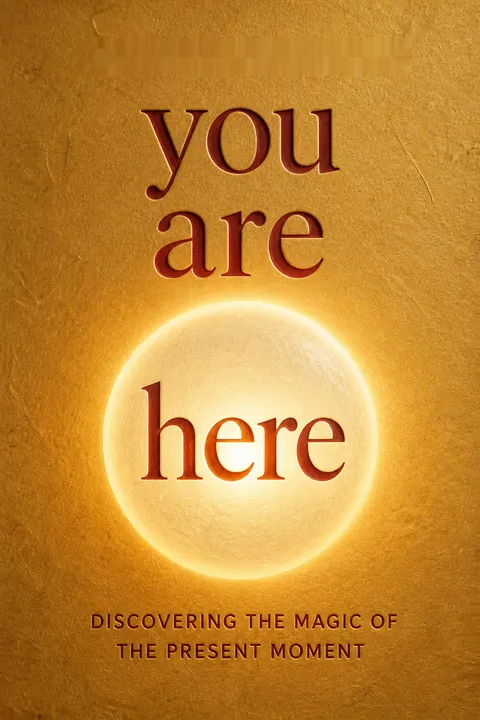
You Are Here: Discovering the Magic of the Present Moment receives praise for its accessible teachings on mindfulness and living in the present. Readers appreciate Thich Nhat Hanh's simple yet profound wisdom, finding it calming and inspiring. Many describe the book as a slow, contemplative read that encourages reflection. While some find it repetitive, others see value in revisiting key concepts. The book's focus on breathing, meditation, and embracing impermanence resonates with readers seeking peace and personal growth. Overall, it's viewed as a valuable introduction to Buddhist principles and mindfulness practices.
People Also Read




Glossary
Mindfulness
Present-moment awarenessMindfulness is the energy of recognizing what is happening in the present without immediately judging, suppressing, or grasping at it. In the book, awareness of breathing is a basic way to generate mindfulness, bringing body and mind together. The practice can then extend to emotions, sensory experience, relationships, and everyday actions.
Five elements
Processes making up a personAlso called the five aggregates or skandhas, the five elements are physical form, feelings, perceptions, mental formations, and consciousness. Together they describe what is commonly experienced as the self. The book presents them as changing processes rather than parts of a permanent, independent identity, and recommends observing them to understand suffering and restore inner harmony.
Interbeing
Existence through interdependenceInterbeing names the teaching that nothing exists entirely by itself. A person, object, or event depends on conditions and elements beyond itself. A sheet of paper, for example, depends on a tree, sunlight, rain, and human work. Seeing this interdependence can loosen the idea of a separate self and reveal connections across nature, family, society, and time.
Selective watering
Nourishing chosen mental seedsSelective watering is the practice of strengthening helpful qualities while avoiding repeated reinforcement of harmful ones. The book describes consciousness as containing seeds of mental formations, including compassion, anger, and fear. Attention, habits, and surroundings can help particular seeds manifest. The practitioner notices these conditions and chooses which qualities to nourish through daily actions.
Sangha
Community of practiceA Sangha is a community whose members practice mindfulness together. In the book, the group’s shared energy can support a person whose individual practice is not yet strong enough to meet deep suffering. Taking refuge in the Sangha means relying on this collective practice and contributing one’s own presence, not merely declaring belief in a group.
Beginning anew
Commitment to a fresh startBeginning anew is a practice of recognizing harm or unskillful behavior, understanding its causes, and making a concrete commitment not to repeat it. It does not erase the past. It changes the way the past continues through present conduct. The book connects the practice to mindful daily choices and to taking responsibility for the effects of one’s actions.
Three Dharma Seals
Marks of authentic teachingThe Three Dharma Seals are presented as tests of an authentic Buddhist teaching: impermanence, non-self, and nirvana. Together, they direct practitioners to see change, the absence of a separate permanent identity, and freedom from concepts that cause suffering. The book treats these ideas as tools for deep looking, not doctrines to cling to as fixed conclusions.
Three concentrations
Modes of deep contemplationThe Three Concentrations are emptiness, signlessness, and aimlessness. They are described as ways of looking deeply that loosen attachment to separate identities, fixed appearances, and goals treated as prerequisites for happiness. The book presents them as foundational contemplative practices that help people encounter reality without being confined by habitual concepts.
Five Mindfulness Trainings
Ethical guides for daily lifeThe Five Mindfulness Trainings are practical ethical commitments concerning protection of life, generosity and non-exploitation, responsible sexual conduct, truthful and compassionate speech, and mindful consumption. They apply mindfulness beyond meditation, connecting personal well-being with the welfare of families, communities, other living beings, and future generations.
Shining light
Receiving clear personal feedbackShining light is a Plum Village practice in which community members offer a person observations about their strengths, difficulties, and patterns. The purpose is illumination and support, not condemnation. The book describes it as a way to see one’s conduct more clearly and to make commitments that nourish constructive qualities while reducing avoidable suffering.
FAQ
What's "You Are Here: Discovering the Magic of the Present Moment" about?
- Focus on the present: The book emphasizes the importance of being fully present in the moment as the gateway to enlightenment and joy.
- Buddhist practice: Thich Nhat Hanh introduces readers to the essentials of Buddhist thought, focusing on mindfulness and presence.
- Transforming suffering: It offers practical advice on transforming personal suffering into compassion and peace through mindfulness.
- Connection to peace: The book links personal inner peace with broader peace on earth, suggesting that individual mindfulness can contribute to global harmony.
Why should I read "You Are Here: Discovering the Magic of the Present Moment"?
- Practical mindfulness techniques: The book provides simple, everyday practices to cultivate mindfulness and presence in daily life.
- Insightful teachings: Thich Nhat Hanh, a renowned Buddhist teacher, shares profound insights into the nature of suffering and happiness.
- Personal transformation: Readers can learn to transform their suffering into compassion and joy, improving their quality of life.
- Global impact: By achieving personal peace, readers can contribute to peace in the world, aligning with the book's broader message.
What are the key takeaways of "You Are Here: Discovering the Magic of the Present Moment"?
- Mindfulness is essential: Being present in the moment is crucial for personal peace and happiness.
- Nonviolence and nonduality: The book emphasizes treating emotions and thoughts with tenderness, avoiding internal conflict.
- Interconnectedness: Understanding the interconnected nature of all things can lead to deeper compassion and less suffering.
- Transformation through practice: Regular mindfulness practice can transform negative emotions and improve relationships.
What are the best quotes from "You Are Here: Discovering the Magic of the Present Moment" and what do they mean?
- "The energy of mindfulness is the energy of the Buddha, and it can be produced by anybody." This quote highlights that mindfulness is accessible to everyone and is a powerful tool for personal transformation.
- "Breathing in, I know I am breathing in." This simple statement encapsulates the essence of mindfulness practice, focusing on the present moment.
- "You are here for life; and if you are here for life, life will be here for you." It suggests that being present allows one to fully experience and appreciate life.
- "The miracle is walking on the earth, not walking on water or fire." This quote emphasizes finding wonder and joy in everyday experiences.
How does Thich Nhat Hanh define mindfulness in "You Are Here: Discovering the Magic of the Present Moment"?
- Simple awareness: Mindfulness is the simple recognition of what is happening in the present moment without judgment or attachment.
- Breath as a tool: The practice often begins with awareness of the breath, which helps unite body and mind.
- Nonviolence: Mindfulness involves treating thoughts and emotions with tenderness, avoiding internal conflict.
- Presence and connection: It is about being truly present for oneself and others, fostering deeper connections and understanding.
What practical advice does "You Are Here: Discovering the Magic of the Present Moment" offer for cultivating mindfulness?
- Mindful breathing: Focus on your breath, acknowledging each in-breath and out-breath to bring your mind back to the present.
- Walking meditation: Coordinate your steps with your breath, using each step to arrive in the present moment.
- Mindful eating: Be fully present while eating, appreciating the food and the people around you.
- Daily mindfulness: Incorporate mindfulness into everyday activities, such as washing dishes or driving, to maintain presence throughout the day.
How does "You Are Here: Discovering the Magic of the Present Moment" address dealing with emotions?
- Embrace emotions: Treat emotions like anger or pain with tenderness, as you would a crying baby.
- Nonviolent approach: Avoid struggling against emotions; instead, recognize and embrace them with mindfulness.
- Transformation: Use mindfulness to transform negative emotions into positive ones, like compassion and understanding.
- Calming techniques: Practice mindful breathing and focus on the movement of your abdomen to calm strong emotions.
What is the significance of the "Four Mantras" in "You Are Here: Discovering the Magic of the Present Moment"?
- Presence and recognition: The first mantra, "Dear one, I am here for you," emphasizes the importance of being present for loved ones.
- Appreciation: The second mantra, "Dear one, I know that you are here," acknowledges and appreciates the presence of others.
- Compassion: The third mantra, "Dear one, I know that you are suffering," offers support and understanding to those in pain.
- Seeking help: The fourth mantra, "Dear one, I am suffering," encourages asking for help when needed, overcoming pride.
How does "You Are Here: Discovering the Magic of the Present Moment" explain the concept of non-self?
- Interbeing: Non-self means recognizing that nothing exists independently; everything is interconnected.
- Miraculous nature: Like a flower containing the whole cosmos, each person contains multitudes and is part of a larger whole.
- Freedom from self: Letting go of the concept of a separate self reduces suffering and leads to greater freedom.
- Aimlessness: Embrace the idea of aimlessness, understanding that you already contain everything you seek.
What role does impermanence play in "You Are Here: Discovering the Magic of the Present Moment"?
- Essential for life: Impermanence is the heart of life, making growth and change possible.
- Hope and transformation: It allows for the transformation of suffering and the end of negative states like dictatorship.
- Understanding reality: Recognizing impermanence helps us see the true nature of things and reduces attachment.
- Joy in change: Embracing impermanence leads to greater appreciation and joy in the present moment.
How does "You Are Here: Discovering the Magic of the Present Moment" suggest we deal with the past and future?
- Present moment focus: The book emphasizes living in the present as the past and future are contained within it.
- Transforming the past: By being present, we can understand and transform past actions and regrets.
- Preparing for the future: Taking care of the present moment is the best way to ensure a positive future.
- Interbeing of time: The past, present, and future inter-are, and understanding this helps us live more fully.
What is the ultimate goal of practicing mindfulness according to "You Are Here: Discovering the Magic of the Present Moment"?
- Touching the ultimate: The practice aims to help individuals touch the ultimate dimension of reality, beyond concepts like birth and death.
- Freedom from fear: By understanding the nature of no-birth and no-death, one can overcome fear and suffering.
- Living deeply: Mindfulness allows for living each moment fully, appreciating the wonders of life.
- Contributing to peace: Achieving personal peace through mindfulness contributes to broader peace in the world.
About the Author
Other books by Thich Nhat Hanh






Download PDF
Download EPUB
.epub digital book format is ideal for reading ebooks on phones, tablets, and e-readers.








