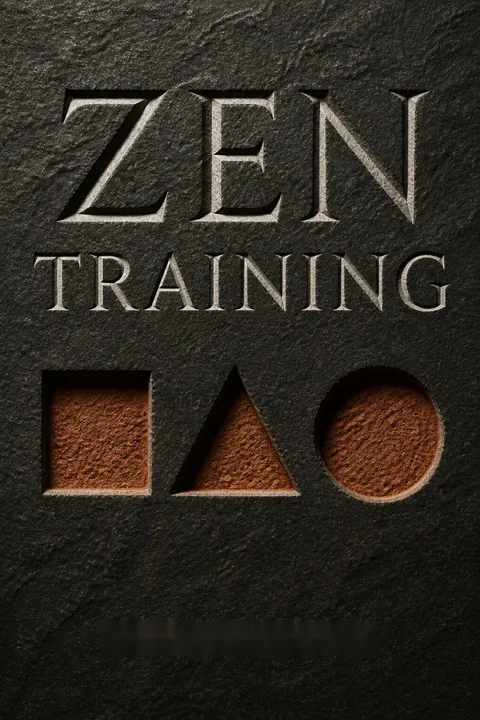


Key Takeaways
Make zazen the foundation, not a hunt for a spectacular awakening
Practice comes first. Sekida presents Zen as training with the whole body and mind, not a theory to agree with. The book moves from sitting instructions to questions of perception, identity, and how to live. Its central shift is to treat stable, awake stillness as the groundwork of practice rather than treating an intense enlightenment experience as the finish line.
The route is demanding. Sekida describes how fear of death drove him to sit, and how an early experience of deep absorption in a calligraphy lesson showed him a quiet state he spent years trying to understand. He argues that such experiences matter only in a larger discipline of repeated practice and ordinary conduct.
What's distinctive is the book's refusal to make a dramatic inner event the sole measure of spiritual progress. That move also guards against confusing intensity with transformation: an experience can feel conclusive without changing habits, judgment, or behavior. Sekida instead asks readers to evaluate practice by its effects on attention and everyday life. His autobiographical account lends urgency to the method, though personal testimony cannot establish that one interpretation of an altered state is the only correct one.
Build a stable seat, but adapt posture to the body you have
Stability matters more than display. Sekida recommends a balanced base, with the knees and buttocks supporting the body, the trunk upright, and the lower abdomen naturally forward. Full lotus is one option, not a requirement. A symmetrical Burmese-style seat, a kneeling position, or a chair can work if the sitter can remain steady without undue discomfort.
Inspect, then adjust. Sekida suggests using a mirror or another observer to notice uneven shoulders, a tilted trunk, or a rounded back. He tells of a correspondent whose foot numbness was linked to an old back injury; changing the posture reduced the problem. His point is not to force every body into one template. Slight individual variations can still support practice.
This practical flexibility is an important counterweight to the romance of austere meditation. It treats bodily difference as information rather than a failure of discipline. The broader lesson is that technique should be judged by both function and cost: a position that creates pain or numbness deserves reconsideration, not moral praise for endurance. Sekida's detailed alignment advice is useful as observation, but it is not a substitute for clinical guidance when symptoms persist.
Use abdominal breathing to recruit attention, not brute force
Breath anchors the effort. Sekida's method emphasizes breathing low in the abdomen while keeping the chest relatively quiet. During a long exhalation, the abdominal muscles and diaphragm resist each other's movement. He argues that this sustained tension helps gather attention and inhibit wandering thoughts. The lower abdominal region, which Zen vocabulary calls the tanden, becomes the physical center of the sitting practice.
Work in pulses. In the bamboo method of exhalation, the breath leaves in gently repeated segments rather than one uninterrupted push. The pauses are flexible, not a timed formula. Sekida says long exhalations may deepen concentration, followed by easier recovery breaths. He also warns against forcing the breath or creating oppressive chest tension, and presents his physiological explanation as a proposal based on practice.
The compelling insight is that attention is not only an act of thinking. Breath, posture, and muscle tone can give attention a bodily scaffold, making a vague instruction to concentrate more concrete. The qualification matters: Sekida's account of a specific brain and abdomen mechanism is an explanatory hypothesis, not a demonstrated universal law. The method is best approached as careful experimentation, not as a contest to hold the breath or endure strain.
Train both absorbed action and thoughtless stillness
Two kinds of samadhi. Sekida uses samadhi for absorbed concentration, then distinguishes positive samadhi from absolute samadhi. Positive samadhi is active absorption in a task or meditation object. He illustrates it with a surgeon so focused on an operation that he does not notice an earthquake. Absolute samadhi, by contrast, is a quiet, wakeful stillness in which ordinary thought subsides.
Neither replaces the other. Breath counting and koan work engage active attention; sitting without pursuing a thought trains stillness. Sekida regards absolute samadhi as the foundation, while positive samadhi is needed to act freely in the busy world. Ordinary absorption alone is not necessarily Zen maturity: anger, fear, or compulsive distraction can also capture attention without the self-mastery he considers essential.
This distinction offers a useful correction to the idea that meditation must always mean either focused concentration or blank quiet. The two modes answer different needs: one steadies attention around an activity, while the other interrupts habitual mental narration. Sekida's extra criterion, self-mastery, is crucial because absorption can serve harmful or narrow aims. Still, his labels are a map for practice, not proof that all absorbed or quiet states belong to cleanly separated psychological categories.
Work on Mu with the breath, not as a riddle to solve
A koan is practice material. Mu is a traditional Zen koan, a prompt used in training, not a puzzle whose answer can be found by clever speculation. Sekida advises a student to voice Mu inwardly with the breath and attention gathered in the lower abdomen. The aim is to experience the prompt directly, rather than build theories about what nothingness means.
Let words become embodied. In kanna, or working on a koan, a phrase is recited slowly, word by word, with each part receiving close attention and a renewed bodily effort. Sekida calls this language samadhi: concentrated engagement with words until they are rooted in experience rather than borrowed concepts. As practice settles, the student may stop repeating Mu and attend directly to the tanden in wakeful stillness.
Sekida's approach makes koan practice intelligible without reducing it to a test of verbal cleverness. Slowing a phrase down can reveal how quickly ordinary reading turns language into a disposable carrier of information. Here, repetition becomes a way to notice and interrupt that reflex. The method also raises a useful question: when does sustained attention deepen experience, and when does it become mere strain? The book's emphasis on bodily ease and teacher guidance helps mark that distinction.
Notice that self-awareness arrives after the thought it claims to own
The mind has a sequence. Sekida calls a momentary action of mind a nen. He describes three nen-actions: the first is an outward-facing thought or perception; the second notices the preceding action; the third gathers and integrates what came before into an ongoing sense of self. For example, someone first notices the weather, then recognizes that they noticed it, then incorporates that recognition into a continuing train of thought.
The self is not a fixed object. In Sekida's account, awareness does not directly catch itself in the act. Reflection arrives after the thought it observes. He uses this model to explain why impulses can begin before a person notices them, and why each thought can shape the mind's next moment. In deep stillness, these reflective actions quiet, leaving what he calls one-eon nen.
The model is valuable as a disciplined reminder that conscious intention is not always the first event in a mental sequence. It encourages humility about self-knowledge: noticing a motive is not the same as having caused it, and reflection can revise behavior without rewriting what already happened. The framework is introspective rather than experimentally established, and its numbered stages may make fluid mental activity look tidier than it is. Its strongest use is as a lens for observation, not a final map of the brain.
Treat kensho as a change in seeing, not proof of completion
Realization changes perception. Kensho means seeing into one's nature. Sekida describes it not as acquiring secret information but as a moment when habitual, self-centered interpretation falls away and the world feels immediate and vivid. One monk, after years of training, recognized this shift when a small stone struck bamboo while he was sweeping. Another student's breakthrough followed an ordinary sensory moment after an interview with her teacher.
A flash is not a finished life. Sekida argues that the depth and durability of kensho depend on the training beneath it. The experience may be powerful yet temporary; old patterns can return, and practice must continue. He distinguishes Zen realization from experiences that may resemble it, including drug or illness-related states, while acknowledging that comparing private experiences is difficult.
The book's most useful safeguard is its distinction between an experience and the capacity built around it. A vivid feeling of unity or clarity can be meaningful, but its intensity alone cannot establish insight, stability, or ethical change. That standard also makes room for humility: outside observers cannot reliably certify another person's inner state from a dramatic description. Sekida's account is strongest when it treats kensho as a beginning in perception, rather than a supernatural badge or a shortcut to maturity.
See people and objects as present, not merely useful
Utility can narrow attention. Sekida borrows the idea of viewing the world through a context of equipment: objects appear mainly as tools for getting something done. He argues that this habit can spread to relationships, so that even close people are treated according to their usefulness. His deliberately uncomfortable example is a man who realizes he handles his wife with the same instrumental attitude he brings to a broom.
Practice restores intimacy. In a Zen story, a monk asks a teacher about the Way. The teacher answers by describing the price of a sickle, then says he uses it with full enjoyment. The point is not to reject practical use, but to experience the act and object without reducing them to functions. Sekida connects this attention to seeing a flower, bowl, or ordinary task as fully present.
This is where the book's meditation theory becomes an ethical claim. Attention is not merely a private skill; the quality of looking affects whether other people appear as full subjects or as extensions of one's plans. That connection is persuasive because it makes perception consequential without requiring abstract moral slogans. It also needs balance: practical use is unavoidable, and treating a tool as useful is not itself a moral failure. The deeper target is the assumption that usefulness exhausts what a person or thing is.
Keep practicing after insight until stillness survives real life
The ox takes time to tame. The traditional ten images of searching for an ox represent a path from seeking one's nature to finding it, gaining a glimpse of it, struggling to guide it, and finally returning to ordinary life with greater freedom. Sekida stresses the difficult middle: after kensho, anger, greed, and distraction can still recur. Insight does not automatically erase habit.
Maturity returns to the world. The final image is a relaxed practitioner among other people, no longer preoccupied with proving an attainment. Sekida also uses Tozan's Five Ranks to describe changing relations between stillness and active life. Across both frameworks, the destination is not permanent withdrawal. It is the ability to move through ordinary tasks while retaining the steadiness and openness cultivated in sitting.
These progression images protect the reader from a common all-or-nothing story: either enlightenment has happened or practice has failed. The ox sequence makes uneven development visible, especially the gap between seeing a pattern and being able to live differently. Its stages should not be mistaken for a universal timetable or a measurable ranking of people. Their value is diagnostic: they ask whether an insight can travel from the cushion into conflict, work, and attention to others.
Let humor release tension without turning another person into a target
Laughter involves the body. Sekida connects laughter with internal pressure, his term for the tension accompanying thought and emotion. He argues that humor often arrives when two conflicting interpretations suddenly collapse into one, and the diaphragm and abdominal muscles discharge the resulting tension. In one Zen story, a monk moves from crying to laughter after an intense realization; Sekida reads both reactions as bodily ways of releasing pressure.
The social effect depends on its aim. Shared laughter can loosen defensiveness and make people feel closer, especially when someone can see the absurdity of their own position. But laughter aimed at humiliating another person is different: it may reinforce superiority rather than soften the ego. Sekida treats the capacity to laugh at oneself as a sign of flexibility, not as permission to dismiss another person's distress.
This account links emotion to physical action and social context, resisting the idea that feelings are sealed inside the head. It also distinguishes laughter's form from its function: the same sound can express affection, relief, aggression, or contempt. That distinction is useful in practice because social bonding is not automatically kind. The explanation of humor as a sudden collapse between ideas is illuminating, though it cannot cover every laugh, including nervous or performative laughter. The broader insight is that emotional release needs interpretation, not just discharge.
Analysis
Sekida's unusual achievement is to make Zen practice concrete without making it merely mechanical. The book gives instructions about posture and breathing, proposes a physiology of attention, and then uses those proposals to approach questions usually reserved for philosophy: what a self is, how perception works, and whether ordinary consciousness distorts the world. Its recurring argument is that insight must be trained in the body before it can be clarified in concepts. This practice-first stance is the book's organizing strength.
Its intellectual risks arise from the same ambition. Sekida's descriptions of muscle tension, wakefulness, nen, and brain activity combine observation with explanatory theory, but those layers are not always sharply separated. His account of the tanden is compelling as a practitioner's phenomenology; it should not be treated as established neurophysiology. Likewise, the three nen-actions offer a memorable vocabulary for introspection, yet they may imply a precision that private observation cannot independently verify.
The book is also notably resistant to spiritual celebrity. Kensho matters, but the evidence of maturity lies in the transformation of attention and conduct, not the claim to have had an extraordinary state. The ox images make this social test vivid: realization has to return to work, relationships, and the ordinary world. That emphasis gives the book a moral dimension. Clear seeing is not simply heightened sensation; it loosens the habit of treating everything as equipment for the self.
The fairest reading therefore holds two judgments together. Zen Training is a rich manual and a bold phenomenological account, especially valuable for readers who want practice described rather than mystified. Its scientific language is most useful as a set of hypotheses and observations, not as proof that spiritual experience has been fully explained. The book's durable contribution is its insistence that disciplined stillness and skilled participation in everyday life belong to one path.
Review Summary
Zen Training receives high praise for its practical approach to meditation and Zen philosophy. Readers appreciate its detailed instructions on zazen, breathing techniques, and the physiological aspects of meditation. Many find it enlightening and useful for beginners and experienced practitioners alike. The book is commended for its scientific explanations and clear descriptions of mental states achieved through practice. While some readers find parts of the book challenging or dense, most agree it offers valuable insights into Zen practice and consciousness.
People Also Read





Glossary
zazen
seated Zen practiceZazen is the central seated practice in Sekida's account of Zen. The practitioner adopts a stable posture, attends to breathing or a koan, and trains body and mind. Sekida treats it not as passive relaxation or abstract contemplation, but as a disciplined route toward stillness, concentration, and clearer engagement with ordinary life.
absolute samadhi
wakeful mental stillnessAbsolute samadhi is Sekida's term for a deeply quiet, alert condition in which ordinary reflective thought and awareness of time, space, and causation recede. He distinguishes it from sleep or unconsciousness. It is the inward stillness he considers foundational to Zen training, while emphasizing that it must be integrated with active life.
positive samadhi
absorbed active concentrationPositive samadhi is absorption in an activity or object while consciousness remains engaged. Sekida includes focused koan work and intense everyday action as possible examples. He contrasts it with absolute samadhi, in which ordinary thought subsides, and argues that mature practice needs both quiet stillness and freedom of attention in active situations.
tanden
lower abdominal focusTanden refers to the lower abdominal region, especially the area below the navel, which Sekida treats as the physical center of zazen. Posture and abdominal breathing direct attention and bodily tension there. Sekida proposes that this helps sustain wakefulness and concentration, while acknowledging that the physiological explanation is his own account.
bamboo method of exhalation
segmented exhalation practiceThe bamboo method is a way of exhaling in repeated, gently stressed segments, with brief pauses between them. Sekida compares the pattern to the joints of a bamboo stalk. It is used during breath practice or inward repetition of a koan, with the aim of renewing attention and avoiding a rigid, continuous push.
nen
momentary mind actionNen is Sekida's broad term for an action or impulse of the mind, including a perception, thought, intention, or flash of emotion. He describes first, second, and third nen-actions to distinguish an initial mental event, awareness of that event, and the integration of prior events into continuing self-awareness. The framework comes from introspection.
one-eon nen
undivided present awarenessOne-eon nen names the fundamental condition Sekida associates with deep absolute samadhi. In this condition, the ordinary sequence of thought and reflection is absent, and the present moment is experienced without the usual divisions of time, space, and causation. Sekida also relates it to pure existence and the basis from which ordinary mental activity resumes.
kensho
seeing one's natureKensho is a realization in which a practitioner recognizes their nature, often through a sudden change in perception. Sekida describes the world as appearing vivid and immediate when habitual, self-centered interpretation falls away. He cautions that an experience of kensho does not by itself establish lasting maturity or remove the need for continued training.
jishu-zammai
samadhi with self-masteryJishu-zammai means samadhi characterized by self-mastery. For Sekida, it is not mere absorption or loss of awareness, but a wakeful inner independence that remains available while attention is engaged. He uses it to distinguish disciplined concentration from being carried away by anger, fear, or other forces without inner freedom.
In Search of the Missing Ox
ten-image training sequenceIn Search of the Missing Ox is a traditional sequence of ten images that Sekida interprets as stages of Zen training. The ox represents true nature. The images move from searching and glimpsing, through the effort of training after insight, toward returning to ordinary life with greater freedom and concern for others. Sekida presents them as a guide, not a fixed timetable.
FAQ
What’s Zen Training: Methods and Philosophy about?
- Comprehensive Guide: Zen Training: Methods and Philosophy by Katsuki Sekida is a detailed handbook on zazen, or seated meditation, offering insights for both beginners and experienced practitioners.
- Focus on Enlightenment: It reevaluates the enlightenment experience, emphasizing the importance of living and training in Zen beyond just achieving kensho (enlightenment).
- Integration of Western Thought: The book draws parallels between Zen practices and Western philosophy, enriching the understanding of Zen through thinkers like Heidegger and Husserl.
Why should I read Zen Training: Methods and Philosophy?
- Expert Guidance: Written by Katsuki Sekida, who has over 60 years of Zen practice, the book offers authoritative insights into Zen methods and philosophy.
- Practical Techniques: It provides practical advice on posture, breathing, and mental focus, essential for effective zazen practice.
- Unique Perspective: The book integrates physiological and phenomenological perspectives, making it valuable for both Zen practitioners and those interested in meditation.
What are the key takeaways of Zen Training: Methods and Philosophy?
- Zazen as Foundation: Zazen is emphasized as the core practice of Zen, essential for achieving samadhi (a state of meditative consciousness).
- Understanding Samadhi: The book distinguishes between absolute samadhi (complete stillness) and positive samadhi (active concentration).
- Role of the Tanden: The tanden, or lower abdomen, is crucial for maintaining spiritual power and concentration during meditation.
What is zazen, and how is it practiced according to Zen Training?
- Seated Meditation: Zazen is defined as seated meditation, focusing on posture and breathing to cultivate awareness and stillness.
- Posture Importance: Various postures, such as the full-lotus and half-lotus positions, are detailed to facilitate meditation.
- Breathing Techniques: Specific breathing methods, including abdominal breathing, are outlined to control the mind and enter deeper states of meditation.
What is kensho, as defined in Zen Training?
- Definition of Kensho: Kensho is described as a moment of awakening or realization of one's true nature, often accompanied by joy and clarity.
- Stages of Kensho: The book outlines various stages, from initial glimpses to deeper realizations, emphasizing it as a process.
- Experiential Nature: Kensho cannot be fully described or understood intellectually; it must be experienced directly through practice.
How does Zen Training differentiate between absolute and positive samadhi?
- Absolute Samadhi: Characterized by complete stillness, where consciousness activity is almost entirely stopped, allowing pure existence.
- Positive Samadhi: Involves active concentration and engagement with thoughts or tasks, such as counting breaths or working on koans.
- Importance of Both: Both forms are necessary for a well-rounded Zen practice, with absolute samadhi serving as the foundation for positive samadhi.
What is the significance of the tanden in Zen Training?
- Center of Spiritual Power: The tanden is described as the seat of human spiritual power, crucial for maintaining stability and concentration during zazen.
- Connection to Breath: Proper manipulation of the tanden through breathing techniques is essential for controlling thoughts and achieving samadhi.
- Physical and Mental Integration: The tanden's tension is linked to both physical posture and mental clarity, making it a focal point in Zen practice.
What methods does Zen Training recommend for achieving kensho?
- Zazen Practice: The primary method is zazen, involving sitting in a specific posture and focusing on the breath to quiet the mind.
- Mindfulness and Attention: Practitioners are encouraged to develop mindfulness and attention to thoughts and sensations for deeper insights.
- Patience and Persistence: Achieving kensho often requires years of dedicated effort, emphasizing patience and persistence in practice.
How does Zen Training describe the relationship between existence and consciousness?
- Existence as Primary: Existence is fundamental and precedes consciousness; true understanding comes from experiencing existence directly.
- Consciousness as a Filter: Consciousness often distorts perception of reality, leading to a separation between the self and the world.
- Unity in Diversity: Through Zen practice, one can experience a unity in diversity, where individual existence and the external world are interconnected.
What are the stages of Zen training outlined in Zen Training?
- Starting the Search for the Ox: Represents the beginning of the quest for understanding one's true nature through Zen practice.
- Finding the Footprints: Practitioners gain confidence in their path, recognizing signs of progress in their training.
- Catching a Glimpse of the Ox: Involves experiencing kensho-like moments, though not yet fully realized.
What are the best quotes from Zen Training: Methods and Philosophy and what do they mean?
- "In this stillness, or emptiness, the source of all kinds of activity is latent.": Emphasizes that true stillness in meditation is not a void but a fertile ground for potential action and awareness.
- "The occurrence of an evil thought is a malady; not to continue it is the remedy.": Highlights the importance of recognizing negative thoughts without attachment, allowing practitioners to let go and return to clarity.
- "Zen is not mysticism or something esoteric: it is a rational method of helping us to become better people.": Underscores the practical and accessible nature of Zen practice, aiming for personal growth and understanding.
How does Zen Training address the challenges of modern life?
- Confronting Ego and Anxiety: Discusses how modern individuals struggle with ego and anxiety, which can be alleviated through Zen practice.
- Cultivating Compassion: Emphasizes developing compassion and understanding towards oneself and others as a remedy for alienation.
- Finding Peace in Simplicity: Advocates for a return to simplicity and mindfulness, suggesting these practices help navigate modern life's complexities.
Download PDF
Download EPUB
.epub digital book format is ideal for reading ebooks on phones, tablets, and e-readers.








