

Key Takeaways
Build presidential protection as a system, not a bet on brave agents.
A mission assembled in pieces. The Secret Service began in 1865 as a Treasury unit fighting counterfeit money. Congress assigned it presidential protection after William McKinley was assassinated in 1901, adding a new duty without a coherent plan. The agency grew from about 300 agents and a $5 million budget in the Kennedy era to roughly 7,000 employees and more than $2.2 billion, while its responsibilities expanded far beyond guarding one person.
Courage is not capacity. Agents still work punishing shifts, rely on aging equipment, and face threats that can arrive by air, online, or inside the White House. The book's central warning is that an elite mission cannot rest on individual devotion or luck. No president has been killed on the Service's watch since Kennedy, but that record does not prove the system is sound.
What's striking is the gap between visible heroism and invisible infrastructure. A bodyguard can react to a bullet, but cannot personally repair a sensor, staff every post, or make threat information move between agencies. High-reliability organizations reduce dependence on any single person's perfect performance through redundancy, training, and maintenance. The Service's successes deserve recognition, yet success is hard to measure in a job where the counterfactual is unknowable: a quiet day might reflect excellent prevention or an attacker who never came. That uncertainty makes routine audits and investment more important, not less.
Keep democratic access, but never let optics erase security risk.
The crowd is part of the job. Presidents need public contact to campaign and to embody an open democracy. Kennedy relished handshakes and unscripted encounters, while his agents worried that each exposed moment increased danger. In Dallas, the motorcade was routed through crowded downtown streets, the detail was depleted and exhausted, and Kennedy had asked agents to move off the limousine's rear steps because their presence looked excessive.
Security cannot command the president. The agents' dilemma was not simply poor planning. They had to protect a leader who could overrule their precautions, while political aides wanted the most visible route and friendliest images. Kennedy's death made the cost of that tension devastatingly concrete, but it did not resolve the underlying conflict between public access and physical protection.
This is a genuine design problem, not a choice between freedom and safety. Visible barriers can chill public life, while unprotected access creates exploitable openings. Democratic institutions need procedures that make risk explicit and assign authority clearly, especially when a principal rejects advice. The Secret Service's position is unusually difficult because its advice can be politically inconvenient, yet the president's preference is not automatically a security judgment. The broader lesson applies to any organization where leaders can overrule specialists: disagreement needs a documented process, not just a brave subordinate and a hopeful outcome.
Make every attack produce reforms that outlast the news cycle.
Tragedy forced modernization. After Kennedy's assassination, Director James Rowley pushed to nearly double the president's traveling detail, require checks of buildings along motorcade routes, improve threat records, and create a dedicated training center. Congress had rejected many of these requests before the shooting. After George Wallace was shot in 1972, the Service drilled agents on rope-line attacks. Reagan's 1981 shooting helped establish metal-detector screening and concealed arrivals at public events.
The pattern repeats. The book shows an agency that often improves after an attacker exposes a weakness, rather than before. Each emergency can make an argument for funding and reform politically undeniable. But new rules only matter if they are maintained, rehearsed, and updated after attention fades.
Crisis can focus attention, but it is an unreliable operating plan. In safety engineering, a near miss is valuable because it reveals a hazard without requiring a catastrophe. The Service's history suggests that near misses and internal reports were often less persuasive than public tragedy. That is a costly way to learn. It also creates a measurement trap: visible reforms, such as new screening equipment, can be mistaken for durable readiness even when staffing, maintenance, and practice remain weak. Institutional learning requires checking whether a fix works in ordinary conditions, not merely announcing it after a frightening event.
Update threat models before yesterday's defenses become today's blind spot.
The attacker changes the problem. The Service long prepared mainly for a lone gunman near a president. The September 11 attacks turned commercial aircraft into weapons, while a 1994 small plane had already crashed on the White House lawn. The Tigerwall system later gave the Service access to FAA radar near Washington, but it did not prevent serious communication failures on 9/11.
Behavior can matter more than ideology. The Exceptional Case Study Project examined 83 people who attacked or came close to attacking public figures. Many were isolated, sought notoriety, had stalked targets, or had hinted at their plans to people around them. Some changed targets when obstacles arose. The findings challenged a narrow focus on political extremists: a threat can be driven by obsession and fame rather than a coherent cause.
Threat assessment is strongest when it tracks behavior, access, and preparation rather than relying on a tidy profile of who an attacker is supposed to be. That approach can catch warning patterns without treating unusual beliefs as proof of danger. It also demands humility: the study describes patterns among known cases, not a reliable recipe for identifying every future attacker. The agency's task is therefore probabilistic, combining human judgment with intelligence and revising assumptions as tactics change. Security planning fails when the last attack becomes the template for every next one.
Keep protectors independent from presidents' political schemes.
Nixon treated protection as leverage. After George Wallace was shot, Richard Nixon tried to use the Secret Service to gather information on political rivals and shape the story about the attacker. He also pressed agents to remove protesters, inflate the appearance of danger at an event, and cover questionable expenses at his private homes. Some agents resisted, but the agency's structure left it vulnerable to orders from the White House it served.
The danger is institutional. A protection agency that performs political errands risks losing the trust of its own workforce and the public. The president is its protectee, but the Service's larger duty is to safeguard the office and the continuity of government, not to advance an incumbent's interests.
This is a principal-agent problem with unusually high stakes. The president is both the person receiving protection and a powerful source of pressure on the protectors. Professional norms can constrain that pressure, but only if leaders, oversight bodies, and staff defend them together. Secrecy makes the risk sharper because political misuse may be difficult to detect until records or insiders surface. Independence does not mean hostility to elected leaders. It means a clear boundary between protecting a person from harm and helping that person win arguments, punish critics, or manage political news.
Make warnings travel clearly from the perimeter to command.
A warning is useless if it stalls. On 9/11, an FAA contact warned a Secret Service liaison that two hijacked planes could be headed toward Washington. The information did not promptly reach the senior command center or the vice president's detail. President Bush remained at a Florida school as officials debated how to respond, while Vice President Cheney was moved toward a bunker without his agents initially having clear access to it.
The same weakness appeared on the grounds. In 2014, a fence-jumper's alarms and radio messages were disrupted by technical problems, muted alerts, and confusion over which team should respond. He reached the White House interior in under half a minute. Redundant systems help only when they communicate, are tested, and give someone authority to act.
Communication is not a secondary layer of security. It is the connective tissue that makes separate sensors, officers, and command posts function as one system. Organizational researchers often describe this as a coordination problem: information can exist somewhere in an institution and still fail to become shared knowledge. The remedy is not simply more equipment. Clear escalation rules, interoperable channels, rehearsed handoffs, and explicit decision rights matter just as much. A warning system should be evaluated end to end, from first detection to the action taken, rather than by counting its devices.
Reward honest dissent before silence becomes a security failure.
The frontline saw the gaps. In 2005, officer Charles Baserap cataloged problems including broken radios, unmanned posts, inadequate weapons, and exhausted staff. When leadership treated his written concerns as a threat, he circulated them anyway. A later survey of 136 officers found that about nine in ten believed the complex lacked the staffing and training to stop simultaneous attacks. Baserap was pushed out, while colleagues kept sharing his memo as a warning.
Confidentiality has limits. During the Clinton investigation, Director Lew Merletti argued that agents should not have to testify about a president's private conduct, claiming such disclosure could weaken protective access. Courts rejected the proposed executive protection privilege. The case exposed a real tension: discretion can support trust, but it cannot automatically excuse concealment or override legal accountability.
Psychological safety means people can report problems without expecting humiliation or retaliation. In a security organization, that is an operational capability, not a workplace perk. Baserap's experience shows how leaders can confuse a warning about the institution with an attack on it. At the same time, internal reporting needs disciplined channels that protect sensitive details while preserving independent review. Absolute secrecy can shield a protectee, but it can also shield preventable failures. A credible system distinguishes between keeping personal details private and suppressing evidence relevant to law or safety.
Promote managers for judgment, not their usefulness to powerful patrons.
The succession system rewarded connection. Secret Service directors have often risen through protection details, where a president can judge which agents feel familiar and accommodating more easily than who can manage budgets, technology, and a large workforce. After Reagan's shooting, the rivalry between Director Stu Knight and Bob Powis ended with a factional purge that moved about 60 agents. The episode taught employees that proximity to political power could matter as much as professional performance.
The pattern weakened reform. Mark Sullivan promoted trusted lieutenants despite misconduct concerns, while Julia Pierson's efforts to change management met resistance from senior colleagues. Outside directors faced suspicion, yet insiders were not automatically equipped to lead a complex agency. Loyalty can create cohesion, but when it becomes the main promotion currency, leaders inherit a network of obligations instead of an independent team.
Leadership succession is a form of organizational design. When the selection process prizes personal comfort, it tends to reproduce the assumptions and blind spots of the current leadership. That is especially risky in a technical organization facing new threats and persistent staffing problems. Insiders offer valuable institutional knowledge, while outsiders may ask questions insiders have learned not to ask. Neither source is sufficient alone. A stronger appointment process would test management ability, ethical judgment, and strategic planning directly, rather than treating familiarity with a president as a proxy for competence.
Treat staffing, rest, and equipment as parts of the security perimeter.
Exhaustion creates operational risk. Kennedy's 34-person detail was stretched by relentless travel, and agents often worked double shifts. Decades later, the Service still relied on overtime and depleted teams. When Julia Pierson became director, she found 86 supervisory jobs vacant, hundreds of authorized positions unfilled, and some protective agents kept in assignments beyond the intended rotation. She told budget officials the agency had reached a breaking point and secured $37 million to restart hiring and move exhausted personnel.
The workload kept expanding. New protective duties, presidential travel, and larger protected families competed with training and maintenance. Under Trump, the Service sought emergency funding as frequent trips and protection for family members strained its budget. Yet the budget is often treated as an administrative concern, rather than a direct component of readiness.
Fatigue is a human-factors issue: attention and reaction depend on conditions, not just character. Treating endurance as proof of dedication can disguise a system that consumes its own capacity. The same applies to aging technology and postponed repairs. Budget requests are often politically awkward because they can sound like admissions of weakness, but underfunding also makes failure more likely and less predictable. A serious readiness plan should connect staffing, rest, training, and equipment to concrete mission demands, then make trade-offs visible instead of quietly transferring the cost to frontline workers.
Apply conduct rules consistently, including to senior agents.
Cartagena exposed a double standard. In 2012, agents and military personnel preparing for President Obama's visit brought prostitutes to their hotel rooms. Twenty-two members of the U.S. delegation were implicated, including 12 Secret Service employees. The episode became a diplomatic scandal, but the agency's response raised a deeper question: why were some frontline employees punished severely while senior misconduct had often been tolerated or hidden?
The consequences reached beyond discipline. Greg Stokes challenged managers with examples of supervisors who had escaped consequences for serious behavior. A separate inquiry into agent Rafael Prieto uncovered undisclosed relationships with foreign nationals and unreported travel, creating legitimate security concerns. Prieto later died by suicide. The book does not establish that the investigation caused his death; it shows the human cost of a culture where problems were concealed until they became crises.
Fair discipline is a security control. If rules vary by rank, personal loyalty, or public embarrassment, employees learn that honesty is risky and concealment is useful. Cartagena made that lesson visible. Yet consistency does not mean identical penalties for different conduct. It requires transparent standards, due process, proportionate consequences, and scrutiny of senior personnel as well as junior staff. The Prieto case also warns against reducing a person to a clearance problem: accountability must take security risks seriously while recognizing the human stakes of how investigations are conducted.
Guard political neutrality as carefully as the president's physical safety.
Trump intensified old pressures. His frequent trips to private properties, expanded family protection, and political use of the Service strained staff and budgets. In 2020, agents helped clear protesters from Lafayette Square before Trump's photo opportunity, and a senior protective agent held a political role inside the White House. After the election, the Service delayed the customary full protection for President-elect Biden while Trump disputed the result. The agency that protects democratic continuity appeared to be taking cues from the incumbent's politics.
The risk is larger than one detail. A president can value individual agents while neglecting the institution they serve. The book's ending argues that repeated loyalty tests and partisan alignment threaten both public trust and operational credibility, particularly when a peaceful transfer of power is uncertain.
Neutrality is not the absence of personal beliefs. It is the disciplined refusal to let those beliefs determine official protection. That distinction matters most during contested transitions, when security decisions can look like political endorsements even if made through routine channels. The Service's legitimacy depends on protecting whoever is constitutionally entitled to protection, regardless of personal affinity. This standard also requires leaders to make decisions transparently enough that neutrality can be trusted. When political direction blurs into operational command, even competent protection can lose public credibility.
Analysis
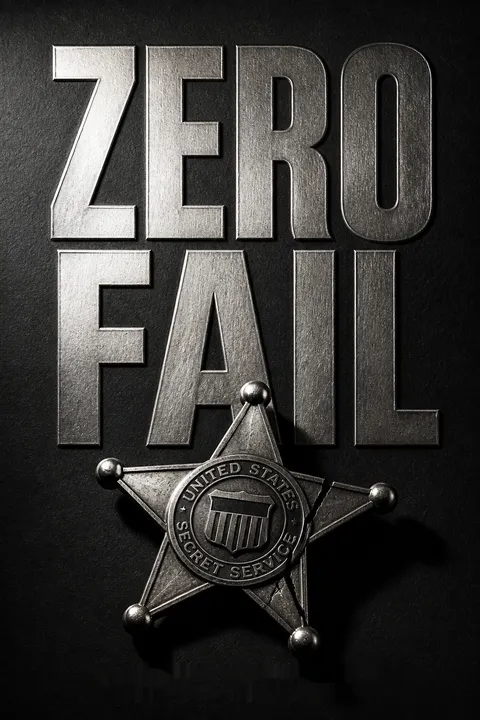
Zero Fail is best read as a history of institutional entropy: a celebrated protective force grows, adapts after attacks, and then repeatedly loses capacity through mission creep, political pressure, weak management, and silence. Its strongest narrative choice is to move between spectacular crises and ordinary organizational habits. Dallas, 9/11, Cartagena, and the White House breaches are gripping, but the deeper causes are less cinematic: exhausted shifts, defective radios, vacancies, selective discipline, and leaders promoted for loyalty. The book shows how a failure can be both an individual mistake and a predictable result of the system around that person.
The central paradox is that the Service must be close enough to a president to protect him, yet independent enough to resist him. That tension cannot be solved by demanding more sacrifice from agents. It requires authority to enforce safety rules, clear communication across units, credible internal oversight, and a budget that matches the mission. The story also warns that secrecy has two faces. It protects vulnerable people and operational plans, but it can also conceal misconduct and discourage learning.
The account is especially persuasive when it traces repeated mechanisms across administrations, rather than treating each scandal as an isolated aberration. Its evidence is built from interviews, records, and reconstructed scenes, so some details necessarily depend on witness recollection. More broadly, failures in protection are difficult to evaluate because prevention is invisible and near misses invite counterfactual speculation. The absence of another presidential assassination is meaningful, but it cannot by itself establish that every safeguard worked. The most useful conclusion is not that the Service is incompetent, nor that its reputation should excuse its failures. It is that the institution's remarkable frontline commitment has too often been used as a substitute for sound leadership, strategic investment, and accountability.
Review Summary
Zero Fail provides a detailed account of the Secret Service's history, revealing systemic issues like underfunding, mismanagement, and a problematic culture. Leonnig exposes security failures, scandals, and the agency's struggle to adapt to evolving threats. The book offers insights into presidential relationships with the Service and highlights the need for reform. While praised for its investigative depth and readability, some reviewers note potential bias in later chapters. Overall, it's considered an eye-opening look at an agency tasked with protecting America's leaders, leaving readers questioning its effectiveness.
People Also Read





Glossary
Advance
pre-event security planningAn advance is the detailed preparation for a protectee's visit to a location. Agents inspect the site, map movements and routes, coordinate with local authorities, identify possible vulnerabilities, and assign posts. The work translates a broad protective mission into a specific plan for a particular event or trip.
Counter Assault Team
armed threat-response unitThe Counter Assault Team, often called CAT, is a heavily armed Secret Service unit assigned to respond to attacks near protected people. While close-protection agents shield and evacuate the protectee, CAT operators are positioned to confront an attacker. The role is distinct from the visible agents who usually flank a president.
Tigerwall
restricted-airspace radar feedTigerwall is a classified arrangement that gave the Secret Service access to real-time FAA radar information about aircraft approaching restricted airspace around Washington. It was developed after a small plane crashed on the White House grounds in 1994. The system provided warning information, but 9/11 showed that technology alone could not ensure a timely response.
Exceptional Case Study Project
study of attackers' pathwaysThe Exceptional Case Study Project examined 83 people who attacked or nearly attacked prominent American public figures between 1949 and 1996. Its findings described recurring behaviors, including target stalking, isolation, and disclosures of violent intentions to people nearby. Many attackers sought fame more than political change, complicating threat assessments based solely on ideology.
executive protection privilege
proposed agent testimony shieldExecutive protection privilege was a legal argument advanced by the Secret Service during the investigation of President Clinton's relationship with Monica Lewinsky. The agency argued that requiring agents to testify about a president's private conduct could undermine the trust and proximity needed for protection. Courts rejected the proposed privilege, finding no basis to exempt agents from lawful testimony.
Uniformed Division Officer's Manifesto
officers' security critiqueThe Uniformed Division Officer's Manifesto was the name officers gave to Charles Baserap's memo describing security vulnerabilities and poor working conditions at the White House complex. It identified problems such as unreliable radios, insufficient staffing, weak equipment, and fear of retaliation for raising concerns. Officers circulated it as evidence that frontline warnings had been ignored.
FAQ
What's Zero Fail: The Rise and Fall of the Secret Service about?
- Focus on the Secret Service: The book chronicles the history and evolution of the U.S. Secret Service, highlighting its dual role in protecting the president and investigating financial crimes.
- Scandals and Misconduct: It delves into various scandals, such as the Cartagena incident, revealing a culture of misconduct and cover-ups within the agency.
- Leadership Challenges: The narrative explores the challenges faced by different directors, particularly during the Trump administration, and how political pressures affected the agency's operations.
Why should I read Zero Fail?
- Insightful Investigation: Carol Leonnig provides a thorough investigation into the Secret Service, revealing both the heroic efforts of its agents and the systemic issues that have led to failures.
- Revealing Behind-the-Scenes: The book offers a behind-the-scenes look at the complexities and challenges of protecting the president in a politically charged environment.
- Cultural Reflection: It serves as a reflection on broader issues of accountability, ethics, and the impact of leadership on organizational culture.
What are the key takeaways of Zero Fail?
- Importance of Accountability: The book stresses the need for accountability within the Secret Service, highlighting how leadership failures have led to a decline in the agency's effectiveness.
- Need for Reform: It underscores the urgent need for reform to restore the agency's credibility and effectiveness in protecting democracy.
- Cultural Change is Essential: The narrative emphasizes that cultural change within the agency is crucial for addressing systemic issues and ensuring mission success.
What are the best quotes from Zero Fail and what do they mean?
- “Worthy of Trust and Confidence”: Reflects the agency's motto and the high expectations placed on its agents to protect the president and uphold public trust.
- “The Service has really let you down”: Highlights the disillusionment felt by some agents regarding the agency's preparedness and effectiveness.
- “We’re letting them down and we’re leaving the country at risk.”: Encapsulates the urgency for reform and the responsibility of leadership to ensure the agency can fulfill its critical mission.
How does Zero Fail address the scandals within the Secret Service?
- Focus on Misconduct: The book details various scandals, including the infamous “Hookergate” incident, showcasing a culture of irresponsibility.
- Leadership Failures: Leonnig discusses how poor leadership decisions and a lack of accountability contributed to these scandals, leading to a decline in morale.
- Impact on Public Perception: The scandals have significantly affected public trust in the Secret Service, prompting calls for reform and greater oversight.
What historical events are covered in Zero Fail?
- Assassination Attempts: The book covers key assassination attempts, including those against Presidents Kennedy, Ford, and Reagan, detailing the circumstances and responses.
- Gulf War and 9/11: It discusses the role of the Secret Service during the Gulf War and the security failures during the 9/11 attacks.
- Cultural Shifts: The narrative places these events within the broader political context, illustrating how political pressures have influenced the agency's operations.
How does Zero Fail depict the agents' experiences?
- Personal Stories: Leonnig includes personal accounts from over 180 interviews with current and former agents, providing a human perspective on their challenges.
- Emotional Toll: The book highlights the emotional and psychological toll that the job takes on agents, including stress and trauma.
- Commitment to Duty: Despite challenges, the agents' dedication to their mission and willingness to protect the president at all costs are central themes.
What systemic issues does Zero Fail identify within the Secret Service?
- Insufficient Resources: The book discusses how budget cuts and insufficient staffing have hampered the agency's ability to effectively protect the president.
- Leadership Problems: It highlights issues with leadership, including promotions based on loyalty rather than capability, leading to a decline in effectiveness.
- Cultural Challenges: The narrative addresses cultural challenges, including a code of silence that has prevented agents from speaking out about problems.
How does Zero Fail illustrate the evolution of presidential protection?
- Changing Threat Landscape: The book details how threats against presidents have evolved, requiring the Secret Service to adapt its strategies and technologies.
- Technological Advances: It discusses technological advancements implemented to enhance security, such as metal detectors and improved communication systems.
- Policy Changes: The narrative outlines policy changes in response to past failures, emphasizing the need for continuous improvement in protective measures.
What role does leadership play in the narrative of Zero Fail?
- Critical Leadership Failures: The book emphasizes how leadership failures have directly contributed to the agency's decline, particularly after scandals.
- Impact on Morale: Leonnig discusses how poor leadership has affected agent morale, leading to disillusionment and a lack of trust in the agency's direction.
- Calls for Reform: The narrative includes calls for reform and better leadership practices to restore the agency's integrity and effectiveness.
How does Zero Fail connect the Secret Service's history to broader themes in American democracy?
- Symbolism vs. Security: The book explores the tension between the need for security and the desire to project an image of openness in American democracy.
- Public Trust: It discusses how the Secret Service's failures have impacted public trust in government institutions, highlighting the importance of accountability.
- Protecting Democracy: The narrative underscores the role of the Secret Service in safeguarding not just the president, but the principles of democracy.
What recommendations does Zero Fail make for the future of the Secret Service?
- Reform and Modernization: The book advocates for comprehensive reforms to modernize the agency's operations, including better training and updated technology.
- Cultural Shift: It calls for a cultural shift within the Secret Service to prioritize integrity, transparency, and ethical behavior.
- Strengthening Leadership: Leonnig emphasizes the need for strong, ethical leadership to navigate modern security challenges while maintaining the agency's core mission.
Download PDF
Download EPUB
.epub digital book format is ideal for reading ebooks on phones, tablets, and e-readers.








