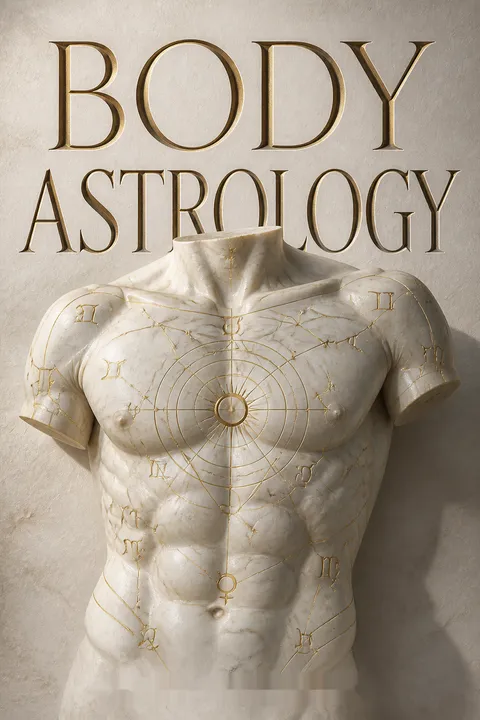


Key Takeaways
Treat the birth chart as a reflective map, not a medical verdict
A mirror, not a cause. Gallagher’s route into medical astrology began after years of severe, hard-to-diagnose illness. She found a symbolic framework that helped her notice patterns, rethink her expectations, and feel less estranged from her body. She presents astrology as a mirror for personal patterns, not a force that causes illness or predicts a fixed future.
Meaning is not diagnosis. The chart is meant to prompt questions about nourishment, movement, and changing needs. It cannot establish what condition someone has or which treatment is medically appropriate. The book itself advises consulting qualified practitioners for health concerns. Its most useful promise is not certainty, but a language for reflection and self-observation.
The distinction between a reflective map and a causal explanation matters. A symbolic framework can help someone describe an experience that feels confusing, much as journaling or metaphor can make emotions easier to examine. That value does not establish that planetary positions explain physiology. People naturally notice confirming examples more readily than mismatches, so a chart can feel uncannily accurate without functioning as a medical test. The strongest reading preserves the book’s invitation to self-trust while keeping diagnosis and treatment grounded in clinical evidence.
Read the whole chart before blaming your Sun sign for your body
One sign is a fragment. The book’s central correction to popular horoscope culture is that a Sun sign is only one point in a birth chart. Gallagher describes the chart as a snapshot of planetary positions at birth, with signs linked to body regions and planets linked to bodily functions. Houses add context, while aspects describe relationships between planets.
Start with three anchors. The Sun is associated with vitality and identity, the Moon with daily energy and nourishment, and the rising sign with physicality and the body’s interface with its surroundings. A cluster of planets in one sign, called a stellium, may also be especially prominent. These are interpretive priorities within the author’s system, not medical findings.
The move away from a single Sun-sign label has an appealing parallel in systems thinking: a person’s experience often emerges from interacting factors rather than one isolated trait. The chart’s layered structure encourages questions about context and change, which is more nuanced than personality shorthand. Yet complexity can also make a framework difficult to falsify: almost any experience may be assigned to some chart feature. Readers can benefit from the broader lens while asking what observation would count against an interpretation.
Translate signs into body qualities instead of memorizing personality stereotypes
A shared vocabulary. Gallagher builds her approach from four qualities: hot, cold, wet, and dry. In her model, hot tends to speed and energize, cold to slow, dry to separate and define, and wet to soften and combine. The four elements pair these qualities: Fire is hot and dry, Air hot and wet, Earth cold and dry, and Water cold and wet.
Modes describe movement. Cardinal signs initiate, fixed signs persist, and mutable signs adapt. A therapeutic gesture is the practical essence the author draws from a sign’s qualities, mode, ruler, and seasonal position. Rather than assigning one sport or menu to a sign, the gesture can be applied to many different practices.
This is the book’s most portable conceptual tool: it converts symbolic categories into questions about the character of an activity. Does a practice warm, soften, stabilize, or stimulate? That resembles qualitative reasoning in traditional medicine, where treatment is selected by matching properties to a person’s perceived state. The framework is flexible and memorable, but its categories are interpretive rather than standardized physiological measurements. They are most responsible when used to generate options, not to override a person’s symptoms or proven medical needs.
Build nourishment around body trust, not wellness rules
No zodiac diet. The book rejects claims that all people of one sign should eat or exercise alike. Any sign can enjoy plant-based eating, meat, running, yoga, or strength training; context determines what may be supportive. The chart, in Gallagher’s view, can illuminate not only preferences but also how a person relates emotionally to food and movement.
Notice the story around food. The author calls recurring judgments and rules “food talk.” Counting, labeling foods good or bad, and treating exercise as compensation can distance people from their own cues. She argues that easing this moral pressure may matter more than searching for a perfect menu. Dietary changes can be necessary, but the book discourages restriction as a default wellness badge.
This anti-moralizing stance aligns with a useful distinction in eating-disorder prevention: behaviors are shaped by social rules and self-judgment, not just nutrients. It also makes room for cultural variation and personal preference, both of which simplistic diet advice often ignores. Still, body cues are not infallible guides for everyone. Illness, medication, trauma, and food insecurity can alter appetite or access. The humane principle is to listen without shame, then combine lived experience with qualified nutritional care when needed.
Let the Moon’s phases guide effort, recovery, and feeding
A rhythm, not a rulebook. The author uses the Moon’s four main phases as a flexible monthly template. New Moon week favors restoring resources and setting a manageable pace. First Quarter supports building momentum. Full Moon week emphasizes sustaining activity and satisfaction. Last Quarter invites slowing down, processing, and making space for recovery.
Waxing is not simply hard. In this system, waxing activity is meant to build, while waning activity creates room and release. Either can be gentle or intense. Gallagher likens the phase to a volume control for energetic capacity, while acknowledging that other factors affect how a person feels. Menstrual cycles vary, so the book permits following the real-time Moon, one’s own cycle, or an individualized mix.
The practical strength here is permission to vary effort rather than treating every day as interchangeable. Training science also recognizes that recovery, workload, and performance fluctuate, even if lunar phase is not an established predictor of those changes. A lunar schedule can function as a planning prompt: pause, assess fatigue, and adjust the dose. The risk is interpreting a difficult day as proof that the Moon caused it. Direct observations of sleep, mood, soreness, and performance are better guides than the calendar alone.
Use seasons and transits as prompts to adjust, not predictions
The sky marks time. In astro-seasonal living, each roughly thirty-day solar sign season becomes a cue to explore that sign’s themes, regardless of someone’s birth sign. The Moon moves through the signs about every two and a half days, and its phases provide another recurring rhythm. Gallagher finds these cycles approachable starting points for learning what changes in one’s own experience.
Longer cycles, lighter touch. A transit is a current planetary position interpreted in relation to a birth chart. Some last days; slower-planet transits may last years. The book suggests paying more attention when a slow-moving planet contacts a prominent natal placement, and adjusting self-care when the timing feels relevant. Transits are framed as opportunities for reflection, not guarantees of illness or success.
Seasonal routines can support attention because recurring cues make reflection easier to remember. This resembles behavioral tracking: a person notices a pattern, records it, and revises a routine. The astrological explanation remains a separate claim from the usefulness of the habit. Weather, workload, sleep, life events, and other variables may explain changes more directly. Treating a transit as a calendar reminder rather than a forecast keeps the practice exploratory and prevents ordinary variation from becoming a source of fear.
Read planets as bodily functions, not isolated body parts
Planets act in the model. The signs are associated with body regions, while planets represent actions or functions. Gallagher describes Mars through heat, inflammation, and activation; Saturn through structure, limitation, and slowing; the Moon through nourishment and rhythm; and Mercury through communication and connection. Other planetary themes include Venus and regulation, Jupiter and growth, Uranus and disruption, Neptune and permeability, and Pluto and transformation.
Use the distinction carefully. A sign may describe where a theme is expressed, while a planet suggests how it operates. For instance, the author links Aries with the head and Mars with rapid, acute responses. These associations form a symbolic interpretive vocabulary. They do not show that a planet is causing a symptom or that a body region is medically compromised.
The distinction between location and process is conceptually productive. In biology, a symptom can depend both on the tissue involved and on the process affecting it, such as inflammation, impaired circulation, or altered signaling. That makes the book’s map intuitively legible. The analogy should not be mistaken for anatomical evidence, however. A headache, for example, has many possible causes, and a symbolic planetary label cannot distinguish among them. The framework works best as metaphor for organizing questions, not as a shortcut to etiology.
Balance a bodily excess by borrowing a complementary quality
Think in contrasts. The book describes health imbalances as excesses or deficiencies in qualities or elements. If a body is symbolically too hot, cooling influences may help; if too damp, drying ones may be considered. Fire and Water, and Air and Earth, are presented as balancing pairs. Signs opposite one another are also treated as partners, such as Taurus and Scorpio, whose systems are understood to work together.
Ask practical questions. Instead of choosing an intervention because it is labeled for a sign, consider its qualities, target, timing, and intended effect. Is it warming or cooling? Does it build, soothe, or mobilize? Gallagher’s point is that foods, movement, herbs, and therapies can be assessed through these properties, with the person’s actual response remaining central.
The balancing model offers a compact way to think about dose and counteraction: a useful intervention depends on what is already happening, not on a universal list of good choices. That logic is familiar in pharmacology and rehabilitation, where the same treatment can help or harm depending on amount and context. The limitation is that terms such as “excess” and “damp” are not clinical measurements here. A reader should not infer a condition from metaphor or self-prescribe potent remedies based on a chart.
Train for the intended stimulus, then leave room to recover
Exercise is a dose. The author treats movement as a stress the body must process and adapt to. A workout can build strength, support circulation, develop skill, or provide release, but more intensity is not automatically more effective. Aries-style peak work, for example, should be used sparingly; the book suggests that one or two brief high-intensity sessions a week may be sufficient for that pattern.
Adapt the method. The sign sections offer different movement metaphors: steady strength work for Taurus, varied and multidirectional movement for Gemini, scaled and symmetrical training for Libra, and sustainable pacing for Capricorn. These are invitations to choose a fitting intention, not rules tied to someone’s sign. Gallagher emphasizes warm-ups, recovery, and adjusting sessions when energy or symptoms change.
The strongest exercise insight is the separation of perceived effort from productive stimulus. A depleted person may feel that a session is brutally hard while producing less useful work and taking longer to recover. This is consistent with basic training principles: adaptation depends on stress balanced by recovery. The astrological labels add imaginative cues, but they are not needed to tailor a program. Fitness level, injury history, disability, and medical conditions remain more direct determinants of safe exercise than a birth chart.
Keep a symptom journal, but let clinicians handle diagnosis
Start small and observe. Gallagher recommends beginning with the Sun, Moon, and rising sign or with seasonal self-care, rather than trying to combine every chart factor at once. A symptom journal can record changes in energy, appetite, mood, movement, and other experiences alongside the cycles being observed. The point is to learn what feels relevant and avoid treating every listed symptom as a prediction.
Keep care grounded. A chart cannot confirm a disease, rule out an emergency, or determine whether a food or exercise is safe. The book explicitly presents its material as educational and advises consulting a qualified health practitioner about health conditions and routines. If a pattern is severe, persistent, or worsening, medical assessment takes priority over astrological interpretation.
A simple journal can improve recall and make discussions with a clinician more concrete, especially when symptoms fluctuate. To reduce hindsight bias, recording observations before interpreting them is useful: note the date, symptom, severity, sleep, stress, and relevant changes in routine. Astrology may supply a reflective question, but it should not decide what counts as evidence. The boundary is especially important because medical language in an astrological book can sound authoritative even when its planetary associations have not been clinically validated.
Analysis
Body Astrology is best understood as a hybrid of memoir, symbolic system, and self-care manual. Its narrative begins with Gallagher’s illness and her search for an intelligible account of a body that conventional diagnoses had not explained. Astrology gives her a vocabulary for individuality, fluctuation, and self-compassion. That origin story clarifies the book’s emotional aim: it wants readers to stop treating a single standard of energy, diet, or fitness as the definition of health.
The system’s most useful features are also its most rhetorically powerful. The elemental qualities, sign modes, planetary functions, lunar phases, and chart placements create a richly connected map. Such maps can help people notice preferences and organize reflection. The therapeutic gesture idea is especially adaptable because it focuses on an intention, such as stabilizing, warming, or releasing, rather than prescribing one food or exercise to everyone. The book also repeatedly counsels moderation, individualized practice, and professional help, which are important safeguards.
The central epistemic distinction, however, is between the value of a metaphor and the truth of a medical explanation. The text presents astrological correlations as practically revealing, but it does not establish that planetary positions predict physiology or illness. A large, flexible system can fit many experiences after the fact. Selective attention, expectation, seasonal change, and ordinary variation can all make a pattern feel more compelling than it is. Medical terms and long lists of possible conditions heighten the risk that symbolic associations will be mistaken for diagnosis.
A careful reader can retain the book’s humane method while narrowing its claims: use astrology as a prompt to notice what the body is doing, keep observations independent of the interpretation, and test routines by their real effects. Do not infer a disease, food intolerance, or treatment from a chart. The book is most compelling as an argument for bodily diversity and against shame-based wellness rules, and least reliable when symbolic language appears to explain clinical causes. Its lasting contribution is an invitation to observe without condemning, paired with a clear need to keep medical decisions in evidence-based care.
Review Summary
Body Astrology by Claire Gallagher is praised for its accessible approach to medical astrology, offering insights on how zodiac signs and planets relate to health, nutrition, and movement. Readers appreciate the book's non-judgmental tone, body-positive perspective, and emphasis on self-reflection. Many find the information fascinating and applicable to their lives, particularly the lunar cycle-aligned practices. While some readers found it overwhelming, most view it as a valuable resource for holistic self-care. The book's beautiful illustrations and layout are also frequently mentioned as positives.
People Also Read






Glossary
Medical astrology
Astrology applied to healthA branch of Western astrology that interprets a birth chart as a symbolic map of bodily tendencies, needs, strengths, and susceptibilities. Gallagher uses it to frame questions about nutrition, movement, and health experiences. It is not a validated diagnostic system, and the book cautions readers to seek qualified medical care for health concerns.
Body astrology triad
Sun, Moon, and risingThe Sun, Moon, and rising signs, presented as the basic personal layer of body astrology. The Sun is associated with vitality and identity, the Moon with daily nourishment and energy rhythms, and the rising sign with physicality and how the body meets its surroundings. Gallagher recommends beginning with these placements rather than interpreting every chart factor at once.
Therapeutic gesture
A sign’s practical essenceThe central quality or energetic signature associated with a zodiac sign, translated into a possible health intention. A gesture such as balance, resilience, or fluidity can be applied to different foods, movement styles, or routines. In Gallagher’s framework, a gesture comes from a sign’s qualities, element, mode, planetary ruler, and seasonal context.
Astro-seasonal living
Self-care guided by cyclesAn approach that uses recurring solar seasons and lunar phases as prompts for adjusting nourishment, movement, and rest. Solar seasons last about a month, while the Moon’s phases divide its roughly monthly cycle into four broad periods. Gallagher presents this as a simple entry point for observing personal patterns, not as a fixed prescription.
Transits
Current planets contacting a chartThe current positions of planets interpreted in relation to the positions in a person’s birth chart. In body astrology, transits are treated as symbolic timing cues that may correspond with changing physical or emotional needs. Their duration varies from days to years. Gallagher frames them as opportunities for reflection, not guaranteed predictions.
Qualities
Hot, cold, wet, and dryFour traditional descriptors used to characterize signs, planets, and possible therapeutic actions. Hot is associated with speed and activation, cold with slowing, dry with separation and definition, and wet with mixing and softening. The qualities combine to form the four elements in the book’s Hellenistic model. They are interpretive categories, not clinical measurements.
Modes
Ways signs move and actThe three styles of expression assigned to zodiac signs: cardinal, fixed, and mutable. Cardinal energy initiates, fixed energy maintains or persists, and mutable energy adapts. Gallagher uses modes to distinguish signs that share an element and to think about how different activities, such as running or strength training, may be performed.
Elemental balancing
Using contrasting elementsA symbolic method for responding to an interpreted excess or deficiency by drawing on complementary or opposing elements. The book pairs Fire with Water and Air with Earth as broad balancing relationships. It applies this idea to the perceived qualities of food, movement, and other therapeutics, while emphasizing that personal context matters.
Sign pairs
Opposite signs used togetherPairs of zodiac signs positioned opposite one another in the wheel, such as Aries and Libra or Taurus and Scorpio. Gallagher treats them not merely as rivals but as related systems that may support one another in a health interpretation. The pairings are used as symbolic options for balancing, not as medical evidence.
Lunar body cycle
Four phases for self-careGallagher’s framework for relating the New Moon, First Quarter, Full Moon, and Last Quarter to changing intentions for nourishment and movement. The phases broadly correspond to replenishing, building, sustaining, and pausing. Waxing and waning describe the intended direction of the stimulus, not a simple hard-versus-easy scale.
Planetary balancing
Countering a planet’s excessA method for choosing symbolic influences that may temper an interpreted planetary excess or support a deficiency. For example, the book suggests using Saturn to ground excess Uranian energy, or the Moon to cool an overheated Mars. Gallagher presents these as flexible interpretive tools and advises against treating planetary associations as a substitute for clinical care.
FAQ
What's Body Astrology about?
- Holistic Health Approach: Body Astrology by Claire Gallagher explores how astrology intersects with health, focusing on how celestial positions at birth influence well-being.
- Astrological Anatomy: Each zodiac sign is linked to specific body parts and functions, offering insights into personal health practices.
- Personalized Healing: The book introduces medical astrology, allowing individuals to tailor health routines based on astrological charts for a personalized healing approach.
Why should I read Body Astrology?
- Empowerment Through Knowledge: The book empowers readers to understand their bodies through astrology, fostering a deeper self-connection.
- Practical Applications: It offers actionable advice on nutrition, movement, and self-care aligned with astrological insights.
- Unique Perspective: By integrating astrology with health, it challenges conventional health narratives and encourages exploration of one's astrological makeup.
What are the key takeaways of Body Astrology?
- Every Sign Matters: All twelve zodiac signs influence your health, not just your Sun sign, leading to a comprehensive view of personal health.
- Astro-Seasonal Living: Aligning health practices with zodiac seasons suggests that physical and emotional needs change throughout the year.
- Planetary Influence: Each planet is associated with specific health themes, guiding wellness routines based on planetary movements.
What are the best quotes from Body Astrology and what do they mean?
- "Astrology inherently challenges...": This quote suggests astrology offers a broader understanding of health beyond conventional metrics.
- "When we lovingly look...": Emphasizes self-acceptance and holistic self-care, suggesting understanding oneself can lead to healing.
- "Astrology is a heavenly mirror...": Reflects the idea that astrology reveals existing patterns and potentials, encouraging self-discovery.
How does Body Astrology define medical astrology?
- Astrological Map of Health: Uses the birth chart as a map to understand individual health needs, strengths, and vulnerabilities.
- Personalized Healing Pathways: Allows for tailored health strategies based on astrological insights, recognizing unique needs.
- Dynamic Interaction: As planetary positions change, they activate different chart aspects, influencing health and wellness needs.
What is the significance of the Sun, Moon, and rising signs in Body Astrology?
- Triad of Influence: Sun sign represents core identity, Moon sign reflects emotional needs, and rising sign describes physical presence.
- Health Priorities: Each sign governs different health facets, helping prioritize wellness aspects.
- Dynamic Interaction: Encourages exploring how these signs interact, providing a nuanced understanding of health.
How can I use the concepts in Body Astrology for my health?
- Personalized Nutrition: Offers dietary recommendations based on astrological signs, aligning food choices with unique needs.
- Movement Practices: Outlines movement routines tailored to each sign, encouraging exercises resonating with astrological characteristics.
- Seasonal Adjustments: Aligning health practices with astrological seasons helps adapt routines to changing needs.
What are the four qualities and elements discussed in Body Astrology?
- Qualities: Hot, cold, wet, and dry describe the energetic nature of each sign and their health interactions.
- Elements: Fire, Air, Earth, and Water represent different physical and emotional characteristics influencing health.
- Balancing Act: Understanding these helps identify health imbalances and apply appropriate adjustments.
How does Body Astrology address the relationship between food and movement?
- Food as Medicine: Emphasizes tailoring food choices to astrological makeup, with specific recommendations for each sign.
- Movement Alignment: Discusses how different signs benefit from various movement types, encouraging exercises resonating with astrological characteristics.
- Holistic Integration: Integrating food and movement practices based on astrology promotes a comprehensive health approach.
What specific nutritional advice does Body Astrology provide for each zodiac sign?
- Taurus Nutrition: Focuses on high-fiber, protein-rich foods to support steady energy and prevent insulin resistance.
- Virgo Nutrition: Recommends simple, easy-to-digest meals to avoid overwhelming the digestive system.
- Capricorn Nutrition: Suggests nutrient-dense foods supporting bone health, emphasizing protein and minerals.
How does Body Astrology suggest individuals approach movement based on their zodiac sign?
- Taurus Movement: Encourages slow, steady exercises connecting with nature, emphasizing resistance training.
- Virgo Movement: Recommends focusing on foundational movements and body awareness, promoting quality over quantity.
- Scorpio Movement: Suggests intense, transformative workouts allowing for emotional release, balancing power with fluidity.
How can I become my own body astrologer as suggested in Body Astrology?
- Self-Discovery: Encourages exploring birth charts to understand unique influences on health.
- Elemental Balancing: Learning to balance elements and qualities helps apply astrological insights to health practices.
- Empowerment Through Knowledge: Involves trusting intuition and experiences to make informed health decisions.
Download PDF
Download EPUB
.epub digital book format is ideal for reading ebooks on phones, tablets, and e-readers.








