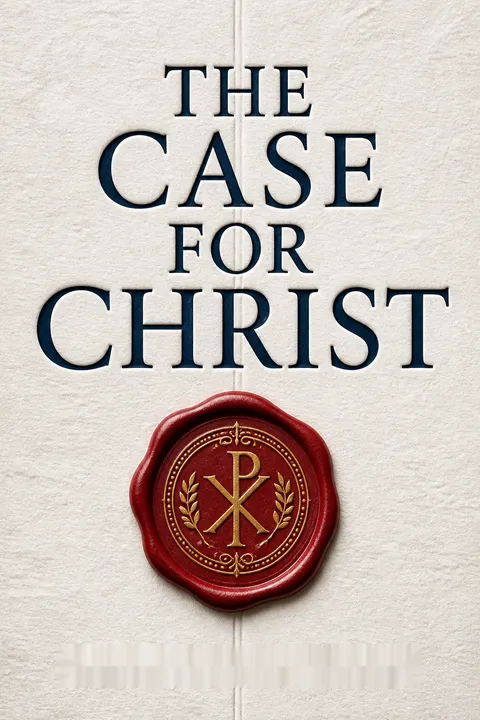


Key Takeaways
Reopen a case when one overlooked fact changes the best explanation
A case can mislead. Strobel opens with a case he covered as a young reporter: James Dixon pleaded guilty to shooting a police officer, and the evidence seemed decisive. New evidence suggested the officer had been wounded by a concealed gun of his own. Reexamining the scene made the earlier facts fit a different story, and Dixon was exonerated. The experience taught Strobel that evidence can support competing accounts, and that investigators must ask which explanation best fits the whole record.
Bias edits the record. Strobel says he had accepted the original case partly because he assumed police and prosecutors were right and Dixon was the sort of person who would commit a crime. He applies the same challenge to his former atheism: were his conclusions based on a thorough investigation, or on selected evidence and personal convenience?
The opening case gives the book a useful discipline: do not confuse a compelling narrative with a proven one. In legal reasoning, competing explanations are tested against the same facts, not merely against the investigator's preferred story. That is a strong antidote to confirmation bias, the tendency to notice evidence that supports an existing belief and discount what challenges it. The analogy also has limits. A criminal case with physical evidence and living witnesses differs from a two-thousand-year-old religious claim. The method transfers, but the standards and kinds of evidence must be adapted.
Read the Gospels as ancient, selective testimony, not modern transcripts
Genre shapes expectation. Craig Blomberg argues that the Gospels reflect eyewitness testimony, either directly or through associates of eyewitnesses. Early Christian writers attributed them to Matthew, Mark, Luke, and John, though the books themselves do not name their authors, and some details of authorship remain debated. The Gospels also differ from modern biographies: ancient writers selected episodes for their significance, did not need to cover a subject's whole life, and could preserve a speaker's meaning without reproducing every word verbatim.
Early traditions matter. Strobel highlights Paul's letters, written before the Gospels, and an early creed in 1 Corinthians 15 that reports Jesus' death, burial, resurrection, and appearances. Blomberg dates this tradition close to the events. The book also weighs oral transmission, apparent inconsistencies, embarrassing details, and the writers' purposes rather than treating any one test as decisive.
Historical sources need to be read according to the conventions of their time. A selective ancient biography should not be rejected merely because it lacks modern reporting habits, and a theological purpose does not by itself make a source unreliable. Still, an author's stated intention and apparent sincerity cannot establish accuracy on their own. Oral memory can preserve central meaning while shifting wording or detail. The strongest approach is therefore comparative: examine genre, date, independent attestation, internal tensions, and external checks together, while resisting the temptation to treat a plausible defense as a demonstration.
Many manuscripts preserve the text, but cannot prove every event it describes
Copies can be compared. Bruce Metzger explains that the New Testament survives in thousands of Greek manuscripts, alongside early translations and quotations by Christian writers. Compared with the few, much later surviving copies of many ancient works, this abundance gives scholars more material for identifying copying errors and reconstructing earlier readings. The book cites a small fragment of John's Gospel, dated by scholars to roughly the second century, as an early surviving witness.
Variants are not all equal. Hand copying produced differences, including spelling changes and altered word order. Metzger argues that most are minor and that no central Christian doctrine depends on a disputed reading. The chapter also addresses the New Testament canon, the collection of books recognized as authoritative. It says early Christians considered apostolic connection, consistency with accepted teaching, and widespread use, while acknowledging that acceptance was not equally immediate for every book.
Textual criticism answers a specific question: how closely can the surviving copies approximate the wording of lost originals? It does not answer whether the original author accurately described a miracle or whether the theology is true. That distinction prevents a common mistake in both directions. Variants do not automatically make a text hopelessly corrupt, but a well-preserved text is not automatically a reliable account of every event. The book's comparison with other ancient writings helps establish the New Testament's unusually rich manuscript record, though manuscript counts alone say little about the quality or independence of the original testimony.
Use archaeology to test settings, not to certify supernatural events
Material evidence checks details. Archaeologist John McRay says archaeology can confirm places, customs, and inscriptions, but cannot establish that a spiritual claim is true. The chapter describes discoveries that support details in the New Testament: an inscription confirming the title of officials in Thessalonica, and the excavation of the Pool of Bethesda with the five porticoes described in John. Such findings strengthen confidence that the writers knew the places they described.
Corroboration has limits. Strobel also surveys ancient references outside the Gospels. Tacitus links Jesus' execution to Pontius Pilate; Pliny describes Christians worshiping Christ; and Josephus refers to James, the brother of Jesus, and to Jesus himself. The chapter notes that parts of Josephus's more expansive passage about Jesus appear to have been altered by Christian copyists. These sources support a historical outline, not every Gospel detail.
Archaeology is especially valuable when it can test a precise claim against independent material evidence. A confirmed place name or civic title makes an author's general familiarity more credible, but it cannot validate an untestable claim simply by association. This is a distinction between local accuracy and global reliability. The non-Christian references add useful context because they come from writers with different interests, yet they are brief and often report what Christians believed rather than independently verifying the beliefs. Their force is cumulative and bounded, not a substitute for examining the Gospel narratives themselves.
Judge Jesus' identity by his authority, mission, and earliest claims
Actions imply a self-understanding. Ben Witherington argues that Jesus' identity appears not only in explicit titles but in how he acted. Jesus gathered and led the Twelve without being merely one member of the group, claimed unusual authority to interpret religious law, forgave sins, and presented his healings as signs of God's reign. His use of the title Son of Man, linked by the interviewees to Daniel, and his intimate address to God as Abba also contribute to their case that he understood himself as uniquely commissioned by God.
Sanity is a separate question. Psychologist Gary Collins finds no pattern in the Gospel portraits of disordered thought, unstable emotions, or detachment from reality. Strobel also reports the argument that Jesus' divine identity became a much later invention, and counters it with early Christian beliefs and the Gospels' proximity to eyewitnesses. The conclusion is that Jesus was not simply a moral teacher who never made extraordinary claims.
The chapter's strongest move is to assess identity through a pattern of speech and conduct rather than relying on one disputed title. That resembles historical inference in other fields: intentions are reconstructed from repeated choices, relationships, and public actions. But interpreting those actions remains contestable. A psychological judgment based on ancient texts is necessarily retrospective, and coherence or charisma cannot establish divinity. Nor does the fact that early Christians worshiped Jesus, by itself, prove that their interpretation was correct. The evidence supports a serious question about Jesus' self-understanding; theological conclusions require further premises.
Test messianic prophecy by context, not just apparent resemblance
A converted skeptic supplies the story. Louis Lapides, raised Jewish and initially hostile to Christian claims, says he investigated the Old Testament after Christians urged him to look for the Messiah there. Isaiah's suffering servant passage especially changed his view: he read it as anticipating a figure who suffers for others, and then recognized parallels with Jesus. He also saw connections in prophecies about the Messiah's ancestry, birthplace, betrayal, and death. Strobel presents these predictions as a distinctive pattern that Jesus uniquely matches.
Four objections are addressed. Could the matches be coincidence, Gospel writers' invention, Jesus' deliberate staging, or Christian misreading of context? Lapides argues that many details were outside Jesus' control and that early communities could have challenged fabricated accounts. The chapter cites striking probability calculations for multiple fulfilled prophecies, while urging readers to examine the passages and competing interpretations.
The personal account shows why these texts can matter deeply to readers whose religious inheritance differs from Christianity. The argument is strongest where a prediction is specific, demonstrably earlier than the event, and not easily shaped by the subject or later narrators. Its statistical claims deserve more caution: probability calculations depend on how prophecies are selected, how narrowly they are interpreted, and whether the events are independent. A fair test therefore asks not only whether a passage resembles Jesus' story, but whether that reading is persuasive in its original literary and historical context.
Crucifixion makes survival implausible; an empty tomb alone proves little
The execution was severe. Physician Alexander Metherell describes the Roman flogging, blood loss, and physical strain of crucifixion. He argues that Jesus' wounds, inability to breathe normally while hanging, and the spear wound described in John make survival medically implausible. The chapter calls the alternative that Jesus merely lost consciousness and revived in the tomb the swoon theory. It also notes archaeological evidence of a crucified man whose bones and nail fragments indicate that nails were used in at least some executions.
The tomb is a separate claim. William Lane Craig argues that Jesus was buried in a known tomb and that early sources imply it was found empty. He treats the Gospel differences about visitors and timing as variations around a shared core. Yet an empty grave by itself does not prove resurrection; the case also depends on the reported appearances and on excluding other explanations.
The medical discussion addresses an important alternative: if Jesus survived execution, the resurrection claim changes fundamentally. Yet a modern medical reconstruction cannot function like an autopsy, and the precise sequence of events depends on ancient narratives. The empty-tomb argument also needs careful separation from the appearance reports. A missing body can support several hypotheses, while a reported encounter can be interpreted in more than one way. The book's cumulative strategy is sensible, but the strength of the conclusion depends on how independently each strand of evidence can be established.
The earliest resurrection claims appear within years, not generations
Paul records early testimony. Gary Habermas focuses on the creed in 1 Corinthians 15, which names people and groups said to have seen Jesus alive after his death. The book argues that Paul received this tradition within a few years of the crucifixion, and that he later met Peter and James, two people named in it. Paul also says Jesus appeared to him, despite his earlier opposition to Christianity. The Gospels and Acts describe further encounters, including appearances to doubting disciples and groups.
The movement needs explaining. J. P. Moreland points to the disciples' changed behavior, the conversions of skeptics such as Paul and James, changes in Jewish religious practice, and the early church's growth. He argues that resurrection best explains this cluster. Strobel also notes that willingness to suffer shows sincerity, though it does not by itself prove the belief true.
Early testimony matters because it leaves less time for a story to drift far from its origins, especially while named witnesses may still be alive. The creed is therefore a significant historical anchor, although its early date establishes the age of the belief, not the truth of the event. Likewise, personal cost is evidence of conviction, not proof of accuracy; people in many traditions accept suffering for mistaken beliefs. The more discriminating question is whether these witnesses had access to the events they claimed to report and whether the evidence explains both their conviction and the movement's emergence better than alternatives.
A historical verdict still leaves a personal decision
Strobel's conclusion becomes personal. After nearly two years of investigation, he says the evidence overturned his assumption that belief in Jesus arose from slow legend. He describes moving from intellectual acceptance to trust, using a simple progression drawn from John: believe, receive, become. For him, belief meant accepting Jesus' identity and death; receiving meant accepting forgiveness as a gift rather than earning it; becoming meant a continuing change in character and priorities.
Evidence does not compel everyone. The book ends by asking readers to judge the case, pursue unresolved questions, and consider a personal response. Strobel treats experience as confirmation, not as a replacement for investigation. His daughter noticing changes in his behavior provides the final personal evidence in his account. The invitation is explicitly Christian: if Jesus is who the book argues he is, the claims have consequences for how a person lives.
The conclusion distinguishes assent from commitment. Historical reasoning can make a belief more or less credible, but choosing to organize a life around it involves trust, values, and identity as well as evidence. That is not unique to religion; many consequential choices exceed what data can mechanically settle. Still, personal transformation is not a neutral test of historical truth, since people can change through incompatible worldviews. Its value is more modest and more human: it shows what a belief does in a life, while the public claims about Jesus must stand on their own historical merits.
Analysis
The book's central method is cumulative: it assembles testimony, manuscript history, external references, archaeology, arguments about Jesus' self-understanding, medical analysis, resurrection reports, and social consequences. Its most valuable habit is asking whether a proposed explanation accounts for the whole record, rather than treating one anomaly as a verdict. The opening wrongful-conviction story makes this method memorable, while also warning that apparently strong evidence can be organized around a mistaken premise.
The argument is clearest when it distinguishes different questions. Manuscripts address textual transmission, not whether a reported miracle occurred. Archaeological discoveries can establish historical settings, not divine identity. Early creeds show that resurrection belief arose quickly, but early belief is not equivalent to the event itself. The resurrection conclusion depends on linking these kinds of evidence without treating one category as if it proves another.
The book's structure is persuasive but not neutral in the modern academic sense. Strobel's interviewees are predominantly Christian scholars presenting a defense of Christianity; critics are often introduced through the author's summaries or selected quotations rather than given equal space to develop their best cases. That does not invalidate the evidence, but it means readers should distinguish the underlying historical data from the interviewees' interpretations and seek serious counterarguments on contested points, including authorship, Gospel independence, the census chronology, and the interpretation of prophecy.
A useful way to read the case is probabilistically. Ask how strongly each fact favors one explanation over another, whether several pieces are genuinely independent, and how much uncertainty remains. The book's case is strongest as an invitation to take Jesus' historical claims seriously and weakest when it presents disputed inferences or numerical odds as if they ended debate. Its lasting value is the demand for a verdict based on evidence, coupled with the recognition that a verdict about Jesus is also a decision about how to live.
Review Summary
The Case for Christ receives mixed reviews. Many Christians praise it as a compelling defense of their faith, appreciating Strobel's journalistic approach and interviews with scholars. They find it strengthens their beliefs and provides answers to common questions. However, critics argue the book is biased, only presenting one side and lacking in genuine skepticism. Some question Strobel's claimed atheist background and find the arguments unconvincing. Despite criticisms, many readers recommend it as a thought-provoking exploration of Christianity's historical claims.
People Also Read








Glossary
Q
Hypothetical sayings sourceQ comes from the German word Quelle, meaning source. It is a scholarly hypothesis for a collection of Jesus' sayings that Matthew and Luke may have used alongside Mark. No copy of Q has been found. In the book, it matters because, if it existed, it could represent early material about Jesus.
synoptic gospels
Matthew, Mark, and LukeThe Synoptic Gospels are Matthew, Mark, and Luke. They are called synoptic because they share many episodes, sayings, and a broad narrative structure, allowing them to be read side by side. John differs more substantially in selection and style, though it overlaps with the others at important points.
canon
Recognized biblical booksThe canon is the collection of writings a religious community recognizes as authoritative scripture. In Strobel's account, early Christians considered whether a work was connected to an apostle, consistent with accepted Christian teaching, and widely used in churches. The book argues that church councils largely confirmed judgments already held broadly, rather than creating the books' authority.
textual variants
Differences among manuscript copiesTextual variants are differences in wording among surviving handwritten copies of a text. They can result from copying mistakes, spelling changes, or other alterations. Comparing many manuscripts helps scholars assess which readings are early. Strobel's interview with Bruce Metzger emphasizes that most New Testament variants are minor, while acknowledging that scholars identify and debate more significant ones.
Testimonium Flavianum
Josephus's passage about JesusThe Testimonium Flavianum is a passage in the Jewish historian Josephus's Antiquities that refers to Jesus. Its surviving wording includes statements that appear to reflect Christian belief, such as calling Jesus the Messiah and saying he rose from the dead. The book reports the view that the passage is substantially authentic but contains later Christian additions.
Incarnation
God becoming humanThe Incarnation is the Christian belief that the divine Son took on human nature in Jesus. The book uses the term to address how Jesus could be both divine and subject to human limits such as hunger, suffering, and limited knowledge. Theological explanations differ, and the interview presents the Incarnation as a mystery that cannot be reduced to a fully transparent mechanism.
hypovolemic shock
Shock from blood lossHypovolemic shock is a dangerous state caused by a severe loss of blood or other body fluids. In the medical interview, Alexander Metherell argues that the blood loss associated with flogging would have strained Jesus' circulation, caused weakness and thirst, and left him in critical condition before crucifixion. This explanation is used to challenge the claim that Jesus survived the execution.
swoon theory
Jesus survived crucifixionThe swoon theory proposes that Jesus did not die on the cross, but only lost consciousness or appeared dead, then revived after being placed in the tomb. Strobel reviews versions of this explanation and presents medical and historical arguments against it, including the severity of crucifixion and the reported spear wound.
criterion of double dissimilarity
A test for sayings of JesusThe criterion of double dissimilarity is a method used by some historians to judge whether a saying may go back to Jesus. A saying is treated as more likely authentic if it differs both from known Jewish teaching of the period and from later Christian beliefs. Gregory Boyd criticizes the method when it is used to dismiss sayings simply because Jesus sounds Jewish or resembles the movement his followers founded.
FAQ
What's The Case for Christ about?
- Investigative Journey: The Case for Christ by Lee Strobel is an investigative work that examines the evidence for Jesus Christ's claims, focusing on his divinity and resurrection.
- Expert Interviews: Strobel, a former legal editor and atheist, interviews biblical scholars, historians, and theologians to explore the historical reliability of the New Testament and evidence for Jesus outside the Bible.
- Personal Transformation: The narrative also details Strobel's personal journey from skepticism to faith, illustrating how the evidence he uncovered led him to believe in Jesus as the Son of God.
Why should I read The Case for Christ?
- Comprehensive Evidence: The book offers a thorough examination of the evidence supporting Jesus' claims, making it a valuable resource for those interested in the historical basis of Christianity.
- Engaging Narrative: Strobel's journalistic background allows him to present complex theological and historical discussions in an accessible and engaging manner.
- Encouragement for Skeptics: For those with doubts about Christianity, Strobel's methodical approach and the credentials of the experts he interviews provide a strong foundation for understanding the claims of Christianity.
What are the key takeaways of The Case for Christ?
- Historical Reliability: The gospels are based on eyewitness testimony and are historically reliable, with evidence supporting their authenticity and accuracy.
- Resurrection Evidence: The resurrection of Jesus is presented as a well-supported historical event, with multiple eyewitness accounts and early creeds affirming its occurrence.
- Personal Faith: The book illustrates the transformative power of faith in Jesus, encouraging readers to explore their beliefs and consider the implications of the resurrection.
What are the best quotes from The Case for Christ and what do they mean?
- "The case for Christ is not just a matter of faith; it’s a matter of evidence.": This quote emphasizes that belief in Jesus should be grounded in credible evidence rather than blind faith.
- "If Christ has not been raised, your faith is futile; you are still in your sins.": Highlighting the centrality of the resurrection, this quote underscores that without it, the foundation of Christianity collapses.
- "The empty tomb, then, forms a veritable rock on which all rationalistic theories of the resurrection dash themselves in vain.": This statement emphasizes the significance of the empty tomb as a critical piece of evidence for the resurrection.
How does Lee Strobel establish the reliability of the New Testament in The Case for Christ?
- Multiple Manuscripts: Strobel discusses the vast number of New Testament manuscripts available, which are dated close to the original writings, supporting the reliability of the text over time.
- Historical Context: He emphasizes that the gospels were written within the lifetimes of eyewitnesses, allowing for immediate correction of any inaccuracies.
- Scholarly Consensus: Strobel cites various scholars who affirm the historical reliability of the New Testament, reinforcing the idea that the gospels are trustworthy sources of information about Jesus.
What types of evidence does Lee Strobel explore in The Case for Christ?
- Eyewitness Evidence: Strobel examines the reliability of eyewitness accounts of Jesus' life and ministry, discussing how the gospels were written by those who witnessed events or were closely associated with eyewitnesses.
- Documentary Evidence: The book delves into the preservation of the gospels and other early Christian writings, highlighting the abundance of manuscript evidence that supports the authenticity of the New Testament texts.
- Scientific Evidence: Strobel explores archaeological findings that corroborate biblical accounts, affirming the historical context of Jesus' life and the accuracy of the gospel narratives.
How does Lee Strobel address the skepticism surrounding the gospels in The Case for Christ?
- Engaging with Critics: Strobel presents the arguments of skeptics and addresses their concerns through interviews with scholars who provide counterarguments.
- Historical Context: He emphasizes the historical context in which the gospels were written, arguing that the authors had strong motivations to accurately report the events of Jesus' life.
- Evidence of Early Beliefs: Strobel discusses how early Christian creeds and writings reflect the beliefs of the first followers of Jesus, suggesting that these beliefs were rooted in historical events rather than later embellishments.
What evidence does Lee Strobel present for the resurrection of Jesus in The Case for Christ?
- Empty Tomb: Strobel highlights the empty tomb as a crucial piece of evidence, supported by early creeds and multiple gospel accounts.
- Eyewitness Accounts: The book details numerous post-resurrection appearances of Jesus to various individuals and groups, including the disciples and skeptics like Paul.
- Transformation of Disciples: Strobel discusses how the disciples became bold proclaimers of the resurrection, with their willingness to die for their beliefs serving as a testament to their conviction.
How does The Case for Christ address objections to the resurrection?
- Swoon Theory: Strobel interviews medical experts who explain that Jesus could not have survived the crucifixion, debunking the swoon theory.
- Hallucination Hypothesis: The book argues against the idea that the resurrection appearances were mere hallucinations, citing psychological insights that indicate such experiences are individual and not shared among groups.
- Legend Development: Strobel presents evidence that the core beliefs about the resurrection emerged within a short time frame after Jesus' death, making it unlikely for legends to have formed in the presence of eyewitnesses.
How does Lee Strobel's personal journey influence The Case for Christ?
- Skeptical Background: Strobel's journey from atheism to faith provides a relatable context for readers who may have similar doubts.
- Transformation Through Evidence: As Strobel uncovers evidence for the resurrection, he shares how it impacts his life and leads to a personal transformation.
- Invitation to Explore: Strobel's story serves as an invitation for readers to explore the evidence for themselves, illustrating that faith can be grounded in reason and evidence.
What role does archaeology play in The Case for Christ?
- Corroborative Evidence: Archaeology is presented as a means of corroborating the historical accuracy of the gospels, with findings that support the existence of places and events mentioned in the New Testament.
- Historical Context: The book highlights how archaeological discoveries provide insights into the cultural and historical context of Jesus' time, enhancing our understanding of the gospels.
- Affirmation of Claims: Strobel argues that archaeology has consistently affirmed the claims made in the gospels, reinforcing the credibility of the New Testament as a historical document.
What implications does the resurrection have for believers, according to The Case for Christ?
- Hope and Assurance: The resurrection provides believers with hope for eternal life and assurance of God's promises.
- Moral Foundation: The resurrection affirms the teachings of Jesus as divine truths that can guide moral decision-making.
- Personal Relationship: Strobel highlights that the resurrection opens the door for a personal relationship with Jesus, allowing believers to experience transformation and guidance in their lives.
About the Author
Other books by Lee Strobel



Download PDF
Download EPUB
.epub digital book format is ideal for reading ebooks on phones, tablets, and e-readers.








