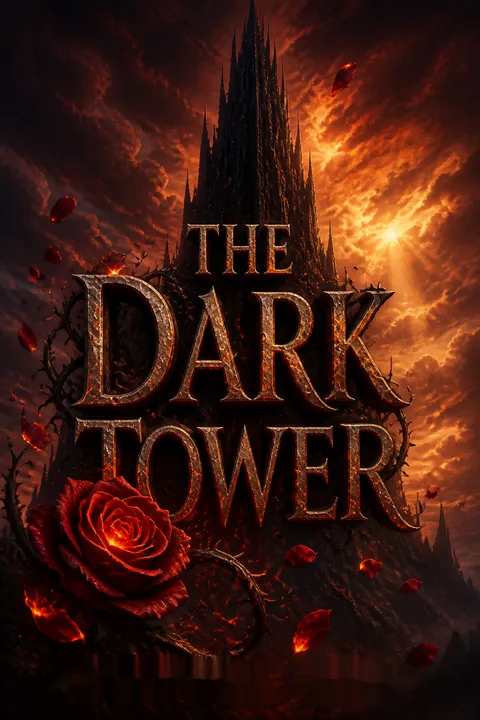


Plot Summary
Callahan Enters the Pig
Jake Chambers,4 his bumbler Oy,5 and Pere Callahan6 enter the Dixie Pig in New York to reach Susannah,2 whom the Crimson King’s servants have taken. Nearly a hundred low men and lesser vampires surround them. Callahan6 raises an ivory turtle that freezes most of the attackers, while Oy5 crushes the blood-drinking insects beneath the tables.
When ancient Type One vampires burst through a tapestry depicting a cannibal feast, the turtle cannot stop them. Callahan’s6 cross burns one vampire to death, giving Jake4 the chance to run after Susannah.2 The low men overwhelm Callahan,6 but he kills their leader and the birdlike taheen Meiman, then uses his own gun to escape capture. Jake4 hears his final blessing across the worlds.
Callahan’s last stand resolves a wound that began with his earlier failure of faith: the cross that once seemed powerless now becomes an instrument of action. The ivory turtle offers protection, but only with limits. Callahan recognizes that courage is not the same as survival and spends the protection he can provide on Jake’s escape. His death is neither a victory over mortality nor a conversion of violence into purity. It is a completed obligation, freely chosen, and the blessing he sends to Roland turns private redemption into a gift the living must carry.
A Wave Through Worlds
As Eddie Dean3 drives Roland1 toward Lovell, a Beamquake lifts their car and carries them through a vision of Fedic. They see Susannah2 and Mia7 chained by a metal hose, trapped in the infirmary while a doctor prepares to deliver Mia’s child.8 Susannah2 spots the two men and sends a single word across the connection.
The wave drops them back onto the road, but Eddie3 refuses to go straight to her. They possess a deed to the New York vacant lot and must place its rose under protection before they leave this one-way world. Roland1 accepts the delay. Their errand becomes a race against time, since the rose and the writer9 who may protect another Beam both remain vulnerable.
The vision makes distance feel less like geography than a condition of attention: the ka-tet can touch one another across worlds, but cannot simply reach in and rescue. Eddie’s refusal to abandon the deed marks a change in his role. He is no longer only Roland’s impulsive younger companion; he understands the practical and historical machinery that must be put in place. The scene also complicates the idea of destiny. The Beam can show them what matters, but it does not remove the costs of choosing what to do first.
Chevin Names Fedic
On the road to Turtleback Lane, Eddie3 and Roland1 encounter Chevin of Chayven, a radiation-sick wanderer from Mid-World. Roland1 calls him out of the woods by invoking his lineage, then learns that Fedic lies near Castle Discordia and that creatures connected to the Crimson King infest the region. Roland1 kills Chevin when the dying man’s suffering and danger leave no safer choice.
In Bridgton, they reach John Cullum,10 the caretaker who had been ordered to leave but stayed because ka kept him waiting. Cullum10 accepts their account, takes the deed and Roland’s1 silver cross, and agrees to enlist Aaron Deepneau and Moses Carver19 in protecting the rose through the Tet Corporation.
Chevin’s death gives the abstract threat a human cost before the ka-tet reaches its stronghold. Roland’s authority can draw loyalty from the ruined, but it can also make him judge and executioner. Cullum provides a contrasting form of service: he chooses to help without being commanded, despite having no way to verify the whole story. The rose’s defense will depend not only on gunslingers but on ordinary people willing to take responsibility for a future they cannot personally witness.
Mia Gives Birth
In Fedic’s infirmary, Susannah2 counts the guards and waits for the birth to distract them. Mia,7 the woman sharing her body, labors under a metal helmet linked to Susannah’s.2 Their connection finally breaks as Mia7 delivers a blue-eyed boy8 marked on the heel. For a moment, the newborn8 appears human.
Then his body blackens and folds into a spider, retaining a small human head with Roland’s1 eyes. The creature8 drinks Mia’s7 blood and kills her, leaving Susannah2 frozen by the horror. When the doctor’s gun swings within reach, Susannah2 tears it free, shoots the guards, and wounds the spider8 before it escapes through a doorway.
Mia’s longing for a child is genuine, yet the apparatus around her has made that longing part of a program to destroy the world. The birth forces Susannah to face an intimacy she never chose, without allowing her to reduce Mia to a monster. Her brief paralysis reflects the emotional shock of witnessing a baby become an abomination, while her eventual attack restores her trained agency. The child’s two visible forms embody the book’s concern with divided inheritance: tenderness and appetite, human recognition and predatory instinct, bound together rather than reconciled.
Jake Finds the Door
At the Dixie Pig, Jake4 escapes into the kitchen, killing a monstrous cook and a pursuer with Susannah’s2 razor-edged plates. He spares Jochabim, a frightened boy from Lud, and continues into the tunnels with Oy5 following Susannah’s2 scent. A mind-trap turns the passage into the jungle and dinosaurs from a childhood film Jake4 once feared.
Remembering Jochabim’s warning, Jake4 realizes the vision feeds on imagination and can still kill him. He and Oy5 exchange bodies, allowing the bumbler5 to carry Jake4 past the trap while Jake4 guides him. At a locked Fedic door, Jake4 hears Susannah2 answer from the other side, speaks the password, and is pulled through just before the pursuers arrive.
Jake’s childhood memory is not a detour from the danger; it is the mechanism that lets him understand it. The mind-trap can make an image physically lethal, but imagination also lets Jake identify its rules. His temporary exchange of bodies with Oy turns their bond into a practical survival skill, not merely affection. The sequence sharpens Jake’s development from child carried into Roland’s world to a young gunslinger able to make decisions under pressure, even while fear and exhaustion remain visible.
The Ka-Tet Reunites
The Beam carries Roland1 and Eddie3 back to the moment of Jake’s4 escape. Roland1 enters Callahan’s6 mind long enough to order Jake4 onward; Eddie’s3 warning about Oy5 finally gets the boy moving. The two men return to the Maine road shaken by Callahan’s6 death, then decide to contact Cullum10 rather than abandon the deed.
Cullum10 meets them at Turtleback Lane, helps them plan the Tet Corporation’s work, and reveals a radiant gathering of walk-ins around an open doorway. Roland1 and Eddie3 enter that light and emerge in Fedic, where Flaherty’s men are waiting at the New York door. Eddie3 kills the leader; Roland1 and Eddie3 clear the corridor, then open the door for Jake4 and Susannah.2
The reunion is built from repeated acts of reaching: Roland inhabits Callahan, Eddie sends Jake toward Susannah, and the four survivors finally open a door between them. The resulting embrace repairs a rupture in the group, especially between Roland and Jake, who had once been betrayed by his dinh. Yet the fellowship is restored under immediate threat, not in safety. The warmth of reunion is therefore real but provisional, a brief human shelter in a story where every bond is exposed to violence and time.
The Child Has Two Fathers
In the infirmary, the reunited group finds Mia’s7 remains and learns how the Wolves’ kidnapped children were processed. Nigel, the blind butler robot, guides them through the ruined station and eventually shuts down. Meanwhile, Mordred8 grows rapidly, changes between infant and spider, and feeds on rats and a captured young bumbler.
He watches the ka-tet from a control room, torn between hunger, hatred, and a longing to belong. Ted Brautigan’s11 recordings explain how the Breakers use stolen children’s minds to attack the Beam, and how his own talent amplifies theirs. The group learns that Stephen King9 may die in 1999, threatening the remaining Beam, but Sheemie’s13 shared dream points them toward saving the Breakers first.
The revelation that Mordred has two fathers does not make him a simple symbol of evil; his scenes show a creature whose appetite is real and whose loneliness is also real. That combination makes him dangerous in a different way from the organized cruelty of the Devar-Toi. The tapes also shift the moral scale of the quest. The Breakers are complicit, but many are isolated, manipulated, and starved of ordinary social belonging. Ending their work will require more than defeating guards; it will require confronting the structure that made destruction feel like purpose.
Blue Heaven Burns
Roland’s1 plan uses Susannah’s2 mobile trike, concealed weapons, fire alarms, and the Breakers’ own telepathic network to fracture Blue Heaven’s routine. Haylis plants sneetches in the compound, while Susannah2 starts shooting from the north and Dinky12 sends the others toward the south exit. Robot fire engines burst into the streets, adding panic and confusion.
Roland1 and Jake4 cut through the fence with Orizas, then attack the guards from cover. Ted11 and Dinky12 help the Breakers escape, while Sheemie13 amplifies the message that they will not be harmed. Roland1 shoots Master Pimli;14 Susannah2 and the others kill or drive off many guards. The victory breaks the compound’s control, but Pimli14 fires back and kills Eddie.3
The assault turns the prison’s instruments against it: alarms, telemetry, mind-amplification, and automated rescue machines all help undo the orderly surface of Blue Heaven. The Breakers move only when someone gives their fear a direction. That makes Dinky’s telepathic intervention a form of leadership rather than coercion. The plan succeeds tactically, but its cost is immediate and irreversible. Eddie’s death prevents the battle from becoming a clean liberation story and exposes the weakness of Roland’s preferred logic: a necessary victory can still consume the people who make it possible.
Eddie’s Last Words
After Pimli’s14 shot, Ted11 and Dinky12 quiet Susannah’s2 panic with their good-mind, but she orders them to stop numbing her grief. Roland1 and Jake4 return to the compound to clear remaining guards while Susannah2 stays beside Eddie.3 His speech falters, then returns just long enough for him to tell her he will wait in the clearing at the end of the path.
He also warns Jake4 to watch for Mordred8 and Dandelo18 and asks Roland1 to finish their work. Eddie3 dies with Roland1 holding his hand. The Breakers, now free but uncertain how to live, resist the idea that they should leave their comfortable prison for the dangerous Callas.
Susannah’s refusal of psychic consolation is a decisive act of self-possession. She will not let the very power that once controlled her erase a grief she considers hers to bear. Eddie’s final warnings connect the immediate loss to the threats still ahead, giving his death narrative consequence without making it feel like a tidy sacrifice. The Breakers’ reluctance to leave also complicates freedom: escape from captivity does not automatically restore desire, courage, or a sense of belonging.
Jake Saves the Writer
Ted11 and Sheemie13 send Roland1 and Jake4 into the Keystone World on June 19, 1999, the day Stephen King9 is fated to die. In East Stoneham, the gunslingers seize the truck of storekeeper Chip McAvoy and recruit Irene Tassenbaum,16 who drives them toward King’s9 home. Jake4 senses the approaching driver, Bryan Smith, but cannot stop him for long.
When Smith’s van leaves the road, Roland’s1 damaged hip buckles; Jake4 leaps to shield King9 and is crushed beneath the vehicle. Roland1 hypnotizes the injured writer,9 compelling him to remember the voices of the Tower and finish his work. King9 survives, but Jake4 dies, leaving Roland1 to bury him alone.
The rescue reverses the earlier pattern of Roland sacrificing Jake for the quest: this time Jake acts freely, choosing to protect another life. That choice does not absolve Roland, but it changes the meaning of their bond. King’s survival depends on an act of embodied care, not simply on the writer’s talent or the gunslinger’s command. The scene also makes the book’s metafictional premise ethically uncomfortable: stories may shape worlds, but the people inside them bear the physical cost of keeping a story alive.
The Rose’s Keepers
After Jake’s4 burial, Irene16 returns Roland1 to New York. At 2 Hammarskjöld Plaza, the rose grows inside a garden protected by the Tet Corporation. Aaron Deepneau’s granddaughter Nancy introduces Roland1 to Moses Carver,19 who confirms that Cullum10 and Deepneau helped preserve the rose and build the corporation against Sombra and North Central Positronics.
Carver19 gives Roland1 a watch that may signal when he nears the Tower, and returns the silver cross once carried by Cullum.10 Nancy also gives him a copy of King’s9 novel Insomnia, whose references may help guide the final stages of the quest. Roland1 leaves the corporate shrine and re-enters the Dixie Pig, taking Oy5 through the Fedic door.
The rose’s protected garden makes the earlier corporate errand visible as more than paperwork: a living thing has been placed at the center of a city’s ordinary machinery. Cullum, Deepneau, and Carver create a human institution capable of lasting beyond their own lives, a counterweight to the Crimson King’s destructiveness. Yet their gifts do not solve Roland’s quest. The watch can measure approach, and the book can point toward clues, but neither can decide what he should sacrifice.
Susannah Reaches Fedic
Susannah2 travels by train from the ruined Devar-Toi to Fedic with Ted,11 Dinky,12 Dani, and Fred, while Roland1 returns through the Dixie Pig. She has explored the underground station and marked a passage beneath Castle Discordia, but the train nearly plunges into a collapsed ravine before its engine reverses and brings the survivors safely to the platform.
When Roland1 emerges, she runs to him and Oy5 races into her arms. She tells him that Sheemie13 died from the polluted wound in his foot, and that the others plan to reach the Callas. The reunion brings comfort, but Roland’s1 purpose remains fixed on the Tower, and Susannah2 chooses to continue despite the grief she carries.
This reunion offers no restoration of the old ka-tet: Sheemie is gone, Eddie and Jake are absent, and Susannah knows the remaining journey may take more from her. The train’s near-disaster underscores how fragile even an apparently functioning route has become. Her return is not driven by renewed faith in Roland’s quest so much as by loyalty to Eddie and to the people they have lost. Love continues to move her, though it no longer guarantees that she trusts the destination.
Odd Lane’s Host
Crossing the Badlands toward the Tower, Roland1 and Susannah2 find a cottage on Odd Lane and meet Joe Collins,18 an eccentric former comedian who offers warmth, food, and shelter. His jokes briefly restore a human ease neither has felt since the deaths of their companions. But a note hidden in the bathroom names Dandelo18 and warns Susannah2 to think about the lane’s name.
She recognizes the anagram before Roland1 does. When Dandelo’s18 laughter begins to overwhelm them, Susannah2 resists his emotional attack, while Roland1 fights to stay conscious. They discover Patrick Danville,17 a mute young artist imprisoned in the cellar, and realize Dandelo18 has been harvesting his laughter, tears, and fear as food.
Dandelo’s trap is designed around hospitality: warmth and comedy become the bait, while the guest’s own emotional responsiveness becomes the meal. This gives the episode a distinct psychological horror from the vampires’ physical hunger. Susannah’s ability to recognize the pattern depends on interpretive attention rather than force. Patrick’s captivity also turns art into a vulnerable resource: his capacity to feel and create has been exploited, but it will soon become the means by which the travelers resist the creature that fed on him.
The Eraser’s Power
Roland1 and Susannah2 kill Dandelo18 with gunfire before he can drain them completely, then release Patrick17 from the cellar. The boy cannot speak, but his drawings reveal what he endured and how he understands the world. Susannah2 discovers that the erasers Dandelo18 removed from Patrick’s pencils are not merely supplies: when Patrick erases an image, its real-world counterpart disappears.
He uses this ability to remove the painful growth beside Susannah’s2 mouth. The revelation gives them a tool of creation and destruction, though Patrick’s17 control remains uncertain. Roland1 recognizes that the boy’s talent could matter at the Tower, while Susannah2 begins to understand why her dreams of a door and a drawing have been pressing on her.
Patrick’s gift literalizes the book’s central metaphor of art without making it a simple power fantasy. His drawings can alter reality, but only through careful attention and a physical act that demands concentration. The healing of Susannah’s face also reverses Dandelo’s use of emotion: the boy who was made to suffer can now make something whole. Yet his power is not mastery over the world; he is still traumatized, and others must help him choose what to draw.
The Road Through Snow
Roland,1 Susannah,2 Patrick,17 and Oy5 press on through the White Lands, where bitter cold makes every night a trial. They hunt deer, use chert tools to scrape hides, and tan them with brains and ash to make clothing and shelter. The labor gives Susannah2 purpose, but the cold strips away comfort and threatens to reduce the journey to bare endurance.
Mordred8 follows, weakened by illness after eating poisoned meat, yet still driven by the command of his Crimson King father. As the landscape changes, Roland1 sees a wild rose and recognizes that the Beams’ recovery is bringing life back to the land. They reach a settlement beneath the Tower’s shadow, where a house promises shelter and danger together.
The survival work deliberately slows the quest. Rather than treating endurance as an abstract virtue, the narrative makes it a sequence of bodily tasks: skinning, scraping, stitching, feeding a fire, and deciding when to rest. Susannah’s competence becomes essential, not ornamental, and Roland’s dependence on her labor quietly revises the authority he once took for granted. Mordred’s pursuit parallels their hardship, but his isolation makes his survival more fragile. The rose suggests renewal, yet the cold reminds them that repair is gradual and costly.
Patrick Draws the Door
At Odd Lane, Patrick draws Susannah’s portrait with startling precision, including the growth that has tormented her. She asks him to erase it, and the mark vanishes from her face as well as the page. The act lets her grasp that his art can alter reality.
From her recurring dreams of Eddie3 and Jake,4 and from the image of the one-sided door, she understands that Patrick may be able to draw an exit into another world. She asks him to create that door, then weighs the choice against Roland’s1 approaching Tower. Patrick’s17 willingness is clear, but the decision belongs to Susannah:2 she can continue a quest that has taken nearly everyone she loves, or choose another life.
Susannah’s choice is not a rejection of courage but a refusal to confuse loyalty with self-erasure. She has spent much of the story being carried, captured, or placed inside other people’s plans. Now she identifies a possibility through her own dreams and asks Patrick to make it real. The erasure of the facial growth acts as proof, but also as a rehearsal: Patrick can change the visible world, and Susannah can choose which world she wants to enter.
The Last Door Opens
Patrick draws the door, and Susannah2 prepares to cross it with Ho Fat III. She asks Oy5 to come, hoping they may find Jake4 again, but the bumbler5 chooses Roland,1 answering to his name and returning to the gunslinger’s side. Patrick17 also stays, unwilling to enter an unknown world. Susannah2 kisses Roland1 goodbye and crosses alone into a snowy Central Park.
The door closes behind her. Roland1 watches the way she leaves, then continues with Patrick17 toward the Tower, carrying his grief and the knowledge that his final companions may not survive the approach. Susannah’s2 departure leaves the quest narrower, but it is the first choice in a long time that is wholly her own.
The door does not offer a painless escape. Susannah must leave the bumbler she loves and the man she has followed, while Roland must accept that love cannot be converted into obedience. Their parting is a genuine act of care precisely because neither forces the other to stay. Patrick’s decision also matters: his gift opened the exit, but it did not dictate its use. Agency here means accepting the loss attached to one’s own choice.
Mordred Falls at Dawn
Mordred8 attacks Roland’s1 camp in spider form while the gunslinger sleeps. Oy5 charges first and tears into the creature’s8 leg, giving Roland1 time to seize his revolver. Roland1 shoots Mordred8 repeatedly, killing the son8 who carries both his blood and the Crimson King’s. Oy5 is mortally wounded in the struggle and dies after answering Roland1 one last time.
Patrick17 wakes to the violence, and Roland1 is left with the last companion of his restored ka-tet gone. The attack confirms that Mordred’s8 pursuit was not merely a shadow at the edge of the journey. Even weakened and starving, he could still have ended Roland’s1 quest if Oy5 had not intervened.
Mordred’s death is less a triumph than a final collapse of the family the story has built and broken. Roland kills a son who was made to be his enemy, while Oy’s loyalty becomes an action with irreversible cost. The bumbler is not a mascot or a symbol here; he is a participant whose choice changes the outcome. Roland’s survival comes through a bond he once might have dismissed as instinct, and his grief confirms that the Tower has never been the only thing he values.
The Artist Erases the King
At the Tower’s base, the Crimson King hurls sneetches from a balcony while Roland1 and Patrick17 shelter behind a steel core hidden inside a stone pyramid. Roland1 shoots the weapons from the air, but the Tower’s song keeps drawing him toward the open path. He asks Patrick17 to draw the King. Patrick17 studies the real figure through Mordred’s8 binoculars, then sketches him with uncanny accuracy.
Roland1 takes a rose and mixes its pigment with blood from his wounded hand; Patrick17 colors the King’s eyes red. At Roland’s1 urging, Patrick erases the figure from the page. The Crimson King vanishes from the balcony, leaving only two red eyes behind, while the way to the Tower stands open.
The climax turns the book’s questions about authorship into physical action. Patrick does not defeat the King through greater force; he observes, represents, and revises him. Roland’s blood and the rose join creation to inheritance, while the erased image makes the King’s power depend on the limits of his own story. The victory is not an uncomplicated liberation, since Roland still must enter the Tower and face what it means to complete a quest that has consumed his companions.
The Door Repeats
Roland1 gives Patrick17 food and sends him away, then crosses the roses alone, naming his dead companions before the Tower’s door. Inside, each level contains an object and a memory from his life: his baby’s umbilical clip, childhood relics, and the losses that shaped his quest. At the top, he opens a door bearing his own name.
The Tower sends him back to the Mohaine Desert, where his pursuit of the man in black20 begins again. This time he carries the horn of Eld, recovered from Jericho Hill, a small change that suggests the next cycle may not be identical. The quest is finished, then restarted, with the possibility of change lodged in one hard-won relic.
The ending refuses the clean reward structure of a completed quest. Roland reaches the Tower, but the achievement becomes another beginning, exposing the difference between attaining an object and changing the self who seeks it. The horn matters because it records a choice Roland once failed to make: he stopped long enough to reclaim something connected to his lost companions. The loop therefore contains a small ethical alteration, not salvation. Whether that alteration can break the cycle remains deliberately unresolved.
Epilogue
In a snowbound Central Park, Susannah2 meets a clean, sober Eddie3 and his brother Jake4 in a version of New York unlike the worlds they left. Eddie3 does not remember their life together, but he has dreamed of her and recognizes that he was waiting.
She shares his hot chocolate as the Harlem school choir sings nearby. The reunion gives Susannah2 a chance to begin again with the men she loves, while Roland1 continues alone toward the Tower. It is not a promise of perfect happiness, but it offers an ordinary future after a journey defined by loss.
The reunion is deliberately modest beside the scale of the Tower. No cosmic explanation restores the old ka-tet or erases the deaths that brought Susannah here; instead, a cup of hot chocolate, a remembered face, and a shared walk become the materials of a new life. Eddie’s lack of memory makes the scene tender rather than triumphant: love must begin again without demanding that the past be reproduced exactly. The ending grants Susannah a future, while leaving Roland’s fate within the harsher cycle of the coda.
Analysis
The novel makes the quest’s central paradox brutally concrete: Roland’s1 devotion to the Tower preserves the worlds, but the same devotion repeatedly places his companions in lethal danger. The deaths of Eddie,3 Jake,4 and Oy5 do not simply raise the stakes; each loss alters Roland’s1 ability to imagine a life beyond the objective. Susannah’s2 departure is therefore not a lesser form of courage. It is an answer to the same moral problem by refusing to let love become another justification for sacrifice.
The book’s multiverse is also a model of storytelling. Stephen King9 can influence events without being their omnipotent creator; Patrick17 can alter reality through images without fully understanding his gift; Roland1 can enter the Tower yet find himself returned to the beginning. Art is powerful, but never cleanly sovereign. It works through limits, accidents, and the attention of other people.
Against that scale, the novel repeatedly places small, material acts: Cullum10 carries a deed, Ted11 records his history, Susannah2 makes clothing from hides, Patrick draws a face, Oy5 keeps watch. These tasks resist the fantasy that salvation arrives through a single heroic gesture. The Beams recover through cooperation; the rose survives through patient protection. Even the final loop contains a possible change, because Roland1 carries the horn he once left behind. The ending offers neither uncomplicated redemption nor simple despair. It leaves open the hardest question: whether repetition can become growth when the person repeating it has learned to love.
Review Summary
The Dark Tower receives an overall rating of 4.29/5, with readers deeply divided. Many praise the cyclical ending as thematically perfect, reflecting the series' core message that the journey matters more than the destination. Roland's emotional arc moves countless readers to tears. Critics argue the finale feels rushed, with major villains like the Crimson King and Randall Flagg receiving anticlimactic endings. King's meta-inclusion of himself polarizes readers. Despite flaws, most consider the series an imaginative, genre-blending masterpiece spanning decades of storytelling.
People Also Read
Characters
Roland Deschain
The last gunslingerRoland is the relentless gunslinger whose pursuit of the Dark Tower has organized his life and drawn others into its dangers. Trained to assess threats, obey duty, and keep moving, he often treats emotion as something to master rather than share. Yet Eddie3, Jake4, Susannah2, and Oy5 have made attachment impossible to dismiss. His authority comes from discipline and experience, but his greatest weakness is the belief that his private quest can justify every cost. The story tests whether he can distinguish commitment from obsession, and whether a man shaped by violence can accept care without trying to command it.
Susannah Dean
The divided gunslingerSusannah is a trained fighter, wife to Eddie3, and member of Roland’s1 ka-tet. Her life has been shaped by conflicting identities, including the fiercely self-protective Detta Walker, and by the bodily autonomy repeatedly taken from her. She meets danger with sharp judgment and practical courage, but she is also attentive to the people others overlook. Her connection to Mia7 complicates easy divisions between victim and antagonist. Susannah’s strength is not simply endurance; it is her capacity to decide what she will carry, whom she will trust, and when she must choose a path of her own.
Eddie Dean
The quick-witted secondEddie is a Brooklyn-born former addict whose humor, improvisation, and verbal agility make him the ka-tet’s most natural bridge to America-side. He begins as someone shaped by dependence on his brother Henry and by a life he has not yet learned to direct. Roland’s1 training gives him discipline, while his marriage to Susannah2 gives him a durable center beyond the gunslinger’s authority. Eddie can puncture Roland’s1 severity without dismissing the danger around them. Beneath his jokes is a practical intelligence: he notices systems, consequences, and the human costs of decisions others might call necessary.
Jake Chambers
The young gunslingerJake is a perceptive child from New York whose bond with Roland1 is both filial and hard-won. He is brave, but his courage does not erase his fear; instead, he learns to use memory, imagination, and the touch to act while afraid. His attachment to Oy5 gives him a companion who responds to him without judgment, while his troubled relationship with Roland1 makes trust an ongoing choice. Jake’s maturity comes through concrete responsibility: protecting others, reading dangerous situations, and accepting that being young does not mean being powerless.
Oy
Jake’s loyal bumblerOy is a small, intelligent bumbler whose speech is limited but whose understanding is often unmistakable. He follows Jake4 with fierce devotion and gradually becomes part of the entire ka-tet. Oy reads scent, danger, and emotional strain with a directness the humans often lack. His loyalty is not passive: he tracks, guards, distracts, and intervenes. The bumbler’s presence tests the group’s tendency to measure intelligence by language. His bond with Jake4 is especially intimate, but his care extends beyond one person, making him a quiet moral center in a world that prizes guns and prophecy.
Pere Callahan
The redeemed priestCallahan is a former priest who has lived through a crisis of faith and years of wandering. His history with vampires leaves him ashamed and wary, but he remains capable of compassion and decisive courage. In the ka-tet, he brings an older man’s hard-earned knowledge of supernatural evil without pretending that knowledge makes him invulnerable. His faith is no longer merely inherited doctrine; it is a commitment tested through action. Callahan’s presence also links this immense multiverse-spanning quest to a particular human history of fear, guilt, and the difficult work of redemption.
Mia
The mother in conflictMia is a woman who longs intensely for motherhood and becomes entangled with Susannah2 through a shared body and a technological connection. Her desire is deeply personal, yet forces beyond her understanding exploit it for political and supernatural ends. Mia is not simply a rival to Susannah2: she can show tenderness, make promises, and act from fear as well as obsession. Her story asks how a genuine human need can be turned into a weapon. Susannah’s2 complicated response to her reflects the difficulty of extending compassion without denying harm.
Mordred
The hungry heirMordred is a supernatural child whose changing body and relentless hunger make him dangerous from the beginning. He is marked by conflicting inheritances and drawn toward violence, yet his isolation is equally central to how he sees the world. He watches the ka-tet from outside their circle, imagining both kinship and revenge. Mordred’s intelligence develops alongside his physical growth, making him unpredictable rather than merely monstrous. He embodies the danger of treating a person as a prophecy first and a child second, while remaining responsible for the harm he chooses to inflict.
Stephen King
The endangered writerKing appears as a writer living in the Keystone World, unaware that his work is entangled with the Dark Tower and its Beams. He is neither a god nor a simple observer: his writing can transmit, shape, and preserve material he does not fully understand. His doubts and avoidance have consequences, but the narrative also distinguishes creative work from omnipotent control. King’s role asks what responsibility an artist bears for a story that exceeds intention. He is a vulnerable human being whose survival matters because the worlds depend on his continued attention.
John Cullum
The Maine caretakerCullum is an observant, practical caretaker who becomes entangled with Roland1 and Eddie3 through local knowledge and an instinct for staying when events turn strange. He is neither a warrior nor a scholar, but he listens carefully and can translate an impossible request into work he knows how to do. His Yankee humor softens his directness without weakening it. Cullum’s value lies in his willingness to take responsibility beyond his ordinary role, and in the quiet courage of a man who understands that useful service does not require certainty.
Ted Brautigan
The reluctant facilitatorTed is a powerful telepath whose ability can amplify the minds of others, a talent that makes him valuable to the Devar-Toi and dangerous to its rulers. He has spent much of his life trying to remain unnoticed, partly because his abilities have hurt people when anger overcame restraint. His compassion sets him apart among the Breakers, but it also burdens him with responsibilities he did not seek. Ted’s recorded life story gives the ka-tet vital knowledge while revealing the cost of using talent without moral freedom.
Dinky Earnshaw
The angry precogDinky is a precognitive Breaker with a sharp temper and a deep suspicion of people who assume they understand his life. His anger protects an old sense of exclusion, but it can also make him reckless. At Algul Siento he learns to turn his psychic skill toward cooperation, helping other prisoners act together rather than remain isolated. Dinky’s intelligence is practical and unsentimental; he is quick to see what a plan will cost. His friendship with Ted11 and Sheemie13 gives his talent a communal purpose without making him gentle or easy.
Sheemie Ruiz
The teleporting friendSheemie is a kind, intellectually disabled man whom Roland1 knew as a young tavern boy. His teleportation ability makes him extraordinarily powerful, though using it strains his body. He remains generous, loyal, and eager to help, often without fully understanding the stakes others place on him. Sheemie’s innocence should not be confused with emptiness: his dreams and perceptions can guide the ka-tet when more sophisticated minds are stuck. His presence reconnects Roland1 to a friendship from before the quest became an endless chain of losses.
Pimli Prentiss
The prison’s believing masterPimli is the human master of Algul Siento, a former corrections officer who has made the prison his life’s work. He can be courteous, religious, and genuinely attentive to those under his control, yet he serves a project that exploits children to break the Beams. His faith allows him to imagine that catastrophic work is compatible with divine purpose. Pimli’s danger lies not in theatrical cruelty but in his ability to make complicity feel like a respectable job, performed by an ordinary man who believes he is serving a higher order.
Finli o’ Tego
The watchful WeaselFinli is a taheen and the security chief at Algul Siento. He is intelligent, disciplined, and more alert to the compound’s instability than his human superior, though loyalty keeps him inside the same destructive system. Finli reads fiction, notices small anomalies, and senses that the end is approaching before he can explain why. His unease gives him psychological depth without excusing his actions. He represents the competent enforcer who can recognize a system’s failure yet continues to serve it because duty has become the only structure left.
Irene Tassenbaum
The unexpected driverIrene is a wealthy New Yorker whose ordinary role as a spouse and social companion no longer satisfies her. When Roland1 and Jake4 commandeer her into their emergency, she proves curious, capable, and braver than she expected. Her willingness to help is not based on full understanding; she acts because she sees immediate danger and chooses involvement over retreat. Irene’s encounter with the gunslingers opens a possibility beyond her comfortable routines. She is a useful outsider precisely because she brings no inherited loyalty to the quest.
Patrick Danville
The drawing-bound artistPatrick is a gifted young artist whose speech is unavailable to him, but whose drawings communicate with extraordinary force. His talent is inseparable from vulnerability: others can exploit his ability, and he has been deprived of ordinary freedom. He works with intense concentration and appears to understand images more readily than people. Patrick’s story asks whether a creative gift can remain humane when it is treated as a tool. His connection to Susannah2 is built through patience, trust, and the recognition that he needs choices as much as protection.
Dandelo
The emotion-feeding hostDandelo disguises danger as hospitality and comedy, using laughter, fear, and grief as nourishment. His performance as a genial host makes him more disturbing than a straightforward predator, because he understands how to invite people into their own vulnerability. He studies what his guests feel and turns their emotional lives against them. Dandelo’s presence challenges the idea that humor is always liberating: laughter can build intimacy, but it can also be engineered into a trap.
Moses Carver
The rose’s elder guardianCarver is Odetta Holmes’s godfather and a founder of the corporation devoted to protecting the rose. Old, sharp-witted, and stubbornly committed, he has learned to put his wealth and remaining years behind a purpose larger than business. His relationship with Susannah2 is affectionate and personal, giving the corporate struggle a human lineage. Carver’s humor keeps age from becoming passivity, while his persistence shows how a long defense of the world can be built through institutions, alliances, and work that outlives its founders.
Walter o’ Dim
The shape-shifting adversaryWalter is a long-lived magician and manipulator who has served several powers, including the Crimson King. He survives by changing names, loyalties, and appearances, but his underlying fixation on Roland1 gives his schemes a personal edge. Walter is clever enough to recognize the importance of the Tower yet vain enough to believe he can control the people and forces surrounding it. His history makes him a foil for Roland1: both are defined by pursuit, but Walter treats others as instruments while Roland1, however imperfectly, has learned to love his companions.
Plot Devices
The Dark Tower and Beams
The worlds’ living axisThe Tower stands at the center of a network of Beams that hold the many worlds together. When the Breakers attack the remaining Beams, the Tower and all existence are endangered. The roses and the Tower’s song register damage and recovery, while the returning strength of the Beams makes new life possible in lands that had been dying. For Roland1, the Tower is both a universal structure and the destination of a personal obsession. That double meaning drives the plot and makes the question of whether he should continue morally difficult. is_spoiler is true.
Doors Between Worlds
Crossings with one-way costsAncient and engineered doors connect different places, times, and worlds. Some open only one way, some require a verbal code, and some are failing as the machinery around them decays. The doors let the ka-tet pursue Susannah2, reach Fedic, enter the Keystone World, and eventually give Susannah2 another possible life. They do not make travel safe or reversible. Every crossing separates people, risks stranding them, or forces a choice about which world they will call home. is_spoiler is true.
The Ka-Tet
A chosen family under strainKa-tet names the bonds among Roland1, Eddie3, Susannah2, Jake4, and Oy5. Their connection enables communication across distance, strengthens their shared efforts, and gives each member a place to belong. It also makes loss more devastating: the deaths of Callahan6, Eddie3, Jake4, and Oy5 are not merely casualties but fractures in the group’s identity. The novel tests whether shared purpose can survive when its original members are gone, and whether loyalty means continuing together or allowing someone to leave. is_spoiler is true.
The Rose
A fragile living anchorThe rose in the New York vacant lot is connected to the Tower and protected by the Tet Corporation. It sings in ways most people cannot consciously hear, draws the attentive toward it, and is associated with healing and the recovery of the Beams. Its vulnerability gives the first part of the story a concrete task: a world-spanning struggle begins with a small patch of living ground that must be kept safe. The rose shows how cosmic stakes can depend on ordinary acts of guardianship. is_spoiler is true.
Patrick’s Drawings
Art that alters the worldPatrick’s17 pencil drawings do more than represent what he sees. With the erasers Dandelo18 removed from his pencils, Patrick17 can erase features from reality, and his image-making eventually becomes essential to the confrontation at the Tower. His talent is introduced through his meticulous portraits and Susannah’s2 healed face before its greater use is revealed. The device turns artistic attention into a practical power, while asking whether creation and destruction can be separated when an image can change the thing it depicts. is_spoiler is true.
The Dark Tower Series




About the Author
Other books by Stephen King



Download PDF
Download EPUB
.epub digital book format is ideal for reading ebooks on phones, tablets, and e-readers.








