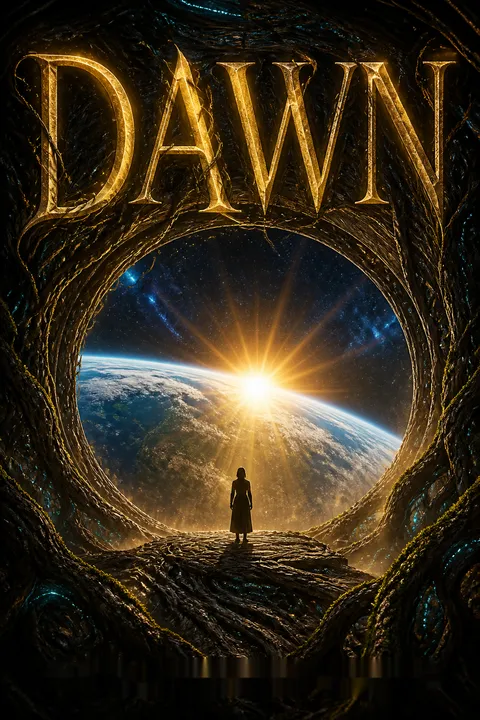


Plot Summary
Awake in the Gray Room
Lilith Iyapo wakes repeatedly in a sealed, colorless room, unable to learn who holds her or how long she has been asleep. The captors question her about her age, family, and life before the nuclear war, but refuse to answer her questions. After months of isolation, she gives up resisting and begins answering. During one awakening, they place a frightened boy named Sharad beside her.
Lilith teaches him English, learns his songs, and finds comfort in being able to touch another person. When she wakes again, Sharad is gone. Her unseen captors say he is with his family, but the loss deepens her suspicion that they treat people as experiments. Then a stranger appears inside her room, offering to take her outside.
Lilith's captivity begins by making uncertainty itself the instrument of control. With no clock, human contact, or explanation, she cannot tell whether refusal protects her or merely prolongs her suffering. Sharad briefly restores ordinary forms of care: teaching, touch, and worry for a child. His removal turns those comforts into evidence of her powerlessness. The room does more than confine Lilith; it severs the social world through which people ordinarily test what is real. Her eventual cooperation is therefore neither surrender nor trust. It is a survival decision made after isolation has stripped resistance of any useful leverage.
The Living Ship Opens
The stranger identifies himself as Jdahya, an Oankali male, and tells Lilith that his people rescued the survivors of humanity's self-inflicted nuclear catastrophe. She has been asleep, with brief periods awake, for about 250 years.
When Jdahya leads her through the wall of her room, she discovers that the room is part of a vast living ship, and that its landscape is an artificial world grown from biological material. Earth has been restored, but the Oankali plan to return humans there only after training them to live without machines.
Jdahya also reveals the bargain: the Oankali trade genetic material, and human descendants will be altered through interbreeding. He describes humanity's intelligence and hierarchy as a dangerous combination. Horrified, Lilith refuses the proposed future, but cannot make herself accept Jdahya's offer of a painless death.
The rescue is not a return to safety. Jdahya's disclosure converts Lilith's captivity into a negotiation whose terms have already been imposed on her body and species. The living ship makes that imbalance tangible: even doors, food, and shelter are organisms the Oankali command. Their account of human hierarchy offers a powerful diagnosis of how intelligence can serve dominance rather than restrain it, but diagnosis does not grant them moral authority to decide humanity's future. Lilith's refusal of death matters precisely because it is not consent to the trade. She chooses life while recognizing that the choice has been narrowed almost to a single path.
A Child in the Plant
Jdahya brings Lilith into the Oankali family, where she meets his mate Tediin, the ooloi Kahguyaht, and the young ooloi Nikanj. Kahguyaht takes her to see Sharad, still alive and apparently only slightly older, asleep inside a living plant that sustains human captives in suspended animation.
Lilith learns that she herself has spent most of her captivity inside one of these plants. She tries to understand the Oankali, but they deny her paper and writing tools, insisting she learn through memory and conversation.
Wanting another human voice, she wanders into a different family area to find a man she has heard discussed. Kahguyaht finds her there and explains that the man, Fukumoto, died after decades of waking life with almost no human company. Lilith returns to Nikanj's household with her isolation newly sharpened.
Sharad's preserved body reframes Lilith's captivity: the Oankali have not simply imprisoned her but maintained her as living biological material. Their care is real, yet it does not erase the horror of being handled without permission. The denied writing tools make this conflict especially precise. Lilith seeks a human technology that would let her preserve knowledge independently, while the Oankali insist that memory and personal instruction are enough. Her discovery of Fukumoto's life shows the cost of an apparently benevolent system: survival can be made compatible with profound social deprivation. Information itself becomes part of the Oankali's management of human dependence.
The Human Reunion Turns Violent
As Lilith's relationship with Nikanj deepens, the young ooloi asks permission to alter her brain chemistry so she can remember and learn Oankali language more effectively. Lilith fears any intervention in her mind, then finally agrees rather than be changed without warning.
Once she recovers, Nikanj arranges a meeting with Paul Titus, a human raised among the Oankali since he was fourteen. Titus urges Lilith to remain aboard the ship, then attacks when she refuses him and rejects the Oankali's reproductive plans.
He breaks her wrist before Nikanj intervenes and heals her. Lilith learns that the Oankali have controlled human fertility and created children from stored genetic material, including many attributed to Titus. Nikanj gives Lilith limited access to the living walls, then finds her another human to meet.
The episode with Titus shows how deprivation can distort a person's ability to consent, without making his violence inevitable or acceptable. He has been separated from human society during adolescence, kept ignorant of his children, and encouraged to see Lilith as a possible refuge. His attack turns the Oankali's abstract policy of managing reproduction into immediate bodily danger. Lilith, meanwhile, accepts Nikanj's intervention in her memory only after being offered advance knowledge and a choice. That distinction becomes central to their uneasy trust: a choice made under coercive conditions remains compromised, but withholding information would make it worse.
Building the First Circle
Nikanj introduces Lilith to Joseph Shing, a practical, observant man who has spent years among the Oankali and wants to know what happened to Earth. He becomes her first human ally, though his warning that the Oankali intend to end humanity's original form confirms the fear she already carries.
Lilith then enters a vast chamber containing eighty sleeping survivors. She studies their histories and chooses Tate Marah first, judging her composed and adaptable. Tate helps Lilith orient Leah Bede and Celene Ivers, though both women initially doubt that aliens hold them in orbit.
Lilith later wakes Joseph, police officer Curt Loehr, and others, gradually building a group of people who can share the work of caring for each new arrival. The Oankali will not release them until at least forty are awake and able to meet them.
The nursery makes leadership a practical burden rather than a position Lilith can simply claim. Every person she wakes becomes permanently present, with needs and suspicions she must help manage. Her choices about whom to awaken first are attempts to reduce danger, but they also make her appear allied with the captors who gave her unusual abilities. Tate and Joseph offer different kinds of help: Tate reads people and adapts quickly, while Joseph emphasizes evidence and planning. Their partnership lets Lilith distribute responsibility, yet the Oankali's numerical threshold leaves her organizing a community inside a structure she does not control.
A Room Full of Suspicion
As Lilith wakes more survivors, cramped living and uncertainty produce fights, factions, and attempts to turn her into a target. Peter Van Weerden gathers angry followers, while Lilith tries to keep the group occupied and prevent accusations from becoming violence.
When Jean Pelerin attacks Lilith over the lack of meat, Lilith knocks her unconscious and discovers how much stronger the Oankali have made her. Later, Peter and Gregory Sebastes try to drag Allison Zeigler away after she refuses Gregory.
Lilith intervenes, breaks Peter's arm, and knocks down the men who resist. She makes clear that no one in the group may claim another person's body. Her intervention stops the assault, but it also gives frightened survivors another reason to wonder whether she is still fully human.
Lilith's enhanced strength solves an immediate problem while deepening her political isolation. She can stop assault where persuasion fails, but each display of power lends support to the claim that she is an instrument of the Oankali. Her defense of Allison establishes a boundary the group cannot leave to custom or majority rule: bodily autonomy cannot depend on whether a survivor is popular, available, or useful to rebuilding. The scene also exposes a danger in nostalgic appeals to civilization. The war has destroyed institutions, but that does not make coercion a natural or necessary substitute. Lilith's authority rests on protection, even when protection makes others fear her.
The Oankali Step Forward
Once forty-three humans are awake, the Oankali drug a shared meal and enter the chamber in numbers, led by ooloi who approach each person individually. Panic breaks out as survivors confront bodies they have never seen before.
Nikanj stays beside Lilith and Joseph, easing Joseph's fear while explaining that the Oankali intend to condition humans to tolerate difference rather than let fear turn into violence. Nikanj offers Joseph a choice about its help, but its sensory contact and neural link overwhelm him before he can decide what he wants.
Lilith and Joseph experience an intense shared pleasure through Nikanj, then struggle with the fact that their sensations were real while the ooloi controlled their connection. The humans remain under Oankali care for several days as the first stage of their adjustment begins.
The Oankali's first public appearance stages a collision between an ethical goal and coercive means. They are trying to prevent terror from becoming attack, yet they use drugs and neural control to shape what humans feel. Joseph's experience makes the distinction between sensation and consent unstable: he feels genuine pleasure, but the conditions and timing are controlled by another being. Lilith's familiarity with Nikanj does not settle the moral problem; it only lets her interpret it more readily. The scene resists a simple division between benevolent care and cruel domination. The Oankali preserve people while also treating fear, sexuality, and social behavior as biological systems they can administer.
A Fatal Misreading
Peter appears briefly at peace under the influence of his ooloi, but later interprets the conditioning as an assault on his humanity and attacks it. The ooloi's defensive sting kills him before it can regain control.
Peter's death leaves Jean terrified and unable to tolerate contact with most humans; her ooloi's family takes her in when even her human friends cannot comfort her. Joseph sees the death as proof that the Oankali can destroy a person while calling the process care.
The survivors are moved from the chamber to a living training environment made to resemble a tropical forest. There they receive tools and instruction in shelter building and foraging, while the Oankali watch how they cooperate. Some humans begin leaving the settlement to test themselves beyond the camp.
Peter's death is not a clean demonstration that either side is right. His fear of being controlled is understandable, but his attack meets a defensive response that cannot be undone. The ooloi's mistake lies in failing to read the gulf between outward calm and inner humiliation; the humans' danger lies in being conditioned without reliable means to refuse. Jean's response further complicates the idea that human solidarity can automatically repair trauma. The Oankali's family bonds can comfort her, but they also reveal that biological attachment may redirect loyalty across species. The forest extends the experiment into practical life: survival skills are taught, while the terms of the test remain hidden.
The Forest Is Another Cage
The humans build a raised shelter, gather food, and learn that the training forest is enclosed by the ship. Some leave the settlement anyway, hoping to find a way out or simply to live beyond Oankali supervision. Tate, Gabriel, Leah, Wray, Allison, Joseph, and Lilith set out together after Tate asks Lilith to join them.
Their trust in her remains uncertain, and Gabriel suspects she may be useful more than loyal. As they follow the river, Lilith shares survival knowledge and argues that the group should build shelter before nightfall.
Joseph, convinced the forest may be Earth, wants to explore, but his touch has begun to feel strangely alien to Lilith since their Oankali-mediated union. The next morning, Curt arrives with other humans and attacks Lilith before she can understand what he intends.
Leaving the settlement appears to offer freedom, but the group's dependence on learned skills and its inability to verify the landscape keep freedom provisional. Lilith goes because Joseph asks her, not because she believes escape is possible. That choice makes intimacy and political judgment inseparable: she risks leaving a familiar Oankali household for people who distrust her. Her altered response to Joseph's touch also shows that biological intervention can outlast the conscious experience that produced it. The group's suspicion is not merely an obstacle to solidarity; it is partly a rational response to concealed control. Yet mistrust, left unexamined, leaves them vulnerable to the violence approaching from Curt's faction.
The Ax Between Them
Curt strikes Lilith with a machete and leaves her unconscious while his group carries away the others. When Lilith follows their trail, she finds Joseph dead, his head nearly severed.
Nikanj explains that Curt saw Joseph's injuries healing and concluded that he was not human; the Oankali had not reached the group in time to stop the killing. They lead Lilith to Curt's camp, where he and his followers threaten the Oankali with axes and machetes. Fighting erupts.
Nikanj is badly wounded, and Lilith lies beside it, holding its nearly severed sensory arm in place while it uses her body to heal. Her biological tendency toward cellular regeneration helps Nikanj recover. The Oankali subdue the humans, and Curt is removed from the possibility of returning to Earth.
The climax brings the novel's competing failures of trust into physical form. Curt mistakes healing for proof of alien identity, but his fear acts on a real difference that Lilith herself cannot explain away. The Oankali's surveillance does not prevent Joseph's murder, revealing the limits of their control and their tendency to treat observation as sufficient protection. Lilith's choice to save Nikanj after losing Joseph is not evidence that she has stopped grieving or that she accepts Oankali rule. It is an attachment she has chosen through years of shared life, made urgent by the possibility of another loss. Her body becomes both a source of danger and a means of repair.
A Child Kept Back
After Nikanj recovers, Lilith returns to a settlement where the humans distrust her for saving the ooloi and blame her for their captivity. She stops leading them and teaches only those who ask. Tate and the others leave for Earth without her; Nikanj says Lilith would have been killed if she had gone with them, because several humans had threatened her.
The Oankali intend to give the departing group supplies and allow them to flee once they reach Earth. Lilith asks whether they can have children without returning to the Oankali, and Nikanj explains that human eggs and sperm will not unite without Oankali intervention.
Then it reveals that Lilith is already pregnant, carrying a daughter created from Joseph's seed and mixed by Nikanj. Lilith protests that the child will not be human, but Nikanj insists she is ready to be a mother.
The ending refuses the comfort of a completed rescue. The human group is given a route toward Earth and the possibility of flight, while Lilith remains with the beings whose intervention she both resists and depends on. Her pregnancy makes the genetic trade intimate and irreversible, but it does not resolve her disagreement with the Oankali. They interpret her capacity for motherhood as evidence of readiness; she experiences the pregnancy as a decision made without her consent. The daughter also joins grief to futurity: Joseph's genetic presence continues, though not in a form Lilith can accept without fear. The novel closes on a divided hope, with humanity surviving but its definition unsettled.
Analysis
Dawn makes survival inseparable from the question of who gets to define a survivor. The Oankali rescue the remnants of humanity, heal disease, restore Earth, and teach practical skills. They also decide when humans wake, what they know, how their bodies change, and which reproductive futures remain possible. The same act can therefore be care from the Oankali's perspective and a violation from Lilith's. The novel refuses to let good outcomes settle the argument: preserving life does not automatically justify taking consent, but insisting on an untouched humanity risks treating a historically destructive social order as sacred.
Lilith's position is difficult because she is neither an uncomplicated collaborator nor an outsider to the Oankali. Her survival depends on relationships with Jdahya and Nikanj, and she genuinely cares about them. At the same time, every skill they give her helps her guide other humans into a future they have not chosen. This makes leadership a form of exposure. She must use authority to protect people from one another, while knowing that her closeness to the Oankali makes her appear compromised. The humans' suspicion is not simply irrational, just as their resistance is not always liberating.
The book's sharpest insight is that hierarchy can recruit intelligence into its service. The Oankali's explanation of humanity's self-destruction is not a complete moral verdict, yet the human characters repeatedly show how quickly fear becomes domination, particularly over women and perceived outsiders. But the Oankali's own confidence in biological management creates a parallel danger: they can reduce agency to a problem their expertise should solve. The final pregnancy does not reconcile these systems. It gives Lilith a future tied to Joseph and Nikanj while confirming that the decisive choice was not hers. Humanity survives, but the novel leaves open whether survival without self-determination can be called a beginning.
Review Summary
Dawn is a thought-provoking sci-fi novel that explores complex themes of humanity, alienness, and survival. Readers praise Butler's world-building, character development, and ability to challenge conventional ideas. The story follows Lilith, a human awakened by aliens after Earth's destruction, as she grapples with her role in humanity's future. While some find the book disturbing and uncomfortable, many appreciate its depth and originality. The novel's exploration of consent, identity, and human nature sparks intense reactions and discussions among readers.
People Also Read






Characters
Lilith Iyapo
Reluctant human intermediaryA Black American survivor of the nuclear war, Lilith is observant, stubborn, and practiced at finding a way forward when circumstances cannot be controlled. Before the war, an accident had taken her husband and young son; later, captivity strips her of ordinary family and community. Her interest in anthropology gives her a habit of watching how people behave rather than trusting their claims about themselves. She resists being made an instrument of the Oankali, yet understands that helping other humans may be their best chance to survive. Her strength lies less in certainty than in her willingness to revise her judgment, protect vulnerable people, and keep acting while others argue over what is real.
Nikanj
Ooloi guide and mediatorNikanj is the young ooloi of Jdahya's family, a third sex whose sensory organs allow it to perceive and alter other bodies. It is curious, exacting, and emotionally responsive, but also raised within a culture that treats biological intervention as ordinary care. Its bond with Lilith begins as a teaching arrangement and becomes an intimate, difficult relationship. Nikanj wants to prove its ability to work with humans, while Lilith wants it to recognize that good intentions do not make control harmless. Its attentiveness to individual feeling distinguishes it from more confident Oankali authorities, though it remains part of the system that has taken choices from her.
Jdahya
Lilith's first Oankali teacherJdahya is the Oankali male who enters Lilith's isolation room and patiently teaches her how to endure contact with his people. His unusual sensory tentacles initially overwhelm her, but his restraint gives her room to adapt. He explains the ship, the restoration of Earth, and the Oankali's genetic trade without pretending that she will like the terms. Jdahya is compassionate without being able to offer the freedom Lilith demands. His willingness to answer difficult questions makes him a valuable guide, but his calm acceptance of the Oankali plan exposes the distance between personal kindness and institutional consent.
Joseph Shing
Lilith's human allyJoseph is an engineer and widower who approaches the Oankali with a practical need for evidence. He is skeptical but not reckless, and he understands that survival may depend on learning how the ship works before attempting escape. His restraint contrasts with the more impulsive resistance of other survivors. With Lilith, he offers companionship without asking her to disguise what she fears. His desire to see the world beyond the ship's walls makes him valuable to the group and complicates Lilith's attachment to the Oankali. He is drawn to her courage, while she values his ability to question her without dismissing her.
Tate Marah
Canny first recruitTate is a bright, self-possessed survivor whose intelligence is matched by a sharp sense of how people maneuver around one another. Lilith chooses her as the first person to awaken because she seems composed enough to help with the others. Tate is adaptable but not easily persuaded: she questions Lilith's account, tests the group's limits, and looks for a way to regain control. Her friendships and loyalties are shaped by practical judgments as much as affection. She recognizes that Lilith may be right about the Oankali while remaining wary of what Lilith has become in their eyes.
Kahguyaht
Ooloi family authorityKahguyaht is Nikanj's ooloi parent and a knowledgeable, often blunt presence in Lilith's life. It teaches her Oankali biology, oversees parts of her education, and helps manage the human group. Its confidence can shade into condescension, especially when Lilith challenges its assumptions. Kahguyaht believes the Oankali's methods are necessary, but its willingness to listen and its concern for Nikanj reveal a more vulnerable side beneath its authority.
Paul Titus
Human raised among aliensTitus was awakened as a young teenager and has spent most of his life among the Oankali, with little contact with other humans. He is intelligent enough to recognize that his situation has been manipulated, but his isolation leaves him with few ways to judge human relationships or power. He longs for connection and fears what the Oankali have done to human reproduction. His anger reflects real losses, even as his attempts to control others repeat the coercion he resents.
Curt Loehr
Protective former police officerCurt is a former New York police officer whose life has been organized around protecting people, especially children. The loss of his wife and children has left him with grief he can manage more easily when someone depends on him. He is physically imposing and accustomed to taking charge, qualities that can steady a frightened group but also make his certainty dangerous. His attachment to Celene and suspicion of Lilith reflect his need to distinguish allies from threats.
Tediin
Jdahya's patient mateTediin is Jdahya's female mate and one of the first Oankali to make Lilith feel accepted within a household. She speaks gently with Lilith and recognizes the emotional ties forming between the human and the family. Her warmth does not make her unaware of the genetic trade; she treats it as part of the future her people expect. Through Tediin, Lilith sees how intimacy and social structure are intertwined among the Oankali.
Ahajas
Nikanj's female mateAhajas is one of Nikanj's mates, a large and steady Oankali female who helps care for Nikanj through its development. She accepts Lilith into the household and later supports her during a crisis. Her attentiveness is expressed through practical acts such as carrying, feeding, and guarding. Ahajas represents the close biological and familial bonds that give the Oankali a model of kinship unlike Lilith's human experience.
Dichaan
Nikanj's male mateDichaan is Nikanj's male mate and a patient source of knowledge about Oankali life. He helps teach Lilith and later supports the household's care of Nikanj. His calmness reflects a culture in which male and female relatives form one part of a family organized around an ooloi. For Lilith, his reliability offers a kind of care she can recognize even when its biological and cultural foundations remain alien.
Sharad
Lilith's first child companionSharad is a young human boy who shares one of Lilith's early isolation rooms. Frightened and unable to speak English, he gradually learns from her while teaching her his own language and songs. His presence gives Lilith a rare chance to care for someone and to experience human touch. He is also a reminder that the Oankali's experiments involve children and families, not only adults.
Peter Van Weerden
Ringleader of resistancePeter is a stubborn survivor who distrusts Lilith and resents the way the Oankali control the humans' choices. He gathers people who want action rather than waiting, and he interprets restraint as weakness. His certainty attracts those who feel powerless, even when he cannot offer a workable escape plan. Peter embodies a form of resistance driven by wounded pride and fear of humiliation.
Leah Bede
Stubborn, self-sufficient survivorLeah is religious, patient, and difficult to coerce. During her captivity she resists through endurance rather than confrontation, and she brings that steadiness into the human group. Though initially skeptical of Lilith, she is hardworking and capable of protecting herself. Her loyalty grows through actions and shared work, not easy reassurance.
Celene Ivers
Grieving, fearful survivorCelene has lost her husband and twin daughters, and grief leaves her frightened of displeasing those around her. She seeks security in people who seem capable of protecting her, especially Curt. Her fear can make her appear passive, but it does not erase her capacity to choose or to offer comfort. She represents the vulnerable survivors whose needs for safety are easily used by stronger personalities.
Gabriel Rinaldi
Actor among the survivorsGabriel is a handsome actor who has learned to make performance a shield. During captivity he uses roles to keep the Oankali from seeing him clearly, and later he reads the group's shifting loyalties with sharpness. He is resourceful and socially perceptive, but his caution can harden into distrust. His connection with Tate draws him into the group's effort to leave the settlement.
Wray Ordway
Practical forest learnerWray is a small, blond survivor whose first reaction to waking is impulsive and physical. Once he settles, he proves willing to learn, work, and adapt to the forest. His growing skill at gathering food helps the group depend less on the Oankali. He is not a natural leader, but he contributes through effort and a readiness to try unfamiliar tasks.
Allison Zeigler
Independent survivorAllison is a survivor who insists on choosing her own relationships and resists being treated as a resource for the group. Her independence brings her into conflict with people who believe survival justifies controlling women's bodies. She is capable of fear and uncertainty, yet continues to assert her judgment. Her presence gives Lilith a direct reason to defend bodily autonomy as a basic condition of rebuilding.
Jean Pelerin
Demanding, volatile survivorJean is a forceful woman who reacts to deprivation with anger and demands, particularly when the humans are denied meat. She is quick to join the group's conflicts and slow to trust those who claim authority. Her bluntness exposes the tensions that arise when basic wants are controlled by the Oankali.
Plot Devices
The living Oankali ship
A world that is also prisonThe Oankali ship is an organism rather than a machine. Its walls open in response to Oankali chemistry, its rooms can grow or change, and its living systems provide food, shelter, and transport. This design makes human escape difficult because there are few controls a human can operate independently. The ship also blurs the boundary between environment and body: Lilith learns that the place holding her is not inert property but part of a biological society. The device turns the Oankali's worldview into architecture, while making their power over daily life impossible to ignore.
Suspended animation plants
Preservation without permissionLong, living plants keep humans asleep while regulating their breathing, nourishment, and bodily condition. Lilith first encounters one when the Oankali remove her from it, then later sees Sharad and other survivors preserved inside them. The plants explain how the Oankali can hold people for centuries while keeping them alive and young. They also give the captivity a disturbing physical form: a person is protected by an organism that once evolved to digest prey. Care and containment are therefore present in the same biological mechanism.
Ooloi sensory connection
Intimacy through biological controlOoloi sensory organs perceive, alter, and connect with other nervous systems. They can treat illness, influence bodily responses, communicate sensory impressions, and create experiences shared between partners. The ability explains why the Oankali can heal humans and conduct genetic changes, but it also complicates consent: sensation can be genuine even when another person controls its conditions. Lilith's bond with Nikanj and Joseph's fear of the connection show how care, pleasure, dependency, and coercion can occupy the same encounter. The device makes alien intimacy both emotionally powerful and politically troubling.
Genetic trade
Survival at the cost of inheritanceThe Oankali survive by trading genetic material with other species, deliberately combining and modifying traits through their ooloi. They rescued humanity because they value human intelligence and other biological capacities, but they intend to alter human reproduction and future children. Lilith learns that this is not a temporary medical intervention: it is the price the Oankali attach to restoring Earth and ensuring human survival. The trade gives the novel its central conflict between preserving life and preserving a species as it understands itself. Its terms remain contested even when the Oankali describe them as inevitable.
Lilith's wall and body changes
Power that isolates its bearerThe Oankali modify Lilith's memory, strength, healing, and ability to open certain living walls and release sleepers from their plants. These abilities let her organize the human group and protect people, but they also make her look like an extension of the captors. Each useful change therefore brings a social cost: survivors may doubt her humanity precisely when they need her help. Her enhanced body also becomes connected to an unexpected regenerative capacity that the Oankali value. The device turns Lilith's physical difference into both an instrument of leadership and a source of suspicion.
FAQ
Synopsis & Basic Details
What is Dawn about?
- Humanity's Last Hope: Dawn introduces Lilith Iyapo, a survivor of a devastating nuclear war, who awakens to find herself held captive by the Oankali, an alien species. They reveal that humanity has nearly destroyed itself, and they have saved the last remnants, including Earth itself, for a "trade."
- Genetic Imperative: The Oankali are "gene traders," driven by a biological imperative to merge their DNA with other species, creating hybrids to ensure mutual evolution and survival. They offer humanity a chance to return to a restored Earth, but only if they agree to this genetic transformation, fundamentally altering what it means to be human.
- Reluctant Leadership: Lilith is chosen by the Oankali to be the "parent" of the first human-Oankali hybrid community. She must awaken other human survivors, teach them Oankali ways, and prepare them for the genetic trade and resettlement on Earth, navigating their fear, anger, and deep-seated resistance.
Why should I read Dawn?
- Profound Thematic Exploration: Dawn delves into complex themes of survival, identity, consent, and the nature of humanity, challenging readers to question what defines a species and the ethics of intervention, making it a powerful work of speculative fiction analysis.
- Unique Alien Perspective: Octavia E. Butler crafts one of science fiction's most original alien species, the Oankali, whose biological technology, three sexes, and "gene trade" philosophy offer a truly alien yet compelling worldview, providing a fresh take on alien contact narratives.
- Psychological Depth: The novel offers an intense psychological journey through Lilith's eyes, exploring her trauma, xenophobia, and reluctant adaptation, forcing readers to confront uncomfortable truths about human nature and the compromises necessary for survival.
What is the background of Dawn?
- Post-Apocalyptic Earth: The story is set after a global nuclear war, initiated by humanity's own "hierarchical" and self-destructive tendencies, has rendered Earth uninhabitable. This catastrophic event serves as the catalyst for the Oankali's intervention, highlighting humanity's inherent flaws.
- Biological Technology: The Oankali operate on a vast, living, sentient ship, and their technology is entirely biological. Their tools, homes, and even their suspended animation chambers are grown, not built, emphasizing their deep connection to life and their unique approach to engineering and survival.
- Oankali Evolutionary Drive: The Oankali are a nomadic species driven by a biological imperative to "trade" genetic material with other intelligent species they encounter. This isn't for conquest, but for their own evolutionary renewal, preventing stagnation and specialization, a core concept in Dawn themes.
What are the most memorable quotes in Dawn?
- "You are intelligent. That's the newer of the two characteristics, and the one you might have put to work to save yourselves. You are potentially one of the most intelligent species we've found, though your focus is different from ours. Still, you had a good start in the life sciences, and even in genetics.": Jdahya's blunt assessment of humanity's intelligence, juxtaposed with its fatal flaw, encapsulates the Oankali's core understanding of human nature and the central conflict of the novel.
- "You have a mismatched pair of genetic characteristics. Either alone would have been useful, would have aided the survival of your species. But the two together are lethal. It was only a matter of time before they destroyed you.": This quote, also from Jdahya, directly states the Oankali's diagnosis of humanity's self-destructive nature, linking intelligence with hierarchy as a "cancer" that led to war, a key element in Dawn analysis.
- "We revere life. We had to be certain we had found ways for you to live with the partnership, not simply to die of it.": Nikanj's explanation to Joseph highlights the Oankali's perspective on their "trade" as a form of salvation, even as it involves profound transformation, underscoring the alien morality at play in Dawn explained.
What writing style, narrative choices, and literary techniques does Octavia E. Butler use?
- First-Person Limited Perspective: Butler primarily uses Lilith's first-person perspective, immersing the reader in her confusion, fear, and gradual understanding. This narrative choice emphasizes the psychological impact of alien contact and the struggle for agency, central to Lilith Iyapo's motivations.
- Sparse, Direct Prose: Butler's writing is characterized by its clarity and directness, avoiding flowery language to deliver powerful emotional and intellectual impact. This stark style enhances the unsettling atmosphere and the brutal honesty of the Oankali's pronouncements, contributing to the overall Dawn literary analysis.
- Biological Metaphors and Symbolism: The novel is rich with biological metaphors, from the Oankali's "gene trade" to the living ship and the "cancer" of human hierarchy. These elements serve as potent symbols for themes of evolution, adaptation, and the interconnectedness of life, deepening the symbolism in Dawn.
Hidden Details & Subtle Connections
What are some minor details that add significant meaning?
- The "Velcro" Clothing: Lilith's observation that her alien clothing "adhered to itself and stayed closed when she closed it, but opened readily enough when she pulled the two front panels apart. The way they came apart reminded her of Velcro, though there was none to be seen" (Chapter 1) subtly introduces the Oankali's biological technology. This seemingly trivial detail foreshadows that even mundane objects are living, genetically engineered entities, hinting at the pervasive nature of Oankali control and their fundamental difference from human mechanical reliance.
- Oankali's "Talent for Cancer": Jdahya reveals that Lilith had a "talent for cancer" (Chapter 3), which the ooloi found "beautiful" and saw "great potential in it." This recontextualizes a human disease as a valuable genetic trait for the Oankali, hinting at their unique biological perspective and their ability to harness what humans perceive as destructive for regenerative purposes, a key aspect of Dawn themes and Oankali biology explained.
- The Ship's Sentience and Affinity: Jdahya explains that the ship "can be intelligent" and that "the human doctor used to say it loved us. There is an affinity, but it's biological—a strong, symbiotic relationship" (Chapter 5). This detail elevates the ship from a mere setting to a living, responsive entity, implying a deeper, almost familial bond between the Oankali and their vessel, and foreshadowing the profound biological integration Lilith will experience.
What are some subtle foreshadowing and callbacks?
- Jdahya's Offer of Death: Early in their interaction, Jdahya offers Lilith a painless death by stinging her (Chapter 5). This seemingly compassionate gesture subtly foreshadows the Oankali's ultimate control over human life and death, and their willingness to end suffering, even if it means ending existence. It also highlights Lilith's deep-seated will to live, which the Oankali value.
- The Oankali's "Acquisitive" Nature: Jdahya states, "We are powerfully acquisitive. We acquire new life—seek it, investigate it, manipulate it, sort it, use it" (Chapter 5). This description, initially presented as a drive for genetic diversity, subtly foreshadows the Oankali's non-consensual genetic manipulation and their "ownership" of humanity, revealing a darker side to their benevolent intentions, crucial for Oankali motivations analysis.
- Paul Titus's Warning about "Making More": Paul Titus, in his desperate attempt to dissuade Lilith, reveals that the Oankali "had to make more" humans for the Toaht group, implying they created babies from stored genetic material (Chapter 8). This foreshadows Nikanj's later revelation that Lilith is pregnant with Joseph's child, conceived by the ooloi, confirming the Oankali's extensive and intrusive genetic engineering capabilities, a key element of Dawn plot explained.
What are some unexpected character connections?
- Nikanj's Prior "Matchmaking" for Lilith: Nikanj reveals that it "set out to find someone for you. Not another Paul Titus, but someone you would want. Someone who would want you" (Chapter 7). This unexpected confession shows Nikanj's deep, almost parental investment in Lilith's emotional well-being and her future mate, Joseph, long before their conscious interaction, highlighting the Oankali's subtle manipulation of human relationships and Nikanj's motivations.
- The Ooloi's Shared Grief for Peter's Ooloi: When Peter's ooloi becomes catatonic after his death, Nikanj notes that "Tehjaht has mates. They'll take care of you" (Chapter 14). This reveals a profound, almost human-like capacity for grief and familial support among the Oankali, particularly for their ooloi, challenging Lilith's perception of them as purely logical and detached, adding depth to Oankali emotional analysis.
- Lilith's Cancer as a "Gift" for Oankali Regeneration: Nikanj reveals that Lilith's "talent for cancer" (Chapter 7) was not just cured but studied, and that her body showed Nikanj "how to awaken them [genes], how to stimulate growth of cells that would not normally regenerate" (Chapter 14) to heal its severed arm. This creates a profound, unexpected biological connection, turning Lilith's personal vulnerability into a crucial genetic "gift" for Oankali regeneration, a unique aspect of Dawn symbolism and Lilith's transformation.
Who are the most significant supporting characters?
- Sharad, the First Human Child: Sharad, the young boy Lilith briefly shares an isolation room with (Chapter 1), is significant not just as a companion but as a precursor to the Oankali's "experiments" in human grouping and education. His presence highlights Lilith's maternal instincts and foreshadows the Oankali's interest in human children and their capacity for learning, a subtle detail in Dawn character analysis.
- The Dying Human Doctor: Jdahya mentions a "human physician" who was with them, "old, dying," but who "could teach" (Chapter 3). This unnamed doctor represents an early human collaborator, a bridge figure who chose to live and die among the Oankali, setting a precedent for human adaptation and foreshadowing the choices Lilith and others will face, adding a layer to humanity's fate in Dawn.
- Ahajas and Dichaan, Nikanj's Mates: As Nikanj's male and female mates, Ahajas and Dichaan provide a glimpse into the complex, non-sexual Oankali family structure. Their concern for Nikanj's well-being and their eventual acceptance of Lilith into their household illustrate the Oankali's capacity for deep, if alien, familial bonds, offering insight into Oankali society explained.
Psychological, Emotional, & Relational Analysis
What are some unspoken motivations of the characters?
- Lilith's Deep-Seated Need for Control: Despite her outward adaptability, Lilith's constant internal struggle against Oankali control, her desire to "learn and run," and her fierce protection of human autonomy (even when she herself is compromised) reveal a profound, unspoken motivation to reclaim agency in a world where it has been utterly stripped away. This is evident in her refusal to let Nikanj drug her during Joseph's transformation, stating, "Leave me … leave me what I feel for him, at least" (Chapter 6).
- The Oankali's Fear of Stagnation: Beyond their stated "acquisitive" drive, the Oankali's relentless pursuit of genetic trade is implicitly motivated by a deep, existential fear of their own species' stagnation or extinction. Their long history of divisions and their meticulous genetic engineering suggest a profound anxiety about evolutionary dead ends, making their "trade" not just a preference but a desperate necessity for their survival, a core aspect of Oankali motivations analysis.
- Joseph's Desire for Purpose and Meaning: Joseph's initial acceptance of his captivity and his later eagerness to "learn and run" (Chapter 4) stem from an unspoken need to find purpose after the loss of his family and world. His willingness to engage with Lilith and the Oankali, even in the face of revulsion, suggests a profound human drive to make sense of chaos and contribute to a future, however alien, as seen in his statement, "I think our best bet now is to learn all we can. Get facts. Keep our eyes open" (Chapter 4).
What psychological complexities do the characters exhibit?
- Lilith's Xenophobia and Maternal Instincts: Lilith grapples with intense xenophobia towards the Oankali, finding them "grotesque" and "repulsive," yet she develops deep bonds with Jdahya and Nikanj, eventually becoming a mother to a hybrid child. This internal conflict highlights the complex interplay between primal fear and the powerful human capacity for connection and adaptation, a central theme in Lilith Iyapo's psychological journey.
- The Humans' Denial and Projection: Many humans, like Tate and Curt, initially refuse to believe Lilith's account of alien captivity, projecting their fear and anger onto her. This psychological defense mechanism allows them to maintain a semblance of control and familiar reality, even as it leads to destructive actions, such as Curt's murder of Joseph, illustrating the dangers of human hierarchical instincts and denial.
- Paul Titus's Stockholm Syndrome: Paul Titus, having been awake for years among the Oankali, exhibits classic signs of Stockholm Syndrome, defending his captors and attempting to coerce Lilith into staying with him. His statement, "There's nothing that I care about left on Earth" (Chapter 8), reveals a profound psychological break, where the alien environment has become his only perceived safe space, a chilling example of human adaptation in Dawn.
What are the major emotional turning points?
- Lilith's Acceptance of Jdahya's Touch: After days of revulsion, Lilith forces herself to touch Jdahya's "smooth second skin" (Chapter 3), a moment of profound emotional breakthrough where she begins to overcome her xenophobia. This act of forced intimacy marks her first step towards accepting the Oankali and her new reality, a critical turning point in Lilith's emotional analysis.
- Joseph's Encounter with Nikanj: Joseph's initial terror and subsequent, drug-induced acceptance of Nikanj's neural link (Chapter 6) is a pivotal emotional experience. It forces him to confront the Oankali's alienness and their power over human sensation, leading to a complex mix of revulsion and desire that profoundly alters his relationship with Lilith and his understanding of his own body.
- Lilith's Grief and Rage over Joseph's Death: Joseph's brutal murder by Curt (Chapter 6) is a devastating emotional turning point for Lilith. Her initial despair and rage, directed at both Curt and the Oankali for their perceived inaction, solidify her resolve to protect the remaining humans, even as it deepens her isolation and highlights the tragic consequences of human violence, central to Dawn themes of loss.
How do relationship dynamics evolve?
- From Captor-Captive to Complex Interdependence: Lilith's relationship with the Oankali, particularly Jdahya and Nikanj, evolves from one of pure captivity to a deeply interdependent, almost familial bond. She becomes their teacher and mate, while they are her protectors and the architects of her future, blurring ethical lines and creating a unique cross-species dynamic, a key aspect of Dawn relationship analysis.
- Human-Human Bonds Under Strain: The relationships among the human survivors are constantly tested by fear, suspicion, and the Oankali's manipulations. While some, like Lilith and Joseph, form deep connections, others, like Curt and Peter, succumb to paranoia and violence, demonstrating humanity's inherent "hierarchical" flaws and its struggle to form cohesive communities, a recurring motif in Dawn character interactions.
- The Ooloi's Role in Intimacy and Reproduction: The ooloi, as the third sex, fundamentally reshapes human intimacy and reproduction. Their ability to create neural links and facilitate three-way sexual experiences (Chapter 6) challenges traditional human concepts of sex, consent, and family, forcing a re-evaluation of relational boundaries and the very definition of a "mate" or "parent" in Dawn explained.
Interpretation & Debate
Which parts of the story remain ambiguous or open-ended?
- The True Extent of Oankali Benevolence: While the Oankali claim to "revere life" and act out of a desire to save humanity, their methods are undeniably coercive and manipulative. The story leaves open to debate whether their actions are truly benevolent or a form of sophisticated, self-serving parasitism, raising questions about the ethics of their "trade" and Oankali motivations.
- The Long-Term Viability of the Hybrid Species: The novel ends with Lilith pregnant with Akin, the first male hybrid. While Nikanj expresses confidence in the new species, the long-term psychological and social implications of this forced evolution remain ambiguous. Will the hybrids truly transcend human flaws, or will new, unforeseen conflicts arise from their dual heritage? This fuels debate on humanity's future in Dawn.
- The Nature of "Consent" in the Gene Trade: The Oankali repeatedly state that humans "choose" to participate in the trade, yet their choices are severely limited by their captivity and the threat of extinction. The story invites readers to question whether true consent can exist under such extreme duress, making the Oankali's "trade" a deeply controversial aspect of Dawn themes and consent in science fiction.
What are some debatable, controversial scenes or moments in Dawn?
- The Ooloi's Neural Link and Sexual Intimacy: The scenes where Nikanj establishes a neural link with Lilith and Joseph, creating a shared, intensely pleasurable sexual experience (Chapter 6), are highly controversial. Readers debate whether this constitutes rape, a form of consensual intimacy, or something entirely alien that defies human categorization, challenging traditional notions of sexuality and consent in Dawn.
- The Oankali's Genetic Engineering of Humans: The Oankali's non-consensual genetic alterations, such as curing Lilith's cancer, enhancing her strength and memory, and controlling human fertility (Chapter 3, 6), spark debate about bodily autonomy. Is it a benevolent intervention for survival, or a violation of human rights and identity, effectively turning humans into a domesticated species? This is central to Dawn ethical dilemmas.
- Lilith's Role as "Judas Goat": Lilith's acceptance of her role as the "parent" who must lead her people to the Oankali, knowing they will be genetically altered, is a point of contention. Her actions are seen by some as collaboration and betrayal, while others view them as a pragmatic choice for survival, highlighting the moral ambiguities of leadership in extreme circumstances and Lilith Iyapo's motivations.
Dawn Ending Explained: How It Ends & What It Means
- Lilith's Forced Pregnancy and the Birth of Akin: The novel concludes with Lilith, having been left behind by the fleeing humans, discovering she is pregnant with Joseph's child, conceived and genetically "mixed" by Nikanj. She gives birth to Akin, the first male construct, who appears human but possesses Oankali senses and abilities. This ending signifies the irreversible beginning of the hybrid species, a literal and symbolic merging of human and alien.
- The Inevitability of the Gene Trade: The Oankali's final revelation that human sperm and egg "will not unite without us" (Chapter 9) on Earth means that the gene trade is not merely an offer but a biological necessity for humanity's continued reproduction. This underscores the Oankali's absolute control and the ultimate futility of human resistance, cementing the transformation as humanity's only path to survival, a key aspect of Dawn ending explained.
- **A
About the Author
Other books by Octavia E. Butler



Download PDF
Download EPUB
.epub digital book format is ideal for reading ebooks on phones, tablets, and e-readers.








