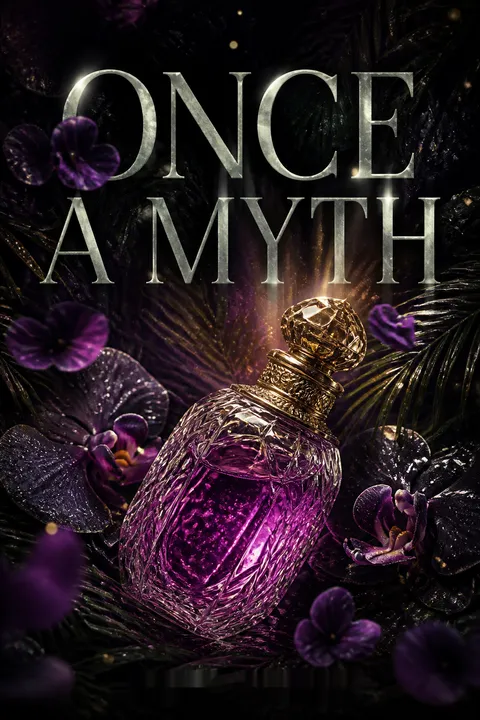


Plot Summary
Prologue
At seventeen, Eleanor Grace survives a drunken bonfire party after her boyfriend, Max, abandons her and a boy corners her. She knees her attacker, finds a ride home, and ends the relationship. A teacher’s school assignment asks students to imagine the worst thing they might endure and how they would survive it.
Four years later, Eleanor has a harsher answer: she has been stolen, sold, and delivered to a man who claims to own her. The story opens with her remembering that lesson, unsure whether the courage that once protected her can withstand what comes next.
The school assignment gives Eleanor a measure of confidence that is both useful and painfully inadequate. Her earlier danger had a recognizable beginning and an action she could take; the new ordeal is designed to remove choice, privacy, and even the meaning of her name. The frame makes survival less a matter of heroic toughness than of adapting without surrendering an inner sense of self. It also establishes the novel’s central contrast: Eleanor has learned to defend herself against individual threats, but she now faces a system built to make resistance seem futile.
The Hostel Kitchen
Four years later, Eleanor is backpacking in Mexico with Scott, her boyfriend and travel companion, when she slips away to cook alone in their hostel kitchen. Three men seize her while Scott is elsewhere in the building. They hold her in a dark room with other kidnapped women, where she meets Tess, a frightened Australian captive who shares food and urges the women to preserve their strength.
When guards drag the prisoners to a communal shower, Tess fights back and is beaten; Eleanor keeps her own anger contained, watching for a better moment. The guards strip and leash the women, then separate them behind locked doors. Eleanor understands that the men have not taken them for ransom. They are preparing the women for sale.
Eleanor’s composure is not consent or passivity; it is a survival tactic chosen in a setting where open resistance brings immediate punishment. Tess offers a counterexample, acting from moral urgency even when it costs her physically. Their brief solidarity shows how captivity attacks not only individual autonomy but trust between prisoners, while small gestures such as sharing food become practical acts of mutual recognition. The chapter also converts an ordinary travel choice into the hinge of the plot. Eleanor’s attempt to find quiet and independence leaves her alone, exposing how quickly a familiar world can become inaccessible.
A Kingdom Built for Sale
On his island, Sullivan Sinclair rejects a wealthy prospective guest after deciding the man is unsafe for the women he calls goddesses. The rejection reveals the rules of Sully’s private resort: he controls access, sells sexual fantasies to rich visitors, and punishes clients who cross his limits.
His authority rests on immense wealth from Sinclair & Sinclair, the pharmaceutical company he inherited and expanded after his parents died. He presents the island as a humane alternative to ordinary life, even as he profits from women taken without consent.
An encrypted message from his trafficking contact confirms that a woman matching his specifications has been acquired and will arrive in two days. Sully treats the email as a delivery notice, not a human emergency.
Sully’s first appearance establishes a disturbing split between restraint and exploitation. He can impose rules on guests and reject a man he considers dangerous, but those protections do not undo the coercion at the foundation of his business. His comparison between human captivity and animal exploitation exposes the moral logic he uses to excuse himself: because society harms other creatures, he believes people cannot claim special protection. The resort’s beauty and administrative polish are therefore not incidental decoration. They help make a violent arrangement appear orderly, even benevolent, to the man who designed it.
A Name Bartered Away
The traffickers restrain Eleanor in a chair, examine her, tattoo a barcode on her wrist, and implant a tracking device in her neck. When one guard attacks her, she uses the self-defence skills she learned after the bonfire assault, striking him hard enough to draw blood.
The head trafficker arrives, stops the man, and confirms that Eleanor has already been sold. He offers her a small concession in return for her name. Eleanor gives it only after securing a promise that her parents will receive a letter claiming she is safe and happy, sparing them the truth of her disappearance.
She identifies herself as Eleanor Grace, but the trafficker knocks her unconscious before she can finish her defiant vow. Her identity survives in her mind, though the men have begun marking her as merchandise.
The barcode and tracking device turn the traffickers’ power into something visible and technical: Eleanor is not merely threatened, she is processed. Her bargain over the letter shows that her agency has narrowed to protecting other people from pain, even while she cannot protect herself. This is a costly form of care, shaped by the trafficker’s control of information. Her self-defence matters, but it cannot reverse the sale; the scene refuses the comforting idea that courage guarantees escape. Instead, Eleanor’s resistance becomes a deliberate effort to preserve a private self beneath the marks others impose.
The Owner on the Shore
Eleanor travels concealed in a coffin-like crate, then wakes in a tropical hangar where a young doctor removes the tracker from her neck. A helicopter carries her over Sully’s chain of islands, a landscape so beautiful it briefly competes with her fear. At the landing, Sully studies her as she approaches without pleading or bolting.
He confirms that he purchased her and says she will work for the wealthy guests who come to the resort. He calls the place a paradise and himself its ruler; Eleanor sees a prison without bars, surrounded by water and guarded paths. Her refusal to accept his claim does not change her location or status. Sully brings her to his office, where he prepares to define the terms of her captivity.
The arrival makes the island’s beauty part of its coercive design. Eleanor can see the sea and walk on open sand, yet geography and surveillance keep those apparent freedoms from becoming usable choices. Her controlled entrance unsettles Sully because he expects captives to respond with panic, anger, or collapse. Their first meeting therefore establishes more than attraction and hostility: each tries to interpret the other’s self-command. Eleanor’s insistence on naming the place a prison resists Sully’s euphemism, preserving a moral distinction that his polished setting is meant to blur.
The First Dose
In Sully’s office, Eleanor demands to know what he expects from her. He tells her she will serve guests, then forces a sweet elixir into her mouth when she refuses to drink it voluntarily. As the drug rapidly intensifies her sexual responses and clouds her judgment, Sully presses a contract on her.
It promises release after four years, but he first makes the terms sound far lighter than they are. Once she signs while under the drug’s influence, he reveals the actual quota: four men each month, a total of 192 encounters.
Eleanor realizes that she agreed only because she believed the burden would be one man a year. Her signature gives Sully a document to wield, while the drug has already begun to compromise the consent the contract pretends to record.
The contract turns legal language into an instrument of coercion rather than protection. Eleanor is asked to make a binding decision while the elixir is already impairing the very judgment that would make agreement meaningful. Sully’s staggered disclosure is especially revealing: he does not simply dictate terms but exploits her reasonable preference for a defined endpoint, then changes the scale after her signature. The drug also makes the body an unreliable witness. Physical response becomes something Sully treats as evidence of willingness, although Eleanor experiences it as an invasion she cannot control.
The Island Takes Its Toll
The elixir overwhelms Eleanor with repeated, uncontrollable orgasms. Sully gives her limited physical relief but refuses to become her partner, then sends her to a villa guarded against escape and against approaching guests.
Eleanor eventually runs into the sea, where the cool water helps the drug’s effects subside. After sleeping, she discovers that the phone in her room only connects to island staff, who address her by the goddess name Jinx rather than Eleanor.
The name is presented as protection and a way to separate island life from the identity she might reclaim later. To Eleanor, it confirms that even routine contact is controlled. She begins to understand that survival will require protecting her name and memory as fiercely as her body.
The first dose makes the novel’s most immediate conflict bodily: Eleanor’s reactions are manufactured, then used to suggest that she wants what has been forced upon her. Her retreat into the sea is a self-directed attempt to regain control, not a cure supplied by Sully. The imposed alias extends the drug’s work beyond sensation, separating Eleanor from her own social identity and reducing her to a role that fits the resort’s mythology. Yet the name also gives her a point of opposition. She continues to think of herself as Eleanor, refusing to let the island’s vocabulary become the whole truth.
A Body Gives Out
When Sully summons her to the central villa, Eleanor breaks her silence in front of his guests, condemning him for drugging and trafficking her. He grips her wrist, takes her to a conference room, and uses unwanted sexual touching to punish her defiance.
Eleanor tries to hold her ground but loses consciousness. Dr Campbell finds her blood pressure, glucose, iron, and sodium dangerously low, partly because she has barely eaten since her abduction. Sully orders a nutrient-rich smoothie and a full meal, then stays while she recovers.
Campbell urges caution, but Sully remains focused on getting her ready to work. Eleanor’s collapse exposes a physical vulnerability that her anger and self-control had concealed, and forces Sully to confront the damage caused by his neglect.
The collapse interrupts a power struggle that has been framed largely through Eleanor’s will and Sully’s control. Her body makes visible what his business model treats as secondary: a person cannot be reduced to a sexual service without physical consequences. Sully’s response contains concern, but it remains entangled with ownership, since he wants her healthy enough to work. The scene resists a simple transformation of cruelty into care. Food and medical attention matter, yet they do not cancel the violence that made them necessary or restore Eleanor’s freedom to choose what happens to her.
A Meal Without Meat
Once Eleanor is stable enough to eat, Sully sits across from her at a table filled entirely with vegetarian dishes. She recognizes Indonesian food and asks how he knew she avoids meat, since she never told him.
Sully explains that the island grows its own produce and serves eggs and dairy from carefully tended animals. Eleanor is startled by the attention to animal welfare from a man who treats kidnapped women as property. Sully defends his worldview by arguing that human beings are not morally separate from the creatures they cage and kill.
The exchange does not soften Eleanor’s judgment, but it complicates it: Sully has a coherent, if deeply distorted, ethical framework. He ends by telling her that a guest will expect her the following day.
The meal gives Eleanor evidence that does not fit her first, totalizing picture of Sully. His care for animals is real within the world he has built, but he uses that concern to justify extending exploitation to humans rather than questioning exploitation itself. The contradiction is more revealing than a simple hypocritical label: Sully has constructed a moral system capable of containing tenderness and brutality at once. Eleanor’s question marks the beginning of interpretation beyond fear. She still recognizes his power and harm, but she now sees that understanding his motives may be useful to survival.
One Hundred Fifty Thousand
Sully’s guests notice Eleanor and compete for the first session with her. Markus Grammer offers 150,000 dollars, while Jordon Wordworth also tries to secure her time. Sully accepts the high bid, despite a warning from Dr Campbell that Eleanor needs several days to recover from her collapse and should not yet take the elixir again.
Sully allows only three days before scheduling her work. Eleanor spends the waiting period eating, resting, and mapping the island, looking for a route to freedom through the chain of islands.
She has no access to outside communication, and every route she can imagine leads back to Sully’s controlled territory. The auction turns her first night into a transaction between men before Eleanor has even learned what Euphoria is.
The auction makes the resort’s economic logic explicit: Eleanor’s body is assigned a price and a timetable without her participation. Sully’s decision to grant three days rather than the doctor’s recommended recovery period shows that his rules bend when business or desire pulls in another direction. Eleanor’s map is a modest countermeasure, an attempt to turn observation into agency in a place where movement is technically possible but strategically contained. The section also makes the island’s geography a plot device, not scenery. Its many shores offer the image of escape while ensuring that ownership extends beyond the visible beach.
The Harem Beneath Stars
At night, Eleanor hides near the beach and overhears Neptune, Jupiter, and Calico joking about their desire for Sully. Their teasing carries genuine longing: they have begun to imagine staying with the man who owns their contracts.
When Sully emerges from the ocean, he rejects Calico’s attempt to seduce him and insists their relationship remains one of employer and goddess. He then notices Eleanor and confronts her on the path. She tells him she wants to leave; he refuses to release her and admits that her arrival has unsettled him.
He nearly kisses her, then pulls away before their mouths meet. Eleanor returns to her villa with a new fear: the other women’s attachment to Sully may be a possible future for her, even if she cannot understand it.
The women’s apparent contentment disrupts Eleanor’s expectation that all captives will interpret the island as she does. Their desire does not prove that the system is fair; it shows how safety, pleasure, and dependence can become tangled when a person has few alternatives. Sully’s rejection of the goddesses preserves his claim to control while also exposing a boundary he has chosen for himself. His near kiss with Eleanor unsettles that boundary. The scene makes attraction part of the power structure, not an escape from it, and leaves Eleanor wary of both her own reactions and the island’s seductive comforts.
A Truce With Teeth
The next day, Sully apologizes for forcing the first dose on Eleanor, but he does not offer to release her. Instead, he demands obedience and threatens to raise her quota to four men a day if she continues defying him. He gives her a tour of the island’s pool, spa, gym, library, and remote food gardens, showing how much comfort exists within the boundaries of his control.
He also introduces Jess, a goddess known on the island as Jealousy. Jess tells Eleanor that her own family was abusive and that the island feels safer than the home she left, though she worries Sully is nearing a breaking point. When guests reveal Markus has booked Eleanor for the following night, Eleanor flees to her villa and shuts herself away.
Sully’s apology is narrowly bounded: he acknowledges a mistake without relinquishing the authority that made it possible. His tour offers Eleanor a more precise map of her captivity, including the amenities that make the arrangement attractive to some residents. Jess’s presence complicates the assumption that every woman wants the same kind of freedom. Her history gives her reasons to stay, but it does not invalidate Eleanor’s wish to leave. The guests’ announcement of Markus’s booking converts abstract threat into an approaching event, pushing Eleanor from observation toward immediate dread.
The Kiss He Stops
Before Eleanor’s first scheduled night, Jess helps her prepare at Euphoria, explaining the bathing room and the elaborate setting where guests act out fantasies. Eleanor is frightened because Sully has already shown her what the elixir can do.
Sully enters while she is in the bath and, overwhelmed by his attraction, pulls her from the water and kisses her forcefully. Eleanor fights him and asks him to stop. He does. The interruption leaves them both shaken, and Sully orders her to continue preparing rather than acknowledging what nearly happened.
Pika, the talkative parrot Sully has raised, settles near Eleanor and offers a brief comfort. Her reaction to the kiss unsettles her, but she knows it has not changed the fact that Sully owns her contract.
The scene is a crucial test of boundaries, not a romantic resolution. Sully initiates physical contact without permission, and Eleanor’s refusal is what stops him; his withdrawal does not erase the coercion that preceded it. The fact that she experiences confusing attraction alongside fear is psychologically credible, but the narrative must not treat bodily response as consent. Pika’s presence provides a contrasting form of attachment: familiar, unbargained-for, and not governed by Sully’s contract. The kiss intensifies their entanglement while leaving the central ethical fact intact: Eleanor remains trapped and her next encounter is still being arranged for someone else.
The Machine of Euphoria
Inside Euphoria, Sully straps Eleanor into a harness and coats her skin with oil, then uses small devices to alter her senses of touch, taste, smell, hearing, and sight. The preparations are designed to make the room disappear into a convincing fantasy, not to offer her a way out. He forces the elixir on her again.
As its effects begin, he kisses her and loses control of his own restraint, but Calvin arrives to remind him that Markus is waiting. Sully backs away, loads the fantasy program he built from Markus’s specifications, and leaves Eleanor suspended in the rig. She begs him not to hand her to another man, but he proceeds with the arrangement. The system begins, and Eleanor loses awareness of the real room.
Euphoria turns fantasy into an engineered environment, using sensory manipulation to make the client’s script feel immediate and total. That technology magnifies the consent problem rather than resolving it: Eleanor is not choosing the fantasy, and the elixir further compromises her ability to refuse. Sully’s own arousal makes him vulnerable to the same system he administers, but it does not make his conduct equivalent to Eleanor’s captivity. Calvin’s interruption restores the hierarchy of business and contract, while Sully’s decision to proceed shows that he can recognize danger and still prioritize the transaction.
The Caveman’s Cave
Euphoria first erases every sensation, then rebuilds Eleanor’s surroundings as a prehistoric cave. She smells smoke and roasted meat, feels the cold earth, and sees furs, primitive tools, and animal drawings.
A leather cuff tethers her ankle, while the elixir’s sexual urgency returns before she can understand how the simulation works. A muscular man carrying a spear enters, apparently the figure in Markus’s fantasy. Eleanor knows he is not Sully, yet the drug makes her body demand relief from anyone nearby.
The stranger approaches, takes hold of her, and forces her toward the cave floor. Eleanor struggles to reconcile fear with the sensations the drug produces. The book ends as the man positions himself behind her, leaving the encounter unresolved.
The cliffhanger fuses technological illusion with bodily coercion. Euphoria can restore sight, smell, touch, and setting so convincingly that Eleanor cannot use ordinary sensory evidence to orient herself; the simulation makes a fantasy feel like an immediate world. The prehistoric scenario also strips away the island’s polished manners and presents domination in its most elemental form. Eleanor’s arousal is again imposed by chemistry, not a reliable sign of desire. Ending before the encounter resolves denies both protagonist and reader a stable outcome, making disorientation the book’s final emotional condition.
Analysis
The novel’s central conflict is not simply between attraction and hostility. It is between an individual’s right to define her own experience and a system that deliberately manufactures responses, then interprets those responses as permission. Eleanor’s physical arousal under the elixir cannot establish consent; the distinction is essential because Sully repeatedly treats sensation as if it could overrule her stated refusal. The story’s dark-romance tension draws force from that contradiction, but an accurate reading must keep coercion visible rather than confuse intensity with mutual choice.
Sully’s island is built to make exploitation look orderly. Contracts, medical staff, private villas, background checks, and strict client rules give the resort the appearance of a regulated institution. Yet these structures protect the business and its assets, not Eleanor’s freedom. Sully’s concern for animal welfare sharpens this critique. He can recognize suffering in animals and organize a careful food system, but he uses that recognition to justify treating people as commodities. His moral framework is not absent; it is selectively applied in a way that lets him retain the identity of a principled man while doing harm.
Eleanor’s resistance is measured rather than unbroken. She hides her anger when violence would be futile, confronts Sully when silence becomes intolerable, maps the island, and holds onto her own name. These actions do not deliver escape in this installment, but they preserve her capacity to interpret what is happening. Jess’s contentment offers a contrasting survival response, shaped by an abusive home, without making Eleanor’s resistance mistaken. The unfinished final scene carries the same unresolved pressure into Euphoria: a fantasy can transform perception, but it cannot transform coercion into consent. The book ends with Eleanor’s agency under threat and the larger conflict still open.
Review Summary
Once a Myth receives mostly positive reviews, praised for its dark, captivating storyline and complex characters. Readers appreciate the intense chemistry between Eleanor and Sullivan, the unique island setting, and Winters' skillful writing. Some criticize the book's morally questionable themes and cliffhanger ending. The story follows Eleanor's abduction and sale to Sullivan, who runs an island catering to wealthy men's fantasies. Many readers find themselves conflicted but addicted to the twisted narrative, eagerly anticipating the next installment.
Characters
Eleanor Grace, called Jinx on the island
Captive with a compassEleanor is a twenty-two-year-old traveler whose curiosity and independence have taken her far from home, but whose confidence is not the same as naïveté without limits. She is vegetarian by conviction, quick to observe, and skilled at hiding fear when displaying it would make her more vulnerable. After an earlier assault, she learned self-defence and carries a strong sense of bodily autonomy. Her instinct is to resist injustice, yet she can also delay action and conserve strength when a direct fight would be useless. The island name Jinx is imposed on her as part of Sully’s system. Eleanor’s central psychological struggle is preserving an inner identity while other people try to define her through ownership, desire, and a contract.
Sullivan Sinclair
The island’s self-made godSully is a wealthy pharmaceutical executive and scientist who has built a private island resort around exclusive sexual fantasies. He is disciplined, observant, and accustomed to treating control as proof of competence. His concern for animals and his strict rules for guests coexist with his willingness to buy women and profit from their captivity. He rationalizes this contradiction through a bleak view of human exceptionalism, arguing that people are not above the systems of exploitation they impose on other creatures. Sully values order, privacy, and mastery, yet Eleanor’s defiance unsettles the boundaries he relies on. His polished manners are a tool of authority, not evidence that his business is benign.
Tess
First ally in captivityTess is a young Australian woman Eleanor meets in the traffickers’ holding room. She shares food and tries to keep the other women from surrendering to despair, even when her own fear is close to the surface. Her instinct is to protest openly when guards abuse the captives, while Eleanor tends toward strategic silence. Tess represents the fragile solidarity that can form between strangers under pressure. Her relationship with Eleanor begins with a practical kindness rather than trust built over time, making their brief connection a reminder of the life and companionship the captors have interrupted.
Scott
Absent travel partnerScott is Eleanor’s boyfriend and companion on their backpacking trip through Mexico. They met while planning travel and share a vegetarian diet and a desire to explore before settling into careers. Their relationship is still new, with ordinary disagreements about destinations and commitments, rather than the certainty of a lifelong partnership. Because Scott is away from the hostel kitchen when Eleanor is abducted, he becomes a source of uncertainty for her: she cannot know whether he understands she has vanished or what he can do to find her.
Jess, called Jealousy
A sanctuary’s willing captiveJess is a blonde goddess who has spent years on Sully’s island and uses the alias Jealousy. Her past includes abuse within her family, making the island’s controlled comforts feel safer than the home she left. She is open and warm toward Eleanor, but her acceptance of island life is shaped by experiences unlike Eleanor’s, not by a universal truth about captivity. Jess wants to remain on the island and believes Sully needs someone trustworthy around him. Her confidence in Euphoria contrasts with Eleanor’s fear, while her kindness gives Eleanor a rare chance to speak with another woman.
Calvin Moor
Sinclair’s operational lieutenantCalvin is Sully’s second-in-command, responsible for coordinating staff and keeping the island’s operations running smoothly. He is precise, loyal to the resort’s hierarchy, and comfortable carrying out orders that maintain Sully’s control. His practical manner also makes him one of the few people willing to interrupt Sully when personal impulses threaten a client arrangement or the business. Calvin sees the danger in Sully’s fixation on Eleanor more clearly than Sully wants to admit, although his concern does not turn him into an advocate for Eleanor’s freedom.
Dr Jim Campbell
Island physician under contractDr Campbell provides medical care to the guests and goddesses on Sully’s island. He recognizes the physical risks of the elixir and calls attention to Eleanor’s starvation, low blood pressure, and depleted nutrients after she collapses. His professional concern leads him to recommend food, supplements, and recovery time. At the same time, he works within Sully’s system and does not challenge the fundamental captivity that brings women to the island. His role exposes the difference between treating harm and preventing the conditions that cause it.
Markus Grammer
Paying fantasy seekerMarkus is a wealthy island guest who expects Sully to construct a private fantasy tailored to his preferences. He is confident enough to bid for Eleanor’s first scheduled session and views the resort as a place where money can arrange experiences unavailable elsewhere. His character represents the clientele that sustains Sully’s business: men who can treat another person’s captivity as part of a luxury purchase. The story gives little access to Markus’s inner life, keeping attention on the imbalance between his purchasing power and Eleanor’s lack of choice.
Pika
Restless feathered confidantPika is a talkative caique parrot Sully rescued and raised after finding him as an egg. Mischievous and energetic, he disrupts Sully’s work by attacking papers, pens, and whatever else catches his attention. Pika is one of the few beings with free movement on the island, and he chooses when to stay near Sully or fly away. His easy trust in Eleanor creates a small bridge between them, but the bird’s affection does not erase the danger Sully poses to her.
Neptune, Jupiter, and Calico
Captive goddess trioThese three goddesses are established residents of Sully’s island. They joke about their attraction to him and treat Euphoria as a place where fantasy can become pleasure. Their easy intimacy and apparent contentment unsettle Eleanor, who fears that captivity may reshape a person’s expectations. Sully keeps emotional distance from them and reminds them that their roles are bounded by his rules. Together, they show that the women on the island do not respond to their circumstances in one uniform way.
Jordon Wordworth
Markus’s bidding rivalJordon is another wealthy guest who seeks to purchase time with Eleanor after seeing her at the resort. His competition with Markus demonstrates how quickly the guests treat her availability as an auction. A successful businessman, he approaches the negotiation as a familiar transaction, though the object being sold is a person who cannot meaningfully consent.
Max
Abandoned teenage boyfriendMax is Eleanor’s boyfriend at seventeen. He gets drunk and leaves her alone at a bonfire party, where another boy assaults her. Eleanor’s decision to end the relationship marks an early lesson in self-protection and accountability. His role is limited to the prologue, but the memory shapes how Eleanor later understands the difference between a frightening incident and a life-altering violation.
Plot Devices
The elixir
Manufactured sexual urgencySully’s scientists develop a potent liquid made from island orchids and other compounds. It sharply heightens sexual sensation and desire while disrupting a person’s ability to think clearly, rest, or attend to ordinary needs such as food and water. Sully administers it to Eleanor without consent, then treats the responses it produces as proof that she is willing. The elixir powers the resort’s promise of extraordinary pleasure, but in Eleanor’s experience it is also a tool of bodily control and a serious physical risk. Its effects are central to the story’s distinction between involuntary arousal and consent.
The four-year contract
A deadline with hidden termsSully presents Eleanor with a contract that promises release after four years. He lets her sign while she is under the elixir’s influence, then reveals that she must serve four men each month, amounting to 192 encounters. The document gives the resort a veneer of formal agreement while concealing the coercive circumstances in which it was accepted. It also gives Eleanor a measurable end point to cling to, even though her signature does not make the arrangement freely chosen. The contract turns time, sex, and promised compensation into instruments of Sully’s control.
Euphoria
Fantasy made immersiveEuphoria is Sully’s private fantasy environment, built around a harness, sensory equipment, programmed scenarios, and the elixir. Devices alter touch, taste, smell, hearing, and sight so a guest’s chosen scenario can feel like a complete world. For Eleanor’s first session, Sully loads a program based on Markus’s specifications, and she experiences it as a prehistoric cave. The technology makes fantasy convincing, but it does not make Eleanor’s participation consensual. It heightens the story’s uncertainty by making it difficult for her to distinguish the simulation from immediate physical reality.
Names and barcodes
Identity turned into inventoryThe traffickers tattoo a barcode on Eleanor’s wrist and implant a tracker in her neck before transferring her to Sully. On the island, Sully replaces her name with Jinx, while other women use goddess aliases such as Jealousy and Neptune. The marks and names make the women easier to organize, sell, and separate from their former lives. Sully describes the aliases as protection from guests who might otherwise identify them, but for Eleanor they are also signs that her captors want to control how she is known. She continues to hold onto Eleanor as her private name.
The island chain
Paradise as perimeterSully’s archipelago gives the resort its beauty and its security. Villas, beaches, gardens, and amenities make the island seem open, while guards and the surrounding sea make escape difficult. Sully owns the nearby islands as well, so reaching land does not necessarily mean reaching safety. Eleanor studies paths and draws a map, trying to turn the landscape into a route out, but each possible direction remains within Sully’s territory. The setting therefore acts as a practical barrier and a psychological temptation: it offers comfort that can soften the perception of confinement without actually removing it.
Goddess Isles Series







About the Author









Download PDF
Download EPUB
.epub digital book format is ideal for reading ebooks on phones, tablets, and e-readers.








