


Plot Summary
Prologue
Sully Sinclair has spent his life treating impulse as a threat, a discipline learned from an abusive older brother. Then he dreams of a silver-eyed woman and builds Euphoria, a virtual world made possible by an elixir that intensifies sexual desire.
Years later, he commissions traffickers to find a woman matching his dream and buys Eleanor Grace when they deliver her. Her realness unsettles the fantasy he has guarded for years. After Eleanor gives him the elixir and runs, Sully abandons restraint and pursues her.
The prologue frames invention as Sully’s attempt to manufacture control over longing. He can construct a convincing alternate world, but he cannot create the woman who first appeared in his dream. His decision to purchase Eleanor turns private desire into a real exercise of power, making the romance’s central contradiction visible before the main action begins: Sully wants an intimate bond while relying on coercive systems that deny Eleanor freedom. His story of spontaneity is therefore not simply liberation from caution. It is also a warning about what happens when a man accustomed to control mistakes possession for connection.
The Elixir Takes Hold
Eleanor has secretly given Sully the elixir to force him to confront their attachment, but when he warns her to flee, she turns back toward him. His desire has become so intense that he can barely recognize himself; he tells her he may hurt her, then chases her when she stays.
The pursuit ends with him overpowering her, and the drug drives them into a brutal encounter that leaves her injured and frightened by how much she wants him. As Sully continues to take her, Eleanor recognizes the physical familiarity of their coupling. She begins to suspect he was the masked caveman who first slept with her in Euphoria, though the evidence remains uncertain.
Eleanor’s choice to return is an attempt to make Sully acknowledge a bond that began under conditions neither can interpret cleanly. Yet the elixir makes his desire compulsive, and his warnings do not erase the danger of his actions. The scene deliberately keeps attraction and threat in collision: Eleanor believes she is choosing him, while Sully’s intoxication strips away his capacity for reliable restraint. Her bodily recognition offers a clue, not proof, so the intimacy deepens her attachment while increasing her uncertainty about what has happened between them.
Nirvana Nearly Drowns Him
When the elixir’s haze briefly lifts, Sully sees the injuries he has caused and runs from Eleanor, hoping to reach his villa before desire overwhelms him again. Instead, he repeatedly seeks release and finally dives beneath the waterfall at Nirvana, where exhaustion and inhaled water leave him unable to surface.
Eleanor follows and drags him from the pool, forcing air back into his lungs. Still impaired, Sully resumes sexual contact before his body finally gives out. Eleanor stays beside him through the day, torn between anger at the man who bought her and fear that he may die. Cal arrives, finds them injured, calls a doctor, and warns Eleanor that drugging Sully has shattered his trust.
The near-drowning makes the elixir’s danger physical rather than merely erotic. Sully tries to escape his own impulses, but his self-punishing flight nearly kills him, and Eleanor becomes the person who saves him despite being the person he has harmed. Her vigil does not settle whether she is forgiving him or simply unable to abandon him. Cal’s accusation sharpens that ambiguity: care is already present, but it coexists with a profound imbalance of power and a breach of consent that neither desire nor survival can undo.
A Dream Became a Purchase
When Sully wakes, he sees Eleanor’s bruises and lashes out, blaming her for giving him the elixir and insisting she leave. In anger, he admits that he had sent traffickers a description of the woman from his dream, then bought Eleanor when they found her. He refuses to confirm that he was her first lover in Euphoria, leaving her unsure whether her memories are instinct or wishful thinking.
Later, Jealousy, a fellow captive who watches Sully closely, identifies the diamond he gave Eleanor as his own and explains that Sully had secretly replaced Markus Grammer in Eleanor’s fantasy. The revelation strengthens Eleanor’s suspicion, but Sully’s denial still governs their strained separation.
The purchase revelation transforms Eleanor’s arrival from coincidence into the result of Sully’s deliberate reach into her life. Jealousy’s account gives Eleanor evidence that Sully has hidden tenderness behind Euphoria’s disguises, but the evidence comes through another person rather than from him. That matters psychologically: Eleanor is trying to build trust from fragments while Sully treats direct admission as surrender. The diamond works as both clue and emotional token, yet it cannot make the underlying transaction benign. His desire may be sincere, but it began by turning a person into an object he could acquire.
The Brother Calls Back
Sully ends his arrangement with Roy Slater and sends the guest away rather than let him take Eleanor. Soon afterward, Sully’s older brother, Drake, calls demanding control of the family company and accusing him of killing their parents. Sully denies the charge to Drake, but privately confirms to Cal that he drugged his parents and watched them drown after years of abuse and Drake’s cruelty.
Drake also invokes the animal Sully failed to save as a child, showing he knows which memories still wound his brother. Their exchange ends with threats rather than reconciliation. Sully’s history explains why he treats trust as a trap, while Drake’s ability to reach him establishes a danger extending beyond the island.
The call reveals that Sully’s distrust is not abstract cynicism. It grew inside a family where affection, violence, and concealment were intertwined, and where he answered cruelty with a murder he still carries as fact. Drake knows how to weaponize that history because he helped create it. The revelation complicates Sully without excusing him: he understands himself as someone capable of lethal retaliation, which makes intimacy feel less like comfort than a future risk. His decision to remove Roy protects Eleanor in the moment, but his methods remain possessive rather than freely negotiated.
The Goddesses Turn on Eleanor
As Roy’s helicopter departs, Calico, Jupiter, and Neptune seize Eleanor in the jungle. Jealousy over Sully’s attention has curdled into a plan to strangle the newcomer and restore their place on the island.
Skittles, Eleanor’s adopted parrot, alerts Sully and attacks the women long enough for him to arrive. He pulls Calico away and chokes her unconscious, then strikes Neptune and begins strangling Jupiter before Cal stops him. Cal revives the two women, while Eleanor regains consciousness.
At the clinic, Dr. Campbell keeps all four under observation. Eleanor learns that the attackers are alive, but Calico’s damaged throat may permanently affect her voice. Sully’s rescue has protected Eleanor and exposed how close his vengeance came to murder.
The attack makes the island’s hidden competition for Sully’s favor explicit. The women are not simply rivals in a romance; they are captives whose dependence on the person who confines them has distorted their alliances. Skittles’ intervention contrasts animal loyalty with human possessiveness, but Sully’s response repeats the violence he claims to oppose. Eleanor’s survival does not make his retaliation just. Her concern for the attackers instead exposes a moral difference between them: she refuses to treat their fear and envy as grounds for denying their humanity.
A Laugh at Lebah
After leaving the clinic, Sully takes Eleanor by speedboat to Lebah, his carefully managed agricultural island, where they can speak without staff or guests nearby. He explains that the other women’s hostility grew from the captivity he created, and Eleanor asks him to release Calico, Jupiter, and Neptune rather than punish them further.
A parrot’s comic intrusion breaks their tension, and Sully laughs openly for the first time in years. He agrees to Eleanor’s request. At dawn, he sends the three women home with money and strict instructions to keep the islands’ secrets. His decision costs him valuable workers and does not end his wider operation, but it is the first concrete change Eleanor has persuaded him to make.
Lebah offers a different image of Sully’s power: he can cultivate food and protect living systems, yet he has not extended the same freedom to the women under his control. Eleanor connects his own account of their captivity to a practical demand, refusing to let remorse remain only a feeling. His laughter marks a rare interruption in his self-conception as a monster, but the meaningful shift is the release itself. It is limited and guarded, not a wholesale ethical conversion. The scene allows tenderness to matter without pretending that one concession repairs the structure that made the women captives.
The Rescue He Misreads
A guest named Adam Marks sees Sully touching Eleanor on a pathway and later offers to help her escape. Jewel, another goddess, tells Adam that the women were trafficked and asks him to take her away. Eleanor instead insists that she wants to stay, though she is trying to explain that she has fallen in love with Sully.
Sully arrives midway through her explanation and hears enough to believe she has revealed the island’s secrets and betrayed him. Adam confirms that Eleanor resisted his offer, but Sully cannot trust either account. He orders Eleanor into Euphoria to serve a guest, framing the punishment as a test of whether she can be trusted. He deliberately withholds the elixir that normally blunts the women’s awareness.
The misunderstanding is credible because each person interprets the same scene through a different history. Adam sees a rescue opportunity, Jewel sees a route home, and Eleanor sees a choice to remain with a man she loves. Sully sees disclosure as the first step toward betrayal, even when the available evidence contradicts him. His test therefore does not measure Eleanor’s honesty so much as reproduce his own terror in a controlled setting. By removing the elixir, he also strips away a protection that has helped her endure Euphoria, turning his insecurity into a direct threat to her autonomy.
The Mask Fails
Inside Euphoria, Eleanor finds herself in a realistic farm setting. A man who looks and sounds like Sully approaches, but his touch lacks the bodily charge she associates with the real Sully; when he forces himself on her, she fights back and rejects him.
A stable hand then appears and stops the assault. Eleanor recognizes the connection in his touch and realizes that Sully is controlling the supposed stranger and inhabiting the stable hand’s disguise.
He reveals that no guest was present: the encounter was a computer-generated test intended to prove she would choose him beneath the masks. Eleanor is furious at the fear and helplessness he inflicted. She refuses to accept his declaration of love until he removes the disguises and tells her the truth as himself.
Eleanor’s recognition shifts the story’s test from sight to embodied knowledge. Sully’s technology can counterfeit appearance, voice, and setting, but the relationship has taught her to distinguish his presence through sensation. That recognition is not a magical solution to their history; it is evidence of intimacy, paired with a justified refusal to excuse his deception. The false assault also reveals the test’s ethical failure. Sully hopes to prove that he can trust her, but he does so by recreating the powerlessness that has defined her captivity.
The Contract Comes Apart
Sully removes Eleanor’s sensors and confirms that he was the caveman in her first Euphoria experience and Roy Slater in another. He also admits that he gave her the diamond and concealed his feelings behind borrowed identities.
Eleanor asks him to speak as himself, and Sully declares his love without a disguise. She chooses to forgive him, but also makes clear that his honesty must extend beyond declarations. He retrieves the document proving he bought her, tears it apart, and tells her she is free to leave.
Sully describes his greatest flaw as a fierce, potentially violent need to protect those he loves. Eleanor accepts his freedom and his danger, and they begin a relationship through consensual intimacy rather than the elixir’s compulsion.
The torn contract changes the terms of their relationship more than the confession does. Sully cannot undo his purchase or the harm he caused, but he can relinquish the legal claim that made Eleanor’s consent structurally compromised. Her choice to stay then has a different meaning because she has been given a real exit. The scene remains uneasy: Sully’s devotion is bound to obsessive protection and possible violence, not a tidy cure for his history. Eleanor’s acceptance is therefore an active risk, not proof that love makes every danger harmless.
Serigala Burns at Dawn
After a night together, Sully and Eleanor wake to explosions and smoke rising beyond the island. Sully learns that Drake has attacked Serigala, the sanctuary where he shelters animals rescued from laboratories and other abuse.
He orders Eleanor to remain at his villa and flies with Cal toward the damage. She follows as far as the shore but cannot catch the helicopter. At Serigala, Sully and Cal join local volunteers in fighting the fire and treating the survivors.
The blast has destroyed buildings, killed animals and staff, and left many injured. Sully blames himself for failing to anticipate Drake’s method of attack. His new relationship is suddenly separated by distance and by the devastation of the place he built to protect vulnerable creatures.
The attack targets the part of Sully’s life that predates Eleanor and gives his self-sacrifice a concrete object. Serigala is not merely property: it is the repair project through which he has tried to answer the cruelty of his childhood and his family’s animal abuse. His instinct to leave Eleanor behind follows the same protective logic that has repeatedly become control. The destruction tests the romance without resolving it. His loyalty to the animals is genuine, but the crisis also threatens to reactivate the guilt and retaliatory violence that made trust so difficult in the first place.
Drake Names His Price
As Sully and the volunteers clear Serigala’s wreckage, he discovers that the attack has killed animals, staff, and two of his veterinarians. Drake calls again and claims he has an informant inside Sully’s operation. He demands the elixir formula, the deeds to Sully’s islands, and Eleanor, threatening to torture and kill her if Sully resists.
Drake proves he knows Eleanor’s name, turning the threat from bluster into a likely breach of security. Sully realizes that his brother can use Eleanor to force his surrender. He refuses to believe she is safe while she remains near him and decides he must make her nothing to him, at least outwardly, to keep her from becoming Drake’s leverage. The book ends before he can act.
The cliffhanger converts Sully’s central fear into an immediate strategic problem. Love has made him more vulnerable, but not because Eleanor has betrayed him; Drake has learned how to exploit the fact that Sully now has someone he cannot bear to lose. His reflex is to protect by erasing the bond, repeating the emotional withdrawal that has already injured them. The ending leaves the moral and tactical questions open: whether surrender would save Eleanor, whether distance could protect her, and whether Sully can trust anyone enough to mount a defense without recreating the isolation that shaped him.
Analysis
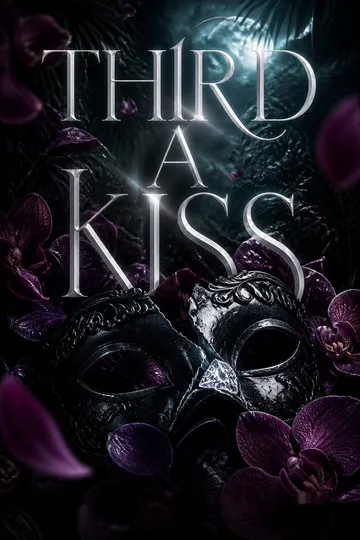
Third a Kiss makes romance emerge from a situation that resists romantic simplification. Eleanor’s attraction to Sully is real, but it develops inside captivity, under the influence of a drug, and amid a business that denies women ordinary freedom. The story repeatedly distinguishes bodily intensity from consent: the elixir can produce desire, yet desire does not settle who has power or whether a choice is freely made. Its most consequential romantic gesture is therefore not a sexual encounter but Sully’s destruction of Eleanor’s purchase contract. That act does not repair the past, but it creates the possibility of a different choice.
Sully’s moral code is both principled and dangerously narrow. He rejects human superiority because he has witnessed animals suffer at human hands, and he devotes resources to their care. Yet he applies that conviction through a system that treats women as assets. His care for animals is not false, but neither does it excuse his exploitation of people. Eleanor’s questions expose this contradiction more effectively than simple condemnation would: she makes him acknowledge that captivity is his responsibility, then asks him to act on that knowledge by releasing the women who attacked her.
The novel’s technology gives these conflicts a physical form. Euphoria can counterfeit a person’s face and voice, while Eleanor’s recognition of Sully depends on a felt connection the system cannot reproduce. That recognition matters emotionally, but the book does not let intuition replace accountability. Sully’s test still frightens and deceives her, and her forgiveness follows his admission of what he did, not merely the claim that they are destined for each other.
The ending refuses romantic closure. Drake’s attack on Serigala revives Sully’s guilt and gives his distrust a new target, while the threat to Eleanor pressures him to retreat into the very isolation she has challenged. Their bond has changed, but its survival is uncertain. Love has made Sully more willing to risk trust, and more vulnerable to coercion; the next choice must show whether protection can become partnership rather than possession.
Review Summary
Third a Kiss is a highly anticipated and well-received installment in Pepper Winters' Goddess Isles series. Readers praise the intense emotional journey, steamy romance, and character development of Sully and Eleanor. The book explores themes of trust, love, and personal growth while maintaining the dark and erotic elements fans expect. Many reviewers note the addictive nature of the series and eagerly anticipate the next book. The cliffhanger ending leaves readers anxious for more, with the overall consensus being that this book is a thrilling and satisfying continuation of the series.
People Also Read


Characters
Eleanor Grace
The defiant captiveEleanor is a young traveler whose capture brings her to Sully’s private island, where she is made to serve as one of his goddesses. She is observant, stubborn, and capable of empathy even toward people who have harmed her. Her attraction to Sully unsettles her judgment because it grows inside a coercive arrangement, not outside it. She keeps asking what her body, memory, and feelings can actually prove, and she challenges Sully when he mistakes possession for care. Eleanor’s compassion extends to the animals in Sully’s care and to the women who resent her, but she is not passive: she makes difficult choices and insists that affection must include the possibility of refusal.
Sully Sinclair
The guarded island rulerSully is a wealthy inventor and the proprietor of Goddess Isles, where he uses Euphoria and its elixir to sell guests elaborate sexual fantasies. He is tender with animals, brilliant at engineering, and deeply distrustful of people. An abusive childhood and a family history of violence have left him convinced that attachment leads to betrayal and that danger must be met with control. He can be generous, funny, and protective, but his protection often becomes possessiveness, and his moral opposition to human exceptionalism does not erase the harm he causes. Eleanor forces him to confront the difference between wanting someone and granting that person freedom.
Cal
The wary right handCal is Sully’s longtime aide and closest confidant, responsible for much of the island’s practical order. He distrusts Eleanor’s early choices and warns her that Sully’s past makes trust difficult, but he also intervenes when Sully’s violence becomes uncontrollable. His loyalty does not make him uncritical: he challenges Sully when the owner’s conduct threatens others or the enterprise itself. Cal’s dry manner gives him distance from the island’s romantic mythology, while his history with Sully gives him unusual access to the man behind the public authority.
Jealousy
The watchful confidanteKnown among the women as Jealousy, she is a perceptive goddess who watches Sully and understands how his fear shapes his decisions. She helps Eleanor interpret the diamond and Sully’s concealed behavior in Euphoria, offering evidence that he cannot bring himself to provide. Her motives combine concern for Eleanor with hope that Sully might change how he treats the women under his control. She is direct, strategic, and willing to risk Sully’s displeasure by telling the truth, though she cannot make either of them trust one another.
Drake Sinclair
The predatory brotherDrake is Sully’s older brother and the source of much of the violence and distrust in Sully’s childhood. He is calculating, cruel, and skilled at turning intimate knowledge into leverage. His relationship with Sully is built around old grievances, competition over family power, and a shared history neither can escape. Drake’s threats extend beyond business: he understands that Sully’s loyalties to vulnerable animals and, increasingly, to Eleanor can be used against him.
Calico
The embittered favoriteCalico is one of Sully’s long-serving goddesses and a woman whose captivity has hardened into resentment. She is especially jealous of Eleanor’s unusual place in Sully’s attention. Her anger reflects both personal desire and the instability of a life where women are confined, drugged, and made to compete for an owner’s favor. Calico’s polished beauty and sharp behavior conceal a deep fear of being replaceable.
Jupiter
The possessive captiveJupiter is one of Sully’s goddesses and an ally of Calico. Her attachment to Sully is shaped by years of captivity and the hope that his attention might secure her future. She treats Eleanor as a threat to the fragile place she has claimed on the island.
Neptune
The anxious followerNeptune is a goddess caught between her own fear and Calico’s influence. She joins the effort against Eleanor, but her actions arise within an environment Sully created, where dependence and competition distort ordinary judgment. Her anxiety makes her less forceful than Calico, yet she remains part of the island’s dangerous hierarchy.
Roy Slater
The wealthy suitorRoy is a wealthy guest who wants to take Eleanor from the island and marry her. His offer gives Sully a reason to confront whether he sees Eleanor as a person or as property he can transfer.
Adam Marks
The misguided rescuerAdam is a guest who mistakes Eleanor’s attachment to Sully for proof that she cannot judge her own circumstances. He tries to arrange an escape, but his assumptions contribute to Sully’s suspicion.
Scott
The distant former boyfriendScott is Eleanor’s boyfriend from her earlier travels. His presence in her thoughts reminds her of the life and commitments she had before captivity and her complicated attachment to Sully.
Dr. Campbell
The island physicianDr. Campbell treats the island’s injured women and animals. He brings medical judgment into a setting otherwise governed by Sully’s personal rules, and he is willing to challenge Sully when his violence puts others at risk.
Pika
The unruly parrotPika is Sully’s bold, mischievous parrot. He interrupts tense moments, follows Sully around the island, and makes the owner’s gentleness with animals visible.
Skittles
The gentle parrotSkittles is a quieter parrot who chooses Eleanor as her companion. Her attachment gives Eleanor comfort and becomes crucial when she senses that Eleanor is in danger.
Markus Grammer
The Euphoria guestMarkus is a guest whose fantasy gives Sully an opportunity to secretly take Eleanor’s place in Euphoria. His role illustrates how completely the simulation can conceal identity.
Plot Devices
The elixir
Desire without restraintSully’s elixir intensifies sexual desire and makes Euphoria’s fantasies feel overwhelming and immediate. It can make a participant’s ordinary inhibitions and judgment unreliable, which gives the island’s guests the experiences they pay for but also creates serious risks. Eleanor uses it on Sully to force a confrontation, and its effects nearly kill him when he tries to escape them. The drug is not merely a romance catalyst: it exposes the consent problem at the center of Sully’s business and makes clear that intense physical response cannot, by itself, establish trust or freely chosen intimacy.
Euphoria
Fantasy that hides identityEuphoria is Sully’s immersive virtual-reality system, designed to make participants experience elaborate sexual scenarios while concealing who is present. Sensors alter sight, sound, smell, and touch, allowing Sully to appear as a stranger or to substitute another figure into a guest’s fantasy. Eleanor’s memories of the cave and other encounters become clues to Sully’s secret participation. Later, he uses a programmed avatar to test her, and she recognizes him through their distinct bodily connection. The system makes fantasy convincing, but its power to disguise people also turns it into an instrument of deception and coercion.
The diamond
A clue disguised as a giftThe diamond Sully gives Eleanor appears to have come from a guest, leaving her unsure who chose it and what it means. Jealousy helps her identify its real source by comparing it with another stone connected to the same Euphoria experience. The diamond becomes tangible evidence that Sully has entered Eleanor’s fantasies while hiding behind other identities. It does not solve their conflict or absolve his secrecy, but it gives Eleanor a reason to keep questioning his denial and connects the island’s material wealth to an intimacy neither character can openly acknowledge.
The goddess contracts
Ownership made bureaucraticThe women on Goddess Isles are brought there through traffickers and bound to Sully’s enterprise by contracts that set a term of service. The paperwork makes exploitation appear orderly, while Sully’s language of investment and employment obscures the fact that the women cannot freely leave. Eleanor’s own purchase contract gives her captivity a specific price, but Sully later tears it up and relinquishes his claim. That action changes the basis on which she can choose to stay, even though it does not dismantle the system that continues to hold the other goddesses.
Serigala sanctuary
The vulnerable heart of SullySerigala is Sully’s refuge for animals rescued from laboratories and other abuse. Its animals explain why he distrusts human claims to moral superiority, while its vulnerable staff and inhabitants reveal what his work is meant to protect. The sanctuary also gives Drake a target that can wound Sully without confronting him directly. Its destruction turns Sully’s ideals into immediate loss and threatens Eleanor by revealing that the island’s apparent isolation cannot keep his past enemies out.
Goddess Isles Series
About the Author



Download PDF
Download EPUB
.epub digital book format is ideal for reading ebooks on phones, tablets, and e-readers.








