


Plot Summary
Prologue
Sullivan Sinclair and Eleanor Grace, called Jinx, have reached a life neither expected: she was once the woman he bought and confined, and he was the captor she learned to love. Five years into their marriage, they share a secluded island, a thriving animal sanctuary, and a fierce devotion that leaves little room for the world beyond them.
Sully sees Eleanor not as another chapter in his life but as the person who makes every future bearable. When they travel, their virtual reality creation, Euphoria, lets them retreat together into worlds where ordinary limits fall away.
The prologue frames the romance as a destination reached through a morally compromised beginning. Sully names his past actions plainly, yet his certainty about their present love risks making possession sound like proof of devotion. The story that follows tests that tension through choices made in partnership: Eleanor proposes, questions, and gives; Sully increasingly trusts her judgment and shares what he once kept hidden. Their island refuge is not simply a reward for surviving the past. It is a chosen environment where care for vulnerable animals offers a daily counterpractice to the coercion that first brought them together.
The Island's New Guests
Five years after the violence that nearly destroyed their lives, Sully and Eleanor run Serigala, an Indonesian refuge for injured, abused, and trafficked animals. They visit recovering mimic octopuses and discuss expanding the sanctuary to take in laboratory animals, while Sully's pharmaceutical work and Eleanor's rescue efforts continue on separate islands.
Their shared life is affectionate, private, and deliberately distant from conventional society. Then Sully receives an invitation from Jethro Hawk, an old friend who is hosting a masquerade at his English estate.
Sully accepts, and Eleanor agrees to join him, though leaving their tropical home makes her uneasy. Before packing, she notices Sully's VR equipment and aphrodisiac, cinta, and quietly decides to bring them in case England feels unbearable.
The island establishes that the couple's happy ending is active rather than static. Their sanctuary turns Sully's wealth and Eleanor's caretaking into protection for animals harmed by human appetites, while their work in pharmaceutical research keeps Sully connected to institutions he distrusts. The invitation matters because it asks them to leave the environment they have built to feel safe. Eleanor's decision to pack the VR equipment is a small act of foresight, not an escape from Sully: she prepares a way for them to remain connected if the outside world overwhelms them. The book's central question is already present: can a shared refuge travel with them?
Hawksridge Behind the Mask
The drive through the English countryside leaves Sully longing for heat and open water, while Eleanor admires the fields and deer outside the car. Hawksridge Hall rises like a fortress, its stone corridors crowded with family portraits and old weapons, though children's toys hint that it is also a home. Their hosts, Jethro and Nila Hawk, are out riding when the Sinclairs arrive.
A lavish suite and a gown designed by Nila wait for Eleanor. The dress combines patterns drawn from snakes, shells, feathers, and insects, turning her love of animals into formalwear. Sully recognizes the artistry and becomes fiercely possessive, while Eleanor chooses to enjoy the rare chance to dress for a grand event rather than retreat to the islands.
Hawksridge places Eleanor and Sully inside a social world built on lineage, display, and inherited power, all qualities their island life has taught them to avoid. The estate's mixture of armor and children's toys complicates its threatening appearance, foreshadowing that the Hawks are not simply the rumors surrounding them. Nila's gown gives Eleanor a way to enter the masquerade without surrendering her own identity: its opulence is made from the natural world she values. Sully's protectiveness is both an expression of attachment and a reminder of their unequal beginning. Eleanor's willingness to explore the hall on her own terms shows that safety no longer requires staying physically isolated.
The Ball's Strange Host
At the masquerade, Sully and Eleanor dance until their familiar desire makes the crowded ballroom feel intolerably public. Jethro interrupts before they can slip away, and his ease in naming their private impatience unsettles Eleanor.
Nila introduces herself warmly and offers to show Eleanor the stables, while Jethro draws Sully into the guests and business contacts. His unusual sensitivity, which lets him register other people's emotional states, makes him seem almost clairvoyant.
Sully accepts the separation reluctantly, then speaks with a yacht builder about possible vessels for Rapture, the couples' retreat he and Eleanor operate in the Pacific. The meeting gives Sully a business lead, but he remains aware that Rapture is Eleanor's creation and that he wants her beside him.
The masquerade makes public performance collide with the couple's private habits. Their masks conceal faces but cannot conceal their desire from Jethro, whose sensitivity makes emotional privacy difficult. His ability introduces a different kind of vulnerability from Eleanor's past captivity: not physical control, but the constant exposure of inner states. Sully's brief business conversation also reveals a quieter shift in his character. He is capable of making decisions in his empire, yet recognizes that Rapture belongs to Eleanor's initiative and should not be shaped without her. The scene contrasts a crowd organized around appearance with the more intimate forms of knowledge the characters seek, including honest consent and trust.
A Purchase Confessed
Away from the dance floor, Jethro asks how Sully became close to Eleanor. Sully admits that he bought and confined her, and that his brother later came to kill her; he does not dress the history up as courtship.
Jethro recognizes how different Sully is now from the emotionally cold man he once knew, and invites the couple to stay for breakfast. Their conversation turns to Jethro's own condition: Sully had once developed medication intended to suppress the overwhelming sensitivity that made Jethro feel others' emotions.
Jethro explains that Nila's love helped him find balance where drugs could not. Sully accepts the invitation, then meets yacht supplier Elder Prest, promising to review the proposed vessels with Eleanor before making any decision for their retreat.
Sully's confession is a meaningful act because it gives Jethro the unvarnished facts rather than a version designed to secure admiration. The conversation does not erase the coercion in Eleanor's past; instead, it shows Sully risking judgment from someone he respects. Jethro's account of his own treatment history offers a parallel without making the two men equivalent. Sully once tried to solve emotional suffering through chemical intervention, while Jethro found stability through a relationship that could hold his sensitivity without demanding that he disappear. Their exchange gives the novella a second portrait of intimacy: care may help someone live with a difficult trait, but it cannot retroactively make every earlier attempt at control harmless.
Cinta at the Stables
While Nila leads Eleanor through the stables, Eleanor meets Moth, Nila's dapple-grey horse, and hears about the Hawks' riding life and the family grief attached to one of their horses. Nila asks whether the notorious elixir Sully once made could give her and Jethro a night free of distractions.
Eleanor explains that elixir was dangerous and destroyed, but Sully created cinta, a safer aphrodisiac that heightens desire already shared by a couple.
Nila describes how Jethro's sensitivity keeps him alert to other people's feelings, even when he wants to focus on his wife. Eleanor recognizes the wish beneath the question: not novelty for its own sake, but a brief reprieve for someone she loves. She decides to leave Nila a set of Euphoria sensors and some cinta.
The stable conversation translates a technological and sexual premise into an act of empathy. Nila is not seeking a stronger drug to fix Jethro; she wants to offer him a rare interval in which his own attention can settle. Eleanor understands because she has seen how Sully's inventions can promise pleasure while carrying serious risks. Her distinction between the dangerous elixir and cinta reflects a broader change in the couple's ethics: desire should amplify a mutual bond, not manufacture consent or override the body. The decision to give Nila the equipment grows from recognition between women who know their partners' vulnerabilities. It also prepares the story's final test of whether a gift remains loving when it crosses a boundary.
Sully's Private Jungle
Back in their suite, Eleanor reveals the sensors and cinta she packed. Sully chooses an unfinished fantasy he had programmed after first buying her, a private wilderness where he can live outside cities and human society.
They put on the lenses and earbuds, take a drop of cinta, and enter a tropical jungle rendered with birds, streams, and dense foliage. Sully appears in primitive clothes, and Eleanor recognizes how completely the setting reflects his longing for an untamed life.
He invites her to run, then pursues her through the forest before catching her beside a river. The chase becomes their own ritual of surrender and trust. Later, he leads her to a bamboo treehouse, revealing that his fantasy is not merely an erotic scenario but a place he had imagined inhabiting.
The jungle externalizes a side of Sully that his pharmaceutical empire and former trafficking operation obscure: he wants fewer human systems, not more control over them. Euphoria lets him stage that wish without making it a literal retreat from the life he and Eleanor have built. The chase carries an important ambiguity. Its force comes from agreed play between partners, yet its imagery echoes their coercive history, so trust must do more work than the fantasy itself. Eleanor is not simply cast as an object in Sully's private invention. She enters it knowingly, questions its meaning, and becomes the person with whom he can inhabit a world he had previously kept to himself.
Skittles's Quiet Verdict
As the fantasy deepens, a jaguar appears on the treehouse platform, followed by a gorilla, both animals Sully has rendered from code linked to an earlier VR scenario. Eleanor sees how naturally he moves among them and realizes that the fantasy reflects his kinship with the wild as much as his appetite for her.
Sully explains that he first began trusting her because Skittles, the parrot who rarely trusted anyone, accepted Eleanor. That small act convinced him that the captive woman he had purchased was kind beneath her anger and courage.
Eleanor asks what Sully did to break his brother Drake's mind, but he does not answer, and she lets the question rest. They explore the imagined landscape, then use the wrist signal to return safely to England and sleep together.
The animals are not decorative scenery; they give Sully a way to explain a moral judgment he could not yet make through ordinary human evidence. Skittles' trust became a measure of Eleanor's character because Sully had learned to distrust human motives, including his own. The moment also complicates his claim to have recognized her goodness: he was still holding her captive when he made that discovery. Eleanor's question about Drake shows that safety has made her more curious about the violence that shaped their marriage, but she does not force disclosure on this night. Their voluntary exit from Euphoria matters too. Unlike earlier fantasies that trapped participants until sleep, this world offers a clear way back.
The Falcon's Cut Leash
At breakfast, Jethro apologizes for sensing too much of the Sinclairs' private night, then explains how his sensitivity once became tangled with the cruelty of his family and with medication that suppressed him. His son Kes may share that gift, though the family is still unsure.
Eleanor and Sully also make clear that they have chosen not to have children, devoting their care instead to hundreds of rescued animals. When Kes arrives carrying a tethered falcon, Sully's distress at the restraint reaches Jethro through his empathic perception.
Jethro rides back with his horse Wings, calls down his birds, and cuts the leather leashes from seven raptors. He lets them fly away freely, keeping only their identification rings. The act turns Sully's unspoken judgment into a practical change in how Jethro treats his animals.
The falcon scene converts private conviction into visible action. Sully does not lecture Jethro; Jethro feels the judgment and must decide whether to reject it or respond. His release of the birds is not presented as a complete moral transformation, but as a specific relinquishment of control: the raptors may return, but they are no longer tethered. That distinction echoes the story's recurring question about love and ownership. Jethro's sensitivity, once a source of confusion and treatment, becomes a route toward ethical recognition. The conversation about children also clarifies the Sinclairs' chosen family. Their investment in rescue is not compensation for an absence they regret; it is a deliberate form of care.
A Box for Hawksridge
After a final walk with the Hawks, Sully and Eleanor prepare to leave England. They plan to continue to the Philippines to see Cal and Jess before returning to their Indonesian islands. Eleanor slips back into a drawing room and leaves Nila the Euphoria sensors, a bottle of cinta, and written instructions explaining how to load the app and end a fantasy by pinching a wrist or falling asleep.
She includes a warning to use the aphrodisiac sparingly and only when the couple is alone. The gift carries the experience beyond the Sinclairs' private suite, offering Nila and Jethro the same technology that let Sully and Eleanor escape the noise of the outside world together. Eleanor rejoins Sully, and they depart for the airport.
Eleanor's gift extends hospitality into a form of shared knowledge. She does not merely hand over a mysterious drug or device; she explains how to use it and how to leave the illusion, translating their pleasure into practical care. The instructions matter because Euphoria is powerful precisely when reality feels distant. Giving Nila an exit mechanism acknowledges that fantasy needs limits if it is to remain chosen. The scene also shifts Eleanor from recipient to maker of an experience for someone else. Her earlier captivity does not define every later exchange of power: here, she controls what she shares and frames the terms, though the next scene will complicate how carefully those terms are honored.
Marrakesh Without Noise
Three days after the guests leave, Nila downloads the Euphoria app and asks Jethro to try it. He refuses the cinta because past medication and Sully's creations make him wary, but he agrees to wear the sensors.
While kissing him, Nila slips drops into his mouth despite that refusal, believing the safer aphrodisiac will not alter his personality. Jethro reacts angrily, then feels his attention narrow until the surrounding emotional noise disappears.
The virtual world places them on a Marrakesh rooftop, where he can focus on Nila and his own desire without sensing everyone else in the hall. For Jethro, the experience is less about spectacle than rare mental quiet. His trust in Nila and the gift's effect give their marriage a new kind of shared privacy.
The ending fulfills Eleanor's hope for Nila while exposing a serious contradiction in the means. Nila wants to give Jethro relief from involuntary emotional exposure, but she administers cinta after he explicitly rejects the drug. Her loving motive does not erase that breach of consent; the scene preserves the novella's dark-romance tension between intimacy and control rather than resolving it cleanly. The virtual setting then supplies what medication once failed to provide: not a cure for Jethro's sensitivity, but a temporary environment in which its pressure recedes. The gift works as technology, fantasy, and relational promise, yet its ethical value depends on choices the characters still need to make together.
Analysis
This novella's romance is built around a difficult distinction: protection can resemble possession, and love does not automatically dissolve the history that produced it. Sully and Eleanor have made a life together after a relationship that began with captivity, but the narrative keeps that origin in view. Their trust appears not as proof that the past was harmless, but as a practice renewed through shared work, honest disclosure, and chosen play. Eleanor's authority is clearest when she decides what to give Nila and how to explain it.
The animal-rescue thread gives the story an ethical vocabulary more concrete than its language of monsters and goddesses. Sully and Eleanor treat care as material labor: injured animals need treatment, safe habitats, and, where possible, freedom. Jethro's decision to release his raptors translates that ethic into a change in behavior. It also shows how empathy can act as social pressure, making another person's discomfort impossible to ignore. Yet the book avoids presenting sensitivity as automatic virtue. Jethro still has to choose what to do with what he feels.
Euphoria and cinta externalize the couple's wish to control their surroundings and intensify intimacy. The jungle gives Sully an imagined home beyond human institutions, while the exit signal preserves a route back to reality. The final scene offers a parallel benefit for Jethro, who experiences a rare quiet inside his own mind. But Nila's decision to give him cinta after he refuses it unsettles the celebratory resolution. Her motive is compassionate, and the effect is welcome, yet the act repeats the story's central danger: deciding what another person needs can become a violation even when it comes from love. That friction keeps the ending from being a simple endorsement of technological escape or romantic devotion.
Review Summary
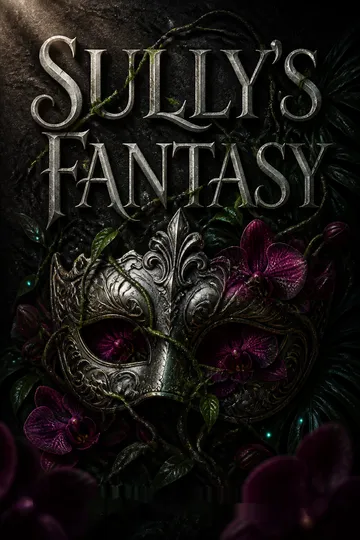
Sully's Fantasy is a highly-rated bonus novella in Pepper Winters' Goddess Isles series. Readers praise the passionate relationship between Sully and Eleanor, set five years after the main series. The novella features a crossover with characters from Winters' Indebted series, delighting fans. Reviewers appreciate the intimate glimpse into the couple's married life and Sully's fantasy. The book is described as sexy, romantic, and a perfect addition to the series. Many readers express excitement for the upcoming companion novella, Jinx's Fantasy.
People Also Read



Characters
Sullivan Sinclair
The reformed island magnateSully is a pharmaceutical magnate whose past includes buying and confining women, a history he does not excuse even as he loves Eleanor. He prefers the distance and freedom of his Indonesian islands, where he and Eleanor run animal sanctuaries and build projects that challenge exploitation. His formidable intelligence often turns first to calculation, but Eleanor has made him more emotionally available and more willing to trust another person's judgment. He is intensely possessive and physically passionate, qualities the marriage channels into consensual play rather than public respectability. His private jungle fantasy reveals that beneath wealth and technical mastery, Sully wants a life close to nature and free from human demands.
Eleanor Grace Sinclair
The animal-rescue goddessEleanor, whom Sully calls Jinx, survived being kidnapped and sold to him, and later chose a life with him after their relationship changed. She is neither a passive symbol of redemption nor simply a caretaker: she runs animal-rescue work, helps direct their couples' retreat, and makes clear decisions about what she wants. Her empathy extends easily to injured creatures, while her humor and appetite for adventure let her meet Sully as an equal in their private world. She values their secluded life and the animals they protect, but she can also enter unfamiliar settings without losing her sense of self. Her initiative in giving Nila the Euphoria equipment shows how carefully she notices another woman's needs.
Jethro Hawk
The emotionally permeable lordJethro is Sully's old friend, the master of Hawksridge Hall, and a highly sensitive person who registers the emotions of those around him. That ability has complicated his sense of self, especially because his family environment and earlier treatment encouraged him to distrust or suppress what he felt. With Nila, he has found a relationship in which his sensitivity can be acknowledged rather than hidden. He is perceptive, wry, and protective of his children, but his awareness does not make him automatically wise or ethically flawless. Sully's views on animal welfare unsettle his habits and prompt him to reconsider what he keeps under his control.
Nila Hawk
The designer and devoted wifeNila is Jethro's wife, a skilled designer, and a warm host who can move easily between aristocratic ceremony and family life. She makes Eleanor's elaborate animal-inspired gown and quickly recognizes that the new guest shares her interest in protecting creatures. Nila understands the strain Jethro's emotional sensitivity places on him and wants to offer him moments of undivided attention. Her care is affectionate and inventive, though her desire to help can lead her to make decisions on his behalf. Her relationship with Jethro is marked by deep familiarity, humor, and a willingness to face difficult parts of their history.
Kes Hawk
The perceptive eldest childKes is Jethro and Nila's energetic son, who plays hunting games with his younger sister and may have inherited some of his father's unusual sensitivity. His curiosity gets ahead of adult rules, as when he brings a falcon to breakfast before his father is ready. He is still a child learning how his impulses affect other people and animals.
Emma Hawk
The fearless younger siblingEmma is Jethro and Nila's younger child, lively and quick to join her brother's games. She brings the unruly energy of family life into the solemn halls of Hawksridge and appears comfortable among the estate's animals. Her presence helps show the home Jethro and Nila have built beyond the family's frightening reputation.
Cal
Sully's blunt old friendCal is Sully's longtime friend and former colleague, married to Jess. Their teasing phone calls show the easy, irreverent trust he shares with Sully. Cal's news that he and Jess are enjoying the Philippines helps prompt the Sinclairs to extend their trip after England.
Jess
Eleanor's island friendJess is Eleanor's friend and Cal's wife. She and Eleanor share an easy rapport, and the prospect of seeing her gives the Sinclairs a reason to continue traveling instead of returning straight home from England.
Drake
Sully's violent brotherDrake is Sully's brother and a central figure in the couple's traumatic past. His violence left lasting physical and emotional consequences for both Sully and Eleanor. Although absent from the present-day visit, the unanswered question of what Sully did to him remains a guarded part of their shared history.
Radcliffe
The discreet security chiefRadcliffe leads security for the Sinclairs and travels with them to England. His team protects Eleanor and Sully without intruding on their visit.
Kaly
The sanctuary vet nurseKaly is a local veterinary nurse at Serigala who helps care for the sanctuary's rescued animals. Her work reflects the skilled local team that makes Sully and Eleanor's refuge possible.
Peter Beck
Sully's research scientistPeter Beck is one of Sully's head scientists. Sully consults him about ways to help people with experiences like Jethro's, linking the personal visit to his continuing medical research.
Elder Prest
The yacht supplierElder Prest is a yacht builder whom Jethro introduces to Sully at the masquerade. He offers vessels that might suit Rapture, giving Sully a possible business addition to discuss with Eleanor.
Skittles
The trusting parrotSkittles is one of the Sinclairs' mischievous parrots. The bird's willingness to trust Eleanor helped Sully recognize her kindness when he was still deeply suspicious of people.
Plot Devices
Euphoria
A portable private worldSully's virtual-reality system uses lenses, earbuds, and a phone app to immerse users in sensory environments shaped by programmed scenarios. He first created it for the illicit fantasies of his former business, then repurposed it for couples' therapy at Rapture and for private play with Eleanor. In this novella, its most personal use is Sully's coded jungle, a wilderness he had imagined for himself before sharing it with his wife. The sensors can make a place feel convincing, but users can end the experience by pinching their wrists or falling asleep. That return mechanism distinguishes this visit from earlier, more dangerous simulations.
Cinta
Desire made more vividCinta is an aphrodisiac Sully developed after destroying the more dangerous elixir from his past. Rather than imposing desire where none exists, it intensifies attraction already present between partners and can prolong their arousal. Eleanor explains the difference to Nila, whose wish is to give Jethro a rare evening of focused intimacy. The drug becomes part of the final couple's experience, but its use also raises a question the story does not smooth over: Nila gives Jethro drops after he has refused them. Its effect may be gentler than the old elixir, yet safety of effect is not the same as consent.
Jethro's sensitivity
Emotion without privacyJethro experiences other people's emotions with unusual intensity and can mistake their feelings for his own. The condition once contributed to isolation and led Sully to develop medication intended to suppress it; Nila's support later helped Jethro find a way to live with it. At the masquerade, his sensitivity lets him notice the Sinclairs' impatience, and at breakfast he feels Sully's discomfort about the tethered falcon. The device links private psychology to outward consequences: other people's feelings reach Jethro, sometimes providing insight and sometimes burdening him. Euphoria offers him a temporary setting in which the emotional noise finally recedes.
Animal sanctuary
Care made tangibleSerigala and the Sinclairs' other rescue projects give their values a daily, material form. Injured octopuses, abused wildlife, and animals rescued from laboratories receive treatment and a chance at safe homes or release. The sanctuary also explains why Sully and Eleanor prefer secluded islands to conventional society: their work is not merely an expression of guilt but a purpose they have chosen together. Animal welfare carries into the English visit when Sully's concern about captive raptors reaches Jethro and helps prompt him to cut their leashes. The rescued animals and the freed birds make the story's questions about protection, captivity, and ownership concrete.
Goddess Isles Series
About the Author



Download PDF
Download EPUB
.epub digital book format is ideal for reading ebooks on phones, tablets, and e-readers.








