


Plot Summary
Prologue
Five years before Sara Burns makes her stand, four riders arrive beneath a violent storm: Pestilence, War, Famine, and Death. Their passage disables engines, planes, computers, and the networks that bind modern life together. Then the Horsemen vanish, leaving humanity to explain the impossible as a technological disaster and rebuild without its former conveniences.
The prologue ends with Pestilence returning alone, now bringing a contagious fever that kills people instead of machines. His renewed ride turns an old apocalypse into an immediate threat, and the world begins to flee ahead of him.
The opening establishes two kinds of collapse: the first, technological, is broad and almost abstract; the second is intimate, measured in infected bodies and abandoned homes. By showing Pestilence return alone, the prologue narrows the apocalypse to a single moving force while keeping the other Horsemen in reserve. Its biblical framing also unsettles ordinary explanations. The world’s attempt to rationalize the first catastrophe has not made people safer; it has only delayed their recognition that the danger is purposeful.
Match for the Grave
In the fifth year after the Horsemen appeared, firefighter Sara Burns and three colleagues draw matches to decide who will remain in Whistler when Pestilence arrives. Sara draws the marked match, sends Luke, Felix, and Briggs toward safety, and waits beside Highway 99 with her grandfather’s shotgun.
News reports place the rider on a path toward British Columbia, so Sara expects him to cross her town and infect everyone left there. When he appears on a white horse, his beauty briefly unsettles her aim.
She fires anyway, knocks him from the saddle, then kills his wounded horse. Finding the rider still alive, Sara covers him in lighter fluid and sets him alight. She stays beside the burning body, horrified by what she has done but convinced the town may now be safe.
Sara’s decision is not a clean heroic act. Her training has taught her to enter danger for others, but here rescue requires deliberate violence against a conscious, apparently human being. The match turns an ethical burden into a lottery, while Sara’s final choice to use fire makes the cost personal and irreversible. Her disgust does not cancel her resolve; it shows that she can act without pretending the act is morally simple. The story begins with her trying to save a community, before asking what happens when the threat cannot be killed.
The Burned Horseman
Before dawn, Pestilence returns with most of his body regenerated and takes Sara by the throat. He explains that other people have tried to kill him and that he means to punish her rather than let her die quickly.
He binds her to his saddle and forces her to run behind him, first through Whistler and then along the highway. When exhaustion makes her collapse, the rope wrenches her shoulders and wrists until she can no longer keep moving. During a brief stay in an evacuated home, Pestilence leaves her alone long enough for Sara to escape through a window.
He shoots two arrows into her back, pulls them out, and drags her through snow until she loses consciousness. He later carries her inside and bandages her wounds, keeping her alive for reasons Sara cannot yet understand.
The failed assassination changes the story’s power structure without making Sara passive. Pestilence can overpower her body, but his punishment depends on her understanding it as deserved, and she resists that logic even when she cannot resist his strength. His care after inflicting the injuries creates a disturbing double bind: the person causing pain is also the only person able to tend it. The contradiction is not yet evidence of goodness. It is a pressure point, making both characters confront the difference between control, vengeance, and responsibility.
The Man on the Couch
Once Sara can walk again, she explores the house and finds an unnamed man covered in fever sores, too weak to reach food or water. Pestilence is absent, so Sara cleans the man with a wet towel, gives him whiskey for pain, and stays beside him reciting poems until he dies.
The encounter makes the plague’s cruelty physical: the victim remains conscious while his body decays. Back on the road, Sara discovers that she is still healthy despite travelling beside Pestilence.
He confirms that he controls infection and has spared her, though he insists this is not kindness. Later, he takes her to a hospital and makes her face patients and staff who cannot escape the approaching fever. Sara sees that even the places built to preserve life have become scenes of certain loss.
Sara’s first response to the plague victim is care without the illusion of cure. She cannot reverse the fever, so she offers what remains within her control: water, pain relief, attention, and a human presence at the end. This becomes a counterpoint to Pestilence’s scale of judgment, which reduces individuals to an inevitable outcome. Sara’s immunity complicates her role as both captive and witness. She is protected from the disease but not from its meaning, and that distinction makes her compassion more demanding rather than less necessary.
Four Days of Fever
A winter storm leaves Sara close to hypothermia during a ride, and Pestilence breaks into a family’s home to warm her. The parents and their two children soon fall ill. Sara remains with them for four days, tending their sores and helping them drink while Pestilence stays mostly away.
The father dies first, then the son and mother; Sara holds the little girl, Stacy, as the last child succumbs. Afterward Pestilence gives Sara a jam sandwich and admits that he does not like watching people die, though he will continue spreading the fever.
The contrast unsettles Sara: he has caused the family’s deaths, yet he notices her hunger and gives her time to recover. Their arguments about suffering no longer fit the simple roles of monster and victim.
The family’s deaths expose the limits of Sara’s rescuer identity. She can reduce distress, but she cannot save the people she serves, and her attention to Stacy makes helplessness impossible to keep abstract. Pestilence’s admission does not absolve him; instead, it reveals a gap between his task and his emerging capacity to feel its consequences. His sandwich is both tenderness and moral dissonance, an ordinary act that cannot compensate for extraordinary harm. Sara’s growing uncertainty comes from seeing that compassion and culpability can coexist in the same person.
Vancouver's Bloodied Shore
In Vancouver, armed residents ambush Pestilence as he rides through the city. He pushes Sara from the saddle, then shoots back at his attackers while she treats the wounded, including people injured by stray bullets.
When the gunfire stops, Pestilence returns for her and carries her away across the water on Trixie, whose hooves can run over the sea. The horseman collapses from his many bullet wounds on a nearby shore. Sara could flee, but instead she stays, removes his armor, and watches him regenerate while resting his head in her lap.
She apologizes for the attack and strokes his hair. Later, after drinking together, they nearly kiss; when Sara falls into the ocean and nearly drowns, Pestilence rescues her and kisses her in anger and relief.
The ambush reverses Sara’s original position: she once tried to kill Pestilence, but now she chooses to protect him from people making the same desperate calculation. Her decision does not erase the deaths he has caused or the violence of his attackers. It does, however, make her loyalties harder to divide into clean categories. The sea crossing gives their relationship a literal passage beyond the city’s violence, while Pestilence’s collapse reveals that invulnerability does not mean immunity to pain. Their first kiss grows from rescue, fear, and anger rather than reconciliation, keeping desire morally unsettled.
Mercy in the Snow
At a home occupied by Nick Jameson, his wife Amelia, and their sons, Sara tries to care for the family as the fever takes hold. Nick blames her for travelling with Pestilence and, one night, leads her into the snow at gunpoint, intending to kill her in revenge for his family’s fate.
Pestilence arrives before Nick can fire and kills him with arrows. He then warms Sara’s frozen feet and takes her away. On the road, Sara learns that Pestilence has existed since humanity’s earliest settlements and remembers human history as a long procession of cities and deaths.
He also admits that a divine sign marked Sara for mercy when he first found her. She begins to understand that his choice to spare her predates their attraction, but it does not explain why he keeps her close.
Nick’s threat makes the apocalypse’s social damage immediate: fear and grief turn a threatened father into an executioner, while Sara becomes a convenient target for blame. Pestilence’s intervention saves her, yet his response is still lethal, preserving the danger that defines him. The revelation of the mercy mark places Sara’s survival inside a religious framework she cannot verify or control. It offers a reason, not a moral solution. His vast memory also sharpens the asymmetry between them: he has watched civilizations rise and fall, while Sara must make meaning from the people she can reach.
Ruth and Rob's Welcome
Sara and Pestilence reach the home of Ruth and Rob, an elderly couple who recognize the Horseman but invite both travellers inside. Their unforced hospitality confounds Pestilence, who expects mortals to fear or attack him.
Over tea, he explains that the Horsemen serve a divine judgment on humanity’s destructive nature, but admits that people may still change before Death arrives. Sara watches Ruth and Rob care for each other through the fever, then helps them as their bodies fail.
They die close together, and Ruth forgives Pestilence while urging him to protect Sara and recognize what humanity can be. Her kindness forces both Sara and Pestilence to reconsider their assumptions: Sara had called him incapable of mercy, while he had seen little of human goodness.
Ruth and Rob do not defeat Pestilence through argument or force. Their influence comes from practicing the values he condemns humanity for losing: hospitality, loyalty, and care at personal cost. Their welcome also lets Sara encounter kindness that is not directed only at her, loosening the isolation of life under captivity. Ruth’s forgiveness is not a verdict that Pestilence is innocent; it is a refusal to let accusation be the only available relation. By witnessing a long partnership at its end, Pestilence encounters love as an enacted commitment rather than a word or appetite.
Seattle's Quiet Dead
As they move south from Canada, Sara and Pestilence enter Seattle, where he has already passed through and left dying people scattered across the city. Sara stops to comfort survivors and give basic aid, but Pestilence eventually forces her onward because she cannot help everyone.
The streets contain few visible bodies; many people have retreated indoors to die. In smaller settlements beyond Seattle, Sara continues to feel the cost of each stop, while Pestilence’s departures after she sleeps reveal that he sometimes rides ahead to spread the fever.
Their arguments turn from whether humans deserve judgment to whether Pestilence can choose differently. He begins to describe himself as nothing but his purpose, yet his growing interest in Sara and human life makes that certainty less convincing.
The empty streets shift catastrophe from spectacle to concealment. Death is not always a public scene; people disappear into rooms, leaving survivors to infer the scale of loss from silence and smell. Sara’s impulse to stop for each person is ethically serious but unsustainable, and Pestilence’s command to move confronts her with the limits of individual care under mass death. His secret rides ahead reveal that tenderness toward Sara has not yet changed his work. The gap between his private feeling and public action becomes the novel’s central moral problem.
No Wedding After Sex
During a night at an isolated cabin, Sara and Pestilence speak about his purpose, her beliefs, and the parts of human life he has begun to enjoy. Their attraction finally becomes sexual, and Pestilence treats the encounter as a binding commitment.
The next day he brings Sara to a church and expects marriage; she refuses, insisting that sex does not grant him ownership of her. Their argument exposes how little he understands human consent and how quickly affection can become possession when filtered through his absolute power.
Sara remains drawn to him, but she will not mistake desire for agreement. The clash leaves their relationship more intimate and more dangerous, since Pestilence’s newly awakened feelings have not yet taught him how to respect limits.
This turning point refuses to equate sexual intimacy with moral resolution. Pestilence interprets physical closeness through a possessive framework, while Sara insists that desire cannot substitute for consent or shared meaning. His proposal is earnest, but sincerity does not make it fair. The scene exposes a crucial developmental gap: he can feel attachment before he can understand the autonomy that makes attachment ethical. Sara’s refusal protects a distinction that the romance might otherwise blur, keeping her agency visible even as she remains emotionally involved.
Three Women for Pestilence
A religious leader named Ezekiel blocks Pestilence’s route with a crowd dressed in white and offers three women in exchange for sparing his followers. Pestilence rejects the bargain, telling the crowd that he cannot save them and that their only hope lies beyond him. Soon after, armed civilians shoot him from his horse near a church and drag Sara inside.
The group believes the Horseman can be killed and keeps her from reaching him while they bury his ruined body in a shallow grave. Sara hears Trixie outside and realizes the captors have mistaken her for Pestilence’s willing accomplice. Their actions leave her isolated among people whose desperation has hardened into a plan to torture an immortal being.
Ezekiel’s bargain treats women as currency and salvation as something that can be purchased from a powerful male figure. Pestilence refuses, but his refusal does not make him a protector of the crowd; he still carries the plague that will kill them. The later ambush translates religious hope into violence once the Horseman proves unresponsive to negotiation. Sara is trapped between competing forms of instrumentalization: the crowd reads her as a tool of Pestilence, while he has long treated her as his prisoner. Her next choice will have to establish what she claims for herself.
The Shallow Grave
Sara steals a gun from one of the people guarding her and forces her way out of the church. She finds the attackers burying Pestilence and drives them off, then digs him from the shallow grave and hauls his broken body onto Trixie. The group fires as she rides away, but she steers the horse in sharp turns until they escape.
At an empty house, Sara stays beside Pestilence while his body and armor rebuild themselves. When he wakes, she admits that he matters to her and that she no longer considers herself his prisoner. Pestilence accepts the change in their relationship. Their renewed intimacy follows, but this time Sara’s care is an active choice rather than a condition imposed by captivity.
Sara’s escape is not simply a rescue of Pestilence. By taking the gun and directing the horse, she acts beyond the role assigned by either side: neither captive nor loyal subordinate, but a person making a choice under pressure. Her decision to return for him remains ethically complicated because he is still responsible for the plague, yet it is no longer explained by fear alone. Naming herself as no longer his prisoner changes the emotional terms of their bond. The story distinguishes chosen attachment from possession, even though the consequences of that attachment remain unresolved.
The Cross and Gunfire
A gang detonates a bomb beneath Pestilence and Trixie, then captures Sara and the injured Horseman. They nail Pestilence to a telephone pole and use Sara’s forced falls to prolong his pain; later, their leader shoots her in front of him and sets fire to Pestilence. Sara slips toward death as the Horseman crawls through the flames to reach her.
In a vision, she meets Thanatos, the winged Horseman of Death, who allows her to return to life. Pestilence carries her to a hospital, where staff refuse to save her. In grief and fury, he uses his supernatural power against them and keeps a few alive long enough to treat her. Sara wakes to find herself alive and Pestilence changed by the violence he has witnessed.
The gang’s torture deliberately imitates Sara’s earlier burning of Pestilence, turning her original act into a weapon against them both. This symmetry does not create equivalence: Sara acted to stop mass death, while the gang acts to inflict pain and revenge. Thanatos’s brief appearance places Sara’s survival within the supernatural structure introduced at the start, but it does not erase the bodily cost. Pestilence’s hospital retaliation marks a dangerous transformation: love has made him vulnerable to loss, yet vulnerability intensifies his violence rather than automatically softening it.
A Fever Without Borders
While Sara heals in an abandoned mansion, Pestilence secretly extends his plague across the West Coast and into Mexico, infecting people far beyond the towns he rides through. She discovers the outbreak on television and confronts him; he confirms that he acted because the gang hurt her, but refuses to reverse the deaths. Sara leaves, arguing that love cannot excuse vengeance against millions.
Pestilence carries her back inside and bars the exits, keeping her confined while he feeds her and remains distant. After eight days, he removes his crown and releases her, admitting that he has lost the one person he wanted. He does not tell her that he has already reversed the plague, so Sara leaves believing his choice has condemned the world.
Pestilence’s mass outbreak is the book’s sharpest challenge to the idea that love is inherently redemptive. He converts personal grief into collective punishment, using the power of a godlike being to make strangers pay for Sara’s suffering. Sara’s departure is therefore not a failure to love him; it is a refusal to let love become an alibi. His confinement of her repeats the coercion of their first days together, while his eventual release signals surrender without yet repairing the harm. The crucial irony is that he acts to save humanity before he tells her, leaving her to judge him on what she can see.
The Plague Recedes
Walking north alone, Sara reaches an outpost and learns that the fever has disappeared and infected people across the West Coast have recovered. Pestilence stopped the plague after releasing her, but she had not known because she avoided the news during her confinement. By the time she returns to Whistler, reports confirm that the recovery was real, though technology remains broken and the world does not return to its old life.
Sara’s parents welcome her home, and Luke and Felix are alive, but Briggs and several other firefighters died while helping the sick. The survivors ask how she escaped Pestilence. Sara gives only the truth she can bear to share: he showed her mercy. Her relief at the cure comes with grief for those already lost.
The cure arrives as information rather than spectacle. Sara learns that the catastrophe has been undone only after she has made a painful moral choice without knowing its outcome. That structure preserves the integrity of her departure: she did not leave because she trusted Pestilence to change, but because she could not accept his mass killing. The return to Whistler also refuses a simple restoration. The Fever is gone, yet the world’s infrastructure and Sara’s former life remain altered. Her reunion brings joy, but the missing firefighters make survival inseparable from mourning.
A Conqueror Comes Home
Months after Sara comes home, Pestilence appears at her apartment without his crown, armor, or bow. He explains that his purpose has ended and reveals that he followed her on the journey north without showing himself. He stopped the divine plague because love had changed what he believed humanity deserved, though it took weeks for his reasoning to catch up with that decision.
Sara asks what he wants now, and Pestilence asks her to return to him. She accepts, making clear that the minutes they share matter even though her mortal life will end before his. He then offers her a gold ring made from his former regalia. Sara agrees to marry him, and he chooses the human name Victor, presenting himself as more than the task that once defined him.
Pestilence’s return is meaningful because he arrives stripped of the symbols that made his authority visible. His change is not a sudden erasure of history: he admits that his heart acted before his mind and that he had to learn what his decision meant. Sara’s acceptance follows her earlier refusal and separation, so it is not a surrender to captivity but a renewed choice made after she has seen both his worst and his capacity to change. The new name marks a shift from function toward personhood, without pretending that mortality and consequence have disappeared.
Love's New Name
After accepting Pestilence’s proposal, Sara asks him to choose a human name rather than remain only the Horseman the world feared. He selects Victor, explaining that he came to conquer humanity but was instead changed by one human being. Sara puts on the gold ring, and they begin their life together knowing that she will age while he may endure.
Victor has no promise of an easy future to offer; he can only promise to spend the time they have beside her. Their marriage answers the book’s opening question in a limited, personal way. The world has not been restored to its former condition, but the force sent to destroy it has chosen a different purpose, and Sara chooses to share the uncertain life that follows.
The ending makes love consequential without turning it into a universal cure for history. Sara and Victor cannot rebuild the lost world by marrying, and the story does not remove the inequalities between a mortal and an immortal being. What changes is the scale of the promise: they choose finite shared time over Victor’s former claim to endless conquest. The new name matters because it separates identity from assigned function, but it does not erase the past. Their future rests on an ongoing choice, not on the fantasy that one confession can repair every injury.
Epilogue
Five years later, Sara and Victor live together with their young children. As sunset falls, Victor senses that his brother is waking and warns that War is coming. He cannot stop the wheel of fate from turning simply because he abandoned his own destructive task.
Sara follows him onto the balcony, where the ocean lies beyond their home, and faces the return of the danger they once thought love had interrupted. Their family has been built in the interval, but the world’s larger reckoning has not ended.
The epilogue places domestic life beside an approaching apocalypse without allowing either to cancel the other. Children’s toys and a quiet home make the coming threat more concrete: what is at stake is no longer humanity in the abstract, but a family and the fragile peace they have built. Victor’s warning also limits the apparent triumph of the ending. He could alter his own course, but not command his brothers or suspend fate itself. The story closes on responsibility rather than closure, with Sara and Victor once again facing a danger that love alone cannot guarantee to overcome.
Analysis
Pestilence uses a romance between a mortal firefighter and an immortal agent of apocalypse to test whether intimate attachment can alter a system built on absolute judgment. Sara’s compassion begins as a professional habit: she enters danger, assesses injury, and offers what aid remains possible. The plague strips that habit of its usual reward. People die despite her efforts, forcing her to confront care as an action valuable even when it cannot produce rescue. This is why her treatment of the nameless victim and the families matters more than a general claim that she is kind. She offers specific bodies comfort, while refusing to confuse comfort with cure.
Pestilence’s transformation is more unstable. He begins by treating humanity as a single guilty species, a view supported by the damage he has witnessed across centuries. Sara’s attention to individuals disrupts that abstraction, and Ruth and Rob deepen the disruption by welcoming him without denying his danger. Yet love does not automatically make him ethical. When he responds to Sara’s torture by spreading plague across an enormous region, private attachment becomes a rationale for collective punishment. The novel’s sharpest moral distinction is between feeling and responsibility: emotion may awaken conscience, but only choices can demonstrate it.
Sara’s departure is therefore essential. She loves Pestilence, but leaves when his actions violate the mercy she asks him to show. Her choice prevents the romance from endorsing possession or treating affection as absolution. Pestilence’s later reversal of the plague has meaning because he acts before he can secure Sara’s return. The cure is not payment for her love; it is a decision he must own. Their reunion follows, rather than replaces, her insistence that he change.
The ending offers no restoration of the old world. Electricity and social order remain broken, the dead remain dead, and the epilogue announces another Horseman. Love changes one agent’s purpose, not fate itself. The book’s hope is consequently conditional and local: people can choose care, accountability, and connection inside a world they cannot fully control.
Review Summary
Pestilence receives mixed reviews, with many praising its unique premise, engaging characters, and slow-burn romance. Readers appreciate the author's ability to make an unlikely love story believable. Some criticize the lack of world-building and plot development, while others find the violence and moral ambiguity disturbing. The book's pacing and humor are frequently mentioned as strengths. Despite its controversial themes, many readers find the story addictive and eagerly anticipate the next installment in the series.
People Also Read





Characters
Sara Burns
Firefighter turned captiveSara is a young Whistler firefighter whose first instinct is to move toward people in danger, even when she knows she cannot save everyone. Her commitment to others is not serene or selfless in a simple way; she feels fear, anger, guilt, and exhaustion, but acts despite them. Before the apocalypse, she wanted to study literature, and poetry remains one of the ways she makes sense of suffering when practical help is no longer possible. Her encounters with Pestilence force her to distinguish compassion from obedience and affection from excuse-making. Sara’s strength lies less in invulnerability than in her ability to revise her judgments without surrendering her moral boundaries.
Pestilence
The plague-bearing HorsemanPestilence is an ancient, immortal force given a human form and the task of spreading a divinely ordained plague. He sees humanity through the long record of its violence and environmental destruction, and this distance makes individual lives seem insignificant to him. Yet he is curious about human customs and gradually becomes attached to Sara, whose care for strangers contradicts his settled judgment of the species. His emotional inexperience is not harmless: he can mistake desire for ownership and grief for permission to punish. His struggle is between an assigned purpose and the new feelings that make the consequences of that purpose impossible to ignore.
Trixie Skillz
The undying white steedTrixie is Pestilence’s faithful white horse and constant companion on the road. Sara gives him his playful name, while Pestilence regards him as steady and loyal. The steed carries the two through cities, wilderness, and even across water, linking the Horseman’s supernatural power to the practical rhythms of travel. His presence also offers Sara and Pestilence a shared object of care, one they can speak about without immediately returning to arguments over humanity’s fate.
Luke
Sara's fellow firefighterLuke is one of the firefighters who remains in Whistler with Sara before Pestilence arrives. He participates in the match draw that determines who will stay behind and confront the Horseman. His bond with Sara is grounded in dangerous work and mutual trust, rather than in the apocalyptic theories and rumors circulating outside their station.
Briggs
The reluctant volunteerBriggs is a firefighter who draws one of the safe matches but offers to take Sara’s place. His concern for her carries a hint of romantic interest, though their shared work and the imminent threat leave little room for it to grow.
Felix
Sara's fellow firefighterFelix is one of Sara’s three remaining firefighter colleagues in Whistler. He draws a safe match and promises to pass on Sara’s message to her family, representing the human ties she risks her life to protect.
Helen
A dying motherHelen is the mother of a family who shelters Sara during a freezing storm. As the plague overtakes her household, she watches Sara care for her children and questions why Pestilence spared her. Her perception of the Horseman complicates Sara’s assumption that his motives are only punitive, even as Helen has no power to change what is happening.
Nick Jameson
A grieving patriarchNick is a father who meets Pestilence’s arrival with hostility and suspicion. His fierce attachment to his family curdles into blame and a desire for vengeance as the plague closes in. He shows how fear can distort grief into violence, especially when the people around him appear to have no control over their fate.
Amelia
Nick's fever-stricken wifeAmelia is Nick’s wife and the mother of their sons. As she falls ill, she seeks to understand why Sara survives beside Pestilence and whether her own family might be spared. Her questions arise from a mother’s fear, not from faith that the Horseman will be merciful.
Ruth
The compassionate hostRuth is an elderly woman whose practical kindness survives the approach of the Horseman and the plague. She welcomes Sara and Pestilence into her home, tends to their needs, and speaks about love as a lived obligation rather than a comforting idea. Her clear-eyed generosity challenges Pestilence’s broad condemnation of humanity without denying the harm he causes.
Rob
Ruth's devoted husbandRob is Ruth’s husband, an elderly man who meets the Horseman with curiosity rather than panic. His devotion to Ruth gives Pestilence a view of human attachment that cannot be reduced to appetite or self-interest. He is hospitable even while facing the danger that has entered his home.
Thanatos
The winged DeathThanatos is the Horseman of Death, a winged and unnervingly composed being who appears beyond ordinary life. He watches Sara with curiosity and makes clear that her return is not inevitable. His presence gives the story’s supernatural order a more personal face, while his motives remain difficult for mortals to read.
Ezekiel
The bargaining prophetEzekiel leads a white-robed religious crowd that believes Pestilence’s arrival can be answered through devotion and sacrifice. He offers three women in exchange for the safety of his followers, revealing how easily spiritual language can conceal coercive arrangements.
Plot Devices
Messianic Fever
The Horseman's moving plagueThe Fever is a supernatural infection that follows Pestilence and kills people through agonizing physical decay. Its predictable progress gives Sara time to care for the sick, but no medical treatment can stop it. The disease makes Pestilence’s abstract mission visible in individual bodies and turns every occupied home into a moral test for Sara. Her immunity is an early mystery that intensifies her captivity and makes other survivors wonder whether she has a cure. The disease’s later reversal shows that Pestilence’s power is not limited to spreading it.
The Mark of Mercy
A divine sign that spares SaraGolden writing on Pestilence’s body identifies his purpose, including a mark associated with mercy. Sara later learns that a shadow cast across her tent showed Pestilence this mark on the night he found her, and that the sign stayed his hand. The mark helps explain why he does not kill her after she shoots him, though it does not explain every choice he makes afterward. It connects his supernatural design to the possibility of moral change, while leaving open whether divine command or personal attachment governs his actions.
The Horseman's Immortality
Violence cannot end his taskPestilence survives Sara’s shotgun blast and fire, later regenerating from shootings, explosions, crucifixion, and burning. The repeated failed attempts to kill him shift conflict away from whether he can be stopped by force and toward what might alter his purpose. His invulnerability does not make him insensible: he experiences pain, and attackers use that fact to torture him. This device also reverses the apparent power imbalance at crucial moments, because Sara’s ordinary human body remains vulnerable even as the Horseman returns from injuries that should be fatal.
Sara's Poetry
Language as care and connectionSara’s memory of Poe, Shakespeare, Byron, and other writers gives her a way to respond when practical help reaches its limit. She recites poetry to a dying stranger and later shares it with Pestilence, who listens even when he pretends not to care. The poems let Sara preserve a human intellectual life in a world stripped of schools, networks, and ordinary routines. They also become a form of intimacy: Pestilence learns about her desires and her inner life through words that are not reducible to survival or flirtation.
The Sea-Riding Steed
A supernatural route beyond roadsTrixie can carry Pestilence and Sara across water as if its surface were solid ground. The ability allows the Horseman to bypass crowded roads and creates a striking contrast between his supernatural mobility and Sara’s fragile body. It also places the pair in situations where dependence becomes literal: Sara must hold on to Pestilence, and later she must guide the horse when the wounded Horseman collapses. The crossing provides a temporary escape from cities, but it cannot keep human violence or the plague from reaching them.
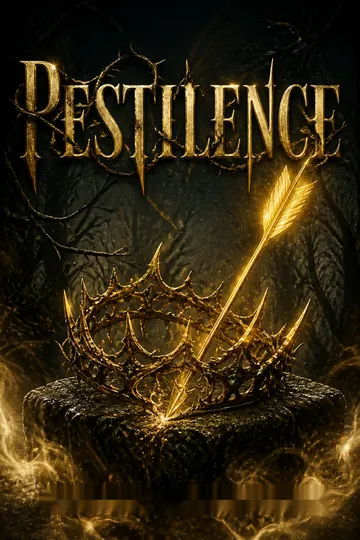
The Four Horsemen Series

About the Author
Other books by Laura Thalassa





Download PDF
Download EPUB
.epub digital book format is ideal for reading ebooks on phones, tablets, and e-readers.








