



Plot Summary
The Only Survivor
Lazarus1 haggles over apples at an outdoor market in Temple, Georgia, when animals stampede and every person within sight drops dead. She checks pulse after pulse, finding nothing. On the highway, she sees him: a winged rider in silver armor, backlit by the morning sun. Death2 himself. He approaches, demands to know who she is, then flees, unsettled that she still lives.
Lazarus1 races home and finds her entire family slaughtered: her mother Jill7 collapsed in the garden, her siblings and their children dead throughout the house. She holds her mother's7 body and weeps. The buildings begin to groan and collapse. Her town is gone, her family is gone, and she is utterly alone.
The inciting incident establishes the story's central paradox: Death meets the one soul he cannot take. Lazarus's survival is not triumphant but traumatic; she is cursed to witness what everyone else escapes. The juxtaposition of the mundane (apple-haggling) with the apocalyptic primes readers for the book's tonal blend of romance and horror. Her family's death gives her mission its emotional fuel, transforming her from an ordinary woman into a relentless adversary. The collapsing buildings symbolize the total erasure Death brings: not just lives, but memory, home, and history.
Bringing Down an Angel
Lazarus1 tracks Death's2 zigzagging path of destruction, marking X's on a map. In Lexington, Kentucky, she convinces skeptical officials by cutting her forearm and showing them the wound heal in two hours. Chief of Police Jeb Holton10 stations archers along the highway. When Death2 rides through, a volley of arrows pierces his wings, throat, and body.
He tumbles from his horse, and the archers keep shooting until he resembles a porcupine. Lazarus1 approaches his body, feeling unexpected remorse. When a deputy touches Death2 to check for a pulse, he instantly drops dead. Lazarus1 loads the horseman's2 heavy, winged form into a cart and pedals out of the city, intending to delay his rampage.
This sequence demonstrates human agency against seemingly unstoppable divine force. The archers' bloody victory buys time for evacuation but comes at a moral cost that Lazarus feels viscerally. Her remorse at seeing Death's ravaged body introduces the complexity that will define their relationship: she can wound him, yet she cannot escape the recognition that he is not purely evil. The deputy's instant death from a single touch reinforces Death's lethal nature and sets up later revelations about his power.
Bound and Broken
Lazarus1 drags Death's2 body into an abandoned barn and binds him with laundry cord. She guards him through the night, but his body slowly purges the arrows and he wakes. He seems amused to be her captive. When she threatens to shoot him for moving, he taunts her by leaning side to side, and she puts an arrow through his wing.
As the night wears on, they talk: he admits he does not enjoy killing, and he calls her 'kismet,' which means fate. Eventually, exhaustion overcomes her. She wakes to his fingers brushing her hair and his whisper that he almost stayed. Then his hands twist her head and snap her neck. When she revives, he is gone, leaving a single black feather on her chest.
The barn scene is the first time they talk rather than fight, planting the seeds of intimacy. Death's admission that he does not enjoy violence and his fascination with simply talking to her reveal a loneliness that mirrors her own. The word 'kismet' recasts their conflict as fated. Yet his final act of snapping her neck reasserts his danger and his refusal to be controlled. The black feather he leaves is both a signature and a promise: he wants her to find him again.
A Dangerous Invitation
In Kansas City, among fresh corpses and rubble, Death2 makes a startling offer: stop fighting and come with him. He admits openly that he wants her, that he has fantasized about taking her from the moment he laid eyes on her. Lazarus,1 sitting astride him with his wrists pinned, is so disarmed by his confession that he easily tears through her rope restraints.
He asks her to end the pain between them, promising she would want for nothing. She reaches for his hand, tempted by the thought of rest and an end to crushing loneliness, but pulls back. Choosing him would mean accepting the annihilation of everyone else. He mounts his horse and delivers a chilling new vow: this was the last time she would have a choice.
The power shift is palpable. Lazarus begins in physical control, but his emotional confession disarms her completely. His admission that he 'wants' her transforms their dynamic from predator and prey to mutual obsession. Her near-acceptance reveals how deeply loneliness has worn her down. His final warning, delivered not with anger but with chilling calm, signals that he has shifted from reactive to proactive: she is no longer the hunter, but the hunted.
Betrayed and Impaled
In Austin, Police Chief Davenport8 refuses to believe Lazarus1 and has her chained to a post on the highway as a sacrificial offering. When Death2 arrives, he kills everyone instantly, then kneels to rip apart her shackles with his bare hands. She shoves him and runs, grabbing a dagger from a dead officer. Death2 catches her and takes flight, but she accidentally stabs his side.
His grip loosens, and she falls, crashing through a building and landing on a metal bar that impales her abdomen. For days she lies pinned, unable to free herself, tormented by carrion birds. Death2 searches relentlessly. When he finds her, he bends the bar with his supernatural strength, lifts her off, and heals her wounds, cradling her as she sobs.
This turning point inverts the expected roles. Humans, whom Lazarus is trying to save, betray her; Death, her sworn enemy, rescues her with desperate tenderness. The impalement is a brutal metaphor: she is literally pinned between life and death, unable to move in either direction. When Death finally finds her, his care is not the cold mercy of an angel but the frantic devotion of a lover. She emerges from this trauma knowing he is no longer just her enemy.
The Dead Rise
In San Antonio, Death2 reveals a terrifying ability: he raises the corpses of the entire city and sends them after Lazarus.1 The revenants charge, ripping weapons from her hands with cold, dead fingers. A small dead child pries her last blade free. Death2 lands, and the corpses halt.
He lifts her onto his horse and rides out of the crumbling city, his arm locked around her waist. He admits he has been luring her all along, that his criss-crossing path was designed to learn her mind and draw her in. He has wanted to take her from the first moment he saw her. The hunt is over. She is now his captive in truth, and he will never let her go.
The revelation that Death could have captured Lazarus at any time reframes the entire first half of the book. His restraint was not weakness but patience; he was studying her, letting her believe she had agency. The risen dead serve as a terrifying demonstration of his full power, but also as a perverse act of care: he uses the dead to stop her without truly harming her. Her capture is simultaneously defeat and the beginning of a new phase.
A Mother's Bargain
While Death2 fights his brother Famine,4 Lazarus1 escapes and finds a baby boy, Ben,3 alive in a town of corpses, just as her own mother7 once found her. She takes him and flees. For months she keeps ahead of Death's2 searching revenants, until Ben3 falls ill with meningitis in Orange, Texas. Antibiotics fail. Pestilence6 finds her and brings her to the other Horsemen.
Famine,4 grumbling, uses his power to heal Ben3 completely. In exchange, they extract a promise: Lazarus1 will return to Death2 and seduce him, using love to stop his mission as love stopped each of them. They will take Ben3 to safety on Vancouver Island. She kisses her son3 goodbye and sends him away with these fearsome, redeemed beings.
Ben functions as both mirror and catalyst. Like Lazarus, he inexplicably survived Death's passage; unlike her, he is mortal and fragile. His illness forces Lazarus to accept help from unlikely allies. The deal with the Horsemen transforms her solo mission into a collaborative one and redefines seduction as a strategic weapon rather than a betrayal. Famine's gruff tenderness toward Ben complicates his cynical persona. The price of Ben's life is her body and heart, a transaction echoing the ancient theme of sacrifice for salvation.
Surrender and Seduction
Lazarus1 leaves a taunting note and waits for Death.2 When he lands, she drops her weapons, says she gives up, and goes to him. He removes his armor piece by piece as he approaches, then kisses her fiercely. He flies her to a palatial Texas mansion where skeletal servants have prepared a feast. That night, she initiates physical intimacy, giving Death2 his first experience of sexual pleasure.
He is overwhelmed, astonished that bodies could feel such sensations. Lazarus1 retreats afterward, savoring the strategic power she holds over him. But Death,2 now awakened to desire, is determined to reciprocate. The walls between them have cracked, and neither can pretend they are simply enemies anymore.
The surrender marks the story's pivot from combat to courtship. Lazarus's choice to 'stop fighting' is performative but emotionally genuine. The mansion with its prepared closet and feast reveals that Death has been planning for this, hoping for it. The oral sex scene is notable for the power reversal: Lazarus, the captive, is in complete control of his pleasure. Her retreat afterward is strategic, leaving him desperate for more. But Death, a quick study, immediately begins planning reciprocation.
Taking the Arrow
Death2 agrees to enter a town without killing immediately. In Rosenberg, armed townspeople confront them. When an archer fires, Lazarus1 throws herself in front of the arrow. It pierces her chest, and she dies in Death's2 arms. He heals her when she revives, then she removes the arrows from his wings in a gesture of intimate care.
That night, they make love fully for the first time. Lightning flashes, the earth shakes, and Death's2 power leaks out in his passion. Afterward, he holds her and asks if she enjoyed it; she admits it was the best. He tells her he wants to know what brings her joy, and she begins to believe he might truly change.
Lazarus's instinctive act of shielding Death reveals what she has refused to admit: she cares for him beyond strategy. The arrow removal is an intimate, almost ritualistic undoing of violence. Their first full sexual encounter, accompanied by literal earth-shaking, frames their union as cosmically significant. The storm outside mirrors their emotional storm. Death's vulnerability when he asks for reassurance humanizes him further. This is the point where seduction ceases to be a mission and becomes a mutual surrender.
A Mother Returns
When Death2 mentions he can resurrect souls, Lazarus1 demands he bring back her mother, Jill Gaumond.7 He reluctantly agrees. From desert earth, Jill's7 body reforms: naked, gasping, alive. Lazarus1 sobs and embraces her, but Jill7 is horrified. She wails, rocks, and begs to be sent back.
She scolds Lazarus1 for disturbing her peace, insisting that death was not a tragedy but a release. The living world feels alien and wrong to her now. Broken-hearted, Lazarus1 nods to Death,2 who gently releases Jill.7 Her body dissolves into dust. Lazarus1 weeps, finally understanding that she has been fighting not just Death2 but the natural order itself.
This is the book's deepest philosophical intervention. Jill speaks for the dead: they do not want to return. Her rejection reframes death not as loss but as transformation. For Lazarus, this is a painful but necessary education. She must stop seeing Death as a thief and begin to understand his function as a ferryman. The scene also deepens her grief, adding guilt to her existing sorrow. It is the emotional low point before the final ascent toward acceptance and love.
Love on the Shore
In a Los Angeles beach house, Death2 brings Lazarus1 to the Pacific. They swim naked in the cold water, and afterward, on the sand under the stars, he tells her he loves her. He has loved her from the moment he was formed, long before she drew breath. Lazarus1 realizes she loves him too and stops guarding her heart.
They spend days cooking soul bread together (he discovers he actually likes food now), reading books, and making love in every room. He begins to sleep and laugh freely. He is becoming human. But beneath the bliss, a shadow looms: the killing has not stopped, and his brothers are closing in.
The beach house interlude is the calm before the apocalyptic storm, representing what their life could be if Death abandoned his task. His love confession is the culmination of his emotional arc from duty-bound angel to feeling man. The soul bread becomes a sacrament of their union. His ability to finally eat and sleep signals his transformation from supernatural entity to mortal being. Yet the idyll is haunted by incompleteness: he has not yet made the final choice.
The Final Judgment
In the night, Death2 wakes and stares at Lazarus1 sleeping. He realizes he is on the brink of abandoning his divine task for love, as his brothers did. But he believes he cannot. The next morning, he stops speaking words of love and instead reads aloud the angelic glyphs on his skin: he is the last judgment of humankind, the end of the world.
His brothers Famine,4 War,5 and Pestilence6 arrive, armed and ready. They see that Lazarus1 has failed to change his mind. Death2 declares that he will finish what the four of them started: the total eradication of humanity. The final confrontation begins on a ruined Los Angeles highway.
This turning point is a devastating reversal. After the intimacy of the beach house, Death's declaration feels like betrayal. But his internal monologue reveals agony: he loves her completely, yet cannot reconcile that love with eons of duty. His reading of the glyphs is a desperate reassertion of identity against the dissolution of self that love has caused. The brothers' arrival transforms the romantic conflict into an epic, familial one. Everything is at stake.
The Horsemen's Last Stand
Pestilence6 climbs a high rise to shoot arrows, Famine4 calls lightning from the sky, and War5 wades into the risen dead with his sword. Death2 counters every attack: wind deflects arrows, lightning cannot harm him, and the revenants keep swarming. One by one, he begins draining his brothers' life force. Famine's4 skin grays and sags.
War5 is stabbed with his own sword by a revenant. Pestilence6 collapses. Famine,4 using his last strength, parts the branches of Lazarus's1 living cage and meets her eyes. Finish this, his look says. Death2 turns to face her, his expression remote and ancient, the skull-like overlay of his true form flickering over his features. The world is ending.
The battle showcases the terrifying scope of Death's power. His brothers, formidable in their own right, are reduced to dying mortals in minutes. The imagery is apocalyptic: buildings collapse, the dead swarm, the sky churns. Yet Famine's final act of freeing Lazarus transforms the battle's meaning: it was always about giving her the chance to reach Death. The battle is not the climax; it is the crucible that forces Lazarus to her final, desperate act.
The Blade Turns Inward
Lazarus1 walks toward Death2 through the carnage, clutching the dagger War5 gave her. Death2 watches her approach, his expression flickering between cold purpose and anguish. She lifts the blade, aiming at his heart for a moment, then reverses it. She drives the dagger into her own chest. Pain explodes. Death2 roars, catching her as she falls.
He pulls the blade out and tries to heal her, but his power fails. Something has changed: a prayer she whispered has been answered. Her immortality is gone. She bleeds out in his arms, her blood soaking his armor. Before she dies, she finally says the words she has withheld: she loves him. And then she is gone.
Lazarus's self-stabbing is a brilliant tactical and thematic stroke. She cannot kill Death, but she can kill the one person he loves: herself. Her prayer for divine intervention is answered: God removes her immortality, making her sacrifice real. The moment inverts their first encounter. Then, he could not take her life; now, she gives it freely. Her 'I love you,' spoken at the threshold of death, is the final key that unlocks his transformation. She weaponizes his love to save humanity, using her own life as the ammunition.
His Word Was Love
Death2 carries Lazarus's1 soul to the afterlife, a realm of muted light where her family waits: Jill,7 her siblings, her birth parents, all of them luminous and welcoming. He tells her she can stay in this peace, or she can return to Earth with Ben3 and with him, but life will include pain. She chooses him.
In that moment, Death2 understands. The angelic word he was given was never 'life'; it was 'love.' The universe wanted him to learn not just to appreciate existence, but to love deeply enough to choose it over annihilation. He brings her soul back to her body, and she gasps back to life on the ruined highway.
The afterlife sequence is the book's theological and emotional climax. Death, the ferryman who never crosses over, finally enters the realm he has only observed. The presence of Lazarus's entire family demonstrates the communal nature of the afterlife: no one is truly lost. His realization that the word was 'love' reframes his entire existence. He was never meant to merely kill; he was meant to learn that love is the only force that justifies creation's existence. The scene echoes Orpheus, but with a willing, mutual return.
A Mortal Beginning
Lazarus1 opens her eyes on the ruined highway. Death2 stands over her, changed: his black wings have dissolved into the wind, his silver armor gone, his glowing glyphs dim. He has been stripped of his immortality. The other Horsemen stir, revived and healed. Famine4 is now mortal too, as he wanted.
The five of them travel north to Vancouver Island, where the Horsemen's families wait. Lazarus1 sees Ben3 running toward her and sweeps him into her arms, sobbing. Death2 kneels to meet the boy, who touches his face and says 'eye.' Death2 smiles. He wraps his arms around both Lazarus1 and Ben,3 and for the first time, they are a family.
The resolution emphasizes transformation and unification. Death's lost wings and dissolved armor are not mourned but celebrated: he is finally free of his terrible duty. The reunion with Ben closes the emotional loop that began when Lazarus first found him in a dead city. The image of Death kneeling to meet the child embodies the complete inversion of his earlier self. The family of Horsemen, wives, and children gathered on the island represents a new Eden, a world saved by love rather than destroyed by divine judgment.
Epilogue
Decades pass. Death2 and Lazarus1 live a full human life together: children, grandchildren, the slow accumulation of years. One by one, his brothers and their wives pass away. Then Lazarus1 dies, and though Death2 knows she is waiting, her loss is an unbearable agony that teaches him fully what grief means.
Years later, an old man2 surrounded by his descendants, Ben3 holding his hand, he feels his own death approach. He slips into the afterlife unescorted, knowing the way. There, at the threshold, stand his brothers, their wives, and Lazarus,1 arms open. He walks into her embrace. He is home.
The epilogue completes Death's human education. Having given up his powers, he cannot choose the day of anyone's death; he must experience mortality's full arc, including the grief of surviving a loved one. His description of himself as 'the pause between sentences' and 'the silence that follows the end of a story' acknowledges that he remains, in essence, Death: his nature is not erased but integrated. The reunion in the afterlife closes the circle: the ferryman who delivered countless souls finally receives his own crossing. And Lazarus, who once envied the dead, now welcomes him to the peace she once feared.
Analysis
Death2 is a story about the necessity of choice in the face of fate. Each of the Four Horsemen was given a word by the universe, a lesson they had to learn before they could truly see humanity. For Death,2 that word was love, and the journey to understand it required him to experience every facet of the human condition: desire, pleasure, grief, sacrifice, and finally, mortality itself. Lazarus,1 whose name means one who cannot die, serves as his perfect counterpart. She embodies life in its most stubborn, relentless form, refusing to yield even when hope seems absurd.
The novel's structure mirrors its theme of transformation. The first half is a war story: ambushes, arrows, broken necks. The second half is a romance: seduction, confession, domesticity. The pivot point is not a battle but a bargain: a mother trading her body and heart for her child's life. Ben,3 the baby who survived Death,2 represents the central paradox: that life persists even when annihilation seems total.
Lazarus's1 arc challenges the notion that resistance must be violent. She begins believing she must kill Death2 to stop him. She learns that she must love him. This is not capitulation but a more radical form of resistance: she refuses to let him remain a monster. By insisting that he eat, sleep, laugh, and feel, she forces him to become human. And once human, he can choose.
The theodicy of the novel is surprisingly nuanced. Death2 is not evil; he is doing what he was made to do. The universe itself is wounded by humanity's destruction of the earth, and the Horsemen are its immune response. Yet love is presented as a force even the universe must respect. When Death2 chooses Lazarus,1 God does not punish him but releases him. The implication is that love was always the point: not annihilation, not survival, but the binding of souls across the boundary of death itself.
Review Summary
Death received mixed reviews, with many praising it as a satisfying conclusion to the Four Horsemen series. Readers enjoyed the romance between Death and Lazarus, the character development, and the appearances of other horsemen. However, some found the plot repetitive and similar to previous books. The steamy scenes and emotional moments were highlights for many. Critics noted pacing issues and felt certain plot elements were underdeveloped. Overall, fans of the series appreciated the book's romantic elements and epic finale, while others found it less engaging than earlier installments.
People Also Read


Characters
Lazarus Gaumond
Deathless Woman, Death's BelovedThe woman who cannot die. Found as an infant by Jill Gaumond7 after Pestilence's6 plague killed her birth parents, she grew up in a large, loving family in Temple, Georgia. After Death2 kills her entire family, she channels her grief into a relentless mission to stop him, using her immortality as her only weapon. She is fierce, stubborn, compassionate, and deeply loyal. Her inability to die isolates her even as it empowers her. Over the course of the story, she moves from hatred to conflicted desire to genuine love for Thanatos2, while never abandoning her commitment to saving humanity. Her adoption of Ben3 awakens maternal instincts that reshape her priorities.
Thanatos
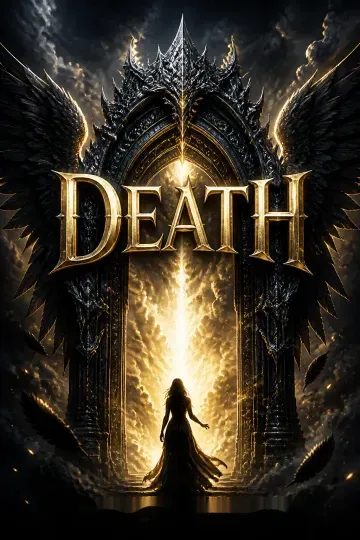
The Fourth Horseman, Death IncarnateThe fourth Horseman of the Apocalypse, who also answers to Death, Anubis, Azrael, and many other names. A winged angel in silver armor who rides a dapple gray horse, he can kill with a thought, raise the dead, control weather, and resurrect souls. Unlike his brothers, he takes no pleasure in killing; he sees it as grim duty. He is ancient, solemn, and deeply lonely. From the moment he meets Lazarus1, he is drawn to her in a way he cannot control, and his obsession gradually transforms into genuine love. His arc involves learning what it means to be human: to eat, sleep, feel pleasure, and ultimately, to choose love over duty.
Ben
Lazarus's Adopted SonAn infant boy Lazarus1 finds alive in a town Death2 has destroyed, just as Jill7 once found Lazarus1. His survival is a mystery (he is mortal, yet he lived through Death's2 power). Lazarus1 adopts him as her own son. His life-threatening meningitis forces Lazarus1 to bargain with the other Horsemen and sets her on the path to seducing Death rather than continuing to fight him. He represents hope, continuity, and the possibility that not all is doomed. His presence gives Lazarus1 something personal to fight for beyond abstract humanity.
Famine
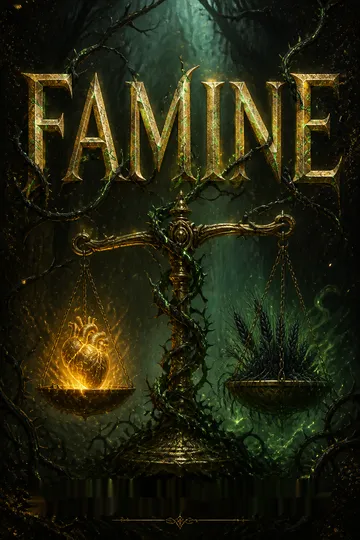
The Third Horseman, the ReaperThe third Horseman, a sarcastic, sharp-tongued immortal who carries a scythe and wears bronze armor. He resents humanity and is bitter about his failed attempt to give up his immortality for his wife Ana. Despite his abrasive exterior, he shows unexpected tenderness toward Ben3, healing the boy when no one else can. He delights in provoking his brothers, especially Death2, and his relationship with Lazarus1 is one of mutual annoyance that masks grudging respect. His arc involves reluctantly accepting that he does care about humanity after all.
War
The Second Horseman, Mortal WarlordThe second Horseman, now mortal and aging, with a wife and four daughters. A fierce warlord with a booming laugh, he retains his martial prowess and strategic mind. He is the one who proposes the seduction deal to Lazarus1, recognizing that love is what stopped each of the Horsemen. He fights valiantly in the final battle, ready to die for his family and humanity. His red-glowing knuckle glyphs are the last remnant of his former power.
Pestilence
The First Horseman, Redeemed PlagueThe first Horseman, who killed Lazarus's1 birth parents with his plague twenty-six years ago. Now mortal, aged, and deeply remorseful, he prefers his human name Victor. He has laugh lines and kind eyes. Of the three brothers, he is the most compassionate toward Lazarus1, offering her hugs and fatherly concern. He represents the possibility of redemption and change. His wife Sara and children live on Vancouver Island, where they eventually welcome Ben3.
Jill Gaumond
Lazarus's Adoptive MotherA brave woman who rode into plague-ravaged Atlanta looking for her husband and instead found an infant Lazarus1. She raised a large, noisy, loving family in Temple, Georgia. Her death at Death's2 hands is Lazarus's1 deepest wound and the primary fuel for her mission. When briefly resurrected by Death's power, she rejects the living world, insisting that death was peaceful and that Lazarus1 must let her go. Her rejection teaches Lazarus1 that the dead do not wish to return.
Chief Davenport
Austin's Treacherous Police ChiefThe Austin chief of police who refuses to believe Lazarus's1 warnings about Death2. Convinced she is a con artist, he has her chained to a post on the highway as bait. His betrayal results in his own death and the destruction of Austin when Death2 arrives to claim Lazarus1.
Shane
Marauder Leader of the Sixty-SixThe leader of a band of desert outlaws who ambush Death2 and Lazarus's1 camp. He beats and interrogates Lazarus1, wanting to learn Death's2 secrets. When Death2 resurrects, he raises the dead to kill Shane and his entire camp in savage revenge.
Chief Jeb Holton
Lexington's Believing Police ChiefThe chief of police in Lexington, Kentucky, who believes Lazarus's1 warning and helps organize the successful archer ambush that temporarily kills Death2. He represents the humans willing to fight back.
Plot Devices
Lazarus's Immortality
Unkillable human, ultimate bargaining chipLazarus1 cannot permanently die. She heals from any wound, resurrects after any death, and is immune to Death's2 lethal aura. This makes her the only human who can repeatedly confront him. The immortality is not intrinsic but a divine gift that can be removed. At the climax, Lazarus1 prays for intervention, and God strips her immortality so that her self-sacrifice to stop Death's2 rampage is real and permanent. Her mortality is the price she pays to save humanity.
Death's Soul Resurrection
Reverses death truly, not just reanimatesDeath2 can not only raise corpses as mindless revenants but truly resurrect souls, pulling them from the afterlife back into fully living bodies. He demonstrates this by bringing back Lazarus's1 mother Jill7, who rejects the living world and begs to return. The power reveals that Death2 could theoretically undo all the killing he has done, but he considers this power cursed and refuses to use it for Lazarus's1 family. This power is distinct from his other abilities and is considered the most sacred and damning of his gifts.
The Angelic Glyphs
Divine scripture on Death's skinGlowing silver tattoos cover Death's2 body from neck to calves, written in Angelic, his innate language. The glyphs describe his nature, powers, and purpose: he is the end of all beginnings, the last judgment of humankind. When Death2 reads portions of them aloud, the words carry palpable power that makes Lazarus1 tremble. Ultimately, the glyphs contain his true lesson: the word 'love,' not 'life,' is what he was always meant to learn. The glyphs dim when he becomes mortal.
The Seduction Bargain
Mission that restructures the plotWar5, Pestilence6, and Famine4 broker a deal with Lazarus1: in exchange for Famine4 healing her dying son Ben3, she must return to Death2 and seduce him, using romantic and sexual love to make him abandon his apocalyptic mission as love stopped each of them. The bargain transforms Lazarus1 from Death's2 enemy into his lover, shifting the story from combat to intimate relationship. It is the mechanism by which the other Horsemen, who cannot physically stop Death2, attempt to defeat him through emotional means.
The Four Horsemen Series
About the Author
Other books by Laura Thalassa


Download PDF
Download EPUB
.epub digital book format is ideal for reading ebooks on phones, tablets, and e-readers.








