


Plot Summary
Laguna's Empty Tribute
The coastal town gathers with gifts for Famine, hoping tribute will soften the Horseman who has already erased nearby settlements. Ana, a sex worker at the Painted Angel, has another reason to stay: five years earlier, she saved him, and she expects him to remember. Her madam, Elvita, presents Ana as a gift, but Famine humiliates them both and orders his guards to dispose of them with the others.
They drag the town's mayor and his family away first. Behind the house, Ana watches Elvita stabbed, then is knifed repeatedly and thrown into an unfinished pool among the dead. Famine never hears that she once saved him. The reunion Ana imagined becomes a second catastrophe.
The opening turns hospitality into a survival strategy with no power behind it. Laguna's gifts express a community trying to negotiate with a force that does not recognize reciprocity, while Ana's plan makes her body both the offering and the instrument of a hoped-for personal appeal. Famine's failure to recognize her is more than a romantic disappointment: he has stopped seeing individual humans at all. Ana's sudden reduction from a person with a history to disposable flesh establishes the central conflict between human particularity and an apocalyptic logic that treats lives as interchangeable.
The Grave Doesn't Keep Ana
Ana wakes beneath loose soil in the pool, surrounded by the mayor's murdered family and the bodies of people who survived the first attack only to be buried alive. Though her wounds are deep and feverish, she forces herself over the corpses and climbs out. She finds Elvita dead and the mayor still breathing, but cannot save him.
The town's roads are choked with killer plants, hanging bodies, and flies; the Painted Angel is silent, its remaining women dead. Ana recovers in her room, then scavenges food and supplies, abandons her old clothes and keepsakes, and leaves on a bicycle cart. Following blighted crops, she reaches Curitiba, learns where Famine is staying, and slips into his house with a knife.
Ana's survival is neither miraculous comfort nor simple triumph. It begins as bodily labor performed in a place designed to erase the distinction between the dead and the living. Her decision to help the mayor, despite their unequal relationship, shows that her compassion persists even when it cannot repair anything. Leaving the brothel without its sentimental objects matters as much as leaving the city: she refuses to carry the identity that poverty and other people's appetites imposed on her. Revenge gives her motion, but it also narrows the future she can imagine.
A Girl Finds Famine
Five years earlier, Ana finds a nearly dismembered stranger beside a rain-soaked road outside Anitápolis. She recognizes the glowing marks on his skin and realizes he is Famine, yet drags him to an abandoned house rather than reporting him. She hides his supernatural glow from the men searching for him, tends him through pain, and offers the care she once wished her own family had offered her.
Famine regenerates, explains that he intends revenge, and takes Ana with him when he returns to town. His former captors attack; he kills them with living vines, then levels Anitápolis in an earthquake. Ana loses her aunt and cousins, refuses to follow him, and watches him ride away after leaving a rose.
The flashback makes the present conflict morally difficult rather than merely ironic. Ana's first kindness is not ignorance: she learns Famine's identity and chooses to help anyway, because suffering matters to her before a person's worth is settled. Famine, meanwhile, interprets mercy through the wound that precedes it. His revenge against captors expands to an entire town, making the difference between justice and retaliation impossible for Ana to ignore. The rose, offered amid destruction, becomes an early sign that his capacity to create and his capacity to annihilate are already entangled.
The Knife He Remembers
In the present, Ana holds her knife to Famine's throat and reminds him that she found him mutilated and kept him alive. Recognition finally breaks through his indifference. Before either can make peace, the ground bucks and Famine disarms her, pins her down, and kills a guard who enters the room.
He could kill Ana too, but instead binds her wrists and admits that no other human has ever saved him. The memory makes her an exception, not a free woman. Famine keeps her as a captive, warning her against another attack, while Ana realizes that the one person she came to hurt is also the only person who remembers the kindness that started their history.
Recognition does not restore the past; it changes the terms of danger. Famine's recollection creates an obligation he cannot dismiss, but he translates that obligation into possession and restraint because control is the only relationship he trusts. Ana's threat is a reversal of their first encounter: she now holds the power to injure him, while he holds overwhelming physical and supernatural power over her. Their attachment begins not in safety but in a contested question of whether gratitude can coexist with coercion, and whether either of them can see the other beyond the roles assigned by violence.
Riding Through the Blight
Famine sets out with Ana and the guards who helped him terrorize Curitiba. As they leave, he turns on the men, growing plants that drag them from their horses and crush them. He frees the animals, then keeps Ana beside him on his own mount, despite her fear and repeated attempts to provoke him. Across the countryside, crops blacken as he passes, while he sometimes grows fruit to keep his captive fed.
Ana challenges his claim that killing is necessary, and his own contradictions surface: he wants to starve humanity but cannot let the woman who saved him go hungry. Their journey brings them to Colombo, where Famine demands a house, supplies, and obedience from a town already terrified of his arrival.
The ride converts Famine's abstract purpose into a continuous, intimate pressure. Ana cannot look away from the dying crops because she is literally carried through their destruction, yet she also becomes dependent on the same being responsible for it. Feeding her is not redemption; it is a small contradiction inside a vast campaign. Famine's brutality toward his own men also removes the convenient explanation that he is merely using force to survive. The section establishes the relationship's uneasy grammar: care appears, but it does not cancel violence, and Ana's sharp scrutiny prevents his occasional tenderness from becoming an easy excuse.
Colombo's False Safety
In Colombo, Famine uses his supernatural voice to make frightened residents provide lodging and service. He kills the house's owners and the police official who arranged the welcome, then orders the remaining people to obey.
Ana watches a father offer his teenage daughter and another poor man surrender family jewelry, neither sacrifice preventing Famine's violence. When she challenges him, he releases her cuffs but cages her in thorns after she slaps him.
Later, a guard strikes Ana; Famine kills the man and feeds her at a lavish table, then asks why she once saved him. Ana describes the childhood neglect that taught her to recognize unwantedness. When they leave Colombo, Famine releases a locust swarm over the city, leaving its people to a slow famine.
Colombo exposes how coercion recruits people into the very order that threatens them. Residents offer daughters, heirlooms, labor, and obedience because they have no reliable way to distinguish appeasement from safety. Ana's protest is ethically clear but practically weak, and Famine's brief protection of her does not make him merciful to anyone else. His question about her first act of kindness reveals a mind shaped by betrayal, while her answer links empathy to her own childhood deprivation. The locusts make his violence more than a spectacle: he chooses a form of death that turns time and hunger into instruments.
A Wound Changes Terms
On the road after Colombo, Ana tries to sleep against Famine as he refuses to stop for rest. At a farmhouse, she throws herself between him and an elderly woman, and Famine's scythe cuts Ana's shoulder before he can halt the blow. The old woman escapes. Famine disinfects and binds Ana's wound, then helps her dress, unsettled by the harm he caused.
During the journey, he tells Ana that humans tortured him for years after a family sheltered him and was murdered; he now sees each death as repayment. Ana shares how her aunt beat her and how she survived by joining a brothel. At an abandoned house, Famine tells her a story about judgment and lets her sleep with her head in his lap.
The injury interrupts the familiar pattern in which Famine controls the conditions and Ana absorbs the consequences. His attempt to care for her is awkward, but it matters because he must face her pain as something more than an abstraction. Their disclosures create a dangerous intimacy: each recognizes the other's suffering, yet Ana's history does not make her endorse his revenge. Famine's account explains his cruelty without absolving it. The story of judgment introduces a standard neither character can comfortably meet, while Ana's willingness to rest against him suggests that trust is emerging as a bodily practice before either can name it.
The Party Becomes a Massacre
Famine reaches Registo, where residents cheer and bring offerings, trusting the public welcome to protect them. He organizes a celebration in a warehouse, seats Ana beside him, and insists that the guests eat, dance, and act merry. The frightened crowd's stiff compliance only sharpens his contempt. When he starts splitting the floor and binding people in plants, Ana stabs his hand to stop the attack.
The pause lasts only briefly. Famine tears the knife free, traps the guests among thorned growth, and offers one man the lives of the crowd in exchange for his own. When the man tries to flee, Famine beheads him and then kills the others. He carries the horrified Ana out through the rain, dismissing her objection as human weakness.
The warehouse is a grotesque experiment in consent. Famine stages a party but cannot produce joy, only obedience under threat; the guests' fear exposes the violence hidden inside his performance of hospitality. Ana's intervention is courageous and consequential, yet it cannot stop the massacre, showing the limits of personal bravery against power without restraint. Famine's bargain makes his judgment of humanity self-confirming: he offers a terrified man a choice under impossible conditions, then treats fear as proof of moral failure. The scene marks a rupture in Ana's hope that understanding Famine might help her redirect him.
The Cartel's Welcome
In São Paulo, Famine rides through a fortified district controlled by cartel leader Heitor Rocha. Guards fire on them, but Famine collapses the walls and kills defenders with his plants; at the estate, he catches an arrow aimed at Ana. Heitor survives the assault by offering his remaining men and his local influence, then kneels and pledges service.
Famine accepts, making the crime boss his lieutenant instead of killing him. Ana distrusts the arrangement, especially when Heitor leads her to a luxurious bedroom and grabs her. She warns Famine about Heitor's danger, but Famine focuses on organizing the cartel's resources. His choice gives the pair a temporary base, while surrounding Ana with men who see her as property.
Heitor's offer reveals that Famine can be recruited through utility even when he despises the people serving him. The cartel's hierarchy resembles the Horseman's own: violence secures obedience, and the powerful decide whose bodies are available. Ana recognizes the danger because she has spent years reading men's entitlement, but her experience is not immediately respected as knowledge. Famine's tactical decision brings a human institution into his campaign, making the coming conflict less a clash between supernatural and mortal power than a collision between two forms of domination. Ana is caught between them, alert to threats neither man wants to acknowledge.
The Candelabra Escape
Heitor enters Ana's room at night with a knife, intending to assault her. She strikes his hand with a heavy candelabra, then hits his head until he collapses. Searching for Famine, she finds Heitor's guards torturing the Horseman, who has been shot, dismembered, and loaded into a cart as a trophy.
When a guard catches her, Ana stabs him in the throat, takes the reins, and drives away with Famine's body. She drags him into a field and pulls an arrow from his face so his regeneration can begin. Once Famine wakes, he helps her return. He withers Heitor and kills the remaining guards, while leaving the cartel boss alive to suffer, then brings Ana into his own room for safety.
Ana's escape consolidates a change in her agency. She has spent years turning observation and performance into ways to survive men; now she acts directly, using violence without the dissociation that once allowed her to endure it. Her rescue of Famine reverses their first encounter but does not erase its imbalance: she can save him, yet he remains capable of far greater violence. Heitor's torture forces Famine to relive the cruelty that shaped his mission. Ana's choice to stay beside him is therefore both an act of attachment and a decision to enter the cycle of vengeance rather than merely witness it.
Scales, Blood, and Desire
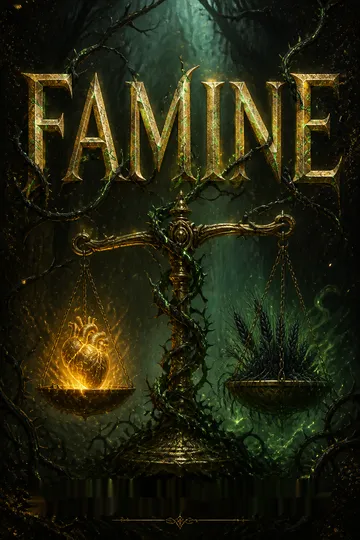
After punishing Heitor's men, Famine cleans Ana's wounds and listens as she describes the beatings that left scars across her back. He is furious on her behalf, then reveals that his glowing marks describe his divine task and that he feels the world as living matter. He shows Ana his scales, which weigh blood rather than ordinary objects.
Her blood makes the scales tip toward her, but Famine's blood tips them farther still, despite his atrocities. He interprets the result as evidence that his heart is purer, and Ana suspects the instrument reflects his own judgment. Their argument shifts into desire: Famine admits she is the human he likes, and they choose intimacy without pretending their history is harmless.
The scales introduce a conflict between moral measurement and moral authority. They appear to provide an objective verdict, but their result favors the being whose power and assumptions shape the test. Ana's skepticism matters because she refuses to let a sacred instrument settle what lived experience contradicts. Meanwhile, the conversation about her scars changes the direction of Famine's attention: he recognizes harm done to her rather than treating suffering as a resource. Their intimacy is not a cure for his violence, but it is an encounter in which Ana's body is no longer merely a commodity or a target.
The Bandits Find Her
After Ana and Famine leave the estate, three road bandits break into the abandoned house where they are resting. They beat Ana and threaten to sell or kill her, until Famine returns and kills them. One bandit's knife has cut Ana's neck. Famine kisses her and tends the wound, but Ana hides its severity; infection soon brings fever, vomiting, and delirium.
A village healer can clean and bind the cut but has no medicine to stop the infection. As Ana weakens, she confesses that she loves Famine. He recognizes the Angelic word she once spoke in her sleep as forgiveness, apologizes for destroying her home, and uses his power to destroy the infection inside her. Ana wakes with the wound almost healed, and Famine admits he loves her.
The bandit attack makes the relationship's stakes physical before either character can control them. Famine's fear when Ana is hurt reveals attachment more clearly than his possessive language has, while Ana's concealment reflects a learned habit of treating her own pain as secondary. The healer's limits expose the material vulnerability of a post-apocalyptic world: care alone cannot always overcome infection. Famine's healing is a morally significant use of the same life-and-death power he has used to destroy. Forgiveness here is not forgetfulness; Ana grants it while the damage remains part of their shared history.
A Home Among Ruins
Ana recovers in Taubaté, where Famine asks residents for a place to stay and presents her as his wife. Instead of immediately destroying the town, he secures an abandoned house and lets the locals repair it. Ana challenges his promise to spare people only temporarily, while Famine admits he wants to remain with her through her mortal life.
He proposes marriage in their overgrown home, describing the ordinary habits he has come to love; Ana accepts. Their domestic life gives Famine a reason to delay his mission, not abandon it. Over the following months, plants spread through the house as he grows less eager to resume killing, while his immortality makes Ana's limited lifespan impossible to ignore.
The house is a fragile counterworld built from the same power that previously made Famine's presence synonymous with ruin. Domestic routines do not make him human, but they give his vast, indifferent existence a scale at which attachment can operate: a meal, a shared bed, a habit worth teasing. Ana's acceptance of marriage is not a promise that danger has passed. It is a choice made with full knowledge that Famine's capacity for harm remains. Their home therefore holds both refuge and threat, a provisional space where tenderness can grow without resolving the world's violence.
The Fourth Horseman Wakes
As months pass, Famine realizes he wants to grow old and die with Ana, even though he hates his human body and would have to surrender his role. He struggles with the forgiveness required to give up his purpose. When he finally declares that he will relinquish it, an earthquake and supernatural storm tear through the region.
Death, his final brother, has awakened. The residents of Taubaté die as Death enters the city. Famine tests his scales again with his blood and Ana's: her side rises above his, because the scale now reflects his altered judgment of humanity. Death approaches, and Famine understands that his attempt to change has triggered a confrontation he cannot avoid.
Famine's crisis shifts the story from private redemption to cosmological consequence. His desire for a finite life is not simply a romantic escape; it asks him to abandon the function that gives his existence meaning and power. The scales reveal that moral judgment is not fixed in the instrument but changes with the one who reads it. That insight offers hope and danger at once: Famine can change, but his transformation has consequences beyond his household. Death's awakening makes the question unavoidable: whether love can alter a divine task without transferring its cost to someone else.
Death's Impossible Bargain
Death confronts Famine and offers two choices: surrender his immortality while Ana dies, or resume his mission and keep Ana alive until humanity is nearly gone. Famine refuses both. Death kills Ana instantly, and Famine attacks his brother in grief, breaking Death's armor and nearly burying him alive. Death overpowers him, then renews the offer.
Famine finally accepts the mission in exchange for Ana's return. The bargain preserves her life but restores the Horseman's purpose, leaving him responsible for killing the world he had begun to spare. When Ana wakes in his arms, she realizes what he chose and understands that her survival has become tied to the fate of everyone else.
Death's ultimatum converts love into a political and ethical test. Famine cannot save Ana without accepting renewed responsibility for the apocalypse, and he cannot choose humanity without losing the person who made that choice imaginable. His refusal is initially a defense of a single beloved life against abstract duty; his eventual surrender shows how grief can force even an immortal being into compromise. The bargain is not a clean victory. Ana returns, but the cost is that the old machinery of mass death starts turning again, now powered by a love that has made Famine more vulnerable rather than less dangerous.
The Reaper's New Road
Ana learns that Famine accepted Death's terms to bring her back. Refusing to let that choice pass quietly, she takes Famine's dagger and stabs Death, forcing the final Horseman to experience pain rather than administer it from a distance. Famine prevents Death from retaliating, then leaves with Ana instead of remaining to negotiate.
He tells her that hope remains if Death can be made to understand human life from within. They ride away from the ruined town to find War and Pestilence, whose earlier encounters with human love changed their own paths. The story ends with Famine's mission resumed, Ana alive at his side, and the fate of humanity dependent on whether the brothers can be changed.
Ana's attack is neither a strategic victory nor a symbolic gesture alone. It gives Death a bodily experience of the pain he has imposed, challenging the distance that lets him treat human lives as units in a divine calculation. Her action echoes Famine's earlier violence but redirects it toward accountability. The ending refuses a simple redemption: the Horseman has resumed his task, and the world remains endangered. Yet the final journey changes the possible means of confronting that danger. Instead of trying to defeat Death through force alone, Ana and Famine intend to use the precedent of his brothers' attachments as evidence that even a divine purpose can be altered.
Analysis
Famine makes an apocalypse intimate by forcing Ana to travel through its consequences beside the being who causes them. She does not encounter mass death as a distant statistic. She steps over bodies, watches crops fail, loses the people who gave her shelter, and then must negotiate her dependence on the Horseman. That proximity prevents easy moral categories: Famine is both the source of her devastation and the person who sees her scars, feeds her, and heals her.
Ana's work as a sex worker is not treated as a simple metaphor for victimhood. It gives her practiced skill in reading desire, recognizing coercion, setting limits, and surviving men who mistake access for ownership. Those skills help her confront Famine and Heitor, but they do not make intimacy effortless. Her movement toward Famine requires receiving care without turning it into a transaction, a difficult reversal for someone whose body has long been treated as labor.
Famine's violence grows from actual torture, but the novel distinguishes explanation from justification. His suffering gives his hatred a history; it does not make the indiscriminate deaths just. Ana's compassion also has limits. She challenges him, intervenes for strangers, and sometimes admits that humanity deserves judgment, yet she refuses to let his pain become a universal sentence. Their relationship is compelling partly because it never fully resolves that disagreement.
The scales sharpen the novel's question about moral authority. They appear divine, but their verdict shifts with Famine's own understanding, suggesting that judgment is not untouched by the judge. Forgiveness becomes the condition of his possible change, not a declaration that the past no longer matters. The ending keeps that change unsettled: Famine chooses Ana and resumes the deadly task, while Ana injures Death and insists that even the final Horseman should experience the pain he dispenses. Love alters the terms of the apocalypse, but does not yet end it.
Review Summary
Famine receives mostly positive reviews, with readers praising the dark, apocalyptic storyline and the complex relationship between Famine and Ana. Many found the slow-burn romance and banter between the characters engaging. Some criticized the repetitive plot structure compared to previous books in the series. The ending generated excitement for the next installment featuring Death. While some readers disliked the graphic violence and explicit content, others appreciated the mature themes and character development. Overall, fans of the series eagerly anticipate the final book.
People Also Read







Characters
Ana da Silva
The defiant survivorA young Brazilian woman who has learned to survive through wit, observation, and a sharp command of her own sexuality. Ana's work at the Painted Angel has taught her how to read what people want, but it has also made her wary of being treated as a body rather than a person. Her humor protects a deep capacity for tenderness, especially toward people who are frightened or abandoned. She is not innocent about human cruelty, yet she resists the idea that cruelty defines everyone. Ana's inner conflict is between self-protection and compassion: she knows the cost of caring, but repeatedly chooses to see the person beneath a frightening role.
Famine
The merciless third HorsemanAn ancient supernatural being tasked with blighting crops and bringing hunger to humanity. Famine experiences the world as living matter, but inhabiting a human form feels confining and unpleasant to him. His history of torture has turned his purpose into personal vengeance, and he interprets human selfishness as proof that humanity deserves extinction. He is commanding, vain, and often cruel, yet he notices more than he admits and has an unexpected interest in human stories. Ana unsettles him because she offers kindness without denying what he is. His central tension lies between an inhuman mandate and the complicated feelings that arise from being seen.
Thanatos
The final HorsemanKnown as Death, Thanatos is Famine's final brother and the most implacable of the Horsemen. He can end human life without the prolonged destruction Famine's powers often cause, and his calm manner makes his authority feel absolute. Thanatos thinks in terms of purpose, balance, and the proper order of the Horsemen, rather than individual human attachments. He is not presented as a simple sadist; he believes the mission must be completed and regards emotional exceptions as a threat to that design. His composure contrasts with Famine's volatility, making their conflict a contest between rigid duty and the possibility that experience can change judgment.
Elvita
Ana's protective madamThe aging madam who runs the Painted Angel and gives Ana a place within its difficult world. Elvita is elegant, practical, and skilled at reading men, but her care is tangled with control and economic necessity. She protects the women who work for her while also treating their labor as something she can direct. Ana feels gratitude and resentment toward her at once, a response that reflects the complicated shelter Elvita provides. She is one of the few people in Ana's adult life who can correct her, tease her, and still be trusted.
Heitor Rocha
The cartel's calculating patriarchA powerful cartel leader whose wealth and network make him accustomed to negotiating from strength. Heitor can appear courteous and pragmatic, but his manners conceal a proprietary view of other people, especially women. He understands that survival depends on reading power quickly and turning it toward his own advantage. His confidence makes him willing to bargain with supernatural forces, while his control of a criminal organization gives him practical influence that ordinary townspeople lack. He embodies human violence in organized form, a counterpart to Famine's divine destruction.
Aunt Maria
The harsh guardianAna's father's sister, who raises Ana after his death while already caring for five children of her own. Maria gives Ana shelter but makes her feel unwanted, using punishment to enforce her authority. Ana's memories of her are conflicted: she recalls the abuse clearly, yet struggles to deny the family bond and basic care Maria also provided. That ambivalence reveals how a child can remain attached to a caregiver who harms her. Maria's influence shapes Ana's sensitivity to rejection and her determination to build a life beyond dependence.
Ana's father
Her first source of safetyA grocery-store worker who raises Ana alone after her mother's death. He treats her with affection and makes her feel cherished, leaving memories of small gifts and everyday attention that contrast sharply with her later home life. His presence gives Ana a model of care that is not based on fear or obligation. Because she loses him young, his love remains both a comfort and a measure of what she knows can exist between people.
Martim
The first broken promiseA rancher Ana falls in love with while she works at the Painted Angel. Martim treats her with a gentleness she rarely receives from clients, which makes her believe their attachment might escape the rules of the brothel. He is also shaped by family expectations and the future his parents have arranged for him. His conflict is not a lack of feeling but a lack of willingness to risk the life he has been promised. Through him, Ana learns how tenderness can be sincere and still fail to become commitment.
Izabel
Ana's closest brothel friendOne of Ana's closest friends among the women at the Painted Angel. Izabel is frank, skeptical of rumors, and part of the everyday companionship that makes the brothel more than a workplace. Her presence represents the friendships Ana builds inside a life other people may judge from the outside.
Antonio Oliveira
Laguna's compromised mayorThe mayor of Laguna and a regular customer of Ana's. His wealth and civic position give him access to information about Famine's demands, but they cannot protect his household when the Horseman arrives. He represents the local authority and privilege that prove powerless against supernatural violence.
Luiz
Colombo's police officialA senior police official in Colombo who organizes lodging and assistance for Famine. Luiz tries to manage the crisis through civic procedure, but the Horseman's contempt for human institutions makes his efforts dangerous. He is one of the few named representatives of the social order that remains after the collapse.
War
Famine's militant brotherOne of the Horsemen who came before Famine and is described as more closely shaped by human desire. Famine recalls encountering him on an island, where War had formed a family and established boundaries around his own territory. His existence complicates Famine's assumption that the Horsemen are incapable of attachment or change.
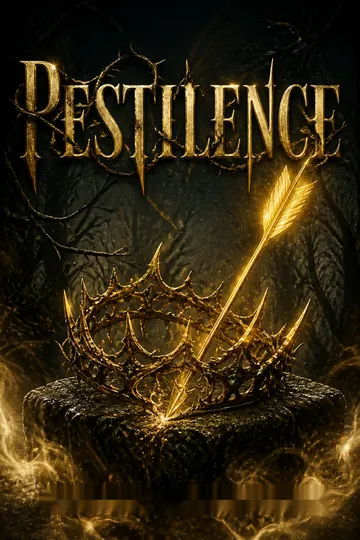
Pestilence
Famine's curious brotherA Horseman who precedes Famine and carries the power of disease. Famine describes him as strangely drawn to humans despite his destructive purpose. Like War, Pestilence complicates the idea that the Horsemen can be reduced to their assigned functions, and his history becomes relevant to Famine's hope of reaching Death.
The Curitiba elder
A grieving informantAn elderly survivor Ana finds trapped in one of Famine's plants in Curitiba. Grieving his murdered family, he tells her where the Horseman is staying but refuses rescue, choosing to remain with his dead. His response shows how catastrophe can make continued survival feel less desirable than loyalty to the lost.
The village healer
A practical caregiverA local healer who treats Ana after her neck wound becomes infected. She can clean and bind the injury and prepare a poultice, but the loss of modern medicine leaves her unable to stop the infection. Her limits make the collapse of technology a concrete threat rather than background scenery.
Plot Devices
Famine's living blight
Destruction made visibleFamine can make crops wither, summon insects, split the ground, and grow plants that bind or kill people. These powers give the apocalypse a physical trail Ana can follow, from dead fields to ruined cities, while also making Famine's mood visible in the landscape. The same capacity can create fruit, shelter Ana, or heal an infection, so the power is not inherently limited to destruction. Its changing use tracks the conflict between Famine's assigned function and his personal attachment. The plants are both weapons and signs of his capacity to choose what he grows.
The divine scales
Judgment made personalFamine carries scales that respond to blood and are associated with justice, balance, and the worth of human hearts. Ana first expects them to provide an objective verdict, but their strange result favors Famine despite his violence. Later, the comparison between their blood changes after Famine's view of humanity shifts. The scales therefore operate less like a neutral court than a measure filtered through the bearer. They turn an abstract moral question into a visible test, while revealing that judgment can change when the judge's understanding changes.
The Horseman's regeneration
Immortality with a costFamine's body regrows severed limbs and survives wounds that would kill a human, but he still experiences pain. His regeneration explains how Ana can find him mutilated and how he can return after Heitor's men dismember him. It also lets the story distinguish bodily survival from invulnerability: captors can repeatedly harm him even if they cannot permanently kill him. Ana's care matters because she treats his pain as real rather than dismissing it as a consequence of immortality. His endurance is a source of power and a history of accumulated trauma.
The lavender rose
Creation amid ruinFamine grows a pale lavender rose when he first leaves Ana after destroying Anitápolis, and later produces the same flower for her again. The rose is a compact expression of his contradiction: the being who blights fields can make something delicate and alive. It does not erase the destruction surrounding it or serve as a substitute for apology. Its importance comes from repetition, as Ana remembers that Famine's power can create even when his choices have devastated her. The flower becomes a private emblem of possibility between them.
Death's bargain
Love priced against humanityThanatos offers Famine a choice between relinquishing his immortal purpose while losing Ana, or resuming his apocalyptic task while keeping her alive until humanity is nearly gone. The bargain turns the Horseman's private attachment into a decision with global consequences. Famine's eventual acceptance revives Ana but restores the mission he had begun to set aside. The device denies a simple romantic rescue: love can preserve one person while imposing danger on everyone else. Ana's final attack on Death then complicates the arrangement, leaving open whether another form of change is possible.
The Four Horsemen Series

About the Author
Other books by Laura Thalassa







Download PDF
Download EPUB
.epub digital book format is ideal for reading ebooks on phones, tablets, and e-readers.








