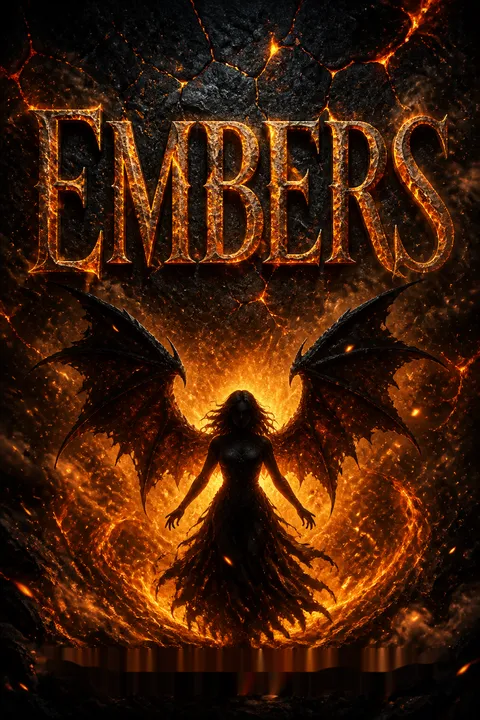


Plot Summary
The Tea Party Double
Harper, a demon Prime, brings her infant son, Asher, to a chaotic family party at her grandmother Jolene's house. Her husband Knox is delayed, so Harper leaves Asher with relatives while she steps outside to help with a collapsing bouncy castle. When she returns, a woman identical to Harper is trying to coax Asher away.
The child stays inside a shield of sparks and embers, but the impostor freezes the other children and throws Harper into the hall. Harper breaks through the icy barrier, stabs the attacker with a blade infused with hellfire, and watches the woman dissolve into vapor. She escapes with Asher, shaken by the realization that someone planned the distraction to reach her son.
The attack turns ordinary maternal vigilance into a problem no amount of good judgment could have prevented. Harper had left Asher among relatives in a crowded, protected home, yet the intruder exploited that reasonable trust as a tactical opening. Asher's shield preserves his safety, but his mother still experiences the scene as a failure because protection, for her, means preventing danger rather than surviving it. The attacker also weaponizes familiarity: Harper's face becomes a counterfeit promise of safety. That deception establishes the story's central threat as both physical and intimate, aimed at the fragile boundary between a child and the people he trusts.
Frost Behind the Door
At home, Harper tells Knox what happened while he fights to contain the fury of his inner demon. He finds her injuries, comforts her instead of blaming her, and returns with her to Jolene's house. There, his power dissolves the false ice holding the children and partygoers in place. Tanner, Knox's hellhound sentinel, cannot track the attacker, and Harper's knife bears no blood.
The evidence points to an enemy able to imitate another body, leave no scent, and turn into vapor. Days later, Knox receives a video showing his former lover Alethea apparently burned to death by someone claiming to be the fourth Horseman. The threat against the Primes is no longer rumor, and the attempted abduction now looks like its first move.
The empty knife and scentless room convert a frightening assault into an investigative crisis: ordinary demon senses cannot establish whether the attacker escaped, died, or was ever physically present in a stable way. Knox's restraint matters here. His power could overwhelm the household, but Harper's distress redirects him toward care and evidence. The video then links a private family violation to a political campaign, making the danger larger without explaining it. The sequence asks the characters to resist the comfort of a simple answer. They have a target, but not yet a body, motive, or trustworthy account of what happened.
Alethea's Burning Image
The video claims the remaining Horseman wants the US Primes to surrender, and threatens Knox first. Knox studies the recording with Harper, who reads Alethea's silent warning as evidence that she knew her killer.
When Knox visits Alethea's brother Jonas, the grieving Prime finally reveals that Alethea had secretly stolen an incorporeal demon from a private collection. She meant to free it, and Jonas had concealed the theft while searching for a way to destroy it. He believes someone helped her, then turned against her.
Freeing the creature required a demonic child's sacrifice, making the earlier attempt to kidnap Harper's young cousin Heidi chillingly relevant. The demon that attacked Asher may now be bound to carry out the Horseman's orders.
Jonas's confession exposes a second danger beneath the visible one: secrecy meant as protection can become complicity. He withheld the incorporeal's existence because he wanted to handle his sister's actions privately, but that decision left everyone else unable to prepare. Alethea, meanwhile, is not simply a victim in the recording. Her theft and possible role in a ritual make her morally difficult to classify, while the missing child's sacrifice reveals the cost hidden behind supernatural power. The story's threat therefore grows through decisions made in isolation. Each character's attempt to manage danger alone gives the enemy more room to maneuver.
The Hellcat's Tattoo
At Jolene's party, Harper reconnects with Drew Clarke, Devon's adventurous older brother, who once shared a drunken, unfinished encounter with her. His return unsettles Knox, and Levi's investigation finds a tattoo on Drew's back: a wingless sphinx beside a protective hellcat.
Jolene admits she once told Drew to stay away until he could offer Harper a settled life, then concealed Knox's courtship because she feared Drew would return for possessive reasons. At Harper's tattoo studio, Drew questions her choice of mate and warns her to hide with Asher. Knox later confronts him, burns away the tattoo, and removes memories of Harper from Drew's mind. Drew's jealousy complicates the hunt, even as the danger around the family grows.
Drew's tattoo makes an unspoken claim visible, but the real conflict is not a contest over who deserves Harper. It is the collision of her chosen present with a past that someone else assumed would remain available. Jolene's concealment was protective and manipulative at once: she tried to spare Harper an unstable partnership, while also deciding which information Drew could use to choose for himself. Knox's possessiveness then turns intimacy into territory. Harper's resistance to being treated as a prize is central; she can love Knox without endorsing his control, and the narrative makes that tension consequential rather than decorative.
The Roadside Decoy
After leaving Harper's studio, Knox and his sentinel Levi notice a pickup following their Bentley. They steer toward a rougher street, suspecting the incorporeal is using a human host. A woman suddenly pushes a stroller into their path, forcing Levi to swerve. The demon then blasts the car into the air with glacial energy.
Knox teleports himself and Levi clear, only to see the incorporeal abandon the woman and escape into the crowd. He uses his psychic power to replace witnesses' memories and conceal the supernatural attack. Back home, Harper is furious that Knox risks himself so readily, while Knox admits the creature may be targeting him rather than Asher. Their uncertainty sharpens the need to identify who gave it its orders.
The attack tests Knox's defining habit: he places Harper and Asher's safety above his own, even when that leaves him exposed. Harper recognizes the love inside that reflex but refuses to accept self-sacrifice as a substitute for partnership. The stroller also makes the incorporeal's tactics morally destabilizing. It uses an innocent child to force a split-second choice, turning rescue into a weapon and collateral danger into leverage. Knox's memory alteration keeps humans safe from the truth, but it also shows how easily power can rewrite another person's experience. Protection and control remain uncomfortably close together.
The Primes Refuse
Knox convenes the US Primes after the Horseman's video and the attacks on his family. No one agrees to surrender power, but suspicion falls on Thatcher and Dario, while Jonas stays away in grief. Knox reveals that the incorporeal has struck twice and argues that its master is not as formidable as he wants demonkind to believe.
The next evening, Knox and Harper broadcast the same warning through the Underground, the demonic district beneath Las Vegas. They continue appearing in public and conducting ordinary business so their lair will not mistake caution for fear. The strategy steadies their followers, but it also dares the Horseman to respond. Knox's decision to make the threat public turns private terror into a shared political contest.
The meeting treats fear as an instrument that can be redistributed. The Horseman tries to make the Primes feel isolated and vulnerable; Knox answers by making the threat common knowledge and refusing to withdraw from public life. His performance of normality is strategic, not denial. It gives the lair a model for responding without surrendering agency to the attacker. Yet public defiance carries a cost: it may provoke another strike. The Primes' refusal to step down confirms that the conflict is not merely about one family, but about who gets to define legitimate authority when fear becomes a political weapon.
Dion's Empty Case
Knox travels with Levi to the isolated island estate of Dion Boughton, a collector of rare supernatural objects. Dion says Alethea once stayed with him and took an interest in the incorporeal he kept in a display case. When he produces what he believes is the case, Knox recognizes that it is a convincing duplicate and concludes Alethea stole the original.
Dion explains that freeing such a creature takes more than breaking glass: it needs a powerful spell and a living host while it regains strength. The months since Alethea vanished match the time the demon would need to recover. Dion denies helping her and offers to search for clues, while Knox leaves with a firmer account of how the enemy was made dangerous.
Dion's empty case gives the investigation its first material anchor. Until now, the incorporeal has been defined by absence: no blood, scent, or stable body. The duplicate case reverses that pattern by showing how deliberate preparation can hide a theft in plain sight. Dion's account also places time inside the supernatural threat. The creature was not instantly unleashed at full strength; someone sustained it through months of possession. That detail implies patience, planning, and access to vulnerable hosts. The mystery shifts from what the demon can do to who supplied it with the conditions to do it.
The Secret in Asher
At the studio, Drew tells Harper that his ability to identify demon breeds suggests Asher is not a sphinx. He describes an unusual darkness around the child, then accuses Knox of concealing what he knows. Knox confirms he has privately wondered whether Asher's apparent sphinx nature is a disguise, but has no answer.
He explains that the child's psychic presence may be cloaked, allowing him to pass as another kind of demon. The admission triggers a fierce argument: Harper resents being excluded from a question about their son, while Knox admits he kept silent because he feared he was wrong. Before the dispute can settle, the incorporeal attacks Harper in a café, turning their unresolved fear into immediate danger.
The uncertainty around Asher is not just a supernatural puzzle; it presses on the parents' fear that knowledge can become a form of rejection. Knox withholds the possibility because he wants to spare Harper needless worry, but silence instead makes her feel shut out of her own child's life. Drew's warning is compromised by jealousy, yet it lands because it names a doubt Harper has already tried not to examine. The section's emotional force comes from the difference between protecting someone from pain and trusting them with reality. Their argument shows that intimacy requires shared uncertainty, not merely shared affection.
The Café Goes White
While driving to clear her head, Harper stops at a café near her former studio. Her ex, Royce, approaches, but his unfamiliar remarks reveal that the incorporeal is speaking through him. Harper strikes Royce with her soul-pain ability, yet the entity leaps into a nearby girl and freezes the room. Its glacial energy leaves Harper too weak to stand, while Tanner is trapped outside by an ice barrier.
Harper reaches Knox psychically just before he arrives. Knox battles the creature, but when it threatens Harper's failing heart, he abandons the chance to destroy it and warms her instead. The incorporeal escapes. Once Harper recovers, Knox apologizes for his earlier accusations and the couple agree to stop hiding crucial fears from each other.
The café attack makes the cost of Knox's protective priorities impossible to theorize away. He can defeat the creature, or he can keep Harper alive, and he chooses her. Harper's survival therefore depends on trust in the moment when she cannot act for herself. The possession of Royce and then the child demonstrates how the incorporeal turns ordinary human bodies into disposable instruments. Afterward, Knox's apology is not a romantic reset but recognition of a concrete failure: he wounded Harper emotionally before the enemy wounded her physically. Their agreement to share fears reframes partnership as information and accountability, not simply devotion.
Sherryl's Last Secret
Larkin traces Alethea's contacts to Sherryl Malloy, a demon dating Harper's cousin Ciaran. Harper and Knox question Sherryl at their boathouse. Under pressure, Sherryl admits Alethea paid her for information about the Wallis imps, Knox, and Asher, while claiming to be afraid of them. Sherryl also passed along the invitation to Jolene's party and knew Alethea had sought information about Heidi.
Harper concludes that Sherryl's carelessness helped expose both children to danger and kills her after the interrogation. The Primes see the aftermath and receive a warning that anyone who targets Harper's family will face the same punishment. Clues from Sherryl's communications lead Harper to suspect Alethea had hidden in North Las Vegas.
Sherryl's choices reveal how harm can travel through apparently small transactions. She tells herself that information is harmless, but her access to family plans makes her a conduit between private life and organized violence. Harper's punishment of her is both vengeance and a public signal, yet the act unsettles Harper precisely because she feels no remorse. The scene complicates her self-image as a merciful person without making her protectiveness seem irrational. By forcing the Primes to witness her own capacity for cruelty, Harper refuses the role of the lesser partner who depends on Knox to do violence on her behalf.
A Cell Beneath the House
Harper and Knox take a short island retreat with Asher, whose first bursts of hellfire hint that his abilities are still unfolding. Their search continues when Jolene's family and the Force locate Alethea's abandoned North Las Vegas house. Its extravagant furniture sits incongruously in a decaying neighborhood, and every room has been magically cleaned of scent.
An incantor named Ella untangles a concealment spell in the basement, revealing a hidden iron cell stained with blood. Levi senses the pain and anger of the dead; the victims were lured there with promises of drugs and sex, then used as hosts to feed the incorporeal. Tanner detects Drew's scent in the room, placing him near Alethea and abruptly making him a suspect.
The basement turns the incorporeal's recovery into a history of human exploitation. Its strength was purchased through people rendered disposable by addiction, poverty, and the assumption that no one would notice their disappearance. The hidden cell is therefore more than a clue; it is the physical record of a system that keeps violence out of sight. Drew's scent adds a relational shock to the evidence, challenging Harper's confidence in the person she thought she knew. The chapter binds two forms of concealment together: magical glamour hides the crimes, while emotional loyalty makes it difficult to believe who may have been present.
The Island Ambush
As the family flies back from the island, an attack tears open the jet. Harper escapes with Asher, but a damaged wing sends her crashing into the rainforest, where she loses consciousness. Knox and the sentinels land elsewhere and search without knowing where she is. When Harper wakes, she finds Asher safe but sees Drew's hellcat form and a black shuck near him.
Jonas, accompanied by a dark practitioner, appears and cages Harper with a spell that burns anyone who touches its bars. He reveals that Alethea is alive: the incorporeal used her appearance in the execution video, making the supposed murder a staged deception. Jonas admits he and Alethea are the Horsemen behind the attacks, and Drew has been drawn into their plan.
The crash strips away the protections that have organized the story: home, sentinels, psychic communication, and the parents' ability to stay beside Asher. Harper's injury makes her dependence on others immediate, while the cage forces her to watch danger approach her son. The false death video now reads as a calculated act of narrative control. Jonas did not merely conceal his identity; he used a fabricated public event to shape what every other demon believed. Alethea's return confirms that appearances have been a weapon throughout the book, but the emotional shock is sharpened by Harper's suspicion that Drew has helped the people threatening her family.
The Anubis Unleashed
Knox arrives and allows Jonas to believe a magical display case can hold him, while his sentinels stay close to Asher. The shuck turns on Jonas's party, and Asher's hidden demon emerges: he is an Anubis, able to call and deliver souls. The child draws the dark practitioner's soul into his hand, breaking the trap's advantage.
Knox reveals his true archdemon nature and battles Jonas; Harper destroys the incorporeal with hellfire and fights Alethea's tentacles until she collapses. The shuck dies, while Drew's demon helps protect Asher. Knox and Harper keep Jonas and Alethea alive for punishment rather than granting them a quick death. The enemies' plan to kill the family and film it ends in defeat.
Asher's revelation changes the meaning of his earlier oddities without reducing him to a weapon. His hidden nature gives him a role in the battle, but the story has already established him as a playful child whose safety matters beyond his power. Knox and Harper also reveal what they have concealed: he is an archdemon, and she can wield hellfire. Their secrecy has been partly protective, partly shaped by a world that fears unusual power. The climax resolves that tension through action rather than explanation. The family survives because each member contributes, and because the adults trust capacities they could not fully predict.
The Family Holds
After the battle, Knox removes Drew's compulsion and erases the memories that could expose Asher's nature or Knox's identity. Drew admits he joined Jonas's circle to redeem himself and protect Harper, not to help harm her; Knox lets him live, and Drew returns to Cuba.
Devon and Harper reconcile after the strain of their brothers' conflict. Jonas and Alethea are confined in Knox's Chamber, while the lair installs a new Prime. Two weeks later, Harper and Knox attend Khloë's birthday garden party with Asher, who can now teleport small objects, throw hellfire, and summon trouble faster than the sentinels can contain it.
The closing celebration restores the noisy family world the attacks had threatened, though Harper and Knox remain alert to the power their child is still discovering.
The ending returns to a party, but the resemblance to Jolene's gathering is deliberate in effect: the opening party was penetrated by an enemy, while this one is held among people who have chosen to remain close. The resolution is not a return to innocence. Knox's memory edits and the prisoners in his Chamber leave moral residue, while Asher's powers make future uncertainty unavoidable. What changes is the family's ability to face that uncertainty together. Harper accepts that being a good mother cannot mean preventing every threat; Knox learns that protection without candor can wound. Their final domestic humor makes belonging an active practice, not a guarantee of safety.
Analysis
Embers treats protection as a problem of power, knowledge, and trust. Harper and Knox are formidable, yet neither can guarantee safety by strength alone: the incorporeal bypasses ordinary senses, the Horseman manipulates public belief, and their own secrecy leaves them vulnerable to misunderstanding. Harper's maternal guilt reflects an impossible standard, the belief that a good parent should prevent danger rather than respond to it. Knox's parallel flaw is control. His childhood deprivation explains why he tries to secure every variable, but loving Harper requires him to share authority and information rather than simply shelter her.
The book repeatedly makes bodies unreliable. The incorporeal wears other people's forms, Alethea's death is staged, Asher's apparent breed is concealed, and Knox's true nature is hidden beneath a public identity. Recognition therefore depends less on appearance than on relationships, memory, and the willingness to question first impressions. This is why Asher's shield and Harper's ability to read danger matter, but are never sufficient by themselves. The family must learn to exchange knowledge rather than assume that love makes silence harmless.
The political plot extends that intimate lesson. The Horseman seeks power by producing fear, isolating leaders, and making their allies appear untrustworthy. Knox counters with public composure, while Harper's punishment of Sherryl and Alethea demonstrates the frightening cost of a community that has failed to protect its children. The story does not present violence as uncomplicated virtue. Harper's lack of remorse unsettles her because it reveals what protection can demand of her, while Knox's brutality threatens to become an end in itself. Their bond keeps these impulses answerable to one another.
Asher's eventual identity widens the family's meaning of acceptance. His parents fear that others will treat his nature as a reason he should not exist, but their own love is not conditional on his fitting a familiar category. The ending offers no promise that danger has vanished. It offers something more earned: a family that can face uncertainty together, tell the truth sooner, and make room for a child who is powerful without ceasing to be a child.
Review Summary
Embers is the fourth book in Suzanne Wright's Dark in You series, focusing on Knox and Harper's relationship as they navigate parenthood and face supernatural threats. Most readers praise the character development, steamy romance, and exciting plot. The book provides a satisfying conclusion to Knox and Harper's story while setting up future installments for side characters. Some critics note repetitive elements and excessive "other woman" drama. Overall, fans of paranormal romance highly recommend the series for its world-building, humor, and passionate relationships.
People Also Read

Characters
Harper
Sphinx Prime and motherHarper is a sphinx demon, tattoo artist, co-Prime of Knox's lair, and mother to Asher. She is resourceful, funny, and fiercely self-reliant, habits shaped by parents who gave her little stability. Her loyalty is practical: she protects people, notices what others overlook, and resists being managed even by the powerful man she loves. Motherhood intensifies both her tenderness and her self-criticism; she assumes that any danger reaching Asher means she should have done more. Harper's emotional strength lies in her ability to remain compassionate without becoming passive. She wants a partner, not a protector who makes decisions for her, and she insists on taking part in the risks that affect her family.
Knox Thorne
Possessive archdemon PrimeKnox is a wealthy, influential demon Prime and Harper's mate and psychic anchor. His disciplined manner conceals a capacity for devastating violence, and he relies on control to keep that force contained. A childhood stripped of choice helps explain why he now takes charge of nearly every situation, especially when Harper or Asher might be hurt. He is not emotionally fluent, but his attachment to Harper has made intimacy possible where he once expected only isolation. Knox wants to provide absolute safety, yet his possessiveness can conflict with Harper's autonomy. Their relationship asks him to make room for her judgment without pretending he can stop worrying.
Asher
Powerful infant sonAsher is the six-month-old son of Harper and Knox, a bright, mischievous child whose abilities are already appearing faster than ordinary human development would allow. He charms relatives and sentinels, experiments with objects, and communicates with his parents through psychic impressions. His innocence is not the same as helplessness: even before he can explain himself, he shows a strong instinct for self-protection. Asher concentrates the adults' hopes and fears, especially their concern that his unusual nature may make him a target. He is not a symbol to his parents, however. Harper and Knox's central task is to see the curious, affectionate child before they see the power others might fear.
Drew Clarke
Restless hellcat friendDrew is Devon's older brother, a hellcat who has spent years traveling, seeking excitement, and avoiding settled commitments. He and Harper share a long history and an old, unfinished attraction, which makes his return emotionally complicated. Drew sees himself as protective and honorable, but his confidence in what Harper needs can shade into entitlement. His willingness to take risks often looks like courage to him and recklessness to those who care about him. He is difficult to dismiss because he has genuine affection for Harper and Devon, even when his choices intensify the tensions among them.
Jolene Wallis
Impatient imp matriarchJolene is Harper's grandmother, a powerful Prime, and the unruly center of the Wallis imp family. She combines elegance with a taste for mischief and a fierce, sometimes destructive loyalty to her relatives. Jolene is a practiced strategist who will manipulate circumstances if she believes it protects someone she loves, even when that means keeping them uninformed. Her relationship with Harper is affectionate but not meek: she expects Harper to stand her ground and takes pride in her independence. Jolene's blunt judgments and chaotic humor offer Harper a form of family belonging unlike the instability she experienced with her parents.
Alethea
Encantada from Knox's pastAlethea is an elegant encantada, a sex demon who once shared Knox's bed and has long moved among powerful demons. She is proud, socially skilled, and accustomed to influencing others through charm and status. Harper's arrival in Knox's life unsettles her, partly because Harper refuses the usual competition for attention and partly because Alethea cannot easily read her. Alethea's polish can conceal ambition and a sharp capacity for resentment. She is not simply defined by her connection to Knox; her own alliances, loyalties, and appetite for risk shape how she navigates a world where influence is often a form of survival.
Jonas
Alethea's Prime brotherJonas is a Prime and Alethea's brother, a demon whose attachment to family is entangled with grief, pride, and political ambition. He carries the habits of someone raised in a brutal environment, including a willingness to regard power as the only reliable defense. His relationship with Alethea is close, but closeness does not guarantee trust or sound judgment. Jonas tends to keep dangerous information private until he believes he can control it himself. That instinct makes him difficult to read: he can appear composed even when fear or resentment is driving his choices.
Levi
Reaper sentinel and strategistLevi is Knox's reaper sentinel, a loyal and sharp-eyed ally who combines tactical patience with a dark sense of humor. He gathers information, notices practical details others miss, and keeps Knox informed without confusing loyalty with blind agreement. Levi understands the danger of powerful demons but is not easily intimidated by it. His steady presence helps turn Knox's anger into a plan, and his experience with death gives him a distinctive perspective on supernatural threats. He is also part of the close-knit circle that treats Harper and Asher as family rather than merely as their Prime's household.
Tanner
Hellhound bodyguardTanner is a hellhound sentinel who protects Harper and can track by scent. He is physically imposing but gentle with Asher, whose toy hellhound he helped choose. Tanner's blunt humor softens tense rooms without making him careless about danger. He trusts Harper's judgment and understands that her need to act is part of how she protects the people she loves. His loyalty is personal as well as professional, and he often serves as a grounded observer when Knox's possessiveness or Harper's guilt begins to dominate a conversation.
Keenan
Incubus sentinel and guardKeenan is an incubus sentinel who serves as a bodyguard and trusted presence around Harper and Asher. He has a boyish grin, an easy rapport with the child, and a practical sense of when caution is warranted. His humor and confidence make him seem relaxed, but he is capable of quick, decisive action. Keenan belongs to the close circle that helps the family preserve ordinary routines under pressure. His interactions with Khloë hint at a more vulnerable side than his bravado usually reveals.
Larkin
Harpy sentinel and investigatorLarkin is a harpy sentinel whose investigative patience complements the group's more forceful methods. She searches records, follows social connections, and is willing to use unusual approaches when conventional inquiries fail. Her practical judgment makes her a valuable counterweight to Knox's suspicion and Harper's urgency. Larkin is protective without being smothering, and she treats Harper as a colleague whose choices matter. Outside the investigation, her attraction to Teague suggests that even disciplined sentinels have personal lives that can complicate their composure.
Devon
Harper's hellcat friendDevon is a hellcat tattoo artist and Harper's close friend, as well as Drew's younger sister. She is quick-witted, affectionate, and comfortable enough with Harper to tease her without ceremony. Family loyalty pulls Devon in opposing directions: she cares about her brother, but she also recognizes Harper's right to choose her own life. Her friendship with Harper is built on years of shared work and humor, which makes conflict between them matter deeply. Devon's directness can conceal how much she worries about the people she loves.
Ciaran
Imp brother and teleporterCiaran is Khloë's twin, an imp who can teleport people and objects. He is irreverent, quick to joke, and more dependable than his teasing manner suggests. Ciaran is closely tied to the Wallis family and often helps Harper move between places when danger makes travel complicated. His friendships can make him vulnerable to people who want access to his relatives, but his instincts about loyalty are strong. He shares a lively, antagonistic bond with Khloë that reflects the family's affection through constant provocation.
Khloë
Imp cousin and organizerKhloë is Ciaran's twin and Harper's cousin, an imp whose unruly humor coexists with surprising competence. She works as a receptionist at Harper and Raini's tattoo studio and can organize events with care, even while making jokes that unsettle everyone around her. Khloë is independent, sociable, and stubborn about accepting help. Her family knows better than to mistake her small stature for helplessness. She treats teasing as both entertainment and a way to test how comfortable people are with her.
Raini
Succubus business partnerRaini is a succubus, Harper's friend, and her business partner at the tattoo studio. Confident and perceptive, she moves easily between her sensual public presence and the practical responsibilities of running a workplace. Raini's loyalty is expressed through attention: she checks how Harper is coping, helps keep the studio functioning, and treats Asher as part of the family. She is sociable without being shallow, and her humor helps preserve the friends' shared life when Harper's duties as a Prime threaten to crowd it out.
Lou
Irritable devil and friendLou is the devil, an immensely powerful and antisocial figure who dresses like an unkempt rock fan. His obsessive habits make him easy to provoke, and he responds to irritation with childish complaints. Despite his reputation and power, he enjoys spending time with Asher and becomes an odd playmate for the infant. Lou's suspicion of the child's potential reflects his tendency to imagine the worst, while his attachment suggests that even he can be disarmed by uncomplicated affection. He is a familiar presence in Harper and Knox's circle, though rarely a calming one.
Sherryl Malloy
Familiar in Ciaran's circleSherryl is a familiar demon, able to change into small animals, who works with Ciaran and becomes part of his social circle. She wants a life free of conflict with an ex-partner and is willing to use her connections to seek a different future. Her ease with information and her ability to sense lies make her an observant presence, though her desire for security can cloud her judgment. Sherryl's place in Ciaran's life gives her access to the Wallis family world.
Dion Boughton
Collector of rare demonsDion is a reclusive collector who lives on a private island among an extraordinary assortment of objects and supernatural rarities. He is fascinated by what is unusual and prefers isolation to ordinary social life. His curiosity can make him helpful to investigators, though it also gives him an acquisitive streak that others may find unsettling. Dion's home reflects his desire to classify and possess the rare, a habit that shapes how he views beings as well as artifacts.
Thatcher
A suspicious demon PrimeThatcher is a Prime whose authority and past association with Alethea place him under suspicion when the Horseman's campaign emerges. He is proud, socially practiced, and quick to defend his standing when others question his motives. Thatcher expects loyalty and exclusivity in his relationships, even when he does not offer commitment himself. His presence at political gatherings makes him a natural focus for rumor, though his own judgment is more complex than the room's assumptions suggest.
Ella
Skilled incantorElla is an incantor, a demon born with an innate capacity for magick. She is self-assured about her craft and methodical when untangling spells, preferring careful attention to theatrical displays. Levi has consulted her before, and she responds to his requests with professional generosity. Ella's confidence comes from competence rather than status, making her a useful ally when hidden enchantments exceed the sentinels' abilities.
Lucian
Harper's unreliable fatherLucian is Harper's father, a nomadic demon who values travel and personal freedom over consistency. He can be affectionate and proud of Harper, yet he often fails to understand how his long absences affect her. His easygoing manner makes him seem harmless, but his emotional immaturity leaves Harper doing much of the work of maintaining their relationship. He is devoted to Asher in his own way, though his promises to visit are not always dependable.
Royce
Harper's human exRoyce is Harper's human ex-boyfriend, whose past betrayal left her with little patience for his attempts to reconnect. He represents a version of Harper's earlier life that she has already outgrown, though he does not initially understand why she keeps her distance. His ordinary human presence also shows how easily the supernatural conflict can enter familiar settings.
Charles
Dark practitionerCharles is a dark practitioner who uses learned magick to conceal spaces and restrain others. Unlike an incantor, his abilities depend on practiced spells rather than an innate relationship with magick. He works with powerful clients and is willing to lend his skills to dangerous purposes. His careful methods make him more threatening than his modest physical presence suggests.
Meg
Housekeeper and caregiverMeg is the Thorne household's housekeeper and one of Asher's trusted caregivers. Practical, warm, and attentive, she helps Harper manage the demands of a rapidly developing infant. Her concern is sincere rather than deferential, and she is willing to ask direct questions when Harper tries to hide distress. Meg provides the family with steady domestic care amid the larger supernatural crises.
Plot Devices
The Anchor Bond
Shared psychic restraintA demon's anchor is its destined psychic counterpart, a bond that strengthens both parties and helps each retain control of the inner demon. Harper is both Knox's mate and his anchor, so their minds can communicate across distance and their emotions often reach each other without words. The bond makes their partnership powerful, but it also brings possessiveness, discomfort at separation, and an expectation of mutual loyalty. It is not the same as romance, yet Harper and Knox's bond is threaded through their intimate relationship. The device gives the story a way to make emotional strain physically consequential: each can sense when the other is afraid, angry, or withholding something.
Inner Demons
Predatory selves withinEvery demon carries an inner entity, a dangerous consciousness that can challenge its host for control. A demon must sometimes yield to that entity's strength while still maintaining dominance over it, a balance that can fail under extreme emotion. Knox's inner demon is especially powerful and destructive, while Harper's is fiercely protective and impatient. The entities can communicate and react to one another in ways the humanlike personalities do not always understand. This device externalizes impulses that characters might otherwise deny, especially rage, possessiveness, and the urge for revenge. It also makes emotional regulation a practical survival skill, not a vague virtue.
The Incorporeal
A bodyless infiltratorAn incorporeal demon has no stable body of its own and survives on Earth by possessing humans or animals. It can hide inside a host, seize control, or briefly manifest a chosen physical appearance when strong enough. Because it leaves no ordinary scent or blood, conventional tracking fails, and victims may not know it is present until it acts. The creature in the story uses Harper's likeness to approach Asher, borrows human bodies to attack, and wields glacial energy that can freeze people and create barriers. Its vulnerability to hellfire gives Harper and Knox a possible means of destroying it, but only when it is exposed rather than safely hidden in a host.
Psychic Shields
A child's instinctive defenseAsher can raise a defensive field made of sparks, ash, and embers. The shield protects him from the impostor at Jolene's party and prevents the attacker from simply reaching into his space. His developing psychic power can also create temporary bonds, such as the cuffs linking him to Harper when he does not want her to leave. These abilities give the adults evidence that Asher is powerful, but they do not make him invulnerable or remove the need to protect him. The shield is a particularly important device because it distinguishes defensive power from aggression: Asher's first response is often to protect himself, even before anyone understands what he is.
Cloaked Demonic Nature
Identity concealed as safetyA demon may cloak its psychic presence, altering or hiding the aura that normally signals its breed. The ability can let its user pass as another type of demon or appear unremarkable, making identification difficult even for those skilled at reading psychic signatures. Harper and Knox suspect this possibility when Drew notices something unusual around Asher and when Knox realizes the child shares Harper's psychic scent exactly. The concealment helps explain why Asher's nature is difficult to classify, but it also reflects the danger of being visibly different in a society that fears rare powers. The device turns identity into both a mystery and a protective choice.
Dark in You Series






About the Author






Download PDF
Download EPUB
.epub digital book format is ideal for reading ebooks on phones, tablets, and e-readers.








