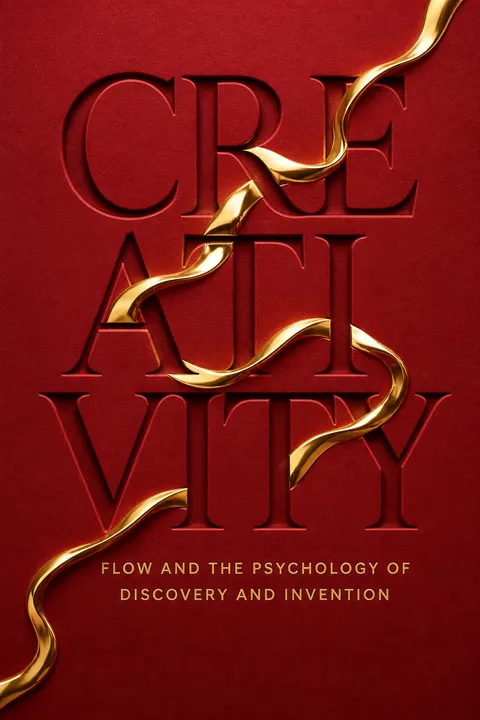


Key Takeaways
Judge creativity by what a culture adopts, not by who had the idea
Creativity is a system. The book’s systems model treats creativity as the interaction of three parts: a domain, the shared knowledge and rules of an area; a field, the experts who assess new work; and a person who introduces a possible change. An idea is not culturally creative just because its originator believes it is novel. It must be understood, evaluated, and taken into the domain.
Rubin’s discovery shows why. Astronomer Vera Rubin noticed that stars in one galaxy appeared to move in opposite directions. Years of studying galactic details made her alert to the pattern, improved instruments made it visible, and colleagues helped test it. Her insight mattered, but so did the knowledge, equipment, and community around her.
This model resembles distributed cognition: complex achievements often depend on tools, records, colleagues, and institutions, not just an individual mind. It also clarifies why generating ideas is only part of innovation. A workplace can invite suggestions yet still suppress creativity if managers never test or implement them. The complication is that fields do not merely recognize value; they can reproduce their own preferences and exclude unfamiliar voices. Recognition is necessary for cultural influence, but it is not a flawless measure of merit.
Learn a domain deeply, then connect it to a neighboring one
Novelty needs a foundation. To change a domain, a person must first learn its accumulated knowledge, symbols, and standards. A musician needs to know how music works before making a consequential departure from convention; an inventor needs to understand the science and engineering behind a design. Without that preparation, an idea can feel new to its maker while repeating old work or ignoring practical constraints.
Florence had both knowledge and patrons. Early Renaissance artists drew on rediscovered Roman techniques, but the city’s wealthy patrons also commissioned ambitious work, organized competitions, and scrutinized proposals. Brunelleschi’s cathedral dome combined classical knowledge with later architectural ideas. The lesson is not to copy tradition, but to know enough to recombine it intelligently.
Deep expertise gives people a useful map of what is already known, while cross-disciplinary contact offers routes the map may not show. That tension is central to the book: specialization makes mastery possible, yet boundaries can hide valuable connections. Modern organizations face the same design problem. Teams need specialists who can judge technical claims and translators who can carry ideas between fields. The caution is that breadth can become shallow sampling; connections matter most when the person understands enough of each area to recognize a real fit.
Let problems incubate, but make every insight survive hard testing
Creative work loops rather than marches. It often begins with close study of a puzzling issue, then alternates between conscious effort, unforced mental wandering, sudden connections, evaluation, and extended development. These are recurring activities, not a dependable recipe. A promising insight still has to withstand calculation, revision, experiment, or criticism.
Dyson’s bus ride captures the rhythm. Physicist Freeman Dyson spent six months working to understand two competing approaches to quantum electrodynamics. After a holiday in California, the connection between them became clear during a night bus ride through Kansas. He then spent another six months working out and publishing the result. The flash mattered because long preparation made it meaningful, and painstaking follow-through made it usable.
The account makes room for both deliberate reasoning and incubation without treating insight as magic. In cognitive science, switching tasks can loosen fixation, while returning to a problem helps test whether a fresh association holds up. But a pause is not automatically productive: ideas need relevant knowledge to combine, and some problems are solved through steady analysis without a dramatic revelation. The practical point is to alternate focused work with genuine recovery, then bring a skeptical standard to whatever emerges.
Practice switching between opposites instead of performing one creative persona
Creativity requires complexity. The book uses this term for a person’s ability to draw on contrasting qualities without being trapped at either extreme. Creative people may be playful and disciplined, imaginative and grounded, solitary and sociable, humble and self-assured. They do not simply occupy a safe midpoint. They can shift their approach as the work demands.
The contrasts serve different tasks. Free association can produce possibilities, but judgment is needed to discard weak ones. Solitude supports concentrated work, while conversation exposes a thinker to useful information and criticism. A person who is only rebellious may produce novelty without a grasp of the domain; one who is only obedient preserves it unchanged. Creative achievement depends on both departure and command of the craft.
This is a more useful portrait than the familiar stereotype of the eccentric genius: it focuses on adaptive range rather than a fixed personality type. It also fits research on psychological flexibility, the ability to change strategies as goals and circumstances change. Still, the book’s examples come from exceptional, self-selected adults, so the pattern should not be treated as a personality test. Contradiction alone is not creativity; the crucial capacity is to coordinate different modes of thought in service of a real task.
Choose work that stretches skill, gives feedback, and rewards attention now
Flow is focused enjoyment. It is a state of deep involvement in an activity, often accompanied by clear immediate goals, usable feedback, and a close match between challenge and skill. When demands exceed ability, anxiety rises; when ability exceeds the task, boredom takes over. In flow, attention stays with the work, self-monitoring fades, and time can seem to speed up or slow down.
The reward can be the activity itself. The book calls an activity autotelic when it is worth doing for its own experience, not only for a later prize. Artists, scientists, and inventors described the pleasure of solving, composing, or discovering as more sustaining than fame or income. Their work could be arduous, but the effort itself held interest.
Flow connects naturally with intrinsic motivation: people tend to persist when an activity offers meaningful challenge, a sense of growing competence, and some control over how they proceed. The framework can help redesign dull tasks by clarifying goals and making feedback visible. Yet intense absorption is not automatically healthy or socially valuable. Gambling or other harmful activities can also command attention. Flow describes the quality of experience, so the activity’s consequences and its place in a balanced life still matter.
Design your surroundings for the phase of work you are in
Different phases need different settings. Concentrated study and careful revision often benefit from familiar, quiet surroundings. During incubation, a walk, a drive, or an unfamiliar landscape may free attention from its usual track and allow unexpected associations. Beauty can help, but it does not plant an idea by itself; the person still needs a prepared mind and a real question.
John Reed’s Florence notebook is a case in point. Away from his office, the Citicorp executive wrote at length about problems facing his company. He later found that his notes overlapped substantially with organizational changes he put into practice. The setting helped him step back from routine, while later discussion and evaluation helped turn reflection into action.
The point is not that scenic views cause breakthroughs, but that context changes what attention can do. This echoes environmental psychology and the idea of cognitive offloading: spaces, routines, and objects can reduce some mental demands while making certain activities easier to enter. The reverse also matters. A beautiful retreat will not compensate for financial stress, unsafe conditions, or constant interruption. Instead of searching for a universally creative workplace, people and institutions can ask which features support the task at hand.
Nurture persistent curiosity, not the myth of the born prodigy
Early brilliance predicts little by itself. The book finds no single childhood pattern among its interviewees. Some showed early talent; others changed direction much later. What recurs is a strong interest in some part of the world, plus the chance to learn it. Astronomer Vera Rubin became fascinated by the stars as a child. Jonas Salk, by contrast, first imagined a career in law before turning to medicine and research.
Opportunity helps curiosity grow. Parents, teachers, peers, and mentors can supply books, instruction, encouragement, and access to the people who assess work. The interviews also show how historical openings mattered: several women scientists said World War II created educational and professional opportunities that might otherwise have been closed to them.
This is a strong corrective to stories that turn achievement into destiny by highlighting childhood signs only in hindsight. It shifts attention toward opportunity and sustained engagement, both of which can be changed by families, schools, and institutions. The study’s evidence has limits: its 91 respondents were older, recognized, and still active, so it cannot establish what predicts creativity across a population. Its most defensible lesson is less deterministic: early promise is not required, and access can determine which interests get room to develop.
Turn daily attention into a creative practice you can actually sustain
Begin with what catches your eye. The book’s practical advice starts with noticing surprises, recording them, and following the interests that keep returning. A notebook can preserve fleeting observations and reveal patterns in what attracts attention. Once an interest becomes clearer, learning its basic skills gives it somewhere to grow.
Protect time and make work rewarding. Set a meaningful task to look forward to, shape a schedule around periods of strong attention when possible, and use walks or other low-demand activities for reflection. Reduce avoidable interruptions and arrange a workspace to suit the work. Even ordinary routines can become more engaging when they have a clear aim and a small challenge. The goal is not constant novelty, but deliberate control over where attention goes.
These practices treat creativity less as a rare gift than as an attentional habit: notice, record, explore, and return. A diary can make vague preferences legible, while a protected work period turns interest into skill. The important constraint is that attention is not equally available to everyone. Care responsibilities, exhausting work, illness, and insecurity can consume the very surplus the book recommends investing. Personal routines help, but they cannot substitute for social conditions that make time and learning accessible.
Judge inventions by their effects on the whole culture, not just their field
Useful advances can create new dangers. The book describes cultural information, or memes, as ideas and practices passed through learning rather than inherited biologically. Such changes can improve life while also producing costs that were not intended. Large-scale irrigation made ancient Mesopotamia productive, yet gradual soil salinization damaged its land. Nuclear technology offered major benefits but also created a long-term waste problem.
Selection needs a wider lens. A field may judge an idea by standards internal to its specialty, and markets often reward immediate benefits. Neither reliably measures effects on society as a whole or on future generations. The author argues for evaluating innovations by their broader consequences while still allowing artists and scientists to explore. Creativity gives people power to shape culture, so judgment must extend beyond novelty and professional approval.
This argument anticipates a familiar problem in technology policy: benefits and costs are often distributed across different people and different times. A whole-system view makes those external effects harder to ignore, especially when a successful tool changes behavior or institutions around it. But broad evaluation can itself become a source of power and bias. Any public review needs transparent evidence, diverse participation, and room for uncertainty. The aim is not to prevent risky inquiry, but to avoid treating a field’s enthusiasm or a market’s demand as sufficient proof of public benefit.
Analysis
The book’s most important move is to relocate creativity from the isolated mind to a relationship among individual, knowledge system, and evaluators. That shift makes several otherwise puzzling facts intelligible: an insight can be privately original but culturally invisible; an expert field can reject a valuable change; and a historical moment can make an idea actionable that would previously have lacked instruments, collaborators, or an audience. Creativity becomes both cognitive labor and social selection.
The framework also improves on heroic biographies. Rubin’s observation, Dyson’s synthesis, and the Florentine commissions show that achievement is neither pure inspiration nor mere social credit. People contribute real judgment and persistence, but they work with inherited concepts and depend on institutions that help test, preserve, and circulate results. The book’s account of flow adds a personal dimension: sustained contribution is more plausible when the activity itself remains absorbing, not when motivation rests only on recognition.
The evidence should nevertheless be read with care. The 91 interviewees were selected for recognized accomplishments, continued activity, and generally advanced age. The sample was heavily male and Western, and retrospective interviews can make a life look more coherent than it felt while unfolding. The method is especially good at challenging universal myths, such as the claim that all creators are tortured prodigies, but weaker at estimating how common a trait is or proving what caused success.
The lasting practical implication is therefore not a formula for manufacturing genius. It is a design principle: cultivate deep learning, protect attention, make room for play and reflection, and build institutions capable of recognizing and testing worthwhile departures. The final ethical argument follows directly. Since cultural innovations can change the conditions of life, creativity deserves neither automatic celebration nor automatic suspicion. It requires both open exploration and responsible evaluation.
Review Summary
Creativity explores the nature of creative individuals and processes through interviews with renowned figures. While praised for its scientific approach and insights into cultivating personal creativity, some reviewers found it repetitive and overly focused on older, mostly white male subjects. The book examines traits of creative people, conditions for "flow" states, and environmental factors influencing creativity. Many readers appreciated the practical advice in the final chapter but felt the overall content could have been more concise and diverse in its examples.
People Also Read





Glossary
Systems model
Creativity as interactionA model that explains cultural creativity through the interaction of a person, a domain, and a field. The person offers a possible innovation, the domain supplies the knowledge and rules being changed, and the field evaluates whether the change merits acceptance. It distinguishes privately experienced novelty from a contribution that alters shared culture.
Domain
Shared symbolic knowledgeA structured area of cultural knowledge, such as music, mathematics, or biology. A domain contains symbols, rules, procedures, and accumulated examples that people learn and use. Creative change requires knowledge of the domain because a proposal must be understood in relation to what already exists.
Field
Domain gatekeepersThe people and institutions that assess new work in a domain. A field may include teachers, editors, critics, researchers, patrons, or managers, depending on the area. Its judgments help determine which innovations receive recognition, resources, and a place in the domain.
Flow
Deep, rewarding involvementA state of concentrated involvement in which a person’s abilities meet a suitably demanding activity. Clear goals and immediate feedback help keep attention on the task. People in flow often lose track of time and self-consciousness. The experience can be rewarding in itself, though its value also depends on the activity.
Autotelic
Rewarding in itselfDescribes an activity pursued partly or wholly for the experience it provides, rather than only for an external result such as money, status, or approval. The book uses the term to explain why creative people may continue difficult work even when public recognition is uncertain. An activity can also offer both intrinsic and external rewards.
Memes
Units of cultural informationLearned information that can be transmitted through culture, including languages, theories, songs, recipes, laws, and values. The book compares memes to genes: both can be copied and altered, but cultural information must be taught and learned rather than inherited through biological mechanisms. New memes compete for limited human attention.
Discovered problems
Unasked questions identifiedProblems that a person notices and formulates before a field has clearly stated them. They differ from presented problems, which arrive already defined and call for a solution. Identifying the question can itself transform a domain, because it changes what people think is worth investigating.
Complexity
Integrated range of traitsThe book’s term for a personality capable of expressing contrasting qualities in a flexible, coordinated way. A complex person may be both playful and disciplined, independent and connected, or imaginative and realistic. Complexity is not a neutral midpoint. It is the ability to draw on different modes as a situation requires.
Experience Sampling Method
Tracking daily experienceA research method that records people’s activities and feelings at multiple points in everyday life, often using signals sent at random times. Participants report what they are doing and how they feel. The book uses this approach to study the quality of daily experience and to show that attention and enjoyment vary with context.
FAQ
What's Creativity: Flow and the Psychology of Discovery and Invention about?
- Exploration of Creativity: The book examines the nature of creativity across various fields, focusing on the psychological processes that drive it.
- Flow State: Central to the book is the concept of "flow," a mental state of deep immersion that enhances creativity and productivity.
- Practical Applications: It offers advice on cultivating creativity in daily life, including techniques for achieving flow and managing distractions.
Why should I read Creativity: Flow and the Psychology of Discovery and Invention?
- Unlock Creative Potential: The book provides insights into the psychological principles that drive creativity, helping readers enhance their creative abilities.
- Real-World Examples: It includes numerous examples from different fields, illustrating how creativity leads to breakthroughs and inspiring readers to apply these principles.
- Practical Strategies: Filled with actionable strategies, the book is a valuable resource for anyone looking to improve their creative skills in personal or professional contexts.
What are the key takeaways of Creativity: Flow and the Psychology of Discovery and Invention?
- Understanding Flow: Achieving flow requires a balance between challenge and skill, leading to optimal creative experiences.
- Importance of Environment: Creating an environment that supports creativity by minimizing distractions and encouraging exploration is crucial.
- Value of Persistence: Creativity often demands sustained effort and the willingness to overcome obstacles, emphasizing the importance of persistence.
How does Mihály Csíkszentmihályi define "flow" in Creativity: Flow and the Psychology of Discovery and Invention?
- Optimal Experience: Flow is a state of optimal experience where individuals are fully immersed in an activity, leading to fulfillment and joy.
- Balance of Challenge and Skill: It occurs when there is a perfect balance between the task's challenge and the individual's skill level.
- Clear Goals and Feedback: Achieving flow requires clear goals and immediate feedback, allowing individuals to adjust their performance and stay engaged.
What practical advice does Creativity: Flow and the Psychology of Discovery and Invention offer for fostering creativity?
- Set Clear Goals: The book advises setting specific, achievable goals to guide creative efforts and maintain focus.
- Create a Conducive Environment: Emphasizes the importance of minimizing distractions and organizing spaces to encourage exploration.
- Practice Mindfulness: Techniques such as meditation are suggested to enhance focus and support creativity by cultivating present-moment awareness.
How can I achieve a flow state according to Creativity: Flow and the Psychology of Discovery and Invention?
- Match Skills to Challenges: Find activities that balance your skill level with the challenge to maintain engagement.
- Minimize Distractions: Create an environment free from distractions to help maintain focus and facilitate flow.
- Engage Fully: Fully immerse yourself in the task at hand, allowing for deep absorption and unlocking creativity.
What role does the environment play in fostering creativity as discussed in Creativity: Flow and the Psychology of Discovery and Invention?
- Supportive Spaces: A supportive environment enhances creativity, including organized physical spaces and encouraging social settings.
- Minimizing Distractions: A cluttered environment can hinder creativity; creating a distraction-free space is essential for focus.
- Cultural Influences: Environments that celebrate innovation and risk-taking can foster a more creative mindset.
How does Creativity: Flow and the Psychology of Discovery and Invention address the relationship between creativity and productivity?
- Interconnected Concepts: Creativity and productivity are deeply interconnected, with creative activities leading to increased productivity.
- Flow as a Productivity Tool: The flow state enhances productivity by enabling efficient and effective work, resulting in higher output.
- Sustained Effort: Creativity requires sustained effort, achievable through structured routines that promote flow and productive outcomes.
What are some common obstacles to achieving flow mentioned in Creativity: Flow and the Psychology of Discovery and Invention?
- Distractions and Interruptions: Distractions can break concentration and disrupt the creative process, making focus essential.
- Fear of Failure: Fear can prevent full engagement in tasks, leading to anxiety and inhibiting the flow state.
- Lack of Clear Goals: Without clear goals, individuals may struggle to find direction, making it difficult to achieve flow.
What are the best quotes from Creativity: Flow and the Psychology of Discovery and Invention and what do they mean?
- "The best moments in our lives...": Highlights fulfillment from engaging in challenging activities that push boundaries, aligning with flow.
- "Creativity is not a talent...": Emphasizes creativity as a mindset and approach to life, cultivated through practice.
- "The more we can learn to control our attention...": Underscores the importance of focus in achieving flow and enhancing creativity.
What’s The Productivity Ecosystem about?
- Focus on Individuality: The book emphasizes that productivity is not one-size-fits-all, encouraging exploration of unique productivity ecosystems.
- Guided Exploration: Offers a guided adventure through self-discovery, including a personality quiz to tailor productivity approaches.
- Holistic Approach: Integrates aspects like health, habits, and relationships into the productivity framework, showing their interactions.
How does The Productivity Ecosystem define productivity?
- Productivity Defined: Described as "what you get done, and when you get it done," emphasizing output and timing.
- Systems and Techniques: Distinguishes between productivity systems, techniques, and routines, helping readers choose suitable methods.
- Ecosystem Concept: Describes the productivity ecosystem as a "web of factors" influencing productivity, including internal and external influences.
About the Author

Download PDF
Download EPUB
.epub digital book format is ideal for reading ebooks on phones, tablets, and e-readers.








