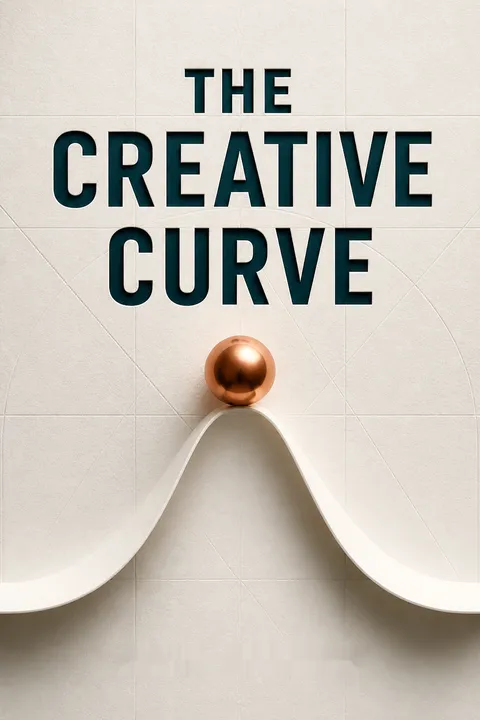


Key Takeaways
Treat inspiration as a starting signal, not a substitute for craft.
A spark is not a song. Paul McCartney woke with a melody that became the basis of “Yesterday,” but he had no finished song. He spent nearly twenty months developing it, first using comic placeholder lyrics, then finding words and an arrangement that matched its melancholy mood. The tune also drew on musical patterns he had absorbed from songs he knew. What looked like a complete gift from a dream was one beginning in a long process.
The genius myth misleads. Mozart, often portrayed as composing perfect first drafts, actually sketched and revised his music. The famous account of his effortless process came from a forged letter. These stories make creative work look like a talent lottery. The book argues instead that insight can arrive suddenly, but preparation and revision build the work that lasts.
What's useful here is the distinction between the arrival of an idea and the creation of a finished work. A sudden insight can be real without being supernatural or sufficient. That distinction also protects creators from a common trap: treating an unproductive day as evidence that inspiration has abandoned them. The account does not imply that effort guarantees a hit. It shows that even celebrated work can require long development, while public stories often compress that labor into a more entertaining origin myth.
Make ideas familiar enough to welcome, but novel enough to notice.
Taste has a rise and fall. The creative curve is the book's model of how familiarity and novelty shape preference. In a music experiment with 108 students, liking increased as participants heard a song clip more often at first, then fell as repeated exposure made the song tiresome. The turning point varied, but the pattern was a rise followed by a decline.
The same tension shapes trends. Fro-yo offered the comfort of ice cream with a tart, supposedly healthier twist. Facebook began with a simple profile-and-friends service, then added features as users grew accustomed to sharing more online. CampusNetwork offered more features early, but asked users to make too many unfamiliar leaps at once. At a group level, a once-fresh idea can become a cliché. Ed Hardy clothing, which sold $700 million in 2009, soon lost its appeal as exposure turned into overexposure.
The curve is a useful design question, not a universal formula for forecasting taste. It directs attention to two distinct risks: novelty can repel people before they understand an idea, while repetition can drain its appeal. That framing helps explain why a product's timing and rollout matter alongside its quality. The caveat is that audiences differ in what feels familiar, and exposure is not the only force shaping preference. A creator should treat the curve as a hypothesis to test, not a law that removes uncertainty.
Practice small skills deliberately; hours alone do not make expertise.
Practice needs a target. Purposeful practice means repeatedly working on a specific skill, with a clear goal and feedback that shows what to improve. The painter Jonathan Hardesty began as a novice, posted his work online, then moved to South Dakota for atelier training. Students there spent thousands of hours on fundamentals, receiving guidance as they advanced from one skill to the next. Hardesty estimates he eventually practiced for more than 25,000 hours.
Repetition can become automatic. The book challenges the popular idea that 10,000 hours alone produces mastery. Many people repeat familiar tasks without improving them. London taxi drivers, who continually navigated new routes, showed changes in the brain area involved in spatial navigation; bus drivers following fixed routes did not show the same pattern. A study described in the book also found that creative potential stopped rising with IQ at about 104, suggesting that unusually high IQ is not a prerequisite for original ideas.
The practical distinction is between time spent and information gained from practice. Feedback makes errors visible, while narrow exercises make improvement manageable. The taxi-driver example also gives the argument a physical dimension: learning is not merely accumulating facts, but adapting to demanding tasks. Still, the 10,000-hour correction should not be misread as a promise that disciplined practice guarantees elite performance. Opportunity, instruction, resources, and the nature of the field all affect how far practice can take someone.
Feed your mind the field before asking it for original answers.
Insights need ingredients. The book's 20 percent principle recommends spending roughly one-fifth of waking hours consuming material from one's creative field. This is meant to build familiarity with the audience's tastes and with what has already been tried, not to replace hands-on skill. As a teenager working in a video store, Ted Sarandos watched nearly every film on its shelves. That accumulated knowledge helped him recommend films and later assess which stories Netflix audiences might embrace.
Aha moments draw on stored material. Researchers in the book's examples found that insight can feel instantaneous even when the mind has been working outside conscious awareness. In a problem-solving study, a subtle swinging motion helped some participants see how to connect two cords, though most did not remember noticing the hint. The book's point is that an idea cannot connect concepts the mind has never encountered. Deliberate consumption supplies those concepts.
Consumption is most valuable when it becomes comparison rather than background noise. A creator who notices patterns, exceptions, and audience reactions builds a more useful mental library than someone who simply logs hours of viewing. The suggested 20 percent is best treated as a heuristic, not a prescription for every schedule or field. The deeper principle is to make learning part of creative work, then give the mind enough material to form connections that are not obvious at first glance.
Borrow proven structures, then spend your originality on the twist.
Imitation can teach structure. The Franklin method, as the book names it, is to study a successful work's underlying organization, recreate it, and compare the result. Benjamin Franklin practiced on essays from The Spectator. He outlined their arguments, rewrote them, and later rearranged his notes to improve the structure. Andrew Ross Sorkin used a similar approach when learning to write for The New York Times, studying earlier articles and building his own stories within their forms.
A template leaves room to invent. Romance readers recognize conventions such as a central relationship, a crisis, and a reassuring resolution. Memes work similarly: people already understand the familiar image or joke format, so the creator can focus on a new caption or turn. These patterns are not proof that every work must follow a formula. They give audiences a foothold, making a fresh element easier to grasp.
Learning a form from strong examples is different from copying a finished work. The first develops judgment about pacing, structure, and audience expectations; the second risks producing an echo. Familiar forms can also help newcomers enter a craft without solving every problem at once. Yet inherited conventions reflect past decisions about whose stories count. The most productive use of a template is therefore not obedience, but informed choice: understand what the structure accomplishes before deciding what to preserve or change.
Build a creative circle that teaches, challenges, sustains, and sponsors you.
Creativity needs different kinds of help. The book calls this network a creative community. Its members can include a master teacher who supplies craft knowledge and feedback, a collaborator who counters the creator's weaknesses, a muse who provides energy or ideas, and a promoter who lends credibility and access. Songwriter Max Martin, for example, taught methods to protégés who went on to write major hits. The duo Pasek and Paul combined different working styles, and used that tension to improve a musical.
Access is part of the equation. Creative relationships can provide instruction, practical support, and introductions to gatekeepers. They are not equally available to everyone. The book notes the underrepresentation of women and people of color in film leadership, despite evidence that their work can rate just as highly. Building a circle matters, but the structures that determine who gets invited into influential circles matter too.
The four roles make a network more concrete than vague advice to collaborate. A useful circle is not simply a collection of admirers; it supplies skills, friction, encouragement, and reach. The emphasis on conflicting perspectives is especially valuable because agreement can feel productive while leaving weak assumptions untouched. At the same time, access cannot be reduced to individual networking effort. The book's own examples show that institutions and social barriers shape who meets mentors and receives endorsement.
Test ideas before expensive polish makes you loyal to a weak bet.
Refine in stages. Ben & Jerry's develops flavors through a process the book describes as conceptualization, reduction, curation, and feedback. The team begins with many plausible ideas, then surveys customers about how likely they are to buy each flavor and how unusual it seems. From roughly 200 flavor profiles, it narrows the list to about fifteen for small-batch tasting. The tastings add qualitative judgment that a survey cannot provide.
Reality can overturn a favorite. A popcorn ice cream tasted promising in the lab, but customers complained that the popcorn became soggy by the time the product reached them. Film studios use a similar principle: test audiences disliked the original ending of Fatal Attraction, and the studio reshot it. Testing does not eliminate risk, but it can reveal a mismatch between a creator's intentions and the audience's actual experience before more investment accumulates.
Early testing can reduce avoidable waste because it separates an idea's appeal on paper from its performance in use. The strongest process combines numbers, which can compare many options, with conversation, which can reveal why people respond as they do. There is also a real tension: audiences are better at reporting their present reactions than at imagining every future possibility. Testing should inform creative judgment, not transfer final authority to a sample group or a metric.
Treat creative reputation as a social achievement, not a private verdict.
Recognition depends on a system. Psychologist Mihaly Csikszentmihalyi's account, presented in the book, links creativity to three elements: a domain of existing knowledge and conventions, a field of people who judge and select work, and an individual who makes something new. A skilled creator can produce original work without receiving recognition if it never reaches those who can evaluate or distribute it.
History rewards visibility as well as discovery. Charles Darwin and Alfred Wallace independently developed ideas about natural selection, yet Darwin became the dominant public name. He published first and had stronger standing in the scientific world; Wallace returned from exploration later and pursued other causes. Their story shows that the label “genius” is not a neutral measurement of originality. It is also shaped by timing, institutions, resources, and public recognition.
This account usefully separates the making of something new from its acceptance as creative. That distinction clarifies why distribution, reputation, and institutional access are part of a creator's environment rather than mere afterthoughts. It also invites a necessary caution: public recognition can identify work that resonates, but it cannot serve as a complete measure of merit. Social acceptance explains how reputations form; it does not establish that the most celebrated work is always the most valuable or original.
Plan distribution and support as carefully as the work itself.
A strong manuscript still needs a path. J. K. Rowling's train-journey idea for Harry Potter became a seven-book plan, not an instant finished series. She spent years developing the plots, revised the first chapter many times, and used detailed charts to track characters and subplots. The work was supported by family and a therapist during a difficult period, as well as by an agent who helped take the manuscript to publishers.
Persistence met advocacy. Twelve British publishers rejected the first book before Bloomsbury editor Barry Cunningham agreed to publish it. Rowling's agent limited the initial deal, believing the book could find a larger market. The eventual success depended on the writing, but also on planning, support, an advocate, and a publisher able to reach readers. The public story of inspiration leaves out much of this infrastructure.
The closing lesson is not that every creator needs a literary agent or a publisher, but that creative work must travel through some route to an audience. A project can be carefully made and still remain unseen without the right support or means of distribution. The story also resists a simplistic meritocracy: persistence mattered, yet so did a responsive editor and access to a publishing network. Creative ambition is personal, but its realization depends on relationships and institutions.
Analysis
The book's central contribution is to replace the image of creativity as a private miracle with a process shaped by learning, audience response, social support, and timing. Its most memorable model, the creative curve, explains why extreme novelty can be hard to enter and familiar work can become stale. The idea is useful because it links psychology to concrete decisions: how much to change, when to introduce a feature, and when to stop repeating a successful formula.
The strongest examples make creativity visible as labor. “Yesterday” took years to finish, Jonathan Hardesty trained through focused exercises, and Rowling planned and revised a world that readers came to experience as effortless. The book also expands the creator beyond the solitary artist, showing how teachers, peers, promoters, and distribution systems influence what gets made and recognized. That wider lens matters because it makes both opportunity and exclusion part of the creative story.
The argument is persuasive as a practical guide, but it has limits. The examples often begin with people who succeeded, which can make their habits look more predictive than they are. Many diligent creators do not become famous, and familiarity plus novelty cannot guarantee a hit. Experiments on exposure, preference, or neural response offer useful clues, but they do not reduce a complex cultural market to a reliable formula. The book also moves between artistic creativity and commercial popularity, outcomes that overlap but are not identical.
The fairest reading is therefore neither “follow the recipe and win” nor “creativity is unknowable.” The practices described increase the chances of making work that is skilled, legible, and responsive: study the field, learn its forms, seek honest feedback, build a useful network, and test assumptions. They cannot promise recognition, because audiences and institutions remain unpredictable. Their value is that they replace passive waiting with repeatable ways to prepare, make, revise, and connect.
Review Summary
The Creative Curve receives mostly positive reviews, with readers praising its insights into the creative process and debunking of creativity myths. Many appreciate the practical advice, real-world examples, and scientific approach to understanding creativity. Some criticize the book for being repetitive or overly focused on commercial success. Readers found the discussions on the balance between familiarity and novelty, as well as the importance of consumption, imitation, and iteration particularly valuable. Overall, the book is seen as inspiring and informative for those interested in developing their creative potential.
People Also Read





Glossary
creative curve
Preference across repeated exposureThe book's model of how familiarity and novelty jointly shape liking. As people encounter an idea, product, or work repeatedly, preference may rise at first, then fall when the experience becomes overfamiliar. The curve is based on exposure, not simply time, and can describe both an individual's changing taste and the broader rise and decline of a trend.
laws of the creative curve
Four repeatable creative practicesThe author's framework for improving the odds that an idea will resonate. It groups four practices: consuming material in one's field, learning from established creative forms, building a supportive and challenging network, and refining work through testing and feedback. Together, the practices aim to help creators combine audience familiarity with enough novelty to hold attention.
20 percent principle
Field immersion through consumptionThe author's recommendation that creators spend about one-fifth of their waking hours consuming material from their field. The purpose is to build cultural awareness: a grounded sense of what audiences already know, value, or find tired. The principle supports idea recognition and inspiration, but does not substitute for the hands-on practice needed to execute an idea.
Franklin method
Reconstruct successful creative formsA learning technique in which a creator studies a successful work's structure, recreates it, and compares the result with the model. Benjamin Franklin used this approach to improve his writing by outlining and rewriting essays from The Spectator. The method is meant to teach craft conventions and give later original work a familiar structure.
creative community
A network supporting creative workThe group of people who directly or indirectly help a creator develop and share work. The book identifies four functions within such a network: teaching craft, challenging weaknesses through collaboration, providing inspiration and motivation, and lending credibility or access. One person or group may fill more than one function, but no single relationship necessarily supplies everything.
purposeful practice
Goal-focused practice with feedbackA form of training centered on a specific skill, a clear improvement goal, and feedback that identifies what to change. As one element becomes more reliable, the learner works on a harder one. It differs from simply accumulating hours or repeating familiar tasks, which may reinforce existing habits without producing further improvement.
point of cliché
The overexposure turning pointThe stage at which an idea, product, or style has become so familiar that additional exposure reduces interest rather than increasing it. In the book's model, novelty has worn down and an audience begins to find the trend overused. Creators can reduce this risk by changing direction or limiting how widely and often an idea appears.
mere exposure effect
Familiarity reducing initial aversionA psychological effect associated with Robert Zajonc's research: repeated exposure to an unfamiliar stimulus can make people evaluate it more positively. The book connects this effect to reduced apprehension toward the unfamiliar, while distinguishing it from unlimited liking. With close attention and enough repetition, familiarity can give way to boredom, as described by the creative curve.
inspiration theory of creativity
Creativity as sudden innate insightThe belief, criticized in the book, that creative success comes primarily from mysterious flashes of insight available to a rare, naturally gifted individual. This account tends to minimize preparation, revision, learning, collaboration, and audience response. The author argues that sudden ideas do occur, but they emerge from ordinary cognitive processes and do not replace the work required to develop them.
FAQ
What's The Creative Curve about?
- Understanding Creativity: The Creative Curve by Allen Gannett explores the science behind creativity, challenging the myth that it is solely the result of innate talent or sudden inspiration.
- Creative Curve Concept: The book introduces the "creative curve," which shows how familiarity and novelty interact to influence preferences for ideas, products, and art.
- Four Laws of Creativity: Gannett outlines four laws—consumption, imitation, creative communities, and iterations—that successful creators follow to maximize their chances of producing hits.
- Real-World Examples: The book includes anecdotes from various creators, illustrating how they navigated their creative journeys and emphasizing that creativity can be learned and mastered.
Why should I read The Creative Curve?
- Practical Insights: The book offers actionable insights for enhancing creative abilities in business, art, or personal projects, providing a roadmap for developing creativity as a skill.
- Debunking Myths: It challenges the myth of the "lone genius" and highlights the importance of collaboration and community in the creative process.
- Research-Backed: Gannett draws on interviews with successful creators and research from psychology and neuroscience, making the content credible and relatable.
- Empowering Message: The book empowers readers by showing that creativity is accessible to everyone, not just the so-called "geniuses."
What are the key takeaways of The Creative Curve?
- Creativity is Learnable: Creativity is not an innate trait but a skill that can be developed through practice and understanding.
- Balance Familiarity and Novelty: The creative curve illustrates the importance of balancing familiar elements with novel ideas to achieve mainstream success.
- Engage with the Four Laws: The four laws—consumption, imitation, creative communities, and iterations—serve as a framework for enhancing creativity.
- Community Matters: Building a creative community is vital for success, providing opportunities for learning and feedback.
What are the four laws of creativity in The Creative Curve?
- Law of Consumption: To create successful ideas, one must consume a wide range of content in their field to identify trends and gaps in the market.
- Law of Imitation: Imitation is crucial in the creative process, allowing creators to build upon existing ideas and refine them into something new and valuable.
- Law of Creative Communities: Collaboration and feedback within creative communities enhance the creative process by providing valuable insights and support.
- Law of Iterations: Refining and iterating on ideas is necessary, as successful creators often go through multiple versions of their work to improve.
How does the creative curve work according to The Creative Curve?
- Bell-Shaped Relationship: The creative curve is represented as a bell-shaped graph, where initial exposure to an idea increases preference, peaking before declining.
- Familiarity vs. Novelty: People are drawn to ideas that are both familiar and novel, and creators must find the sweet spot where their ideas resonate while offering something new.
- Cultural Trends: The curve applies to cultural trends, where ideas gain popularity, peak, and eventually fade, helping creators time their ideas for maximum impact.
What is the inspiration theory of creativity in The Creative Curve?
- Myth of Sudden Insight: The inspiration theory posits that creativity is a mystical process characterized by sudden flashes of insight, which Gannett argues is misleading.
- Individual Genius: This theory emphasizes individual genius, suggesting only a select few possess the innate talent to create, which Gannett counters by showing creativity can be cultivated.
- Cultural Narratives: The inspiration theory is reinforced by cultural narratives celebrating individual artists and their "light-bulb" moments, which Gannett seeks to dismantle.
What role does consumption play in creativity according to The Creative Curve?
- Building Knowledge: Consumption allows creators to build a knowledge base about their field, helping them identify trends and successful ideas.
- Developing Exemplars: Through consumption, creators can develop exemplars—specific examples of successful ideas that serve as benchmarks.
- 20 Percent Principle: Gannett suggests spending 20 percent of one's waking hours consuming relevant material to enhance creative instincts.
How does Allen Gannett define "aha moments" in The Creative Curve?
- Biological Basis of Insights: "Aha moments" are flashes of insight rooted in biological processes, often more accurate than those derived from logical analysis.
- Subconscious Processing: These moments occur when the brain's right hemisphere processes information subconsciously, leading to sudden realizations.
- Enhancing Aha Moments: While they can feel spontaneous, these moments can be cultivated through practice and exposure to relevant knowledge.
What role does community play in the creative process according to The Creative Curve?
- Essential for Success: Creativity thrives in community settings, with four key roles supporting individual creators: a master teacher, a conflicting collaborator, a modern muse, and a prominent promoter.
- Learning and Feedback: Communities provide opportunities for learning and feedback, crucial for refining ideas and skills.
- Diverse Perspectives: Engaging with a diverse group fosters innovation and helps creators overcome challenges.
What is the Franklin Method mentioned in The Creative Curve?
- Imitation as a Learning Tool: The Franklin Method involves studying and imitating successful works to understand their underlying structures.
- Building a Framework: By recreating admired works, creators can develop their unique voice while adhering to proven formulas.
- Practical Application: Successful individuals, like Andrew Ross Sorkin, have used this method to enhance their skills, underscoring the importance of learning from established creators.
How does The Creative Curve address the concept of iteration in the creative process?
- Importance of Feedback: Iteration allows creators to refine ideas based on audience feedback, improving both the process and the results.
- Four Steps of Iteration: The book outlines a four-step process: conceptualization, reduction, curation, and feedback, helping creators systematically develop ideas.
- Real-World Examples: Examples from industries like ice cream flavor development and movie production illustrate how iteration leads to successful outcomes.
What are the best quotes from The Creative Curve and what do they mean?
- “You can’t have insights about things you don’t know anything about.”: Emphasizes the importance of consuming knowledge and experiences to foster creativity.
- “Constraints free up creators to focus on the novelty portion of the creative curve.”: Highlights that limitations can enhance creativity by providing a framework for innovation.
- “The goal of any creative process isn’t just to create great results but also to improve the process itself.”: Emphasizes the importance of iteration and feedback in the creative journey.
Download PDF
Download EPUB
.epub digital book format is ideal for reading ebooks on phones, tablets, and e-readers.








