


Key Takeaways
Retire when competing costs more than it gives back
Pain had become the job. Bird's back condition caused relentless pain, sometimes making it difficult to stand, sit, or lift his young son. In his final season with Boston, he missed 37 games and wore a rigid brace that ran from his chest to his hips. He says he should have stopped after his first back surgery in 1991, when the pain quickly returned and his spine remained unstable.
The ending was his choice. Bird stayed through the season partly because he believed he owed it to the fans and teammates, and still hoped Boston might contend. He retired in 1992, then played through pain in Barcelona for the Dream Team, winning Olympic gold. The medal mattered, but retirement brought relief from a life organized around injury.
What's striking is how easily commitment can disguise a shrinking life. Bird's loyalty to teammates and fans was real, but it also made stopping feel like a betrayal. That tension appears in many demanding professions: people keep going because others depend on them, even when the cost is becoming unsustainable. His story does not make perseverance foolish. It asks a sharper question: what is the work taking away, and is the sacrifice still freely chosen? A person who can no longer recover, practice, or be present at home may need to redefine courage as leaving.
Make conditioning a team system, not a player's private virtue
Preparation showed up late. Before his first Pacers season, Bird and assistant Rick Carlisle reviewed the team's previous year. Indiana had led going into the fourth quarter in 48 games, yet finished those games losing by an average of eight points. Bird saw a team that started well but could not sustain its effort. He made conditioning a central part of camp, with demanding running and defensive drills.
The results changed expectations. The Pacers had won 39 games the year before Bird arrived. They won 58 in his first season, their best NBA-era total at the time, and reached the Eastern Conference Finals. Bird credited the players' work and their improved fitness. He did not treat conditioning as a slogan: the staff studied game patterns, trained the whole roster, and expected reserves to be ready when called.
The valuable move is converting a vague complaint into a pattern the team can inspect. A late-game collapse may look like a character flaw until the numbers reveal a repeatable performance problem. That shift makes improvement more practical and less accusatory. Still, a before-and-after record does not prove conditioning alone produced the change. Personnel, coaching, and chance matter too. Bird's stronger lesson is methodological: measure where performance breaks down, choose a plausible intervention, and judge it by what happens under pressure.
Give the unglamorous role a place in the team's win
Practice has its own scoreboard. Bird points to Greg Kite, a Boston reserve who rarely played but competed hard every day. A newspaper critic dismissed Kite as an unworthy twelfth man. Bird saw a smart, dependable practice player who helped prepare the team by pushing the starters. Practice was especially valuable for players who did not get many minutes in games.
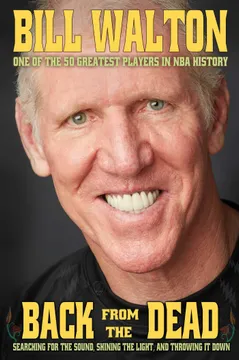
Status need not dictate contribution. On the 1986 Celtics, All-Star center Robert Parish accepted that Bill Walton sometimes played in the fourth quarter instead of him. Walton's skill helped the team, and Parish did not make playing time a personal grievance. Bird believed that mutual respect mattered more than outside praise. A team needs visible stars, but it also needs people who make the stars' work harder and the group's preparation more realistic.
This is a useful correction to the habit of judging contribution only by public metrics. In a team, some work is valuable because it raises another person's standard, reduces uncertainty, or makes a substitute ready. Those contributions can disappear from box scores and performance reviews alike. The limitation is that praising selflessness can become a way to excuse unfair treatment. A strong team should recognize less visible work explicitly, rather than asking people to accept obscurity as proof of loyalty.
Ask for advice only when you are willing to give it weight
Input needs authority. After retiring, Bird joined the Celtics front office and often advised owner Paul Gaston and general manager M. L. Carr. He named point guard Sherman Douglas the team's most valuable player, then watched Boston sign Dana Barros and trade Douglas. Bird believed the decisions reflected marketing and money as much as basketball. He also grew frustrated by a decision process where many people weighed in but responsibility was unclear.
Trust means defined roles. In Indiana, he gave assistants Rick Carlisle and Dick Harter genuine responsibility. Carlisle designed plays and studied the offense; Harter focused on defense; Bird made final game decisions. They could disagree, then review those disagreements afterward. The contrast is not between one boss and a committee. It is between clear decision rights and consultation that gives advice no practical effect.
Organizations often confuse access with influence. Asking for a veteran's view can look collaborative while quietly withholding any power to shape the outcome. Bird's front-office frustration exposes that gap, while his coaching staff offers a more functional model: expertise is distributed, responsibilities are visible, and the final decision-maker is identifiable. The model still depends on trust and competence. Delegation fails if authority is symbolic, but central control fails when a leader refuses to use knowledge held by others.
Set a few standards, then enforce them without favorites
Punctuality became a rule. Bird told the Pacers that lateness would bring a $1,000 fine, with a suspension after a third offense in one month. He applied the rule regardless of a player's status. When Travis Best and Dale Davis arrived late for a flight, Bird told the pilot to leave. They had to find another route to the game, and Best served a suspension after accumulating three violations.
Consistency made the standard credible. Bird thought lateness was disruptive and disrespectful, so he did not treat it as a small personal quirk. He also made the standard visible before enforcing it, giving players a clear idea of what would happen. His broader approach was direct rather than theatrical: explain what the job requires, then address failures specifically. The point was not to punish for its own sake, but to make team expectations predictable.
A rule earns legitimacy when people can anticipate it and see it applied evenly. Predictability reduces the suspicion that discipline is really a coach's mood or a star's privilege. But consistency is not the same as rigidity. A fair system needs room to distinguish a preventable choice from illness, emergency, or circumstances outside someone's control. Bird's example is most useful as a reminder to make expectations explicit and consequences proportionate, not as a case for treating every lateness as identical.
Let film sharpen judgment without strangling players' instincts
Evidence made coaching concrete. Carlisle charted possessions, while Harter tracked defensive patterns. The staff could show players that an opponent hit 28 percent of shots when turned toward the baseline, compared with 35 percent when directed toward the middle. Bird also used video to assemble examples of a player missing a defensive assignment, making feedback harder to dismiss as a vague impression.
The numbers were not the whole game. Bird warned against drawing conclusions from too few possessions or from an unusual hot or cold night. He also told point guard Mark Jackson to run a play he believed in, even if coaches were calling something else. And Bird wanted open shots taken, even after several misses. Analysis was there to improve decisions, not remove a player's ability to read a moment.
The section captures a productive relationship between measurement and agency. Video turns memory into something observable, while tracking can reveal tendencies that intuition misses. Yet a percentage is only useful when its sample and situation are understood; a player's judgment may incorporate factors the chart cannot see. Bird's approach avoids two familiar traps: treating data as unquestionable, and treating experience as beyond examination. The staff gathers evidence, explains it, and leaves room for the player to act on information that is not fully captured.
Do not turn your pain threshold into a rule for everyone
Grit has unequal costs. Bird played through serious back problems and believed some players might feel better after moving through a minor injury. But he also recalls his longtime therapist Dan Dyrek warning him that his tolerance for pain was unusually high. Bird eventually accepted that a coach cannot assume everyone can, or should, endure what he endured.
Honesty beats heroic guessing. His standard for players was to tell him before a game if they could not play, rather than hide the problem and let teammates discover it on the court. That distinction matters: he wanted effort, but he also needed accurate information to make decisions. In his own career, pain sometimes kept him from practicing, and his skills suffered. Endurance had limits, even for someone famous for competing through injury.
A leader's personal example can inspire, but it can also distort what seems normal. When a star survives extraordinary strain, others may interpret a different limit as weak character. Bird's account is valuable because he distinguishes willingness from capacity and treats honest disclosure as part of team responsibility. The remaining tension is that athletes often face incentives to conceal pain, especially when selection and status are at stake. A culture of candor requires more than permission to speak; it requires confidence that speaking will not quietly cost someone their place.
Treat a superstar's aura as an opponent, then challenge it
Reputation changed the Pacers' behavior. Bird noticed his players hesitating against Michael Jordan, turning down shots as though Chicago could not be beaten. He believed Jordan's psychological pressure mattered alongside his talent and the strength of Scottie Pippen. Bird challenged his team to stop treating Jordan as untouchable and to compete physically rather than waiting for permission to believe.
Belief helped, but did not guarantee victory. In the 1998 Eastern Conference Finals, Indiana tied the series with Chicago at two games apiece after Reggie Miller's late shot in Game 4. The Pacers forced a seventh game, then lost after a decisive sequence involving a missed jump ball and a Chicago three-pointer. Bird called the jump-ball setup his mistake. Confidence could change the contest, but it could not replace positioning, rebounding, and execution.
A reputation is not merely a story told about a competitor. It can alter what the opposition attempts, which makes the story part of the contest. Bird tries to break that effect by naming it and asking players to act rather than defer. That is a potent leadership move, but it can become counterproductive if confidence turns into bravado. His account preserves the distinction: challenging Jordan's aura made the series competitive, while a specific tactical error still mattered at the end.
Put boundaries around fame before it takes your ordinary life
Attention can become confinement. Bird disliked being surrounded by crowds and sometimes waited after Celtics games until fans had left. During the Barcelona Olympics, he discovered a side exit and used it to take the subway to watch the United States baseball team, enjoying an ordinary day among strangers who treated him kindly. He valued privacy not because he rejected fans, but because constant recognition made simple movement difficult.
Boundaries can be practical. After a McDonald's commercial took fourteen hours, Bird set a four-hour limit for future shoots. He also declined work that felt wrong to him, including an ad that would have required him to dress as a ballerina. These choices protected his time and sense of self. He understood that a public career brings obligations, but did not believe every request deserved access to his life.
Celebrity is often described as a reward, but Bird shows its less glamorous cost: ordinary activities become negotiated events. His side-door escape is funny, yet it points to a serious loss of autonomy. The useful principle is not that public figures owe nothing to audiences. It is that access should have limits, or the person behind the public image can disappear from their own schedule. The same logic applies outside fame: boundaries preserve attention for family, rest, and commitments that cannot be outsourced.
Negotiate from your value, then save enough to keep choices
Bird took responsibility for the deal. After winning the 1984 championship and MVP award, he told Boston he wanted a salary equal to Moses Malone's $1.8 million. He argued the number himself, even when his attorney favored asking for more. Bird wanted what he considered fair, and he did not want to let the negotiation drag on indefinitely. His contract helped produce the salary-cap exception later known by his name, a rule that let teams exceed the cap to retain their own free agents.
Money meant future options. Bird grew up in a family that sometimes ran short of food and never assumed wealth would last. He and Dinah avoided extravagant spending and saved rather than treating a playing career as permanent income. He had seen former teammates ask him for financial help after spending heavily. His advice was blunt: a short career should not be mistaken for a lifelong paycheck.
Bird links compensation to agency. Negotiating directly can clarify what a person values, while saving can reduce dependence on future employers or luck. His account also captures a structural effect: an individual contract can alter rules that shape opportunities for others. Still, his personal discipline should not be mistaken for a universal financial plan. Athletes face different contracts, risks, and family obligations. The transferable insight is simpler: understand the terms of your labor, and preserve enough resources to make choices after the income changes.
A playoff collapse is a chain of missed chances, not one bad call
The 1999 Pacers had warning signs. Indiana lost six regular-season games by one point and often relaxed after building a lead. Against the Knicks in the Eastern Conference Finals, a disputed late foul call helped New York win Game 3 on a four-point play. The Pacers recovered to win Game 4, then played poorly in Game 5. In the deciding Game 6, they committed 26 turnovers and could not produce enough offense.
Bird did not let the call explain everything. New York had injuries, including Patrick Ewing's absence, but Indiana failed to exploit its advantages. Reggie Miller struggled, Rik Smits had difficulty, and the team repeatedly waited for someone else to make the decisive play. Bird believed the Pacers should have won, but accepted that protecting leads and executing consistently were their responsibility. They lost the series in six games, and the opportunity did not return on command.
The account resists the comforting story that one whistle decided a season. A disputed call can shift momentum, but a series offers many chances to recover, and the Pacers had trouble doing so. Bird's self-criticism is useful because it redirects attention from what cannot be controlled to preparation and execution. At the same time, retrospective diagnosis is vulnerable to hindsight: after a loss, every missed shot and substitution looks newly significant. The durable lesson is to review a failure as a sequence, not a single villain or a single excuse.
Analysis
The book's central subject is translation: how the instincts of an elite player become the habits of a coach. Bird does not present a polished management system. He shows a working method assembled from remembered coaches, injury, film, practice, and a strong preference for plain dealing. The method is concrete: condition the roster, prepare reserves, set a few nonnegotiable standards, study opponents, and let assistants own the areas where they are strongest. Its emotional center is not the trophy cabinet but the team as a place where effort and trust become visible.
That makes the memoir unusually revealing about the gap between public legend and private experience. Bird's reputation rests on toughness, yet his back pain ended his playing life and impaired his ability to practice. He is also frank about how fame constricted daily life, how a front office can solicit advice without respecting it, and how a coach can misread a decisive moment. The 1998 jump-ball mistake and 1999 loss to New York prevent the story from becoming a simple success narrative. His authority comes partly from showing what he could not control and what he believes he got wrong.
The book also contains a productive contradiction. Bird argues that players should compete through discomfort, but his therapist reminds him that his pain tolerance is not a fair standard for others. That tension reflects a broader leadership problem: exemplary sacrifice can inspire a group while also normalizing unsafe expectations. Bird's best coaching instinct is his willingness to adjust his demands to the actual person, as when he accounts for a player's physical limits or gives an assistant real responsibility. His least reliable judgments appear when personal preference becomes a rule for everyone, as with the toughness he expects from injured players or the physical intimidation he associates with winning.
Ultimately, Bird's strongest claim is not that talent or motivation wins alone. A team's capacity is built through repeated, unglamorous acts: practice, honest roles, sound preparation, and shared accountability. The same discipline that makes a team harder to beat also makes failure easier to examine without pretending it was inevitable.
Review Summary
Bird Watching receives generally positive reviews, with readers praising Larry Bird's insights into basketball and his personal life. Many appreciate his honesty and determination, both as a player and coach. The book offers a unique perspective on Bird's career transition and coaching experiences. Some readers found the focus on his post-playing career disappointing, wanting more details about his time as a player. Overall, fans of basketball and Larry Bird enjoy the book for its candid look into the mind of a basketball legend.
People Also Read




Glossary
Larry Bird exception
salary-cap retention exceptionA salary-cap exception associated with Bird's contract that lets a team exceed the salary cap to retain its own qualifying free agent. Bird says he did not anticipate how much the rule would affect league finances. The term links his personal negotiation to a broader change in how NBA teams could keep players.
Dream Team
1992 Olympic basketball teamThe nickname for the United States men's basketball team at the 1992 Barcelona Olympics, which included NBA stars such as Bird, Magic Johnson, Michael Jordan, Patrick Ewing, and Charles Barkley. The team marked the arrival of professional players in Olympic basketball and won the gold medal. Bird played despite severe back pain.
The Fraternity
Bird's label for coach networksBird's term for the circle of NBA coaches who socialize, exchange jobs, and support one another professionally. He sees himself as outside that network because he does not enjoy coach-to-coach schmoozing and entered the profession without the usual coaching path. It is his characterization, not a formal league organization.
FAQ
What’s "Bird Watching: On Playing and Coaching the Game I Love" by Larry Bird about?
- Larry Bird’s journey: The book traces Bird’s life from his humble beginnings in French Lick, Indiana, through his legendary NBA career with the Boston Celtics, and into his coaching tenure with the Indiana Pacers.
- Dual perspective: Bird offers insights from both his playing and coaching days, sharing behind-the-scenes stories, personal reflections, and his evolving basketball philosophy.
- Themes of competition and humanity: The narrative highlights Bird’s competitive drive, straightforward personality, and the challenges he faced both on and off the court.
Why should I read "Bird Watching: On Playing and Coaching the Game I Love" by Larry Bird?
- Unique insider perspective: Bird provides a rare look at the NBA from both a superstar player’s and a head coach’s viewpoint, making it valuable for fans, athletes, and coaches.
- Inspirational life lessons: The book is filled with stories of perseverance, discipline, and overcoming adversity, offering motivation for readers in any field.
- Accessible basketball wisdom: Bird’s candid storytelling and practical advice make complex basketball strategies and leadership lessons easy to understand and apply.
What are the key takeaways from "Bird Watching: On Playing and Coaching the Game I Love" by Larry Bird?
- Importance of fundamentals: Bird emphasizes mastering basic skills, conditioning, and discipline as the foundation for success in basketball and life.
- Team-first mentality: He stresses the value of unselfish play, clear roles, and strong team chemistry, both as a player and a coach.
- Leadership and humility: Bird’s approach centers on honest communication, humility, and empowering others, whether managing NBA stars or supporting his family.
What is Larry Bird’s coaching philosophy in "Bird Watching: On Playing and Coaching the Game I Love"?
- Emphasis on conditioning: Bird believes top physical fitness is essential for winning and injury prevention, and he holds his teams to high standards.
- Simplicity and fundamentals: He focuses on basic principles—solid offense, defense, and rebounding—rather than overcomplicating the game.
- Team empowerment: Bird encourages players to take ownership, trusts their instincts, and gives assistants significant authority, prioritizing team success over personal recognition.
What are the key coaching methods and advice Larry Bird shares in "Bird Watching: On Playing and Coaching the Game I Love"?
- Strict discipline: Bird enforces punctuality, effort, and accountability, using fines and suspensions to maintain professionalism.
- Repetition and practice: He stresses the importance of shooting practice, conditioning, and mastering basics like the bounce pass and boxing out.
- Player motivation: Bird uses straightforward communication, avoids mind games, and tailors his approach to each player’s needs and personality.
How does Larry Bird describe the transition from player to coach in "Bird Watching: On Playing and Coaching the Game I Love"?
- Desire for challenge: After retirement and recovery from injuries, Bird missed competition and sought a meaningful new role, leading him to coaching.
- Learning curve: He admits to making mistakes and learning on the job, highlighting the broader responsibilities and pressures of coaching compared to playing.
- Preparation and planning: Bird conducted background checks, built a trusted staff, and developed a coaching style focused on discipline, simplicity, and team unity.
What challenges and lessons does Larry Bird discuss regarding his retirement and health in "Bird Watching: On Playing and Coaching the Game I Love"?
- Chronic back pain: Bird details his decade-long struggle with back problems, which ultimately forced his retirement from playing.
- Mental and emotional toll: The constant pain affected his mood and quality of life, making retirement both a difficult and relieving decision.
- Managing health as a coach: Bird openly discusses his heart condition (atrial fibrillation), how he managed it with medication and lifestyle changes, and his efforts to keep it private to avoid distractions.
How does Larry Bird approach player motivation and team management in "Bird Watching: On Playing and Coaching the Game I Love"?
- Direct communication: Bird tells players exactly what he expects, building trust and respect through honesty rather than manipulation.
- Sensitivity to needs: He adjusts practice intensity and offers support based on players’ physical and emotional states, avoiding harsh criticism.
- Balancing roles: Bird strives to give all players meaningful minutes, keeping the team engaged and motivated regardless of seniority.
What insights does Larry Bird provide about his relationships with Magic Johnson and Michael Jordan in "Bird Watching: On Playing and Coaching the Game I Love"?
- Respectful rivalry with Magic: Bird and Magic Johnson shared a competitive but respectful relationship, often compared to iconic sports rivalries.
- Observations on Michael Jordan: Bird recognizes Jordan’s mental toughness, scoring ability, and intimidating presence, calling him possibly the greatest player ever.
- Contrasting personalities: Bird reflects on the differences between his reserved nature, Magic’s charisma, and Jordan’s celebrity, appreciating their unique impacts on basketball.
What does Larry Bird reveal about the Indiana Pacers’ team dynamics and personalities in "Bird Watching: On Playing and Coaching the Game I Love"?
- Diverse player traits: Bird describes the unique contributions of players like Reggie Miller, Dale Davis, and Mark Jackson, managing their personalities with tailored approaches.
- Leadership and chemistry: He emphasizes the importance of earned respect, strong leadership, and fostering a family-like atmosphere within the team.
- Supporting off-court relationships: Bird encourages players to involve their families and supports team bonding as key to on-court success.
How does Larry Bird reflect on the 1999 playoffs and the Pacers’ challenges in "Bird Watching: On Playing and Coaching the Game I Love"?
- High expectations: Bird believed the Pacers had a strong chance to win the championship but faced issues with consistency, injuries, and key players’ slumps.
- Critical moments: He identifies missed opportunities and controversial calls, particularly in the series against the New York Knicks, as turning points.
- Looking ahead: Bird discusses the need for roster changes and the realities of NBA business, while reaffirming his commitment to coaching.
What are the best quotes from "Bird Watching: On Playing and Coaching the Game I Love" by Larry Bird and what do they mean?
- On competition: Pat Riley recalls, “Bird looked directly at me. He didn’t say a word. The expression on his face showed exactly what he was thinking,” illustrating Bird’s intense competitive spirit.
- On coaching assistants: Bird said, “If you think it will hurt you, by people asking, ‘Why is Rick drawing all the plays,’ guess what? I don’t care. My main goal is to get this team to win,” showing his humility and team-first approach.
- On leadership: Bird told his team, “This is your team. I don’t want the attention, and I don’t need the attention, so let’s get that straight,” reflecting his belief in empowering players and avoiding the spotlight.
Download PDF
Download EPUB
.epub digital book format is ideal for reading ebooks on phones, tablets, and e-readers.








