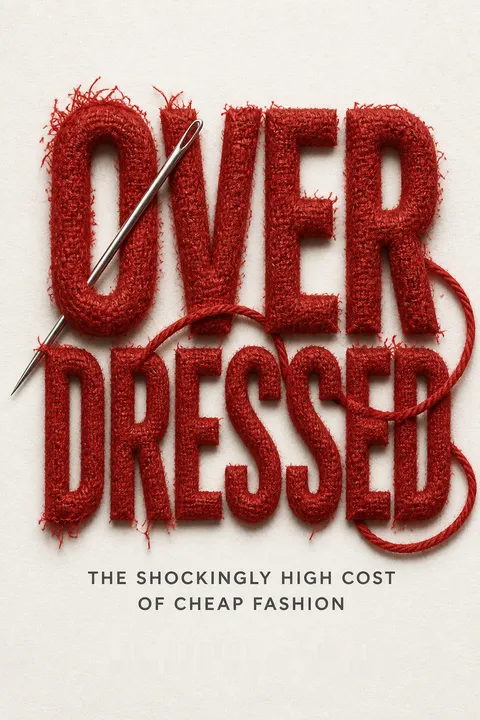


Key Takeaways
Treat clothing as a resource, not a bargain that disappears after checkout
A closet reveals the cost. Cline opens with seven pairs of $7 canvas shoes. Their soles soon separated, the trend moved on, and two pairs remained unworn. The purchase felt trivial because each pair was cheap. Her later inventory counted 354 garments, roughly the amount the average American bought in a little over five years. The point is not that every large wardrobe is wasteful. It is that low prices make accumulation feel harmless, even when the closet is already full.
Cheapness changes expectations. Clothing once took a larger share of household income and was commonly mended, altered, and worn for years. By 2009, Americans spent less than 3 percent of household budgets on apparel. Falling prices made fashion accessible, but also helped turn clothing from a valued possession into an easy, disposable purchase.
What's striking is how the shoe story makes an economic abstraction physical: a low price can hide a high cost in waste, space, and attention. Behavioral economics describes a related effect: small, frequent purchases often escape the scrutiny applied to one expensive decision. The 354-piece closet gives that accumulation a visible scale. Still, buying inexpensive clothing is not inherently careless, especially for people with limited budgets. The more useful distinction is between low price and low use. A cheap garment worn for years can be a better purchase than an expensive one that sits untouched.
Question prices that make a new outfit feel cheaper than keeping one
The price floor fell. The book traces how chain stores, discount retailers, and department-store markdowns trained shoppers to treat the lowest price as the fair price. Stores increasingly designed and sold their own labels, bypassing manufacturers and competing through volume. Gap helped make frequent shopping feel normal by refreshing familiar basics in new colors. Then chains such as Old Navy and Target sold fashionable-looking clothes at lower prices, while department stores answered competition with constant sales that taught customers to wait for discounts.
The middle disappeared. Independent manufacturers and regional department stores lost ground as huge retailers consolidated purchasing power. The author describes a market increasingly split between ultracheap garments and luxury goods, with fewer accessible options that combine decent construction, distinctive design, and moderate prices. The cheap item is not merely a cheaper alternative; its price can make a better-made garment seem like a rip-off.
This account connects retail strategy to a familiar market failure: consumers see the sticker price, but rarely the costs shifted onto workers, communities, or the environment. Once a low price becomes the reference point, a more responsible product must justify itself against an artificially cheap benchmark. The history also cautions against nostalgia. Earlier department stores were not universally fair or accessible, and high prices did not guarantee quality. The sharper lesson is to ask what a price includes, and what it leaves out, rather than treating either cheapness or prestige as proof of value.
Follow the price tag to the workers and factories behind it
Labor is a major cost. Clothing is assembled by people using sewing machines, not produced by fully automated systems. Cline reports that labor accounted for about 20 to 40 percent of garment production costs, while wages varied enormously by country. In the period covered, a Bangladeshi garment worker's monthly legal minimum was about $43, compared with roughly $147 in China's coastal provinces. A New York factory quoted $30 to make a simple skirt before fabric, while overseas factories offered it for under $5.
The domestic trade contracted. The United States made about half the clothing it consumed in 1990, but only 2 percent by the book's publication. The shift eliminated hundreds of thousands of apparel jobs and weakened the network of factories, textile mills, and skilled trades. Cheaper imports benefited shoppers, but the price advantage depended heavily on much lower wages and the loss of local manufacturing capacity.
The garment supply chain illustrates how competition can make a morally troubling outcome appear economically inevitable. When buyers can move orders across borders, factories and workers have little bargaining power, while consumers encounter only the final price. That is a classic power imbalance, not simply a story of individual bad actors. Yet domestic production is not automatically ethical: the book also documents low-paid, unsafe work in American factories. The relevant questions are who has leverage, whether labor protections are enforceable, and whether purchasing prices leave suppliers enough room to meet them.
Recognize fast fashion as a shopping system, not just a quick supply chain
Newness drives the model. Fast fashion means retailers introduce new merchandise continually instead of relying mainly on seasonal collections. Zara could move a design from concept to store in about two weeks, while H&M and Forever 21 refreshed stock frequently. Zara used store feedback to adjust what it produced, and limited batches helped reduce leftovers. Its unsold stock was reported at under 10 percent, compared with an industry average of 17 to 20 percent.
Scarcity pushes repeat visits. Zara customers averaged seventeen store visits a year. Retailers often did not replenish popular items, encouraging shoppers to return before a style vanished. This creates a loop: rapid turnover makes trends short-lived, short-lived trends make quality and longevity seem less important, and low prices make each new purchase easy to excuse. The system's efficiency depends on selling an enormous quantity of garments.
Fast fashion is often praised as a logistics achievement, and the operational ingenuity is real: better feedback and smaller initial runs can reduce forecasting errors. But efficiency at the level of a single retailer does not guarantee efficiency for the system as a whole. Lower unsold inventory can coexist with enormous production and more frequent consumption. This resembles the rebound effect in energy use, where efficiency gains make a service cheaper and thereby increase total demand. The key measure is not only how well a company manages inventory, but how many garments the entire model encourages people to buy.
Judge a garment by its construction, not its trendiness or label
Good enough replaced good. Cline contrasts older garments, often lined and finished with careful hems, with modern mass-market clothing built from thinner fabrics and simpler seams. A garment can look fashionable while omitting details that improve fit, durability, or repairability. One designer found flowers on a tank top attached with tape. A Consumer Reports comparison cited in the book even rated a $7 Target polo above pricier branded versions on durability, fiber content, and wear.
Materials tell another story. Polyester had grown to more than 40 percent of global fiber production, often blended into clothing to lower cost or imitate natural fibers. Cline argues that shoppers have lost much of the knowledge needed to assess fabric and construction. Before buying, examine the fiber label, stitching, lining, closures, and whether the garment can be altered. A famous name and a polished display are not substitutes for workmanship.
The book's quality critique is strongest when it shifts attention from branding to observable features. This resembles product literacy in food: once buyers learn to read ingredients, the package's claims become less persuasive. Construction knowledge also changes repair economics, because seams and materials determine whether a garment can be fixed. There is a caveat: synthetic fibers can offer useful performance, and country of manufacture alone does not establish quality. The practical standard is not natural versus synthetic, or expensive versus cheap, but whether the material and construction suit the garment's purpose and expected life.
Resist both disposable bargains and status prices that outrun craftsmanship
Luxury and low-cost fashion reinforce each other. Designer clothing became more visible through celebrity culture, television, magazines, and the Internet. Meanwhile, luxury brands raised prices, and some used handbags and accessories as major profit drivers. The author notes that a designer name can signal exclusivity even when it does not guarantee superior construction. At the other end, designer collaborations at retailers such as H&M and Target sold inexpensive versions of prestigious labels, sometimes made from substantially different materials.
Copying speeds the cycle. Fast-fashion retailers reproduce the look of runway and vintage designs quickly. This spreads styles widely, but can undercut independent designers who cannot match corporate scale. Cline describes a two-tier market in which consumers may pay for prestige or chase a cheap approximation, while well-made, moderately priced clothing becomes harder to find. A high price can reflect skilled labor and materials, but it can also be a status signal.
This section brings together two different forms of signaling. A low price can communicate savvy deal-hunting, while a luxury label communicates status and distinction. In both cases, the garment's actual usefulness can become secondary to the story attached to it. Sociological accounts of consumption help explain why a logo or a bargain can carry identity value beyond material function. But criticism of luxury pricing should not flatten all premium goods into scams: intricate workmanship and small production runs can justify real costs. The sound test is to separate the garment's demonstrable qualities from the prestige surrounding it.
Do not mistake clothing donations for an unlimited second life
The donation stream is already crowded. At one Brooklyn Salvation Army center, workers processed about five tons of clothing daily, yet only a fraction made it to store shelves. The author calls the belief that every donated garment will find a grateful local wearer the clothing deficit myth. Less than 20 percent of the clothing handled by charities was sold in their thrift stores, according to a textile recycler interviewed in the book. Much of the rest was graded for export, turned into wiping rags or fiber products, or discarded.
Making clothes uses resources too. Global fiber use rose from just over 10 million tons in 1950 to more than 82 million tons by the time of the book. Textile production consumes water and energy and can involve toxic chemicals. Blended fabrics are especially difficult to recycle because fibers cannot readily be separated. Donation helps, but it does not cancel the impacts of making and buying excess clothing.
The donation center makes a powerful distinction between diversion and prevention. Recycling can reduce landfill pressure, but it does not erase the resources already used to make an item, and resale markets cannot absorb every garment. This is a central principle of circular-economy thinking: keeping products in use matters, but reducing unnecessary production matters more. The account also complicates the comforting idea that exports always help recipients. Used-clothing markets have their own preferences and limits, and low-quality surplus can become a burden. The most reliable waste strategy begins before the purchase.
Demand enforceable worker protections, not just reassuring factory audits
Compliance has limits. Clothing companies commonly publish codes of conduct and hire auditors, but the book describes factories where audits failed to prevent fires, unsafe exits, or poverty wages. Suppliers may subcontract unseen factories, and announced inspections can miss violations. A brand can demand better conditions while also pressing a factory to lower prices and meet faster deadlines, leaving the supplier to absorb the cost.
Alta Gracia offers a different test. This Dominican factory, owned by Knights Apparel, supported a union and paid workers about three and a half times the local legal minimum, roughly $500 a month at the time described. Its shirts retailed for about $18, close to competing collegiate products. The example shows that a living wage, meaning pay sufficient for basic needs and modest security, can be built into a product, although the business took a deliberate risk to sustain it.
The contrast between audits and Alta Gracia points toward a deeper governance problem: monitoring can identify violations, but it cannot by itself redistribute bargaining power. Stronger standards need worker voice, reliable enforcement, and purchasing terms that let factories comply without absorbing every added cost. The living-wage example is persuasive because it makes responsibility tangible in both pay and retail price. It is not a universal proof that every product can follow the same model; the factory benefited from a committed company and a defined market. Still, it shows that ethical production is a design choice, not an impossibility.
Buy fewer pieces, then repair, tailor, swap, or refashion what you own
Care restores agency. Cline's change begins not with finding a perfect ethical store, but with learning to sew and alter. A torn pair of jeans, a loose hem, or an ill-fitting shirt can often be repaired instead of replaced. Sarah Kate Beaumont makes garments with carefully finished seams; Jillian Owens turns thrift-store clothing into new designs; vintage dealer Sara Bereket alters older pieces for resale. These examples show that clothing is not fixed at the moment it leaves a store.
Make shopping more intentional. Slow fashion, as the book uses the term, favors smaller-scale production, durable construction, local or responsible sourcing, and styles that do not depend on rapid trend turnover. Consumers can also use swaps, rentals, secondhand stores, and tailors. The goal is not to make everyone sew a wardrobe from scratch. It is to choose garments with greater care, wear them more, and keep them useful longer.
Repair and alteration are practical skills, but they also change the buyer's relationship to clothing. In design research, participation often increases attachment because people understand how an object works and have shaped it themselves. That attachment can make care more likely, although it cannot replace responsible manufacturing or accessible prices. Nor should sustainability become another lifestyle burden placed mainly on individuals. The strongest version of Cline's proposal pairs personal habits with better business practices: consumers extend garment life, while retailers and policymakers make durable products and fair labor easier to choose.
Analysis
Overdressed works because its argument is built from a contradiction that shoppers can feel: clothing has never been cheaper, yet the abundance does not reliably produce better style, durable goods, or satisfaction. Cline turns that contradiction into a reported journey. The seven failed shoes and the 354-piece closet introduce personal complicity rather than treating waste as somebody else's problem. From there, the book follows the garment backward into retail strategy, factories, labor conditions, fiber production, and forward into closets, donation centers, and export markets. Its narrative strength is that each system becomes visible through a place or person: a nearly empty garment-industry nonprofit, a Chinese production complex, an overburdened thrift warehouse, and a Dominican factory that tests whether living wages can be made commercially viable.
The central claim is not simply that cheap clothing is bad. It is that the retail price has become a misleading measure of value. Low-cost fashion is enabled by scale, simplified construction, global wage differences, and rapid turnover. Those forces interact: faster trends weaken the case for quality, lower prices encourage more purchases, and larger volumes give retailers greater power over suppliers. Luxury fashion does not provide a clean alternative, because status pricing and designer branding can obscure whether craftsmanship justifies the cost. The book is therefore critical of both ends of the market, while searching for an underdeveloped middle grounded in quality, transparency, local skill, and responsible labor.
The argument is most compelling as a diagnosis of incentives and consumer habits, not as a claim that every shopper can solve structural problems through better choices. Budgets differ, ethical supply chains are difficult to verify, and local production can still be exploitative. Cline's strongest practical contribution is a broader definition of agency: learn to assess materials, mend what can be mended, buy with intended use in mind, and support credible alternatives where possible. These acts matter most when they reinforce collective pressure for better sourcing and worker power. The book's enduring question is simple: if a garment's price excludes its true costs, what would it take for clothing to be valued honestly?
Review Summary
Overdressed examines the consequences of fast fashion, including environmental impact, poor working conditions, and declining quality. Readers found the book informative and eye-opening, praising Cline's research and personal journey. Many felt convicted to change their shopping habits after reading. Some criticized repetitive content and lack of practical solutions for all income levels. Overall, reviewers appreciated the book's insight into the fashion industry's problems, comparing it to "Fast Food Nation" for clothing. Most recommended it as an important read for understanding the true cost of cheap fashion.
People Also Read

Glossary
fast fashion
Constantly renewed low-cost fashionA retail model that introduces new styles frequently throughout the year, rather than relying mainly on seasonal collections. Fast-fashion companies use short production timelines, trend monitoring, and high sales volumes to bring current-looking garments to stores quickly and at low prices. Frequent novelty encourages repeat shopping and makes clothing styles feel short-lived.
clothing deficit myth
The imagined shortage of recipientsCline's term for the widespread belief that every unwanted garment donated to charity will reach someone nearby who needs and wants it. In practice, thrift stores cannot sell all donated clothing. Much is sorted for export, recycled into lower-value materials, used as wiping rags, or discarded, so donation does not guarantee reuse.
Costco effect
Bulk buying prompts overconsumptionThe tendency to consume more after buying a product in bulk, because having a large supply can make excessive use seem reasonable. Cline adapts the idea to fast fashion: low prices and limited availability can prompt shoppers to buy clothes they do not need, despite already owning similar garments.
living wage
Pay sufficient for basic securityA wage intended to cover a worker's basic needs, including food, housing, utilities, clothing, health care, transportation, education, and child care, with some room for savings and discretionary spending. The amount varies with local living costs. In the book, Alta Gracia's wage substantially exceeded the Dominican legal minimum and was independently assessed.
slow fashion
Fashion made for longer useAn approach to clothing that favors responsible materials and production, smaller quantities, thoughtful design, and garments intended to remain useful beyond a brief trend. It can include local manufacturing, repair, alteration, secondhand clothing, and versatile designs. The concept emphasizes quality and continued use rather than a constant supply of new, disposable styles.
Multi Fibre Arrangement
A system limiting textile importsAn international quota system, in force from 1974 until its phaseout ended in 2005, that restricted exports of many categories of clothing from developing countries to industrialized markets. The book argues that the quotas shaped global production, encouraged large overseas factories, and influenced where retailers sourced garments. Their removal accelerated competition, especially from China.
FAQ
What's Overdressed: The Shockingly High Cost of Cheap Fashion about?
- Explores cheap fashion's impact: The book examines how the rise of cheap fashion has changed consumer behavior, the fashion industry, and the environment, focusing on the shift from valuing quality to prioritizing low prices and trends.
- Personal journey of the author: Elizabeth L. Cline shares her experiences with fast fashion, including her realization of its unsustainable nature, using her story to critique the broader industry.
- Critique of fast fashion: Cline discusses the consequences of fast fashion, such as environmental degradation and labor exploitation, arguing that the current model is unsustainable and harmful.
Why should I read Overdressed by Elizabeth L. Cline?
- Awareness of consumer habits: The book helps readers understand the implications of their shopping choices and the true cost of cheap clothing, encouraging reflection on consumption patterns.
- Insight into the fashion industry: Cline provides a detailed look at the fashion industry's operations, empowering consumers to make informed decisions.
- Call for change: It advocates for a shift towards sustainable fashion practices, inspiring readers to invest in quality over quantity and embrace ethical consumption.
What are the key takeaways of Overdressed?
- Impact of fast fashion: Fast fashion has led to a culture of disposability, with significant environmental and social consequences.
- Consumer responsibility: Consumers can change the industry by buying less and investing in quality clothing, combating the negative effects of fast fashion.
- Historical context: Understanding the historical perspective on clothing consumption helps appreciate the current state of the industry.
How does Overdressed define fast fashion?
- Fast fashion explained: Cline defines it as a retail model prioritizing rapid production and low prices, allowing quick access to trends.
- Impact on quality: Fast fashion often sacrifices quality for speed and affordability, leading to poorly made garments and overconsumption.
- Consumer behavior shift: It encourages frequent purchases and a mindset of disposability, with profound implications for the environment and economy.
What are the environmental impacts discussed in Overdressed?
- Resource depletion: The fast fashion industry depletes natural resources like water and oil due to high clothing production volumes.
- Waste generation: Millions of garments end up in landfills each year, contributing to pollution and environmental degradation.
- Carbon footprint: The production and transportation of cheap clothing significantly increase the fashion industry's carbon footprint, exacerbating climate change.
How does Overdressed address labor issues in the fashion industry?
- Exploitation of workers: Many fast fashion brands rely on low-wage labor in developing countries, often under poor working conditions.
- Loss of domestic jobs: The decline of the American garment industry and outsourcing have led to economic instability and wage stagnation.
- Call for ethical practices: Cline urges consumers to support brands prioritizing fair wages and safe working conditions to improve garment workers' lives.
What solutions does Overdressed propose for consumers?
- Invest in quality: Cline encourages investing in well-made, timeless pieces rather than cheap, trendy items to promote sustainability.
- Embrace secondhand shopping: Exploring thrift stores and vintage shops reduces environmental impact and supports a circular economy.
- Learn to sew and mend: Reviving sewing and mending skills fosters a deeper connection to clothing and promotes sustainability.
What is the "clothing deficit myth" mentioned in Overdressed?
- Definition of the myth: The belief that donating unwanted clothing always benefits those in need, leading to overconsumption and lack of accountability.
- Reality of donations: Many donated clothes are unsellable and end up in landfills, as charities cannot process the volume of donations.
- Consumer awareness: Cline encourages critical thinking about clothing donations and more sustainable practices like repairing or repurposing garments.
How does Overdressed suggest consumers can make a difference?
- Support sustainable brands: Seek out brands prioritizing ethical production and sustainable materials to drive change in the fashion industry.
- Reduce consumption: Value quality over quantity by investing in fewer, higher-quality pieces that last longer.
- Educate others: Spread awareness about fast fashion and textile waste issues to foster a culture of sustainability.
What role do garment workers play in the issues discussed in Overdressed?
- Exploitation in factories: Garment workers face poor conditions and low wages, with the demand for cheap fashion often compromising their rights.
- Global impact: The fashion industry's complex supply chain frequently exploits workers in developing countries, requiring greater brand accountability.
- Empowerment through fair wages: Supporting ethical brands can help improve working conditions and wages for garment workers.
How does Overdressed propose to change consumer behavior?
- Mindful consumption: Be more mindful of clothing purchases, considering their environmental and social implications.
- Community engagement: Drive change by engaging with communities and advocating for sustainable practices, like organizing clothing swaps.
- Education and awareness: Educate oneself and others about fast fashion and textile waste to create a culture of sustainability.
What are some sustainable fashion practices mentioned in Overdressed?
- Buying secondhand: Purchase secondhand clothing to reduce waste and extend garment life, supporting local charities.
- Repairing and altering: Learn basic sewing skills to repair and alter clothing, extending its lifespan.
- Supporting local designers: Support local designers and brands prioritizing ethical production and sustainable materials to foster a responsible fashion industry.
Download PDF
Download EPUB
.epub digital book format is ideal for reading ebooks on phones, tablets, and e-readers.








