


Plot Summary
The Fair Reopens Old Ties
At the county fair, Lexie tries to enjoy time with Isaac, one of her closest friends, while avoiding the question waiting at Miles’s house: can the five young men she loves remain a family if they try to date her? She and Isaac ride together, kiss on the Ferris wheel, then find Asher, who has won the chili cook-off.
Their friends’ jealousy erupts into an argument, and Lexie reminds them she is not a prize to be fought over. Her painting of the five men as a wolf pack wins first place, making her guilt over their strained friendships almost unbearable. When Ethan panics before his band performs, Lexie calms him, then tells friends Jake and Riley that she loves all five men.
The fair places the novel’s emotional problem in public, where competition and scrutiny are hard to disguise. Lexie’s painting offers a revealing counter-image: she sees the men as a pack, not as rivals, even as they begin acting like suitors competing for possession. Her refusal to let them fight over her is an early assertion of agency, but her guilt turns that agency inward. She treats the group’s future as her responsibility, a burden that will shape her choices throughout the trip.
A Ghost at the Door
After the fair, Lexie sees a rotting skeleton shambling toward her home. Recognizing the dead serial killer who once attacked her, she takes him into the Veil, where its vines drain his energy and a freezing darkness pulls him through a door. Shaken, she drives to Zeke’s house.
He has ignored her for a month, and their argument exposes the wound beneath his silence: he believes she hid the other men’s kisses from him and fears she will eventually choose someone else. Lexie explains what happened, including that Asher, Isaac, and Miles kissed her at different moments when she believed she might die. Zeke says he still wants her, then cruelly suggests the kiss between them was a mistake. Lexie leaves in tears.
The ghost’s crossing makes Lexie confront violence she can no longer treat as an abstract duty. Her anger at the killer is personal, and the ordeal leaves her needing comfort from someone who has withdrawn it. Zeke’s silence is similarly defensive: he tries to end uncertainty by making rejection his own decision. The strategy fails because it wounds Lexie and reveals how much he cares. Both scenes show that withholding feeling does not prevent pain. It merely leaves the other person to interpret the silence.
Birthday, Almost Lost
On her birthday, Lexie tries to hand Zeke the keys to the boys’ houses and announce that she is leaving their lives. Instead, he admits his fear made him cruel, apologizes, and accepts that she will not tolerate that treatment again. Later, all five men gather at Miles’s home for a meeting, but none can speak honestly.
Lexie packs a bag, convinced their silence proves she has damaged their friendship beyond repair. Asher finally admits he is angry at Zeke for hiding his feelings and at Miles for seeming likely to decide everyone’s future. The others explain their own fears, including that they expected to be rejected. Lexie returns to the room, and they agree to nightly meetings and more direct communication.
The birthday marks a shift from romantic uncertainty to a test of the group’s basic capacity for repair. Lexie’s threatened departure is not an ultimatum meant to manipulate the men. It is her attempt to prevent herself from becoming the cause of their estrangement. Asher’s confession breaks the stalemate because it translates silence into specific grievances. The group does not resolve its romantic dilemma, but it begins to practice the skill it will need: speaking before resentment hardens into a decision made on someone else’s behalf.
The Lake Becomes a Test
The group drives to Swan Lake with Lexie’s uncle Rory and cousin Tara, carrying enough equipment for a comfortable week in the woods. Lexie tells the cemetery spirits she will be away from her regular crossings, then notices that several souls have gone missing. At camp, she and the men take turns discussing whether she should choose one partner, date them all, or date no one.
Their first attempt stalls until Lexie makes clear that preserving their friendships matters most to her. A hundred-foot climb, jet skiing, and a rope swing offer temporary relief from the tension. Tara, who has been jealous of Lexie, begins to soften as she spends time with the others and with two nearby campers, siblings Danielle and Dean.
The carefully equipped campsite functions as a temporary social laboratory. The men have arranged privacy and comfort, yet neither can make the conversation comfortable by design. Lexie’s concern for their friendship keeps shaping the terms of debate, while the shared activities briefly restore the group’s familiar rhythm. The missing cemetery spirits quietly broaden the story beyond romance, however. Their absence suggests that the supernatural crisis is not confined to Lexie’s home town, even as the characters are distracted by the more immediate question of who may love whom.
A Climb and a Shadow
Lexie completes her first outdoor climb under Asher’s supervision, reaching the top of a limestone wall and returning safely despite dizziness and aching hands. The accomplishment gives the group a moment of uncomplicated pride.
Later, Isaac notices a rippling darkness over Danielle’s face that fades when she laughs and returns when she grows quiet. The sensation fills him with the same hopelessness he once felt after a traumatic experience called Boulder, so he tells Lexie what he saw rather than hiding his fear.
She recognizes that the shadow differs from the force that once possessed him and urges him to contact Evelyn, who can help interpret the change. Isaac agrees, then returns to the lake with Lexie, carrying the worry without letting it consume their day.
The climb makes trust physical: Lexie can move upward because Asher has checked the route and the others hold the rope. Isaac’s experience with Danielle parallels that structure. He cannot diagnose what he sees, but he can report it and ask for help rather than treating private distress as something he must manage alone. The shadow externalizes a danger that Danielle herself has not yet voiced. By linking it to Isaac’s remembered hopelessness, the novel frames empathy as bodily recognition, useful but not sufficient without communication.
The Bear in Camp
After a night of drinking and games, Lexie wakes from a nightmare about her abduction by Clay Ordin and accidentally raises a dead bear. The skeleton advances through the campsite with fire in its eye sockets before Lexie’s energy fades and it collapses.
Tara, terrified, retreats to Miles’s truck and refuses to come out. Asher also loses control of his temper, frightening Tara after she tells other campers about Lexie’s scars. The following day, Rory reveals that Ordin’s sentencing hearing has already taken place.
Powerful parents helped secure a five-year commitment to a psychiatric hospital, with the possibility of early release if he is judged safe. Lexie’s account of the assault was played in court, but the sentence leaves her feeling that money has outweighed what was done to her.
The bear gives physical form to two kinds of lost control. Lexie’s fear triggers necromancy she cannot yet command, while Asher’s unexplained rage turns a mistake into a threat. The court’s decision then makes institutional power feel equally unpredictable: Lexie has testified, but the result does not restore her sense of safety. These events refuse the comforting assumption that courage or honesty reliably earns protection. They also make the friends’ dependence on one another concrete, since each must help manage dangers the others cannot yet manage alone.
The Sentence and the Water
Angry at the sentence, Lexie swims far out into the lake, continuing until her body nearly gives out. Miles follows and supports her while she catches her breath, recognizing that she has been driven by rage rather than a plan to hurt herself. Back at camp, Lexie tells Miles she wants his touch to replace the memory of Ordin’s.
He checks that she is comfortable, and their closeness becomes an act of reclaiming choice rather than a cure for what happened. Later, when the fear returns, Lexie goes to Zeke’s tent and cries against him. Zeke holds her without demanding an explanation. Meanwhile, Asher’s unexplained aggression intensifies, and the group’s arguments over Lexie’s future become harder to separate from their fear for him.
Lexie’s swim is a form of self-regulation that nearly becomes dangerous because she cannot feel the limit of her body while consumed by anger. Miles intervenes without taking control of her, and his careful attention allows intimacy to remain hers to choose. Zeke offers a different kind of care: he makes room for grief without trying to solve it. The contrast matters. Lexie needs both active reassurance and quiet presence, while the men must learn that supporting her does not mean claiming authority over her feelings.
The Ravine’s Strange Mark
After Asher blurts out that he overheard Lexie and Miles being intimate, the men fight, and Lexie walks away before she is ready to speak with him. She loses the trail and meets Jack, a dead firefighter who helps hikers find their way. Jack says the ghosts around Swan Lake began disappearing roughly a year and a half earlier, long before Lexie arrived.
He has heard rumors that souls enter a ravine and never return. Lexie follows him there with Asher and finds a rusted apparatus connected by a hose to a faded triangle painted on a boulder. The markings resemble a ritual setup, but neither she nor Asher can identify its purpose. The discovery gives the missing spirits a possible location, though not an explanation.
Jack’s practical kindness contrasts with the cruelty of the circumstances that left him dead, and his account expands the mystery from a local anomaly to a sustained pattern. The ravine’s apparatus is material evidence in a story where supernatural explanations can otherwise feel difficult to verify. Lexie’s conflict with Asher remains unresolved, yet she can still act alongside him when the investigation demands it. Her priorities are not simple avoidance or forgiveness. She is angry, protective, and capable of pursuing a larger danger at the same time.
Two Men Change
Astrid and Ranulf arrive to help the group. Astrid recognizes that Asher has been infected with lycanthropy after a frightened toddler bit him during the New Orleans ordeal. A silver ring burns his skin, confirming the change. Asher runs into the woods, terrified that he may hurt his friends.
Astrid explains that his first shift will happen under the full moon and that he must learn to control his new instincts. Zeke reaches him and helps him see that his life has changed, not ended. At the same time, Ranulf tells Ethan that the witches who tortured him may have altered his body too. Ethan hides the news from Lexie, then tells Isaac, asking his brother to watch for unexplained changes.
The transformations expose a central tension between identity and bodily change. Asher’s fear is ethical as much as personal: he worries that a new capacity for violence will make him unrecognizable to people he loves. Zeke helps by separating danger from destiny and insisting that Asher still has choices. Ethan’s silence repeats the group’s old habit of withholding frightening information, even as he asks Isaac to be more honest with him. Both men face uncertainty, but only Asher’s condition is immediately understood.
Learning to Raise the Dead
Louis teaches Lexie that necromancers use their own energy and that careless use can kill them. She resists connecting with death until he helps her accept it as part of her life. Then she senses a dead squirrel, raises its bones, directs it toward her, and lays it back to rest. The work exhausts and sickens her, but it replaces frightening accidents with the beginnings of control.
Louis also explains how his own family made a shared marriage work through communication and practical cooperation. Lexie considers what that might mean for her and the five men. She tells them she wants to try dating them all, if they can each decide freely. Ethan and Miles begin to accept the possibility; the others still need time.
Louis’s instruction is not simply technical. Lexie must stop treating her power as an alien intrusion before she can direct it, which makes acceptance a precondition for control rather than surrender to it. The small squirrel is a meaningful scale of practice beside the bear she raised unconsciously. Louis’s account of his family also gives Lexie a model that is neither conventional nor effortless. His example does not promise success; it clarifies the sustained work and negotiation that success would demand.
The Full Moon’s Price
The group tackles a difficult multi-pitch climb, and Lexie falls eleven feet before Isaac’s belay catches her. She recovers, finishes the route, and later talks with Isaac, who admits he fears that sharing her would mean he is not enough. Lexie reassures him that she loves him without ranking him above the others.
Under the full moon, Astrid takes Asher deep into the woods. His body breaks and reforms as he resists the change, but he eventually accepts the wolf within him and completes his first shift. The next morning, Zeke helps him return to camp, where the others clean him up and let him rest. Astrid will mentor Asher for a month, so he can learn to control his new body.
The climb turns trust into a literal safety line: Lexie falls, but Isaac’s preparation keeps the fall from becoming a catastrophe. Her conversation with him shows the emotional equivalent of that assurance. She cannot promise exclusive preference, but she can affirm that his place in her life is real. Asher’s shift is more brutal and less orderly. His eventual acceptance does not erase the pain or the coming separation, but it makes survival possible. His friends’ care afterward confirms that transformation need not mean abandonment.
The Veil Under Attack
While Lexie is at camp, a warning horn signals that someone has entered the Veil and set it ablaze. She drops into the spirit realm, freezes the fire, and fights a black-robed attacker with ice, lightning, and a conjured blade. The stranger wounds her, but Lexie drives the figure away from the center of the Veil.
When she reaches for the mask, the intruder disappears, leaving the attacker’s identity unknown. Ethan tends Lexie’s burns and bruises, while Asher returns from his first shift and stays near her. Louis then asks Lexie to cross him over. He wants to leave the living world so his family can grieve and heal. She takes him to the Veil, where he reunites with his loved ones beyond the door.
The attack converts Lexie’s private responsibility for the Veil into an active conflict with an unseen opponent. Her expanding command of the realm lets her defend it, but not identify or capture the person who threatens it. The unanswered identity keeps the external plot open even as the emotional stakes intensify. Louis’s crossing offers a contrasting form of departure: unlike the attacker’s evasive escape, Louis makes a deliberate choice and entrusts Lexie with the task. His farewell also asks her to continue protecting a world he is leaving.
Five Boyfriends, One Choice
On the final morning at Swan Lake, the five men meet to decide whether Lexie should date none of them or all of them. Lexie says she will not choose one and admits that she wants to try a shared relationship.
Miles, Ethan, Asher, and Isaac agree, each recognizing that losing her would hurt more than confronting jealousy and social judgment. Zeke privately refuses, worried that the arrangement will make Lexie feel objectified and expose her to more harassment at school.
Lexie tells him she trusts her friends and would rather face consequences together than regret never trying. Believing she will return with his refusal, Zeke goes back to the others and asks them to trust Lexie’s choice. They invite her to be their girlfriend, and she accepts.
Zeke’s objection is protective, but it also reproduces the pattern the group has been trying to break: deciding what Lexie should endure without trusting her account of what she wants. His change of mind matters because it is not a sudden loss of concern. He recognizes that care can become control when it substitutes his judgment for hers. The final agreement is therefore not a magical solution to jealousy. It is a shared commitment to try, with the understanding that each relationship and the friendships around it will require continued consent and communication.
Epilogue
Asher leaves with Astrid and Ranulf for a month of training, a necessary separation after his first shift. Lexie and Asher agree that none of the five men will take an individual date with her until he returns, so he is not excluded from the relationship they have only just begun.
They promise to stay in contact, and Asher departs with the others waiting behind. Lexie knows a month will be difficult, but the goodbye is no longer a rejection. It is the first practical compromise of their new relationship.
The departure makes the group’s decision tangible. Choosing one another does not remove the demands of Asher’s new life, and the relationship must accommodate a month of separation immediately. Their agreement to pause individual dates is a concrete act of inclusion rather than a claim that everyone’s needs are identical. Lexie’s question about whether she can endure the month acknowledges uncertainty without retreating from the choice. The ending offers commitment as an ongoing practice, not a guarantee that the coming difficulties have already been solved.
Analysis
The novel’s central question is not whether Lexie’s love for five people is conventional. It is whether the people involved can build a relationship that honors each person’s agency without sacrificing a longstanding friendship. Lexie repeatedly rejects being treated as a prize, yet she also assumes too much responsibility for the men’s choices. Her eventual decision to ask them to try marks a movement away from self-erasure: she stops treating her own happiness as inherently dangerous to others and gives them the information needed to decide for themselves.
That movement is inseparable from the book’s treatment of trauma. Lexie’s assault is not resolved by a court sentence, and the possibility that Ordin may be released leaves justice feeling compromised by wealth and influence. Her intimacy with Miles is meaningful because he pauses when she stiffens and lets her set the terms of contact. Zeke’s quiet presence after her fear returns offers another form of care, one that does not demand explanation. The narrative distinguishes support from control by asking whether the person in distress retains the right to choose.
Necromancy makes that question literal. Lexie’s powers first erupt through fear, raising a bear she did not intend to command. Louis teaches her that control requires accepting death as part of her life, not pretending it can be excluded. The missing ghosts and the attack on the Veil extend that lesson into a larger responsibility she cannot yet fully understand. Meanwhile, Asher and Ethan’s bodily changes unsettle the group’s belief that familiar people will remain unchanged. The friends’ response is neither to deny danger nor to abandon one another, but to learn new rules together. The ending is therefore hopeful without pretending everything is settled: the shared relationship begins, Asher leaves to train, and the Veil’s attacker remains free.
Review Summary
Characters
Lexie
The reluctant necromancerLexie is an eighteen-year-old artist who can see and cross the dead. She is brave in emergencies, quick to defend people from cruelty, and often more attentive to others’ needs than to her own limits. Her history of trauma makes safety and consent deeply personal, while her work with spirits forces her to face death rather than pretend it can be kept at a distance. Lexie’s defining conflict is not simply whom she loves, but how to honor that love without treating herself or her friends as expendable. Her humor, stubbornness, and fierce loyalty help her speak up, though guilt can make her mistake self-sacrifice for care.
Zeke
The guarded protectorZeke is a close friend of Lexie and the others, a mechanic and a formidable presence whose bluntness can sound like command. His difficult childhood has taught him to expect loss and to protect himself by withdrawing before someone else can leave. He is most comfortable showing care through action: watching over people, taking responsibility in danger, and making sure practical needs are met. His temper and jealousy make closeness difficult, but beneath them is a strong capacity for loyalty. Zeke’s central challenge is to tell the difference between protecting someone and deciding for them.
Miles
The careful mediatorMiles is Lexie’s thoughtful friend and the group’s habitual organizer. Intelligent, patient, and quietly perceptive, he tends to prepare for problems before others recognize them, whether that means arranging a secluded campsite or creating a space for difficult conversations. His composure can conceal how little he asks for support himself. Miles values stability, but he is not emotionally detached; he worries deeply about losing the people he loves. His growth depends on letting others care for him as he cares for them, and on recognizing that a plan cannot replace honest consent.
Asher
The generous climberAsher is one of Lexie’s longtime friends, a talented climber, cook, and athlete who tends to act through practical kindness. He is warm and encouraging, especially when someone is afraid to attempt something new. His instinct to protect can become possessive when he feels insecure, and he is not always prepared to admit how deeply he cares. Asher’s identity is closely tied to competence and physical discipline, so unexpected changes challenge his sense of control. His most enduring strength is his ability to return to care after fear has made him behave badly.
Isaac
The playful encouragerIsaac is Ethan’s twin brother and one of Lexie’s closest friends. Funny, energetic, and fond of testing limits, he helps pull the group out of tense silences and encourages Lexie to try things she might otherwise avoid. Humor can also help him dodge difficult feelings, especially when he fears rejection or worries that he cannot measure up. Isaac’s affection is open and physically warm, but he has to learn that good intentions do not excuse acting without considering how his choices affect others. His bond with Ethan is a core source of both loyalty and emotional complexity.
Ethan
The empathetic musicianEthan is Isaac’s twin, a musician whose band performances and creative interests give him an easy connection with Lexie’s art. He is affectionate, observant, and often willing to discuss subjects the others find awkward. His romantic history has made him wary of commitment, but he is capable of surprising honesty and generosity toward his brother. Ethan often notices when someone is hurting and offers comfort without insisting that they explain themselves. His loyalty is especially strong within his family, and he is learning that silence meant to protect someone can still leave them alone.
Rory
Lexie’s steady uncleRory is Lexie’s uncle and guardian, a police officer who gives her a stable home and takes her safety seriously. His care is practical and direct, but it does not prevent him from becoming furious when institutions fail her. He acts as an adult presence around the young friends without trying to control every choice they make.
Louis
The veteran necromancerLouis is an experienced necromancer who becomes Lexie’s teacher. Patient but candid, he understands both the cost of denying one’s abilities and the discipline required to use them safely. He shares knowledge through practice rather than mystique, and his close family relationships inform his understanding of love, grief, and responsibility.
Astrid
The werewolf mentorAstrid is a werewolf who arrives with supernatural support and a blunt understanding of the dangers surrounding a first shift. She is direct about rules and risk, but her firmness comes from responsibility rather than coldness. She offers guidance when Asher needs someone who understands what is happening to him.
Ranulf
The seasoned gargoyleRanulf is Astrid’s gargoyle husband, an experienced supernatural who helps assess unfamiliar changes and keeps people away from danger. His caution can frustrate the young friends, but it is grounded in long experience and concern for those who do not understand the risks.
Tara
Lexie’s guarded cousinTara is Lexie’s cousin, stylish and initially prickly, with a strong concern about being overlooked in relationships. Her jealousy makes her judgmental, but she is capable of warmth when she feels less threatened. She wants to be seen for herself, especially in her ambitions and friendships.
Jessica
Asher’s sharp-edged twinJessica is Asher’s twin sister. Confident and conscious of her appearance, she can be dismissive toward Lexie and is involved in a relationship that makes her brother wary. She is part of the group’s wider social world, where attraction and reputation can quickly become sources of conflict.
Jack
The lost-hiker guideJack is a dead firefighter who remains near the trails where he once worked. He helps living hikers find their way, turning his own past failure into a reason to protect strangers. His account of missing spirits gives Lexie a lead on the wider supernatural mystery.
Danielle
The quiet camperDanielle is a young camper who befriends Tara and joins the group’s games. She is reserved at first and carries private distress that is not immediately obvious to those around her. Her connection with Isaac develops through his willingness to approach her without judgment.
Dean
Danielle’s protective brotherDean is Danielle’s brother and one of the nearby campers. Sociable and protective, he joins the group’s activities but asks about Lexie’s scars without understanding how personal the subject is. His interaction with Tara reflects her wish to be liked without competing with Lexie.
Evelyn
The supernatural adviserEvelyn is a supernatural contact who offers guidance when the group encounters unfamiliar effects. Her advice helps Lexie and Isaac consider explanations beyond their first assumptions.
Sylvie
Zeke’s candid sisterSylvie is Zeke’s sister and one of the few people willing to confront him directly. She recognizes his habit of pushing people away when he is afraid and urges him to take emotional risks rather than treating isolation as safety.
Jake
Lexie’s loyal friendJake is Lexie’s friend, a practical and supportive voice who listens as she considers an unconventional relationship and encourages her to ask the men directly what they think.
Riley
The disapproving friendRiley is Lexie’s former close friend and Zeke’s ex-girlfriend. Her traditional ideas about love lead her to judge Lexie’s feelings before she understands them, deepening a friendship already strained by distance.
Dylan
Lexie’s former boyfriendDylan is Lexie’s ex-boyfriend, encountered briefly at the fair. Their strained history and his attention to her jewelry contrast with the care she finds among her closest friends.
Maria
The twins’ warm motherMaria is Isaac and Ethan’s mother. She welcomes Lexie into the twins’ home, feeds her generously, and combines affection with the authority of a parent who knows her sons’ habits well.
Susan
Lexie’s teasing auntSusan is Lexie’s aunt and Rory’s former wife. She remains close enough to visit and cares about Lexie, even when her teasing makes family conversations embarrassingly candid.
Arthur
Miles’s controlling fatherArthur is Miles’s estranged father, a wealthy and forceful man who expects influence over his son’s future. His presence creates unease because his offers and interest tend to come with conditions.
Clay Ordin
Lexie’s former attackerClay Ordin is the young man who abducted and assaulted Lexie. His actions leave her with lasting trauma, and his influential family shapes the legal process around his case.
Plot Devices
The Veil
The dead’s passagewayThe Veil is the realm where Lexie takes spirits after death and where souls may move onward through the Way. Its condition is tied to the wider supernatural crisis: the Veil has been damaged, souls are disappearing, and an unseen intruder attacks it with fire. Lexie can enter it, alter its environment, and use her growing abilities to defend it. The realm gives spiritual questions physical stakes, since a soul’s treatment there can be frightening, painful, or peaceful. It also connects Lexie’s everyday work crossing the dead to the mystery she must eventually investigate.
Necromantic Will
Power through intentionLexie’s necromancy draws on her own energy rather than an external supply. Fear can trigger it without her consent, as when she raises the bear in her sleep, while training with Louis teaches her to sense the dead, direct her will, and return a raised creature to rest. The ability has a bodily cost: exhausting her energy could kill her. This device makes emotional states operational. Trauma, anger, and determination can change what Lexie does, but skill and control depend on learning how to focus rather than simply reacting.
The Missing Spirits
A trail of disappearancesGhosts vanish from both Lexie’s home area and the region around Swan Lake. Jack reports that the local disappearances began long before Lexie arrived and that rumors point toward a ravine. Lexie and Asher find a rusted chemical apparatus connected to a painted triangle, but the purpose of the setup remains uncertain. These clues turn a personal vacation into an investigation and suggest that the damaged Veil has consequences beyond one town. The mystery is deliberately unresolved at the end, leaving the attacker and the fate of the missing souls as continuing threats.
The Shared Relationship
Love without rankingLexie loves five close friends and cannot choose one without feeling that she is sacrificing the others. Their possible shared relationship is not presented as an automatic solution: each man must decide whether he can handle jealousy, boundaries, and the social consequences. The men discuss separate dates, time together, and the importance of communication. Their longstanding friendship is both a foundation and a risk, since romantic competition can damage bonds they value independently of Lexie. The device tests whether affection can be organized through consent and negotiation instead of conventional assumptions about exclusivity.
The Full Moon Shift
A body remade by instinctAsher’s unexplained restlessness, vivid hunting dreams, and rising aggression are eventually traced to a werewolf bite he received while helping a frightened child. Astrid explains that his first shift will come with the full moon and that he needs guidance to avoid harming others. The transformation is painful and forces Asher to confront the difference between who he is and what his body can now do. His friends cannot complete the change for him, but their support helps him accept it and begin training. The shift also creates a temporary separation when he leaves to learn control.
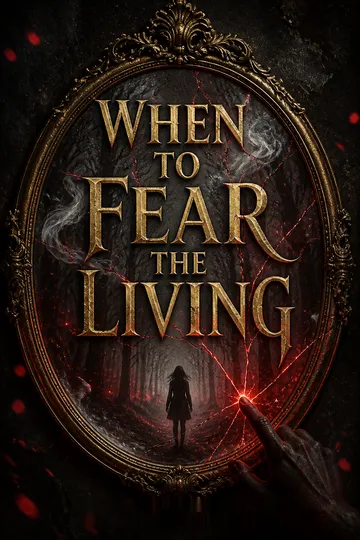
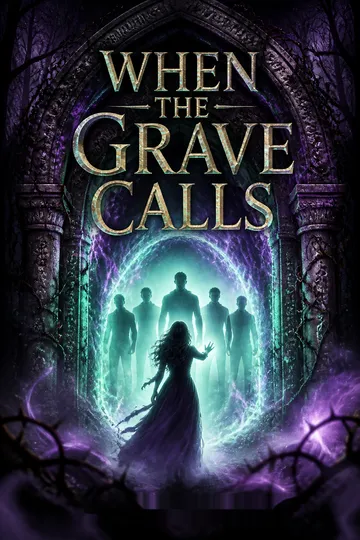
The Veil Diaries Series







About the Author

Download PDF
Download EPUB
.epub digital book format is ideal for reading ebooks on phones, tablets, and e-readers.








