

Key Takeaways
Treat quick fixes as hypotheses, not truths handed down by gurus
Evidence beats folklore. Wiseman’s starting point is a warning: popular advice can sound scientific without being tested. The often-repeated Yale study claiming that written goals made graduates wealthy could not be verified. A more practical example comes from a nursing-home study: residents who were given a plant to care for, and thus a small choice and responsibility, were happier and healthier than residents whose plants were managed for them. The study reported deaths of 15 percent in the first group and 30 percent in the second, though that finding alone cannot establish a general rule about lifespan.
Small actions can matter. The book searches research for brief interventions rather than grand promises. Its central invitation is to test a specific, evidence-backed action, observe whether it helps, and avoid treating a catchy anecdote as proof.
The book’s most durable contribution is its skepticism toward advice that feels right simply because it is vivid. The unverified Yale story shows how repetition can give a claim borrowed authority. This is closely related to a basic principle of evidence-based practice: ask how an intervention was tested, who participated, and whether the result was replicated. At the same time, a short experiment is not a personal guarantee. A useful technique is a promising starting point, not a substitute for clinical care or a reason to blame people when circumstances limit their choices.
Build happiness through attention, generosity, and experiences, not bigger purchases
Notice what becomes invisible. Wiseman reports that about half of happiness is linked to genetics, about 10 percent to circumstances, and the remaining share to everyday behavior and thought. Lottery winners in one study were no happier than a comparison group and enjoyed ordinary pleasures less. Income appears to matter most when it secures necessities; beyond that, people adapt to upgrades.
Write and give. Brief writing exercises can redirect attention: list things that went well, recall a cherished experience, describe a hoped-for future, or write about someone important. Gratitude exercises were linked with greater optimism and well-being. Research in the book also found that spending on other people and batching several small acts of kindness into one day could lift mood. Experiences often outlast purchases because they create memories and social connection.
This account connects happiness to attention, not merely possession. Adaptation helps explain why a new purchase quickly becomes ordinary, while an experience can be retold and shared. Giving may also strengthen social bonds, a plausible route from generosity to well-being. The useful qualification is that the 50-10-40 division is an estimate, not a personal formula, and writing exercises do not erase depression, poverty, or grief. These practices are best treated as modest tools for shaping ordinary days, not as evidence that people can simply choose their way out of hardship.
Turn ambitions into written steps, then rehearse obstacles as well as rewards
Plan the path, not the fantasy. In Wiseman’s studies of more than 5,000 people pursuing goals, only about one in ten said they had succeeded. The more useful strategies included breaking a goal into concrete, measurable steps, telling other people, recording progress, and attaching small rewards to milestones. Imagining a perfect outcome alone could backfire: students who pictured top exam results studied less, while those who pictured the process of studying did better.
Pair hope with friction. The book’s term “doublethink” means holding a desired benefit and a likely obstacle in mind together, then considering how to respond to that obstacle. For procrastination, start with a few minutes of work. Beginning can make an unfinished task harder to ignore, an effect associated with Bluma Zeigarnik’s studies of incomplete activities.
The strongest distinction here is between wanting an outcome and mentally practicing the behaviors that produce it. Written milestones turn a vague aspiration into feedback, while sharing a commitment can add social support and accountability. The obstacle component also makes optimism more operational: it asks what could interfere, rather than assuming motivation will remain high. Public commitments can sometimes create pressure without creating capacity, however. A plan works best when its steps are realistic, revisable, and matched to the person’s resources, not when it becomes another standard for self-reproach.
Shape cues and actions so behavior does not depend on heroic willpower
Make the easy choice visible. Wiseman describes studies in which people ate more from large bowls, short wide glasses, and food that was nearby or easy to see. In one experiment, participants with continuously refilled soup bowls consumed more than 75 percent more than those eating from ordinary bowls, without realizing how much they had eaten. Smaller dishes, less visible snacks, and a food diary can make consumption easier to notice and regulate.
The body feeds the mind. Research described in the book links smiling with improved mood, and upright posture with better mood and performance on a math task. Conversely, trying to suppress unwanted thoughts can make them recur more often. The practical lesson is to arrange surroundings and behavior so that helpful actions require less effort, rather than relying on forceful self-control.
This is an early, accessible account of what behavioral science calls choice architecture: small features of a setting can tilt behavior without changing anyone’s formal options. That insight is useful because attention and self-control fluctuate. Still, effects from bowl size or posture vary by person and context, and the research on facial feedback has drawn debate about how large and reliable its effects are. Environmental adjustments should support agency, not become covert control by employers, schools, or families. The best design makes a healthy choice easier while leaving people informed and free to choose otherwise.
Persuade through trust and reciprocity, while resisting engineered compliance
Rewards can change what an activity means. In one study, children who were promised medals for drawing later drew less than children who received no promised reward. Wiseman also reports that people paid generously to clean a park rated the task less enjoyable than those paid modestly. The interpretation is that an external reward can make an activity feel like work, especially when it was already enjoyable.
Small social signals carry weight. In the Franklin effect, people may feel more warmly toward someone after doing that person a small favor. A minor mistake can make an apparently flawless person more relatable, while excessive self-promotion can undermine likability. Persuasion also includes tactics such as beginning with a small request or making a large request, then retreating to a smaller one. These methods can be used to influence, so they are worth recognizing as well as applying.
The section’s most useful lesson is that motivation and persuasion depend on interpretation, not just incentives. A reward can communicate that an activity is unpleasant, while a favor can invite a sense of connection. Modern motivation research similarly distinguishes external control from autonomy and meaningful feedback. The risk is treating every interaction as a lever to pull. Reciprocity and staged requests can exploit social pressure. Ethical influence keeps the request transparent, proportionate, and easy to decline, and uses rewards to acknowledge effort rather than replace a person’s reasons for caring.
Make room for originality by changing inputs, teams, and mental state
Generate ideas before the group takes over. Wiseman reviews studies in which people working alone produced more ideas, and often better ones, than conventional brainstorming groups. One explanation is social loafing: people may contribute less when individual effort is harder to identify. Groups can still help, but changing a team’s membership may bring fresh ideas and disrupt stale habits.
Give the mind different material. In experiments described in the book, people sometimes produced more unusual ideas after a demanding distraction than after deliberate concentration on the problem. Plants and green surroundings were also associated with more creative work. The practical sequence is to work on a problem, step away into a different activity or environment, and return with fresh attention. Novel inputs can help, but simply demanding that people “be creative” rarely supplies them.
Creativity benefits from both focused effort and distance from fixation. This resembles incubation: a problem remains active in memory while attention shifts, allowing different associations to surface. The critique of brainstorming is strongest when it concerns groups that offer ideas aloud in turn, since waiting, evaluation anxiety, and diffusion of effort can inhibit contribution. It does not prove that collaboration itself is useless. Structured methods that let people generate ideas independently before combining them can preserve individual contribution while adding the advantages of shared knowledge.
Keep relationships alive with shared novelty and a surplus of warmth
Routine needs deliberate interruption. A study of couples asked some pairs to complete a novel, coordinated obstacle course and others to do a more ordinary task. The couples sharing the unusual activity reported more romantic feeling and made more positive comments afterward. Wiseman also describes research suggesting that, for a relationship to thrive, positive interactions need to substantially outnumber negative ones, with one estimate placing the ratio near five to one.
Small expressions accumulate. In one study of new couples, writing about a relationship was associated with more positive language in later messages and a higher proportion still dating three months later. The book also questions the idea that successful partners must constantly paraphrase each other’s feelings. In the observed conversations, active-listening responses did not predict relationship success; accepting a partner’s concerns and sharing power mattered more.
The emphasis on novelty is more than a date-night prescription. Shared challenges create fresh memories and require partners to coordinate, which can renew a sense of being a team. The focus on positive exchanges also counters the tendency for criticism to dominate attention. A numerical ratio should not be mistaken for a relationship scorecard, though: context, safety, and the seriousness of conflict matter. Nor does the finding about active listening mean empathy is unimportant. It cautions against performing a communication technique mechanically when a partner needs genuine engagement or practical change.
Cool anger by finding meaning, not rehearsing the insult
Venting can rehearse aggression. In a study by Brad Bushman, people who punched a bag while thinking about someone who had angered them later reported more aggression and chose louder noise blasts against another participant than people who sat quietly. The familiar idea that anger must be physically discharged did not hold up in this experiment.
Reframe without denying the hurt. Benefit finding is the practice of identifying ways a painful experience may have led to strength, insight, better boundaries, or more compassionate relationships. In a study of people recalling an offense, those asked to write about possible benefits felt more forgiving and less inclined toward revenge than those asked to dwell on the injury. The book also points to humor, calming music, time outdoors, and contact with dogs as ways to reduce stress, though effects depend on the person and situation.
The distinction is between processing an emotion and repeatedly rehearsing the story that fuels it. Reappraisal can broaden the meaning of an event and restore a sense of choice, while aggressive rehearsal may keep attention locked on threat. Benefit finding is not the same as insisting that every injury was secretly good. Some experiences are devastating, and premature pressure to find a silver lining can invalidate people or obscure accountability. It is most useful when chosen by the person affected, after the harm is acknowledged and when safety does not require immediate action.
Make hard decisions after gathering facts, then step away from the noise
Groups can intensify a starting bias. Research on group decisions found that discussion often pushed people toward more extreme versions of their initial views, whether cautious or risky. For complex choices, the book describes experiments in which people considered options, performed a distracting mental task, and later felt more satisfied with their decisions than people who either deliberated intensely or chose immediately. Wiseman calls this the unconscious thought theory: the possibility that stepping away helps integrate information that conscious attention struggles to hold at once.
Use reality checks. People often underestimate how long projects take. Better estimates come from recalling how long similar work took before and breaking a task into its component steps. For possible deception, nervous gestures are unreliable; sudden changes in detail, hesitation, or evasiveness may justify further questions, but none proves a lie.
The section offers a useful two-part discipline: gather relevant information, then create distance from pressure and premature certainty. It complements decision research showing that confidence and group consensus are not reliable measures of accuracy. Yet unconscious deliberation should not be treated as a mysterious oracle. The studies summarized here do not imply that every difficult choice improves when postponed, especially when time is scarce or expertise is needed. Likewise, behavioral cues cannot diagnose dishonesty. A sound decision process uses independent evidence, explicit criteria, and a willingness to update.
Praise effort and train self-control without making forbidden things irresistible
Praise the work, not a fixed trait. In experiments with children, those praised for intelligence were more likely to choose an easy task after succeeding, less willing to persist when work became difficult, and more likely to do poorly on a later test. Children praised for effort were more willing to tackle challenges and improved their performance. Specific feedback about practice, concentration, or strategy gives children something they can repeat.
Teach control through practice. The marshmallow experiment asked children to wait for a larger treat rather than take a smaller one immediately; waiting was associated with later self-regulation in the original follow-up. Wiseman also describes games that practice attention and rule-following. Strong threats against forbidden behavior may make the forbidden object more attractive, while a calm, limited instruction can reduce that effect. A music CD alone, meanwhile, is not a reliable route to lasting intelligence.
This advice shifts praise from identity to controllable behavior, helping children interpret difficulty as information rather than proof that they lack talent. It also turns self-regulation into a skill that can be practiced, not simply a virtue some children possess. The marshmallow result needs particular care: waiting reflects the child and the conditions around the child, including whether the promised reward seems trustworthy. It should not be used to rank children’s futures. The Mozart example makes a parallel point: meaningful learning requires engagement, such as music lessons, not passive exposure to a supposedly magical stimulus.
Use tested personality measures, not handwriting or finger-reading shortcuts
Prefer broad, validated patterns. Wiseman rejects graphology as a dependable way to infer character or predict job performance. In analyses described in the book, graphologists performed about as well as untrained readers. A more established model is the Big Five, which describes personality along five continua: openness, conscientiousness, extroversion, agreeableness, and neuroticism. These dimensions offer a structured vocabulary, not a complete portrait of a person.
Treat body clues cautiously. The book discusses 2D:4D, the ratio between index-finger and ring-finger length, as a proposed clue to prenatal hormone exposure and some physical or psychological traits. It also notes that the proposal is controversial. Pets, sleeping schedules, and possessions may invite conversation, but they do not justify confident judgments about an individual. A quick cue can suggest a question; it cannot replace knowing someone.
This chapter is strongest when it distinguishes a validated personality framework from a practice that makes unsupported claims. The Big Five can help describe recurring tendencies, but scores do not explain a whole person or predict every situation. The contrast is especially important because people are drawn to fast personality readings: they reduce uncertainty, but can also harden stereotypes. Finger ratios are a useful example of how a plausible biological story can outrun the strength of its evidence. Responsible assessment treats traits as probabilistic patterns and gives the individual’s behavior and context priority.
Analysis
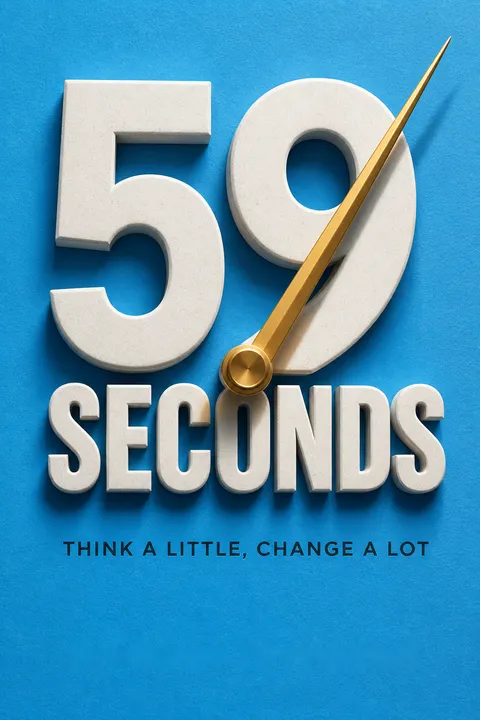
59 Seconds is a popular psychology book organized around a practical promise: research can sometimes identify small actions that shift mood, motivation, persuasion, creativity, relationships, stress, decisions, and parenting. Its narrative begins with Sophie asking for useful advice that fits into a minute. That question gives a sprawling survey of studies a human scale. Wiseman’s recurring contrast is between appealing folk wisdom and interventions tested in experiments, from positive visualization to process planning, from anger venting to benefit finding.
The book’s great strength is translation. A laboratory result becomes a concrete action, often with an entertaining story that helps readers remember it. The breadth also makes the work unusually useful as a menu of experiments rather than a single life philosophy. Its deeper argument is that agency can be recovered through specific, manageable actions, especially when environments and social relationships are designed to support them.
That same breadth creates a limitation. The book often moves quickly from an experiment to advice for ordinary life. A result from a small or artificial setting may not generalize to every age, culture, relationship, or clinical condition. Many findings are presented as if their effects are crisp and readily reproducible, although behavioral research can be sensitive to study design, publication bias, and differences between populations. Some topics, such as finger-length personality claims, receive a more cautious status than others, but the reader must still distinguish stronger evidence from intriguing early findings.
The best way to use the book is therefore neither to dismiss its quick techniques nor to treat each as a guaranteed fix. Select one practice that fits a real problem, try it consistently, and judge it by observable outcomes. The book is most persuasive when it encourages curiosity and agency, and least persuasive when a striking percentage risks sounding like a universal law. Its lasting message is not that every life problem has a one-minute solution, but that a small, well-chosen intervention can sometimes change the next step.
Review Summary
59 Seconds offers science-backed, quick self-improvement techniques covering happiness, relationships, creativity, and more. Readers appreciate its research-based approach, debunking of self-help myths, and practical tips. Many found it informative and useful, praising its concise format and diverse topics. Some criticisms include potential gender bias and questionable study methodologies. Overall, it's viewed as a refreshing alternative to traditional self-help books, providing evidence-based strategies for personal growth in just 59 seconds.
People Also Read






Glossary
Expressive writing
Writing to organize experienceA brief writing practice in which someone describes thoughts and feelings about a significant experience, rather than merely recounting events. Wiseman presents research linking this structured expression with improved coping and well-being. The proposed benefit is that writing can organize confusing thoughts into a more coherent account, although it is not a substitute for professional support when trauma or distress requires treatment.
Hedonistic habituation
Adjustment to repeated pleasuresThe tendency for people to become accustomed to positive circumstances or possessions, so that the pleasure they initially provide fades. Wiseman uses the idea to explain why a raise, new car, or larger home may create a brief lift without permanently raising happiness. Activities that involve continuing effort and changing experiences may be less likely to become psychologically routine.
Franklin effect
A favor can increase likingThe tendency for someone to feel more positively toward a person after doing that person a small favor. The name refers to Benjamin Franklin’s account of asking a political rival to lend him a book, after which the rival treated him more warmly. Experimental work described by Wiseman found a similar effect, particularly for modest requests rather than burdensome ones.
Pratfall effect
A mistake can humanizeThe tendency for a highly capable person to become more likable after making a minor mistake. In the studies Wiseman describes, people who already appeared exceptionally competent gained warmth after a small mishap. The same error harmed the appeal of someone who was not seen as especially capable, so the effect depends on the impression formed beforehand.
Bystander effect
Crowds diffuse helping responsibilityThe finding that an individual may be less likely to help when other witnesses are present. People can look to others to decide whether an event is an emergency, while each person may assume someone else will act. Wiseman’s practical advice is to identify one person directly and specify the help required, making responsibility clearer.
Social loafing
Reduced effort in groupsA reduction in individual effort when people work together and personal contributions are difficult to identify. Wiseman connects this effect to group brainstorming: participants may contribute less when responsibility and recognition are shared. The concept does not mean all teamwork fails. It highlights the value of making contributions visible and structuring group work so each person has a clear role.
Doublethink
Pair goal benefits with obstaclesWiseman uses this term for a motivational exercise that combines optimistic thinking about a goal’s benefits with realistic consideration of barriers. A person identifies desired outcomes, names likely obstacles, and considers how to respond to them. The purpose is to preserve commitment without allowing positive fantasy to replace preparation.
Zeigarnik effect
Unfinished tasks remain mentally activeThe tendency for incomplete activities to remain more accessible in memory than completed ones. Bluma Zeigarnik developed the idea after observing that waiters remembered unpaid orders more readily than orders that had been settled. Wiseman connects the effect to procrastination: beginning a task, even briefly, may make it easier to continue.
Unconscious thought theory
Unattended thought integrates choicesThe proposal that complex decisions can sometimes benefit when people first consider the options and then turn their conscious attention elsewhere. In studies discussed by Wiseman, participants who were distracted before choosing were more satisfied with some decisions than participants who deliberated continuously. The theory is presented as a possible aid, not a guarantee that intuition is always accurate.
Big Five
Five broad personality dimensionsA widely used model describing personality through five continua: openness, conscientiousness, extroversion, agreeableness, and neuroticism. The dimensions summarize recurring tendencies rather than fixed categories. Wiseman presents them as a more research-grounded alternative to interpreting handwriting, while emphasizing that they do not reveal every feature of an individual or determine behavior in every context.
2D:4D
Index-to-ring finger ratioA measurement comparing the length of the second digit, the index finger, with the fourth digit, the ring finger. Some researchers have proposed that the ratio relates to prenatal hormone exposure and certain traits or abilities. Wiseman describes reported associations with sporting performance and other characteristics, while noting that the theory is disputed and should not be treated as a reliable personality test.
Planning fallacy
Underestimating task durationThe tendency to predict that a project will take less time than it actually does, often because people imagine a smooth process and overlook delays. Wiseman describes research showing that estimates improve when people recall how long comparable tasks took in the past or break a project into smaller steps before estimating its duration.
FAQ
What's 59 Seconds: Think a Little, Change a Lot about?
- Focus on Rapid Change: The book explores how small, scientifically-backed techniques can lead to significant personal improvements in various aspects of life, such as happiness, motivation, and creativity.
- Debunking Self-Help Myths: Richard Wiseman critiques popular self-help methods, arguing that many are ineffective or even counterproductive, and presents evidence-based alternatives.
- Quick Techniques: Each chapter provides practical advice that can be implemented in under a minute, making it accessible for busy individuals seeking change.
Why should I read 59 Seconds: Think a Little, Change a Lot?
- Evidence-Based Approach: The book is grounded in psychological research, offering readers scientifically validated methods for personal development rather than anecdotal advice.
- Time-Efficient Solutions: Wiseman emphasizes that effective change doesn’t require extensive time commitments, appealing to those with busy lifestyles.
- Broad Applicability: The techniques cover a wide range of topics, including happiness, relationships, and decision-making, making it relevant to many readers.
What are the key takeaways of 59 Seconds: Think a Little, Change a Lot?
- Happiness Techniques: The book suggests keeping a gratitude diary, engaging in expressive writing, and focusing on small acts of kindness to boost happiness.
- Motivation Strategies: Wiseman highlights the importance of creating a detailed plan, sharing goals with others, and rewarding progress to maintain motivation.
- Creativity Enhancement: Techniques such as changing your environment, using visual priming, and allowing your unconscious mind to work can significantly enhance creativity.
What are the best quotes from 59 Seconds: Think a Little, Change a Lot and what do they mean?
- “Effective change does not have to be time-consuming.”: This emphasizes that significant personal transformation can occur quickly with the right techniques, challenging the notion that change requires extensive effort.
- “Those who do not feel in control of their lives are less successful.”: This highlights the importance of perceived control in achieving personal goals and overall well-being.
- “If you want to buy happiness, then spend your hard-earned cash on experiences.”: This suggests that investing in experiences rather than material goods leads to greater long-term happiness.
How does 59 Seconds: Think a Little, Change a Lot address the concept of happiness?
- Gratitude and Writing: Wiseman emphasizes the importance of gratitude journaling and expressive writing as effective methods for enhancing happiness.
- Avoiding Positive Thinking Myths: The book critiques the idea that simply thinking positively can lead to happiness, suggesting instead that engaging in meaningful actions is more effective.
- Scientific Backing: Research cited in the book shows that happiness is linked to social connections, acts of kindness, and a focus on personal strengths.
What are some quick techniques for improving motivation from 59 Seconds: Think a Little, Change a Lot?
- Create a Step-by-Step Plan: Break down larger goals into smaller, manageable steps, making it easier to track progress and stay motivated.
- Public Commitment: Share your goals with friends or family to increase accountability and support, which can enhance your commitment to achieving them.
- Reward Yourself: Attach small rewards to each sub-goal to maintain motivation and create a sense of achievement as you progress.
What does 59 Seconds: Think a Little, Change a Lot say about creativity?
- Brainstorming Myths: Wiseman debunks the effectiveness of group brainstorming, showing that individuals often generate more creative ideas alone.
- Environmental Influence: The presence of plants and nature can enhance creativity, suggesting that a conducive environment is crucial for innovative thinking.
- Unconscious Mind: Engaging in unrelated tasks can free the unconscious mind to generate creative solutions, highlighting the importance of mental breaks.
How can I apply the doublethink technique from 59 Seconds: Think a Little, Change a Lot?
- Visualize Benefits and Barriers: Identify the benefits of achieving your goal and the potential obstacles you may face, then reflect on both to create a balanced perspective.
- Elaborate on Each Aspect: Spend time detailing how achieving your goal will improve your life and how you will address the challenges that arise.
- Use for Various Goals: This technique can be applied to personal, professional, or relational goals, making it a versatile tool for motivation and planning.
What is the bystander effect discussed in 59 Seconds: Think a Little, Change a Lot?
- Diffusion of Responsibility: The bystander effect explains why individuals are less likely to help in emergencies when others are present, as they assume someone else will take action.
- Research Background: Wiseman references studies that illustrate this phenomenon, including the infamous case of Kitty Genovese, to highlight the importance of personal accountability.
- Practical Application: To counteract this effect, Wiseman suggests directly addressing individuals in a crowd to increase the likelihood of receiving help.
How does 59 Seconds: Think a Little, Change a Lot suggest improving relationships?
- Active Listening Critique: Wiseman challenges the effectiveness of active listening, suggesting that it may not be as crucial to relationship success as previously thought.
- Power Sharing: Successful relationships often involve partners who share power and listen to each other’s ideas, fostering mutual respect and understanding.
- Simple Gestures Matter: Small acts of kindness and appreciation can significantly strengthen relationships, emphasizing the importance of everyday interactions.
What psychological techniques does 59 Seconds: Think a Little, Change a Lot recommend for improving relationships?
- Know Your Partner: Engaging in quizzes about each other’s preferences can strengthen bonds and improve relationship longevity, as knowing details about your partner predicts relationship success.
- Shared Experiences: Participating in novel and exciting activities together can rekindle romance and attraction, as it mimics the excitement of early courtship.
- Expressive Writing: Writing about your feelings and thoughts regarding your relationship can enhance communication and emotional connection between partners.
How does 59 Seconds: Think a Little, Change a Lot suggest managing stress effectively?
- Focus on Benefits: The book recommends finding positive aspects in negative experiences to reduce feelings of anger and resentment, promoting a healthier mindset.
- Avoid Venting Anger: Contrary to popular belief, expressing anger does not alleviate it; instead, it can intensify feelings of aggression.
- Utilize Humor: Engaging in humor and laughter can significantly improve mood and reduce stress, contributing to better overall health.
About the Author


Download PDF
Download EPUB
.epub digital book format is ideal for reading ebooks on phones, tablets, and e-readers.








