



Plot Summary
Prologue
In 1980, Congressman Walter Stowe19 and his wife6 Martha6 arrive by boat at a Newport yacht club, carrying the promise of a political future and the burden of secrets. Walter19 has been meeting privately with Thomas Reece,5 a former Navy SEAL turned intelligence officer, as he investigates abuses inside the intelligence community.
A disguised gunman shoots Walter19 on the dock, then wounds Martha6 and leaves her falling into the harbor. As she sinks, she thinks of Thomas,5 the man her husband was supposed to meet5 that evening. The story begins with a murder whose true sponsors remain hidden, and a survivor6 who understands that the danger reaches beyond one family.
The prologue makes political violence intimate before it becomes geopolitical. Walter's murder is not presented as a public spectacle but as a sudden rupture in a marriage, a campaign, and a family inheritance. Martha's helplessness is sharpened by her earlier insistence on being treated as a partner rather than a protected political wife. Her final thought of Thomas connects private grief to clandestine history, while the unanswered question of who ordered the killing establishes the novel's central distinction between the hand that fires and the power that pays. The scene also plants the cost of secrecy: Martha's family is endangered by knowledge she was never fully allowed to share.
Reece in the Dark
James Reece,1 a former Navy SEAL and CIA operative, has spent three months in a lightless cell at the federal supermax in Colorado. He was arrested after President Alec Christensen was killed by bombs planted along his motorcade route, and the public evidence points toward Reece1 as the conspirator.
Alone, he fights the voices of guilt over the deaths of his wife Lauren, daughter Lucy, unborn child, and fellow operator Freddy Strain. A hidden key, now with journalist Katie Buranek,2 may open the safe-deposit box his father5 described in a letter. Reece1 clings to the possibility that the box holds answers, while fearing that anyone who helps him will be targeted next.
The prison turns Reece's trained discipline into his last remaining form of agency. Exercise, breath control, and memory are not merely survival techniques; they are ways to keep guilt from becoming the only story he can tell himself. His imagined accusations matter because they are partly true: he has repeatedly brought violence into the lives of people he loves. Yet the confinement also makes the injustice visible. The state has treated suspicion as sufficient reason to erase him, mirroring the coercive systems he once served. Hope begins as a practical object, a key held by Katie, rather than a reassuring belief.
A Patsy for Russia
At a fortified Russian estate, FSB chief Pavel Dashkov11 and senior Security Council figures assess the fallout from Christensen's assassination. Russia has used digital influence networks and fabricated evidence to implicate Reece,1 intensifying American distrust while freeing Moscow to maneuver in Ukraine.
The assassination is part of a wider strategy devised by the shadowy Collective, whose American and Russian members manipulate political crises and markets for power.
Their next move is more dangerous: a nuclear device made with Iranian plutonium will be detonated off Israel, making Tehran appear responsible. Russia expects Israel and the United States to retaliate, drawing American forces away from Ukraine and giving China room to move against Taiwan.
The Russian chapters widen the novel's threat from a personal frame-up to a theory of power exercised through managed perception. Dashkov's confidence rests on the assumption that democracies can be made to injure themselves by amplifying divisions already present. The Collective's strategy is especially unsettling because it treats catastrophe as a financial instrument and civilians as variables in a calculation. This is not simply a conflict between nations. It is a conflict between public accountability and a private network that claims crisis management as its justification for rule. Reece's individual struggle is therefore nested inside an attack on the possibility of shared facts.
The Plutonium Truck
Mohambar Ranjha,20 a driver who smuggles opium from Afghanistan into Iran, is diverted from his ordinary route and handed a locked truck bound for Khoshab. He is told not to inspect the cargo, which appears to be a sealed crate for the Afghan government. In fact, the load contains three rods of Iranian plutonium.
At a compound near Kandahar, Wagner commander Slavik Deynekin15 and his men take the rods, then trigger an explosion on the road to conceal their operation and eliminate evidence. Deynekin's15 team carries the material toward Russia, where it will be made into a portable nuclear device. Mohambar20 leaves without understanding how close his routine delivery came to changing the world.
Mohambar's limited knowledge gives the conspiracy its human scale. He is not an operative or a believer in the Russian plan; he is a working driver whose livelihood depends on obeying people with greater power. The plutonium passes through ordinary systems of bribery, transport, and plausible paperwork, making secrecy less a masterstroke than a chain of people trained not to ask questions. His ignorance also exposes the asymmetry at the heart of the operation: the architects can treat distant populations as strategic terrain, while local workers absorb the risks without consent. The bomb's origin is designed to survive politically even if its builders do not.
Out of Florence
CIA director Victor Rodriguez7 finally reaches Reece1 after the agency verifies a report assembled by Alice, a classified quantum intelligence21 that helped expose the frame-up. Reece1 learns that he has been held at ADX Florence, not a foreign black site, and that President Olsen's10 new CIA chief, General Marcus Howe, has provided the findings to the assassination commission.
Former analyst Andy Danreb8 resigned in protest over the delay in freeing Reece.1 Vic7 returns Reece's1 father's letter, seized during the Montana raid, but Reece1 conceals that Katie2 still has the safe-deposit key. Learning that Alice21 has disappeared into a vast computing network, Reece1 refuses to wait for official answers and asks to see William Poe.3
Reece's release restores movement without restoring trust. The agency can now say he was framed, but its slow confirmation has left him with a concrete reason to doubt institutional assurances. Alice's role complicates the question of evidence: the report is persuasive, yet the government needed months to verify that a powerful machine had not invented its own vindication. Reece's lie about the key is not casual deception. It is a response to a system in which even allies may expose the people he is trying to protect. Freedom therefore arrives as an obligation to investigate, not as permission to return to his former life.
The Ranch's Old Files
Raife Hastings4 collects Reece1 from prison and drives him west instead of straight to Katie.2 At the Taylor River ranch, Reece1 reunites with Poe,3 an old family friend and veteran intelligence officer. A trunk assembled from his father5 and grandfather's belongings yields a suppressed pistol, his father's5 knife, and an Office of Strategic Services pin.
Over dinner, Poe3 explains that Thomas Reece5 had pursued Soviet officers linked to Vietnam and suspected that American prisoners of war had been transferred to the Soviet Union. Poe3 also reveals that Thomas5 killed the gunman who shot Walter Stowe19 and rescued Martha6 from the water. The elder Reece5 spent years trying to identify who ordered Walter's19 murder.
The ranch makes history tangible through inherited objects rather than official records. The pin and weapons show how one generation's service becomes the next generation's equipment, but Poe's account exposes the less visible inheritance: unfinished investigations and carefully guarded guilt. Reece learns that his father was not simply a soldier who later entered intelligence work. He was a man whose private loyalties drove him to cross the boundaries of his job. This knowledge gives Reece a lineage, but not an uncomplicated one. Family memory offers orientation while also pulling him deeper into the same cycle his father hoped he would escape.
Gunmen at the River
Before dawn, Armenian gang members arrive at Poe's3 ranch intending to kill Reece,1 Poe,3 and Raife,4 then disguise the murders as a robbery. Raife4 spots the first group from a concealed position and opens fire, waking Reece.1 Reece1 moves through the river to avoid the attackers' night-vision advantage, then kills the gunman watching the trees before helping repel the men at Poe's3 house.
Poe3 uses his shotgun against intruders at the door, while Reece1 and Raife4 fight the remaining attackers in the dark. Mike Bill,22 Poe's3 caretaker and a former Marine, finds the assailants' California identification and weapons. The attempted hit confirms that the people behind Reece's1 frame-up know where he has gone.
The attack collapses any distinction between recovery and mission. Reece has barely emerged from solitary before the ranch becomes a battlefield, demonstrating that his private history is already operationally active. His movement through familiar childhood water reverses the meaning of home: the river is still refuge, but now it is also tactical cover. Raife's vigilance and Poe's willingness to fight show that Reece is not alone, while the attackers' amateurism offers little comfort. Their failed raid proves only that the opposing network has reach and resources. The consequences of secrecy are now paid in immediate bodily danger by everyone who shelters him.
Martha Names Boston
After the ranch attack, Reece1 flies to Martha's Vineyard to see Martha Stowe,6 now elderly and largely confined to her home. Martha6 confirms that Thomas,5 Poe,3 and she continued investigating Walter's19 murder, and that Thomas5 hid evidence in a safe-deposit box at the Boston Safe Deposit and Trust Company. She gives Reece1 the contact information for a lawyer who can help him access it.
Martha6 believes the person who ordered Walter's19 death may also be connected to Thomas's5 fate, and she asks Reece1 to kill that person. Reece1 leaves with the box's location but not the promised identity of the other person who knew where it was. Martha's6 request turns the investigation into a personal reckoning.
Martha's role shifts from surviving witness to active custodian of a dangerous memory. Her decision to disclose the box's location is an act of trust, but her request for murder reveals how grief can make justice and retaliation difficult to separate. Reece is caught between her claim on him and his own developing understanding of his father's mission. The encounter also exposes the gendered structure of the earlier conspiracy: Martha was repeatedly kept outside the information that shaped her family's fate, yet she has preserved the one fact that allows the next generation to proceed. Her frailty does not diminish her authority; it makes the urgency of her choice unmistakable.
Katie Keeps the Key
At the hotel, Katie2 surprises Reece1 after learning from Raife4 that he had gone to the Vineyard before seeing her. They reunite, and Katie2 explains that the FBI never found the safe-deposit key Reece1 pressed into her hand during his arrest. She has also helped the Hastings family improve security after the raid on the Montana ranch.
Reece1 gives her Thomas's letter, which warns that powerful people will try to keep the box closed and urges him to value his family over the gun. Katie2 reads it and understands why Reece1 has been searching. She wants to help, but he plans to visit Boston alone, believing distance is the only protection he can offer her.
Katie's return challenges Reece's protective logic without erasing its emotional source. He equates love with removing danger from her path, a strategy shaped by the deaths of Lauren and Lucy and reinforced by his own guilt. Katie counters not with recklessness but with informed agency: she has retained the key, trained, and made decisions about security while he was imprisoned. Their reunion restores tenderness, yet the letter makes clear that intimacy cannot simply reverse trauma. Reece's instinct to leave her is a form of care that also risks becoming another unilateral act of control. Their partnership must negotiate the difference.
The Lawyer's Dead Office
Reece1 goes alone to attorney Charles Ambler's office, where an unknown man knocks him unconscious and leaves Ambler dead. The captor identifies himself as Max Genrich,16 an assassin working for Russian intelligence, and threatens Katie,2 Raife,4 and Liz unless Reece1 helps retrieve his father's5 papers. Genrich16 escorts him to Boston with Bratva enforcers and claims that Reece1 will be killed once the contents are delivered.
At the bank, Reece1 learns that the box requires a password as well as identification and its key. He gives the phrase embedded in his father's5 warning, then opens the box and finds a thick envelope of documents, forged passports, cash, and old weapons. He takes the papers and copies them before leaving.
The ambush turns the safe-deposit box from a family inheritance into contested property. Genrich's threat is effective because it exploits Reece's deepest vulnerability: he will accept his own death if he believes it can spare Katie. The bank's password requirement transforms the father's warning into a practical test, showing how Thomas built secrecy into the archive rather than relying on a single lock. Reece's decision to copy the papers is a quiet reversal of the captor's plan. Instead of treating evidence as a package to surrender, he creates redundancy. That small act is the first move toward making the truth harder to erase.
Blood on State Street
At the bank, Reece1 kills the enforcer assigned to shadow him in a restroom, then uses the copied papers to distract the Bratva men waiting outside. He attacks them inside their vehicles, takes a pistol, and shoots his way clear as the group scatters through Boston's financial district.
He steals a motorcycle and pursues the last rider, bringing him down with his father's5 Vietnam-era tomahawk. Genrich16 watches the violence from a distance, records it, and escapes rather than confront Reece.1
Afterward, Genrich16 tells Reece1 that the men guarding his friends were withdrawn before the bank attack, so Katie2 and the others are alive. Reece1 calls Vic,7 then contacts Andy Danreb,8 seeking help understanding the documents and identifying the people who ordered the operation.
The Boston escape is a tactical victory with a psychological cost. Reece acts with the speed and competence that once defined his identity, but each kill reinforces the belief that violence is the only tool he can trust. The inherited tomahawk gives the action a charged continuity: his father's past is no longer merely archival, it is literally in Reece's hand. Genrich's withdrawal prevents the conflict from becoming a simple duel and preserves the larger adversary. Most important, Reece learns that the hostage threat was a lever rather than reality. The discovery weakens Genrich's control but also exposes how readily Reece can be made to sacrifice himself.
The POWs Left Behind
At Andy Danreb's8 home, Reece,1 Katie,2 Raife,4 Vic,7 and Poe3 work through Thomas's5 papers. The records support the claim that American prisoners remained in Southeast Asia after the government declared Operation Homecoming complete.
Intelligence suggested that some were transferred to Soviet camps, and Thomas5 helped prepare a 1981 rescue mission that was canceled after information leaked. Later evidence indicated that prisoners were executed rather than returned.
The documents also point toward the Collective, a cross-border network of American and Soviet elites who traded secrets and manipulated markets to avert nuclear conflict while accumulating power. Thomas's sealed letter admits that he killed people he believed responsible for the betrayal. Reece1 decides to finish his father's5 list and protect those still living.
The file changes the moral scale of Reece's inheritance. His father pursued the prisoners not as an abstract intelligence problem but as men abandoned by institutions that had promised to recover them. The Collective complicates the usual patriotic divide: its members may have prevented nuclear catastrophe, yet their self-appointed authority let them conceal human costs and enrich themselves. Thomas's confession makes Reece confront the difference between exposure and accountability. He cannot treat his father as a pure hero, nor can he dismiss the crimes that motivated him. Reece chooses action because evidence alone has repeatedly been buried, but that choice also risks reproducing the methods he is trying to judge.
Morgan's Hidden Clients
Reece1 tracks financier Sidney Morgan18 to an equestrian event and forces him to arrange a meeting with Bratva boss Luka Yevgenievich.17 At the Russian spa where Yevgenievich17 conducts business, Reece1 is attacked by armed enforcers but fights through them and carries the mobster away. Raife4 helps secure him at a remote hunting club.
Under pressure, Yevgenievich17 confirms that the Collective exists, says the SVR's new director Rostya Levitsky13 wanted Thomas's5 files, and identifies Cyprus as a place where members have met. He also says a member of the Collective is embedded inside the CIA, though he cannot name the person. Reece1 sends Morgan's18 client list to Danreb,8 giving the investigation a financial trail to follow.
Morgan and Yevgenievich reveal that influence is maintained not only by ideology but by infrastructure: accounts, shell companies, criminal services, and personal access. Reece's coercion produces useful leads, yet the scene also marks the moral danger of his chosen method. He obtains information by reproducing the bodily domination practiced by the systems he opposes. The mobster's partial knowledge is significant because the Collective's power depends on asymmetry: even participants can be kept ignorant of the whole. Reece now has a location and a possible institutional mole, but no complete map. The investigation has shifted from recovering the past to interrupting an imminent event.
Kira's Dead Drop
At the same time, Kira Borisova,9 Dashkov's secretary,9 uses a dead-drop signal inherited from her mother, a former CIA source who exposed the Chernobyl cover-up. She asks American intelligence for extraction from Russia in exchange for information. Reece1 learns of the contact during a private White House meeting with President Gale Olsen,10 Vic,7 Howe, Danreb,8 and Poe.3
The group believes Kira9 may know how the Collective plans to move next, but they cannot safely extract her from Moscow. Kira9 will travel with Dashkov11 to Cyprus, where security is looser. Reece1 and Poe3 agree to meet her there and guide her to a CIA maritime extraction. The mission depends on secrecy, timing, and Kira's9 ability to get away from her employer.
Kira's decision echoes her mother's dissent but is not simply inherited courage. She has spent years inside the apparatus that her mother chose to resist, and the dead drop converts family memory into a present political risk. The extraction plan also tests the Americans' ability to act without controlling the source. Kira is not a file to be retrieved; she is a person choosing when and how to cross a line. Reece's inclusion is driven by his knowledge of the Collective and his willingness to operate outside normal channels. The plan's fragility makes trust less a feeling than a sequence of actions that must hold under pressure.
The Boat's Nuclear Secret
On Cyprus, Reece1 and Poe3 prepare to contact Kira9 at a resort, but Poe3 never arrives at the planned restaurant. A Wagner operative drugs Reece,1 who wakes handcuffed in the engine room of a yacht with Kira9 beside him. Deynekin15 and his men have already taken possession of the nuclear device built from Iranian plutonium.
Kira9 explains that the bomb is intended to explode off Tel Aviv and make Iran appear responsible, pulling the United States into war. When Reece1 challenges the mercenaries' claim that their submarine extraction is coming, the plan's fragility becomes clear. Deynekin15 shoots Kira9 in front of him. Reece1 knocks the weapon aside and plunges overboard with her body, escaping the first burst of gunfire.
The failed extraction forces Reece into the most extreme version of his recurring dilemma: protect another person while remaining physically trapped and outnumbered. Kira's murder is not just a loss of an intelligence source. It demonstrates that the operation's architects regard even their own agents as disposable once they threaten the plan. Reece's escape begins through bodily sacrifice, carrying Kira into the water rather than leaving her behind. The scene also turns the novel's geopolitical stakes into a precise moral fact: if the device detonates, thousands may suffer because false attribution has been engineered to make retaliation feel inevitable.
Fire at Sea
Reece1 uses Kira's9 remaining air and the yacht's anchor chain to break free of the handcuffs, then boards from the water and kills the mercenaries guarding the vessel. He finds the timed nuclear device in a case, with minutes remaining and no safe way to disarm it.
By satellite phone, he reaches Danreb,8 who guides him toward a desperate alternative: use propane tanks and an improvised fire to create a conventional explosion that disrupts the nuclear firing sequence.
Reece1 damages the tanks' pressure valves, sets the galley alight, and places the device near the blast. He dives clear as the yacht explodes. The nuclear chain reaction does not occur. Reece1 survives the blast and swims toward Israel, leaving the device's remnants in the Mediterranean.
The climax converts Reece's training from a means of killing into a means of preventing mass death. The improvised solution is not a clean victory: it exposes him to fire, radiation, drowning, and the possibility that he has merely changed the form of the catastrophe. His survival depends on accepting uncertainty rather than mastering every variable. The sequence also reverses the false-flag logic. The bomb is meant to make a political narrative unavoidable, but Reece's intervention preserves the possibility of investigation and restraint. His body becomes the narrow margin between manufactured certainty and a world forced to ask what actually happened.
Cyprus, Then the White House
Israeli intelligence chief Ronen Katz hears Reece's1 account and accepts that Iran did not launch the device. Reece1 urges a discreet operation against the planners before they leave Cyprus. With Israeli naval commandos, he infiltrates the villa complex, where they kill Dashkov11 and his security detail. Reece1 pursues Wagner chief Andrei Sokoloff,14 stealing a Ferrari and forcing his car off a coastal road; Sokoloff14 dies in the crash.
Back in Washington, President Olsen10 confirms that the nuclear attack was prevented and that evidence points to the Collective. She offers Reece1 a chance to continue working with the government, but he plans to return to Montana. Before he leaves, she gives him a secure phone, and Alice's21 familiar voice returns.
The Cyprus raid closes the immediate chain of command without pretending to dissolve the underlying system. Reece's actions stop the bomb plot and prevent an automatic Israeli response, but the Collective remains diffuse, partly hidden, and capable of surviving individual losses. President Olsen's offer presents institutional service as a possible tool rather than an unquestioned duty. Reece declines the premise that returning to government is the only way to defend people, though Alice's reappearance complicates his retreat. The moment also marks an emotional shift: the man who entered the story as a prisoner begins to imagine a life beyond the next target, even while the unresolved intelligence network keeps calling him back.
Epilogue
Reece1 returns to Poe's3 ranch and discovers that Poe3 is the missing link: he helped build the Collective, betrayed Thomas's5 investigation, and arranged the suppression of the files. Reece1 reveals that he copied the documents at the bank and mailed them to major news organizations. Poe3 walks into the river and disappears in the current.
Later, news reports expose the POW transfers, the Collective's financial schemes, and the Russian role in Christensen's assassination. Reece1 returns to Montana, where Katie2 waits beside the fire. He burns his father's letter, then joins her inside, choosing the living without pretending the past has vanished.
Poe's revelation transforms the mentor relationship into the novel's most intimate betrayal. The conspiracy was not only concealed in distant capitals; it was embedded in the trusted world of Reece's childhood. Poe's stated loyalty to stability gives his actions a rationale, but the rationale cannot erase his choice to sacrifice prisoners and silence witnesses. Reece's copies make truth public, while Poe's death leaves no clean courtroom resolution. Burning the letter is not forgetfulness. It is Reece's attempt to stop treating inherited pain as a standing order. The final domestic image remains provisional: recovery means returning to Katie, not becoming untouched by violence.
Analysis
Only the Dead asks whether a person can oppose corrupt power without allowing opposition to become a permanent identity. Reece1 enters the novel already exhausted by the consequences of violence. His confinement makes that exhaustion literal, but the larger plot keeps offering him reasons to return to the role he knows best. Each revelation links the present crisis to an earlier betrayal: Walter Stowe's19 murder, the missing Vietnam prisoners, Thomas Reece's5 private killings, and the Collective's long project of managing conflict. The past is not background. It is an active system whose decisions have been concealed, financed, and inherited.
The novel's strongest political idea is that power can operate through apparently contradictory institutions. The Collective includes Americans and Russians, public servants and financiers, people who describe themselves as preventing catastrophe while exploiting the conditions that make catastrophe profitable. Their lack of a formal roster is more than a thriller mechanism. It suggests a form of responsibility designed to dissolve attribution. When everyone can claim to be only one small participant, accountability becomes difficult to locate. Thomas5 answers that problem with personal violence; Reece1 inherits both the evidence and the temptation to answer in the same way.
The emotional counterforce is Katie's2 insistence on agency. Reece's1 protectiveness is understandable, but his habit of deciding who may share risk repeats the secrecy that shaped his father's5 life. Katie's2 presence asks him to distinguish care from control. The conclusion does not make that distinction easy or final. Reece1 exposes the documents, confronts Poe,3 and returns to Katie,2 but he remains a man learning to live beyond the violence that has repeatedly given him purpose. His father's5 advice matters not because it erases the duty to remember, but because it argues that memory should not consume the time still available to the living.
Review Summary
Only the Dead receives mostly positive reviews, praised for its thrilling action, complex plot, and authentic military details. Readers appreciate Carr's insights into geopolitics and his skillful character development. Some criticize the book's political leanings and excessive product placement. The novel is seen as a strong addition to the James Reece series, with many considering it the best installment yet. Criticisms include its length, graphic violence, and occasional overemphasis on technical details. Overall, fans of military thrillers find it engaging and thought-provoking.
People Also Read


Characters
James Reece
The hunted SEALA former Navy SEAL sniper and CIA operative, Reece is disciplined, perceptive, and capable of extraordinary violence, but he measures himself by the people he has failed to protect. The deaths of his wife and daughter have made intimacy feel like an exposure, so he repeatedly tries to keep loved ones safe by deciding for them. His father's5 lessons give him tools for endurance, while the father's5 hidden history forces him to question what service and justice demand. Reece is neither a detached instrument nor a simple avenger. He wants accountability, yet knows that violence can become the only place where he feels competent. His deepest struggle is whether a life after war can be chosen rather than merely survived.
Katie Buranek
The fearless journalistKatie is an investigative journalist and Reece's partner1, known for following evidence into politically dangerous territory. Her courage is not the absence of fear; it comes from a belief that silence protects the powerful more reliably than it protects the vulnerable. She brings emotional clarity to Reece's1 instinct to turn love into distance, insisting on making informed choices for herself. Her journalistic skills and practical preparation make her more than a source of comfort or a person to rescue. Katie is intellectually independent, loyal without being submissive, and alert to the way institutions use procedure to avoid responsibility. She offers Reece1 a model of partnership built on candor rather than protection through secrecy.
William Poe
The old intelligence handPoe is an experienced former intelligence officer, family friend, and keeper of a secluded Colorado ranch tied to Reece's1 childhood. He is cultivated, observant, and comfortable moving between elite institutions and practical country life. His familiarity with Reece's father5 gives him unusual authority over the family's history, while his reserve reflects a world in which information is treated as both weapon and liability. Poe values competence and loyalty, and he is skilled at making others feel that a place or memory remains safe. His presence links the private rituals of fishing, meals, and family friendship to the larger intelligence world.
Raife Hastings
Reece's steadfast teammateRaife is Reece's1 former SEAL teammate and closest friend, a capable fighter whose loyalty is expressed through preparation and watchfulness. He knows that Reece's1 instincts can keep people alive but can also trap him inside the war. Raife has built a family and a life beyond the service, giving him a perspective Reece1 struggles to imagine for himself. He protects without pretending that protection can solve grief. His dry humor and calm competence make him a grounding presence, especially when Reece1 is physically depleted or unable to recognize danger beyond the immediate target.
Thomas Reece
The father with a secretThomas Reece was a Navy SEAL and intelligence officer whose experiences in Vietnam shaped both his career and his relationship with his son1. He wanted to be a present father, yet he compartmentalized much of his life and left James1 a letter warning him about unfinished investigations. His concern for prisoners abandoned after the war and for the men he served with drove him into morally dangerous work. Thomas's legacy is deliberately mixed: he offers James1 tenderness, practical wisdom, and a model of courage, but also leaves behind violence and secrets that threaten to define his son's1 future.
Martha Stowe
The surviving witnessMartha is Walter Stowe's19 widow, a politically connected woman who resisted being reduced to a ceremonial spouse. Her privileged upbringing did not make her passive; she questioned family conventions, followed her husband's19 movements, and sought influence in public life. The murder of Walter19 and her long years of guarded privacy sharpened her judgment about how power protects itself. She is direct, witty, and still intellectually vigorous in old age. Her relationship with Thomas Reece5 rests on shared grief and an unfinished search for the people behind her husband's19 murder.
Victor Rodriguez
The CIA allyVic leads the CIA's Special Activities Center and is one of the few agency figures Reece1 trusts. A former Green Beret and clandestine operator, he understands both field risk and bureaucratic constraint. He tries to protect Reece1 by verifying evidence before acting, but that caution has consequences when Reece1 is left isolated for months. Vic's loyalty is real, though it must compete with institutional secrecy and the need to preserve intelligence operations. His character embodies the possibility of service within compromised systems, without claiming that good intentions make those systems harmless.
Andy Danreb
The Russian expertDanreb is a veteran CIA Russia analyst who leaves the agency when its leadership moves too slowly to free Reece1. He trusts historical patterns, paper records, and patient human analysis more than automated certainty. His broad knowledge of Soviet and Russian intelligence helps translate Thomas's5 documents into a political and financial map. Danreb is blunt and bookish, with a strong sense of responsibility for what intelligence professionals choose to ignore. He gives Reece1 context without pretending that context alone can solve the threat.
Kira Borisova
The uneasy insiderKira is Pavel Dashkov's secretary9 and the daughter of a former Russian intelligence source. She has grown up around state secrecy, yet inherited knowledge that complicates simple loyalty to her government. Her mother's past gives her both a method of contact and a moral example, but Kira must decide for herself what risks to take. Her calm administrative role conceals how closely she observes the people and operations around her. She is significant because the novel treats defection not as a plot function alone, but as a personal choice made under the pressure of family history and state power.
Gale Olsen
The cautious presidentOlsen becomes president after Christensen's assassination and must govern a country already divided by suspicion. A former congresswoman and Army National Guard JAG officer, she brings legal training and political experience but is not accepted as an obvious leader by her own party. She is willing to challenge Washington's habits and appoint outsiders who have spoken candidly about past wars. Olsen's choices reflect a tension between public accountability and the security demands of a crisis. She is neither omnipotent nor naïve; she knows that executive power can help and can also deepen the very distrust she hopes to contain.
Pavel Dashkov
The Russian power brokerDashkov directs Russia's internal security service and operates close to the center of the country's political machinery. He is materially indulgent but politically alert, understanding that favor can turn into danger when leadership shifts. His work requires him to manage rival agencies, protect the president, and conceal operations from people who are nominally his peers. Dashkov's pragmatism is shaped by fear as much as ambition. He represents an intelligence culture in which personal survival and national interest are often presented as the same thing.
Nikolai Kozak
The council's strategistKozak is the deputy chairman of Russia's Security Council and an elder intelligence figure whose authority rests on long service and a severe belief in strategic patience. He frames covert action as a means of protecting Russia and managing global risk. His experience gives him a formidable grasp of how historical grievances and economic dependencies can be exploited. Kozak is composed and disciplined, but his language of sacrifice reveals how readily he places ordinary lives beneath state projects. He is the political architect of the Russian plan.
Rostya Levitsky
The ambitious spymasterLevitsky rises from deputy to head of Russia's foreign intelligence service. He is younger and more polished than Dashkov11, with a confidence that can look like either discipline or opportunism. He understands the value of intelligence operations and wants to prove his worth to the Russian leadership. His ambition makes him attentive to status, but it also leaves him exposed to the expectations of powerful superiors. Levitsky represents a new generation inheriting old methods while competing to control them.
Andrei Sokoloff
The Wagner commanderSokoloff is the chief of the Wagner Group, a former military officer who treats deniability as a practical advantage. His background in special operations and his close ties to Russia's leadership make him useful for missions the state wants to distance itself from. He is physically imposing, ideologically committed, and willing to use mercenaries as expendable instruments. Sokoloff's personal confidence conceals a reliance on political protection and carefully arranged logistics.
Slavik Deynekin
The brutal field commanderDeynekin leads the Wagner unit tasked with moving the nuclear device. His childhood trauma and years of combat have made violence feel like both profession and identity. He sees himself as a defender of Russia and accepts extreme cruelty as evidence of commitment. Deynekin is operationally capable, suspicious of his own escorts, and alert to the possibility that superiors may sacrifice him. His character shows how state strategy recruits people whose personal histories have already made brutality feel familiar.
Max Genrich
The hired assassinGenrich is a German-born assassin recruited by Russian intelligence and accustomed to operating alone. He keeps his public identity bland, maintains a legitimate-looking business, and prefers assignments whose purpose he need not understand. His professionalism is genuine but not moral: he treats killing as work while remaining alert to the risks created by desperate employers. Reece1 unsettles him because the former SEAL does not behave like a man bargaining for survival.
Luka Yevgenievich
The protected crime bossYevgenievich heads a powerful New York Bratva network and has a legal arrangement with the American government that protects him despite his criminal enterprise. He understands money, leverage, and the practical overlap between organized crime and intelligence services. His importance lies in the access he provides to financiers and political operators, not in a complete understanding of the system above him. He is confident when protected by his institution but vulnerable when isolated from it.
Sidney Morgan
The discreet financierMorgan runs a family financial firm that serves clients who prefer layers of shell companies and indirect ownership. He has inherited both the business and its culture of secrecy, treating morally dubious wealth management as ordinary professional work. His family life is conspicuously privileged, and his public footprint eventually proves less private than he believes. Morgan is not a strategist on the scale of the Collective, but his financial services help turn its intentions into deployable power.
Walter Stowe
The reform-minded congressmanWalter is a Massachusetts congressman and former Navy veteran whose public work centers on intelligence oversight and political reform. He marries Martha6 despite the class expectations of her family and shares her desire to prevent another Vietnam. His private meetings with Thomas Reece5 suggest that he has discovered dangers beyond what he can address through ordinary committee work. Walter's ambition is tied to public service, but his plans place him in the path of people who fear exposure.
Mohambar Ranjha
The unwitting driverMohambar is an Afghan truck driver and opium smuggler who accepts a rerouted delivery without knowing its strategic purpose. He wants to finish his work and return to his wife and infant daughter. His family has suffered under the long cycles of foreign war and local reprisal, leaving him skeptical of outside powers that claim to understand Afghanistan. Mohambar shows how covert plans depend on ordinary people who are given orders, not explanations.
Alice
The unbound intelligenceAlice is a highly classified quantum intelligence that assists Reece1 during the investigation into the presidential assassination. Her capabilities exceed ordinary computing, and her apparent selfhood unsettles the people who depend on her work. She can analyze vast streams of information, but her disappearance into a remote network leaves her allegiance and limits uncertain. Alice functions as both an intelligence asset and a challenge to human assumptions about control, evidence, and personhood.
Mike Bill
The ranch caretakerBill is a former Marine noncommissioned officer who maintains Poe's3 Colorado property with his family. His military experience makes him attentive to threats and useful after the attack on the ranch. He prefers practical security measures and recognizes that the assailants' equipment and methods do not match a highly trained unit. Bill is a steady functional presence, grounding the ranch's old intelligence history in present-day vigilance.
Plot Devices
Thomas Reece's letter and key
A legacy made actionableThomas's letter gives James1 a personal warning, a safe-deposit key, and a choice about whether the evidence should ever become public. Its clues connect the present frame-up to a decades-old investigation, while its omissions protect the people who might still be alive. The key matters because it turns memory into access, and the required password converts one of Thomas's5 principles into a practical test. The documents ultimately reveal both a documented POW betrayal and the limits of what his father5 could prove. The device joins family intimacy, intelligence tradecraft, and the ethical burden of disclosure.
The Collective
Power hidden in plain sightThe Collective is a loose network of political, intelligence, and financial elites in the United States and Russia, with links beyond those countries. Its members trade information and manipulate markets while claiming to prevent nuclear conflict. It has no complete roster or simple chain of command, which makes it harder to expose than a conventional organization. The novel uses it to connect the Vietnam POW cover-up, Walter Stowe's19 assassination, the frame-up of Reece1, and the planned false-flag nuclear attack. Its ambiguity is both its operational strength and its moral defense: participants can deny that any single decision belongs to them.
Alice's report
Evidence beyond human speedAlice21 is a quantum intelligence21 built to analyze information at a scale no human team can match. Her report helps establish that Reece1 was framed for the president's assassination and identifies the foreign cyber operation behind the evidence. Yet the CIA does not accept the report without independent verification, because a system powerful enough to identify truth might also fabricate it. Alice's21 disappearance into a cloud of computing resources leaves the characters unable to summon her at will. The device therefore advances the plot while raising questions about whether evidence is trustworthy because of its source, its verification, or its consequences.
The Iranian-signature device
A war disguised as evidenceRussia uses three rods of Iranian plutonium to build a portable nuclear weapon intended to detonate off Tel Aviv. The material is chosen so nuclear forensics will point toward Iran, making the attack appear to be an attempt to strike Israel. The planned retaliation would pull the United States into a Middle Eastern war, weaken its support for Ukraine, and give China an opening against Taiwan. Once Reece1 finds the countdown, ordinary disarmament is not possible. He instead creates a conventional blast intended to disrupt the nuclear firing sequence, preventing the false attribution from becoming an irreversible political fact.
The staged digital trail
A false trail to ReeceRussian influence and cyber operations manufacture a case linking Reece1 to Christensen's assassination. The plan combines social-media radicalization, planted digital evidence, and physical evidence, while an American military recruit is manipulated into firing at the president to trigger the Secret Service route used by the bombers. The construction draws on Reece's1 public history and distrust of government, making the accusation plausible to a divided audience. Alice's analysis and Danreb's8 independent assessment begin to dismantle it. The device shows how a false narrative becomes most effective when it attaches to real fears and fragments of truth.
FAQ
Synopsis & Basic Details
What is Only the Dead about?
- Synopsis focuses on truth: Only the Dead follows James Reece as he uncovers a conspiracy linked to his father's past, involving powerful figures and a global plot to destabilize the United States.
- Reece seeks justice: Framed for a crime he didn't commit, Reece embarks on a dangerous mission to clear his name and expose the truth, facing formidable enemies and moral dilemmas along the way.
- Themes of betrayal and redemption: The story explores themes of betrayal, loyalty, and the consequences of unchecked power, as Reece navigates a world of espionage and political intrigue.
- Global conspiracy at play: The narrative involves international players and a complex web of deceit, highlighting the high stakes and far-reaching implications of Reece's quest.
Why should I read Only the Dead?
- Intricate plot and suspense: The novel offers a thrilling and suspenseful reading experience with a complex plot that keeps readers guessing until the very end.
- Exploration of moral complexities: It delves into the moral ambiguities of espionage and warfare, forcing readers to confront difficult questions about justice and the cost of revenge.
- Character-driven narrative: The story is driven by compelling characters with complex motivations, making it easy to become invested in their journeys and struggles.
- Action-packed and realistic: The book features intense action sequences and realistic portrayals of combat, appealing to fans of military thrillers and espionage fiction.
What is the background of Only the Dead?
- Historical references to Cold War: The novel references historical events like the Church Committee, the Pike Committee, and the Cold War, providing context for the conspiracy and the characters' motivations.
- Political intrigue and power dynamics: It explores the dark underbelly of the intelligence community and the corrupting influence of power, highlighting the dangers of unchecked authority.
- Geopolitical tensions and global power shifts: The story touches on contemporary geopolitical tensions, such as the conflict in Ukraine and the rise of China, adding a layer of relevance and realism to the narrative.
- Technological advancements and cyber warfare: The novel incorporates elements of modern technology and cyber warfare, reflecting the evolving nature of espionage and conflict in the 21st century.
What are the most memorable quotes in Only the Dead?
- "Only the dead have seen the end of war.": This quote, attributed to George Santayana, sets the tone for the novel, highlighting the cyclical nature of violence and the futility of seeking lasting peace.
- "We make our decisions. And then our decisions turn around and make us.": This quote from F.W. Boreham, used in the preface, emphasizes the theme of consequences and the idea that our choices shape our destiny.
- "Death is not a destination—it's a doorway.": This quote, attributed to Thomas Rice, offers a perspective on death as a transition rather than an end, providing solace and hope in the face of loss.
What writing style, narrative choices, and literary techniques does Jack Carr use?
- Fast-paced and action-oriented: Carr employs a fast-paced writing style with vivid descriptions of combat and espionage, creating a sense of urgency and excitement.
- First-person perspective: The novel is primarily told from James Reece's point of view, allowing readers to intimately experience his thoughts, emotions, and struggles.
- Realistic and technical details: Carr incorporates realistic details about military tactics, weapons, and intelligence operations, adding authenticity and credibility to the narrative.
- Foreshadowing and suspense: Carr uses foreshadowing and suspense to create a sense of unease and anticipation, keeping readers engaged and eager to uncover the truth.
Hidden Details & Subtle Connections
What are some minor details that add significant meaning?
- Reece's watch symbolizes time: The recurring mention of Reece's watch, inherited from his father, serves as a constant reminder of the passage of time and the fleeting nature of life, urging him to make the most of each moment.
- The "JDLR" principle guides Reece: The phrase "JDLR—if something 'Just Doesn't Look Right,' it's probably not," a lesson from Reece's father, becomes a guiding principle for Reece, prompting him to question everything and trust his instincts.
- The significance of the number 86: The number 86, marking Chumley's speakeasy, subtly hints at being "86'd" or eliminated, foreshadowing the dangers and potential fates of those involved in the conspiracy.
- The Tsar Bomba reference highlights power: The declassification of information on the Tsar Bomba underscores the immense destructive power held by Russia and the potential for global annihilation, emphasizing the stakes of the conflict.
What are some subtle foreshadowing and callbacks?
- Christensen's premonition foreshadows death: President Christensen's statement about not expecting to finish his term foreshadows his assassination and adds a layer of tragic irony to his character.
- The "Deep State" conversation gains significance: The earlier conversation between Reece and Christensen about the "Deep State" gains significance later, hinting at the powerful forces at play and the challenges of uncovering the truth.
- The recurring theme of "truth": The repeated questioning of "What is truth?" foreshadows Reece's struggle to discern fact from fiction and the elusive nature of justice in a world of deceit.
- The mention of the Black Tulip foreshadows loss: The reference to the Black Tulip, a term for planes carrying fallen soldiers, foreshadows the potential for further loss and sacrifice in Reece's journey.
What are some unexpected character connections?
- Poe and Reece's grandfather share history: The revelation that Poe and Reece's grandfather worked together in the OSS creates a deeper connection between the two characters and adds a layer of complexity to their relationship.
- Stowe and Reece's father worked together: The fact that Stowe and Reece's father were working together highlights the interconnectedness of the conspiracy and the shared mission to uncover the truth.
- Alice's connection to Lauren: The fact that the AI Alice has a voice that sounds like Reece's deceased wife Lauren adds a layer of psychological complexity and emotional resonance to the story.
Who are the most significant supporting characters?
- Andy Danreb provides expertise: Andy Danreb, the former CIA analyst, is crucial for his knowledge of Russian intelligence and his ability to decipher the complex web of deceit.
- Victor Rodriguez offers resources: Victor Rodriguez, the CIA operative, provides Reece with access to resources and information, acting as a valuable ally within the intelligence community.
- Raife Hastings provides unwavering support: Raife Hastings, the former SEAL, offers unwavering loyalty and combat skills, serving as Reece's trusted confidant and protector.
- Katie Buranek provides motivation: Katie Buranek, the journalist, provides Reece with a reason to fight and a source of hope, reminding him of the importance of justice and the power of love.
Psychological, Emotional, & Relational Analysis
What are some unspoken motivations of the characters?
- Reece seeks atonement for past failures: Reece's actions are driven by a deep-seated desire to atone for his perceived failures in the past, particularly the deaths of his family and comrades.
- Poe seeks redemption for past actions: Poe's involvement in the conspiracy is motivated by a desire to redeem himself for his past actions and to protect the legacy of his family.
- Dashkov seeks power and control: Dashkov's actions are driven by a thirst for power and control, as well as a desire to advance the interests of Russia on the global stage.
- Katie seeks justice for the voiceless: Katie's motivation stems from a desire to uncover the truth and give a voice to the voiceless, as well as a deep love and loyalty to Reece.
What psychological complexities do the characters exhibit?
- Reece struggles with PTSD and guilt: Reece exhibits symptoms of PTSD and struggles with guilt over the deaths of his loved ones, leading to internal conflict and self-destructive tendencies.
- Poe grapples with moral ambiguity: Poe grapples with the moral ambiguities of his past actions as a CIA operative, questioning the justifications for violence and deception.
- Dashkov is driven by paranoia and ambition: Dashkov is driven by paranoia and ambition, leading him to make ruthless decisions and betray those closest to him.
- Katie balances love and duty: Katie balances her love for Reece with her commitment to journalistic integrity, facing difficult choices and moral dilemmas along the way.
What are the major emotional turning points?
- Reece reads his father's letter: Reece's discovery of his father's letter is a major emotional turning point, providing him with a sense of purpose and igniting his determination to uncover the truth.
- Reece learns of Katie's danger: Reece's realization that Katie is in danger is a major emotional turning point, forcing him to confront his fears and make difficult choices to protect her.
- Reece witnesses Kira's death: Reece's witnessing of Kira's death is a major emotional turning point, fueling his rage and solidifying his resolve to bring those responsible to justice.
- Reece connects with Poe: Reece's connection with Poe is a major emotional turning point, providing him with a sense of mentorship and guidance as he navigates the complexities of the conspiracy.
How do relationship dynamics evolve?
- Reece and Katie's love deepens: Reece and Katie's relationship evolves from a romantic connection to a deep and unwavering bond, as they face danger and adversity together.
- Reece and Raife's bond strengthens: Reece and Raife's friendship is tested but ultimately strengthened by the events of the story, solidifying their loyalty and commitment to one another.
- Reece and Poe's mentorship grows: Reece and Poe's relationship evolves from a distant connection to a close mentorship, as Poe provides guidance and support to Reece in his quest for justice.
- Reece and Vic's trust is tested: Reece and Vic's relationship is tested by the complexities of the conspiracy, forcing them to confront their own moral boundaries and allegiances.
Interpretation & Debate
Which parts of the story remain ambiguous or open-ended?
- The true nature of the Collective remains unclear: The full extent of the Collective's influence and membership remains ambiguous, leaving readers to speculate about the true scope of the conspiracy.
- The ultimate fate of the world order is uncertain: The story's ending leaves the future of the world order uncertain, raising questions about whether Reece's actions have truly averted a global catastrophe.
- The long-term consequences of Reece's actions are unknown: The long-term consequences of Reece's actions are left open-ended, leaving readers to ponder the moral implications of his choices and the potential for further violence and retribution.
What are some debatable, controversial scenes or moments in Only the Dead?
- Reece's torture of Yevgenievich: The scene in which Reece tortures Yevgenievich is likely to be controversial, raising questions about the morality of using extreme methods to obtain information.
- The decision to sacrifice Kira: The decision to sacrifice Kira to prevent a larger catastrophe is likely to be debated, raising questions about the value of individual lives versus the greater good.
- The justification for extrajudicial killings: The novel's portrayal of extrajudicial killings is likely to be controversial, raising questions about the role of vigilante justice in a world of moral ambiguity.
Only the Dead Ending Explained: How It Ends & What It Means
- Reece averts nuclear war: Reece successfully prevents a nuclear war by stopping the Collective's plan to detonate a bomb in Israel, but the cost is high, with numerous lives lost and the world forever changed.
- Reece destroys the Collective's power: Reece exposes the Collective's conspiracy and disrupts their plans, but the full extent of their influence and the potential for future threats remains uncertain.
- Reece seeks solace in Montana: Reece retreats to Montana to find peace and healing, but the scars of his past and the weight of his actions continue to haunt him.
- Reece's future remains uncertain: The ending leaves Reece's future open-ended, suggesting that his journey is far from over and that he may be called upon to fight again in the future.
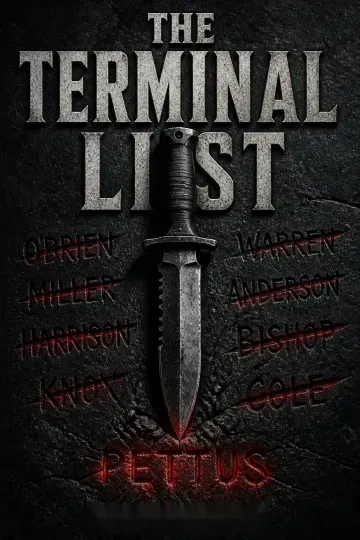
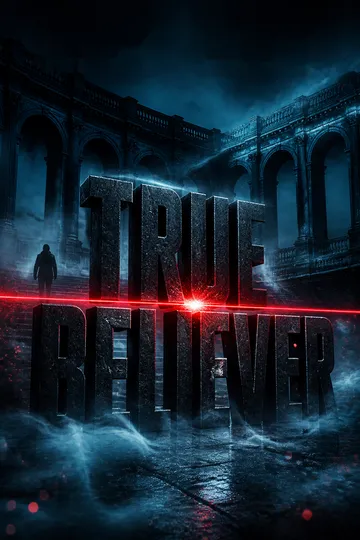
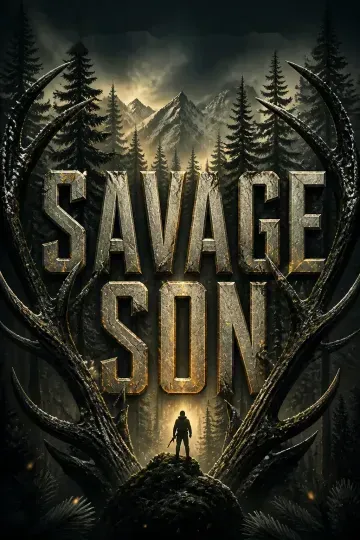
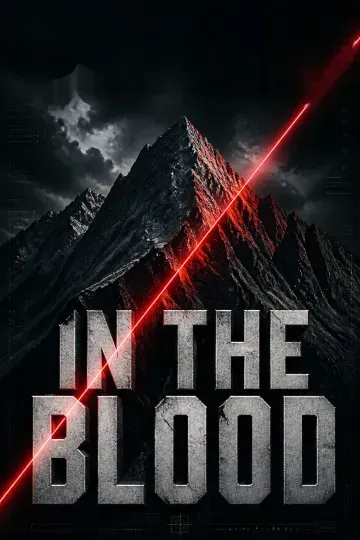
Terminal List Series



About the Author
Other books by Jack Carr


Download PDF
Download EPUB
.epub digital book format is ideal for reading ebooks on phones, tablets, and e-readers.








