

Key Takeaways
Treat precision bombing as a moral promise, not merely a technical achievement.
A dream of restraint. In the 1930s, a small group of American airmen imagined that bombers could strike crucial military and industrial targets accurately enough to end wars without mass slaughter on battlefields or attacks on whole cities. Their technical ambition was also an ethical claim: better aim could limit whom war harmed. The Dutch engineer Carl Norden built the bombsight they hoped would make that vision possible. Its reputation rested on a startling promise: a bombardier could hit a tiny target from miles above.
The dream meets war. In practice, clouds, wind, mechanical flaws, enemy fire, and human error frustrated the plan. The book follows Haywood Hansell, who kept faith with precision, and Curtis LeMay, who abandoned it for incendiary attacks on Japanese cities. Their clash asks whether technology can make violence more humane, or whether the pressure to win overwhelms the purpose for which a technology was designed.
The distinction between engineering and ethics is the book's central strength. A device can reduce targeting error without answering the prior question of which targets are legitimate. That is a familiar problem in fields such as medicine and data science: accuracy improves a tool, but values determine how it should be used. The precision ideal matters because it treats restraint as a design goal, not a pleasant extra. Its limit is equally important: a moral intention cannot guarantee a moral outcome once a tool enters an institution under pressure.
A small, isolated school can invent doctrine before the hardware exists.
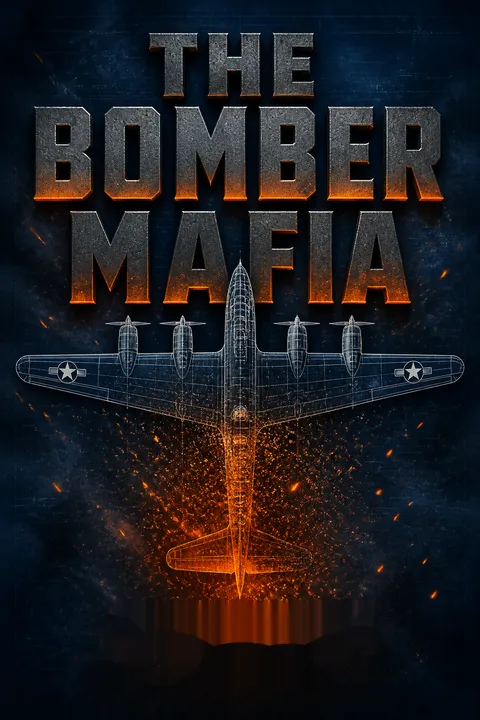
Ideas before machines. At Maxwell Field in Alabama, a tight-knit group of young air officers gathered at the Air Corps Tactical School, a military college for airpower. The group, nicknamed the Bomber Mafia, argued that bombers could fly high, attack in daylight, evade defenses, and strike selected industrial targets. Their ideas ran against a military culture that treated aircraft mainly as support for ground forces. They were imagining planes that had not yet been built and a kind of war that had not yet been tested.
Conversation became doctrine. The officers debated, taught, and refined their arguments together. When Washington needed a plan for airpower, members of the school produced a detailed blueprint in nine days, identifying targets such as power plants, oil refineries, and aircraft factories. Their influence shows how a small intellectual community can shape policy when a crisis suddenly creates demand for expertise.
The story highlights a powerful feature of innovation: ideas mature socially. Discussion lets a group test, extend, and legitimize claims that an individual might leave as speculation. But cohesion has a cost. The same closeness that helps a minority develop a new doctrine can make it harder to hear dissent or notice that assumptions remain untested. The useful lesson is not to distrust ambitious specialist groups, but to pair their creative freedom with channels for challenge and evidence.
A brilliant bombsight could not turn combat into a controlled experiment.
The machine's promise. The Norden bombsight was a 55-pound mechanical computer that helped bombardiers calculate when to release a bomb. Its gyroscopes stabilized the sight, while its dials and formulas accounted for variables such as aircraft speed, wind, and temperature. Training to use it took months. The device embodied the Bomber Mafia's hope that calculation could replace guesswork and let crews strike specific targets from high altitude.
The world interfered. The sight depended on seeing the target, stable conditions, and precise adjustments. Clouds hid factories. Cold thickened lubricating oils and increased friction inside the mechanism. Stress and movement could change a bombardier's view through the telescope. In the air, crews also faced enemy fire and turbulence. A machine tested under controlled conditions could not remove the chaos surrounding its operators, and every small error could become a large miss on the ground.
This is a classic gap between laboratory performance and real-world performance. Engineers often optimize a system under specified conditions, while users encounter shifting environments, fatigue, and unexpected interactions. The bombsight's failure was not simply a bad design; it was a reminder that reliability belongs to the whole system, including training, weather, maintenance, and human attention. Still, the instrument's limits do not make precision a foolish goal. They show why claims of precision need to be evaluated in the conditions where people will actually depend on it.
Civilian bombing failed to break London, yet leaders kept betting on it.
A failed prediction. During the Blitz, German attacks killed more than 43,000 people in Britain and damaged or destroyed over a million buildings. British leaders feared that bombing would trigger panic and collapse morale. Instead, Londoners largely stayed, adapted, and carried on. Some civilians sheltered during raids, then returned to work and daily routines. The episode offered a warning: devastation does not reliably make a population turn against its government.
The warning was ignored. British advocates of area bombing, which meant attacking broad urban zones rather than selected targets, still argued that sustained destruction would break German resolve. Churchill's close adviser Frederick Lindemann helped promote that policy, and Arthur Harris led the bombing campaign. American airman Ira Eaker argued for daylight precision attacks instead. The disagreement was not only about tactics. It was a dispute about whether terrorizing civilians could produce the political surrender bombers promised.
The Blitz makes a useful distinction between physical damage and political effect. A population can suffer terribly without responding in the way an attacker predicts; shared danger may even strengthen solidarity with the state. That does not mean bombing has no coercive effects, only that leaders cannot assume pain translates neatly into surrender. The larger caution is about models of human behavior: when strategy treats civilians as predictable levers, it can confuse a tidy theory of morale with the complicated loyalties people actually hold.
When Schweinfurt failed, the Bomber Mafia defended its theory from evidence.
A costly test. In 1943, American planners targeted Schweinfurt, where Germany concentrated much of its ball-bearing production. They expected that destroying this industrial choke point, a bottleneck whose loss might disrupt many other operations, would damage the German war effort. The raid sent roughly 230 bombers toward the factories. Around 2,000 bombs fell, but only about 80 hit the main plants. The attacks caused severe losses among aircrews, while the factories resumed work and Germany's wider production continued.
Belief survived disconfirmation. The Bomber Mafia explained away the poor results and tried again. The book connects this persistence to psychologist Leon Festinger's study of the Seekers, a group that held to a failed prophecy by revising its explanation rather than abandoning belief. Hansell likewise treated the raid as a turning point despite the evidence. Commitment can sustain a difficult project, but it can also make contrary results seem like reasons to double down.
The episode captures motivated reasoning in an unusually high-stakes setting. When people have invested identity, effort, and lives in a theory, changing course can feel like admitting that earlier sacrifices were wasted. Festinger's study offers a lens for understanding that response, though a military campaign is not identical to a small religious group. Here the strongest corrective is not ridicule but independent measurement: distinguish what a mission was intended to do, what it actually did, and whether the claimed strategic effect followed.
The jet stream made high-altitude precision bombing over Japan impossible.
A hidden force. The B-29 gave American forces a route to Japan from the Mariana Islands, about 1,500 miles away. Yet Hansell's crews could not reliably hit their targets. High above Japan, they encountered the jet stream, a narrow band of fast-moving air that could push bombers far off course. One crew reported a tailwind of 125 knots and found itself past the target before it could release its bombs. The effect was not a flaw that better training could fix.
Other routes were worse. LeMay's earlier missions from India required B-29s to cross the Himalayas, with fuel costs so extreme that one report described using twelve gallons to deliver one gallon across the mountains. In one mission, only a single bomb hit its target. These theaters exposed the difference between a strategy that is plausible on paper and one that can survive geography, machinery, and weather.
The jet stream functions as more than a dramatic obstacle. It represents a class of constraints that planners cannot negotiate with or overcome through determination alone. Modern projects face analogous limits in supply chains, ecosystems, and infrastructure: a local improvement may be irrelevant if the larger system blocks it. The book's point is not that planning is useless, but that sound planning needs models of the environment and room to revise assumptions when observation contradicts them.
Hansell lost command rather than trade precision for napalm.
An alternative weapon. Chemists Louis Fieser and E. B. Hershberg developed napalm, a jellied fuel that clung to surfaces and burned intensely. The military tested incendiary bombs on carefully constructed replicas of Japanese and German buildings in Utah. Napalm produced uncontrollable fires in 68 percent of the Japanese-house tests. As precision attacks struggled against weather and wind, senior officers urged Hansell to use the weapon against Japanese cities.
A line he would not cross. Hansell tried a limited incendiary attack, burning only a small area, but resisted the demand for a full-scale city assault. In January 1945, he was removed from command and LeMay replaced him. Hansell had made mistakes and his preferred strategy was failing, but the book presents his refusal as a moral boundary: he would not turn an attack on selected military targets into deliberate mass burning of urban neighborhoods.
Hansell's decision shows how ethical commitments become meaningful when they carry a cost. Principles are easy to praise when they do not obstruct advancement or success. At the same time, refusing one course does not automatically make a commander effective, and the crews under Hansell continued to face danger and losses. His case is most useful as a reminder that institutions need people empowered to say no, especially when an available tool makes destructive action seem administratively simple.
LeMay made weather irrelevant by shifting the target from factories to cities.
A radical change in method. LeMay found that high-altitude daylight attacks could not reliably reach their targets through Japan's weather and the jet stream. He changed the plan: B-29s would fly lower, at night, without most defensive guns, and drop napalm over urban areas instead of aiming at a single factory. The first major attack, Operation Meetinghouse, sent more than 300 bombers over Tokyo on the night of March 9 to 10, 1945.
Success measured in devastation. The raid dropped 1,665 tons of napalm and created a firestorm that burned roughly sixteen square miles. As many as 100,000 people died. LeMay argued that overwhelming force could shorten the war and reduce total suffering by avoiding a ground invasion. But the method achieved its military purpose by burning densely populated civilian districts, turning a technical workaround into a vast moral and human catastrophe.
LeMay's reasoning deserves its strongest form: prolonged war also kills, and commanders bear responsibility for the people sent into battle. Yet an urgent goal can make any means appear necessary, especially when success is defined as immediate destruction rather than long-term political consequences. The episode exposes a measurement problem: military effectiveness can be counted in targets destroyed, while civilian harm and moral injury are easier to push outside the ledger. That imbalance can make brutal strategies look cleaner than they are.
A precise weapon limits damage, but can make starting violence easier.
Accuracy is not restraint. The conclusion returns to the modern Air Force, where improved weapons can strike a particular building, or even a specific part of it, with far greater precision than World War II bombers could manage. That capability can spare neighboring structures and civilians. The generals interviewed by Gladwell also recognized its danger: when a strike appears controllable, decision-makers may feel less hesitation about authorizing it.
The older choice remains. LeMay's firebombing campaign destroyed cities across Japan, while Hansell's effort to preserve precision failed to deliver the results he sought. Japan surrendered in August 1945, but the book cannot establish that any single bombing strategy alone determined the timing. The central question therefore outlives the war: better aim can reduce damage per attack, but it cannot decide whether an attack is necessary, proportionate, or morally acceptable.
This is the book's most contemporary insight. Precision can lower the expected cost of an action for the attacker, which may lower the threshold for using force. In that sense, a tool can reduce harm within each operation while increasing the number of operations considered acceptable. The analysis also needs humility: a counterfactual war without firebombing cannot be observed, and claims that destruction prevented invasion remain uncertain. Technical restraint matters, but political judgment must still govern when and why force is used.
Analysis
The book's narrative works by setting two kinds of failure beside each other. Hansell's precision doctrine fails operationally under conditions its architects did not anticipate. LeMay's campaign succeeds at producing visible destruction, but that success does not settle whether it was necessary, proportionate, or strategically decisive. This contrast turns a history of airpower into a study of what institutions do when cherished plans collide with reality.
The sharpest argument is that technology does not carry its intended morality with it. Norden's bombsight was meant to make bombing selective, while napalm made broad destruction easier. Yet neither tool dictated its own use. Doctrine, command decisions, political pressure, and assumptions about civilian morale shaped the consequences. Precision is therefore not an ethical property of a weapon by itself. It is a capability that can enable restraint or make force feel safer to authorize.
The Hansell and LeMay contrast is memorable, but deliberately clean. Hansell stands for principle, LeMay for practical action under impossible pressure. The account also shows that LeMay cared about his crews and believed that decisive force might shorten the war. Conversely, Hansell's moral steadfastness did not make his campaign effective or spare his airmen risk. Keeping both points in view prevents either man from becoming a simple emblem.
The book leaves an important historical question unsettled: whether firebombing and atomic attacks were necessary to bring surrender in August 1945, or whether another course would have prolonged the war and produced still more deaths. The claim that devastation prevented invasion has force, but it remains a counterfactual. The most durable lesson is not that restraint always wins, or that ruthlessness saves lives. It is that technical performance cannot substitute for public moral judgment, especially when commanders are making decisions whose victims cannot participate in the debate.
Review Summary
The Bomber Mafia receives mixed reviews, with praise for its engaging storytelling and exploration of WWII bombing strategies. Critics appreciate Gladwell's examination of the moral dilemmas faced by military leaders. However, some find the book's thesis muddled and its arguments oversimplified. Readers value the historical insights and audio production but question the depth of analysis. While many enjoy Gladwell's writing style, others feel the book lacks the thoroughness of his previous works. Overall, it's seen as an interesting, if somewhat flawed, exploration of a complex historical topic.
People Also Read










Glossary
Norden bombsight
Mechanical bombing computerA gyroscopically stabilized analog device used by bombardiers to calculate when to release bombs from an aircraft. It incorporated variables such as speed, altitude, wind, and temperature. American airmen associated it with the promise of high-altitude precision bombing, but its performance depended on visibility, working components, stable aircraft, and the bombardier's ability to use it under combat conditions.
Bomber Mafia
Airpower doctrine circleAn informal group of officers and instructors associated with the Air Corps Tactical School at Maxwell Field in Alabama. They promoted the idea that high-flying bombers could attack selected industrial targets in daylight and cripple an enemy's ability to wage war. Their vision helped shape American air strategy, despite limited evidence that the imagined precision and strategic effects could be achieved.
choke points
Critical supply bottlenecksIn the book's bombing strategy, choke points are vulnerable parts of an enemy's industrial system whose loss might disrupt many connected activities. The Bomber Mafia considered targets such as power plants, oil refineries, and ball-bearing factories. The theory was that destroying a small number of crucial sites could impair an entire war economy more efficiently than attacking cities broadly.
area bombing
Broad urban-area attacksA bombing strategy that attacks extensive urban areas rather than aiming only at a specific military or industrial installation. In the book, British advocates argued that sustained attacks on cities could damage production and break civilian morale. The strategy caused enormous destruction, but the Blitz suggested that bombing did not reliably make civilians abandon support for their government.
jet stream
Fast upper-air currentA relatively narrow band of powerful winds high in the atmosphere. American B-29 crews encountered strong jet-stream winds over Japan, which could push aircraft off course or carry them past targets too quickly for accurate bombing. The phenomenon had been observed before the war, but it was not sufficiently understood by the air commanders planning high-altitude attacks.
napalm
Sticky incendiary gelA jellied fuel developed by chemists Louis Fieser and E. B. Hershberg during the Second World War. Unlike liquid fuel that burns away quickly, the gel adheres to surfaces and continues burning. The military tested it against replicas of Japanese and German buildings, then used it in incendiary bombs designed to ignite widespread fires in urban areas.
FAQ
What's "The Bomber Mafia" about?
- Overview of the book: "The Bomber Mafia" by Malcolm Gladwell explores the contrasting philosophies of two groups during World War II: the Bomber Mafia, who believed in precision bombing to minimize civilian casualties, and those who advocated for area bombing.
- Central figures: The book focuses on key figures like Haywood Hansell, a proponent of precision bombing, and Curtis LeMay, who ultimately led the firebombing campaign against Japan.
- Historical context: It delves into the technological and moral challenges faced by the U.S. Army Air Forces during the war, particularly in the Pacific theater.
- Moral and ethical questions: Gladwell examines the ethical dilemmas of warfare and the impact of technological advancements on military strategy.
Why should I read "The Bomber Mafia"?
- Insight into military history: The book provides a detailed look at a pivotal moment in military history, offering insights into the development of airpower strategy during World War II.
- Moral exploration: It raises important ethical questions about the conduct of war and the balance between military objectives and humanitarian concerns.
- Engaging storytelling: Gladwell's narrative style makes complex historical events accessible and engaging, weaving together personal stories and broader historical analysis.
- Relevance to modern warfare: The themes of technological innovation and moral decision-making in warfare are highly relevant to contemporary military and political discussions.
What are the key takeaways of "The Bomber Mafia"?
- Precision vs. area bombing: The book highlights the tension between the Bomber Mafia's vision of precision bombing and the reality of area bombing during World War II.
- Technological challenges: It underscores the limitations and challenges of the Norden bombsight and the impact of the jet stream on bombing accuracy.
- Moral complexity: Gladwell explores the moral complexities faced by military leaders, particularly the temptation to abandon principles for expedient solutions.
- Legacy of airpower: The book examines the long-term impact of these wartime decisions on the development of airpower and military strategy.
What is the Bomber Mafia's philosophy?
- Precision bombing: The Bomber Mafia believed in using precision bombing to target specific military and industrial sites, minimizing civilian casualties.
- Technological faith: They placed great faith in the Norden bombsight, which they believed could allow for highly accurate bombing from high altitudes.
- Moral high ground: The group saw precision bombing as a more humane way to conduct warfare, aligning with their ethical principles.
- Revolutionary vision: They envisioned a future where wars could be won from the air without the need for large-scale ground invasions.
Who was Curtis LeMay and what was his role?
- Military leader: Curtis LeMay was a key figure in the U.S. Army Air Forces during World War II, known for his leadership and strategic innovations.
- Firebombing campaign: He led the firebombing campaign against Japan, which involved low-altitude, nighttime raids using incendiary bombs.
- Pragmatic approach: LeMay prioritized achieving military objectives quickly, even if it meant abandoning the precision bombing doctrine.
- Controversial legacy: His actions and decisions remain controversial, raising questions about the ethics of wartime strategies.
What challenges did Haywood Hansell face?
- Technological limitations: Hansell struggled with the limitations of the Norden bombsight and the impact of the jet stream on bombing accuracy.
- Moral dilemma: He faced pressure to abandon precision bombing in favor of more destructive tactics, which conflicted with his principles.
- Operational difficulties: The harsh conditions in the Pacific theater, including logistical challenges and weather issues, complicated his efforts.
- Eventual replacement: Hansell was eventually replaced by Curtis LeMay, who took a different approach to the air war against Japan.
How did the jet stream affect bombing missions?
- Unexpected obstacle: The jet stream, a fast-flowing air current, was an unforeseen challenge that disrupted bombing accuracy over Japan.
- Impact on Norden bombsight: The high-altitude winds made it difficult for bombardiers to use the Norden bombsight effectively.
- Strategic adjustments: The presence of the jet stream forced military leaders to reconsider their bombing strategies and tactics.
- Historical significance: The discovery of the jet stream highlighted the limitations of existing technology and the need for adaptation in warfare.
What role did napalm play in the Pacific theater?
- Development of napalm: Napalm was developed as a highly effective incendiary weapon, capable of causing widespread destruction.
- Use in firebombing: Curtis LeMay used napalm extensively in the firebombing of Japanese cities, leading to massive civilian casualties.
- Moral implications: The use of napalm raised ethical questions about the conduct of war and the targeting of civilian populations.
- Long-term impact: Napalm's effectiveness in the Pacific theater influenced future military strategies and the development of incendiary weapons.
What are the best quotes from "The Bomber Mafia" and what do they mean?
- "We make progress unhindered by custom." This quote reflects the Bomber Mafia's belief in innovation and challenging traditional military doctrines.
- "The bomber will always get through." This statement encapsulates the Bomber Mafia's confidence in the power of airpower to achieve military objectives.
- "War is a mean, nasty business." Curtis LeMay's pragmatic view of warfare highlights the harsh realities and difficult decisions faced by military leaders.
- "If you, then, will worship me, it will all be yours." This biblical reference underscores the moral temptations and ethical dilemmas faced by figures like Haywood Hansell.
How does "The Bomber Mafia" explore the theme of moral decision-making?
- Ethical dilemmas: The book examines the moral challenges faced by military leaders in choosing between precision and area bombing.
- Principles vs. pragmatism: It highlights the tension between adhering to ethical principles and achieving military objectives through expedient means.
- Impact of technology: The role of technological advancements in shaping moral decision-making is a central theme throughout the book.
- Historical reflection: Gladwell encourages readers to reflect on the moral implications of wartime decisions and their relevance to modern conflicts.
What is the significance of the Norden bombsight in "The Bomber Mafia"?
- Technological innovation: The Norden bombsight was a key technological advancement that promised precision bombing capabilities.
- Limitations revealed: The book explores the challenges and limitations of the bombsight, particularly in the context of the Pacific theater.
- Symbol of the Bomber Mafia's vision: The bombsight represents the Bomber Mafia's belief in using technology to conduct more humane warfare.
- Impact on military strategy: The effectiveness and limitations of the Norden bombsight influenced the development of airpower strategy during World War II.
How does "The Bomber Mafia" relate to modern military strategy?
- Legacy of airpower: The book traces the evolution of airpower strategy from World War II to contemporary military operations.
- Precision bombing advancements: It highlights the technological advancements that have made precision bombing a reality in modern warfare.
- Ethical considerations: The moral questions raised in the book remain relevant to current discussions about the conduct of war and the use of technology.
- Lessons for the future: Gladwell's exploration of historical events offers insights into the challenges and opportunities facing military leaders today.
About the Author
Other books by Malcolm Gladwell









Download PDF
Download EPUB
.epub digital book format is ideal for reading ebooks on phones, tablets, and e-readers.








