

Plot Summary
The Shot and the Silence
The battle at Spirit Lake leaves the Saints battered: eight are dead, Vance may never walk again, Rook4 has a shattered leg, Corvus2 is stitched around a bullet wound, and Grey3 wakes missing an eye. Ava Jade1 is gone. At the docks, Corvus2 had blamed her for the losses after she shot Lenny Ace, and now he understands that his words may have driven her away.
A phone found on the dock roof reveals an earlier email in which Ava1 challenged her stalker7 to come after her. The injured Crows cannot search immediately, so Diesel6 organizes help while they wait. Corvus2 fears that Ava1 has gone alone to confront the threat, and his guilt turns every hour without news into another accusation against himself.
The novel opens with consequence rather than explanation: damaged bodies make the violence legible before the full chain of choices is known. Corvus’s central failure is not simply that he misjudges Ava, but that he uses blame to regain control after a battle he could not fully command. Her disappearance converts that private rupture into an operational danger. The email complicates the apparent cause: Ava is not merely fleeing hurt, she has been actively baiting a predator. The Crows’ injuries make their dependence on one another visible, while Ava’s absence shows how easily their protective loyalty can become a cage.
Julia’s Last Message
Corvus2 takes Becca5 to check on Julia,8 a young woman who runs a confidential help line for abused children and has stopped answering their requests for updates. Her landlord says Julia8 has been missing for weeks, and the stench inside her apartment leads Corvus2 and Becca5 to her office. Julia8 has been tortured and strangled with the cord from her landline.
Her safe has been opened, its files gone, and a message carved into the desk warns the Crows that the killing is meant for them. Corvus2 recognizes the threat as a deliberate signature, not random gang violence. He abandons the search for paperwork and leaves convinced he knows who is responsible. The missing records also mean the attacker knew exactly what Julia8 was protecting.
Julia’s death widens the conflict beyond the romantic circle and makes the gang’s private acts of protection vulnerable to exposure. Her work depends on trust, anonymity, and careful records; the killer violates all three, turning an aid network into a map of possible victims. Corvus’s reaction reveals a particular moral boundary: violence is ordinary in his world, but Julia’s deliberate suffering is not. The carved warning makes the antagonist’s strategy theatrical, designed to provoke the Crows into acting rashly. It also forces them to see that their enemies are targeting the structures around them, not only their bodies.
Becca Paints a Face
Grey3 realizes Becca’s5 vanished Ace boyfriend7 may be connected to Ava’s1 stalker,7 so he asks her to paint the man from memory. Becca5 works through the night, confronting how thoroughly she was deceived while Axel9 keeps watch outside her room. The guard does not stop the intruder. The man Becca5 knew as Jericho7 enters in disguise, kills Axel,9 and shoots Becca5 in the chest.
Before he reaches her unfinished painting, Becca5 hides it behind her self-portrait. Corvus2 and Rook4 arrive to find Axel9 dead and Becca5 barely alive; Corvus2 calls an ambulance while Rook4 keeps pressure on her wound. At the hospital, Becca5 falls into a coma. The hidden painting remains the one piece of evidence the attacker failed to destroy.
Becca’s art becomes an act of recognition under pressure. Painting Jericho requires her to turn a relationship she had understood emotionally into a face others can use as evidence. The attack answers that effort with brutal clarity: he has not merely lied to her, he considers her knowledge dangerous. Hiding the portrait behind a self-portrait gives the image a sharp psychological function. Becca conceals the man who manipulated her behind an image of herself, preserving proof while refusing to let his identity replace her own. Her survival now depends on both her body and the work she managed to hide.
The Kingsnake Slips Away
Grey3 finds paint on Becca’s5 hand and searches her room with Corvus2 and Rook.4 They discover the portrait concealed behind her self-portrait and recognize the face as Drake,7 Maverick’s10 cleanup man, the same man Becca5 knew as Jericho.7 At a meeting with the Kings, Diesel6 demands access to Aries, the suspected stalker, but the real danger is sitting among Maverick’s10 men.
Drake7 uses a smoke bomb and flash device to escape before the Crows can seize him. Grey,3 Corvus,2 and Rook4 pursue him onto the highway, but a crash and a dangerous crossing let him disappear. Corvus2 then follows a separate lead alone, ignoring his injuries and his brothers’ warnings. The gang knows the enemy’s face at last, but has lost the chance to capture him.
The portrait changes suspicion into recognition, but recognition alone does not confer power. The brothers have the right face and still cannot hold the man who has embedded himself in their alliance. Their failed pursuit exposes the weakness beneath their fearsome reputation: Drake has planned for surveillance, confusion, and escape. Corvus’s decision to follow another lead alone is psychologically consistent with his need to repair his earlier failure through action, yet it repeats the same controlling impulse that helped drive Ava away. The section turns knowledge into a test of discipline. The Crows must resist treating certainty as if it were already victory.
A Fall from the Vandermark
Drake7 reaches Corvus2 at the Vandermark Hotel by phone and directs him to the roof. There he shows Corvus2 a live video of Ava1 restrained, bruised, and nearly naked in a hidden cell. When Corvus2 refuses to obey, Drake7 touches and threatens her on camera until Corvus2 sees no way to protect her from further harm except by jumping. He steps from the roof.
Grey3 and Rook4 arrive moments later, find Corvus’s2 phone, and hear the impact below: he has landed on Diesel’s6 Camaro. The fall leaves him with serious brain bleeding and broken ribs, but he survives surgery. In the cell, Ava1 watches the footage and believes Corvus2 is dead. Drake7 uses her grief to make the threat against the other Crows feel immediate and personal.
Drake turns intimacy into coercion by making Corvus witness the threatened violation of someone he loves. The rooftop choice is not a clean act of heroism: it is the result of a trap that narrows his imagination until self-destruction appears to be the only remaining form of protection. Ava’s view of the same event makes the cost double. She is not only imprisoned, she is forced to absorb the apparent death of a loved one while unable to intervene. The scene exposes the danger in the Crows’ devotion when an enemy can weaponize it, and it leaves survival dependent on a choice Corvus cannot undo.
Fire Opens the Cell
Drake7 keeps Ava1 drugged, bound, and watched by hidden cameras. When he leaves a lighter within reach, she uses its flame to burn through the wooden chair and the restraints holding her. The fire spreads, giving her cover to reach the monitors. She finds recordings from cameras planted around the Crow’s Nest, Sanctum, and Briar Hall, along with photographs of strangled women who resemble her.
Ava1 breaks open the locked exit with metal tweezers and escapes through a concealed cellar door into the forest. Injured, barefoot, and disoriented by drugs, she follows the sound of a train until the tracks lead her toward Lennox. After stumbling in the dark, she finally reaches a road and tries to take a minivan, where Rook4 and Grey3 find her.
Ava’s escape depends on practical intelligence rather than sudden rescue. The lighter, her ability to read a lock, and her decision to use the cameras for information turn the tools of her captivity against their owner. The fire is both a physical danger and a costly act of agency: freedom comes through injury, not through a miraculous return to safety. The photographs reveal that Drake’s fixation is part of a pattern, while the railway provides a modest, concrete orientation when drugs have scrambled her sense of time and place. Her escape makes the novel’s most important distinction: protection can help, but Ava first has to save herself.
The Crows Find Her
Rook4 and Grey3 stop Ava1 before she can steal the minivan, but she attacks them with a piece of metal because the drugs make them seem unreal. When she recognizes them, she collapses into Rook’s4 arms and apologizes for failing to save Becca5 and Corvus.2 The brothers tell her both are alive: Corvus2 is recovering in hospital, and Becca5 is still in a coma.
Doctors treat Ava’s1 burns, pelvic fracture, and abdominal injuries; they warn that the trauma may have damaged her ability to have children. Rook4 admits he used cocaine while searching for her, then destroys what remains and promises to seek help rather than hide another relapse. Ava1 begins to understand that her hallucinations came from the drugs, not a permanent break with reality.
The reunion does not erase captivity. Ava reaches safety carrying false memories, guilt, and injuries that alter her sense of what the future can contain. The revelation that Becca and Corvus survived offers relief, but it also exposes how effectively Drake controlled her perception. Rook’s confession matters because it interrupts the Crows’ habit of making suffering private and disguising it as competence. Ava does not excuse his relapse; she makes honesty a condition of intimacy. Their bond becomes more durable when care includes limits, disclosure, and the right to ask for help, rather than only shared appetite for danger.
Diesel’s Buried Son
Ava1 remembers the initials on Drake’s7 lighter, and Diesel6 recognizes them as belonging to Lilliana Rose Bates, his first love. He admits that Carson,7 Lilliana’s son, is his biological child, conceived during an affair before Diesel’s6 marriage to Jacqueline.12
Carson7 strangled his mother when he was twelve; Diesel6 visited him in juvenile detention but refused to bring him into the Saints’ family. Later letters from prison show Carson’s7 growing obsession with becoming a Saint.
Ava1 and the brothers connect that history to the campaign against them: Carson7 helped provoke the war with the Aces, weakened the Saints, and used the alliance with the Kings to get close. Diesel’s6 concealed past has become a present threat to every person he calls family.
The lighter converts an intimate object into evidence. Its initials force Diesel’s private history into the same room as the violence he has tried to manage as a gang leader. His past is not a simple explanation for Carson’s crimes, but his secrecy has left the family without information that might have exposed the danger sooner. The Crows’ anger is therefore directed at two linked failures: Carson’s choices and Diesel’s refusal to share a threat that concerned them all. Ava’s role in assembling the pattern matters; she reads the evidence not as destiny but as a scheme built from specific decisions.
Eggs Buy an Army
The Saints need money and ammunition, so Ava1 helps plan a burglary at her wealthy aunt Viola Humphrey’s mansion. Grey3 disables the security system while Ava1 guides the group to the Fabergé eggs and jewelry she knows are valuable.
They escape with the haul, though Viola returns during the theft and later dies of a heart attack. Her staff vanish with other valuables, leaving little appetite for an investigation. Under the law, Ava1 inherits the estate, providing the gang with resources to rebuild.
Meanwhile, Becca’s5 memories of Jericho7 mention a factory where he met his supposed superior. Grey3 searches property records and finds an old metalworks leased under Maverick’s10 real name, Clancy Moore. The theft solves the weapons shortage; Becca’s5 clue points the Crows toward their enemy’s base.
The burglary makes Ava an active architect of the response rather than a protected object waiting for the men to act. Her knowledge of the house and Grey’s technical skill turn inherited wealth into collective leverage. Viola’s death complicates the inheritance, but Ava’s emotional distance from her aunt is rooted in a history of harm, not simple greed. The factory clue also shows how evidence accumulates through different forms of knowledge: Becca remembers a place, Grey verifies it through records, and Ava supplies the practical resources to make an attack possible. The Crows’ power is rebuilt through cooperation, not sheer force alone.
The Factory Takes Shape
Grey3 identifies the factory as the Kings’ likely base, and Mickey scouts it, confirming cars, guards, and trip wires around the building. Diesel6 plans a three-sided attack intended to drive the Kings through the front doors into waiting Saints. Ava1 wants to enter with the ground team, but Diesel6 assigns her to a sniper position because her marksmanship can protect the others from above.
Before the operation, Damien11 arrives with his sons Hardin15 and Kaleb16 and twelve additional men, answering Diesel’s6 need for help. The brothers agree to attack before Carson7 can strike their weakened territory. Ava1 accepts the elevated position, taking a new pistol and communications gear so she can warn the Crows if the assault turns against them.
The plan is a negotiated balance between Ava’s autonomy and the group’s fear of losing her. Diesel does not keep her out of the operation; he gives her a role that uses her skill while managing the risk. Ava accepts only after securing a way to remain connected to the men below. That detail matters because the earlier catastrophe grew from isolation and failed communication. Damien’s arrival also marks a shift from a threatened family unit to a wider coalition. The Crows are no longer fighting only through personal loyalty; they are trying to build a structure capable of surviving a coordinated enemy.
The Cellar’s Second Door
The Saints begin with grenades and a rush on the factory, but Carson7 has concealed far more Kings than Mickey’s scout found. The extra force overwhelms the expected pattern. From the hill, Ava1 uses her rifle to protect the ground team until her weapon jams and her ammunition runs out.
She spots Carson7 fleeing into the trees, abandons the sniper post, and pursues him without her radio or phone. Marking rocks and trees with her blades, she follows his trail to the hidden cellar where Drake7 held her.
Inside, she finds rooms bearing signs of captivity and reaches the control room, where Carson7 is destroying evidence. Ava1 attacks and wounds him, but he shoots her twice through her vest. She falls before she can finish the fight, while the battle still rages outside.
The tactical plan fails because Carson has hidden the scale of his force, but Ava’s response is not a reckless rejection of her assigned role. She first fulfills it, spending her ammunition to protect the people below. Only when Carson appears does the pursuit become personal and time-sensitive. Her marks on the trail echo her own escape from the forest, transforming the route of her captivity into a path she now chooses to follow. The cellar’s return strips away the distance between past and present. Yet the two bullets remind the reader that courage does not guarantee control over consequences.
The Crows Refuse Her Death
Corvus2 and Rook4 reach the cellar as Ava1 collapses, and Corvus2 shoots Carson’s7 hand while Rook4 tries to revive her. When the veterinarian cannot restore her heartbeat, Corvus2 threatens him into continuing. Rook4 uses a tube to drain blood from Ava’s1 lung, buying time for the group to get her to emergency care. At the same moment, Rook4 nearly kills himself with a grenade, unable to imagine living if Ava1 is dead.
Diesel6 tackles him and throws the grenade clear. Ava1 coughs and breathes again. Carson7 is captured, and Diesel6 rejects him as a son,7 leaving him to the Crows. Their survival comes at a cost: the rescue depends on quick medical improvisation, and Rook’s4 crisis exposes the danger in making one person the sole reason to live.
The rescue is a collective refusal to accept helplessness. Corvus’s earlier leap had turned self-sacrifice into a private bargain; now he directs his force toward medical action, while Rook’s despair threatens to repeat the same logic. Diesel’s intervention saves Rook as the vet and Rook work to save Ava. The scene does not present violence as a cure. Instead, it shows how the Crows’ skills can serve preservation as well as destruction, though their methods remain desperate and morally unstable. Carson’s capture shifts the question from whether the family can survive him to what justice will mean after survival.
Carson’s Last Audience
After Ava1 recovers enough to stand, the Crows keep Carson7 prisoner beneath Sanctum and torture him for what he did to her and Becca.5 Ava1 insists on being present, reclaiming the body and desire he tried to control by choosing how she will be seen and touched. The three men make love to her in front of Carson,7 an act she frames as taking back the intimacy he tried to make his own.
She then shoots Carson7 twice, naming the harm done to Becca5 and to herself. His death ends the immediate threat, though the cost cannot be undone: Julia,8 Axel,9 and many Saints are dead, Becca5 carries lasting injuries, and Ava’s1 body may not recover fully. The Crows’ vengeance gives them closure, but not restoration.
Ava’s revenge is staged as an assertion of authorship over her own body. Carson’s plan depended on renaming her, isolating her, and treating her as material for his private fantasy. She counters by choosing the witnesses, the terms of intimacy, and the moment of death. The scene’s erotic element is therefore not merely a reward or spectacle; within the story, it marks a deliberate contrast between coercion and consent. Still, the ending is not clean catharsis. The Crows’ violence answers the perpetrator but cannot restore the dead or erase the physical consequences. Agency is reclaimed as choice, not as a return to an untouched past.
A Family of Their Choosing
On New Year’s Eve, Ava1 watches fireworks with the Crows from Sanctum’s roof after Carson’s7 death. Diesel6 gives her Jacqueline’s12 leather jacket and welcomes her into the family, then offers his adopted sons the chance to take the St. Crow name. His help also keeps the students’ grades intact so they can return to school.
Ava1 inherits her aunt’s estate, giving the Saints money to rebuild, while Corvus2 takes a record deal and plans to tour. Becca5 wakes from her coma, reconnects with Ava,1 and chooses CalArts despite her father’s demand that she attend MIT. She and Ava1 agree to remain close. The ending answers the opening’s fracture with practical commitments: a home, a future, and a family whose bonds are chosen rather than merely inherited.
The resolution answers the novel’s opening wound without pretending that family can undo violence. Diesel’s jacket and the St. Crow papers make belonging tangible, while the estate turns Ava’s compromised inheritance into a resource for collective survival. Becca’s decision to study art parallels Ava’s refusal to be reduced to the choices other people make for her. Corvus’s record deal offers another future beyond gang conflict, though the book does not erase the dangers that remain in their world. The fireworks matter because the characters can finally watch something explode without having to turn it into a battle.
Analysis
Warped Minds treats intimacy as both shelter and a point of attack. Ava1’s relationship with Corvus,2 Grey,3 and Rook4 is not a detour from the crime plot; it is the reason Carson7 can manipulate the group so effectively. He understands that each Crow will risk himself to protect her, then arranges situations in which protection appears to demand self-destruction. Corvus2 jumps from a roof, Rook4 nearly follows him into death, and Ava1 is repeatedly made to believe that the people she loves have been lost. The novel’s central psychological question is whether fierce attachment can exist without becoming possession.
Ava1’s answer is not to reject dependence, but to insist on agency inside it. She fights her way out of captivity, makes choices about her body, demands honesty from Rook,4 and takes part in planning the gang’s response. Her resilience is not presented as invulnerability. She is injured, frightened, disoriented by drugs, and burdened by guilt. What makes her powerful is not an absence of damage but her ability to act while damaged, then accept help without surrendering the right to decide what happens next.
The Crows’ family is likewise built from acts rather than blood. Diesel6’s adoption of the three brothers gives them a home, while his concealed past with Carson7 shows the danger of treating secrecy as protection. The revelation does not make Diesel6 the author of his son’s7 crimes, but it forces him to confront how withholding information left the others exposed. His later welcome to Ava,1 and his offer of the St. Crow name to his sons, answer that failure through public commitment rather than private sentiment.
The book’s violence is deliberately difficult to separate from its romance. The Crows use brutality to defend one another, yet the narrative distinguishes their chosen intimacy from Carson7’s coercion through consent and self-determination. Revenge ends his immediate power, but it cannot return Julia,8 Axel,9 or the lost years to anyone. The final fireworks offer a modest counterimage: for a moment, the family can gather without needing to turn danger into a test of loyalty. Survival becomes meaningful when it opens a future beyond the next act of violence.
Review Summary
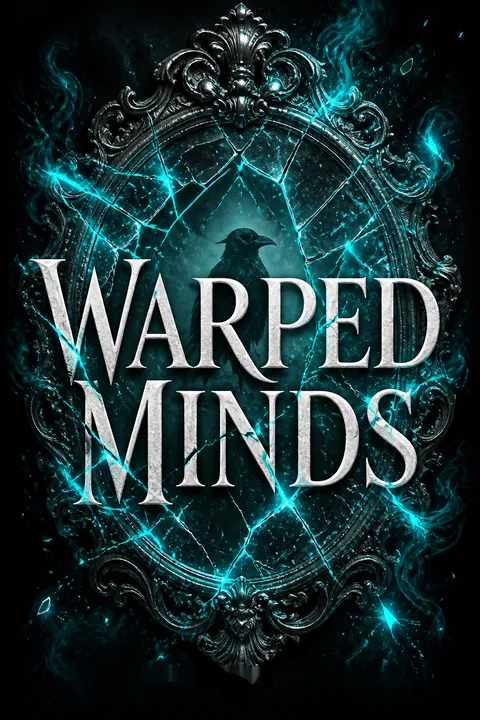
Warped Minds received mixed reviews, with an overall rating of 4.36/5. Many readers praised the thrilling conclusion to the series, highlighting its dark themes, intense action, and steamy romance. They appreciated the character development and emotional depth. However, some critics found issues with plot holes, timeline inconsistencies, and unrealistic elements. Despite these concerns, fans generally enjoyed the epic finale and satisfying ending for Ava Jade and her Crows.
People Also Read
Characters
Ava Jade Mason
The Crows’ fierce centerAva Jade is a sharp-witted, self-reliant young woman whose humor and appetite for danger sit beside a deep fear of being powerless. Her childhood with a con-artist father taught her to read people and improvise; her mother’s history left her wary of love as a force that can distort judgment. She is drawn to the Crows because they recognize the violence and darkness she does not try to disguise. Her closeness with Corvus2, Grey3, and Rook4 is shared rather than exclusive, built on desire, loyalty, and an unusual willingness to let each man see her vulnerabilities. Ava’s defining tension is between independence and belonging: she wants protection without surrendering authorship of her own life.
Corvus James
The controlled protectorCorvus is the eldest and most controlled of the three adopted Crow brothers, a calculating presence whose self-command hides an intense fear of losing the people he loves. He is a musician as well as a gang member, and his artistic side coexists with a capacity for decisive violence. With Ava1, his desire to protect can become possessiveness, especially when guilt makes him believe he must control every danger before it reaches her. He shares a deep, complicated bond with Grey3 and Rook4, often acting as the one who plans and interprets threats. His psychological struggle is not a lack of feeling but an effort to contain it until containment itself becomes another kind of harm.
Grey Winters
The Crows’ quiet strategistGrey is the analytical, socially graceful brother, often serving as mediator when Corvus2 and Rook4 push toward opposite extremes. Beneath his reputation as a charming playboy, he is observant, technically gifted, and unusually attentive to the people others overlook. He uses computers, surveillance, and patient deduction to make sense of threats that cannot be solved by force alone. His gentleness is not passivity; when his family is endangered, he can act with frightening precision. With Ava1, Grey offers emotional steadiness and careful affection, though his habit of absorbing pain quietly can leave others uncertain about what he needs. He is driven by loyalty and by the belief that understanding a problem may save lives.
Rook Clayton
The volatile loyalistRook is the most openly ferocious of the brothers, a man who channels pain into motion and treats loyalty as an absolute obligation. His dark humor and appetite for physical confrontation can make him seem invulnerable, but they also conceal a mind that struggles to stay balanced when fear and loss overwhelm him. He is fiercely attached to Corvus2 and Grey3 and finds in Ava1 someone who can meet his intensity without mistaking it for simple cruelty. Rook’s relationship with her depends on an unusual combination of roughness, trust, and explicit attention to consent. He seeks closeness, even when his instincts tell him to disguise need as aggression.
Rebecca Hart
Ava’s artist and allyBecca is Ava’s1 closest friend, a talented artist raised with money and expectations but not much freedom to choose her own future. Her polished appearance can make people underestimate her, yet she shows nerve when confronted with violence and a willingness to act even while frightened. Art gives her a way to observe and preserve what others might dismiss, and her loyalty to Ava1 is more than affection: it is a form of chosen kinship. Becca’s conflict with her father reflects her broader struggle to distinguish security from obedience. She wants a life shaped by her own talent, not merely by the social and academic path laid out for her.
Diesel St. Crow
The family’s hard-edged patriarchDiesel leads the Saints with discipline, strategic patience, and a capacity for violence that few people challenge. He adopted Corvus2, Grey3, and Rook4 and treats their chosen family as the center of his personal world, even when gang leadership demands that he make cold decisions. His late wife Jacqueline12 remains a moral and emotional reference point, shaping the tenderness he rarely displays in public. Diesel’s instinct is to protect by withholding information and controlling risk, a habit that can become damaging when others need the truth. He respects strength, but his deeper test is learning that authority does not exempt him from accountability to the people he calls his children.
Drake
The Kings’ quiet fixerDrake serves Maverick’s10 Kings as a cleanup man, a role that places him near the aftermath of violence rather than at its obvious center. Lean and seemingly less formidable than the gang’s bruisers, he relies on observation, disguise, and access to move through rooms without attracting much scrutiny. His composed manner makes him difficult to read, and his position beside Maverick10 gives him opportunities to gather information. To the Crows, he first appears to be a possible source of answers about a wider threat. His ability to seem useful and unremarkable is precisely what makes him unsettling.
Julia
The children’s advocateJulia runs a confidential phone service for children facing abuse, drawing on her own experience to make help feel possible rather than theoretical. She lives simply and resists the Saints’ attempts to make her work comfortable or safe, believing that even one successful intervention matters. Her compassion is practical: she records details carefully, protects callers’ identities, and accepts risks that others would avoid. Julia represents the vulnerable community beyond the gang, and her work gives the Crows a way to use their resources for something other than retaliation.
Axel
The dependable SaintAxel is a loyal Saint who proves useful under pressure, even when injuries leave him physically compromised. He accepts the task of watching over Becca5 and treats the assignment seriously rather than as an inconvenience. His steady presence gives the group a practical sense of security, and his willingness to help reflects the quieter forms of loyalty that sustain the Saints beyond the most visible fighters.
Maverick
The uneasy King leaderMaverick leads the Kings and negotiates an alliance with Diesel’s6 Saints, presenting himself as a powerful partner while often relying on the judgment of his inner circle. He is concerned with territory, arms, and the standing of his crew, but he does not always project the confidence expected of a gang leader. His relationship with Diesel6 is transactional, shaped by mutual advantage and the possibility that cooperation may end as soon as the balance of power changes.
Damien St. Vincent
Diesel’s allied brotherDamien is Diesel’s6 brother and the leader of a separate Saints chapter, with territory and responsibilities of his own. He carries the same dangerous authority as Diesel6 but is more willing to offer help when family is in trouble. His bond with Diesel6 is affectionate beneath their hard exterior, though both men are accustomed to managing their own problems. Damien’s arrival makes clear that the family’s reach extends beyond Thorn Valley.
Jacqueline St. Crow
Diesel’s remembered heartJacqueline was Diesel’s6 wife, a woman remembered by the Saints as generous, warm, and deeply invested in creating a family. She could not have children, but her wish to raise them led Diesel6 to adopt Corvus2, Grey3, and Rook4. Though absent from the present action, her values shape the household Diesel6 built and the tenderness he keeps guarded. Her memory is a source of both comfort and grief for him.
Kitrick Dagwood
Ava’s former instructorKit is a self-defense instructor from Lennox and one of Ava’s1 past romantic connections. He arrives at Briar Hall looking for her, unaware that his appearance will be read as a threat by the Crows. His confidence and physical training make him seem more imposing than he is in the face of their violence.
Dominique
Ava’s old friendDominique is an old friend from Ava’s1 life in Lennox who accompanies Kit13 to Briar Hall. She is more cautious than he is and tries to pull him away from a confrontation. Her concern for Kit13 reveals a protective streak beneath her privileged appearance.
Hardin St. Vincent
Damien’s dangerous sonHardin is one of Damien’s11 sons, a broad-shouldered fighter whose quiet manner suggests experience rather than showmanship. He arrives with his father11 to support Diesel6 and the Thorn Valley Saints. His steadiness makes him a useful ally in a group where sudden violence is always possible.
Kaleb St. Vincent
Damien’s lively sonKaleb is Hardin’s15 brother and Damien’s11 more openly sociable son. He greets the Crows with enthusiasm and teases them as family, easing the tension of an approaching fight. His humor does not make him less capable; it simply gives the family a warmer register than its reputation suggests.
Plot Devices
Ava’s taunting email
The stalker’s invitationAva’s1 earlier email challenges her unseen pursuer to stop hiding and come after her. The message remains on the phone recovered from the docks, where Grey3 and the others discover it after Ava1 disappears. It establishes that she has been provoking the stalker7 rather than merely reacting to him, and it sharpens the fear that she may have gone to confront him alone. The email gives the search its emotional urgency while preserving uncertainty about the pursuer’s location and identity. Its importance lies in the gap between Ava’s1 confidence in her own nerve and the danger of acting without the Crows’ knowledge.
Becca’s hidden portrait
A face preserved as evidenceBecca5 paints the man she knew as Jericho7 from memory after Grey3 suspects the former boyfriend may be connected to Ava’s1 stalker7. When the intruder attacks, she hides the portrait behind her own self-portrait before he can take it. Grey3 later notices paint on Becca’s5 hand and discovers the concealed image, which allows the Crows to recognize Drake7. The painting gives an artist’s memory investigative force: it makes visible the person who has survived by hiding behind aliases and appearances. Its concealment also reflects Becca’s5 instinct to preserve her own identity while exposing the man who manipulated her.
The engraved lighter
A family secret made legibleThe lighter Drake7 carries bears initials that Ava1 remembers after escaping. Rook4 recognizes them, and Diesel6 identifies them as belonging to Lilliana Rose Bates, the mother of his estranged biological son7. The object turns a personal possession into a link between the stalker7, Diesel’s6 past, and the family’s present danger. It is especially effective because it is small and ordinary, carried casually through meetings and captivity, while its meaning has been hidden in plain sight. The lighter also becomes the means by which Ava1 starts the fire that frees her from the chair.
The surveillance network
A weapon turned against its ownerDrake’s7 concealed cameras watch the Crow’s Nest, Sanctum, Briar Hall, and other places in the group’s orbit. While imprisoned, Ava1 finds the feeds and recordings, learning both how extensively he has monitored them and how he has approached her while she slept. Later, Grey3 uses traffic footage, gas station recordings, and other security systems to trace the vehicle that carried Ava1 away. Surveillance first represents the invader’s power to make private spaces unsafe, then becomes a practical tool for the Crows to find his route and prepare a counterattack.
The Fabergé heist
Inherited wealth becomes firepowerAva1 knows the valuable objects inside her aunt Viola Humphrey’s mansion, and Grey3 can disable the old security system. Their theft of Fabergé eggs and jewelry gives the Saints money to buy weapons and ammunition when their normal supply routes are compromised. The plan also gives Ava1 a concrete role in rebuilding the group after the battle at the docks. Her later inheritance expands the same resource into a longer-term foundation. The heist links her knowledge of her former household to the gang’s survival, converting an inheritance associated with control and resentment into material power she can choose how to use.
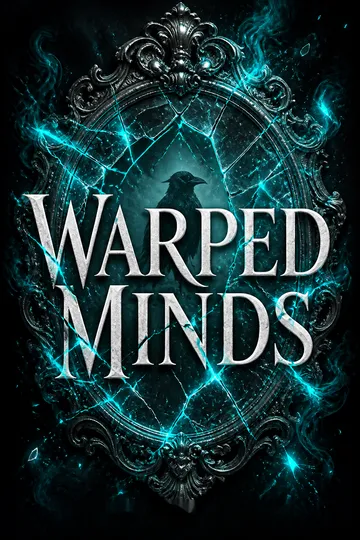
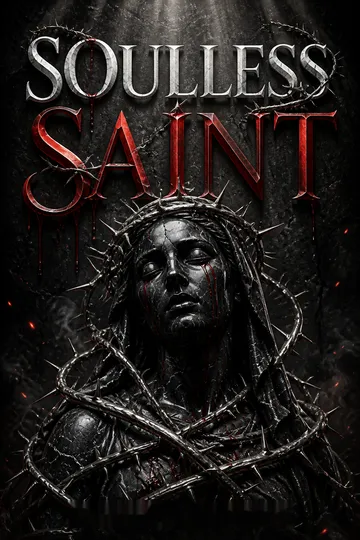
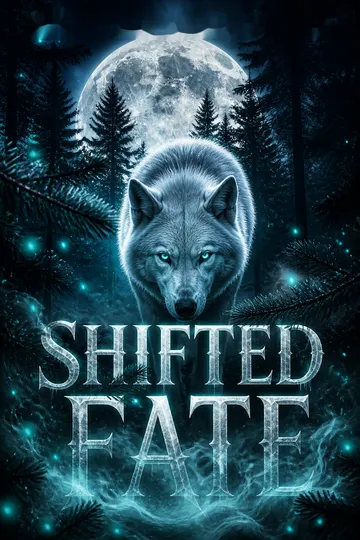
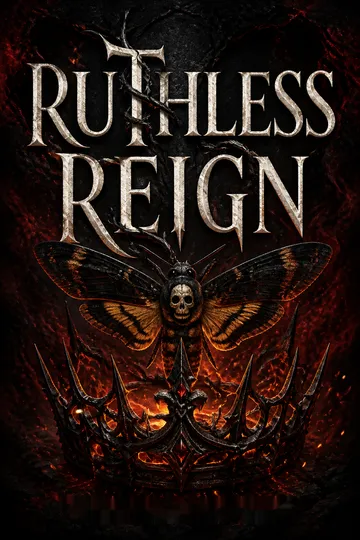
Boys of Briar Hall Series

About the Author


Download PDF
Download EPUB
.epub digital book format is ideal for reading ebooks on phones, tablets, and e-readers.








