

Key Takeaways
Anchor hope to a promise-maker, not to the outcome you want
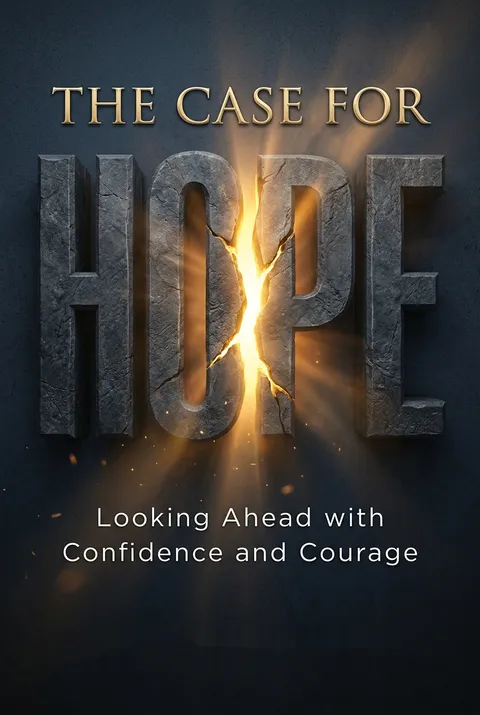
Hope is more than wishing. Strobel separates wishful thinking, blind optimism, and hopeful dreams from biblical hope. Wishing cannot change the facts, optimism can ignore them, and even diligent plans depend on circumstances beyond one person’s control. Biblical hope, as he defines it, is confidence that God can and will keep the promises Christians trust him to make. He calls this “living hope,” grounded in Jesus’ resurrection and the promised future it represents.
Despair narrows the future. The opening story describes a young Marine prisoner who lost hope after discovering his captors would not release him. He stopped eating and died within weeks. The story illustrates the book’s claim that hope can sustain a person under severe pressure. It does not mean Christians are promised the particular earthly outcome they want; the anchor is God’s character and promises, not a preferred result.
What's valuable here is the distinction between optimism and a reason to expect something. Optimism can be a useful temperament, but it offers no answer when reality refuses to cooperate. Strobel’s account instead asks readers to identify what their hope rests on. That makes the idea more durable, while also inviting a careful question: which promises are being claimed, and how should they be interpreted? If hope is treated as a guarantee of success, suffering can feel like betrayal. If it means confidence in companionship, forgiveness, and a future beyond present circumstances, it can coexist with disappointment without denying it.
Treat Jesus’ resurrection as the load-bearing claim behind Christian hope
The argument begins with history. Strobel presents Michael Licona’s “minimal facts case,” an argument built from claims that Licona says are strongly supported and widely accepted by scholars, including skeptics. The five facts are: Jesus died by crucifixion; his followers believed he appeared alive; persecutor Saul became the apostle Paul after claiming an encounter; Jesus’ skeptical brother James became a believer after claiming an appearance; and the tomb was empty. The case draws on early Christian testimony, the Gospels, and references outside the New Testament.
Evidence supports an inference. Strobel argues that resurrection best explains this combination of claims and that Christian hope depends on that conclusion. He also says the resurrection would validate Jesus’ identity and promises. The details are not interchangeable: evidence that people believed something is evidence of their conviction, while whether the event happened remains a further historical judgment.
The strongest feature of this case is its cumulative structure. Instead of asking one source to carry the whole argument, it considers several kinds of testimony and asks which explanation accounts for them together. That is a familiar form of historical reasoning, where conclusions are inferred from incomplete records rather than directly observed. The distinction between evidence and conclusion matters, though. A willingness to suffer can support sincerity, but does not by itself establish that a belief is true. Readers can take the argument seriously while still examining the dating, independence, and interpretation of each source.
Let grace make a new identity visible in costly choices
Change becomes credible in conduct. Ronnie Bronski was a Chicago gang member who shot a rival and fled to avoid prosecution. After becoming a Christian in Portland, he returned to Chicago, pleaded guilty rather than risk a false acquittal, and apologized to the man he had shot. A judge placed him on probation, persuaded that he no longer posed the same threat. Strobel, then a skeptical reporter, covered the story and later concluded that Ronnie’s change was more than a self-help turnaround.
The past is not the whole person. The chapter presents grace as both forgiveness and a new direction, not as pretending that harm never happened. Ronnie’s willingness to face consequences makes the transformation concrete. Strobel connects the story to his own change from a hard-hearted, career-focused atheist to a Christian, and urges readers to keep practices such as prayer, Scripture reading, worship, and fellowship alive rather than letting grace become an abstract idea.
The story’s persuasive force comes from accountability, not merely a dramatic conversion claim. Ronnie does not use a changed self-image to avoid the damage he caused; he takes steps that expose him to consequences. In moral psychology, identity shifts are more credible when they are reinforced by repeated behavior and repaired relationships. At the same time, one compelling testimony cannot establish that every profound change has the same cause. The book offers a Christian interpretation of transformation, while the observable pattern, facing harm and choosing service, remains meaningful across religious and nonreligious settings.
Ask for strength, then move before you feel ready
Dependence leads to action. Strobel names a five-step practice the “Five A’s,” a way to seek God’s strength during fear, temptation, or hardship: admit personal weakness, affirm God’s power and presence, align with God’s will, ask specifically for help, and act in obedience. The sequence resists both self-sufficiency and passive waiting. Prayer is not presented as a button that guarantees a desired result; action is part of trusting God.
Courage can arrive in motion. Strobel describes needing to reconcile with someone he had hurt. He prayed through the first four steps but still felt apprehensive. He called anyway, and found strength during the difficult conversation. The chapter also recounts Jesus telling ten lepers to go to the priests before they were healed; they were cleansed as they went. The practical lesson is to take the next responsible step even when confidence has not arrived first.
This framework links spiritual dependence to behavior rather than treating prayer and action as rivals. That combination resembles an implementation intention: a person translates a value into a concrete next move instead of waiting for a feeling to change. The framework is especially useful when the next step is clear but emotionally uncomfortable. Its safeguard is the instruction to align with God’s will, which the book connects to Scripture and wise counsel. That safeguard matters because strong conviction alone cannot establish that a risky impulse is divine guidance.
Treat doubt as a question to investigate, not a verdict on faith
Uncertainty is not rejection. In Strobel’s account, John the Baptist, imprisoned and facing death, sent messengers to ask whether Jesus really was the expected Messiah. Jesus answered by pointing to what the messengers had witnessed, rather than condemning John for asking. The chapter distinguishes doubt, being divided or uncertain, from unbelief, a settled refusal to trust. It argues that questions can prompt a more considered faith.
Use the FAITH steps. Strobel’s acronym is a response plan: find the source of doubt, ask God and trusted people for help, implement a course of treatment, take care of spiritual health, and hold unresolved questions in tension. The causes might be intellectual, emotional, or connected to choices. The author recommends naming specific questions, seeking informed counsel, and accepting that some answers may remain incomplete for now.
The distinction between doubt and denial gives people room to speak honestly without treating uncertainty as moral failure. That is valuable in any community where belonging depends on trust. The book’s practical emphasis on identifying a doubt’s source also prevents every problem from being reduced to an argument: grief, trauma, intellectual questions, and conduct may call for different kinds of help. A further caution is that spiritual practices need not replace professional care when distress is severe. Holding a question open can be patient inquiry, but it should not become a way to avoid evidence.
Let heaven shrink fear without shrinking grief
A future can change the present. Strobel recounts the sudden deaths of his childhood friend Bart, his father, and another friend, as well as a frightening medical crisis of his own. During that crisis, he feared dying but believed that death would mean being with God and that his family would be cared for. The book presents this assurance as a source of courage, not as a claim that death is painless or that loss should not hurt.
Heaven reshapes three judgments. In the Christian vision Strobel describes, a promised life with God affirms human worth, helps people endure temporary hardship, and gives them something to anticipate even when its details remain unknown. He cites Paul’s many hardships and argues that the hope of heaven gave Paul courage. The promise is explicitly tied to trust in Christ, not to earning a place through moral achievement.
The chapter’s most useful distinction is between grief and hopelessness. A belief in an afterlife need not erase the pain of separation; it can offer a larger story within which the pain is carried. Future-oriented beliefs often shape present decisions, and here the promised future is meant to loosen fear’s hold on moral courage. The idea deserves careful handling: assurance about heaven can comfort, but it should not be used to hurry another person through grief or dismiss preventable suffering. The author’s own fear during illness makes the comfort more human than triumphalist.
Keep praying for unlikely people, but offer grace without coercion
No one is beyond change. Strobel recalls William Neal Moore, a man sentenced to death for murder who became a Christian in prison. Moore led Bible discussions, supported fellow inmates, and eventually had his sentence commuted before being released on parole. Strobel also tells of his atheist father-in-law Al, who accepted Christian faith near the end of his life after decades of rejecting it. These stories support the book’s conviction that a person’s history does not settle what that person can become.
Hope becomes a responsibility. Strobel describes Christians as ambassadors who should extend the grace they have received and keep praying for people they consider unreachable. The stories are offered as reasons not to give up, not as a formula that guarantees conversion. Their moral complexity matters: spiritual change may be profound, but it does not erase victims, undo past harm, or make every consequence unjust.
These testimonies widen the reader’s sense of who might change, especially when a person’s past seems to make compassion feel naïve. Moore’s service to other prisoners makes the transformation socially visible, while Al’s late conversion underscores how unpredictable another person’s inner life can be. The language of invitation is strongest when paired with respect for agency. Prayer and patient example can sustain care, but pressure can damage relationships and contradict the very grace being offered. Hope for a person should include concern for those harmed by that person.
Turn hope into a daily practice, not just an emergency belief
Rehearse the reasons for hope. Strobel closes with a 30-day journey through Bible passages on hope. The suggested routine is simple: read one passage, reflect on what it says, note a possible response or action, and pray. He encourages readers to do the practice with a friend, group, or church class, making hope part of shared life rather than a private crisis tool.
Small rituals create continuity. The passages address affliction, waiting, weakness, suffering, death, and the future. Their range keeps hope from being reduced to a single mood or circumstance. The purpose is not to memorize a slogan or deny a difficult day, but to return attention to the book’s central grounding: God’s character and promises, understood through Jesus. A daily practice gives that belief repeated contact with ordinary decisions.
The closing exercise turns a large theological claim into a repeatable practice. Reflection, written intentions, and prayer can help people notice how a belief affects conduct, while doing the exercise with others adds conversation and accountability. The format is deliberately modest, which makes it easier to sustain than an ambitious spiritual overhaul. Still, repetition alone does not guarantee insight. A reader benefits most by asking what a passage means in context and what concrete response it invites, rather than treating Scripture as a set of instant reassurances.
Analysis
The Case for Hope is both Christian apologetics and pastoral encouragement. Its organizing movement is deliberate: first define the kind of hope being defended, then identify its claimed historical foundation, and finally show how that belief might shape conduct, doubt, grief, and relationships. Personal stories do much of the emotional work. A prisoner loses hope and dies; a gang member returns to face judgment; a skeptical reporter reconsiders his assumptions; and people facing death imagine a future beyond it. The recurring contrast makes an abstract doctrine legible through decisions and consequences.
The book’s central strength is its refusal to make hope merely a positive attitude. Its account has a specific anchor, the Christian claim that Jesus rose from the dead, and the author makes clear that without this claim Christianity’s hope loses its foundation. The “minimal facts” argument gives readers a route into the historical case, but its conclusion is interpretive. Evidence that early Christians believed Jesus appeared, or that the tomb was empty, does not itself compel every reader to infer a miracle. The book’s own reasoning is best evaluated by separating the historical claims from the explanation it favors.
The practical frameworks, the Five A’s and FAITH, offer memorable ways to translate belief into action. Their strongest common feature is movement: admit weakness, ask for help, investigate uncertainty, then take a next step. They also work best when paired with humility about what a person can know. A conviction that a course of action is divinely guided deserves testing through Scripture, counsel, consequences, and care for others.
The book is written from a committed evangelical perspective, not as a neutral survey of world religions or a clinical account of resilience. Its brief depictions of other traditions should be read as part of its argument, not as comprehensive descriptions. For sympathetic readers, its most lasting contribution is a coherent account of hope as trust, moral renewal, and expectation. For skeptical readers, its stories may still prompt a useful question: what beliefs can sustain courage without requiring a person to deny pain?
Review Summary
The Case for Hope receives mostly positive reviews, with readers praising its encouraging message and biblical foundation. Many find it helpful for strengthening faith and understanding biblical hope. Some note it's simpler than Strobel's previous works, focusing more on inspiration than apologetics. Readers appreciate the personal stories and practical applications, including the 30-day journal. A few critics find it repetitive or overly simplistic, but most recommend it for both believers and non-believers seeking hope in challenging times.
People Also Read










Glossary
living hope
Hope grounded in ChristStrobel’s term for Christian hope grounded in Jesus’ resurrection. It means confidence that God can fulfill the promises Christians trust, including forgiveness, guidance, and eternal life. Unlike wishing or optimism, it is not simply a desire for a preferred outcome. Its certainty rests on God’s character and the future Christians believe Christ has secured.
minimal facts case
Historical argument for resurrectionAn argument for Jesus’ resurrection that begins with a small set of claims its proponents regard as strongly supported by historical evidence and broadly accepted by scholars, including skeptics. In the book, these include Jesus’ crucifixion, the disciples’ belief that he appeared to them, the conversions of Paul and James, and the empty tomb. The argument then asks which explanation best accounts for the combined evidence.
Five A’s
Steps for seeking God’s strengthA five-part practice Strobel presents for seeking divine strength in difficult circumstances: admit personal weakness, affirm God’s power and presence, align with God’s will, ask for needed help, and act in obedience. The sequence joins prayer and trust to practical action, emphasizing that a person may need to move forward before feeling confident.
FAITH
Steps for addressing doubtStrobel’s acronym for responding to spiritual doubt: find its root, ask God and other people for help, implement a course of treatment, take care of spiritual health, and hold remaining questions in tension. It encourages people to identify whether a concern is intellectual, emotional, or connected to choices, then seek appropriate help rather than treating uncertainty as automatic rejection of faith.
FAQ
1. What is "The Case for Hope" by Lee Strobel about?
- Exploring the Nature of Hope: The book investigates what true, biblical hope is, contrasting it with wishful thinking, blind optimism, and mere hopeful dreams.
- Christian Foundation: Strobel grounds hope in the historical reality of Jesus’ resurrection, arguing that this event provides a solid foundation for lasting hope.
- Practical Application: The book offers practical advice for experiencing hope in daily life, overcoming despair, and facing doubts, suffering, and even death.
- Stories and Evidence: Through real-life stories, biblical analysis, and interviews with scholars, Strobel demonstrates how hope can transform individuals and communities.
2. Why should I read "The Case for Hope" by Lee Strobel?
- Addressing Hopelessness: If you struggle with despair, uncertainty, or a sense of meaninglessness, the book provides a compelling case for why hope is both possible and rational.
- Evidence-Based Faith: Strobel, a former atheist and journalist, uses investigative techniques to present historical and logical reasons for Christian hope.
- Personal Transformation: The book shares stories of dramatic life change, showing how hope can lead to forgiveness, healing, and new beginnings.
- Practical Tools: Readers receive actionable steps and a 30-day journey to cultivate hope in their own lives.
3. What are the key takeaways from "The Case for Hope" by Lee Strobel?
- Hope Is Essential: Hope is as vital as faith and love, and without it, people can become spiritually and emotionally sick.
- Biblical Hope Is Different: True hope is not wishful thinking but a confident expectation based on God’s promises and the resurrection of Jesus.
- Transformation Is Possible: No one is beyond the reach of God’s grace; lives can be radically changed regardless of past mistakes.
- Hope for Today and Tomorrow: God’s power is available not just for the past but for present challenges and the future, including facing doubts and death.
4. How does Lee Strobel define "biblical hope" in "The Case for Hope"?
- Confident Expectation: Biblical hope is a confident expectation that God will fulfill His promises to those who trust in Him.
- Anchored in Christ: This hope is anchored in the resurrection of Jesus, which serves as historical evidence that God can be trusted.
- Living Hope: Strobel describes it as a “living hope” that is active, enduring, and transformative, not passive or uncertain.
- Contrast with Counterfeits: He distinguishes biblical hope from wishful thinking, blind optimism, and self-driven dreams, emphasizing its unique foundation.
5. What evidence does "The Case for Hope" by Lee Strobel present for the resurrection of Jesus?
- Minimal Facts Approach: Strobel interviews Dr. Michael Licona, who presents five “minimal facts” accepted by most scholars: Jesus’ crucifixion, disciples’ belief in His resurrection, Paul’s conversion, James’ conversion, and the empty tomb.
- Historical Sources: The book cites both Christian and non-Christian sources, including ancient historians and early creeds, to support these facts.
- Transformation of Skeptics: The conversions of Paul (a persecutor) and James (a skeptic) are highlighted as powerful evidence.
- Empty Tomb Arguments: Strobel discusses the Jerusalem factor, enemy attestation, and the testimony of women as strong historical reasons to believe the tomb was empty.
6. How does "The Case for Hope" by Lee Strobel address the problem of doubt?
- Doubt Is Normal: Strobel reassures readers that doubt is a common experience, even among biblical heroes like John the Baptist.
- Distinguishing Doubt from Unbelief: He explains that doubt is not the opposite of faith, nor is it a sin, but rather a state of being “in two minds.”
- Constructive Approach: The book offers a five-step FAITH process: Find the root, Ask for help, Implement a treatment, Take care of spiritual health, and Hold questions in tension.
- Doubt Can Strengthen Faith: Strobel argues that wrestling with doubt can ultimately lead to a stronger, more resilient faith and deeper hope.
7. What practical advice does "The Case for Hope" by Lee Strobel give for experiencing hope in daily life?
- The Five A’s Method: Strobel outlines five steps: Admit your weakness, Affirm God’s power and presence, Align with God’s will, Ask for God’s power, and Act in obedience.
- Power as Needed: He emphasizes that God often gives strength “along the way” as we step out in faith, not always before we act.
- Scripture and Prayer: Regular engagement with the Bible and prayer are recommended to keep hope alive and fresh.
- Community Support: Strobel encourages seeking support from other Christians and being honest about struggles.
8. How does "The Case for Hope" by Lee Strobel show that hope can transform lives?
- Real-Life Stories: The book shares dramatic stories, such as a violent gang member turned pastor and Strobel’s own journey from atheism to faith.
- Grace and Do-Overs: Strobel highlights God’s willingness to offer “do-overs,” forgiveness, and new beginnings, regardless of past failures.
- Transformation of the Hard-Hearted: Even those who seem most resistant or hopeless, like death row inmates or lifelong skeptics, can experience radical change.
- Ongoing Growth: The book encourages readers to continually seek God’s grace and transformation, not just a one-time change.
9. What does "The Case for Hope" by Lee Strobel say about the hope of heaven?
- Certainty of Eternal Life: Strobel argues that the resurrection of Jesus guarantees believers an inheritance in heaven that “can never perish, spoil or fade.”
- Benefits of Heaven: The hope of heaven establishes our value, bolsters our courage in the face of suffering and death, and ignites excitement for the future.
- Heaven’s Nature: Heaven is described as a place of perfect relationships, comfort, joy, and the presence of God, free from pain and regret.
- Assurance for Believers: The book stresses that anyone who trusts in Christ can have full confidence in their eternal destiny.
10. How does "The Case for Hope" by Lee Strobel encourage readers to share hope with others?
- Ambassadors of Hope: Strobel teaches that God wants believers to be “distributors of his grace,” sharing hope with those who seem far from God.
- Stories of Unlikely Converts: The book recounts the conversions of people like Billy Moore (a murderer), Evel Knievel (a celebrity daredevil), and Strobel’s own father-in-law, showing that no one is beyond hope.
- Practical Outreach: Readers are encouraged to pray, extend grace, and speak boldly yet gently to friends and family who need hope.
- God’s Power to Save: Strobel emphasizes that God delights in doing the impossible and can reach anyone, no matter how resistant.
11. What is the "30-Day Journey of Hope" in "The Case for Hope" by Lee Strobel?
- Daily Scripture Meditation: The journey consists of 30 Bible passages focused on hope, one for each day.
- Reflection and Action: Readers are encouraged to meditate on each passage, write down thoughts and action steps, and pray in response.
- Community Engagement: Strobel suggests doing the journey with friends, a small group, or a church class for deeper impact.
- Purpose: The goal is to let God’s Word “dwell in you richly” and to cultivate a deeper, more resilient hope.
12. What are the best quotes from "The Case for Hope" by Lee Strobel and what do they mean?
- “Hope is the inextinguishable flicker God ignites in our souls to keep us believing in the prevailing power of his light even when we are surrounded by utter darkness.”
This quote captures the essence of biblical hope as a God-given, enduring force that persists even in the darkest times. - “The only way hope has any impact is when we anchor it to the One who has real power.”
Strobel emphasizes that hope is only effective when it is rooted in God, not in ourselves or circumstances. - “Once the most important issue of life is resolved—once you’re assured of spending eternity in heaven with God—then your whole outlook toward life is transformed.”
This highlights how the assurance of eternal life changes one’s perspective on present challenges. - “Nobody—not the most rebellious, resistant, or irreligious person you’ve ever met, and certainly not you—no one is beyond the reach of God’s grace.”
Strobel underscores the universal availability of hope and grace, regardless of one’s past or present situation.
About the Author
Other books by Lee Strobel



Download PDF
Download EPUB
.epub digital book format is ideal for reading ebooks on phones, tablets, and e-readers.








