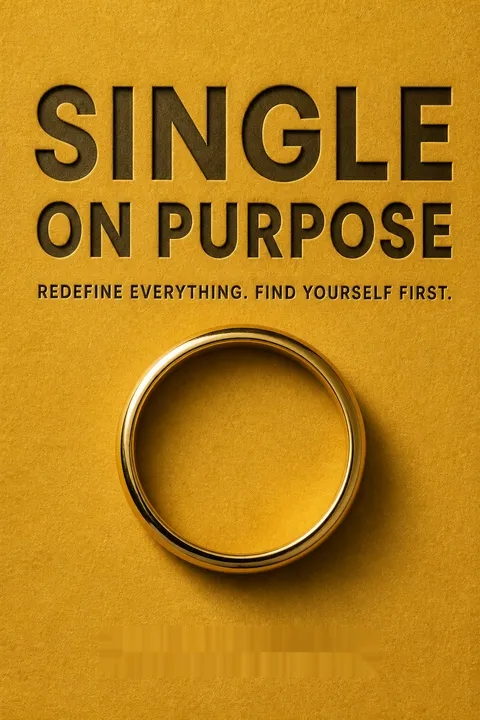


Key Takeaways
Treat singlehood as practice in self-trust, not proof you are incomplete
A deliberate reset. Kim’s story begins with a marriage ending, a career that felt false, and a job where he hid in a bathroom stall to cry. The divorce did not magically fix him. It removed the relationship that had buffered him from questions he had avoided: What did he want? What patterns kept repeating? What gave his life meaning? After years of moving from one relationship to the next, he chose to spend time alone and examine those questions instead of reaching for another partner to confirm his worth.
Not anti-romance. The book’s central idea, “single on purpose,” is a choice to build a relationship with yourself, not a vow to avoid love. It also applies to partnered people: a healthy couple consists of two people who remain individuals, rather than one person disappearing into the relationship.
What's compelling is the distinction between wanting partnership and needing partnership to certify personal value. Self-determination theory, a framework for motivation, emphasizes autonomy alongside connection: belonging matters, but so does acting from one's own values. The book's focus on self-trust protects both needs. Its argument should not be read as claiming that a partner is unnecessary or that solitude suits everyone equally. The more precise target is dependence, where fear of being alone leads someone to abandon preferences, friendships, or boundaries to keep a relationship.
Let loneliness be a feeling, not a verdict on your worth
Name the experience. Kim does not pretend that a partner’s absence is easy. People can miss daily conversation, touch, shared meals, and the comfort of being known. The problem begins when a temporary or recurring feeling turns into an identity: “I feel lonely” becomes “I am defective, and nobody will want me.” The book cites a 2017 US census figure of 110.6 million unmarried adults, or 45.2 percent of adults, as evidence that unmarried life is not a rare exception, even if popular stories often treat it as a failure.
Face the feared future. Kim recommends radical acceptance: acknowledging that a desired outcome is not guaranteed, without giving up on wanting it. Accepting the possibility of remaining single loosens the grip of waiting and makes room to build a meaningful life now.
This reframing resembles an important distinction in emotion research: feelings carry information, but they do not automatically define a person or predict the future. Acceptance can also reduce the exhausting effort spent denying an unwanted possibility. Still, acceptance is not a substitute for connection. Loneliness can signal a genuine lack of intimacy or community, and simply relabeling it will not meet that need. The useful move is twofold: stop treating loneliness as evidence of personal failure, then respond to it with real connection rather than panic-driven dating.
Treat self-care as relationship maintenance, not a prize for productivity
Meet your actual needs. Kim’s first meaningful date with himself did not involve a luxury trip or a perfect wellness routine. After work, he went to the beach, ran along the shore, stayed to watch the day end, and bought himself a meal. He had been exercising and meeting obligations, but he was ignoring his emotional exhaustion. The outing gave him room to notice what he enjoyed and what he wanted to explore.
Make care practical. Self-care, in this account, means treating yourself with the consideration you would offer someone you love. That can mean resting, setting a boundary, asking for help, going to therapy, or making time for a neglected interest. It is not a checklist of indulgences, and it does not require putting your needs above everyone else’s. It means including your needs rather than automatically placing them last.
The strongest feature here is the shift from self-care as consumption to self-care as a pattern of attention. A bath or a treat can be pleasant, but neither replaces asking what is draining a person and what would actually help. This connects with the broader idea of self-compassion: responding to difficulty with care and accountability rather than contempt. There is also a practical limit. Time, money, health, and caregiving demands constrain choices, so self-care should not become another standard people blame themselves for failing to meet.
Let your body challenge the story your anxious mind keeps repeating
Reconnect through sensation. Kim describes the self through body, mind, and soul, each needing attention. A high-performing athlete he calls Anna looked strong from the outside, but treated her body as equipment to command. Her earlier eating disorder and later extreme training shared a pattern of avoiding feelings. Pausing a competition and learning to notice what her body was saying helped her change that pattern.
Notice, then choose. The book’s practices include paying attention to tension, breath, energy, and enjoyment in movement; observing recurring thoughts; and making room for activities that feel meaningful or enlivening. Kim found that break-dancing, motorcycles, and writing reconnected him with parts of himself he had buried. The activity itself is not a cure. It is a way to discover what feels honest and alive now.
The body can offer useful information that abstract analysis misses. Stress, fatigue, pleasure, and discomfort often register physically before a person has words for them. Yet bodily signals are not infallible instructions. Trauma, illness, and learned fear can make a healthy choice feel threatening, while a familiar harmful pattern can feel comfortable. A more reliable practice is to treat sensation as evidence to investigate, then combine it with reflection, context, and trusted support. That preserves the book’s emphasis on embodiment without turning intuition into an unquestionable authority.
Treat old relationship patterns as learned blueprints, not proof of destiny
Intensity can mislead. Kim calls a familiar mix of insecurity, drama, control, and anxious attachment “the sticky.” It can feel thrilling because it resembles early ideas about love or offers the validation someone fears they lack. The rush is not proof that a relationship is healthy. In one couple’s story, Dave treated sex as the main evidence of love, while Maddy had learned to use sex to please or attract partners rather than to express her own desire. Their different histories shaped what each expected intimacy to mean.
Write new tracks. Their work involved exploring those histories, communicating more honestly, and creating forms of closeness that were not limited to sex. Kim’s broader point is that relationship habits are learned and can be revised. His age-based sketch of young love, adulthood, and later self-discovery is a pattern he observed, not a timetable everyone must follow.
The idea that familiar dynamics can masquerade as chemistry is useful because attraction is not a neutral diagnostic tool. Attachment research offers a compatible lens: early experiences can shape expectations about closeness, conflict, and rejection. But no single story explains every difficult relationship, and intense attraction is not automatically unhealthy. The practical question is what the intensity encourages: honesty and mutual care, or self-abandonment, fear, and control? That question avoids both romanticizing dysfunction and treating calm, stable affection as inherently superior.
Grieve the relationship you had, then build closure without their permission
Move through the loss. Kim argues that rushing to “move on” can bury grief and leave old pain active in new relationships. A client who quickly replaced partners had never allowed herself to mourn two people she had genuinely loved. Making space for both the good memories and the hurt helped her understand what she had lost, rather than reducing every former partner to a villain or a mistake.
Own your side. Closure, in the book’s account, does not require an apology, explanation, or shared version of events. Kim learned this when a reunion with his ex-wife, years after their dog died, felt warm to him but did not mean she wanted renewed contact. He had to respect her boundary and focus on his own account of the marriage, including his part in its ending.
Grief is not a neat sequence, and the book’s emphasis on revisiting both affection and injury makes room for that complexity. It also correctly separates healing from obtaining a verdict from an ex. However, distance is not one-size-fits-all. Shared parenting, safety concerns, or legal obligations can require ongoing communication. In those cases, clear boundaries and structured contact matter more than total silence. The deeper principle is to stop using access to another person as the condition for processing one’s own experience.
Give friendship its own calendar before romance becomes your whole village
Romance is not a tribe. Kim recalls returning home to a surprise birthday party and realizing the guests were his wife’s friends, not people he had built relationships with himself. When the marriage ended, the social world he assumed he had largely disappeared. He later formed friendships through exercise, motorcycle trips, shared meals, and honest conversations.
Create repeat contact. Adult friendship often requires deliberate effort because school teams, clubs, and other built-in social settings are less available. Kim suggests choosing a community around an interest, showing up repeatedly, and accepting social invitations instead of waiting for close friends to appear. A romantic partner and children can be central relationships, but relying on them alone places too much weight on a small number of people.
Friendship is more than a consolation prize for people without partners. It distributes emotional support across relationships and creates settings where different parts of a person can be expressed. The practical insight is to build recurring contact, not merely collect acquaintances. Shared activities make conversation easier, while repeated encounters give trust time to develop. The advice to accept invitations is best treated as an experiment rather than a permanent rule: connection needs openness, but rest, safety, and genuine preference still matter.
Choose romantic and sexual experiments for curiosity, not emergency validation
Ask what drives the choice. Kim supports sexual exploration when it comes from genuine curiosity, comfort, and honest communication, rather than an attempt to prove desirability or avoid being alone. Stacey, who had been married for five years and had sex only eleven times in that relationship, began dating after leaving and explored sexuality without treating every encounter as a search for a spouse. The experience helped her learn what she wanted, rather than simply repeating familiar expectations.
Exploration can be shared. New experiences do not require casual sex or multiple partners. A couple can discuss desires, try different forms of intimacy, or question assumptions together. Kim’s standard is not a particular relationship structure. It is whether everyone understands the situation, agrees freely, and can express needs and limits without being pressured.
This is a useful alternative to both sexual shame and the assumption that more experience is always liberating. The same behavior can serve different purposes: pleasure and curiosity in one context, avoidance or reassurance-seeking in another. Consent, communication, and emotional readiness therefore matter more than a count of partners. The book’s permissive stance is strongest when understood as permission to choose, including the choice not to explore. No sexual script, adventurous or conventional, is a reliable shortcut to self-knowledge on its own.
Audit your inherited blueprint against what gives your present life meaning
Question the template. Kim describes “blueprints” as inherited definitions of success, love, and happiness. One common template might require marriage, children, a house, and career status by a certain age. When real life does not match, a person may feel like a failure and rush into choices that do not fit. Kim once measured success through a screenwriting deal, an impressive home, and expensive cars. That picture left little room for character, purpose, or enjoyment.
Build a life in motion. He offers three anchors: meaning, joy, and engagement. Meaning is what matters to you now; joy is something to notice and cultivate in ordinary moments; engagement is participating in life rather than watching it pass. A therapist client with a thriving practice and beautiful home found that changing her routines and reconnecting with friends made her life feel inhabited again.
The framework is valuable because it shifts attention from visible milestones to the texture of daily life. A prestigious career or attractive home can coexist with boredom and disconnection, just as a modest life can feel rich when it fits a person’s values. Still, meaning is not always enjoyable, and duties can be meaningful even when they feel draining. The three anchors work best as questions, not a happiness score: what matters, what brings vitality, and where is attention actually being invested?
Build self-worth through experiences that contradict your old story
Evidence changes belief. Kim argues that telling yourself you have value is weaker than repeatedly acting as though your needs and abilities matter. A client who had once felt confident playing electric guitar picked it up again, then used the feeling it awakened to speak more clearly at work and ask for changes in her relationship. The guitar did not solve those problems. It reminded her of a capacity she could express in new settings.
Start with one experiment. Kim describes a cycle in which new experiences can shift beliefs, revised beliefs can change personal definitions, and those definitions make further experiences possible. The first step need not be dramatic: try an activity, state an honest preference, or set one boundary. Repetition matters because old assumptions are often deeply practiced, not erased by a single insight.
This is a persuasive account of learning through action. In behavioral approaches to change, small experiments can test assumptions more concretely than reassurance can. Speaking up and discovering that a relationship survives, for example, supplies information the person did not have before. Yet worth should not be treated as something earned through achievement or successful experiments. A person’s dignity is not conditional on progress. The healthier interpretation is that action builds confidence and agency, while worth remains intact even when an experiment fails.
Analysis
Single On Purpose is a memoir-shaped self-help book whose argument travels through three linked stages: reconnect with the self, understand the residue of past relationships, and build a life based on chosen definitions rather than inherited scripts. Its structure is less a clinical manual than a sequence of lived examples. The bathroom stall, the post-divorce CrossFit gym, the motorcycle, the awkward reunion with an ex-wife, and clients’ relationship dilemmas all turn abstract advice into scenes of uncertainty and change.
The book’s most useful distinction is between wanting a partner and relying on a partner to establish personal worth. That distinction avoids the false choice between romantic love and independence. It also explains why the book speaks to people in relationships: the goal is not solitude, but maintaining a self while sharing a life. Its practical tools follow that aim. Notice thoughts rather than obeying them, listen to the body, make space for grief, invest in friendship, question old definitions, and try experiences that test limiting beliefs.
The narrative voice is unusually candid about failure. Kim admits that he entered new relationships too quickly, misread intensity as love, and sometimes avoided difficult conversations. Those admissions strengthen the book’s central claim that insight alone does not equal change. A person learns about patterns by seeing them recur, taking responsibility, and attempting a different response.
Some claims need careful handling. The book’s broad sketches of how love changes with age are not universal, and its emphasis on self-work could be misread as making every hardship an individual responsibility. Material constraints, discrimination, illness, and unsafe relationships cannot be solved by mindset alone. Likewise, bodily intuition is informative but can reflect fear as well as preference. Read with those limits in mind, the book is strongest as a prompt for deliberate self-inquiry, not a promise that happiness follows automatically from being single. Its memorable thesis is practical: build a life worth inhabiting before asking a relationship to make it feel complete.
Review Summary
Single On Purpose receives mixed reviews. Some readers find it insightful and helpful for self-discovery, praising Kim's candid approach and practical advice on building a relationship with oneself. Others criticize it for promoting unhealthy behaviors and lacking depth. Many appreciate the focus on personal growth and self-care, while some feel it doesn't fully address the joys of being single. The book's casual tone and short chapters are welcomed by some but seen as shallow by others. Overall, readers' responses vary widely based on their personal situations and expectations.
People Also Read





Glossary
Single on Purpose
Intentional self-relationshipA chosen period or way of living in which a person develops self-knowledge, self-care, interests, and independence rather than relying on a romantic partner to establish worth or happiness. It does not mean rejecting love or staying single permanently. The idea also applies within relationships, where each partner maintains an individual identity.
the sticky
Intense, familiar dysfunctionKim’s term for an emotionally charged relationship dynamic shaped by insecurity, codependency, control, or other familiar patterns. Because the intensity can feel thrilling and recognizable, people may mistake it for proof of love. The term describes a pattern that can be examined and changed, not a diagnosis or a claim that all intense attraction is unhealthy.
relationship residue
Unprocessed past relationship patternsThe emotional effects, expectations, beliefs, and habits carried from earlier relationships into present ones. Residue can include unresolved grief, idealized memories, fear of abandonment, or assumptions about what love requires. Examining it helps a person distinguish current circumstances from old reactions and avoid repeating patterns without understanding them.
moving through
Processing loss over timeKim’s alternative to demanding that someone quickly “move on” after a breakup. It means accepting what happened, grieving what was lost, examining one’s own role where appropriate, and allowing feelings to change over time. The process does not require erasing memories, reconciling with an ex, or following a fixed schedule.
time machine
Past or future ruminationKim’s label for leaving the present through repetitive thoughts about what happened or what might happen. A memory or worry can trigger feelings, which may lead to further stories and reactive behavior. The suggested response is to notice the thought, create distance from it, and return attention to current experience.
radical acceptance
Accepting reality without surrenderThe practice of acknowledging circumstances as they are, including uncertainty and outcomes that cannot be controlled, rather than spending energy resisting their existence. In the book’s discussion of singlehood, it means allowing that a partner may not arrive while still remaining open to love and actively building a fulfilling life.
seeking nectar
Practicing everyday joyKim’s name for deliberately noticing and cultivating small sources of pleasure and vitality in daily life. Examples include enjoying coffee, movement, creative work, or conversation with full attention. The practice counters the belief that joy must wait for a major achievement or ideal future circumstance.
new love experience
A different pattern of intimacyAn experience of closeness that challenges a person’s old expectations about love, sex, communication, or selfhood. It may involve practicing boundaries, communicating desire, receiving care, or building intimacy at a different pace. The purpose is not novelty for its own sake, but learning what healthier connection can feel like.
four pistons
Four dimensions of sexual confidenceKim’s metaphor for maintaining a sense of sexiness through movement, self-respect, acceptance of one’s sexuality, and attention to sexual needs. Like parts of an engine, these dimensions are presented as mutually reinforcing. The framework is not a medical model and does not prescribe one body type, level of activity, or relationship structure.
FAQ
What's "Single On Purpose" by John Kim about?
- Focus on Self-Relationship: The book emphasizes building a strong relationship with oneself before seeking or maintaining relationships with others.
- Redefining Singlehood: It challenges the societal norms that equate being single with being incomplete or defective, promoting singlehood as a time for personal growth.
- Personal Journey: John Kim shares his personal experiences and struggles with relationships, loneliness, and self-discovery.
- Practical Advice: The book offers practical advice and exercises to help readers connect with themselves and redefine their lives.
Why should I read "Single On Purpose"?
- Self-Discovery: It provides insights into understanding and connecting with oneself, which is crucial for personal growth and happiness.
- Empowerment: The book empowers readers to embrace singlehood as a valuable phase of life rather than a temporary state to escape from.
- Relatable Stories: John Kim shares relatable personal stories and client experiences that illustrate common struggles and solutions.
- Actionable Steps: It offers actionable steps and exercises to help readers build a healthier relationship with themselves.
What are the key takeaways of "Single On Purpose"?
- Self-Relationship is Key: Building a strong relationship with oneself is essential for personal happiness and healthy relationships with others.
- Redefine Singlehood: Being single is not a flaw but an opportunity for growth and self-discovery.
- Acceptance and Ownership: Accepting past relationships and taking ownership of one's role in them is crucial for moving forward.
- New Experiences: Embracing new experiences and redefining personal beliefs can lead to personal growth and a better understanding of oneself.
How does John Kim suggest dealing with loneliness in "Single On Purpose"?
- Acknowledge Loneliness: Recognize that loneliness is a natural feeling and not an indication of personal failure.
- Differentiate Feelings: Understand the difference between feeling lonely and being lonely as an identity.
- Radical Acceptance: Practice radical acceptance of singlehood and the possibility of not finding a partner, which can lead to freedom and personal growth.
- Focus on Self: Use the time alone to explore personal interests, build a life that stands on its own, and develop a deeper relationship with oneself.
What is the "Single On Purpose" method for building a better relationship with oneself?
- Self-Care as a Priority: Treat self-care as a first date with oneself, focusing on activities that connect you to your body, mind, and soul.
- Daily Practices: Incorporate daily practices that promote self-awareness, self-compassion, and self-discipline.
- Explore and Engage: Engage in activities that bring joy, meaning, and engagement to your life, fostering a deeper connection with yourself.
- Challenge Old Beliefs: Continuously challenge and redefine old beliefs and blueprints that no longer serve you.
What does John Kim mean by "relationship residue" in "Single On Purpose"?
- Past Impact: Relationship residue refers to the lingering effects of past relationships on one's current life and self-perception.
- Acceptance and Letting Go: Accepting and processing past relationships is crucial for letting go and moving forward.
- Ownership: Taking ownership of one's role in past relationships helps in learning and growing from those experiences.
- New Definitions: Creating new definitions of love and relationships can help in overcoming past patterns and building healthier future relationships.
How does "Single On Purpose" redefine the concept of closure?
- Internal Process: Closure is an internal process that does not require answers or apologies from others.
- Acceptance: It involves accepting the end of a relationship and the feelings associated with it.
- Self-Exploration: Closure is achieved through self-exploration and understanding the deeper reasons behind one's need for closure.
- Ongoing Journey: It is a journey rather than a destination, with feelings that may come and go over time.
What are some of the best quotes from "Single On Purpose" and what do they mean?
- "The Richest Soil for Growth Is Cultivated When You’re Single": This quote emphasizes that singlehood is a fertile time for personal growth and self-discovery.
- "Radical acceptance is about saying yes to life, just as it is": It highlights the importance of accepting life and oneself as they are, without resistance.
- "Love and relationships are only one part of your life, not your entire life": This quote reminds readers that there are many fulfilling aspects of life beyond romantic relationships.
- "You’re not going to find someone by reading this book. But I promise that you’ll be a better person if and when you do": It underscores the book's focus on self-improvement rather than finding a partner.
How does John Kim address the concept of self-worth in "Single On Purpose"?
- Worth is Built: Self-worth is not an inherent belief but something that is built through experiences and self-discovery.
- New Experiences: Giving oneself new experiences can shift beliefs and help build self-worth.
- Daily Practice: Building self-worth requires a daily practice of self-care, self-compassion, and self-discipline.
- Challenge Negative Beliefs: Continuously challenge and change negative beliefs about oneself to foster a sense of worth.
What role do friendships play in "Single On Purpose"?
- Essential for Growth: Friendships are essential for personal growth and building a strong sense of self.
- Support System: Friends provide support, encouragement, and a sense of belonging that is crucial for well-being.
- Honest Connections: Building honest connections with friends helps in connecting more deeply with oneself.
- Balance in Life: Friendships offer a balance to romantic relationships and contribute to a fulfilling life.
How does "Single On Purpose" suggest redefining personal blueprints?
- Identify Old Blueprints: Recognize and identify old blueprints and definitions that no longer serve you.
- Create New Definitions: Create new definitions of love, success, happiness, and other aspects of life that align with your current truth.
- Live Authentically: Live a life that is honest to you, rather than tracing someone else's blueprint.
- Continuous Evolution: Continuously evolve and redefine your blueprints as you grow and change.
What is the significance of the "Single On Purpose Mixtape" in the book?
- Personal Soundtrack: The mixtape serves as a personal soundtrack for the singlehood journey, providing emotional support and inspiration.
- Connection to Self: Music is used as a tool to connect with oneself and evoke emotions that aid in self-discovery.
- Reflective Moments: The songs chosen reflect different moments and feelings experienced during the author's journey.
- Encouragement: It encourages readers to create their own mixtape as a form of self-expression and connection.
About the Author
Other books by John Kim


Download PDF
Download EPUB
.epub digital book format is ideal for reading ebooks on phones, tablets, and e-readers.








