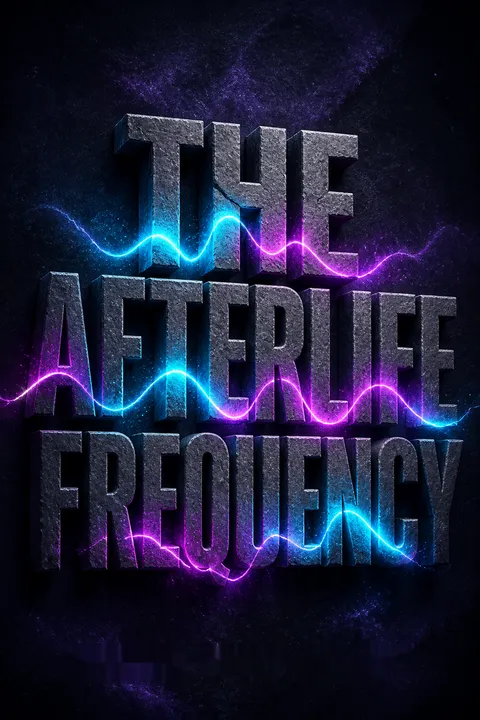


Key Takeaways
The book's central proposal: consciousness may survive as an electromagnetic soul
A bridge between worlds. Mark Anthony proposes that consciousness is an electromagnetic soul, or EMS: an enduring field of personal awareness that the brain hosts rather than creates. At death, he argues, this energy shifts to a higher frequency he calls the afterlife frequency. The book links this idea to brain electricity, near-death experiences, and reports of contact with the dead. Its central image is a light bulb: the bulb carries electricity but does not make it, and a damaged bulb does not destroy the current.
A claim, not a proof. Anthony presents the EMS as a scientific explanation, but the analogy does not establish that personal memories or identity survive brain death. Conservation of energy applies to physical energy; it does not by itself demonstrate an immortal self.
The proposal is appealing because it gives a physical-sounding account of an experience usually described in spiritual language. Its strongest contribution may be posing consciousness as an open question rather than treating it as solved. The key distinction is between showing that brains have electrical activity and showing that a person's identity exists independently of the brain. Energy conservation supports the first kind of physical continuity, not automatically the second. Readers can remain curious about the hypothesis while asking what observation would distinguish it from a metaphor.
Read coincidences as prompts for attention, not proof of destiny
A narrow escape. In Bangkok, Anthony says he sensed danger in a crowd and was pulled to safety by a young boy driving a tuk tuk. He later considered the event from both sides: he escaped a riot, while the boy earned money that could help his family. His friend Billy offered a practical interpretation: being in the right place matters, but so does noticing an opportunity and acting on it.
Meaning without certainty. Anthony calls meaningful coincidences spiritual synchronicity, a sequence of events that seems connected and may offer guidance. He treats such moments as potentially significant, not merely random. The useful practice is to notice what happened, consider who else may be affected, and avoid assuming that a coincidence proves a hidden plan.
This story makes synchronicity more than a private feeling of being chosen. Billy's reminder that the child also benefited shifts attention from personal rescue to reciprocal circumstance. That is an ethically useful reading even without a supernatural explanation. Human beings naturally search for patterns, especially after frightening events, so a felt connection is not proof of a directing force. The experience can still prompt gratitude, alertness, and generosity. Meaning can guide conduct without settling the metaphysics behind the event.
Treat spirits as a proposed network, not isolated messengers
The collective model. Anthony describes the Other Side as a collective consciousness: spirits remain individual but are interconnected, like voices in a chorus. He says this could explain why several deceased people seem to communicate together, or why one message resonates with several listeners. At a gathering for bereaved parents, he reported that the spirits of the children came as a group, then offered details associated with individual families.
A technological hope. The book also discusses the SoulPhone Project, which aims to develop devices for communication with deceased people. A proposed early device, the SoulSwitch, is intended to enable yes-or-no responses. These are plans for a research program, not established communication technology. The network image gives the book a model for contact, but the proposed mechanism remains unverified.
The network metaphor helps explain how the book imagines individuality and connection coexisting, much as a person can retain a distinct voice within a community. It also raises a testable question: can a message contain specific information that recipients could not have supplied or inferred? Group readings can feel powerful, but shared themes and flexible interpretation make independent verification important. A future communication device would need controls against ordinary signals, expectation, and accidental cueing. The idea is intriguing precisely because it invites measurable questions.
Use RAFT to meet unusual experiences with openness and judgment
Four steps for contact. RAFT is Anthony's method for responding to a possible message from a deceased person: recognize a sign, accept that it may be contact, feel its immediate emotional meaning, and trust the guidance enough to consider it. The book illustrates it with a pair of coins Anthony noticed on a walk. He linked their six-cent value to his family's talk of a sixth sense, then connected a later image of his father holding a raft to the method's four steps.
Stay receptive, not credulous. Anthony advises against dismissing an experience immediately or demanding instant certainty. Notice the first response, record what happened, and reflect afterward. RAFT is intended to reduce reflexive rejection, but it is not a way to prove that a message came from a spirit.
RAFT's practical value lies in slowing two opposite reflexes: instant dismissal and instant conviction. That resembles a useful reflective habit in many settings: observe an experience, name the reaction, and review it before acting. The distinction between openness and credulity matters especially when a message could influence medical, financial, or relationship decisions. Emotional resonance can reveal personal meaning, but it cannot independently verify a supernatural source. The framework is safest when reflection includes both a charitable interpretation and ordinary explanations.
Build awareness of danger without treating intuition as infallible
Notice the whole scene. Anthony calls heightened attention to physical and energetic surroundings spiritual situational awareness. He traces the idea to his father's repeated advice to stay alert. As a teenager snorkeling in the Bahamas, Anthony drifted away from his father and attracted a tiger shark by splashing. His father positioned himself between the boy and the animal, then coached him to swim calmly toward shore.
Intuition is not a superpower. The book also recounts Rocky, a colleague who sensed a robbery before it happened and chased the thief in a superhero costume. Her intervention helped stop him, but Anthony stresses that intuition does not make someone invulnerable. The practical lesson is to notice your surroundings, heed credible warning signs, and seek help rather than rushing into danger.
The shark story grounds an abstract spiritual idea in a familiar survival skill: attention changes what a person notices and how quickly they respond. The contrast with Rocky's pursuit is important. A strong feeling can alert someone, but acting on it still requires risk assessment. Intuition may register subtle cues before conscious reasoning catches up, yet it can also misread ambiguity. A sound rule is to treat intuition as a signal to pause and check the situation, not as permission to take unnecessary risks.
Take near-death accounts seriously without calling them settled proof
Experiences at the edge. The book describes near-death experiences, or NDEs, as reports from people who clinically die or approach death, then recover with memories of leaving the body, encountering deceased relatives, or seeing a powerful light. Anthony recounts his own childhood NDE during a life-threatening infection, when he says he saw luminous figures and heard a message about eternal life. He also discusses shared death experiences, in which bystanders report elements resembling the dying person's experience.
A puzzling case. Another account involves a woman with advanced Alzheimer's who briefly regained clarity, recognized her children, and spoke before dying. Researchers call this terminal lucidity. Such reports challenge simple explanations, but the book's conclusion that they demonstrate survival of consciousness goes beyond what anecdotes alone can establish.
These accounts deserve careful attention because they can profoundly change how people understand death, grief, and their own lives. A report can be meaningful and sincere without conclusively identifying its cause. Memory, medication, oxygen deprivation, and the brain's changing state are among the kinds of explanations that need examination alongside spiritual interpretations. The central research challenge is to identify reliable details that could not be known through ordinary means. Respect for experiencers and rigor about evidence are compatible, not competing, commitments.
Let unclear messages breathe before deciding what they mean
Meaning can take time. Anthony calls the period when a message becomes understandable the unfolding. During a session, a detail may seem irrelevant until a memory or later event gives it context. One client rejected the word "Napoleon" during a reading, then recognized years afterward that it referred to her son's favorite film, Napoleon Dynamite. Another client eventually connected an image of an octopus to a memorable incident with her late husband.
Resist the instant no. Anthony calls reflexively rejecting every unfamiliar detail the No, No, No syndrome. He suggests responding with uncertainty rather than forcing a meaning on the spot, then reviewing the details later. The advice is useful beyond mediumship: ambiguity deserves patience. Still, delayed recognition can also make vague information seem more specific in retrospect, so keeping a record helps preserve what was actually said.
Waiting before interpreting can protect a person from premature conclusions, and written notes can help distinguish a genuine match from a memory reshaped afterward. That matters because human memory is reconstructive: details often become clearer, or seem clearer, as people revisit them. The book's puzzle analogy captures the patience needed, but not every loose piece belongs to a meaningful picture. The strongest practice is to keep the original wording, note competing explanations, and welcome a later connection without treating it as automatic confirmation.
Turn spiritual warnings into practical checks, not unquestioned commands
Guidance with consequences. Anthony presents spirit intervention as a warning or nudge that can alter a chain of events without overriding free will. One family was urged to clear storm drains and gutters. Before a hurricane later caused flooding nearby, their house avoided serious water damage. In another case, a woman contacted a friend about an unusual warning concerning her eyesight; an examination found an early condition that could be treated.
Act responsibly. These stories show why a warning can be valuable even when its source is uncertain: checking a drain or booking an eye exam is sensible. The book also describes a warning about a young man's abdominal symptoms that was ignored before a medical emergency. Such anecdotes cannot establish that spirits predicted events. Health concerns should be evaluated by clinicians, not managed through readings alone.
The most robust part of this idea is its low-regret translation: convert a warning into a sensible check rather than accepting a supernatural explanation as fact. This resembles precautionary thinking, where a modest action is justified when the cost is low and the possible harm is serious. The limit is that warnings can be wrong, frightening, or vague. Medical decisions need evidence and professional assessment, while major choices deserve ordinary deliberation. A claimed message should never become a substitute for care or consent.
See hell as lived suffering, not a sentence imposed after death
A human form of hell. Anthony argues that eternal punishment is not the best way to understand suffering. He describes hell instead as the real, often temporary anguish people endure in life, including grief, trauma, and guilt. His story of Joy, a lawyer who survived a murder attempt in which her colleague Rudy was killed, shows how survivor's guilt and recurring memories kept her psychologically trapped. A later message, as Anthony tells it, helped her see that she could not change Rudy's choice to save her.
Choose repair over revenge. The book also distinguishes karma from instant payback, describing it as the consequences of actions and intentions that ripple through relationships and communities. Its ethical direction is toward compassion and accountability, not taking revenge or blaming sufferers for what happened to them.
Recasting hell as lived suffering shifts attention from speculating about punishment after death to reducing pain in the present. Joy's story also makes a difficult distinction: accepting that the past cannot be changed is not the same as excusing the person who caused harm. That insight can support recovery, but spiritual interpretation should not replace trauma-informed care or imply that healing is simply a matter of deciding to move on. Compassion and accountability can coexist, and neither requires claiming that tragedy was deserved.
Analysis
The book's distinctive move is to translate mediumship into the language of physics. It calls consciousness an electromagnetic soul, describes contact as alignment with a higher frequency, and frames spiritual connection as a collective network. This vocabulary gives readers a vivid conceptual map, while the recurring personal stories supply emotional force. The map is also where the book's evidential argument is most vulnerable. That brains generate electrical activity is established, but it does not show that consciousness is a separable field, that memories persist after brain death, or that quantum physics provides a channel to spirits. Conservation of energy does not guarantee the survival of a particular person's identity. Frequency, entanglement, and energy are scientific terms with precise meanings, and using them as analogies does not demonstrate the proposed mechanism.
The experiential material deserves a different kind of care. Near-death accounts, terminal lucidity, deathbed visions, and mediumistic readings are important reports about human experience. They can illuminate grief, belief, and the ways people make meaning under pressure. The book's anecdotes, however, are not equivalent to controlled demonstrations. Retrospective matches, flexible symbolism, and selective reporting can make an interpretation feel more certain than the initial information warrants. The strongest case for survival would require independently documented information, careful controls, and replication by researchers with different assumptions.
The book's practical contribution is more secure than its metaphysical conclusion. RAFT encourages attention, emotional honesty, and patient reflection. Its warnings are most useful when converted into ordinary protective action, such as contacting a doctor or checking a home before a storm. Its account of Joy also recognizes that grief and trauma can become enduring burdens, although spiritual meaning should complement, not replace, professional support. Readers can take the book's humane invitation seriously while keeping its scientific claims provisional: openness need not mean surrendering judgment.
Review Summary
Readers highly praise The Afterlife Frequency for its scientific approach to spiritual phenomena. Many appreciate Anthony's blend of quantum physics and spirituality, finding it logical and engaging. The book's stories and explanations of spirit communication resonate with readers, offering comfort and insight. Some critics note repetition and stilted dialogue, but most find the content compelling. The RAFT method and concept of the electromagnetic soul are frequently highlighted as valuable takeaways. Overall, readers recommend the book for those interested in afterlife communication and the intersection of science and spirituality.
People Also Read







Glossary
electromagnetic soul
Consciousness as enduring energyAnthony's term for the enduring personal consciousness he believes is associated with electromagnetic energy. In his model, the brain hosts this consciousness rather than generating it, and death releases it from the body. The book presents this as a bridge between spiritual belief and physics, though it is not an established scientific finding.
afterlife frequency
Proposed higher spiritual vibrationThe higher vibrational state that Anthony proposes is inhabited by spirits after bodily death. He describes communication as occurring when a living person's brainwave activity aligns with this frequency. The term supplies the book's central mechanism for spirit contact, but the claimed frequency has not been established as a measurable scientific signal.
interdimensional communication
Contact across proposed dimensionsAnthony's umbrella term for communication between the material world and the Other Side. It includes mediumship, after-death communication, near-death experiences, deathbed visions, and related encounters. The book explains these events as an interaction between different energetic frequencies, a proposed model rather than a verified account of how such experiences occur.
collective consciousness
Interconnected community of spiritsThe book's name for the proposed interconnected state of spirits after death. Anthony argues that spirits retain individual personalities while sharing access to a larger body of knowledge and awareness. This model is used to explain group messages, shared communications, and information said to exceed what a deceased person knew during life.
RAFT
Four steps for receiving messagesAnthony's four-step technique for responding to possible spirit contact: recognize a sign, accept the possibility of contact, feel its emotional significance, and trust its guidance enough to consider it. The method aims to prevent reflexive dismissal and encourage reflection. It is a way to approach an experience, not a test that proves its source.
spiritual situational awareness
Attention to physical and spiritual cuesAnthony's extension of ordinary situational awareness to include possible intuitive or spiritual signals. It involves observing one's surroundings, noticing internal sensations, and considering whether a feeling might be a warning or message. The book emphasizes that this awareness can inform choices but does not confer protection or replace practical safety measures.
frequency beacon
Attention-directing energetic signalAnthony's term for an energetic impulse that allegedly directs a living person's attention toward a particular object, person, place, or event. He also says a person's emotions can act as beacons that spirits detect. The concept helps explain the book's accounts of meaningful signs, though it is not presented as an independently measurable signal.
unfolding
Delayed recognition of a messageThe period after a possible spirit communication when its significance becomes clearer to the recipient. Anthony says an image or word may connect to a memory or event hours, years, or more after a reading. The concept encourages patience, while careful notes can help distinguish an original detail from a later reinterpretation.
FAQ
What's The Afterlife Frequency about?
- Exploration of Afterlife Communication: The book explores the idea that human consciousness survives physical death and that communication with spirits is possible. It combines personal stories, scientific theories, and spiritual insights.
- Scientific Basis: Author Mark Anthony introduces the "electromagnetic soul," suggesting consciousness is a form of energy that exists beyond the physical realm, supported by quantum physics and consciousness studies.
- Practical Techniques: Offers methods like the RAFT technique (Recognize, Accept, Feel, Trust) to help readers become more aware of spiritual messages and signs from the afterlife.
Why should I read The Afterlife Frequency?
- Unique Perspective: Bridges ancient wisdom and contemporary science, making complex ideas accessible. Provides a rational framework for understanding life, death, and the afterlife.
- Personal Growth: Offers insights into spiritual experiences and interpreting signs from deceased loved ones, leading to healing and closure. Encourages a compassionate worldview.
- Expert Endorsements: Praised by notable figures in psychology, medicine, and spirituality, adding credibility to its claims and insights.
What are the key takeaways of The Afterlife Frequency?
- Survival of Consciousness: Asserts that consciousness continues after death, with the electromagnetic soul existing and communicating with the living.
- Interdimensional Communication: Spirits communicate through dreams and signs, framed as a natural human experience. Learning to recognize these messages is emphasized.
- RAFT Technique: A practical approach to recognizing and interpreting messages from the afterlife, encouraging recognition, acceptance, feeling, and trust.
What is the RAFT technique in The Afterlife Frequency?
- Recognize: Identify when a spirit is present or a sign is being sent, manifesting as physical sensations, visual cues, or intuitive feelings.
- Accept: Allow the experience to unfold by acknowledging the reality of spirit contact without fear or skepticism.
- Feel: Trust your initial emotional response to the sign or message, embracing the feelings associated with the contact.
- Trust: Believe in the messages and allow them to positively influence your life.
How does The Afterlife Frequency relate to quantum physics?
- Electromagnetic Energy: Posits that consciousness is electromagnetic energy, aligning with quantum physics principles. Suggests scientific inquiry can expand understanding of the universe and consciousness.
- Interconnectedness: Quantum physics supports the idea of interconnectedness at a subatomic level, paralleling the book's assertion of a collective consciousness.
- Scientific Validation: References scientific studies and theories that lend credibility to the idea of an afterlife and spirit communication, including the electromagnetic soul concept.
What is the electromagnetic soul as defined in The Afterlife Frequency?
- Definition: Describes human consciousness as electromagnetic energy existing beyond the physical body, rooted in spiritual and scientific perspectives.
- Survival After Death: Suggests consciousness continues in a different form after physical death, aligning with the book's theme of life after death and spirit communication.
- Scientific Basis: Connects the concept to quantum physics, arguing energy is neither created nor destroyed, only transformed, providing a framework for understanding consciousness beyond the physical realm.
What are Near-Death Experiences (NDEs) and Shared Death Experiences (SDEs) in The Afterlife Frequency?
- Definition of NDEs: Occur when a person clinically dies and returns to life, often recounting vivid afterlife experiences, including peace, encounters with deceased loved ones, and traveling toward a light.
- Understanding SDEs: Occur when bystanders witness a dying person's transition to the afterlife, experiencing lights, peace, or communication with the deceased.
- Significance: Both provide compelling evidence for an afterlife and continuity of consciousness, challenging the notion that death is the end.
How does The Afterlife Frequency address grief and loss?
- Understanding Grief: Discusses the stages of grief and their manifestations, emphasizing that grief is a natural response to loss and can be a long journey.
- Spiritual Connections: Highlights recognizing spiritual connections with deceased loved ones as a way to cope with grief, providing comfort and reassurance.
- Empowerment Through Acceptance: Encourages accepting feelings of loss and understanding that healing is possible, finding peace by embracing the presence of loved ones in spirit.
What are some examples of spirit communication in The Afterlife Frequency?
- Personal Anecdotes: Shares personal stories of communicating with spirits, illustrating various interaction methods, such as receiving messages during readings.
- Collective Consciousness: Discusses instances of multiple spirits communicating simultaneously, highlighting interconnectedness and message conveyance to the living.
- Dream Visitations: Explains how spirits communicate during dreams, providing comfort and guidance, reinforcing ongoing connections with loved ones.
What are the best quotes from The Afterlife Frequency and what do they mean?
- “Eternal Light, Eternal Life.”: Encapsulates the theme that consciousness is eternal and transcends physical death, suggesting ongoing existence and connection with the living.
- “Nothing is random.”: Reflects the idea that life events, including spirit communication, are interconnected and purposeful, encouraging recognition of afterlife signs.
- “You will go back. You will see us again.”: Emphasizes the comforting notion that death is a transition, reassuring readers of reuniting with loved ones in the afterlife.
How can I apply the concepts from The Afterlife Frequency in my life?
- Develop Spiritual Awareness: Practice the RAFT technique to enhance recognition and interpretation of signs from spirits, deepening understanding of spiritual experiences.
- Embrace Healing: Allow spirit communication to guide healing and grief resolution, finding comfort and closure through openness to afterlife messages.
- Foster Compassion: Insights inspire cultivating a compassionate worldview, understanding consciousness survives death, leading to greater empathy and spiritual connection.
About the Author
Other books by Mark Anthony

Download PDF
Download EPUB
.epub digital book format is ideal for reading ebooks on phones, tablets, and e-readers.








