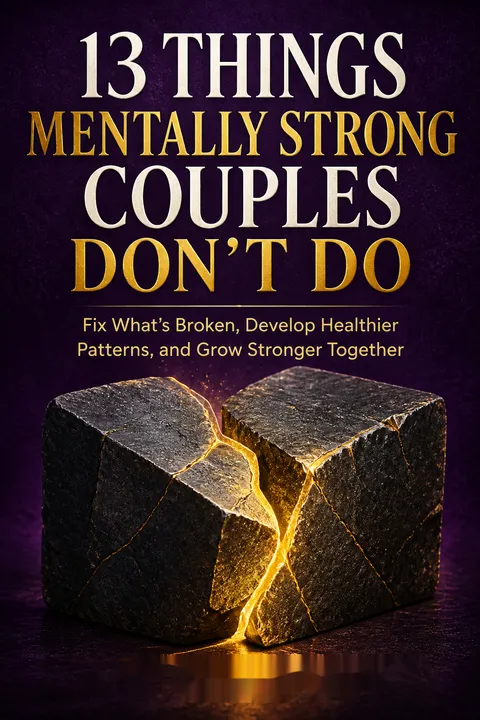


Key Takeaways
Change your own steps before demanding that your partner change
Start with your leverage. Morin’s central claim is that one partner can change a relationship’s pattern by changing their own behavior, even when the other person is not ready to work on it. Angela, lonely after her children left home, feared her husband would reject a serious conversation. She instead planned activities they could enjoy together. Shared outings made it easier for them to reconnect and talk. The point is not that one person can control the outcome, but that they can stop repeating an unhelpful pattern.
Know the limits. In a survey of 1,032 married Americans, 74 percent thought their relationship could improve if they built mental strength, and 86 percent wanted to strengthen their relationship. Morin does not argue that couples should stay together at any cost. This advice is not for unsafe or abusive relationships.
What's striking is the shift from diagnosis to agency. A relationship is an interaction pattern, not simply one person's collection of flaws, so changing one person's response can alter the choices available to both. That principle is useful without promising that a partner will reciprocate. The survey records respondents' beliefs and desires, not proof that individual change causes a relationship to improve. The safety boundary matters too: self-improvement should never be framed as an obligation to endure abuse or carry a relationship alone.
Name the real problem, then decide whether it can be solved
Look beneath the complaint. Couples may argue about a symptom while avoiding its cause. Angela described her distress as empty-nest loneliness, but the deeper issue was that she and her husband had built little connection outside parenting. Before arguing over a solution, define the problem in terms both partners could recognize. A fight about housework, for instance, may be about differing standards or an unequal division of responsibility, not simply one partner being messy.
Separate action from acceptance. A 2019 study discussed in the book found that happier couples tended to focus on problems with workable solutions, rather than repeatedly fighting over issues that were difficult or impossible to change. For an unsolvable difference, the task may be managing its effects and feelings, not forcing agreement. Avoiding every difficult topic is not the same as accepting what cannot change.
This distinction protects couples from treating every disagreement as a puzzle with a hidden correct answer. Some conflicts concern logistics and can be negotiated; others involve enduring differences in values, preferences, or life plans. Naming which kind of problem is present can reduce futile argument and clarify what choice remains. There is a risk, however, in labeling a problem unsolvable too quickly. Acceptance should follow careful discussion, not become a respectable-sounding excuse for avoiding a hard conversation or tolerating preventable harm.
Make honesty safer by agreeing where privacy ends and secrecy begins
Distinguish the two. Privacy means keeping something personal that does not harm or materially affect a partner. Secrecy means withholding or lying about information because the person expects their partner would be upset. In the book’s example, David’s paid subscription to explicit content from an ex damaged trust with his wife, especially because he had hidden it. The couple had never clearly discussed what counted as crossing a line, so they had to work through both the breach and their different expectations.
Set rules together. Morin cites research estimating that adults hold an average of thirteen secrets, though not all are kept from partners. Couples can discuss what they want to share about exes, spending, online activity, and private conversations. Rebuilding trust may require accountability and agreed transparency, but openness does not mean a partner is automatically entitled to every password or private exchange.
Trust depends less on total access than on shared expectations and credible conduct. That makes negotiated privacy a useful middle ground between secrecy and surveillance. It also prevents the word honesty from becoming a demand for unlimited disclosure, including information that serves no constructive purpose. After betrayal, temporary transparency may be mutually chosen as part of repair. If monitoring becomes coercive or indefinite, however, it can turn a trust-building measure into control. The distinction between voluntary accountability and compelled access is essential.
Set boundaries to define your limits, not to control another person
Make the rule clear. A boundary is a limit that protects a person’s well-being and defines how they will respond, rather than a command designed to control someone else. Jen’s husband made jokes about her debt in front of family and friends. She told him those comments hurt her and asked that their finances stay private unless they agreed together to share them. They also made a plan to discuss money as a team, instead of turning the debt into a public blame story.
Include the outside world. Boundaries may cover time, money, emotional privacy, physical space, sex, or contact with relatives and friends. They need not mean cutting someone off. The book’s 2023 survey found that 34 percent of couples disagreed about boundaries with extended family. A boundary should be flexible when appropriate, but it must be respected. Attempts to isolate a partner from supportive people may signal abuse, not healthy boundary-setting.
A boundary works best when it is operational: it names what is acceptable and what the person setting it will do if the limit is crossed. That makes it different from a demand that another person adopt a particular belief or habit. Couples also need shared rules for their joint resources and private information, since an individual's choice can affect both partners. The hard cases arise when one person's boundary constrains the other's autonomy. Safety, mutual respect, and the ability to disagree help distinguish protection from control.
Ask directly for help instead of auditioning for the most exhausted partner
Trade scorekeeping for teamwork. Martyrdom is not simply making sacrifices. It is repeatedly emphasizing one's suffering, refusing help, or treating hardship as proof of greater worth. Kevin complained that he worked constantly for his family, while Leah felt she carried the household and childcare. Each tried to establish who had it harder, so neither felt understood. Their pattern shifted when Leah acknowledged Kevin's work pressure and he began accepting her help with business paperwork.
Make the need visible. Complaints and hints leave a partner guessing whether the speaker wants comfort, advice, or practical assistance. A direct request is clearer. It also helps to discuss who owns the planning and coordination, not just who completes a task. The book’s survey found that 47 percent of respondents felt resentful about the work or sacrifices they made for their relationships. Fairness does not always mean an exact 50-50 split, but chronic resentment deserves attention.
The useful insight is that household labor includes management: noticing, planning, remembering, and coordinating. A task count can look equal while the mental load remains concentrated in one person. At the same time, a fair division cannot be inferred from one partner's frustration alone. Couples may have different standards, capacities, or workloads, and some imbalances are temporary. Specific requests and periodic review make the arrangement discussable, while treating suffering as a contest makes practical cooperation feel like losing.
Let emotions speak without letting them dictate the rules
Respect feelings, govern actions. Emotions are real experiences, but they do not excuse intimidation, insults, or manipulation. Jillian tried to anticipate every mood of her husband Marcel, who sometimes withdrew or became angry when she raised concerns. She learned that she could acknowledge his anxiety without abandoning her own plans or taking over responsibilities he could manage. A person can feel angry without yelling, or feel anxious without making a partner handle every difficult task.
Watch the conversation pattern. Relationship researcher John Gottman’s four horsemen are criticism, contempt, defensiveness, and stonewalling. They describe communication habits that can escalate conflict, not a verdict that a couple is doomed. Morin recommends listening closely, reflecting what was heard, validating feelings, and pausing when a discussion becomes too heated. If a partner is genuinely struggling with trauma or mental illness, support and professional care may be needed, rather than dismissing distress as a tactic.
Separating an emotion from the behavior that follows it allows compassion without surrendering accountability. It also discourages the common mistake of treating every intense feeling as evidence of manipulation. The four horsemen are most useful as a way to notice interaction patterns early, not as labels to wield against a partner during a fight. A pause can protect a conversation, but only if the couple agrees to return to it. Without that return, a timeout can become another form of stonewalling.
Offer support, not a renovation plan for your partner
Respect ownership of change. Trying to fix a partner through lectures, nagging, tricks, or punishment often creates a parent-child dynamic and invites resistance. Janice feared her husband's drinking was harming his health. Rather than keep arguing each time he came home late, she changed her own response and later raised her concern in a calmer conversation. She could express care and encourage him to speak with his doctor, but she could not make his decision for him.
Listen for change talk. Morin calls statements of desire or doubt about a habit “wishes and dips,” a form of change talk. If a partner says they wish they spent less money on vaping, curiosity can help them develop their own next step. Advice is not always welcome, and a serious addiction or health risk may call for professional support. Influence is not the same as control, and changing one's response does not make another person's harmful behavior acceptable.
Autonomy is not merely a courtesy. It is part of what makes change durable: a person is more likely to own a decision they have helped form than one imposed by a partner. The chapter's approach resembles motivational interviewing, where open questions and attention to a person's own reasons for change replace argument. Still, stepping back should not be confused with passivity. A partner can set limits, protect shared finances or safety, and seek professional guidance when another person's behavior creates serious risk.
Build a life that does not make your partner your only emotional lifeline
Know what you need. The book describes ten basic emotional needs, including affection, intimate conversation, domestic support, and recreational companionship. Partners may rank them differently, so neither should assume the other knows what matters most. Cara wanted her husband to stop attending car shows because she felt anxious and lonely on weekends. In therapy, she connected that reaction to childhood experiences of being left waiting for her father. Her husband was dependable, but the old fear still shaped how his hobby felt to her.
Ask, and also act. Cara explained the history without using it to force her husband to stay home. They discussed ways to meet both partners' needs, and she found her own weekend activities, including knitting and visiting friends. A partner can offer meaningful care, but cannot be responsible for every feeling or every source of purpose. Strong reactions may reflect a past wound as well as the present situation.
A close relationship can provide security without becoming the sole source of identity, social contact, or emotional regulation. That balance resembles self-differentiation: remaining connected while retaining a sense of self. Linking a present reaction to an earlier experience can create room between feeling and interpretation, but it should not be used to discredit a legitimate current grievance. The most useful question is not whether the feeling is justified, but what its history and present circumstances each reveal about the need.
Keep love vivid through attention, gratitude, and small shared rituals
Feed the connection. Familiarity can make good work invisible. In a study cited by Morin, unhappy couples noticed only about half of the positive actions observers recorded. Mindy and Paul were stuck in arguments about housework until they spent time recalling what they valued in each other. That did not settle every chore dispute, but it helped them approach the practical issue with more goodwill. Appreciation matters most when it is specific and sincere, not a sarcastic thank-you attached to criticism.
Make connection repeatable. A ritual is a shared, meaningful routine, such as a brief nightly check-in or a regular activity together. Gary and Alex, whose relationship had become neglected, agreed to daily calls when apart and a day together each week. Morin also cites research linking gratitude with relationship well-being. These habits do not replace honest discussion or a fair division of labor, but they keep attention from drifting entirely to logistics and screens.
Repeated gestures are small pieces of relationship infrastructure. They create predictable opportunities for warmth, which is useful in lives crowded with work, parenting, and devices. Gratitude can also correct selective attention by making positive contributions more visible. Yet rituals should not become a performance metric or a substitute for repair: a nightly compliment cannot resolve betrayal, contempt, or an inequitable workload. Their value lies in creating a reliable setting where connection and difficult conversations both have room.
Treat personal growth as a relationship change you can plan for
Expect movement. A partner's growth can unsettle a relationship even when the change is positive. James wanted to use what he learned while caring for his father to start a caregiving business. His wife Brenda feared the financial and relational consequences, and called the plan a midlife crisis. In therapy, each listened to the other's concerns and hopes. They began treating the venture as a shared challenge, with plans to protect their finances and their time together.
Trace the effects. Change often has a domino effect: a new work schedule, diet, hobby, or exercise routine can alter shared meals, free time, and social plans. Discussing those effects is more supportive than pretending a change affects only one person. Morin cites research associating marital boredom with later dissatisfaction, but novelty alone cannot repair every problem. Partners can encourage growth while still questioning risky decisions and holding firm on core values.
Growth changes the conditions of a partnership, not just the individual who initiates it. A useful conversation therefore asks both what the change makes possible and what it will cost in time, money, attention, or shared identity. That is a more realistic form of support than uncritical cheerleading. The claim about boredom deserves a careful reading: novelty can interrupt stagnation, but stability and routine are also valuable. Couples need enough continuity to feel secure and enough flexibility to keep adapting.
Analysis
Morin organizes relationship health around subtraction: stop the behaviors that make closeness harder before adding more advice about dates, communication scripts, or romantic gestures. That structure is practical because couples often seek a fresh technique while continuing the patterns that undermine it. A date night cannot compensate for contempt; a gratitude ritual cannot repair concealed betrayal; and an agreement about chores cannot work when one partner refuses to discuss the underlying division of labor. The book’s recurring therapy stories make these patterns visible in ordinary scenes rather than abstract rules.
Its most useful through-line is the distinction between influence and control. Each partner can take responsibility for their conduct, name needs, set boundaries, and invite collaboration. None can guarantee the other’s response. This protects the advice from becoming a demand that one person carry the entire relationship. The explicit warning about abusive or unsafe relationships is therefore essential, not incidental. Relationship improvement is not a moral duty to remain together.
The book also moves between two scales of change. At the close range, it offers concrete practices such as reflective listening, direct requests, and appreciation. At the wider scale, it asks partners to identify histories, expectations, and roles that shape their reactions. These levels work best together: a better script may interrupt a conflict, while deeper reflection explains why the same conflict keeps returning. The danger is that a reader may treat every difficulty as a communication problem when some involve addiction, trauma, incompatible values, or unequal power and require professional support or a decision to leave.
The survey and studies lend context, but they should not be mistaken for universal prescriptions. The survey is a snapshot of married respondents, and research associations do not prove that a particular ritual or behavior caused a happier relationship. The strongest case for the book rests less on sweeping prediction than on a modest, testable proposition: notice the pattern, change one's own contribution, and see whether the relationship becomes more workable. Its measure of success is a healthier partnership, not staying together at all costs.
Review Summary
"13 Things Mentally Strong Couples Don't Do" offers practical advice for strengthening relationships, though some readers found the content unoriginal. Many appreciated the book's actionable strategies, focus on personal growth, and emphasis on addressing problems directly. Some praised its relevance to modern challenges, while others felt it lacked depth or new insights. The book's layout, including quizzes and expert interviews, was generally well-received. Overall, readers found it a helpful tool for relationship maintenance, despite mixed opinions on its originality and depth.
People Also Read





Glossary
the four horsemen
Four corrosive communication habitsRelationship researcher John Gottman's term for criticism, contempt, defensiveness, and stonewalling. The patterns describe ways partners attack character, express superiority, deflect responsibility, or withdraw from interaction. Morin presents them as warning signs that can damage a relationship, not as proof that separation is inevitable.
change talk
Language signaling openness to changeStatements that reveal a person's own interest, doubt, or motivation to change a behavior. Morin advises partners to notice this language and ask curious questions rather than supply a lecture or solution. The goal is to help the person identify their own reasons and next steps.
wishes and dips
Two forms of change talkWishes express a desire for a different outcome, while dips identify a cost or drawback of the current behavior. For example, someone may wish to improve their health or notice that a habit consumes money they need elsewhere. Morin treats these comments as openings for supportive questions, not permission to take over the person's change process.
we talk
Language emphasizing shared identityUse of plural language, such as we and us, when describing shared plans, work, or responsibilities. Morin cites research associating this language with more positive relationship feelings and less decline in marital satisfaction over time. The idea is not to erase individual identity, but to recognize areas of life that partners genuinely manage together.
Couples by the Numbers
Morin's survey of married AmericansAn independent survey commissioned by Morin in February 2023. It asked 1,032 married people in the United States about relationship concerns, mental strength, and the book's thirteen unhealthy habits. The results offer a snapshot of the respondents' reported views and experiences, not a controlled test of whether the recommended practices cause relationship improvement.
What Are the Marital Problems of Happy Couples?
Study of couples' reported marital problemsA 2019 study in Family Process, cited by Morin, that examined marital problems among couples with differing levels of relationship satisfaction. Morin highlights its finding that happier couples tended to focus discussion on problems that could be solved, while less tractable differences were less often the subject of repeated conflict. The finding supports distinguishing solvable issues from enduring disagreements.
ten basic emotional needs
A list of common relationship needsA set of ten emotional needs discussed through relationship researcher Willard Harley's work: admiration, affection, intimate conversation, domestic support, family commitment, financial support, honesty and openness, physical attractiveness, recreational companionship, and sexual fulfillment. Partners may prioritize these needs differently, so the list is intended to prompt discussion rather than establish a universal ranking.
FAQ
What's 13 Things Mentally Strong Couples Don’t Do about?
- Focus on Mental Strength: The book emphasizes the importance of mental strength in relationships, highlighting habits that can undermine a couple's bond.
- Avoiding Unhealthy Patterns: It identifies 13 specific behaviors that mentally strong couples avoid, such as ignoring problems and using emotions as weapons.
- Growth and Development: Amy Morin encourages couples to work together to develop healthier patterns and grow stronger as a unit.
Why should I read 13 Things Mentally Strong Couples Don’t Do?
- Practical Strategies: The book offers actionable strategies for couples to improve their relationship dynamics and communication.
- Therapeutic Insights: Morin draws from her experience as a therapist, providing insights that can help couples navigate common challenges.
- Strengthening Bonds: It aims to help couples build resilience and deepen their emotional connection, making it a valuable read for anyone in a relationship.
What are the key takeaways of 13 Things Mentally Strong Couples Don’t Do?
- Address Problems Directly: Couples should confront issues rather than let them fester, as ignoring problems can lead to resentment.
- Set Healthy Boundaries: Establishing boundaries is crucial for maintaining respect and understanding within the relationship.
- Embrace Change: Couples should focus on personal and relational growth, recognizing that change is a natural part of any partnership.
What are the best quotes from 13 Things Mentally Strong Couples Don’t Do and what do they mean?
- "Avoid Difficult Conversations": This quote underscores the importance of open communication in resolving conflicts and building a strong relationship.
- "Healthy Relationships Require Teamwork": This emphasizes that both partners must work together and support each other to foster a healthy and thriving relationship.
- "Power to Change Relationship": This highlights the idea that individual actions can significantly impact the dynamics of a partnership, encouraging personal responsibility.
What are the 13 habits that mentally strong couples avoid according to Amy Morin?
- Ignoring Problems: Couples should confront issues rather than sweep them under the rug.
- Keeping Secrets: Transparency is vital; secrets can erode trust and intimacy.
- Using Emotions as Weapons: Manipulating emotions can damage trust and communication.
- Becoming Martyrs: Avoid sacrificing personal happiness for the sake of the relationship.
How can couples effectively communicate without disrespect according to 13 Things Mentally Strong Couples Don’t Do?
- Active Listening: Couples should practice listening to each other without interrupting, ensuring both partners feel heard.
- Use “I” Statements: Express feelings using “I” statements to avoid sounding accusatory, which can lead to defensiveness.
- Stay Calm: Maintaining a calm demeanor during discussions can help keep the conversation productive and respectful.
What strategies can couples use to avoid becoming martyrs as suggested by Amy Morin?
- Recognize Sacrifices: Acknowledge the sacrifices made for the relationship without keeping score or seeking validation.
- Open Dialogue: Encourage open discussions about feelings and responsibilities to ensure both partners feel valued.
- Focus on Teamwork: Shift the mindset from competition to collaboration, emphasizing that both partners contribute to the relationship.
How can couples set healthy boundaries according to 13 Things Mentally Strong Couples Don’t Do?
- Identify Needs: Each partner should identify their personal needs and communicate them clearly to one another.
- Discuss Expectations: Regularly discuss what is acceptable and what isn’t in terms of behavior and interactions with others.
- Practice Assertiveness: Encourage each other to express needs and concerns assertively without fear of backlash.
How does 13 Things Mentally Strong Couples Don’t Do address the issue of blame in relationships?
- Shared Responsibility: The book emphasizes that both partners should take responsibility for their relationship's health.
- Open Communication: Couples are encouraged to discuss their feelings and concerns without assigning blame.
- Empathy Importance: Understanding each other's perspectives can reduce the tendency to blame, fostering a supportive environment.
What role does appreciation play in relationships according to 13 Things Mentally Strong Couples Don’t Do?
- Strengthens Bonds: Regularly expressing appreciation can enhance feelings of love and connection.
- Reduces Neglect: When partners show gratitude, it minimizes the risk of one feeling taken for granted.
- Encourages Positive Behavior: When partners feel appreciated, they are more likely to continue engaging in positive behaviors.
How can couples ensure they continue to grow and change together as suggested by Amy Morin?
- Set Shared Goals: Couples should discuss their individual and joint aspirations regularly to stay aligned.
- Engage in New Experiences: Trying new activities together can foster connection and excitement.
- Communicate About Changes: Partners should discuss any changes they want to make in their lives to ensure mutual support.
What mental strength exercises are suggested in 13 Things Mentally Strong Couples Don’t Do?
- Identify Emotional Needs: Couples are encouraged to list their emotional needs and discuss them openly.
- Express Gratitude Regularly: Establishing rituals for expressing appreciation can strengthen the relationship.
- Observe and Reassess: Couples should take time to reflect on their thoughts and feelings about each other to promote healthier interactions.
About the Author
Other books by Amy Morin



Download PDF
Download EPUB
.epub digital book format is ideal for reading ebooks on phones, tablets, and e-readers.








