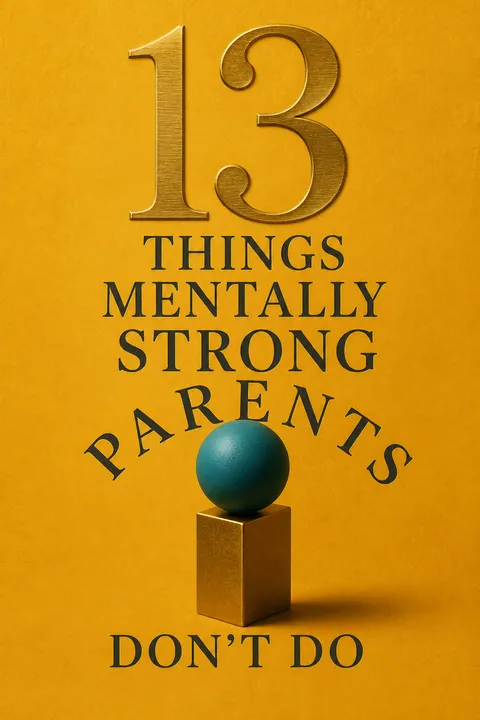


Key Takeaways
Build mental strength by coaching skills, not removing every obstacle
Strength grows through practice. Amy Morin began her original list of mental-strength habits as a private note during a period of grief, after losing her mother, first husband, and father-in-law. The central parenting lesson is that children build resilience through repeated chances to think clearly, manage feelings, and choose useful actions. Parents can coach these abilities in ordinary moments, instead of waiting for a therapist or trying to shield a child from every setback.
Aim for independence. Mental strength is not constant optimism or immunity to distress. It is the ability to respond productively when life is hard. Like physical strength, it develops through practice, support, and gradually harder challenges. The parent’s role shifts from supplying answers to helping a child learn to coach himself.
The book’s strongest organizing idea is practice rather than protection. This fits developmental science: skills such as planning and emotional regulation improve when children try them with support, not when adults perform every difficult step for them. The key phrase is with support. Independence is not abandonment, and a child’s age, disability, temperament, or circumstances affect how much help is appropriate. The useful question is not whether to help, but whether the help builds a capacity the child can use without the parent next time.
Teach children to separate real barriers from helplessness
Challenge the story of powerlessness. Cody’s parents believed his ADHD made academic success unrealistic, although medication helped, teachers provided accommodations, and extra help was available. Cody had stopped completing assignments because he shared their belief that he could not keep up. Once his parents treated the diagnosis as a challenge to manage rather than a verdict, they supported his work and held him accountable. His grades and confidence improved.
Look for thinking errors. Morin uses the BLUE checklist to flag thoughts that may exaggerate helplessness: blaming everyone else, noticing only bad outcomes, predicting disaster, and making negative claims too sweeping. The goal is not to pretend barriers are imaginary. It is to ask what is true, what remains uncertain, and what action is still possible.
This is a practical version of perceived control, the belief that one’s actions can influence at least part of an outcome. That belief can increase effort, but it should not be confused with the claim that effort controls everything. ADHD, discrimination, poverty, and inadequate school support are real constraints. A child needs both accurate advocacy and a sense of agency. The most constructive coaching names the barrier plainly, then identifies a next step that is genuinely within the child’s reach.
Let guilt inform your parenting, but never make the decision
Separate remorse from panic. Joe felt guilty about his son Micah’s weight, yet felt even worse when Micah asked for more food. Giving in relieved Joe briefly, while preserving a pattern that threatened his son’s health. With nutrition guidance, a clear plan, and practice tolerating discomfort, Joe began setting limits and supporting healthier habits.
Ask what guilt is signaling. Morin distinguishes useful guilt after harmful behavior from unnecessary guilt about harmless choices and chronic guilt that persists without a clear cause. If a parent has caused harm, the response is to change behavior and make amends where appropriate. If guilt rests on an exaggerated prediction, such as believing one missed activity will damage a child’s future, the parent can question that conclusion rather than compensate with gifts or permissiveness.
Guilt can function like a moral alarm, but alarms are not verdicts. Emotion research distinguishes the feeling itself from the interpretation attached to it: guilt may prompt repair, or it may arise from impossible standards and social comparison. The parent’s task is to check the evidence and choose a response consistent with the child’s needs. This avoids two extremes, treating every guilty feeling as proof of wrongdoing, or dismissing genuine harm because guilt is uncomfortable.
Pair affection with contribution, not special treatment
Praise what children do. Brittany’s parents made nearly every family activity about their only child, provided what she wanted, and spared her ordinary responsibilities. By adolescence she was defiant and unkind to peers. Her parents changed course by setting limits, assigning chores, and making privileges something she earned. The shift was uncomfortable, but it helped correct the idea that family life revolved around her.
Build esteem honestly. Morin recommends praising effort, kindness, and choices a child controls, rather than declaring the child exceptional at everything. She also suggests gratitude rituals, volunteering, and conversations that help children imagine another person’s perspective. These practices direct attention beyond status and possessions. The aim is neither to diminish a child nor to deny real strengths, but to help confidence coexist with humility and consideration.
The distinction between secure self-worth and inflated status is important. Children need warmth and recognition, but praise that makes them superior to others can make ordinary feedback feel like an attack. Process-focused praise is useful because it links achievement to actions the child can repeat. Still, praise should not become a covert control system in which every kind act earns approval. Genuine regard, fair expectations, and chances to contribute help children experience belonging without assuming they are the family’s permanent guest of honor.
Treat fear as information, then practice courage in manageable steps
Distinguish danger from discomfort. Anna responded to anxiety by tightly controlling her children’s schedules and restricting their independence. When twelve-year-old Zoey returned from a friend’s home with dyed hair, Anna saw proof that she needed still more control. Morin instead recommended age-appropriate freedom, unstructured time, and small decisions. As Anna loosened the rules, Zoey had reason to demonstrate responsibility.
Use gradual exposure. A fear ladder breaks a frightening goal into smaller steps. A child afraid to sleep alone might first sleep on a mattress near a parent’s bed, then near the doorway, and eventually in her own room. Each step should create manageable discomfort, not panic. Parents should also assess the actual danger and the developmental cost of saying no, rather than treating every anxious feeling as evidence of risk.
Gradual exposure is a well-established approach to anxiety: safe, repeated contact can teach the brain that an anticipated threat is tolerable. The distinction between risk and discomfort is especially useful because avoidance often brings immediate relief while strengthening fear over time. But independence is not a universal prescription. A realistic risk assessment must account for a child’s maturity, local conditions, and specific vulnerabilities. Courage is not recklessness. It is taking a proportionate step while retaining appropriate safeguards.
Keep adult authority clear while giving children age-appropriate choices
Limits can create safety. Clarissa, a capable sixteen-year-old, threatened self-harm when her parents denied requests and had cut herself. Her parents felt trapped. They sought separate therapy for Clarissa, created a safety plan, secured sharp objects, and established rules and consequences. Threats were taken seriously, with hospital evaluation considered if they feared for her safety, but the threats did not become a way to obtain privileges.
Share power carefully. Children benefit from choices they can manage, such as selecting clothes or deciding which task to do first. They should not carry responsibility for adult decisions or be allowed to rewrite every limit through arguing. The point is not rigid control. It is a dependable hierarchy in which parents make safety and family decisions, listen respectfully, and give children increasing autonomy as they demonstrate readiness.
This section’s distinction between authority and domination is essential. Predictable limits can reduce the uncertainty children must manage, while bounded choices support autonomy. Self-harm threats require particular care: they warrant professional assessment and a safety response, regardless of whether a parent suspects they are being used to influence a decision. A firm boundary should never become a reason to minimize danger. Good authority combines emotional steadiness, clear expectations, and readiness to seek specialized help.
Treat mistakes as practice, not proof your child is failing
Choose excellence over flawlessness. Kylie cried over grades below an A and struggled with peers, while her mother focused on raising her GPA. Therapy helped both mother and daughter shift attention toward emotional health, effort, and more forgiving self-talk. Morin argues that high expectations become damaging when a child believes love or approval depends on perfect performance.
Let safe errors teach. Taylor’s mother had managed her schedule, corrected her work, and made decisions for her. Taylor eventually asked whether she should get out of bed to use the bathroom. Her mother began stepping back, even when Taylor made imperfect choices or her grades dipped. A debrief after a success or failure can help a child identify what worked and what to try next, without turning one mistake into a judgment about character.
Perfectionism often converts a specific outcome into a global identity claim: a poor grade becomes evidence of being a failure. That makes experimentation feel dangerous and encourages concealment. Allowing low-stakes errors can weaken that association and develop problem-solving ability. The boundary is important: mistakes involving serious safety risks or harm to others need intervention. The goal is not to celebrate every error, but to preserve enough room for children to learn before consequences become severe.
Make responsibility a daily skill, not an adulthood surprise
Teach before independence is urgent. Chris was twenty-five, working as a waiter, and still relying on his parents for money. He did not know his income, expenses, or how to budget. His parents had to set conditions for support, review his finances with him, and help him build a budget. They stopped assuming he was incapable and began teaching the skills they had missed earlier.
Transfer the work gradually. Chores, packing for activities, tracking homework, and managing small sums of money give children practice with consequences. Morin cites a survey in which 82 percent of adults recalled regular childhood chores, but only 28 percent said their children had them. Natural consequences can teach when the stakes are manageable. A child who forgets equipment may miss practice, while a parent can respond with empathy rather than a rescue mission.
Responsibility grows through repeated cycles of planning, action, feedback, and adjustment. Chores are not merely labor; they offer practice in noticing what a household needs and contributing without constant prompting. Yet the aim is competence, not transferring adult burdens onto children. Tasks should match ability, and consequences should be proportionate. The most useful parental support often resembles scaffolding: enough structure to make a task possible, then less assistance as the child becomes capable.
Let children feel hard things, then coach them through the feelings
Honesty makes pain manageable. Julie tried to preserve the appearance of a unified family after divorce, including shared holidays with her ex-husband. The arrangement delayed grief and complicated her new relationship. When she set boundaries and started separate traditions, her children were sad, but they could begin adjusting to the real shape of their family. Morin also describes Addie, who feared her father would die after hearing he had diabetes; age-appropriate facts relieved the terror created by silence.
Stay present without taking over. Children need space to feel sadness, fear, anger, or disappointment, alongside support in naming and managing those emotions. Validate the feeling, distinguish it from behavior, and help the child find a coping step. Protect children from genuine danger, but do not treat every painful feeling as a problem adults must erase.
Emotional resilience depends on both experience and relationship. A child who faces distress with a trustworthy adult can learn that painful feelings rise and fall without dictating every action. This resembles co-regulation: adults initially help children settle, then gradually hand over more of the process. The book’s warning against overprotection is valuable, but pain is not automatically beneficial. Abuse, trauma, and persistent distress require protection and care, not a lesson in toughness.
Discipline should teach the next choice, not manufacture suffering
Make consequences instructive. Dylan’s parents had removed nearly every privilege and had used threats and spanking, yet Dylan behaved well at school and badly at home. His parents began spending positive time with him, noticing good behavior, and letting him earn privileges each day. Those changes gave him a reason to try again instead of feeling that improvement was impossible.
Teach, then follow through. Morin defines discipline as training that prepares a child to behave better, in contrast to punishment designed to make a child suffer. Clear rules, specific goals, rewards, and logical consequences can support self-control. For example, a child who breaks a household object can help earn money to replace it. The consequence should connect to the behavior and include a clear path back to trust.
The distinction between teaching and retribution is useful because consequences only help when the child can connect them to a future choice. Predictability matters too: inconsistent or severe penalties can encourage fear and concealment rather than learning. Positive attention is not a reward for being perfect; it communicates that constructive behavior is noticed. At the same time, incentives should not crowd out internal reasons to act well. They work best as temporary structure while skills and habits develop.
Choose long-term growth over shortcuts, especially when parenting feels exhausting
Short-term peace can train the wrong lesson. Nicole was exhausted by three children’s evening routines and often cleaned up after them or gave in to stop arguments. Once she and her husband agreed on rules, consequences, and ways to protect her own energy, she could follow through more consistently. The children gradually began to respond to those expectations.
Make persistence concrete. Morin distinguishes a shortcut that solves a problem for the moment from a strategy that supports the child’s longer-term goal. Parents can help children set specific goals, break them into manageable steps, track progress, and use a short self-reminder when they want to quit. The Batman effect describes a study in which young children persisted longer at boring tasks when pretending to be a hardworking character. The strategy makes effort feel more accessible, not effortless.
A shortcut often works because it is reinforced immediately: the whining stops, the room is clean, or the parent gets a few minutes of quiet. That immediate payoff can make an unhelpful routine remarkably durable. Planning for predictable moments of fatigue is therefore more effective than relying on ideal patience. The chapter’s focus on parental self-care is not a luxury add-on. A depleted adult has fewer resources for consistent coaching, although structural support and realistic demands matter as much as individual coping.
Make family values visible in ordinary choices
Behavior reveals priorities. Kyle cheated on a college-level assignment because he feared failing and disappointing his parents. His family said honesty mattered, but much of their attention had gone to grades, tutors, and elite colleges. After the incident, they discussed their priorities and recognized that their actions had made achievement seem more important than integrity.
Turn values into decisions. A family mission statement can name shared commitments and help guide choices about time, money, and behavior. Morin recommends discussing the reasoning behind decisions, talking through ethical dilemmas, and acknowledging when a parent’s actions contradict stated values. A child learns more from watching how adults treat people, handle mistakes, and respond to unfairness than from hearing a rule repeated without example.
Values become credible when they impose a cost. A parent who praises honesty but tolerates small deceptions teaches that integrity is optional when inconvenient. Family discussions can make implicit priorities visible, but a mission statement has little force unless daily behavior supports it. Values also sometimes conflict: honesty can collide with kindness, or perseverance with the freedom to quit. Helping children reason through those tensions is more durable than asking them to memorize a list of virtues.
Analysis
Morin’s book is a practical argument for parenting as skill-building. Its central reversal is simple: a parent can weaken a child while trying to help, especially by relieving discomfort, correcting every error, or making the child’s life frictionless. Across its case stories, the recurring pattern is that adult behavior shapes the conditions in which children practice agency. A parent’s belief that a child is incapable can become a self-fulfilling limit; a parent’s willingness to hold a boundary can create room for competence.
The book is strongest when it translates broad principles into specific interactions: asking what a child can control, validating a feeling without excusing harmful conduct, tying a privilege to a concrete responsibility, or letting a safe mistake have a natural consequence. These methods make mental strength observable rather than mystical. Its repeated emphasis on modeling is also persuasive: children learn not only from rules, but from how adults handle frustration, unfairness, and their own mistakes.
The framework needs careful application. The language of toughness and personal responsibility can be misused if it erases disability, trauma, discrimination, or a child’s legitimate need for protection. A diagnosis is not a character flaw, and emotional distress is not proof of manipulation. Nor can parents always determine alone whether a behavior requires clinical support. The book itself recognizes professional help as appropriate when functioning is affected, and that safeguard matters.
Some research claims and cultural examples are presented in a confident, popular format, while the underlying studies may have limits in what they can prove. Readers should treat statistics as illustrations, not universal rules for individual families. The durable insight is more modest and stronger: responsive parenting combines warmth with boundaries, and support with increasing opportunities to act. Children need adults who neither abandon them to hardship nor make hardship disappear. They need guided practice in living through it.
Review Summary
"13 Things Mentally Strong Parents Don't Do" received mostly positive reviews, with an average rating of 4.16 out of 5. Readers appreciated the practical advice, clear instructions, and actionable strategies for empowering children. Some found the book helpful for self-reflection and understanding adults. However, a few critics noted issues with privilege, outdated information, and dismissal of factors like trauma and socioeconomic status. Overall, most readers found value in the book's approach to fostering mental strength in children, despite some disagreements with specific points.
People Also Read







Glossary
BLUE
negative-thinking checklistA mnemonic for identifying thoughts that can intensify a child’s sense of helplessness. The letters refer to blaming everyone else, looking only for bad news, making unhappy guesses about the future, and using exaggeratedly negative language. The aim is to help children question whether a thought accurately describes the situation and identify a more realistic response.
learned helplessness
expecting effort cannot helpA pattern in which repeated experiences of having no control lead a person to stop trying, even when a later situation offers a way to improve it. Morin uses the term to explain how children who see themselves as powerless may stop seeking solutions. Parents can counter it by acknowledging real barriers while helping children find actions they can take.
Fear Ladder
stepwise fear practiceA gradual plan for approaching a fear through a sequence of manageable steps. The child and parent identify the eventual goal, then arrange smaller actions that lead toward it. For a child afraid to sleep alone, steps might move from sleeping near a parent’s bed to sleeping independently. Repeated success builds confidence without forcing an overwhelming leap.
Grandma’s Rule of Discipline
privileges follow responsibilitiesA way of presenting expectations by stating what a child can do after completing a responsibility. Instead of framing the rule only as a prohibition, the parent connects a desired activity to a specific task, such as playing after homework is finished. The approach emphasizes that the child’s choices affect when a privilege becomes available.
Batman effect
role-play that supports persistenceA technique based on a study in which young children persisted longer at repetitive tasks when they imagined themselves as a hardworking character, such as Batman or Dora the Explorer. A parent can invite a child to approach a boring task in character. The role-play offers psychological distance from frustration and makes sustained effort more engaging.
socially prescribed perfectionism
believing approval requires perfectionThe belief that other people will value or accept someone only if that person performs flawlessly. Morin connects this pressure to harsh self-criticism, anxiety, depression, and chronic dissatisfaction. Children may hide errors or experience ordinary setbacks as threats to belonging. Parents can reduce the pressure by valuing effort, learning, and the child’s worth beyond achievement.
token economy
tokens exchanged for privilegesA behavior system in which a child earns tokens for clearly defined actions and exchanges them for agreed-upon privileges or rewards. Morin describes using it with a foster child who struggled with respectful language, physical behavior, and borrowing belongings. Goals should be specific and attainable, with rewards that motivate the child while reinforcing positive choices.
FAQ
What's 13 Things Mentally Strong Parents Don’t Do about?
- Focus on Mental Strength: The book emphasizes raising children to be mentally strong and resilient by avoiding certain detrimental parenting behaviors.
- Thirteen Key Principles: Amy Morin identifies thirteen specific things that mentally strong parents avoid, such as condoning a victim mentality and expecting perfection.
- Empowerment and Responsibility: It aims to empower parents to help their children take responsibility for their actions and develop a healthy mindset.
Why should I read 13 Things Mentally Strong Parents Don’t Do?
- Practical Parenting Advice: The book provides actionable strategies for parents to implement in their daily lives to positively impact their children's mental health.
- Promotes Healthy Development: It helps parents foster a supportive environment that encourages emotional growth and independence in their children.
- Research-Based Insights: Morin combines personal anecdotes with research findings, making the advice relatable and credible.
What are the key takeaways of 13 Things Mentally Strong Parents Don’t Do?
- Avoid Victim Mentality: Parents should encourage resilience and personal responsibility instead of condoning a victim mentality.
- Set Realistic Expectations: Focus on effort and growth rather than expecting perfection, allowing children to learn from their mistakes.
- Teach Responsibility: Create opportunities for children to learn life skills and hold them accountable for their actions.
What are the best quotes from 13 Things Mentally Strong Parents Don’t Do and what do they mean?
- “It’s easier to build strong children than to repair broken men.”: Highlights the importance of early intervention in a child's development.
- “Mentally strong people don’t feel sorry for themselves.”: Encourages teaching children to take charge of their emotions and circumstances.
- “Mistakes are great teachers.”: Reinforces the idea that mistakes provide valuable learning opportunities for growth and resilience.
How can parents avoid condoning a victim mentality in their children according to Amy Morin?
- Promote Problem-Solving: Encourage children to find solutions to their problems rather than blaming others.
- Teach Empathy: Help children understand the feelings of others and recognize that everyone faces challenges.
- Avoid Overprotection: Allow children to experience failure and disappointment to teach them that setbacks are a normal part of life.
What specific methods does Amy Morin suggest for raising mentally strong children?
- Encourage Independence: Allow children to make choices and face the consequences of their actions to develop decision-making skills.
- Model Resilience: Demonstrate mental strength in your own life to teach children how to cope with challenges.
- Set Clear Boundaries: Establish and consistently enforce rules and expectations to promote accountability.
How does 13 Things Mentally Strong Parents Don’t Do address the issue of emotional pain?
- Embrace Emotional Discomfort: Morin argues that shielding children from emotional pain can hinder their growth.
- Teach Coping Skills: Emphasizes the importance of teaching children healthy ways to manage their emotions.
- Normalize Struggles: Acknowledging that everyone faces challenges helps children understand that it’s okay to feel sad or anxious.
What are the dangers of expecting perfection from children, according to 13 Things Mentally Strong Parents Don’t Do?
- Increased Anxiety: Expecting perfection can lead to heightened stress and anxiety in children.
- Fear of Failure: Children may develop a fear of making mistakes, hindering their willingness to try new things.
- Negative Self-Image: Perfectionism can lead to a poor self-image, resulting in mental health issues such as depression and anxiety.
How can parents teach their children to take responsibility for their actions?
- Set Clear Expectations: Clearly communicate what is expected of children in terms of behavior and responsibilities.
- Encourage Accountability: When children make mistakes, encourage them to acknowledge their actions and learn from them.
- Provide Opportunities for Growth: Give children age-appropriate responsibilities and tasks to develop skills and confidence.
What role does empathy play in raising mentally strong children?
- Understanding Others: Teaching empathy helps children recognize and understand the feelings of others.
- Building Resilience: Empathetic children are often more resilient, as they can relate to the struggles of others.
- Encouraging Kindness: Empathy promotes kindness and compassion, essential traits for healthy interpersonal relationships.
How can parents effectively discipline their children without resorting to punishment?
- Focus on Teaching: Discipline should be about teaching children how to make better choices rather than inflicting pain or shame.
- Use Logical Consequences: Implement consequences that are directly related to the misbehavior to help children understand the impact of their actions.
- Encourage Positive Behavior: Praising good behavior and providing rewards can motivate children to follow rules and make better choices.
How does the book suggest parents can recharge their energy to avoid shortcuts in parenting?
- Prioritize Self-Care: Morin stresses the importance of parents taking time for themselves to recharge.
- Identify Energizing Activities: Discover activities that help parents feel rejuvenated, such as exercise or hobbies.
- Set Boundaries: Establish boundaries around work and family time to maintain energy levels and focus on children’s needs.
About the Author
Other books by Amy Morin



Download PDF
Download EPUB
.epub digital book format is ideal for reading ebooks on phones, tablets, and e-readers.








