

Plot Summary
Prologue
The Raphaëls vanish from 33 Place Brugmann, leaving their furniture, a projector, and a blank canvas marked for Charlotte Sauvin. Their paintings are missing, though the rooms seem otherwise untouched.
Charlotte knows they are truly gone when she finds the canvas, and rumors immediately fill the building: perhaps the family took their silver, perhaps someone stole the art. The unexplained absence of the paintings turns a familiar apartment into a mystery, while the note makes their departure feel like a private message Charlotte has not yet learned to read.
The opening makes a homecoming feel like a crime scene. The furniture remains, but the paintings have disappeared, so absence becomes the first evidence Charlotte must interpret. The canvas addressed to her also links art with inheritance: what the Raphaëls leave behind is not an explanation but a responsibility. Rumor starts at once, showing how a building full of people who hear everything can still fail to know the truth. This frame promises that the novel’s central mysteries will be read through objects, omissions, and the competing stories neighbors tell themselves.
The Camera Catches Blood
In August 1939, eighteen-year-old Charlotte Sauvin lives with her architect father, Francois, across the landing from the Raphaëls. She is color-blind, though she recognizes subtle patterns and draws with a precision that has won her a place at art school. The Raphaëls’ son Julian, her closest friend, and his sister Esther make films with a camera their father brought from America.
When a car kills a cat in the square, Julian keeps filming while Esther kneels beside it. Charlotte sees blood spreading from the church as well as the animal, a vision no one else notices. Soon afterward Julian tells her he will fight the Nazis if war comes. Charlotte dismisses the danger, but his warning unsettles the life she had hoped to keep.
The camera turns observation into an ethical problem before the war has formally begun. Julian records the cat’s death instead of intervening, while Esther wants to save it and Charlotte watches an impossible flood of blood. Their differing responses anticipate the choices each will face when witnessing suffering is no longer safely aesthetic. Charlotte’s color-blindness is not presented as a simple deficit: her grayscale perception lets her notice patterns others miss, but it also makes her private visions difficult to communicate. The looming war first enters this sheltered world as an argument over what seeing obliges a person to do.
Masha Finds an Attic
Masha Balyayeva reaches Brussels after fleeing revolutionary violence in Russia, where a soldier killed her mother during a pogrom. Her rabbi uncle gives her names to seek help from; Sophia Raphaël offers her a new name, work altering a dress, and a room at the top of Number 33. Masha turns that cramped attic into a sewing studio and becomes the trusted seamstress of Brussels society.
Charlotte, still a child, begins visiting to watch her work and learn how fabric can alter a person’s bearing. Years later, Colonel Warlemont introduces Masha to Harry, a magnetic, guarded man with experience in war. Their attraction deepens into love, giving Masha a life beyond the room and a reason to risk leaving it.
Masha’s sewing is both livelihood and social intelligence. She reads bodies, status, and vulnerability through the fit of a garment, making her craft a form of attention that counters the crude categories surrounding her as a refugee. Sophia’s gift of a name and a room offers safety, but Masha earns belonging through skilled work rather than passive charity. Her bond with Charlotte is similarly built through observation and shared making. Harry’s arrival introduces a different kind of intimacy, one that asks Masha to trust a man whose secrecy resembles the danger she has spent her life escaping.
Art Must Cross Borders
Leo Raphaël, a Jewish art dealer, learns that American immigration quotas have blocked his plan to move his family to safety. A buyer named Mats offers to take over Leo’s clients as German demand expands, effectively letting Leo sell through a non-Jewish front.
Leo refuses to abandon the artists or accept a deal that would profit from their persecution. His cousin in London has proposed moving vulnerable paintings to safety, and Leo decides to accept. He asks Francois whether an architect can serve a Nazi society without helping shape it.
Francois refuses that future too, saying architecture sets rules for how people live. The two men understand that their professions, like their friendships, will soon be tested by choices they cannot keep theoretical.
Leo’s refusal is not a claim to moral purity; it is a decision about which relationships his work will preserve. Mats offers a practical route for Leo to remain economically useful, but the price is severing artists from their own agency. Francois sees architecture as social structure, so designing for the regime would mean helping materialize its hierarchy. Their exchange binds cultural preservation to civic responsibility without pretending that either can stop the war. The men are not choosing between safety and danger in the abstract. They are deciding which forms of complicity their trades would make ordinary.
A Marriage Without Papers
At art school, Charlotte first notices Philippe Kahn after he is savaged during a critique; she defends the light and structure in his work rather than flattering him. Their attraction grows through a shared respect for art, architecture, and each other’s stubbornness.
Julian, who has always assumed Charlotte will remain his closest companion, withdraws when she admits she loves Philippe. As Europe darkens, Charlotte and Philippe decide they cannot afford to wait. They marry privately, with Francois as witness, a priest officiating, and a Jewish marriage contract signed, but they leave the union unregistered for safety.
Professor Weiss, a Jewish art teacher, begins removing paintings from his home and hiding them in crates. His students’ violent fight over national loyalties has convinced him that the danger is already inside ordinary rooms.
Charlotte’s decision to marry is a movement from inherited intimacy toward chosen desire, but it does not erase her attachment to Julian. Her emotional reserve makes the change easy for others to misread; Julian recognizes what she cannot yet name, and his hurt exposes the cost of her self-containment. The secret marriage reflects the same pressure as Weiss’s hidden paintings: private life and public identity must be separated to survive. Yet secrecy is not merely concealment. Charlotte and Philippe make a binding commitment without legal recognition, choosing a relationship that exists through acts of care rather than institutional proof.
The Empty Raphaël Rooms
After the Raphaëls leave, Charlotte is furious that Julian and Esther disappeared without a goodbye. Francois explains that telling them about the escape would have made their family complicit, but his calm reasoning only sharpens her sense of abandonment. She refuses his coffee, retreats to bed, and resents the unfamiliar parquet floor he has installed while the Raphaëls’ apartment is empty.
Before leaving for Antwerp, she studies the family’s films, including the images of the people and places that made their shared life feel permanent. She does not yet know that the paintings have been hidden beneath the new floor. For now, the blank space across the landing seems to prove that the family she relied on chose survival without her.
Charlotte experiences departure as a breach of relationship because she measures loyalty through presence and farewell. Francois’s argument is factually sound, yet its logic cannot meet the emotional need she is expressing. Her anger is not simply childishness; she has lost the people who made her father’s household feel like a larger family. The new parquet intensifies this rupture because it covers a secret she cannot see. A floor meant to repair a flaw in the apartment becomes a literal surface beneath which both memory and danger are concealed.
Occupation Measures Every Life
When German forces occupy Belgium in May 1940, Charlotte is in the countryside with Philippe. He leaves soon afterward to join the fight, refusing to take her because she cannot follow him into combat and Francois would be alone.
Charlotte returns to Brussels and watches restrictions tighten by increments: ration cards, curfews, shuttered businesses, and neighbors who learn to profit from deprivation. A German officer named Schmidt politely lets her buy butter after grocer Smets tries to deny her father’s share, then slips an extra portion into her bag.
Charlotte gives that butter to a hungry newsboy rather than keeping it. She works first in a hat shop, then in a uniform factory, while months without news from Philippe make his face and voice harder to remember.
Occupation changes morality through small transactions before it announces itself as catastrophe. Smets uses ration rules to assert power, Schmidt bends them with a quiet kindness, and Charlotte passes the surplus onward rather than treating it as personal fortune. Her choices do not defeat the system, but they preserve a sense of responsibility inside it. Philippe’s departure creates a second scarcity, emotional rather than material. Charlotte’s fear that she may forget him gives rationing a personal analogue: both love and food become vulnerable to time, distance, and the conditions imposed by others.
Masha Joins the Resistance
In occupied Paris, Harry builds a resistance network and draws Masha into it. She alters clothes for the wives and mistresses of officials in the Vichy government, listening as they discuss travel, political favors, and men they suspect of being Jewish or disloyal.
Masha passes messages and helps fugitives reach their next contacts, using the credibility of a seamstress who seems to know little. On one journey, Harry recognizes that their cheerful young driver is armed and working against them.
He shoots the driver, takes his weapon, and drives away with Masha, explaining that they had been the intended victims. The killing shows her the lethal cost of Harry’s work, but she continues helping because she cannot separate love for him from the people the network is trying to save.
Masha’s profession gives resistance work a plausible cover and a precise method: fitting rooms create access to conversations that men in public offices cannot hear. Her success depends on managing what others believe she knows. Harry’s sudden violence against the driver breaks the fantasy that their work consists mainly of clever disguises and messages. Masha remains, not because she mistakes Harry for harmless, but because she experiences participation as a refusal to retreat from life. The choice is psychologically costly: affection, political duty, and risk become braided together until she cannot disentangle them.
Stars at the Factory
In 1942, the German authorities require Jews to wear yellow stars. Francois refuses to make his Jewish colleagues wear them, while his partners divide over whether compliance is necessary to keep the firm open. The authorities shut the practice down, and Francois loses his work. Charlotte’s Jewish employer has already been taken for questioning, leaving a VNV supporter, DeDecker, in charge of the uniform factory where she sews.
When he threatens her job and hints at sending her to Germany, she tells him she is pregnant and uses the threat of exposing his stolen bread and his affair to escape his office. She leaves without taking factory supplies. Her pregnancy is real, but she keeps it from Philippe, believing contact could expose him.
The star ordinance converts prejudice into administration, and Francois’s refusal shows how bureaucratic obedience recruits professionals into persecution. His colleagues’ disagreement is painful because each can justify a different response through family survival or principle. Charlotte’s encounter with DeDecker reveals a parallel abuse of power at work: he uses employment and forced labor as leverage for sexual access. Her improvised claim is not a triumph without cost; she loses income and must protect a pregnancy alone. Survival here means neither clean heroism nor simple compliance, but choosing what not to surrender.
Scotland Saves the Paintings
The Raphaëls reach a family home in Scotland, where Sophia struggles with exile and fears the island may not stay safe. Esther refuses to abandon nursing and begins caring for badly wounded airmen.
Leo travels between London and Wales, helping move the National Gallery’s paintings into a former slate quarry fitted with controlled storage rooms. He also arranges for one painting at a time to appear in the Gallery, so Londoners can still encounter beauty during the bombing.
Julian, studying mathematics at Cambridge, joins the RAF as a navigator. His parents know he is flying missions but cannot speak freely about the risks. Leo hides his fear behind practical plans, while Sophia confronts it directly, trying to hold their family together across distance.
The family’s wartime roles turn preservation into several distinct kinds of service. Leo protects paintings by moving them underground, Esther tends bodies damaged by the same conflict, and Julian applies mathematics to missions where calculation cannot eliminate chance. Their work is not interchangeable, but each attempts to keep something human from being erased. Sophia’s anxiety is not a failure of courage; it is the emotional labor of recognizing what the men’s plans often turn into abstractions. The weekly public painting also resists a false choice between safety and culture: art is hidden to survive, then briefly shown so people can endure.
The Shuttle Is a Trap
In Paris, Masha escorts a young RAF airman to a café where a Canadian contact is supposed to move him onward. The man’s Flemish accent, contempt for Belgian ration coins, and concealed missing fingertip reveal that he is an impostor. Masha leaves before he can seize her, but someone shoots her as she runs. She reaches a second café, wounded and losing blood, where Harry arrives too late to save her.
A gun touches her head while he holds her, but Masha cannot determine whether he fires to prevent capture or another person kills her. The airman escapes through the building’s basement and eventually reaches Gibraltar. Harry later tells Colonel Warlemont that Masha is dead, then accepts a request to help move other airmen through Brussels.
Masha’s death is framed through the limits of knowledge that have governed her work. She correctly reads the contact’s disguise, but recognition comes after the operation has already exposed her. Her final uncertainty about the gunshot refuses the reader a clean verdict on Harry, even as her account makes his grief inseparable from suspicion. The uncertainty is ethically important: wartime loyalty does not guarantee trust, and love cannot restore the facts it destroys. The escaped airman’s survival gives the network a result, but not a consolation. Masha saves someone and still pays the price herself.
The Son Behind the Mole
Dirk DeBaerre has spent years observing people and attending VNV meetings, hungry for money, status, and the leverage that information brings. He once switched Charlotte’s pencils at school, exposing her color-blindness to classmates, and has never forgotten the harm he caused.
During the occupation, he learns that his father, Martin, had secretly helped a Jewish family escape. The family is found, and Martin is taken; his mother soon dies after stepping in front of a tram.
Before her death, she reveals that Dirk’s biological father was her own stepfather, the man whose mole Dirk inherited. Dirk continues attending VNV meetings, but now watches informants and collaborators for weaknesses, turning his appetite for surveillance toward a purpose he has not yet admitted.
Dirk’s self-image is built from concealment: he studies others so they cannot study him, and he treats social life as a contest with winners and fools. His childhood cruelty toward Charlotte shows how easily a desire for beauty or mastery becomes an excuse to injure someone more vulnerable. Martin’s hidden aid complicates Dirk’s contempt for his father, while the revelation of his parentage destabilizes the identity he had used to explain himself. The result is not instant moral conversion. Dirk still calculates, follows, and seeks advantage, but his observation begins to serve protection as well as self-interest.
Julian Falls Over Flanders
On a mission over Belgium, Julian’s aircraft is hit by a German fighter. The wireless operator dies, the pilot stays with the damaged plane, and Julian escapes into the dark before the bomber explodes. He crosses a freezing canal and wakes in a barn surrounded by farmers who debate whether to kill him. Julian identifies himself as Jewish and speaks Hebrew to convince them he is not an enemy.
They vote to spare him, give him farm clothes, and hide him as a deaf man who cannot speak. He works among their animals until they judge it safe to send him toward Brussels. The farmers warn that a collaborator has entered the escape network, so Julian must trust no one blindly, even when the next link offers shelter.
Julian’s mathematical training cannot control the most decisive variables of his mission: fear, loyalty, and other people’s judgment. The farmers’ vote makes rescue contingent rather than sentimental; they risk themselves only after weighing what they believe about him. Julian earns their trust by drawing on a Jewish identity his father did not insist he perform through religious ritual. His assumed deafness then turns concealment into a discipline of the body. He must suppress instinctive responses to sound, making survival depend on acting a role even when the role denies part of his humanity.
The Balcony Becomes an Exit
The resistance brings Julian to Colonel Warlemont’s apartment at Number 33, where the Colonel is already sheltering a real deaf man, Jacques, and another airman. Dirk notices Julian and later learns that Felix Putzeis, a collaborator, wants him delivered to a false contact named Anderson.
When the Colonel prepares to meet Anderson, Dirk warns Charlotte that the handoff is a trap and gives her a colored pencil stub as proof of his old guilt. Charlotte and Francois draw Anderson away with a staged conversation about hats.
Meanwhile, Dirk disguises Julian in oversized clothes and sends him out in the bakery truck beneath grain sacks. Julian reaches Charlotte’s balcony by the narrow ledge he and Guy once tested as boys, then vanishes from Brussels before the search can find him.
The escape resolves several forms of earlier knowledge at once. Dirk’s pencil stub transforms a childhood act of betrayal into a token of accountability, though it cannot undo the injury. Charlotte’s hat-making becomes a practical language for confusing Anderson, while Guy’s dare and the building’s ledges provide Julian with a physical route no official plan could offer. The rescue depends on people using their particular skills rather than following a single heroic leader. Crucially, Dirk’s choice is not made through a declaration of goodness. He risks himself by acting, the standard he once applied to everyone else.
A Bomb Opens the Ending
After Julian’s escape, the Gestapo searches Number 33. They find Francois’s obsolete rifle, missing its bolt, and take him for questioning. The next day a Belgian RAF pilot bombs the headquarters on Avenue Louise, where Francois is being held.
Charlotte reaches the ruined building but receives no confirmation of his fate; she can only assume those inside are gone. Julian, meanwhile, makes it through Spain to Gibraltar and learns that Philippe is missing and presumed dead.
He also reveals that the Raphaël paintings were hidden beneath Charlotte’s parquet floor. Back at Number 33, Charlotte feels her unborn baby move. She opens Francois’s sketchbook and finds his imagined version of the building, a home with room for every resident, including people who failed one another.
The ending refuses to equate survival with restoration. Julian gets out, the hidden paintings remain protected, and Charlotte feels new life, but Francois’s fate and Philippe’s absence leave the family incomplete. The final sketchbook converts architecture from Francois’s profession into an ethical proposition: a building can be designed to make conversation possible rather than merely contain separate lives. Its residents include the compromised, the frightened, and the generous, not an idealized community purified of conflict. Charlotte’s next task is therefore not to recover the prewar household but to decide whether its imperfect people can still belong in a future she helps create.
Analysis
33 Place Brugmann is built as an ensemble novel in which a single Brussels apartment building gathers several distinct forms of danger. Charlotte’s narration anchors the story, but the changing speakers prevent her perspective from becoming the only measure of truth. Masha, Leo, Francois, Dirk, Julian, and others report events through their own fears and self-justifications. Their accounts sometimes correct one another and sometimes deepen uncertainty, especially around motives that cannot be safely spoken. This structure makes the building’s acoustics more than atmosphere: everyone hears fragments, yet no one possesses the whole story.
The novel repeatedly tests the difference between seeing and understanding. Charlotte cannot identify colors conventionally, but she reads light, shape, and relationship with unusual acuity. Dirk watches people to gain power, then must decide whether observation will serve self-protection or responsibility. Masha reads accents and clothing to detect a false contact, while her final uncertainty shows that perceptiveness cannot guarantee survival. These characters do not share one reliable method of knowing. They must act amid incomplete evidence, and their choices acquire moral weight precisely because certainty is unavailable.
Art and architecture offer contrasting forms of preservation. Paintings can be hidden, transported, or briefly displayed, while Francois’s buildings encode ideas about how people might live together. Yet neither art nor design offers simple rescue. Paintings survive under floors while their owners are displaced; a humane building remains an imagined plan rather than a shield from violence. The book therefore refuses the consoling idea that beauty defeats brutality. Instead, it presents preservation as work: carrying a person across a border, keeping a painting intact, sharing food, or making room for someone previously treated as expendable.
The emotional movement is from Charlotte’s belief in a stable household toward a harder, chosen hope. She loses friends, husband, and father to separation or uncertain fate, but the baby’s movement and Francois’s drawings give her a future not dependent on restoring the past. The ending’s community is imperfect and compromised. Its possibility rests on people continuing to make choices for one another, even after trust has been damaged.
People Also Read










Characters
Charlotte Sauvin
The grayscale artistCharlotte is a Belgian art student and the daughter of architect Francois Sauvin. Color-blind from childhood, she sees distinctions through shape, light, and pattern, a way of perceiving that informs her painting and makes her unusually alert to what others overlook. Her reserve can look like indifference, but she feels attachment intensely and often expresses it through practical acts rather than display. She is close to the Raphaël family, especially Julian, Esther, and Masha, and her relationship with Philippe introduces a more disruptive form of desire. Charlotte is driven by a need to understand what she sees without surrendering her own judgment. Art, memory, and the problem of how one person can know another remain central to her.
Francois Sauvin
The architect of refugeFrancois is Charlotte’s widowed father, an architect whose damaged leg and memories of the First World War have made him both cautious and stubborn. He raised Charlotte alone and learned to interpret her unusual perception without treating it as a defect. His practice is founded on the idea that buildings shape how people relate, so he resists work that would serve Nazi values. Francois is measured where Charlotte is guarded, and his calm can comfort her or make her feel unheard. He shows affection through teaching, practical care, and the spaces he makes for others. His understanding of family extends beyond blood, encompassing the neighbors who helped him raise his daughter.
Julian Raphaël
The quiet mathematicianJulian is the intelligent, serious son of Leo and Sophia Raphaël, Charlotte’s childhood friend and companion in filming. He studies mathematics and is drawn to questions about whether patterns are discovered or invented, while his camera lets him examine motion and change. Julian is restrained in conversation but capable of fierce conviction, especially when he believes people must oppose the Nazis. His closeness to Charlotte gives him a deep emotional stake he struggles to express directly. He values precision but gradually encounters the limits of calculation in a war governed by human choices and chance. His quietness is not passivity; it is a way of concentrating on what he considers essential.
Masha Balyayeva
The seamstress and sentinelMasha is a Russian refugee who makes a home and career in the attic room of Number 33. A gifted seamstress, she understands how clothing can change both appearance and confidence, and she builds trust through competence, candor, and a sharp eye for people. She becomes a confidante and surrogate family member to Charlotte, while her bond with Sophia is rooted in gratitude and mutual respect. Masha has survived political violence and refuses to be treated as helpless, yet her independence does not prevent her from longing for intimacy. She is drawn to men who seem both vulnerable and dangerous, and she believes that continuing to live fully is itself a form of defiance.
Leo Raphaël
The keeper of paintingsLeo is a Jewish art dealer, husband to Sophia, and father to Esther and Julian. He combines commercial judgment with a serious commitment to artists, refusing to treat their work as disposable property when political danger rises. His knowledge of paintings and international contacts makes him practical in crisis, though his confidence can strain his marriage when Sophia sees risks he prefers to manage. Leo believes art preserves ideas and a sense of human identity, but he also understands that people require concrete protection. He is affectionate through stories, shared meals, and work undertaken on behalf of others. His relationship with Francois rests on long friendship and a shared conviction that professional choices have moral consequences.
Sophia Raphaël
The family's fierce centerSophia is Leo’s wife and the mother of Esther and Julian. She is generous, socially perceptive, and more suspicious than Leo of the assurances people offer in dangerous times. Her support of Masha is decisive: she gives the refugee work, a name, and a place to live, then helps create a chosen family around Charlotte. Sophia is protective without being sentimental, and she recognizes that love can make people reckless. Exile tests her ability to keep fear from governing every choice, especially as her children take on wartime responsibilities. She values kindness and loyalty, but she also knows that survival sometimes requires withholding information from those one loves.
Esther Raphaël
The aspiring nurseEsther is Sophia and Leo’s daughter and Julian’s sister. She is Charlotte’s friend from childhood, affectionate and emotionally direct where Charlotte is guarded. After a painful encounter with an animal’s death, Esther becomes determined to learn nursing, wanting practical skill rather than helpless sympathy. Her choice takes her into wartime medical service, where she confronts wounds and loss more directly than she expected. Esther’s compassion is not softness alone; she is capable of enduring difficult work and forming her own judgments about duty, marriage, and belief. She remains an important link between the warmth of the prewar household and the more austere life the family adopts in exile.
Philippe Kahn
The restless architectPhilippe is a French architect and painter whose attraction to Charlotte begins with her ability to see qualities in his work that others dismiss. He is intense, self-directed, and impatient with convention, qualities that make him compelling to Charlotte and difficult to hold close. He prefers to keep plans and risks to himself, believing secrecy can protect the people he loves. His work and political commitments compete with the domestic life Charlotte imagines, and his departures leave her to interpret silence. Philippe is not a simple romantic ideal: his ambition, reserve, and courage shape the relationship as much as tenderness does.
Harry
The guarded resistance fighterHarry is a veteran and resistance organizer who becomes Masha’s lover and draws her into clandestine work. He reads faces closely, plans operations with care, and can make quick, violent decisions when a mission turns dangerous. His emotional life is guarded by habit, and his love for Masha coexists with a need to control what she knows. Harry’s loyalty is difficult to separate from his secrecy, which makes him compelling to Masha and alarming to people who care for her. He believes a network must be divided into limited links to protect its members, but even careful systems leave room for betrayal and grief.
Colonel Herman Warlemont
The widower who sheltersColonel Warlemont is a retired Belgian officer and widower who lives beneath Francois and Charlotte. He carries the habits of military command into ordinary life, especially in the way he trains and cares for his dog, Zipper. Beneath his gruff manner is a long memory of war and a strong instinct to protect people at risk. His friendship with Masha and Harry places him near clandestine activity, though he dislikes being drawn back into danger. He is practical rather than romantic about courage, but he is willing to use his home and reputation to help others. Charlotte respects his steadiness, even when she cannot know the extent of his plans.
Dirk DeBaerre
The watcher with a conscienceDirk is the son of Martin and Katrin DeBaerre, a large, observant young man who studies people and collects information. As a child he resents his own limits and envies Charlotte’s artistic confidence, and one cruel prank helps expose her color-blindness at school. He is drawn to status and money, and his involvement with Flemish nationalists reflects both opportunism and a wish to belong among people he considers powerful. Dirk is a skilled liar, but he also remembers the consequences of his actions. His guardedness makes it hard for others to judge his loyalties, while his fascination with observation gives him the means to choose what kind of person he will become.
Agathe Hobert
The suspicious neighborAgathe lives alone on the third floor and prides herself on noticing everything that happens in the building. A former café proprietor, she is shrewd about money and proud of her recipes, but loneliness and fear often turn her vigilance into suspicion. She measures people by propriety and social standing, particularly Masha and the Raphaëls, whom she often misunderstands. Her need for truth is genuine, though she frequently mistakes conjecture for evidence. Agathe’s interest in the Colonel’s activities and the building’s comings and goings makes her a source of both useful information and danger.
Martin DeBaerre
The quiet moral lawyerMartin is a lawyer, Dirk’s father, and the husband of Katrin. Gentle and habitually apologetic, he seems to his son like a weak man who avoids confrontation. Martin’s decency is expressed less through speeches than through private obligations and care for people whose names cannot safely be discussed. He and Francois share neighborly trust, and he turns to Francois when he needs someone reliable to hold sensitive information. His relationship with Dirk is strained by his son’s contempt, but Martin continues trying to act according to a moral standard that does not depend on recognition.
Guy
The fearless childhood friendGuy is Julian’s childhood friend and one of the boys who grew up around Number 33. Daring and quick-witted, he treats dangerous challenges as puzzles to be solved, a habit that leaves a lasting impression on Julian and Dirk. His later work against the Nazis depends on courage, disguise, and a talent for improvisation. Guy’s ability to survive capture becomes an example Julian draws on when escape seems impossible. He is also a reminder that the boys’ childhood games trained them to take risks whose consequences they could not yet understand.
Jacques Goffin
The deaf lodgerJacques is a Belgian man who is deaf and does not speak. He lives for a time with Colonel Warlemont, who helps him navigate a hostile world that often treats disability as evidence of incompetence. Jacques communicates through gesture and attention, and Julian makes an effort to teach him a few written words. His presence reveals the Colonel’s practical compassion and complicates assumptions about who can understand or participate in a crisis.
Captain Schmidt
The courteous German officerSchmidt is a German officer assigned to occupied Brussels. He first encounters Charlotte at a grocer’s shop, where his courtesy and small act of assistance distinguish him from the men who use regulations to humiliate her. His conduct does not make him innocent of the system he serves, and the novel keeps that tension in view. Charlotte sees a person capable of judgment inside an enemy uniform, while also understanding that kindness from an individual cannot undo institutional violence.
Felix Putzeis
The opportunistic informerPutzeis rents an apartment from Agathe and moves easily among people connected to Flemish nationalist circles and the occupation authorities. He uses money, clothing, and cultivated appearances to make himself seem more secure than his circumstances warrant. Dirk notices that Putzeis changes spectacles often and follows him to learn whom he serves. Putzeis’s skill lies in making himself useful to several sides while revealing as little as possible about his own motives.
Ivo Van Cauter
The building's Nazi tenantVan Cauter is a city administrator and Nazi collaborator who moves into Number 33 during the occupation. He treats registration and regulation as instruments of authority and participates in searches of the building. His presence gives the residents a constant local reminder that state power has entered their shared home. He is especially dangerous because he can make bureaucratic surveillance look routine.
Jan Everard
The rule-bound notaryEverard is the building’s notary and manager, a careful man who prefers formal rules and records. His willingness to accommodate the occupation’s authorities makes him a source of danger, though he is not wholly beyond persuasion or shame. His position in the lobby gives him access to residents’ movements and the paperwork that can determine who is allowed to stay.
Incarna
The Raphaëls' observant maidIncarna is the Raphaëls’ cleaning woman, a Spanish-speaking worker whose broken French often leads wealthier residents to underestimate her. She knows the family’s apartment and its contents intimately. Her work places her close to the household’s secrets, even when others treat her as an outsider.
Plot Devices
Number 33 Place Brugmann
A house of witnessesThe apartment building connects the characters through thin walls, shared stairs, windows, and a courtyard. Its residents hear arguments, footsteps, doors, and music, making private life difficult to keep private. During the occupation, the same architecture becomes a hiding place, a surveillance system, and a route of escape. The building’s repeated rooms and ledges also give memory a physical form: childhood dares and friendships later become practical knowledge. It is neither a safe refuge nor merely a setting. Its residents can betray one another, shelter one another, or misunderstand what they hear.
Julian's Movie Camera
Time made visibleThe American camera Julian uses with Charlotte and Esther turns ordinary events into images they can replay and reverse. Their early films make a cat’s death, rain, and daily life part of a shared record, while the darkroom gives Julian and Charlotte a private space for difficult confidences. The camera’s interest in reversal echoes the characters’ wish to change outcomes, although film cannot undo what it records. Its absence and later presence matter because the reels preserve a world the war is steadily dismantling.
Hats and Disguises
Identity altered by craftMasha and Charlotte use clothing to change how people are read. Masha’s tailoring wins clients and gives her access to conversations among officials’ families; Charlotte’s millinery work offers a livelihood and later helps confuse a suspected collaborator. Hats can conceal a face, establish a plausible role, or give someone warmth in a city stripped of ordinary comforts. The device also reflects the novel’s concern with the gap between appearance and identity: a disguise can protect someone, but it cannot make the danger beneath it disappear.
The Hidden Paintings
Art sheltered beneath homeThe Raphaël paintings become objects of pursuit and a test of what cultural inheritance means under occupation. Leo helps move artworks to secure locations in Britain, while a portion of the family collection is concealed beneath the parquet floor in Francois and Charlotte’s apartment. The hidden floor transforms an ordinary domestic improvement into a vault. The paintings survive because friendship, money, planning, and physical labor converge. Their concealment also gives Charlotte’s home a secret connection to the people she believes abandoned her.
The Lioness and Visions
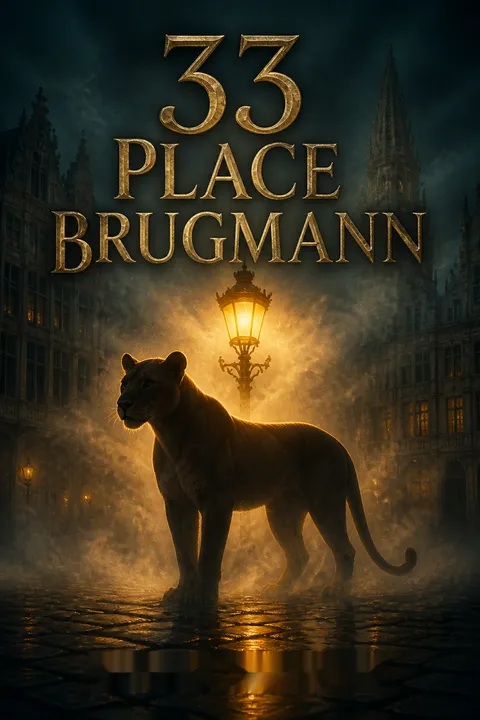
Perception beyond proofCharlotte and other characters experience visions that place a lioness, blood, or spectral figures beside ordinary streets and rooms. The novel does not settle whether these sights are supernatural, psychological, or a form of perception sharpened by danger. Their narrative function is to give shape to what characters cannot yet know in factual terms: coming violence, grief, and survival. The lioness becomes especially important to Charlotte’s sense that hidden things can still be real, even when no one else can verify them.
Download PDF
Download EPUB
.epub digital book format is ideal for reading ebooks on phones, tablets, and e-readers.








