Key Takeaways
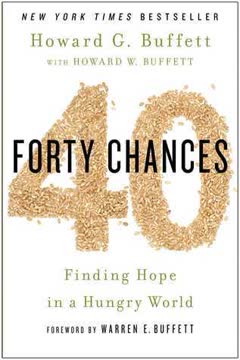
1. Life's "40 Chances" demand urgent, impactful action.
If you’re pretty healthy, and you’re like most farmers, you’re probably only going to do this about forty times.
Limited opportunities. The concept of "40 Chances" originated from a speaker at a Planter's School, highlighting that a farmer gets only about forty planting seasons in a lifetime. This realization profoundly shifted the author's perspective, extending beyond farming to all aspects of life and philanthropy. It underscored the urgency of making every opportunity count, learning from mistakes, and continuously improving methods.
Personal mission. This insight spurred the author to align his life's purpose with addressing global hunger, especially after inheriting significant funds for his foundation. He recognized that his passion for wildlife conservation was intrinsically linked to human well-being, as "No one will starve to save a tree." This led to a fundamental shift in his philanthropic focus towards food security.
Global challenge. The scale of global hunger is immense, with 870 million people chronically hungry and the world population projected to reach 9 billion by 2050. This intensifying challenge demands a new intensity and productivity from all involved, from farmers to governments and NGOs. The author's foundation is committed to dispersing all its funds by 2045, embracing the "40 Chances" philosophy to achieve maximum impact within a limited timeframe.
2. Conflict and displacement create profound, complex hunger.
Crocodiles attack when they are hungry or their turf or young are threatened. I was about to meet General Caesar Acellam, an African warlord who had helped lead a campaign of murder, rape, torture, and enslavement across at least four countries.
War's devastating toll. The author's encounter with warlord General Caesar Acellam in South Sudan vividly illustrates how conflict is a leading cause of hunger, displacing millions and destroying agricultural systems. His mission to photograph Acellam for surrender flyers highlights the desperate, often bizarre, measures taken to mitigate the human cost of war. This experience underscored that hunger is not just about food scarcity, but a weapon and consequence of violence.
Child soldiers' plight. The story of "Little Cromite" in Sierra Leone, abducted at age six and forced into unspeakable acts, reveals the dehumanizing impact of conflict on children. These former child soldiers, often drugged and traumatized, are left without skills or hope, making them vulnerable to further exploitation. Their desperation for food can drive them back to violence, as seen when Little Cromite asked for help to fight as a mercenary in Somalia.
Hidden suffering. The author's teenage visit to Prague in 1968, witnessing Soviet occupation and food shortages, was his first exposure to how quickly conflict undermines food security. Later, in Armenia, he saw the profound despair of elderly people who felt forgotten after the collapse of the Soviet Union, highlighting that hunger's toll is not just physical but deeply psychological. These experiences emphasize that conflict creates a fundamental disorder that endangers the most vulnerable.
3. Soil health is the indispensable foundation for sustainable agriculture.
The difference between dirt and soil is that soil is alive: home to millions of diverse microbial organisms.
Beyond "dirt cheap." The author, a farmer at heart, emphasizes that soil is a treasure, not just dirt. Healthy soil, rich in organic matter and teeming with microbial life, is a farmer's most valuable capital, directly impacting production capacity. This understanding is critical for feeding a growing world population sustainably.
The Brown Revolution. The author advocates for a "Brown Revolution" focused on soil management techniques like:
- No-till farming: planting directly into undisturbed soil.
- Cover crops: planting non-cash crops to protect and enrich soil.
- Crop rotations: varying crops to maintain soil fertility.
- Mulching: leaving plant residues to retain moisture and add organic matter.
These practices build soil health, reduce erosion, and improve water retention, offering a sustainable path to higher yields.
Global degradation. Many civilizations have declined due to soil depletion, and today, over 20% of cultivated areas worldwide are degraded. In Africa, ancient, weathered soils are further damaged by slash-and-burn agriculture and overgrazing, leading to barren land. Even in the US, traditional plowing methods contribute to significant topsoil loss and nutrient runoff, creating environmental issues like the Gulf of Mexico's hypoxic zone.
4. Traditional aid often fails due to cultural disconnects and market distortions.
The development industry is the only industry I know that over time can get more stupid.
Unintended consequences. The author's experience in Mozambique, discovering NGOs monetizing US food aid by selling it locally, revealed a critical flaw in traditional aid. This practice, while funding NGO programs, depressed local crop prices, discouraging local farmers and undermining the very markets aid was meant to strengthen. This "iron triangle" of US agriculture, shipping, and NGOs perpetuates an inefficient system.
Cultural blind spots. The author's work at the Jubatus cheetah reserve in South Africa exposed pervasive cultural disconnects, from the influence of witch doctors on land deals to differing perceptions of time and planning. Building homes with internal toilets for villagers who prefer outdoor facilities, or providing winter clothing in the tropics after the tsunami in Thailand, are examples of well-intentioned aid failing due to a lack of local consultation and understanding.
Aid dependency. The "TIA" (This Is Africa) phenomenon, where giving aid creates expectations of continuous support, can foster dependency rather than self-sufficiency. The story of the Koevoet men cutting down trees after receiving free wood illustrates how aid can inadvertently create new demands. This highlights the need for aid to be designed with an exit strategy, empowering communities to sustain progress independently.
5. Effective aid requires data, transparency, and a focus on long-term outcomes.
Doing good does not excuse us from doing better.
Beyond good intentions. The author's frustration with the lack of measurable impact from many aid projects led him to question the effectiveness of traditional philanthropy. He argues that simply "doing good" is insufficient; organizations must strive to "do better" by focusing on sustainable outcomes rather than just visible, short-term activities. This requires a shift from project-by-project interventions to comprehensive, long-term strategies.
Data-driven insights. Tools like "Map the Meal Gap" in the US, which provides granular data on food insecurity down to the county level, are crucial for effective aid. This transparency helps identify hidden hunger, target resources efficiently, and inform policy. Similarly, research at Texas A&M on the link between aid and conflict uses sophisticated data analysis to understand which types of aid truly foster peace and reduce violence.
Rethinking aid models. The author advocates for "catalytic funding," where philanthropic dollars leverage private sector markets and create sustainable value chains. CARE's principled decision to stop monetizing food aid, despite significant financial cost, is lauded as a courageous step towards aligning aid with local market development. This approach aims to empower beneficiaries to become "shareholders" in their own economic future, rather than passive recipients.
6. Empowering local farmers through land ownership and market access is transformative.
Everywhere in the world, farmers who own their own land take better care of the soil than those who do not.
Security in ownership. The story of José Martín in Nicaragua, who finally obtained legal title to his small plot of land, powerfully illustrates the transformative impact of land tenure. Without secure ownership, farmers are hesitant to invest in long-term soil improvements or infrastructure, fearing displacement. Landesa's data confirms that secure land rights significantly increase family income, agricultural production, and even high school graduation rates.
Building value chains. The author's work in Afghanistan highlighted the critical importance of developing comprehensive agricultural "value chains" – from high-quality seeds and tools to storage, processing, and market access. Drug warlords understand this well, offering upfront payments and guaranteed pickups for poppy crops. Legitimate value chains, like the women-owned processing centers in Herat, create sustainable economic ecosystems that empower communities and offer alternatives to illicit activities.
Market connections. The World Food Programme's "Purchase for Progress" (P4P) initiative is a prime example of empowering local farmers by creating stable markets for their surplus crops. Instead of shipping food aid from abroad, P4P buys locally, providing farmers with a reliable buyer and an incentive to improve yields and quality. This approach not only feeds hungry people but also stimulates local economies, as seen in Honduras where P4P supplies over half the grain for school feeding programs.
7. Engaging both men and women is crucial for sustainable community development.
If you teach a woman to fish, everybody eats.
Women's central role. The author acknowledges the critical role of women in development, noting that they often prioritize family and community needs. Programs targeting women, such as microcredit or agricultural training, can significantly improve livelihoods. However, he stresses that simply empowering women is not enough; the broader community, including men, must be engaged to prevent backlash and ensure sustainability.
Addressing hidden violence. The author's early trip to Tijuana with his mother revealed the pervasive fear and domestic violence many women face, often linked to food insecurity and power dynamics within families. He argues that this "toxic undertow" is often overlooked in development, leading to program failures when women are unable or unwilling to participate due to fear of their husbands' reactions.
Inclusive empowerment. Development initiatives must address gender issues holistically, not just focus on women in isolation. Programs that educate men about the benefits of women's economic contributions, or create shared learning experiences to challenge harmful cultural norms, are more likely to succeed. The author's participation in a role-playing exercise in Burundi to combat domestic abuse exemplifies this approach, aiming to make men feel stronger by showing respect.
8. Social entrepreneurship offers market-based, sustainable pathways out of poverty.
Unless you create a path to market, you’re pushing on string.
Beyond traditional aid. The author is excited by the potential of social entrepreneurship to create sustainable solutions that go beyond temporary aid. Joe Whinney, CEO of Theo Chocolate, exemplifies "enlightened capitalism" by sourcing premium cocoa from the DRC, providing market access and training to local farmers. This approach creates jobs and income, allowing communities to control their economic future.
Empowering choices. Jake Harriman's Nuru International, operating in Kenya and Ethiopia, focuses on broadening choices for people living in extreme poverty. Nuru provides loans of seeds and fertilizers, teaches farming skills, and launches for-profit companies run by local entrepreneurs to address value chain gaps like transportation. This model aims for a seven-year exit strategy, ensuring communities can sustain successes without external assistance.
Innovative models. Social entrepreneurs are developing diverse solutions:
- Smartphone apps for farmers to check grain prices.
- Microcredit programs for low-income women, like the one with Eva Longoria's foundation in Texas.
- Organizations like CITA, which legally connect Mexican farmworkers with US seasonal jobs, increasing their earnings significantly.
These initiatives demonstrate that market-based approaches, when designed with social conscience, can create lasting change and lift people out of poverty.
9. Appropriate technology and conservation farming can revolutionize smallholder yields.
The roller crimper we are working with at Ukulima is one of the simplest yet most effective tools for conservation systems because it kills cover crops without chemicals.
Low-tech innovation. The author highlights the potential of simple, robust tools like the ox-drawn roller crimper to revolutionize smallholder farming. This implement flattens cover crops, creating a natural mulch that suppresses weeds, retains soil moisture, and adds organic matter. It requires no expensive fuel or fragile electronics, making it ideal for resource-limited farmers.
Conservation agriculture's promise. Kofi Boa, a Ghanaian agronomist and "Mr. Mulch," is a tireless advocate for conservation agriculture in West Africa. His research demonstrates that no-till farming, cover cropping, and crop rotation significantly increase maize yields (up to 45% higher) while reducing labor and improving soil health. This approach is crucial for Africa's weathered soils and rain-fed systems.
Bridging the gap. While not advocating for organic farming on a global scale, the author recognizes that many subsistence farmers operate organically by necessity. The challenge is to adapt conservation techniques to their context, providing tools and knowledge that are affordable and sustainable. The author's collaboration with John Deere to develop larger roller crimpers for US farms, and smaller, ox-drawn versions for Africa, exemplifies this dual approach to appropriate technology.
10. Good governance is the essential bedrock for lasting development and food security.
African countries must be in the driving seat of their own development, setting the priorities and making the decisions.
Beyond crisis response. The author's frustration with aid projects being undermined by poor governance led him to appreciate Tony Blair's Africa Governance Initiative (AGI). AGI focuses on teaching basic principles of effective, responsive government to African leaders, recognizing that sustainable development cannot occur without strong institutional foundations. This shifts the focus from merely reacting to crises to building long-term capacity.
Capacity building. Many developing countries lack the skilled personnel and established processes to manage complex development projects or maintain infrastructure. President Ellen Johnson Sirleaf of Liberia highlights how years of war and inactivity have "deskilled" populations, making it difficult to implement even basic changes. AGI addresses this by embedding skilled teams within key ministries to institutionalize systems and procedures, ensuring priorities like infrastructure improvements are consistently addressed.
Investment in agriculture. The Maputo Declaration, where African heads of state pledged to invest 10% of national budgets in agriculture, underscores the recognition of agriculture's importance. However, few countries meet this target. The author argues that without government commitment to agricultural systems—including roads, storage, credit, and market access—external aid efforts will remain temporary. Good governance creates the stable, predictable environment necessary to attract investment and empower farmers.
Last updated:
Review Summary
40 Chances receives praise for its honest examination of global food insecurity and agricultural development. Readers appreciate Howard Buffett's emphasis on cultural sensitivity, locally-driven solutions, and avoiding "philanthropic colonialism." Many highlight his advocacy for soil conservation and no-till farming. Some find the 400 pages repetitive, though most value his transparency about failures and successes. Reviewers commend his hands-on approach, traveling to dangerous regions, and commitment to sustainable development rather than short-term aid. The book's framework of "40 chances" resonates strongly, inspiring readers to reconsider effective philanthropy.
Similar Books


![Onyx Storm (Part 1 of 2) [Dramatized Adaptation] Summary](https://files.sobrief.com/social/cover_onyx-storm-part-1-of-2-dramatized-adaptation_360px_1754722837.jpg)