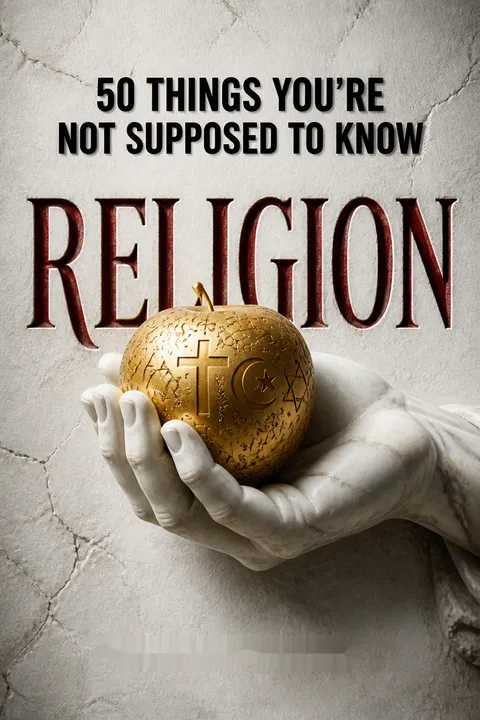


Key Takeaways
Test religious authority against history, even when the story feels sacred.
Question the guardians. The book's central invitation is to examine religious institutions as human creations, shaped by politics, historical pressures, and competing interpretations. Thomas Paine illustrates the cost of doing so. Celebrated for defending American independence, he became a public outcast after attacking organized religion in The Age of Reason. Paine believed in God, but rejected churches as authorities that could turn spiritual belief into control. His case reveals how readily people praise challenges to political power while condemning similar challenges to religious power.
Keep belief and authority distinct. Paine's story complicates the easy labels of believer and atheist. The book asks readers to investigate who benefits from a doctrine, how it developed, and whether its institutions live by the values they proclaim. Skepticism here is less a verdict on every believer than a method for scrutinizing claims made in religion's name.
What's striking is that Paine's story separates spiritual belief from institutional loyalty. That distinction makes criticism more precise: questioning a church's power does not automatically settle whether God exists, and religious commitment does not require defending every act of a religious authority. The book's sharp tone can make this scrutiny feel like a trial of religion itself. Its strongest invitation is narrower and more useful: treat institutions as accountable human organizations, and let their records matter as much as their ideals.
A tradition's meaning changes when warriors and governments put it to work.
Context reshapes practice. The book points to Japanese samurai who used Zen training to quiet fear and remain composed in battle. A practice associated with compassion could also help a warrior act effectively in combat. Shinto offers a political version of the same transformation. The book describes how Japanese leaders, amid pressure from Western powers, elevated the emperor's divine ancestry and ideas of national destiny, helping convert a loosely organized tradition into a tool for state nationalism. That shift accompanied militarism, including the fanaticism of kamikaze pilots.
Separate idea from use. These examples do not mean Zen or Shinto inherently demands violence. They show how institutions can select and reshape religious ideas to serve a practical aim: personal discipline in one case, national mobilization in another. The same tradition can acquire very different consequences under different authorities.
This distinction resembles the difference between a technology and the purposes to which it is put. A discipline that trains attention can serve care, survival, or violence, depending on who directs it and toward what end. The book's examples also warn against treating a religion as a single, timeless actor. Yet context should not become an excuse: when religious leaders or states lend sacred legitimacy to coercion, their choices deserve examination, even if the underlying tradition contains other possibilities.
When scripture clashes with compassion, readers still choose what it means.
Texts invite selection. The book shows how the Bible could be cited by both abolitionists and defenders of slavery. Some passages support protecting an escaped slave, while others permit the permanent enslavement of outsiders and regulate the treatment of enslaved people as property. The competing arguments were not invented from nothing; each side emphasized passages that served its moral and political position. The same interpretive pressure appears in the author's account of a Muslim student trying to reconcile a Quranic passage about disciplining a wife with his own opposition to abuse.
Interpretation has consequences. A scripture does not apply itself. Readers, teachers, and institutions decide which passages are central, how they should be understood, and whether older commands remain binding. The book urges readers to notice when interpretation preserves compassion, and when it mainly protects inherited authority.
The important distinction is between acknowledging a text's history and using history to excuse its effects. Interpretation can make difficult material intelligible, but it can also become a rescue operation designed to defend a conclusion already chosen. The book's examples are strongest when they expose that process without assuming every believer reads literally or uncritically. A useful test is practical: does an interpretation reduce harm and apply its standards consistently, or does it grant power to one group while placing the burden on another?
Protect religious freedom most when the belief seems strange or offensive.
Rights face hard cases. The book recalls a period when US authorities suppressed Native American ceremonies, sometimes sending practitioners to jail, despite constitutional promises of religious freedom. The American Indian Religious Freedom Act of 1978 helped end this formal suppression. It also recounts the backlash to cartoons of Muhammad, including violence and calls for censorship, alongside Western institutions that blamed the cartoonists for causing offense. The Flying Spaghetti Monster, a satirical religion created amid a debate over teaching intelligent design, sharpened the question: should unusual beliefs receive the same legal consideration as familiar ones?
Tolerance is tested at the margins. John Locke, a major defender of religious toleration, initially excluded atheists and Catholics from it because he feared they would undermine social trust or persecute others. The book uses such examples to show that freedom is easiest to endorse when it protects a favored group.
A right that applies only to beliefs considered respectable is not a stable right. The book's cases make the principle concrete: protecting religious practice also means protecting people from state coercion, while protecting expression means that offense alone cannot settle whether speech should be forbidden. Locke's worry about intolerant movements remains a real tension, not a trivial objection. The difficult task is to respond to actual coercion and violence without handing authorities a broad license to silence unpopular belief or criticism.
Use spiritual teachings as guides, not objects of worship.
Do not confuse the map. A legend about Lao Tzu says he wrote the Tao Te Ching only after a border guard detained him and demanded a record of his teaching. The story is probably not reliable history; its point, the book explains, is that words can only gesture toward living wisdom. Zen teachers made a similar argument in deliberately shocking terms, urging students not to turn the Buddha or Buddhist teachings into objects of worship. The aim was to develop insight, not to cling to a revered figure or a fixed formula.
Practice in ordinary life. Taoist and Zen stories also resist the idea that spirituality belongs only in temples or solemn rituals. Chuang Tzu's comic claim that the Tao is present even in something as unappealing as dog waste punctures the urge to separate the sacred from everyday existence. Awareness, rather than ceremony alone, is the point.
These stories describe a self-correcting impulse within religion: a teaching can warn against the dogma that forms around it. That is a valuable safeguard, since reverence can shift from learning a practice to protecting its symbols. But anti-dogmatism can harden into a new dogma of its own, and provocative teachers can still attract authority and followers. The practical question is not whether a tradition uses words or rituals, but whether they open inquiry or demand obedience in place of it.
Religious history turns on contingencies, not just timeless doctrines.
Small events can matter. The book recounts the Assyrian siege of Jerusalem in 701 BCE. The city survived when the Assyrian army withdrew, perhaps after illness linked to unsafe water, according to a historian's explanation discussed in the book. Jewish belief interpreted the survival as divine protection, strengthening monotheism at a vulnerable moment. The book argues that a different outcome might have changed the later histories of Judaism, Christianity, and Islam. It also traces themes in Western monotheism to Zoroastrian ideas, suggesting that religious doctrines developed through contact among traditions.
Power builds institutions. Constantine's support for Christianity offers another example. The book portrays him as a ruler who used religious unity to consolidate political authority, convened the Council of Nicaea, and suppressed rival Christian positions. Christianity's ascent was not only a story of belief; it was also a story of imperial power.
Contingency is a useful correction to histories that make a religion's success seem inevitable. Survival, patronage, and political alliances can shape which beliefs are transmitted and which are marginalized. Still, counterfactuals require caution: a siege's outcome or a ruler's policy rarely explains an entire religious tradition by itself. The book is most persuasive when it uses these episodes to reveal historical vulnerability, not when a striking turning point is treated as the sole cause of everything that follows.
Certainty becomes dangerous when leaders claim exclusive access to truth.
Authority can turn lethal. The book's portrait of the Spanish inquisitor Tomás de Torquemada shows how claims of defending the faith could justify torture, execution, and confiscation. The accused faced a system in which denial could itself be treated as evidence of guilt. A very different example is the Japanese Buddhist teacher Nichiren, who declared his own form of Buddhism the only true one and urged authorities to suppress rival schools. Hong Xiuquan, a Chinese convert who claimed a special relationship to God, led a movement that attacked other traditions and helped trigger the Taiping Rebellion, which the book estimates killed about 20 million people.
Watch for the pattern. Across these cases, a leader labels disagreement as a threat, presents coercion as defense, and demands obedience as proof of loyalty. The book's point is not that every intense religious conviction leads to violence, but that certainty joined to political power can make persecution seem righteous.
The recurring mechanism is more precise than a claim that religion simply causes violence: leaders define an enemy, make dissent morally dangerous, and give coercion a sacred purpose. That sequence can be recognized in religious and political movements alike. The distinction matters because it avoids treating all believers as equally responsible for violence. It also raises a useful question about institutions: what protections exist for dissenters when a movement claims that disagreement threatens the whole community?
Watch how religious rules distribute sex, money, and status.
Morality has material effects. The book highlights contradictions between Christian teachings about wealth and later defenses of prosperity as evidence of divine favor. It also describes Augustine, who condemned sex for pleasure yet supported legal prostitution as a way to manage men's sexual desires. In another example, the Church of Jesus Christ of Latter-day Saints ended its racial restriction on priesthood eligibility in 1978, reversing a policy previously presented as divinely grounded. Across these episodes, religious rules do more than express abstract ideas. They shape who may lead, who is blamed, and who receives resources or freedom.
Ask who benefits. The author's recurring challenge is to compare moral teaching with institutional practice. When a rule changes alongside broader social pressures, or when it burdens one group more than another, that history deserves attention rather than a reflexive claim that the rule is timeless.
Religious rules often operate as social arrangements: they allocate authority, regulate bodies, and define respectable wealth. Looking at those effects can reveal a gap between universal moral language and unequal lived consequences. The book's provocative examples invite scrutiny, though a changed policy alone cannot prove that leaders acted only for convenience or public approval. A more careful inquiry asks both what a doctrine says and how its interpretation affects people with different levels of power.
Seek spirituality in lived experience, not only religious institutions.
Experience can resist hierarchy. Ikkyu Sojun, a fifteenth-century Zen monk, rejected the temple career path and its formal recognition of enlightenment. He sought spiritual insight in ordinary, sensual life and later helped rebuild temples when Zen institutions were in danger. His story complicates the easy opposition between free spirituality and organized religion: a critic of institutions could still act to preserve them. The book also describes Jiddu Krishnamurti, who refused the role of messiah assigned to him by admirers and returned land given to him by followers.
Keep the tension visible. These figures suggest that spiritual life need not depend on a single authority or official status. Yet the alternative is not automatically free of hierarchy. The book's account of Osho, a charismatic teacher whose community became entangled in serious abuses under his secretary, illustrates how a movement that rejects established religion can still create new centers of power.
The most valuable insight here is not that institutions are always bad, but that spiritual authority should remain open to scrutiny wherever it appears. A temple, a teacher, or a supposedly liberated community can all become powerful. Ikkyu's return to rebuilding temples further complicates the fantasy that authenticity requires permanent withdrawal. The useful distinction is between institutions that support practice and those that claim exclusive ownership of it.
Treat origin stories as hypotheses when the evidence is fragmentary.
Clues are not conclusions. To explore religion's beginnings, the book turns to evidence such as Neanderthal burials, red ochre on human remains, and cave paintings of animals. Some archaeologists interpret the placement of paintings and traces of movement as signs of ritual dance tied to hunting and fertility. These are informed proposals, not direct records of what prehistoric people believed. The author also recounts R. Gordon Wasson's theory that Soma, the sacred drink in ancient Hindu texts, may have involved a hallucinogenic mushroom. The plant's identity and the theory remain uncertain.
Separate evidence from story. The book notes that religious history often reaches into periods with no written records, leaving scholars to infer meaning from remains. That uncertainty is part of the subject, not a reason to abandon it. It is also a reason to distinguish an intriguing reconstruction from an established fact.
Origin stories are compelling because they make fragments feel whole. Archaeological interpretation can responsibly connect artifacts, space, and repeated patterns, but the same traces may support more than one explanation. The book's best methodological lesson is to keep the confidence level visible. A hypothesis about ritual behavior can illuminate what people might have done; it cannot, by itself, recover a complete belief system or prove that religion began in one particular way.
Analysis
This book is a collection of fifty compact, provocative histories rather than a systematic theory of religion. Its organizing thread is the gap between religious ideals and religious behavior: compassion paired with warfare, toleration paired with repression, sexual restraint paired with hypocrisy, and spiritual inquiry transformed into institutional authority. The stories range from prehistoric ritual to contemporary disputes over speech, law, and political identity. Their variety is the argument. No single tradition owns either virtue or cruelty, and no sacred label guarantees that an institution will act according to its stated principles.
The book's greatest strength is its talent for destabilizing the familiar. A samurai's Zen practice, an emperor's political calculation, a pope's posthumous trial, and a satirical church challenge the reader to reconsider what counts as religious, moral, or normal. Humor makes these reversals memorable, while historical anecdotes reveal that religious ideas do not travel untouched by political power. The stories also encourage a practical habit: compare what a tradition teaches with how its communities interpret and enforce it.
The same polemical energy creates a limitation. The author often presents complex events through a sharp moral lens, and some historical claims in the book are explicitly speculative or disputed, including theories about prehistoric ritual and Soma. Vivid examples can expose hypocrisy, but they cannot establish that a whole tradition is reducible to its worst leaders or most troubling passages. Readers should distinguish primary evidence, scholarly hypothesis, and rhetorical framing. That caution does not blunt the book's challenge; it strengthens it. Religious claims, like political claims, merit historical scrutiny, and criticism is most persuasive when it applies that scrutiny consistently to believers, institutions, and the critic's own assumptions.
Review Summary
50 Things You're Not Supposed To Know receives mostly positive reviews for its entertaining and thought-provoking content on world religions. Readers appreciate the author's wit, humor, and diverse coverage of religious topics. Many found it informative and mind-expanding, though some felt it lacked depth. The book's irreverent approach and quick-read format were praised, but a few reviewers criticized the writing style or found it offensive. Overall, it's recommended for those interested in unusual religious facts and willing to challenge their beliefs.
People Also Read








Glossary
Heyoka
Lakota sacred clownIn the book's account of Lakota religion, a heyoka is a person who receives a vision from thunder spirits and takes on the role of a sacred clown. Through behavior that reverses social expectations, the heyoka provokes laughter and unsettles rigid distinctions, offering a spiritual lesson through paradox.
Sigheh
Temporary marriageSigheh is a temporary marriage recognized in some Shiite Muslim contexts, particularly in Iran as described by the book. The partners specify how long the arrangement lasts and what payment is due to the woman. The practice can function as a religiously sanctioned relationship, though the book notes that it may also serve as a cover for prostitution.
Soma
Vedic sacred drinkSoma refers in ancient Hindu texts to a god, a plant associated with that god, and the sacred drink made from the plant. The book describes its ritual use in early Vedic religion and recounts R. Gordon Wasson's theory that the plant may have been a hallucinogenic mushroom. Its precise identity remains uncertain.
Pastafarianism
Flying Spaghetti Monster religionPastafarianism is the satirical religion organized around the Flying Spaghetti Monster, a deity proposed by Bobby Henderson during a debate over teaching intelligent design. The book presents the movement as both parody and a challenge about equal treatment: if religious claims receive special standing in public life, who decides which religions count?
Doctrine of discovery
Colonial claim to landThe doctrine of discovery is the legal and religious principle described in the book as granting Christian powers a basis for claiming lands inhabited by non-Christians. The author connects it to European colonization and the dispossession of Indigenous peoples, noting that the idea was endorsed by the US Supreme Court in the nineteenth century.
About the Author

Download PDF
Download EPUB
.epub digital book format is ideal for reading ebooks on phones, tablets, and e-readers.








