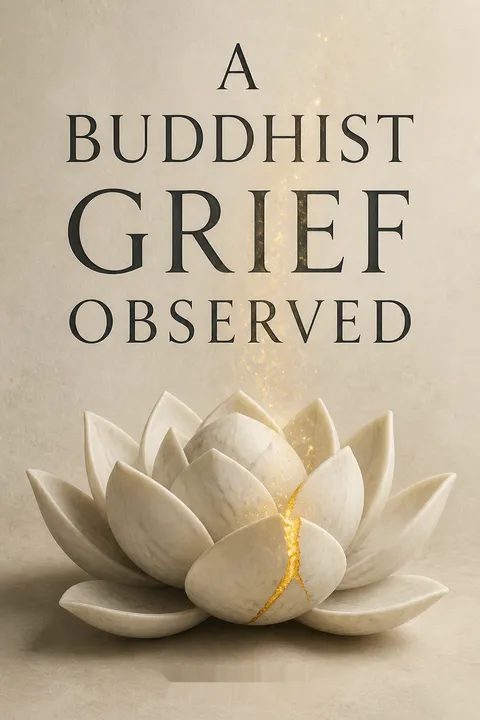


Key Takeaways
Treat grief as a human country, not a private failure
A hidden common world. Guy Newland’s wife, Valerie, died in 2013 after metastatic cancer. In the months that followed, he struggled to concentrate, slept little, and experienced aching and violent shivering. Ordinary tasks became difficult, while the people around him often seemed to inhabit a world untouched by loss. He describes grief as a place that can make a person feel uniquely isolated, even though nearly everyone will enter it.
Silence deepens isolation. People often steer away from death in conversation, and the bereaved may hide pain to avoid seeming self-absorbed or gloomy. Newland’s account challenges that quiet social agreement: grief is not evidence of personal weakness or unusual failure. Naming it can help a bereaved person recognize that others have been there, too.
The book’s force comes from treating grief as both intensely personal and widely shared. That combination matters: universalizing pain can reduce shame, but it can also flatten the specific relationship that has been lost. Newland holds both truths together by describing Valerie in concrete detail rather than reducing her death to an abstract lesson. The useful social response is not to claim that everyone grieves alike, but to make room for particular grief without treating it as abnormal.
Let grief move without making it your permanent identity
Pain arrives in waves. Newland’s grief did not follow a tidy sequence. It shifted between numbness, bodily distress, confusion, and sudden surges of longing. He describes how routine responsibilities after a death can keep a person busy, but can also become a way to avoid feeling. Neither constant activity nor constant attention to pain guarantees relief.
Avoid both traps. Treating grief as the whole self can trap a person in a repeating story of loss. Trying to bury it does not erase it, and can leave it shaping behavior unnoticed. Newland argues for a middle course: acknowledge what hurts, recognize that feelings change, and allow moments of laughter or calm without interpreting them as betrayal. Regret can guide better care, but it need not become permanent self-punishment.
This distinction resembles a useful principle in emotional regulation: feelings can be attended to without being treated as commands or definitions of identity. That perspective makes room for grief’s changing intensity, rather than demanding either constant mourning or rapid recovery. It also guards against turning an emotional insight into a new rule. Some people need deliberate distance from overwhelming feelings before they can examine them; presence is not the same as forcing exposure.
Buddhist practice cannot make love painless, and should not pretend otherwise
Insight is not anesthesia. Buddhist reflection on impermanence did not protect Newland from the physical shock of losing Valerie. He recalls the poet Issa, whose young daughter died, and whose Buddhist understanding of life’s fragility did not dissolve his grief. A person can understand that everything changes and still be devastated when someone beloved dies.
There is no ideal death. Newland recounts Zen teacher Dainin Katagiri’s blunt response when students wanted to see how a master dies: he expressed his fear and said he could not predict his own final moments. The point is not that practice is useless, but that it does not make people invulnerable. Expecting spiritual maturity to erase grief adds shame to pain, and can turn a tradition meant to help into a standard for self-condemnation.
This is a valuable correction to the fantasy that spiritual practice should produce emotional invulnerability. It distinguishes understanding a truth from being insulated from its consequences. The same distinction applies beyond Buddhism: knowing that illness is common does not make a diagnosis harmless, and understanding attachment does not make separation painless. Practice may change how a person relates to suffering, but claims of guaranteed composure risk confusing an ideal with a human capacity.
Hold two truths: Valerie is gone, and her life remains real
Emptiness does not erase loss. In Buddhist philosophy, emptiness means that people and things do not exist as fixed, independent entities. Newland rejects using this idea to deny the ordinary fact that Valerie was alive and is now dead. Her absence hurts. The teaching is not a command to pretend otherwise.
The past still shapes the present. After an earlier partner, Joan, died, Newland dreamed of a wounded tree that continued to grow. Its scar remained, but its place in the tree changed over time. He uses this image to describe how a relationship can remain part of a person’s history without requiring the bereaved to freeze at the moment of loss. A loved one’s life cannot be undone, and its effects continue in those who knew them.
The distinction between an enduring impact and a continuing physical presence avoids two unsatisfying extremes: treating the dead as if they were simply still here, or treating the relationship as if death made it meaningless. This is also compatible with ordinary accounts of memory and social influence: a person’s actions can remain consequential after that person is gone. The image of the scar is especially helpful because it preserves both change and continuity without promising that grief disappears.
Treat karma as influence, not a verdict that victims deserve pain
Causation is not cosmic justice. Newland challenges a strong reading of karma: the claim that each person’s suffering is specifically deserved because of their own past actions. Valerie’s cancer gave him no reason to conclude that she had caused or earned her illness. Applying that claim to disaster victims can add blame to suffering without evidence.
Choices still matter. Newland instead understands karma as the continuing effects of actions, thoughts, and decisions. Choices shape character and influence what follows, but they interact with other people’s choices and impersonal forces. Like waves meeting in a crowded sea, causes combine unpredictably. A person’s actions matter, but they do not guarantee control over every outcome. This account preserves responsibility without claiming that every painful event is fair.
The distinction between causal influence and moral desert is essential. If every misfortune is treated as proof of past wrongdoing, a spiritual explanation can become victim-blaming and obscure social or natural causes. Newland’s account is more modest: actions matter, but outcomes arise through networks of conditions no individual commands. That view can support ethical responsibility while leaving space for solidarity and practical efforts to reduce preventable suffering. It also resists the comforting but dangerous assumption that good conduct guarantees safety.
Meet suffering with curiosity before prescribing what it means
Start without a script. Joan Halifax’s approach to caring for people who are dying emphasizes three practices: not knowing, bearing witness, and compassionate action. Not knowing means setting aside assumptions about what another person feels or needs. Bearing witness means giving careful attention without turning the moment toward advice or reassurance. Compassionate action means responding in a way that actually helps.
Advice can become a defense. While Valerie was dying, some visitors told her to be grateful, urged her toward religious services, or assumed they already understood her feelings. Their intentions may have been kind, but their certainty left little room for her experience. Newland suggests approaching each person with humility: ask, listen, and remember that a familiar theory or personal story is not a map of someone else’s inner life.
The three-part approach offers a practical check against a common helping reflex: reducing another person’s distress to a problem that must be solved immediately. Listening first can reveal whether a person wants company, advice, logistics, or silence. At the same time, humility should not become passivity. When someone faces a concrete need, careful attention should lead to useful action. The sequence is not a rigid formula; it is a reminder to let the person’s actual circumstances shape the response.
Choose the grief practice that fits the moment, not one universal cure
Different moments need different tools. Newland sometimes watched painful feelings closely, but mindfulness was not always manageable. When concentration was available, he practiced loving-kindness meditation, wishing for peace and kindness for himself and his family. When even that felt too demanding, repeating a familiar Tara mantra helped settle his mind enough to return to attentive awareness.
Match practice to capacity. He also describes tackling his wife’s purse too soon after her death and becoming overwhelmed. The lesson is not to avoid difficult things forever, but to notice when a particular task or practice exceeds what can be borne at that moment. Attention to pain can help, but it is not automatically the best response to acute distress. Sometimes calming, distraction, or practical support is the more useful first step.
This flexible approach is more realistic than treating any single contemplative method as universally beneficial. Attention can clarify emotion, yet intense focus on distress may overwhelm a person who lacks enough support or stability. The account’s practical wisdom lies in observing capacity and adjusting the method rather than judging the person. Such flexibility also avoids turning meditation into another performance test, where distress is interpreted as evidence that someone is practicing incorrectly.
Make care concrete: ask, listen, remember, and offer specific help
Presence beats polished reassurance. Newland found it more helpful when people recalled a particular kindness Valerie had shown or stayed open to hearing about her. General promises that everything would be fine could feel dismissive, especially when no one could know that. A thoughtful question about how someone is feeling today can acknowledge that grief shifts from day to day.
Shared loss can loosen isolation. In the story of Kisa Gotami, a grieving mother asks the Buddha for help after her child dies. He sends her to find mustard seed from a home untouched by death. She finds no such home, but encounters bereavement everywhere. Her experience shows how recognizing other people’s suffering can reconnect someone who feels uniquely afflicted. Care can be simple and practical: listen without redirecting, remember the deceased, and offer help that fits the person’s real needs.
The emphasis on specificity turns compassion from a sentiment into a social practice. A remembered detail communicates that the deceased mattered as an individual, while a concrete offer reduces the burden of asking for help. The story of Kisa Gotami also shows how shared experience can restore connection, though it should not be used to imply that another person’s grief is less important because others suffer too. Solidarity works best when it accompanies, rather than replaces, attention to an individual’s loss.
Turn love into trained kindness, especially when outcomes remain beyond control
Care is a practiced capacity. Newland presents Valerie not only as the person he lost, but as someone who deliberately developed her ability to help others. Raised amid family violence and instability, she pursued education, became a clinical psychologist, and kept working to understand both her clients and herself. Her life illustrates that compassion can grow through attention, learning, and repeated effort.
Kindness is not control. Valerie helped many people, but she could not help everyone, and she could not save herself from cancer. Newland connects this limit to a broader ethic: act with care without demanding guaranteed results. After her death, his responsibilities to their children also gave him reasons to keep showing up. Love continues not as a denial of absence, but as deliberate care for living people.
Valerie’s story grounds the book’s ethical conclusion in a life rather than an abstraction. Compassion appears as skilled work shaped by self-knowledge, education, and sustained attention, not simply a warm disposition. The account also refuses a simplistic equation between virtue and success: helping well does not ensure that suffering can be prevented. That limit makes care more, not less, important. It shifts the measure of action from control over outcomes to the quality and responsiveness of the effort.
Analysis
A Buddhist Grief Observed is part memoir, part Buddhist reflection, and part guide to accompanying people in pain. Its organizing force is not a universal theory of grief but a sequence of tests against false comfort. Newland asks whether Buddhist ideas help when the body is shocked, whether emptiness can be spoken without denying a death, whether karma explains suffering or merely relocates blame, and whether advice serves the bereaved or reassures the adviser. Valerie’s illness and death keep those questions concrete.
The book’s strongest conceptual move is separating three ideas too often fused together: impermanence, emotional composure, and moral deservingness. Impermanence does not make loss painless. Spiritual practice does not guarantee equanimity. Causation does not establish that a victim earned a tragedy. This separation protects Buddhist practice from becoming either an emotional performance or an account of cosmic fairness that cannot survive contact with illness and catastrophe.
Its model of care is similarly disciplined. Not knowing is not indifference; it is a refusal to substitute a helper’s explanation for the suffering person’s experience. Bearing witness makes room for distress, while compassionate action asks what might actually help. The sequence fits trauma-informed approaches that emphasize agency and responsiveness, though the book also recognizes that attention to painful experience can overwhelm someone and that different practices suit different moments.
The memoir’s challenge is that its practical wisdom resists conversion into a formula. Grief varies with relationship, history, culture, resources, and circumstance. The book does not provide a timetable or promise that pain resolves into growth, and its most reliable advice is correspondingly modest: do not blame the bereaved for suffering, do not claim certainty about what they need, and do not confuse a meaningful explanation with a true or helpful one. The result is a Buddhist account of grief that treats love as the reason pain is real, not as a mistake to overcome.
Review Summary
A Buddhist Grief Observed receives mostly positive reviews, with readers appreciating its insights into grief, Buddhism, and the human condition. Many find it thoughtful and comforting, praising the author's honesty and perspective on loss. Some readers value its practical advice and reflections on Buddhist teachings. While a few reviewers found parts didactic or struggled with certain aspects, overall, the book is seen as a valuable resource for those dealing with grief or interested in Buddhist approaches to loss and change.
People Also Read








Glossary
avidya
Misseeing how things existA Sanskrit Buddhist term commonly translated as ignorance. In Newland’s account, it refers to the basic misperception that people and things exist independently, with fixed identities of their own. This mistaken view supports grasping and unnecessary suffering. Overcoming avidya means learning to see the dependent, changing nature of experience, not simply collecting information.
emptiness
Lack of independent existenceA Buddhist philosophical teaching that people and things do not exist as fixed, self-sufficient entities. They depend on causes, parts, relationships, and ways of being understood. Newland cautions that emptiness does not mean that a death did not happen or that grief is unreal. It challenges the idea of an unchanging essence, not the lived fact of loss.
karma
Actions shaping future conditionsIn Buddhist traditions, karma concerns the effects of intentional actions. Newland emphasizes that choices shape character and influence later events, but their effects interact with countless other causes. Karma therefore does not establish that every illness, disaster, or loss is deserved, nor does it guarantee that life distributes outcomes fairly.
strong karma
Suffering as deserved consequenceNewland’s label for the interpretation that a person’s specific suffering is the natural consequence of that person’s past wrongdoing. He rejects using this claim to explain an individual’s cancer or a community’s disaster, since such explanations lack an evident factual basis and can intensify harm by blaming people who are already suffering.
not knowing, bearing witness, compassionate action
A three-part caregiving approachA framework Joan Halifax uses in preparing people to accompany those who are dying. Not knowing means loosening assumptions about another person’s experience. Bearing witness means giving full attention without rushing to fix or reinterpret it. Compassionate action means responding practically and sensitively to what the situation requires. Newland finds this approach useful in grief care as well.
FAQ
1. What is "A Buddhist Grief Observed" by Guy Newland about?
- Personal account of grief: The book is a deeply personal narrative of Guy Newland’s experience with grief after the death of his wife, Valerie, from cancer.
- Buddhist perspective on loss: It explores how Buddhist teachings and practices intersect with the raw reality of grief, questioning and reflecting on their effectiveness.
- Universal and particular: While rooted in Newland’s specific story, the book addresses universal themes of loss, suffering, and the human condition.
- Honest exploration: Newland offers an unvarnished look at the pain, confusion, and transformation that accompany profound loss, without resorting to easy consolations.
2. Why should I read "A Buddhist Grief Observed" by Guy Newland?
- Authentic voice: The book provides a rare, honest account of grief from a practicing Buddhist and scholar, challenging common spiritual platitudes.
- Practical insights: Readers gain practical advice on supporting themselves and others through grief, informed by both personal experience and Buddhist wisdom.
- Relatable and compassionate: Newland’s vulnerability and compassion make the book accessible to anyone facing loss, regardless of religious background.
- Challenges assumptions: The book questions traditional interpretations of karma, suffering, and consolation, encouraging readers to think critically about spiritual teachings.
3. What are the key takeaways from "A Buddhist Grief Observed" by Guy Newland?
- Grief is isolating but universal: Deep grief feels uniquely personal, yet it is a common human experience that connects us all.
- Buddhist practice doesn’t erase pain: Buddhist teachings can offer perspective, but they do not eliminate the rawness of loss or shield us from suffering.
- The importance of honest presence: Being present with one’s own pain and with others’ suffering is more helpful than offering empty consolations or advice.
- Karma is complex: The book challenges simplistic views of karma as cosmic justice, emphasizing the interplay of personal choices and uncontrollable circumstances.
4. How does Guy Newland define and describe grief in "A Buddhist Grief Observed"?
- Grief as adjustment to change: Newland defines grief as the process of adapting to unwanted change, both in daily life and in the face of major loss.
- Physical and mental impact: He describes grief as a “season in hell,” with symptoms like insomnia, shivering, numbness, and loss of identity.
- Not a linear process: Grief is depicted as coming in waves, not neat stages, and often includes feelings of alienation and disconnection from others.
- Social secrecy: The book highlights how society encourages hiding the full extent of grief, leading to further isolation for the bereaved.
5. What role do Buddhist teachings and practices play in "A Buddhist Grief Observed"?
- Mindfulness and observation: Newland attempts to use Buddhist mindfulness to observe his grief, though he finds it difficult in the depths of pain.
- No magical immunity: The book dispels the myth that Buddhist practice can prevent or quickly resolve grief, showing that even seasoned practitioners suffer deeply.
- Emptiness and impermanence: Buddhist concepts like emptiness and impermanence are explored, but Newland finds they offer limited comfort in acute grief.
- Compassion and presence: Ultimately, Buddhist practice is most helpful in fostering compassion for oneself and others, and in encouraging honest presence with suffering.
6. How does "A Buddhist Grief Observed" by Guy Newland address the concept of karma?
- Critique of “strong karma”: Newland challenges the idea that all suffering is the direct result of past actions, calling this view unkind and unsupported by evidence.
- Karma as interconnectedness: He suggests a more nuanced understanding of karma, likening it to waves or probabilities rather than a strict system of rewards and punishments.
- Limits of control: The book emphasizes that while our choices matter, many events—like illness or loss—are beyond our control and not “deserved.”
- Moral implications: Newland warns that a simplistic view of karma can lead to victim-blaming and discourage social action against injustice.
7. What advice does Guy Newland offer for supporting others in grief in "A Buddhist Grief Observed"?
- Presence over solutions: The most helpful support is often simply being present, listening, and bearing witness, rather than offering advice or platitudes.
- Avoiding harmful clichés: Newland cautions against telling the bereaved that their loss is “for the best” or that they will “get over it,” as these can invalidate their pain.
- Acknowledge the loss: He encourages acknowledging the reality and significance of the loss, rather than avoiding the topic or pretending things are normal.
- Individualized care: Recognize that each person’s grief is unique, and what helps one person may not help another; genuine intention and humility are key.
8. How does "A Buddhist Grief Observed" explore the relationship between grief, self, and identity?
- Loss of self: Newland describes how losing a loved one can feel like losing a part of one’s own identity, leading to a sense of hollowness or unreality.
- Rebuilding identity: The process of grief involves slowly reconstructing a sense of self, often shaped by new responsibilities and relationships.
- Universal vulnerability: The book highlights that everyone is “mortally wounded” by loss, and that facing this truth can foster deeper compassion and connection.
- Letting go of specialness: Newland suggests that awakening from the belief that one’s pain is uniquely private is a step toward healing and solidarity.
9. What does "A Buddhist Grief Observed" say about the limitations of spiritual or religious consolation?
- No easy answers: The book argues that religious or spiritual consolations often fail to address the real pain of grief, and can even increase suffering if they create unrealistic expectations.
- The danger of denial: Relying on spiritual platitudes can lead to denial or repression of genuine emotions, hindering the grieving process.
- Embracing not-knowing: Newland advocates for “not knowing” and bearing witness, rather than clinging to doctrines or explanations that may not fit the situation.
- Honesty over comfort: True spiritual practice, according to Newland, involves honest engagement with suffering, rather than seeking to escape or explain it away.
10. How does Guy Newland use personal stories and examples in "A Buddhist Grief Observed"?
- Valerie’s illness and death: The book is anchored in the detailed account of Valerie’s diagnosis, decline, and death, as well as the impact on their family.
- Other losses: Newland shares stories of previous losses, such as the death of a former partner and his father, to illustrate the ongoing nature of grief.
- Encounters with others: He includes anecdotes from friends, students, and fellow mourners, showing the diversity of grief experiences and responses.
- Buddhist and literary references: The narrative is interwoven with Buddhist parables, Zen koans, and literary quotes, enriching the personal account with broader context.
11. What are the most important concepts and practices discussed in "A Buddhist Grief Observed" by Guy Newland?
- Not knowing and bearing witness: Inspired by Joan Halifax, Newland emphasizes the value of approaching grief with humility and openness, rather than certainty.
- Compassionate action: The book advocates for compassionate presence and practical support, both for oneself and others.
- Mindfulness and loving-kindness: Newland discusses the use of mindfulness and loving-kindness meditation as tools for navigating intense emotions.
- Challenging toxic positivity: He critiques the cultural pressure to view suffering as a “gift” or to maintain constant positivity, advocating instead for honest engagement with pain.
12. What are some of the best quotes from "A Buddhist Grief Observed" by Guy Newland, and what do they mean?
- “Grief is the process of adjusting to unwanted change, and since change is unrelenting, we bear every day unrecognized micro-griefs.” — Highlights the ubiquity of loss and the ongoing nature of adaptation.
- “Shock and pain are not a personal failure. It is cruel to judge ourselves so harshly; it is unhelpful to blame ourselves for being human.” — Reminds readers that suffering is a natural part of life, not a sign of spiritual inadequacy.
- “We are all post-traumatic, pre-traumatic, or—most often—both.” — Emphasizes that everyone is touched by loss, whether in the past, present, or future.
- “If you don’t tend to one another, who then will tend to you?” — A call to compassionate action, echoing the Buddha’s teaching on mutual care.
- “Our well-being, our dignity, is already fulfilled when we forget ourselves in acts of love.” — Suggests that meaning and healing are found in selfless compassion, not in seeking control or cosmic fairness.
Download PDF
Download EPUB
.epub digital book format is ideal for reading ebooks on phones, tablets, and e-readers.








