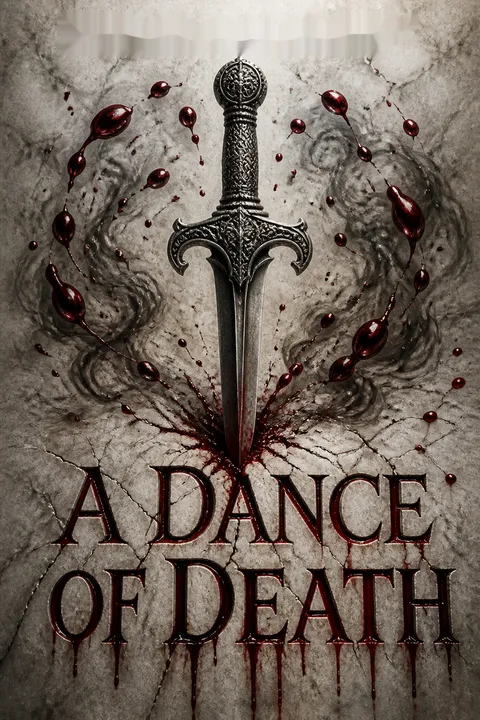


Plot Summary
Prologue
Drunk and unarmed, Torgar returns to the Keenan estate and finds two guards murdered. He raises the alarm, but the cloaked killer cuts through the mansion, leaving Taras Keenan and his wife Julie dead in their bedroom. Their newborn daughter, Tori, survives.
As Laurie and Madelyn Keenan grieve, Torgar finds an open eye drawn in their family’s blood. He recognizes it as the Watcher’s old calling card, though the Watcher is far away in Veldaren. The massacre turns a private loss into a challenge aimed at a notorious killer, and gives Torgar a promise of vengeance to carry.
The massacre converts grief into a public accusation before anyone knows who committed it. The eye is less evidence than a weapon: it directs suspicion toward Haern and makes the Keenan family’s pain part of a larger contest. Torgar’s promise to retaliate is emotionally understandable, but it also foreshadows how readily characters will treat violence as a form of justice. Tori’s survival offers a fragile counterweight to the room’s destruction. The infant is not merely a spared victim; she becomes a living obligation amid adults already tempted to answer one death with many more.
A Child Pays the Price
In Veldaren, Haern, the feared King’s Watcher, hunts Brann Goodfinger, a thief who has trained children to steal. When Haern kills Brann, the children attack; Haern knocks one boy down, then discovers the child has died. He carries the body to a cremator and pays for the ashes to be buried as Victim, a name that leaves his guilt exposed rather than repaired.
Still furious, he goes to meet Alyssa Gemcroft, who reveals that the blood-drawn eye at the Keenan murders is a summons, not an accusation. She asks him to travel to Angelport and find Taras’s killer. Haern agrees, though leaving Veldaren means abandoning the uneasy order he has imposed there.
Haern’s authority rests on making others fear the consequences of wrongdoing, but the dead child exposes the cost of a system that treats force as its clearest language. Brann’s manipulation of children makes the choice morally coercive, yet Haern’s lethal response still leaves him responsible for a life lost. Naming the boy Victim resists the city’s habit of reducing people to their usefulness or guilt, though it cannot undo the harm. Alyssa’s commission gives Haern a new target, but also places him in a setting where his familiar rules may not distinguish justice from retaliation.
Angelport's Loaded Welcome
Alyssa travels south with Haern and Zusa, a former assassin and her trusted companion, disguised as a married couple so they can move through Angelport unnoticed. The city is already tense: its human rulers are disputing access to elven forests, while the Merchant Lords pursue a valuable new drug called Violet.
On the road, the elven ambassador Eravon debates whether to concede forest land; the masked Wraith interrupts, wounds him, mutilates another envoy, and leaves an eye carved into Eravon’s body.
When Haern reaches the Keenan funeral, he studies the cleaned bedroom and spots blood on the ceiling, evidence that the killer wanted the massacre remembered. He meets Ulrich Blackwater, a merchant whose interest in Zusa soon turns threatening.
Angelport’s conflict is built from competing claims to land, trade, and safety, but its leaders speak as if each desire were a moral necessity. Haern arrives trained to read violence as a personal message; the matching eye tempts him to interpret the Wraith as his distorted counterpart. Yet the attack on the elven envoy shows that the killings reach beyond the Keenan family. Ulrich’s appetite for Zusa and his involvement with Violet introduce private exploitation alongside public ambition. The city’s danger is not one villain’s handiwork alone, but a network in which intimate coercion and political calculation reinforce one another.
The Gallows Answer Back
Haern and Zusa mark their arrival by confronting dockside robbers, but the dead men turn out to be city guards, not the thieves Haern expected. Lord Ingram Murband retaliates by hanging thirty prisoners, including children, for the deaths. Haern watches, unable to intervene without triggering more executions, and recognizes how easily his own methods have furnished Ingram with an excuse.
He then confronts Ingram in his bedroom. Ingram threatens to execute every prisoner if he is killed, so Haern wounds him instead and warns him against further hangings. Crossbowmen drive Haern from the mansion. The Wraith appears on the roof and guides him over the wall, then leads him to a street where corrupt guards prey on a murdered man.
The executions force Haern to confront the political afterlife of violence. Ingram does not merely imitate the Watcher’s methods; he turns Haern’s reputation into state permission to kill people who had no part in the original crime. Haern’s restraint is therefore not simple mercy: it is a tactical response to a ruler who has made prisoners into hostages. The Wraith’s rescue complicates the expected confrontation, while his display of corrupt guards questions whether Haern’s categories of guilty and innocent can survive contact with Angelport. The hero’s expertise remains useful, but his moral certainty no longer does.
Violet Beneath the Deck
While Haern is imprisoned, Zusa searches the docks for the Merchant Lords’ new cargo. She boards Ulrich’s guarded ship, kills the sentries, breaks open its only crate, and finds bags of Violet. A fire meant to destroy the shipment fills the hold with smoke; the drug’s effects overwhelm her, leaving her disoriented, terrified, and feverish.
She returns to the Keenan estate with a sample. In the dungeon, the Wraith visits Haern and argues that Angelport’s powerful factions are all implicated in the violence, urging him to investigate before condemning anyone. Zusa later frees Haern. When guards block their exit, the Wraith intervenes, giving the injured pair a chance to reach the Keenan mansion.
Violet makes the city’s political conflict bodily. Its extraordinary pleasure and punishing aftermath reveal the human cost hidden inside the Merchant Lords’ projections of profit. Zusa’s raid is both an act of investigation and a personal miscalculation: she understands stealth and weapons better than an unfamiliar drug. Meanwhile, the Wraith attacks Haern’s moral self-image by comparing their methods, not merely their body counts. The rescued Watcher must choose whether to treat that argument as manipulation or evidence. His willingness to keep investigating marks a shift from confident judge to uncertain witness, while Zusa’s illness makes the conspiracy immediate and intimate.
Madelyn Takes the Knife
Back at the Keenan mansion, Madelyn resents Alyssa’s arrival and fears that the wounded Haern and Zusa will bring Ingram’s guards to her door. She confronts Laurie over his cooperation with Alyssa and his secret aid to the elves. Their marriage has hardened under grief and political pressure; Madelyn stabs Laurie, then mutilates his body and recreates the Wraith’s eye to disguise the murder.
She tells the household that the Wraith killed him. When Haern and Zusa recover, Madelyn confines Alyssa and her companions under the pretext of protection. Torgar discovers the truth and blackmails Madelyn into naming him Tori’s godfather. Ulrich follows Haern and the women after they escape to the elves’ refuge.
Madelyn’s murder of Laurie is a desperate attempt to regain control, but the act reproduces the very violence she claims to oppose. By copying the Wraith’s signature, she turns grief into political theater and makes truth harder to separate from convenient blame. Her fear for Tori is sincere, yet it becomes entangled with ambition and a desire to punish Alyssa. Torgar’s discovery shifts power within the household: the veteran guard understands that evidence is leverage, not simply a path to justice. The family’s collapse shows how private trauma can become an instrument of governance when institutions are already unstable.
A Temple Betrays Them
With the elves refusing to shelter them openly, Haern, Zusa, and Alyssa seek refuge at an impoverished temple of Ashhur. Its priest, Nole, initially treats Zusa and Haern, but later drugs Alyssa’s tea and alerts the authorities, hoping to earn land for rebuilding the temple. Haern and Zusa escape through a window, leaving Alyssa unconscious as guards surround the building.
Ingram announces a bounty on Alyssa and Haern, falsely claiming they attacked the elven princess Laryssa. The accusation uses the Watcher’s eye to support a lie. Haern returns to confront Nole, who admits his motive, but Haern refuses to kill him. He leaves with no clearer answer about how to protect Alyssa or stop the city’s slide toward war.
Nole’s betrayal is persuasive because it grows from a recognizably human frustration: he believes a neglected institution could serve more people if he gained resources. But he converts a sacred duty of refuge into a transaction, then claims the hoped-for future outweighs the betrayal in the present. Haern’s refusal to kill him matters because it interrupts the familiar logic of punishment without absolving the priest. The false bounty further weaponizes Haern’s symbol, showing how quickly public reputation can be repurposed as evidence. The fugitives’ escape is a tactical success that leaves their closest ally behind, making restraint feel costly rather than triumphant.
A Princess Demands Blood
Elven fighters break into the dungeon and carry Alyssa away, believing she ordered the attack on Laryssa. Zusa follows them, kills several attackers, but cannot prevent Alyssa from reaching an outdoor tribunal.
There, Alyssa denies responsibility and argues that the elves are answering false accusations with unlawful violence. As the princess prepares to sentence her, Zusa takes Laryssa hostage; Haern arrives, and the standoff threatens to ignite open war. Ambassador Graeven intervenes and leads the three humans away, promising a hidden refuge.
He explains that both human and elven leaders are using Alyssa as a symbol, while claiming he still seeks peace. His apparent aid gives them shelter, but their survival now depends on trusting a diplomat amid widespread deception.
Alyssa’s trial makes the conflict’s symbolic economy explicit: both sides treat her as a representative of an entire people, so her actual conduct becomes secondary. Her defense insists that political belonging does not erase individual rights, while Laryssa’s rage turns accumulated historical injury into a verdict on humanity. Zusa’s hostage-taking exposes the thin line between protection and escalation; she can save Alyssa only by reproducing the threat that endangers her. Graeven’s intervention offers genuine relief, but it also introduces a new dependence. The scene asks whether peace can be trusted when its advocates control access to safety and information.
The Merchants Seize Angelport
Madelyn persuades Ingram to let her attack the Merchant Lords, whose growing power threatens the Trifect. Her mercenaries burn merchant property and kill Arren Goldsail; Ulrich is also killed after the Wraith rescues him from the assault. The merchants regroup and exploit the chaos. At the same time, elven forces storm Ingram’s mansion, where Haern and Zusa join the defenders.
The Wraith’s warnings prove right: Ingram’s rule is collapsing, and Egar turns against him. At the docks, Warrick Sun forces Alyssa to sign away the Trifect’s trading power while Torgar threatens Zusa. Alyssa signs to save her friend, but Torgar stabs Zusa anyway and sends Alyssa toward imprisonment.
The attempted restoration of Trifect power accelerates its destruction. Madelyn treats force as a way to recover lost authority, while the Merchant Lords convert the resulting disorder into a bid for rule. Their coercion of Alyssa makes political defeat literal: her signature is extracted from a body already threatened with violence. Her choice protects Zusa for a moment, yet Torgar’s betrayal demonstrates that no bargain can bind someone who intends to exploit the victim regardless. The concurrent elven assault shows that Angelport’s crises are no longer separable. Every faction’s attempt to control the city gives another faction an opening.
The Wraith Unmasked
As the city’s defenders face the elven assault, Haern and Zusa fight beside the guards, helping them resist the better-trained attackers. After the battle fractures across the city, Haern follows the Wraith to a safe house and discovers that the masked killer is Graeven, the elven ambassador who had pretended to protect them.
Graeven admits he used the Watcher’s symbol and manipulated the conflict, believing war could purge both human and elven societies of their corruption. Dieredon, the elven scoutmaster, joins Haern against him. Graeven defeats Dieredon, then fights Haern, arguing that their shared use of violence makes them natural allies. Haern refuses the comparison, uses his cloakdance to anticipate Graeven’s feint, and kills him.
Graeven’s plan is not simply a desire for war; it is a theory of moral purification that treats mass suffering as proof of seriousness. His belief that Haern will join him rests on a real resemblance: both have used fear and lethal force to impose order. Haern’s refusal therefore cannot depend on pretending he is innocent. It depends on the narrower, harder distinction between violence used to protect lives and violence that makes destruction the goal. Dieredon’s alliance also breaks the easy opposition between human and elf. The decisive moral choice is made across political boundaries, through cooperation rather than racial loyalty.
Alyssa Walks Free
Haern finds Zusa alive at the docks and carries her to Nole, who heals her despite his earlier betrayal. Meanwhile, Dieredon arranges a staged surrender: Warrick believes Alyssa is being delivered to the elves, but she is reunited with Haern and Zusa once the merchant escort leaves. Alyssa tells Dieredon that Torgar, now claiming control of the Keenan household, admitted to attacking Laryssa.
Dieredon departs to confront him. Haern returns alone to Warrick’s new residence, where the old merchant defends his rule and exposes the limits of Haern’s knowledge. Haern leaves Warrick alive, recognizing that killing one ruler would not resolve the city’s deeper disorder. He rejoins Alyssa and Zusa outside Angelport.
The staged transfer turns the merchants’ own confidence in procedure against them: Warrick accepts a ceremonial surrender because he assumes power has made the outcome secure. Dieredon’s choice to help Alyssa also demonstrates that loyalty to one’s community need not mean obedience to its most vengeful leaders. Haern’s final visit to Warrick is the story’s ethical test after the immediate antagonist is gone. He has the skill to kill the new ruler, but no longer mistakes personal punishment for political repair. His retreat is not surrender so much as a recognition that destroying a person and changing a system are different acts.
Epilogue
Dieredon visits Torgar and releases an arrow after Alyssa identifies him as Laryssa’s attacker. Haern returns to Veldaren, where Delysia tells him King Edwin has nullified Alyssa’s coerced treaty, preserving the Trifect so the city’s guilds do not resume their war.
Haern admits that Angelport has made him question the bloodshed by which he once kept Veldaren in line. Delysia reminds him that his purpose was to protect his home, not to destroy it. He takes up his sabers and the Wraith’s hood, then resumes his night patrols, determined to guard Veldaren without pretending the work has made him innocent.
The ending offers political repair without pretending that the city’s violence has been undone. The King’s annulment prevents the Trifect’s collapse from reopening Veldaren’s guild war, but Haern returns with an altered understanding of what his work costs. Delysia does not absolve him; she helps him distinguish his protective purpose from a fantasy of moral purity. The Wraith’s hood becomes a reminder of the future Haern might choose if he confuses effectiveness with righteousness. His renewed patrol is therefore neither a clean victory nor a return to innocence. It is a decision to keep acting while remaining answerable for the consequences.
Analysis
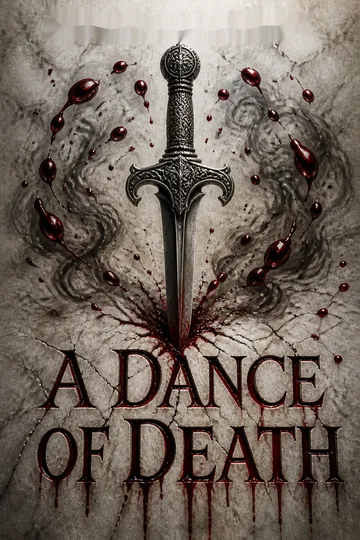
A Dance of Death tests what happens when a person who has used violence to create order is placed inside a political system that uses the same instrument for profit, prejudice, and survival. Haern’s problem is not that he has never known he can kill. He has built a reputation around it. The problem is whether his self-description as protector can survive contact with the consequences: the child who dies after Brann’s murder, the prisoners executed in his name, and the civilians caught between rival rulers.
Angelport multiplies the moral uncertainty through competing institutions. Ingram turns punishment into public spectacle; the Merchant Lords treat land and people as negotiable assets; the elves carry memories of dispossession into every proposed compromise; and the Trifect’s leaders defend a system that has also depended on coercion. Graeven’s plan is horrifying partly because it grows from a recognizable diagnosis. The city is unjust, and its factions exploit fear. His error is to treat catastrophic war as a cleansing tool, as if mass death could create the moral clarity that politics has failed to produce.
Haern’s eventual refusal does not restore innocence. He kills Graeven, but he does not conclude that violence has solved Angelport. His choice to spare Warrick reflects a more limited understanding of responsibility: removing one powerful person cannot repair the relationships and incentives that produced the crisis. The novel leaves him with a continuing duty rather than a final victory. The Wraith’s hood embodies that tension. Haern keeps it not as a trophy, but as a warning that a protector can become the thing he hunts when certainty replaces accountability.
Review Summary
A Dance of Mirrors receives mostly positive reviews, with readers praising the action sequences, character development, and plot twists. Many appreciate the change in setting and the exploration of Haern's character. Some criticize the lack of continuity with previous books and find the new characters less engaging. Overall, fans of the series enjoy the fast-paced, dark fantasy elements and Dalglish's writing style. However, a few readers find the plot predictable or disconnected from earlier installments.
People Also Read

Characters
Haern
The Watcher of VeldarenHaern is a highly trained swordsman who keeps Veldaren’s thieves in check through fear, speed, and calculated violence. The son of the infamous Thren Felhorn, he has built an identity around being the dangerous man who acts when others hesitate. Yet his discipline does not erase the guilt he carries over people harmed by his methods. In Angelport, he is forced to question whether the order he created is peace or merely silence enforced by a blade. His relationship with Alyssa begins as a hired obligation, while his guarded trust in Zusa deepens through shared danger. He is driven by a sincere wish to protect people, even when he struggles to separate that wish from the power violence gives him.
Zusa
Alyssa's shadowed protectorZusa is Alyssa’s close companion, a formidable fighter trained among the faceless women, whose ritual wrappings reflect a history shaped by punishment and discipline. She is observant, physically daring, and more willing than Haern to act before a plan feels safe. Her loyalty to Alyssa is intimate and fierce, but she is not merely a bodyguard: she reads people, recognizes danger, and often sees Haern’s emotional evasions before he does. Her history with Karak’s power gives her a complicated relationship with faith and agency. Though she can be playful with Haern, her humor rarely softens her judgment. She values attachment in a life where trust has often been dangerous.
Alyssa Gemcroft
The Trifect's political strategistAlyssa is a powerful member of Veldaren’s Trifect and a practiced negotiator, accustomed to converting wealth and influence into protection for those she values. She travels to Angelport to support the Keenan family and investigate the Wraith, but her larger concern is preventing the Merchant Lords from exploiting elven conflict for profit. Her affection for her son Nathanial and her friendship with Zusa give her political choices a personal cost. Alyssa can be shrewd, proud, and unsentimental, yet she does not regard power as an end in itself. She believes institutions can still prevent catastrophe, even when the people controlling them repeatedly disappoint her.
Graeven
The elven ambassadorGraeven represents Quellassar in negotiations with Angelport and presents himself as a measured advocate for peace. He is articulate, politically perceptive, and conscious of the danger facing a people whose numbers and influence are declining. His diplomatic role requires him to move among rival human factions while navigating divided opinions among the elves. He understands the weight of history, especially the destruction of the Dezren elves’ city, and fears that further concessions could leave his people vulnerable. His calm manner can make him seem more moderate than the forces surrounding him, but the pressure of those conflicts shapes every choice he makes.
Madelyn Keenan
A grieving household rulerMadelyn is Laurie Keenan’s wife and Tori’s grandmother, a noblewoman whose need for safety has shaped her life and narrowed her trust. The deaths of her son Taras and daughter-in-law Julie deepen her fear of Veldaren and her reliance on the walls of the Keenan estate. She is proud, socially perceptive, and capable of using charm or rank when either can secure control. Grief does not make her passive; she reacts to threats with force, often convincing herself that ruthless choices are necessary to protect her family. Her strained relationship with Alyssa reflects a long rivalry over power, responsibility, and who has truly earned the right to lead.
Torgar
The hard-drinking guard captainTorgar is the veteran captain of the Keenan guards, a blunt, physically imposing sellsword whose loyalty is grounded in long service and personal attachment. He has known the family for years and feels particular affection for Taras and the vulnerable Tori. His drinking and rough humor conceal a practical intelligence about security, fear, and the loyalties of mercenaries. Torgar dislikes noble performance and rarely tempers his opinions to spare anyone’s pride. He can be protective and coercive in the same breath, treating force as both a tool and a language he understands better than courtly negotiation.
Ulrich Blackwater
The ambitious merchant lordUlrich is a wealthy Merchant Lord who wants his family to rise beyond its commercial status and enter the ruling Trifect. He is quick-witted, vain, and skilled at reading other people’s insecurities, but his appetite for Violet begins to compromise his judgment. He sees wealth as both protection and proof of superiority, and treats negotiations as contests he should win rather than obligations to honor. His relationship with his brother Stern mixes familial loyalty with rivalry. Ulrich’s desire for Zusa reveals how easily his confidence turns into entitlement when he believes another person can be acquired like a rare commodity.
Laryssa Sinistel
The elven princessLaryssa is the daughter of Quellassar’s ruler and a political representative whose presence raises the stakes of Angelport’s negotiations. She is proud, controlled, and deeply conscious of the violence humans have inflicted on elven communities. Her preference for caution is not indifference: she measures every risk against the lives of her people and the possibility of another devastating war. She expects human leaders to honor agreements, but distrust makes compromise difficult. Her relationship with Graeven and the elven delegation places her between diplomacy and the anger of those who see restraint as surrender.
Dieredon
The Quellan scoutmasterDieredon is a skilled elven tracker and fighter who has spent long periods among humans and other peoples. His experience has left him skeptical of human rule, but he does not mistake revenge for a strategy that will protect the elves. He is disciplined, observant, and willing to act alone when his own community’s choices trouble him. His advanced combat skill makes him a serious threat to Haern, while his willingness to reconsider what he has been told allows a practical alliance to form. He is motivated by survival and responsibility to Quellassar, not by a desire to flatter either side.
Ingram Murband
Angelport's embattled rulerIngram rules Angelport as a human lord who is proud of his authority but unsure how to manage the forces surrounding him. He wants elven land for local development and interprets resistance as an insult to human power. His use of public executions reveals a ruler who governs through spectacle and fear, especially when his control feels threatened. Ingram is neither a master strategist nor a simple fool: he can recognize danger, but pride and prejudice repeatedly distort his judgment. He fears both the Merchant Lords’ influence and the prospect of war with the elves.
Warrick Sun
The merchants' elder negotiatorWarrick is the elderly, calculating head of the Merchant Lords’ gatherings. His years at sea taught him patience, while his commercial success taught him to treat timing and leverage as forms of power. He is less impulsive than Ulrich, but no less ambitious; he believes merchants should govern the trade and territory they already finance. Warrick can make domination sound like reform, presenting the end of Trifect control as a benefit to everyone. His calmness is an advantage in negotiation, though it can also make him underestimate the moral and political consequences of treating people as bargaining pieces.
Nole
Ashhur's struggling priestNole leads a poor temple of Ashhur in Angelport, where a small congregation and mounting debts make his vocation feel close to failure. He wants the temple to become a place people can respect, and he fears that his work is reaching too few lives. That desire makes him vulnerable to the promise of material resources, even when gaining them would violate the trust people place in him. Nole’s conflict is not between faith and unbelief, but between a good intention and the means he can justify to pursue it. He provides a grounded counterpoint to the city’s wealth and political grandeur.
Laurie Keenan
The aging Trifect patriarchLaurie is one of the Trifect’s senior leaders and the head of the Keenan family. He is soft-spoken and controlled, but his calm rests on decades of political experience and a reputation for ruthless action when necessary. As a father and grandfather, he is also visibly vulnerable to family loss. Laurie supports efforts to prevent war and recognizes that Angelport’s political balance is changing, though he is slower than Alyssa to confront how far the Merchant Lords have advanced. His relationship with Madelyn is shaped by shared grief and diverging ideas of what strength should look like.
Delysia
Haern's faithful confidanteDelysia is a priestess and one of Haern’s trusted companions in Veldaren. Her warmth and steady attention give her an unusual ability to reach him when he retreats into guilt or the cold authority of the Watcher. She does not deny the harm caused by his choices, but understands the protective motive beneath them. Delysia represents a kind of intimacy that does not demand he perform invulnerability. Her presence matters because Haern’s work depends not only on combat skill, but on having people who can remind him that he remains more than his reputation.
Tarlak
The mercenary wizardTarlak leads the mercenary company that works with Haern in Veldaren. A wizard with a practical streak, he balances friendship with the demands of keeping contracts and people alive. His easy humor eases Haern’s departure, while his magical skill contributes to equipment designed for the Watcher’s work. Tarlak represents the network of colleagues Haern leaves behind, a reminder that his choices affect more than his own survival.
Tori Keenan
The surviving Keenan infantTori is the newborn daughter of Taras and Julie Keenan, cared for by her grandmother Madelyn and the household. She is too young to understand the political violence surrounding her, yet her safety becomes a powerful concern for the adults who remain. Tori’s presence tests whether family obligation will restrain the powerful or become another excuse for controlling others.
Plot Devices
The open eye
A false trail in bloodThe eye is the Watcher’s former calling card, a mark associated with Haern’s campaign to control Veldaren’s underworld. Someone uses it in Angelport to make distant violence appear connected to him, first at the Keenan massacre and later in the accusation against Alyssa. Because people recognize the symbol but do not know its full history, it works as both a threat and a convenient piece of supposed evidence. Its repeated use links Haern to the Wraith while obscuring the real author of the killings.
Violet
Profit with a poisonous costViolet is a potent leaf found only in the Quellan Forest. The Merchant Lords see it as a commodity that could expand their wealth and weaken the Trifect’s hold over trade. Its effects bring intense euphoria followed by physical and psychological distress, as Zusa discovers after opening a shipment. The drug gives the conflict a material center: access to elven land is not merely a question of human expansion, but a route to a new market whose costs its investors prefer not to see.
The cloakdance
Concealment in motionHaern’s flowing cloaks conceal the position of his hands, weapons, and body as he spins through combat. The technique lets him confuse opponents who rely on reading his stance, but it also creates a brief moment when he cannot see his enemy. Against Graeven, that vulnerability becomes crucial: Haern must reject the obvious movement and trust his judgment about where the attack will come. The cloakdance therefore serves as both a practical fighting method and a test of whether Haern can act from experience without surrendering to instinct.
The Trifect
A brittle balance of powerThe Trifect is the alliance of the Gemcroft, Keenan, and Connington families, whose wealth and political influence have long shaped Veldaren and Angelport. Its power is rooted in trade, family ties, and agreements with the thief guilds, not simply in noble titles. In Angelport, the Merchant Lords try to break its commercial control while the elven dispute threatens the stability on which both sides depend. Alyssa’s forced treaty puts the institution at risk, showing that a political structure can be weakened through a single coerced document even when its network of interests remains intact.
The Wraith's hood
A borrowed face of terrorThe Wraith’s dark hood, hidden face, smoke, and sudden appearances make him seem almost impossible to track. His theatrical anonymity lets him frighten people and turn violence into a public message. The disguise also invites Haern to see the Wraith as a rival version of himself, someone who uses fear to reshape a city. Once the hood changes hands, it becomes a reminder that a mask can outlast the person who wore it and that the boundary between protection and vengeance must be chosen again by whoever takes it up.
Shadowdance Series

About the Author
Other books by David Dalglish
Download PDF
Download EPUB
.epub digital book format is ideal for reading ebooks on phones, tablets, and e-readers.








