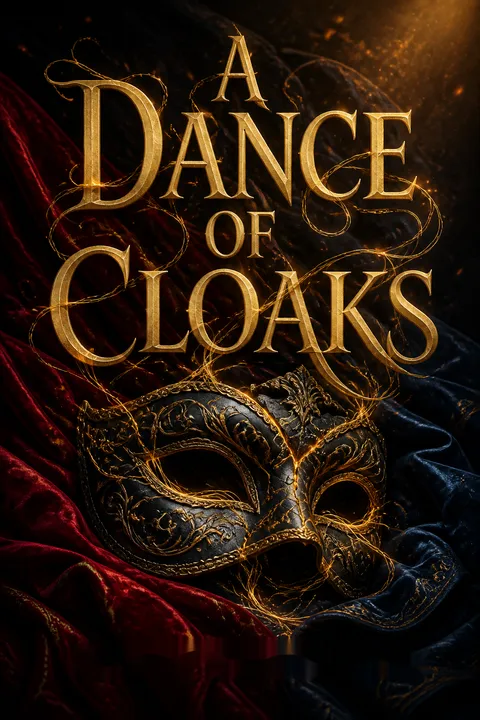


Plot Summary
Prologue
Wounded by the opening moves of Veldaren’s war, Spider Guild master Thren Felhorn returns to his hidden rooms and finds his elder son, Randith, ready to defy him. His younger son, eight-year-old Aaron, is quiet, bookish, and easy to overlook.
When an assassin attacks, Aaron kills him and calmly explains that he waited because he understood the danger his father’s words had concealed. Thren then tests his sons’ loyalty by giving Aaron Randith’s dagger. Aaron drives it into his brother’s chest. Thren names the child his heir, beginning the making of a boy taught to confuse obedience with strength.
The prologue makes Aaron’s inheritance a moral injury before the main story begins. Thren does not merely train a child to survive violence; he turns family love into a test whose only passing answer is murder. Aaron’s intelligence is real, but Thren recognizes and rewards it only when it serves his rule. That distinction explains the boy’s later divided identity: Aaron is the name attached to obedience, while Haern becomes a space in which another self might survive. The scene also establishes Thren’s central method. He arranges circumstances so that other people commit the violence he wants, then treats their actions as proof of character.
Alyssa Returns to Veldaren
Maynard Gemcroft has survived years of attacks in the war between Veldaren’s wealthy Trifect and its thief guilds. When his daughter Alyssa returns from foster homes, she condemns his caution and argues that the guilds are winning because the nobles have mistaken money for control. Maynard suspects the Kull family has been feeding her information, and his fear for her safety hardens into anger.
He has her dragged to the freezing cells beneath his mansion rather than risk her interfering in the conflict. In a separate locked room, Thren’s son Aaron begins lessons with Robert Haern, a former royal tutor. Robert uses isolation to force the withdrawn boy to speak, then teaches him why the Trifect fears Thren’s growing power.
Alyssa and Aaron enter the story through opposite forms of confinement. Maynard locks Alyssa away because he cannot distinguish protection from control; Thren commissions Robert to shape Aaron because he sees a child as an unfinished political instrument. The contrast is not simply between a rich household and a thieves’ guild. Both fathers treat intimacy as a form of governance, though Maynard’s fear remains entangled with genuine affection while Thren’s affection is conditional on usefulness. Robert’s unusual lesson matters because it gives Aaron a first experience of being challenged without being beaten. In a city where nearly every adult calls domination care, even that distinction is consequential.
The Boy in the Safehouse
Robert explains that the Trifect’s wealth lets it rule through dependence as well as force, while Thren is trying to unite the guilds against it. Their lesson ends when King Vaelor’s advisor, Gerand Crold, arrives with soldiers to take Aaron hostage and force Thren to end the war. Robert strikes Gerand with his cane and sends Aaron through a window, then stays behind to face the soldiers.
From a rooftop, information broker Kayla sees Aaron flee and kills a pursuing guard before the search closes around them. She corners him in an abandoned temple, where he admits that he is Thren’s son. The boy who appeared timid in Robert’s room has become a precise fighter under pursuit, and Kayla realizes he is worth more than any ordinary bounty.
The attempted kidnapping turns abstract political instruction into immediate bodily danger. Robert’s lesson about power is tested at once: he cannot protect Aaron by staying beside him, so he gives the boy a chance to act alone and accepts the cost himself. Kayla’s decision to intervene is initially transactional, but her information trade has made her unusually alert to the difference between a valuable captive and a child in danger. Aaron’s combat skill and his shyness are not contradictions. They are separate adaptations, one drilled into the body, the other preserved as retreat. The chapter’s suspense comes from the gap between what adults assume the boy is and what he can do.
The Spider Claims Its Heir
Kayla and Aaron fight through the eastern district as hundreds of soldiers seal streets and search homes. Aaron’s injured leg slows him, but he opens the gate to Laurie Keenan’s estate while Kayla distracts the guards. The Serpent Guild captures them just after they escape the compound. Thren arrives with Spider Guild fighters, kills the Serpent leader, and claims his son.
Aaron tells his father that Kayla repeatedly saved his life, so Thren offers her a place at his side. The offer changes her from a freelance seller of secrets into a participant in the war. Before settling into the safehouse, Kayla kills Undry, the perfume seller who carried her information to the Trifect, cutting off her old channel of business and allegiance.
The rescue is also a recruitment. Kayla earns Thren’s favor through loyalty to Aaron, but she accepts because the guild offers the power and recognition that her independent work could never guarantee. Her choice is not naïve: she understands the danger and still wants a place inside the machinery that once paid her for scraps of knowledge. Aaron, meanwhile, discovers that his father’s city is held together by surveillance, not omniscience. He trusts Thren’s reach because he has been trained to imagine it everywhere, while Kayla knows how often survival depends on a narrow opening and a quick decision. The partnership begins with a debt, and debt becomes the language through which Thren absorbs people.
Alyssa Takes the Shadow Road
In Maynard’s cells, Alyssa endures days without warmth before Eliora, one of Karak’s expelled priestesses, appears with two fellow Faceless. Hired by the Kulls, the women kill the jailer and lead Alyssa through the mansion, but Maynard has hidden himself in tunnels and his guards ambush them. Nava gets Alyssa through the outer gate while Eliora and Zusa fight their way clear.
Nava takes her toward the Kull camp, where Alyssa finds Yoren waiting. She has believed his attention meant alliance; instead, he makes clear that the Kulls intend to use her inheritance to seize Gemcroft land and wealth. He assaults her when she refuses to accept that her father must die, and Alyssa begins planning how to survive him rather than trust him.
Alyssa’s escape exposes the difference between being rescued and being free. The Faceless can open doors, but their contract binds the rescue to the Kulls’ political design, and Yoren’s intimacy proves another instrument of possession. Alyssa has mistaken flattery for solidarity because she wants an ally against her father’s dismissal; the discovery that Yoren sees her as a route to property makes her earlier confidence painful rather than foolishly simple. Her response is not immediate escape but observation. She learns to perform compliance while preserving judgment, a survival strategy that lets her remain near the people who would otherwise decide her future for her.
Thren’s Last Alliance
Five years of war have drained both the Trifect and the guilds, but Thren still believes he can win by uniting Veldaren’s thieves. James Beren of the Ash Guild resists Thren’s proposal for a coordinated attack on the three Trifect leaders during their Kensgold. Gileas the Worm sells the plan to Gerand, while Veliana, James’s second, discovers rival guilds encroaching on Ash territory.
Thren then sends Kayla, Senke, and Will into the royal prison to free Robert. They use a spellscroll to pass through the outer wall, but alarms trap them inside. Will carries the tortured tutor through the fighting and out through a magical wall. Robert later admits that Gerand arranged the attempt to seize Aaron, explaining why the king’s men targeted him.
Thren’s coalition depends on the very thing his rule steadily destroys: trust. James sees the plan’s military risks, but the guilds are so depleted that refusing Thren may be more dangerous than obeying him. Gileas turns this weakness into a market, selling information to whoever pays while pretending that knowledge has no moral owner. The prison rescue makes loyalty concrete through bodily cost, especially Will’s willingness to carry Robert through danger. Yet Robert’s disclosure confirms that the crown is not a neutral observer. The conflict has become a web of factions each claiming to restore order, while using kidnapping, surveillance, and coercion to do it.
Lessons in Fear and Mercy
After Robert returns, Thren allows him to resume Aaron’s political lessons and brings the boy to a brothel to expose how information flows through the city’s women. There, Thren punishes the owner for secretly supplying the Trifect, teaching Aaron that fear can make people mistake survival for gratitude.
Soon afterward, Thren has Kayla kill Delius Eschaton, a priest whose public sermons urge citizens to resist the guilds. Aaron is ordered to kill Delius’s daughter, Delysia, but finds her grieving and praying and cannot strike.
Kayla learns what Thren expects of the child, then helps Aaron locate Delysia when he learns another assassin is hunting her. Aaron kills that assassin and hides with Delysia, while her grandmother takes her to the Ashhur temple for safety.
These lessons reveal the precise content of Thren’s education. He wants Aaron to interpret every human relation as a contest over leverage, then calls that interpretation wisdom. The brothel owner’s mutilation demonstrates how terror can manufacture public submission, while Delysia’s prayer offers Aaron an experience his father cannot explain away as weakness: another person’s grief makes a claim on him. Kayla’s choice to help him is morally compromised because she has just carried out Thren’s order against Delius, yet she refuses to let the next killing become inevitable. Her divided conduct mirrors the city’s larger corruption, where people sometimes preserve life from inside institutions that demand cruelty.
The Worm Sells Everyone
Thren captures Veliana after the Hawks and Serpents encroach on Ash territory, hoping she will replace James and bring the guild under his command. She refuses to betray the man who raised her within the Ash Guild.
Gileas claims her as payment for informing Thren about her dealings with Gerand, then tortures her outside the city. Eliora rescues Veliana and offers her a place among the Faceless; Veliana accepts an oath to Karak to stay alive, but intends to return to James.
She finds that James has agreed to Thren’s plan because Ash has been pushed close to destruction. When Veliana confronts Gileas again, she learns he told Gerand the true Kensgold plan and revealed Ash’s hiding place to Thren. She kills him, but the damage is already done.
Veliana’s ordeal makes the costs of political usefulness impossible to romanticize. Thren offers her authority only if she will destroy her own loyalty; Gileas treats her body as a negotiable fee. Her survival depends on accepting a religious vow whose meaning she does not share, exposing how institutions can turn belief into a price of refuge. Yet she is not simply acted upon. She returns to James, gathers the truth, and kills the broker who helped set her up. That victory is limited: the knowledge arrives after the betrayal has spread. The sequence rejects the fantasy that cleverness can always undo systemic harm once information has been sold.
Karak Claims the Dispute
Maynard confronts Pelarak, high priest of Karak, after learning that the Faceless attacked his estate to free Alyssa. He threatens to expose the hidden temple to Veldaren’s angry population unless the priests help end the war. Pelarak answers that he will support Maynard only if Alyssa joins the order, making her a guarantee against future threats.
Meanwhile, the Faceless defy Pelarak’s command to surrender Alyssa, and the Kulls keep her at their camp as leverage against Maynard. The priesthood sends Ethric, a dark paladin, to retrieve her and punish the rogue priestesses. As these factions close in, Alyssa pretends to accept Yoren’s courtship while keeping a dagger concealed in her clothing and learning what the Kulls intend.
The religious conflict mirrors the political one: each side speaks of order while bargaining with people as safeguards. Maynard’s threat is strategically astute, but it forces Pelarak to choose between institutional survival and genuine neutrality. Pelarak’s demand that Alyssa become a priestess turns the daughter into a political hostage once more, this time under sacred language. The Faceless’ disobedience complicates any simple picture of religious authority. They are shaped by Karak’s discipline but increasingly act according to their own judgments. Alyssa’s concealed dagger is a small but important shift: she is no longer waiting for a powerful man or institution to decide when her life begins.
A Prayer Becomes Rebellion
After Delysia enters the Ashhur temple, Madelyn Keenan, held there after a street attack, persuades the girl to leave by promising to reunite her with her brother. In an alley, Madelyn reveals that she means to silence Delysia, but Aaron arrives and drives her away. He tells Delysia that he helped kill her father and had been ordered to kill her too.
Instead of fleeing, she teaches him how to pray by asking him to hold someone he loves in mind. Thren tracks them to a rooftop and shoots Delysia with a crossbow bolt, then knocks Aaron unconscious and takes him to Karak’s temple. Kayla finds Delysia still alive and carries her to safety, choosing to protect the child despite the risk of Thren’s anger.
Aaron’s confession breaks the convenient boundary between guilt and identity. He does not ask Delysia to absolve him; he tells her the facts that make trust dangerous. Her response, offering a practice rather than a verdict, gives him a form of care unlike Thren’s tests or Robert’s intellectual discipline. Madelyn’s deception shows that even a woman harmed by the guilds can reproduce their instrumental logic. Kayla’s rescue of Delysia is another refusal to let loyalty excuse cruelty. The rooftop attack, however, demonstrates Thren’s reach in its most personal form: he wounds the person who has made his son imagine a life beyond the one he designed.
The Lion’s False Promise
Pelarak subjects Aaron to a ritual meant to erase his devotion to Ashhur. In a room where water and blood rise against gravity, the priest presents visions of Delysia abandoned by her god and a blazing image of Karak demanding submission. Aaron recognizes that terror is being used to make obedience feel like truth.
He accepts the vision’s pain but rejects the god’s command, declaring that the identity shaped by Thren can die while Haern remains. When he wakes in the temple, he escapes without a weapon, steals a sacrificial dagger, and kills five priests who try to stop him. He leaves the temple wounded but free, now committed to breaking his father’s plan rather than inheriting it.
The ritual literalizes the psychological trap Thren has built around his son: Aaron is told that dependence is reality and that resistance is self-destruction. Pelarak’s methods resemble Thren’s, even though their gods and vocabularies differ. Both men attempt to monopolize interpretation, telling the boy what fear means and what his future must be. Aaron’s choice of Haern is not a clean escape from violence; he kills his way out and carries his conditioning with him. Its significance lies in a narrower claim. He can act violently without accepting violence as the only truth about himself, though the novel leaves open how difficult that distinction will be to sustain.
Alyssa Turns the Knife
While Ethric hunts the Faceless, Alyssa and Zusa escape the Kull camp and cross the freezing river to slow him. Zusa kills Nava, then brings Alyssa back to Theo Kull’s camp. A vision leads Zusa to warn Alyssa that she may be pregnant and that the Kulls could use the child to claim Gemcroft wealth. Alyssa refuses to remain Yoren’s instrument.
Alone with Theo, she offers him mines and Riverrun properties in exchange for abandoning any marriage plan, then defeats him when he attacks. Zusa arrives carrying Yoren’s severed head. Alyssa kills Theo, and the mercenaries, seeing their employers gone and her inheritance available, accept her command. She now has a force capable of returning to Maynard’s estate.
Alyssa’s political awakening does not mean she becomes untouched by the systems she opposes. She uses property and mercenary loyalty because those are the currencies available, but she begins setting the terms instead of being traded through them. Her offer to Theo is a genuine negotiation, not a plea for recognition, and her readiness to fight when it fails marks a change from the daughter who expected argument to persuade her father. Zusa’s warning about pregnancy gives Alyssa a future that may remain entangled with Yoren, but it does not dictate her present choices. The scene grants her agency without pretending that agency erases the harm she has endured.
The Kensgold Becomes Bait
Gerand uses the stolen information to manipulate King Vaelor into taxing incoming goods, restricting mercenary gatherings, and arresting merchants who evade their dues. The measures choke Veldaren’s food supply and inflame the poor.
Thren plans to exploit the Kensgold, the Trifect’s lavish gathering outside the city, by sending guilds to attack the empty Gemcroft and Connington estates. He deliberately lets the king and Trifect hear of an earlier plan to assassinate their leaders at the feast, so they prepare for the wrong attack.
The Trifect arrives with thousands of followers, while Leon Connington stages Will’s torture and execution before the crowd. Thren watches his trusted enforcer die and abandons his planned target, fixing his vengeance on Leon.
The Kensgold gathers the novel’s competing performances of power into one public spectacle. The Trifect displays wealth, the guilds stage menace, and the king attempts to regulate both with laws that intensify scarcity. Thren’s false plan shows strategic brilliance, but the public torture of Will reveals its emotional cost: a person becomes both a friend and a message, and the crowd is trained to enjoy his suffering. Thren’s reaction is not a retreat from spectacle but a shift in its intended victim. His grief turns into a personal vendetta, threatening the discipline that made the deception effective. Power here depends on controlling attention, but attention can also hijack its controller.
The Feast Breaks Apart
Gerand’s plan to kill King Vaelor with a poisoned needle hidden in a dancer’s bell fails when he spots the weapon and has her shot. The king sends soldiers toward Connington’s estate, where Thren’s men are preparing to strike. At the same time, Thren’s guild captures Madelyn Keenan during the riots and threatens Laurie with her life.
Calan, newly made high priest of Ashhur, rescues her, but Madelyn later leaves the temple with Delysia and is captured again. A messenger brings Laurie the threat against his wife and son, and Torgar persuades him to end the Kensgold. Laurie sends Torgar to find Madelyn, putting family before the prestige of staying at the feast.
The feast collapses because every faction has treated human beings as leverage and now discovers that leverage has unpredictable movement. Gerand’s poison plot fails through observation, while the threat against Madelyn forces Laurie to choose between public status and private attachment. His decision matters because the Trifect’s culture equates authority with never yielding; Laurie yields anyway, recognizing that reputation cannot compensate for a dead wife. Madelyn’s repeated flight shows that rescue is fragile when a person is moved from one protector to another without control of the route. Torgar’s mission introduces a more personal ethic of loyalty, one measured by whether he brings someone home alive.
The Guilds Turn on Ash
Haern reaches the burning Connington mansion as royal soldiers storm it. He kills Serpent leader Norris, then finds Senke, who admits he alerted the king because Haern’s resistance made him question the life he served. At the same time, the assault on Gemcroft’s estate triggers Maynard’s magical traps, killing many attackers before the doors even open.
Inside, Kayla finds Veliana and learns that Thren expects the Hawks to eliminate Ash after the estate is secured. The Hawks attack their supposed allies. Kayla warns Veliana, who escapes after learning Haern is at Connington’s. In the smoke-filled mansion, Haern defeats Veliana but lowers her from a window rather than leave her to burn. Thren discovers Kayla’s disobedience and kills her.
The coordinated assault fails through a chain of broken assumptions. Thren thinks fear can hold the guilds together, but his plan to sacrifice Ash confirms every suspicion James and Veliana had about him. Senke’s desertion and Kayla’s warning are parallel acts of moral refusal: both men and women have learned that obedience offers no durable safety. Haern’s decision to save Veliana matters because she has been trying to kill him, and because he refuses to make her past betrayal an excuse for abandonment. Thren’s killing of Kayla completes the opposite movement. When loyalty no longer serves him, he treats it as treason, destroying one of the few people who protected his son’s humanity.
Alyssa Comes Home Armed
Thren’s forces spring their trap at the Gemcroft estate, where Maynard enters with hundreds of mercenaries and is caught between attackers inside the mansion and archers in nearby houses. Alyssa arrives with the soldiers who have joined her after she killed Theo Kull, and her charge breaks the encirclement. She reaches Maynard as he lies mortally wounded by an arrow.
He acknowledges that she was right and names her his heir before dying in her arms. Alyssa orders the surviving mercenaries to kill the guild fighters who attacked her father. Thren withdraws with the remains of his force, having lost the estate assault and the authority he meant to cement. Meanwhile, Torgar finds Madelyn and another captive and carries them out of the city.
Alyssa’s return resolves the opening conflict not by proving that Maynard was wholly wrong or that she was wholly right, but by changing the terms between them before he dies. His recognition comes too late to restore their relationship, yet it grants her the inheritance she had been denied and makes her political authority visible to the household. Her first order is military, not sentimental: grief must coexist with immediate responsibility. Thren’s defeat is similarly concrete. His men can still kill, but they cannot make the city’s other powers obey as one. The closing movement places care beside violence, as Torgar’s rescue of Madelyn answers the novel’s many uses of hostage-taking with an act aimed at bringing someone back alive.
Epilogue
Thren retreats to a weakened Spider Guild, having lost his son, his allies, and the prestige that made others fear him. He vows to continue the war against the Trifect, but his new advisors cannot replace the people he drove away.
In the ruins of Connington’s estate, Haern finds a Serpent searching for valuables and kills him before disappearing into the night. The boy who was trained to inherit Thren’s rule has begun acting alone, though the danger around him and the war in Veldaren remain unresolved.
The epilogue refuses a tidy redemption or a final political settlement. Thren survives, but survival is no longer proof of mastery: the guilds have suffered, the Trifect remains powerful, and his imagined legacy has vanished with Aaron’s departure. Haern’s last attack is both a sign of independence and a warning. He has rejected his father’s claim over him, yet he continues to inhabit the nocturnal violence that shaped them both. The ending therefore distinguishes escape from healing. Haern can choose whom to strike and why, but the city offers no simple world beyond the shadows in which he learned to move.
Analysis
A Dance of Cloaks makes inheritance a political and psychological problem. Aaron is not born into evil; he is trained to understand love as obedience, violence as competence, and fear as evidence that his father’s rule is natural. The name Haern gives him room to test those assumptions, but the novel does not pretend a new name removes the training in his body. He survives through skills learned from Thren, and his escape from Karak’s temple is still violent. His moral change is therefore not purity but a struggle over purpose.
Alyssa’s arc offers a parallel critique of inherited authority. Maynard tries to protect her by excluding her, Yoren tries to possess her through romance and marriage, and the Kulls treat her as a route to property. She becomes powerful not because the men around her finally behave well, but because she learns to read their incentives and negotiate from a position they cannot easily dismiss. Her return to Maynard comes too late to repair their relationship, yet his recognition gives her a real political inheritance. That victory remains compromised by the violence and wealth on which the Trifect’s power rests.
The city’s factions repeatedly claim to restore order. The king taxes food and arrests merchants, the Trifect hires armies, Thren coerces guilds into unity, and Pelarak uses ritual to compel faith. Each system treats people as resources: hosts, heirs, hostages, soldiers, informants, or public examples. The characters who resist do so through specific acts of care that break those categories. Kayla protects children she was ordered to endanger. Senke abandons a life that has made him complicit. Haern spares or rescues people who have reason to fear him. These gestures do not stop the war, but they distinguish chosen responsibility from obedience.
The ending is deliberately unsettled. Thren survives, Alyssa inherits a damaged household, and Haern remains in a city where violence is still ordinary. The novel’s hope lies not in a clean victory over power, but in the possibility that people shaped by coercive systems can still make choices those systems did not authorize.
Review Summary
A Dance of Cloaks received mixed reviews, with ratings ranging from 1 to 5 stars. Readers praised the fast-paced action, intricate plot, and gritty world-building. Some compared it favorably to works by George R.R. Martin and Brent Weeks. Critics found the characters underdeveloped and the violence excessive. Many readers felt conflicted, acknowledging the book's flaws while still finding it entertaining. The writing style and fight scenes were generally well-received. Overall, opinions varied widely, with some readers eagerly anticipating the sequel and others struggling to finish.
People Also Read




Characters
Aaron Felhorn, who calls himself Haern
The heir with two namesThren Felhorn’s younger son is raised to inherit the Spider Guild through secrecy, combat, and obedience. Aaron is observant and unusually capable, yet socially withdrawn, with a private life built around books and watching others. The name Haern becomes a way to imagine a self not wholly defined by his father’s expectations. His bond with Robert Haern gives him intellectual honesty; his connection with Kayla offers affection that is imperfect but protective; and Delysia’s faith confronts him with mercy he has never been taught to value. He is driven by a hunger to understand what kind of person he can become when fear and family duty are no longer the only guides.
Thren Felhorn
The Spider Guild’s masterThren is the feared leader of the Spider Guild and the architect of a campaign to unite Veldaren’s thieves against the Trifect. His patience is tactical: he reads motives, plants pressure, and prefers to make opponents choose the outcome he wants. He is protective of Aaron, but his protection is inseparable from possession. Thren wants a son who will extend his influence, and he interprets dissent as weakness or betrayal. His skill and strategic intelligence make him formidable, while his need to control the people closest to him leaves him vulnerable to the very disloyalty he fears.
Alyssa Gemcroft
The heiress who learns commandMaynard Gemcroft’s daughter returns to Veldaren confident that she can challenge her father and help direct the family’s struggle. She is witty, physically capable, proud of her name, and impatient with men who treat caution as wisdom. Her early confidence is partly a defense against being excluded from power, and it leaves her susceptible to Yoren Kull’s flattering promises. Alyssa’s sharp observation and ability to perform compliance become as useful as her courage. She wants to protect her family’s inheritance without being reduced to a daughter, bride, or bargaining chip, and she increasingly insists on negotiating from her own judgment.
Kayla
The knife and information brokerKayla makes her living selling secrets, reading people from rooftops, and throwing daggers with exceptional precision. She avoids guild allegiance until the night Aaron’s escape forces her to choose between profit and protecting him. Ambitious and drawn to the authority Thren offers, she is not naturally selfless; her courage grows through attachments she did not plan to make. Kayla’s choices reveal the strain between wanting power and recognizing what power asks her to do. She is especially perceptive about the vulnerability of children, even when she has already helped carry out the violence that threatens them.
Delysia Eschaton
The child of AshhurDelysia is the young daughter of Delius Eschaton, whose public preaching makes the family a target. Sheltered from the city’s violence, she is grieving, frightened, and still able to extend trust without mistaking it for certainty. Her prayers matter to Aaron because they express an emotional life he has been trained to suppress. Delysia does not possess political power, but she has a direct moral influence on the people around her. Her kindness is not naïveté so much as a stubborn belief that a person’s actions can differ from the name and family that precede them.
Robert Haern
The tutor who asks whyA former tutor to King Vaelor, Robert is hired to educate Aaron beyond swordplay and stealth. His teaching style relies on questions, silence, and carefully controlled discomfort, challenging the boy to reason rather than simply obey. Robert understands the political history behind the war and is willing to tell Aaron truths that Thren would prefer to shape. He is warm beneath his dry manner and recognizes the child’s capacity for moral independence. His memories and beliefs give the novel a counterweight to Thren’s certainty: knowledge can prepare someone to choose, not merely to dominate.
Veliana
The Ash Guild’s sharp bladeVeliana is James Beren’s trusted lieutenant, an accomplished fighter whose intelligence is as important as her dagger skill. She is loyal to the Ash Guild because it has been her home and protection, not because she mistakes its leaders for saints. Thren sees her as a means to control Ash, while Gileas treats her as a commodity. Her survival depends on composure, tactical judgment, and a capacity to act after betrayal. Veliana’s scarred appearance and guarded manner do not erase her ambition or anger; she remains determined to shape her own loyalties rather than have them assigned.
Alyssa’s father, Maynard Gemcroft
The guarded Trifect lordMaynard is a wealthy Trifect leader whose mansion is protected by guards, traps, and hidden passages. Years of attacks have made him suspicious and politically cautious, but he mistakes Alyssa’s independence for a danger he can manage by sending her away or locking her up. He loves his daughter and fears losing her, yet his attempts to keep her safe repeatedly deny her agency. Maynard’s conflict with the guilds is bound up with inheritance, property, and the survival of the Gemcroft name. His central struggle is learning, too late, that authority within a family cannot be secured by fear alone.
Yoren Kull
The polished Kull heirYoren is the handsome son of tax collector Theo Kull, skilled at presenting ambition as romance. He courts Alyssa with promises of shared power while his family plans to use her inheritance to expand its reach. His vanity makes him persuasive, but beneath it lies a possessive view of women and property. Yoren’s desire to inherit the Gemcroft fortune is inseparable from his belief that Alyssa should submit to his plans.
Eliora
The Faceless protectorEliora is one of three priestesses expelled from Karak’s temple and forced into the Faceless order. She is a capable assassin who believes her faith remains meaningful even when temple authorities misuse it. Her rescue of Veliana grows from empathy for women harmed and controlled by powerful men. Eliora obeys her religious vows selectively, placing her own understanding of Karak’s will above Pelarak’s commands.
Zusa
The shadow-cloaked fighterZusa is another of the Faceless, a skilled fighter whose shadow magic makes her dangerous in close combat. She is terse, disciplined, and willing to risk herself for Alyssa even as she questions the authority of her order. Zusa’s loyalty is directed less toward Kull money than toward the people she has chosen to protect. She combines physical courage with an unsettling fluency in prophecy and ritual.
Senke
Thren’s quick-witted enforcerSenke is one of Thren’s most trusted fighters, a practical man who balances combat skill with humor and social ease. He trains Aaron and becomes one of the few adults who treats the boy as a person rather than an heir. Senke is comfortable inside the guild’s violence, but he notices the cost of Thren’s control and begins questioning whether survival is enough. His instincts remain sharp even when his loyalties shift.
Pelarak
Karak’s high priestPelarak leads Karak’s concealed temple in Veldaren and sees the city’s political war as a threat to the order of his institution. He values discipline and hierarchy, but his decisions are shaped by pressure from both Maynard and the Faceless. He believes his authority serves a divine structure, which makes his treatment of dissent particularly severe. Pelarak’s confidence in ritual and doctrine contrasts with the more independent faith practiced by the women he oversees.
Ethric
The dark paladin hunterEthric is a powerful paladin of Karak sent to bring Alyssa back and punish the Faceless for defying their temple. His black fire and heavy armor make him an intimidating fighter, and his faith gives him absolute confidence in his authority. Ethric interprets disobedience as heresy rather than a dispute over conscience. His pursuit turns the religious conflict into a physical danger for Alyssa and the women protecting her.
Gerand Crold
The king’s calculating advisorGerand is King Vaelor’s advisor, a practiced administrator who manages the castle’s fears and searches for advantage in the conflict. He uses Gileas’s information to manipulate both the king and the Trifect, shaping policy to destabilize the Kensgold. Gerand is ambitious and self-preserving, with a talent for presenting dangerous decisions as necessary counsel. His influence demonstrates how a supposedly secondary court official can redirect a city’s violence.
James Beren
The wary Ash GuildmasterJames leads the smaller Ash Guild and relies on Veliana’s judgment as his closest lieutenant. He sees the risks in Thren’s plan but knows that resistance may destroy his people before the Trifect can. James is neither fearless nor easily persuaded; he measures decisions against the survival of a guild whose territory is shrinking. His pragmatism puts him in painful conflict with his sense of loyalty.
Laurie Keenan
The distant Trifect magnateLaurie is the wealthiest member of the Trifect and the head of the Keenan family. He is a shrewd organizer who understands that Veldaren’s political balance depends on the presence of all three families. His confidence in wealth and mercenary strength is tested when a threat reaches his household. Laurie’s relationship with his wife and son reveals a private attachment beneath his public role as a master of trade.
Madelyn Keenan
The guarded Keenan matriarchMadelyn is Laurie’s wife, a socially skilled noblewoman accustomed to using appearance and conversation to influence men. She dislikes feeling exposed or dependent, and danger sharpens rather than softens her instincts. Her encounter with Delysia shows how easily her survival strategies can become manipulation. Madelyn’s need for safety is real, but her pride often makes it difficult for her to accept help without trying to control its terms.
Torgar
The blunt mercenary captainTorgar commands Laurie Keenan’s mercenaries and favors direct speech over noble politeness. His size and reputation make him an effective fighter, but his judgment is not limited to the battlefield. He challenges Laurie when he believes pride is endangering Madelyn and accepts personal risk to search for her. Torgar’s loyalty is practical and embodied: he measures it by the people he is willing to bring home.
King Edwin Vaelor
The frightened young kingEdwin inherited the throne while still young and is deeply anxious about poison, assassination, and the power of the Trifect. His fear often looks like childish vanity, but it is sharpened by the danger surrounding his court. Gerand manages and exploits that fear, steering the king toward policies that affect the whole city. Edwin’s authority is real, though his dependence on advisors makes it uncertain.
Will
The Spider Guild’s enforcerWill is a massive, controlled fighter who has served Thren since the Spider Guild’s beginnings. He dislikes liars and communicates more readily through action than charm. His physical strength makes him useful in dangerous work, but he is not a blunt instrument; his skill includes stealth and careful judgment. Will represents the personal loyalty Thren has built within the guild, and the cost of turning that loyalty into public spectacle.
Gileas the Worm
The broker of secretsGileas sells information to rival powers and treats every relationship as a transaction. His grotesque appearance and adopted nickname conceal a literal, magical secret. He is patient, opportunistic, and difficult to trust, making him a dangerous conduit between factions.
Plot Devices
Aaron and Haern
A name for resistanceAaron is the identity Thren cultivates: a son trained to inherit the Spider Guild and carry out orders without hesitation. Haern becomes the name the boy uses when he tries to separate his own choices from his father’s design. The distinction is not a second personality or a simple disguise; it is a fragile way of imagining freedom while still using the skills Thren taught him. The names organize the story’s central conflict around agency. Each time the boy chooses Haern, he is testing whether he can act without letting Thren define what his actions mean.
The Kensgold
A feast masking an assaultThe Kensgold is the Trifect’s lavish gathering, held outside Veldaren so its three families can display their wealth and power. Thren lets a plan to attack the leaders during the feast leak to the king and the Trifect, drawing attention away from his real target: their empty city estates. The gathering also concentrates mercenaries, food, money, and political rivals in one place, making it a natural stage for both the public torture of Will and the attempted assassination of the king. It is less a single event than a contested performance, with each faction trying to make the others watch the wrong danger.
The Faceless
Faith made into shadowThe Faceless are priestesses expelled from Karak’s temple and ordered to hide their bodies beneath black and purple wrappings. Their training and shadow magic make them formidable assassins, while their religious status leaves them caught between Pelarak’s authority and their own interpretation of Karak’s will. The Kulls hire them to free Alyssa, but the women do not remain simple hired weapons. Eliora protects Veliana, and Zusa becomes Alyssa’s ally. Their divided loyalties show how institutions can punish women in the name of order while still depending on their skill.
Karak’s Trial
Terror disguised as revelationPelarak’s ritual places Aaron in a magically distorted room where invisible chains become visible and a vision of Karak demands obedience. The experience turns the debate over faith into bodily pressure, making submission seem like the only way to end fear. Aaron recognizes that the priest is using terror to dictate what counts as truth, but the ordeal still leaves him wounded and forces him to fight his way out of the temple. The trial tests whether he will accept a new authority merely because it speaks in sacred terms.
The Information Market
Secrets become weaponsKayla, Undry, and Gileas reveal different forms of Veldaren’s information economy. Kayla gathers and sells what she observes; Undry carries her reports upward to the Trifect; Gileas sells plans and locations to whichever power will pay. Information changes the balance of the war, from the king’s attempt to take Aaron hostage to the leak that exposes Thren’s plans and Ash’s safehouse. The device makes knowledge materially dangerous: a secret is not merely something characters know, but something that can be bought, passed on, and used to put a body in a cell or under a blade.
Shadowdance Series


About the Author
Other books by David Dalglish
Download PDF
Download EPUB
.epub digital book format is ideal for reading ebooks on phones, tablets, and e-readers.








