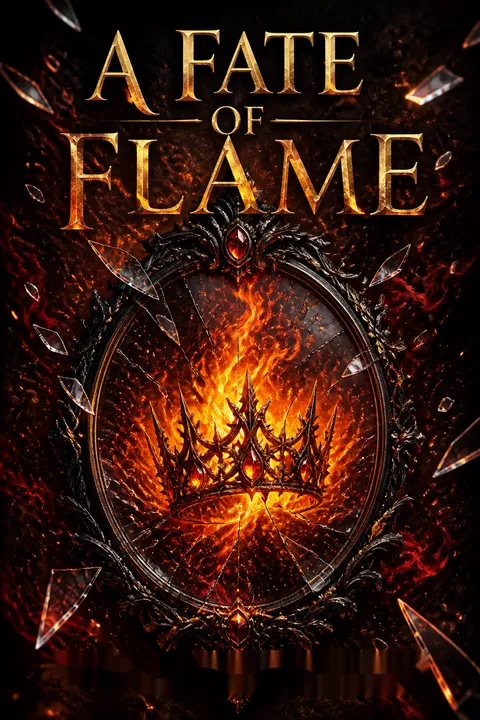


Plot Summary
A Spy Beneath Ridine
Seven months into her reign, Queen Cora interrogates a captured Norunian spy in Ridine Castle’s dungeon. Her clairsentient magic catches fear beneath his practiced calm, and his reaction to questions about Syrus confirms that he is hiding more than he admits. Norun blames Khero for Prince Helios’s death, and Cora’s agents have heard that Norun is aligning with Syrus, ruled by Morkai’s father.
She fears her recovering kingdom cannot withstand another invasion, yet orders the gaoler to continue questioning the prisoner. Leaving the dungeon, she steadies herself by reaching for the elements and reminds herself that protecting Khero may require her to act harshly.
Cora’s first choice as queen is not a grand declaration but an order that makes someone suffer. The scene binds political responsibility to her bodily sensitivity: her gift lets her read fear, but it also exposes her to the prisoner’s emotions. She uses that access not to become merciful, but to separate useful truth from performance. The resulting moral discomfort matters. Cora is learning that the crown cannot preserve her innocence, and she accepts this without pretending that necessity makes the violence clean.
The Groom Arrives Early
Cora learns that Teryn, her fiancé, has ridden ahead of his party and is resting nearby. Afraid his injuries from Morkai’s possession have returned, she ignores royal etiquette and worldwalks into his room. Instead of finding him frail, she finds him strong, silver-haired, and eager to see her.
Their reunion turns tender and then passionate; later, candles and a music box give them a quieter setting to confess their love and choose each other beyond their political engagement. Teryn also discovers that Emylia, the seer whose visions helped shape Morkai’s actions, is still near Ridine as a spirit. She hopes to make amends and warns that Darius remains dangerous.
The reunion repairs more than distance. Teryn’s restored body answers Cora’s fear that the person she loves might return only as a remnant, while his openness gives her permission to speak plainly about desire and commitment. Yet private happiness sits beside two forms of aftermath: Teryn’s trauma from being trapped outside his body and Emylia’s guilt over the knowledge she once supplied. The book makes intimacy a chosen return to embodied life, not an escape from history. Their love begins again in a world still shaped by the dead.
Friends Around the Table
At the formal welcome and dinner for Cora’s royal guests, she reunites with Mareleau, Queen of Vera, and Mareleau’s husband, King Larylis. Teryn’s brother, Larylis, remains more comfortable with a book than courtly ceremony, while Cora welcomes the irreverent Crown Prince Lex and his wife, Lily. Their reunion loosens the evening’s stiffness, but talk of Norun turns serious.
Lex explains that his wife’s uncle, a former king of conquered Haldor, is helping organize a rebellion. Lex and Lily have arranged for weapons to pass into Norun disguised among manure shipments from Tomas. The rebels expect to strike at month’s end, offering Cora a possible counterweight to Norun’s hostility.
The dinner makes alliance feel less like a treaty than a network of personal loyalties, favors, and ingenious risks. Lex’s scheme depends on the very thing that makes it comic: soldiers ignore manure carts. Its humor does not diminish its political stakes; it shows how people without overwhelming military power can exploit the habits of authority. Cora’s old friends also restore a form of ease she has lost since becoming queen. That comfort proves brief, however, because the meal’s concealed danger is not merely international. Mareleau’s labor begins that night.
The Heir and the Prophecy
Mareleau’s waters break during the night, and she seeks Cora rather than her midwives because she needs a trusted friend beside her. After twelve hours of labor, Mareleau gives birth to a healthy boy, Noah, with Cora holding her hand throughout. As they speak afterward, Mareleau unknowingly reveals that her ability to alter how others perceive her is real magic.
Cora connects that gift, Mareleau’s birth beneath Khero’s black mountain, and a prophecy about a witch mother and a child who will unite crowns. Valorre’s recovered memories confirm that dragons had sensed Mareleau’s magic. Cora realizes Morkai targeted her by mistake, and the rage she has buried finally breaks through.
The birth transforms a private event into a political and metaphysical fact, but it also exposes the cruelty of Cora’s earlier suffering. Her rage is not simple jealousy of Mareleau’s motherhood. It is grief at having been punished for an identity she never possessed, coupled with the recognition that another woman’s safety does not erase her own injury. The scene refuses the tidy comfort of destiny correcting itself. Noah’s birth clarifies the prophecy, but the revelation arrives after Cora has already paid its price.
Vows Under Shadow
On Cora and Teryn’s wedding day, the pair exchange vows in Ridine’s Godskeep, joining Khero and Vera in a public alliance as well as a marriage. The ceremony’s first disturbance is a shadow crossing the room, followed by a shriek outside. Two dragons descend on the castle, one white and feather-winged, the other black and larger.
The black dragon attacks when guards raise weapons, setting fire to the grounds and killing several people. The white dragon searches the keep for Mareleau and Noah. Cora recognizes the creature from El’Ara and understands that the Veil between worlds has torn, bringing dragons into the human realm.
The interruption strips the wedding of its promise of a protected beginning. Cora and Teryn have made their union public just as forces beyond their political map arrive in the sky. The dragons are not merely monsters attacking a castle: their search for Mareleau and Noah makes the family at the center of the prophecy physically vulnerable. Cora’s new authority is tested before she has time to enjoy it. Her first response must be defensive and imperfect, because the danger outruns both the ceremony and the knowledge available to her.
The Collar’s Cost
When the dragons close in, Cora places a magic-suppressing collar around Mareleau’s neck, hoping its grip will keep the creatures from sensing her. The device hurts Mareleau, but it buys the group time to plan. Cora decides that Mareleau and Noah must reach the Forest People, who may know how to shield Mareleau’s magic and understand the prophecy.
Teryn must remain at Ridine as Khero’s ruler, while Larylis returns to prepare Vera’s defenses against the threatened invasion. Cora practices worldwalking with Teryn and his falcon, Berol, then finds the Forest People with Valorre’s help. The separation leaves both newlyweds facing danger without the other.
The collar turns protection into a visible injury. Cora’s solution works by restricting Mareleau’s power, so the attempt to keep her safe also makes her endure a violation Cora knows intimately. The choice is pragmatic, but the book does not let pragmatism erase its cost. At the same time, Cora and Teryn’s separation reverses the emotional promise of their wedding: their first act as a married couple is to divide their duties. Love is present here as cooperation under strain, not simply as the reward waiting after danger.
Ailan Steps From Shadow
Cora reaches the Forest People’s winter camp and reunites with her foster mother, Salinda. A witch named Bernice tries to shield Mareleau’s magic, but the ward fails to keep the dragons away. As the camp’s defenders raise weapons, a woman who had been thought near death walks out and speaks to the dragons in the ancient fae language.
They obey her and fly away. Cora recognizes the woman’s energy as the High Elder Nalia, then realizes that Nalia is Ailan, the long-lost Elvyn royal and sister of King Darius. Ailan explains that Noah is her blood heir and the true Morkara, the ruler destined to direct El’Ara’s magic.
The arrival of Ailan reframes the Forest People’s history without making Cora’s emotional homecoming irrelevant. The elders’ knowledge was incomplete, and their oldest authority has carried a history even she had forgotten. Her command over the dragons temporarily restores order, but it also exposes the consequences of concealment: the camp has already been endangered before she chooses to reveal herself. Cora finds the person who may answer her questions, yet that discovery does not grant easy trust. The figure who can protect them has also withheld information from the community that sheltered her.
No More Forest Refuge
Ailan explains that the Veil’s rupture restored her memories and youth, and that Darius may soon remember El’Ara as well. She urges Mareleau and Noah to cross into the fae realm for safety. Before leaving, Cora visits Maiya, her foster sister, who says the commune cannot keep receiving royal crises as though its rules do not matter.
Their farewell forces Cora to accept that she cannot treat the Forest People as a reserve political resource. Meanwhile, Salinda helps Mareleau identify her gift as a rare narcuss Art, which can shape another person’s perception. Mareleau begins to consider how the same skill she used to escape suitors might serve a purpose beyond her own advantage.
This section gives both women a difficult form of self-recognition. Cora must accept that affection does not entitle her to use the community that raised her; Maiya’s boundary is a defense of collective autonomy, not a denial of love. Mareleau, meanwhile, learns that her instinct for manipulating appearances is genuine power. Its moral direction remains undecided. The book avoids treating ability as virtue: Cora’s magic can wound through its emotional demands, and Mareleau’s can deceive. What matters is whether either woman can understand her own motives before acting.
The Tribunal’s Terms
At the edge of a cliff, the group finds a tear in the Veil and crosses into El’Ara. Cora brings them beyond the Blight to meet Ailan’s father, Etrix, and the Elvyn leaders, including Fanon, who had previously treated Cora as a criminal. The tribunal accepts Noah as Morkara but resists accepting his human mother or Cora as allies.
To prove she will not use her magic against them, Cora offers the collar that once suppressed her. Ailan refuses to let the tribunal use it on Cora and argues that returning the rare device is proof of trust. The leaders agree to a limited alliance, but their terms leave Cora wary of her people’s future.
The tribunal’s demand makes trust a political technology: because humans cannot make the Elvyn’s binding vows, Cora must find another costly sign of good faith. Her offer of the collar is powerful precisely because it recalls her own captivity. Ailan’s refusal protects her, yet Cora’s safety remains conditional on rules she did not help shape. The scene also exposes the limits of an alliance formed against a common enemy. The Elvyn will fight beside humans, but they have not promised humans a home once the war is over.
The Spy Is Darius
Back at Ridine, Cora finds the supposed Norunian spy inside her private room, no longer disguised as an injured prisoner. He is Darius, Morkai’s father and King of Syrus. Darius reveals that he entered Ridine deliberately, faked his death with a decoy corpse, and used his worldwalking ability to return to the castle.
He admits that Norun’s hostility is real, then takes Cora to Syrus to show her his thriving island kingdom. He claims to want peace and offers her rule over Lela if she helps him reshape El’Ara. He also reveals that Cora shares distant ancestry with him, making Morkai’s certainty about her prophetic role a catastrophic misreading.
Darius’s entrance turns the earlier spy plot inside out: the supposed captive was not simply hiding information but choosing the shape of his own capture and escape. His invitation to Syrus is therefore both diplomatic performance and a test of Cora’s judgment. The city’s lively public life complicates her expectation of a tyrant’s realm, but its apparent prosperity cannot establish justice by itself. His offer is attractive because it answers Cora’s fear of Lela’s loss. It is also dangerous because he presents domination as reform and treats his own conviction as proof of merit.
The Shadow Cora Names
Darius presses Cora to admit that she wishes Mareleau had suffered the curse meant for the prophesied mother. Cora finally acknowledges that part of her does resent paying for someone else’s fate. Naming the feeling strengthens her magic, but it does not make her accept Darius’s solution of sacrificing Mareleau and Noah to prevent war.
She returns to Ridine and tells Teryn what happened. Meanwhile, Teryn discovers that the corpse left in the spy’s cell belonged to an ordinary laborer, whose spirit he can send onward by touch. Using Darius’s blood and Morkai’s old ritual as a guide, Teryn summons Morkai’s warrior wraiths and secures their aid for one final battle.
Cora’s growth comes from allowing an ugly feeling to exist without making it the whole of her moral identity. She does not become blameless by admitting resentment; she becomes more capable of choosing because she stops spending energy denying it. Teryn faces a parallel temptation. He can use death-linked magic to protect his kingdom, but the method carries the stain of Morkai’s bloodcraft. Their choices show two versions of self-command: Cora integrates a shadow, while Teryn must decide how far he will go in wielding it.
A Crown for Lela
Cora returns to El’Ara and rejects Darius’s offer, proposing instead to become Queen of Lela and push the mora back through the tear. She insists that the Elvyn accept Larylis and Queen Mother Helena as citizens, and that Mareleau and Noah remain with them. Ailan agrees to negotiate, provided Cora begins reversing the flow of magic once Darius is engaged.
The allies prepare an ambush, with Larylis abdicating the throne of Vera so Teryn can inherit and unite the human kingdoms. Lex and Lily’s rebellion is also ready to disrupt Norun’s reinforcements. Cora’s plan aims to keep Lela human, restore El’Ara’s magic, and trap Darius where he can be defeated.
Cora refuses the false choice between surrendering Lela to Darius and accepting its eventual return to El’Ara as an act of exile. Her proposal does not preserve everything unchanged; it demands that she acquire a dangerous authority over magic and then relinquish the power it offers. The conditions for Larylis and Helena also make sovereignty personal. Cora is negotiating not only borders but the survival of a family. Yet each concession has a cost, and the alliance depends on trusting Ailan to close the tear while Cora performs the task no one else can.
Ridine Under Siege
Darius breaks his promised three-week pause after Norun’s reinforcements are stalled by the rebellion and sends groups of soldiers directly into Ridine by worldwalking. He gives Cora one last chance to surrender and demands that she take him to the tear. Cora pretends to comply, then carries him to a false cliff location near the coast.
At Ridine, Teryn bleeds onto the ground and calls the wraiths into battle, while Captain Alden organizes the royal guard. Cora shoots at Darius but misses, then retreats as he recognizes the ambush. The deception has not won the fight, but it has brought him within reach of Ailan and the real confrontation.
The siege makes Darius’s mobility a strategic asymmetry: walls and gates cannot protect a castle from an enemy who can step past them. Cora’s false location is not a flawless trick but a way to control where the next decision happens. Teryn’s answer is equally costly. He turns the castle grounds into a battlefield for the dead, relying on their promise of one last purpose. The section’s tension comes from imperfect plans meeting a stronger opponent. Neither queen nor king can control every outcome, so they must build a chance for others to act.
Two Queens Defy Darius
At the real tear, Ailan fights Darius while Cora reaches Centerpointe Rock with Teryn and Valorre and orders the mora to reverse. Its power tempts her to keep it, but Teryn and Valorre anchor her until she sends it back toward El’Ara. Darius wounds Ailan, then kills her before she can secure the collar around him.
Larylis carries the collar to Mareleau in the dragon caves, where Darius hunts for Noah. Mareleau uses her glamour to appear helpless, lures Darius close, and drives the talon into him. Ferrah burns him with dragon flame. Mareleau survives because the ward she practiced protects her, while Etrix brings wardweavers to seal the Veil.
The climax distributes agency among women whose abilities have been underestimated. Cora’s victory depends on resisting the intoxicating possibility of absolute power; Mareleau’s depends on using the deceptive skill others might dismiss as vanity. Ailan’s death shows that knowledge and authority cannot guarantee survival, while her earlier preparations still give the others a path forward. The battle is won through interdependence rather than a single chosen hero: Teryn and Valorre steady Cora, Larylis gets the collar to Mareleau, and Ferrah completes the strike.
The Veil Closes
With Darius dead and the mora returned, Elvyn wardweavers seal the tear, separating the realms again. Ailan’s death leaves Mareleau as regent for Noah, while Larylis’s abdication allows Teryn and Cora to unite Vera and Khero as Lela. Teryn sends the warrior wraiths, including Emylia, onward to the otherlife after honoring their final battle.
Cora brings Larylis, Mareleau, Noah, and Helena to El’Ara, then says goodbye to Valorre when the Elvyn refuse to let the unicorn return with her. In the human realm, Cora and Teryn rule under a public story that Mareleau and Larylis died. Their final parting leaves Cora grieving, but Valorre promises to find another way back.
The resolution converts victory into a new arrangement rather than a return to the old one. The realms are separated, but Cora’s political choice has made Lela a shared inheritance, while Mareleau’s family must build a life inside the fae world. The cost is intimate as well as geopolitical: Cora cannot bring Valorre home, and the public must be given a lie to preserve peace. Teryn’s release of the wraiths supplies a smaller ethical answer to the violence of war. The dead are not left as tools once their usefulness ends.
Epilogue
One year later, Cora and Teryn rule a more peaceful Lela, while a new king in Syrus distances himself from Darius’s campaign. The human realm believes Mareleau and Larylis are dead. Then Valorre finds Cora after searching across strange worlds, using their bond to reach her again.
Seven years later in El’Ara, Mareleau, Larylis, and their seven-year-old son Noah live in a new palace. As Noah worries that his mixed heritage makes him destined for evil, Mareleau teaches him to acknowledge darkness without letting it rule him. She has become a mother, regent, and dragon rider, but she still misses Cora.
The epilogue refuses to make victory synonymous with reunion. Cora and Mareleau survive in different worlds, and their separation remains part of the cost of the peace they created. Valorre’s return offers hope through affection and persistence rather than an official treaty: he crosses worlds because he refuses to accept distance as final. Noah’s question about becoming evil brings the story’s psychological argument into the next generation. Mareleau does not promise that he is free of darkness; she teaches him that moral identity depends on how he meets it. The ending turns inheritance from a bloodline burden into a practice of self-knowledge.
Analysis
A Fate of Flame treats prophecy less as a map than as a story people use to justify action. Morkai’s error does not remain an abstract mistake: it determines whom he watches, curses, and harms. Cora’s eventual understanding cannot undo that damage, so the novel refuses the easy notion that discovering the truth restores what was lost. Her anger becomes useful only when she can acknowledge it without allowing Darius to convert it into permission for further violence.
Mareleau’s arc offers a parallel challenge. Her gift for shaping impressions has helped her preserve autonomy in a court that treated her as a bargaining piece. The same skill can become manipulation, but the novel does not equate power with corruption. It asks whether she can perceive her own motives and choose how to use what she has. Her victory over Darius comes through the very faculty others might dismiss as vanity, transformed by self-knowledge into strategy.
The romantic relationships also resist the idea that love means protection from consequence. Cora and Teryn love each other, but their marriage requires separation, difficult political choices, and reliance on each other’s judgment. Mareleau and Larylis give up a crown and a familiar world to remain a family. Affection matters because it makes risk legible: each character knows precisely whom an abstract decision could injure.
Finally, the novel’s resolution is deliberately uneasy. Cora preserves Lela for human rule, yet El’Ara needs its magic restored; the answer is not the easy triumph of one world over another. The sealed Veil creates peace by separating communities, while also leaving loved ones divided. The book’s deepest claim is that responsible power means acknowledging what one cannot keep: a crown, a source of magic, an old identity, or even a beloved companion. What survives is not innocence, but a more honest form of responsibility.
Review Summary
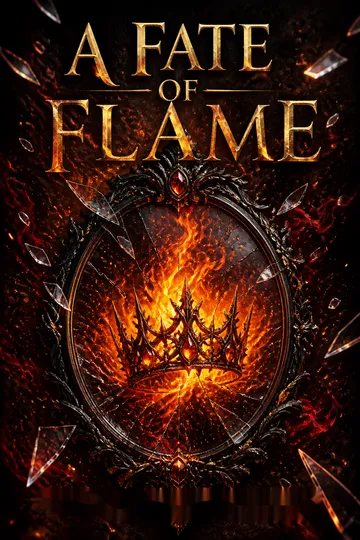
A Fate of Flame concludes the Prophecy of the Forgotten Fae trilogy with mixed reviews. Many readers praise the epic conclusion, character development, and unique magic system. The slow-burn romance between Cora and Teryn is well-received, and Valorre the unicorn is a fan favorite. Some criticize pacing issues and information dumping. Overall, readers find it a satisfying end to the series, with emotional moments and unexpected twists. The trilogy is commended for its world-building, complex characters, and blend of fantasy and romance elements.
People Also Read
Characters
Cora
The witch on the throneQueen of Khero, Cora is a clairsentient witch raised for part of her childhood by the Forest People. Her sensitivity lets her feel other people’s emotions, but it also demands boundaries and self-control. Years of exile, political suspicion, and violence have made her wary of relying on others, even as she longs for friendship and a home that can hold all parts of her identity. Her engagement to Teryn began as a political arrangement, but their shared history gives it an emotional depth that neither can simply command. Cora is most compelling when she must distinguish intuition from fear and responsibility from self-erasure.
Teryn
Cora’s steadfast consortTeryn is Cora’s fiancé and the younger brother of Larylis. After surviving Morkai’s possession, he has had to reclaim confidence in his own body and rebuild his strength through training. His humor and physical confidence conceal a serious fear of losing control again. He loves Cora without requiring her to become softer, more courtly, or easier to understand. As a royal partner, he is observant and practical, often helping turn emotional loyalty into concrete action. His relationship with Cora rests on candor and mutual respect, not the assumption that love will make danger disappear.
Mareleau
The queen with sharp thornsMareleau is Queen of Vera, Larylis’s wife, and Cora’s closest friend. Raised amid court expectations and a painful relationship with her mother, she learned to use beauty, composure, and cutting wit as armor. She wants love and security, but vulnerability can feel like surrendering control to people who have failed her before. Her pride is neither a simple flaw nor a disguise for hidden sweetness; it is a survival strategy that sometimes harms the people she cares about. Motherhood, friendship, and political responsibility test her ability to act without denying her own needs.
Larylis
The scholar kingLarylis is King of Vera, Mareleau’s husband, and Teryn’s older brother. A thoughtful reader with little appetite for spectacle, he approaches uncertainty by studying precedent and gathering facts. This habit makes him perceptive, though he can sometimes seek certainty in books where only judgment is available. His love for Mareleau is deep and patient, shaped by a history of estrangement and reconciliation. He takes royal duty seriously without mistaking the crown for his identity. Family gives his political choices their true measure.
Darius
The king beyond the VeilDarius rules the island kingdom of Syrus and has long-standing ambitions involving El’Ara and its magic. He is intelligent, patient, and able to present his political vision as a practical answer to injustice. His belief in merit over inherited status gives his public image persuasive force, but he is also willing to define other people’s needs for them. He regards resistance as evidence that others fail to recognize his value and often treats power as the instrument that will prove him right. His conflict with Cora is therefore ideological as well as military.
Valorre
Cora’s unicorn familiarValorre is Cora’s unicorn companion and the being most closely linked to her magic. Proud, expressive, and comically concerned with his appearance, he can be both an emotional anchor and a source of mischief. His bond with Cora gives her access to memories and places she could not reach alone. He is not a mount or magical tool, even when he allows himself to be saddled; he has opinions, loyalties, and his own sense of importance. Beneath his vanity is a fierce devotion to Cora and a deep need to belong.
Nalia
The Forest People’s elderNalia is the High Elder of the Forest People, a community of witches and Faeryn descendants. She is respected for her authority, long memory, and ability to preserve knowledge across generations. Her manner combines warmth with the firm expectation that others take communal rules seriously. To Cora, she represents a form of family beyond the royal household, one built through care and shared practice. Nalia’s choices are shaped by an unusual history and responsibilities that reach beyond the community, though she does not reveal all she knows at once.
Emylia
The burdened seerEmylia is a seer whose visions influenced the events surrounding Morkai and the prophecy. She carries guilt over the consequences of the information she once supplied and hopes to make amends. Her connection to Teryn gives her a chance to share what she knows, though her remorse sometimes makes her believe she must earn the right to peace.
Lex
The reckless royal allyLex is Crown Prince of Tomas, a friend to Cora and Teryn, and a natural improviser. His irreverence makes him seem careless, but he is attentive to opportunity and willing to risk his standing for causes he believes in. He works closely with Lily, whose seriousness and strategic insight complement his showmanship.
Lily
The quiet revolutionaryLily is Lex’s wife and a member of the Tomas royal family. Quiet in private, she can command a crowd when a cause requires it. Her family ties give her access to political networks, while her calm judgment helps turn Lex’s daring ideas into workable plans. She is compassionate without being timid.
Helena
Mareleau’s guarded motherHelena is Mareleau’s mother and a queen mother accustomed to courtly status. Her relationship with her daughter is burdened by old betrayals and unspoken grief. She often reaches for criticism or fussing when she is afraid, but she has a capacity for tenderness that becomes clearer when she is no longer performing for court.
Salinda
Cora’s foster motherSalinda raised Cora among the Forest People and serves as a keeper of their histories and customs. She is a practical witch and a perceptive guide, willing to comfort Cora while also insisting that she respect the community’s boundaries. Her counsel helps Mareleau approach her magic without treating it as proof of moral corruption.
Maiya
Cora’s foster sisterMaiya grew up beside Cora in the Forest People’s commune and loves her as family. Her loyalty does not prevent her from confronting Cora when royal demands threaten the commune’s principles. Her directness reflects the adult she has become, no longer simply the shy girl Cora remembers.
Fanon
Ailan’s stern consortFanon is an Elvyn warrior and Ailan’s consort. Suspicious of humans and especially wary of Cora, he carries the history of conflict between El’Ara and the human world. His severity grows from genuine fear for his people, though it can harden into prejudice. Duty and loyalty remain central to his character.
Etrix
The tribunal’s measured headEtrix leads El’Ara’s tribunal and is a composed, deliberative presence among the Elvyn. He values procedure because decisions about magic and political authority can affect entire peoples. His measured manner does not make him indifferent; he is deeply invested in family, history, and the future of his realm.
Garot
The genial pathweaverGarot is an Elvyn pathweaver whose magic opens routes through the landscape. He is sociable and enthusiastic, with a storyteller’s interest in events that others might treat as mere politics. Beneath his humor is a practical understanding of danger and the complicated loyalties that bind El’Ara.
Captain Alden
Ridine’s battle-tested guardCaptain Alden commands Cora’s royal guard. Her battle experience and scarred cheek give her authority, but she is more than a martial presence: she reports danger plainly and carries out difficult orders without losing discipline. Her loyalty helps stabilize Cora’s new reign.
Noah
Mareleau’s newborn sonNoah is the infant son of Mareleau and Larylis. He is too young to understand the political and magical claims made around him, which makes the adults’ attempts to decide his future especially fraught. His presence turns abstract questions of inheritance and prophecy into immediate questions of care.
Berol
Teryn’s loyal falconBerol is Teryn’s peregrine falcon and a reliable messenger between separated allies. She is sharp-eyed, independent, and strongly attached to Teryn, with little patience for being overlooked.
Morkai
The blood mage’s legacyMorkai is the blood mage whose possession of Teryn and misreading of the prophecy left lasting damage across several kingdoms. His plans continue to shape the present through the secrets, curses, and magical methods he left behind. He is defined by ambition and the conviction that his ends justify his methods.
Ailan
The heir of El’AraAilan is a powerful Elvyn figure with deep ties to the history and magic of El’Ara. She is authoritative, strategic, and guided by a form of truth-seeking magic. Her concern for the fae realm is genuine, but her decisions place heavy demands on the humans whose cooperation she needs.
Plot Devices
Cora’s clairsentience and worldwalking
Feeling paths between worldsCora senses other people’s emotions and uses her own feelings to fuel magic. She can also worldwalk to places she can clearly imagine, making emotional memory as important as geography. Valorre strengthens that ability through their bond and provides access to memories Cora could not form alone. The magic helps her detect deception, find the Forest People, move allies across the human realm, and reach Centerpointe Rock. Its cost is physical fatigue and emotional exposure. When Cora suppresses a painful truth, her power weakens, so magical competence depends on psychological honesty as much as technical skill.
The prophecy of the Morkara
A future mistaken for certaintyThe prophecy describes a witch mother, a true Morkara, three crowns, and El’Ara’s heart. Morkai interprets the clues incorrectly and targets Cora, while later discoveries point to Mareleau as the mother and Noah as the heir. Even then, Ailan warns that prophecy is open to interpretation and can come true in unexpected ways. The prophecy drives war and political choices, but it does not assign every important action to the child at its center. Cora and Mareleau ultimately shape the outcome through decisions the prophecy cannot explain in simple, heroic terms.
The Veil and the mora
Magic’s damaged borderThe Veil separates El’Ara from the human world, while the mora is the magic that once flowed through the fae realm under the Morkara’s direction. The Veil’s rupture allows dragons to enter the human world and lets magic spill outward, creating the Blight in El’Ara. Cora’s temporary authority as Queen of Lela enables her to reverse the mora’s flow, while Elvyn wardweavers seal the tear. The device links political sovereignty to ecological balance: whether Lela belongs to humans or fae is not merely a question of borders, because the answer affects both worlds’ survival.
Berolla’s talon collar
A weapon against worldwalkingThe collar is made from talons sacrificed by a dragon and can suppress magic when it pierces the wearer’s skin. Cora once uses it to interrupt Morkai’s control of Teryn, and later uses it to suppress Mareleau’s magic so dragons cannot easily locate her. The device is painful and politically fraught because it protects by restricting its wearer. In El’Ara, Cora offers it to the tribunal as evidence of trust, and Ailan later uses it against Darius. Its changing role links coercion, protection, and the difficult question of whether a dangerous tool can be used without repeating the harm that created it.
Blood magic and the wraiths
The dead answer one last callMorkai used blood weaving to make warrior wraiths sentient and direct them through battle. Teryn inherits a connection to spirits after using blood magic while near death, and he discovers that a touch can send a willing spirit onward. When Darius threatens Ridine, Teryn uses Darius’s blood and a promise of final purpose to summon the wraiths without repeating Morkai’s full ritual. They help defend the castle, then Teryn releases them after the battle. The device tests whether power over the dead must become ownership. Teryn’s choice is to honor the wraiths’ agency and end their service rather than keep them as a standing army.
Prophecy of the Forgotten Fae Series
About the Author

Download PDF
Download EPUB
.epub digital book format is ideal for reading ebooks on phones, tablets, and e-readers.








