

Plot Summary
The Wolf Breaks Dalos
Sera1 wakes chained inside Kolis’s3 golden cage, barely alive after his bite. Attes4 has delivered her to the false King,3 and Kolis3 is holding her as if she were the returned Sotoria he has obsessed over for centuries. A silver wolf appears at the ruined chamber doors, then erupts into Ash,2 Sera’s husband2 and the Primal of Death.2
Ash2 kills Hanan, whose death allows Bele11 to rise as the new Goddess of the Hunt, and attacks Kolis.3 He wounds his uncle,3 but the battle leaves him weakened. Kolis3 tears him from Sera1 and drives a shadowstone blade into his heart, then orders him taken to the Carcers. Sera1 collapses as Kolis3 carries her away.
The rescue arrives as both recognition and catastrophe. Ash’s wolf form offers Sera an intimate sign that he has found her, but his violence immediately widens the crisis: Hanan’s death changes the balance of power, and Kolis uses Ash’s injuries to seize control. The chapter’s emotional trap is that Sera’s reunion with her husband lasts only long enough to make their separation more devastating. Kolis’s gentle handling of her does not soften his possession; it makes the difference between care and control more chilling.
A Sea Of Borrowed Life
Kolis3 carries Sera1 to the Triton Isles and forces Phanos,14 the Primal of the Skies and Seas,14 to keep her alive. The ceeren gather around her underwater, breathing their eather into her until her heart steadies and her blood loss stops. When Sera1 surfaces, she sees their bodies floating in the water.
Phanos14 has used the lives of his people to buy her only a temporary reprieve, not a cure for the Ascension already approaching. Sera1 lashes out at Kolis,3 takes a guard’s sword, and nearly wounds him before he catches her. She recognizes that a reckless escape will not free Ash2 or stop the Rot. She chooses to survive long enough to fight Kolis3 from inside his court.
The ceeren’s sacrifice sharpens the book’s central distinction between preserving life and claiming it. Kolis calls his intervention necessary, while Sera sees the dead bodies and understands that necessity does not erase the cost. Her anger is not simply guilt: it is a refusal to let other people’s lives become resources without her consent. Yet she cannot make a clean, self-protective choice, because Ash and the mortal realm remain in danger. Survival becomes an active decision, not a passive gift.
Escape Through The Dead
Back in a lavish cage at the Vita, Kolis’s3 sanctuary, Sera1 decides she will not wait for him to choose her future. She breaks a glass object from his collection into a makeshift blade, kills the Revenant Callum,5 takes a guard’s sword, and slips into the palace corridors. There she finds veiled Chosen and a starving Ascended who attacks her.
When she kills the creature, its body collapses into dust, while its victim rises as a Craven, a ravenous undead being. A draken subdues Sera1 before she can escape. She wakes back in the cage, with her attempt having revealed how Kolis’s3 court uses the Chosen and how little freedom she can seize by force alone.
Sera’s improvised escape is a declaration of agency, but the palace turns that agency into evidence of the system’s reach. Its luxurious rooms conceal violence, and the distinction between service, Ascension, and imprisonment has been blurred until the Chosen’s veils make their captivity look ceremonial. Sera’s fight against the Ascended also exposes the danger in Kolis’s methods: attempts to manufacture life create new forms of hunger. Her defeat does not make the attempt meaningless. It gives her knowledge, and knowledge becomes her next weapon.
Attes Names The Real Danger
Attes4 returns in the form of a silver hawk and admits he knew what Ash’s father,6 Eythos,6 had hidden: the true embers of life and Sotoria’s soul were placed in Sera’s1 bloodline. He believes Sera1 is not Sotoria reborn. Instead, Sotoria’s soul is trapped inside her, which means Sera’s1 death could leave that soul unable to move on.
Attes4 also explains that the embers are bonding with Sera,1 giving her powers such as restoring life and compelling Primals. He cannot free Ash2 from the warded Carcers, but he swears allegiance to Sera1 and promises support for Ash.2 The revelation complicates her duty: she may not be the weapon Eythos6 intended, and saving Sotoria may matter as much as defeating Kolis.3
Attes’s disclosure separates Sera’s identity from the role imposed on her. She has been trained to understand herself as a vessel and weapon; now she learns that the person inside her is distinct, and that the intended plan may never have been hers to fulfill. This produces no uncomplicated relief, because the same revelation creates a new moral obligation toward Sotoria. Attes’s oath also shifts political power toward Sera, even as he admits he cannot rescue Ash. Her authority is real, but it arrives alongside uncertainty rather than clarity.
A Bargain In The Cage
Sera1 steadies herself by adopting the blank, adaptable persona she was trained to use, then turns Kolis’s3 fixation on Sotoria against him. When Kolis3 reveals that Ash2 is in stasis, she tells the false King3 that she loves him only in a lesser, changeable way and claims she might learn to love Kolis3 if he releases his nephew.2
Kolis3 accepts the bargain but demands that she prove her identity and loyalty. His jealousy soon breaks through his performance: he bites Sera1 without consent while feeding from her, then apologizes as though his shame should settle the matter. Sera1 retreats to the bath, shaken and furious, and recommits to gaining Ash’s2 freedom without surrendering her sense of self.
Sera’s tactic exposes the cost of agency under coercion. She chooses how to perform affection, but the situation leaves her no genuinely free alternative if she wants to reach Ash. Kolis mistakes emotional compliance for intimacy and treats his own remorse as repair. Sera can recognize the manipulation intellectually, yet her body still has to endure its consequences. The gap between what she can negotiate and what she cannot control is the section’s key psychological tension. Her strategy is survival, not consent.
The Witness Chooses A Lie
Kolis3 brings Ione, a goddess who can enter another person’s memories, to verify Sera’s1 claim that she is Sotoria. Sera1 knows the examination could expose both her love for Ash2 and the truth that Sotoria’s soul is not her own. Ione drinks Sera’s1 blood and searches her memories, causing intense pain.
Sera1 fights back with the embers and throws Ione across the cage. Despite what she has seen, Ione tells Kolis3 that Sera1 is Sotoria and denies that she is in love with Ash.2 Kolis3 accepts the answer, declares his beloved has returned, and dismisses Callum.5 The lie keeps Sera1 alive, but Kolis’s3 conviction makes his possessiveness more dangerous.
Ione’s lie is a political act performed through intimate knowledge. She enters Sera’s memory, but chooses not to make truth equivalent to disclosure. That choice protects Sera while also showing how dangerous a court becomes when the ruler treats private experience as evidence he is entitled to inspect. The scene reverses the usual power of the mind-reader: Kolis has arranged the test, yet he receives the answer he wants rather than the whole truth. Sera survives because another person refuses to become his instrument.
Kolis Makes Fear Intimate
After Ione confirms Kolis’s3 belief, he embraces Sera1 and feeds from her throat, turning jealousy over Ash2 into an assault. Sera1 uses practiced dissociation to endure the violation, then asks for a bath rather than giving Kolis3 the reaction he wants. Kolis3 promises that Ash2 will be released once he recovers from the injury that sent him into stasis.
Later, Kolis3 punishes Sera1 for defying him by chaining her to the cage ceiling for hours. He cries while insisting that her survival proves his love. Callum,5 who claims he would object if Sera1 were truly his sister, leaves her suspended in pain. Sera1 refuses to accept Kolis’s3 tears as evidence that his violence is care.
The section distinguishes remorse from accountability. Kolis feels distress, but he uses that distress to center his own suffering while Sera bears the physical consequences. His tears do not undo the chains, and his language of love makes the coercion harder, not easier, to name. Sera’s dissociation is not presented as weakness; it is a survival skill under conditions designed to strip her of choice. Her insistence that she is still a person, rather than a blank vessel, becomes a quiet form of resistance.
Rhain Bought Back Alive
Kyn13 brings Rhain,10 one of Ash’s2 loyal gods, to Kolis3 battered and near collapse after Rhain10 tries to locate Ash.2 When Kolis3 threatens to kill him, Sera1 argues that releasing Rhain10 would make Kolis3 appear more worthy of loyalty than executing a captured servant. She offers to do anything in return, and Kolis3 agrees to send Rhain10 home without further harm.
Sera1 then accepts Kolis’s3 demand that they share a bed, though he only sleeps beside her. Soon afterward, at Court, Kolis3 tests her by presenting a Chosen in distress and daring her to intervene. Sera1 kills the god she believes is abusing the servant, only to learn Kolis3 engineered the misunderstanding to punish Keella’s8 court and expose Sera’s1 judgment.
Sera’s bargain saves Rhain, but it also shows how Kolis converts moral concern into leverage. She speaks for a man whose loyalty to Ash has made him disposable in the King’s eyes, and she secures his life by offering access to herself. At Court, that same willingness to intervene is manipulated into a killing. The episode complicates Sera’s self-trust: seeing suffering should move her to act, but acting without reliable information can make her serve someone else’s cruelty. Kolis’s trap targets both her conscience and her confidence.
A Court Built On Traps
Kolis3 displays Sera1 before the gods and uses a suggestive exchange to provoke Uros, then kills him in front of her. He later asks Sera1 to judge a Chosen’s treatment without explaining the full situation; she kills Evander, believing he is assaulting Jacinta, but Kolis3 reveals that he had deliberately led her to that conclusion.
When Kolis3 orders Veses,7 the Primal of Rites and Prosperity,7 handed to Kyn13 as punishment, Sera1 protests. Kolis3 compels her into silence and returns her to the cage, where he chains her up again. Veses7 later visits after escaping confinement and warns that Kolis3 will never release Ash2 if he learns Sera1 truly loves him. Sera1 recognizes the warning but refuses to stop resisting.
Kolis’s court operates as a theater of controlled interpretation. He arranges the scenes, withholds context, and then treats Sera’s response as proof of her character. Her mistake about Evander is real, but the King has engineered the conditions that make it possible, turning moral action into spectacle. His punishment of Sera after she objects to Veses’s treatment further reveals that the court’s rules protect power, not justice. Veses’s warning is valuable despite her own manipulative motives: affection for Ash has become a pressure point Kolis can exploit.
The Star Above Her
Kolis3 takes Sera1 on a tour of the empty City of the Gods and admits that the Fates destroyed those who had accepted his rule, while he had killed those who refused. Sera1 learns that Kolis3 intends to create Ascended from the Chosen and claims this is necessary to maintain balance.
Hoping to find a way to free Ash2 and protect Sotoria, Sera1 persuades him to show her a rare silver diamond. It has been concealed above her cage all along: The Star, a vessel made by dragon fire that can hold Primal embers. Touching it, Sera1 sees Kolis3 stab Eythos6 after rejecting his brother’s6 attempt at reconciliation. When Kolis3 realizes she has witnessed the truth, he attacks her.
The Star turns hidden history into physical evidence. Its position above Sera’s bed links her imprisonment to the political machinery she has been trying to understand: the instrument that might hold a Primal’s power was literally overhead while she searched for escape. The vision also disrupts Kolis’s self-made history. He has framed himself as wronged and necessary, but Sera sees that Eythos offered reconciliation before Kolis killed him. The truth does not excuse Kolis’s later choices; it clarifies the wound he chose to answer with violence.
Life Shatters The Cage
Kolis3 attacks Sera1 after she sees the memory inside The Star, blaming her for provoking him. She stops trying to pacify him and claims the embers as her own. Her power blasts Kolis3 away, breaks the cage’s wards, and tears down the shadowstone barriers of the Carcers, where Ash2 is imprisoned. Sera1 sends her will through the city and frees him.
Ash2 wakes and fights through Kolis’s3 guards, Revenants, and dakkais, killing those who block his path. He reaches the cage as Sera1 collapses from the effort. Nektas9 and other allies battle outside, while Elias15 helps remove the wounded Kolis.3 Sera1 and Ash2 escape Dalos together, carrying The Star and the knowledge that Eythos’s soul6 remains inside it.
Sera’s power becomes decisive only after she stops treating it as something borrowed from a hidden vessel. She does not merely overpower Kolis; she breaks the architecture that keeps Ash imprisoned. The action is both literal and psychological: her will reaches through barriers that had made her feel helpless. Yet the rescue is not a clean victory. Sera’s strength is nearly spent, Ash has killed his way through the palace, and Kolis remains alive. Freedom arrives as an opening in the crisis, not its resolution.
Eythos Leaves The Star
In a hidden hot spring beyond the Skotos, Ash2 and Sera1 wash away the blood and speak about what happened in Dalos. Sera1 reveals that Eythos’s soul6 is trapped in The Star, and Ash2 reluctantly lets her summon the diamond. Keella,8 the Primal of Rebirth,8 explains how Sera1 can free the soul. Sera1 wills Eythos6 out of the stone, and his light touches Ash’s2 cheek before rising away.
She then asks Keella8 to remove Sotoria’s soul from her body. Ash2 anchors Sera’s soul1 while Keella8 draws Sotoria into The Star, where Attes4 will keep her safe until she can be reborn. The effort leaves Sera1 close to death. Before leaving the Bonelands, Ash’s2 allies honor her as a warrior and pledge themselves to her.
This section separates two lives that have been dangerously entangled. Eythos is released from the object that has held him, while Sotoria is given a chance to exist apart from Sera. The act costs Sera strength, but it also refuses the idea that one person must remain another’s prison. Ash’s presence as an anchor makes the rescue collaborative rather than sacrificial. The allies’ public honor adds a political dimension: they recognize Sera not as a vessel or Kolis’s favorite, but as someone whose choices have earned their respect.
Ash Refuses The Embers
Sera’s1 Ascension becomes imminent as Ash2 takes her to her lake in the Dark Elms. She asks him to take the embers of life and accept his rightful place, but he has never intended to let her die for the realms. As her heart falters, Ash2 drinks from her, then presses his own bleeding wrist to her mouth and begs her to feed.
He chooses the risk that the embers may die with her over deliberately taking them at the cost of her life. Sera1 drinks his blood as darkness closes in, understanding that his choice could destroy both realms if it fails. Ash2 tells her he would rather face that ruin than exist without her. Her heart stops, and she slips into death.
Ash’s decision rejects the arithmetic that has governed Sera’s life: one person must be spent to preserve the many. His choice is loving, but it is also politically catastrophic, because the realms depend on the embers he refuses to claim. The scene does not make the choice easy or morally tidy. It asks whether a duty can remain virtuous when it demands another person’s death without consent. Sera’s final awareness is not of triumph but of the danger Ash accepts for her, a danger that tests whether love can remake the order built around sacrifice.
Life Returns As A Feline
Sera1 experiences a vast vision of the realms’ beginning, the Ancients’ rise, and the balance linking life to death. She understands that she is not merely carrying the embers: she is the cycle itself, the true Primal of Life. Ash’s2 voice reaches her through the darkness, and she returns after feeding on his blood.
She wakes disoriented, hungry, and changed, briefly appearing in the form of a moonlit feline before recognizing Ash.2 Her senses sharpen, her fangs emerge, and her memories return as she feeds from him again. Ash2 admits that he feared she would wake without remembering him. Sera1 confirms that she knows him, while the two of them discover that their bond survived the removal of his kardia.
Sera’s transformation is framed as recognition rather than replacement. The vision gives her knowledge of the cosmic order, but the emotional test is much smaller and more intimate: can she still know Ash? Her return makes her the true Primal of Life, yet her first actions are to feed, remember, and reconnect. The feline form gives bodily shape to the power she has become, while her retained identity prevents that power from swallowing the person beneath it. She is changed, but not erased.
The Rot Gives Way
Sera1 and Ash2 reunite in the Shadowlands, where she confirms that the Rot has stopped and grass is returning to the barren ground. She learns that her Ascension has made her Queen of the Gods,1 while Ash2 accepts his place beside her and begins to admit the full extent of his love.
Their bond is revealed as something deeper than the embers or a marriage imprint: they are heartmates, a connection strong enough to restore Ash’s2 capacity to love. The pair still face Kolis,3 who remains wounded and out of action rather than defeated, and the other Primals may not accept Sera’s1 sudden rise. But for the first time, Sera1 can choose a future with Ash2 rather than merely endure the fate assigned to her.
The ending resolves the ecological crisis without pretending the political crisis has vanished. Grass returning to the Shadowlands makes the effect of Sera’s Ascension visible, while Kolis’s survival keeps the threat active. The heartmate revelation also revises the meaning of Ash’s earlier self-protection: removing his kardia could not sever a bond rooted beyond it. Most importantly, the relationship becomes reciprocal in a new way. Sera is no longer valuable because she carries a solution; she is valued as herself, and she can meet Ash as an equal in power and choice.
Analysis
The novel makes a sharp distinction between being kept alive and being allowed to live. Sera1 is repeatedly treated as a container: for a kingdom’s bargain, for the embers of life, for Sotoria’s soul, and finally for Kolis’s3 desire. Her resistance begins when she refuses to treat those roles as the whole of her identity. The story’s most important ethical question is therefore not whether sacrifice can save many, but who has the right to demand that sacrifice and whether the person asked has a meaningful choice.
Kolis3 and Ash2 are deliberately set against each other as two forms of attachment. Kolis3 calls possession love and treats distress as proof of devotion. Ash’s2 protection can be forceful, but his most consequential acts are guided by attention to Sera’s1 wishes and fear of making her a tool. Their contrast is not simply between villain and hero. Both are capable of violence, and Ash’s2 willingness to risk the realms for Sera1 is itself dangerous. The novel leaves that danger unresolved rather than pretending love automatically makes power harmless.
The embers, the Rot, and the Star turn metaphysical questions into material ones. Power lives in bodies, souls can be trapped in objects, and even the ground bears the history of destruction. Sera’s1 transformation changes the ecological world, making the return of grass a consequence readers can see rather than an abstract promise. At the same time, the revelation that she and Ash2 are heartmates does not erase the damage caused by secrecy, coercion, or delayed honesty. It reframes their bond as a force neither the Fates nor Ash’s2 self-protection could fully control.
The ending offers a restoration, not a final peace. Sera1 becomes the Primal of Life and stops the Rot, but Kolis3 remains alive and the political order is unsettled. That open danger suits the book’s emotional conclusion: Sera1 is no longer merely enduring a future chosen for her. She has power, a partner who recognizes her personhood, and the right to decide what happens next.
Review Summary
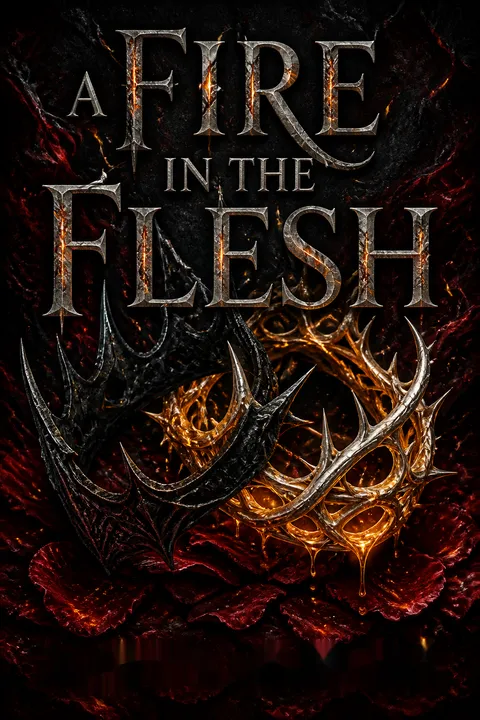
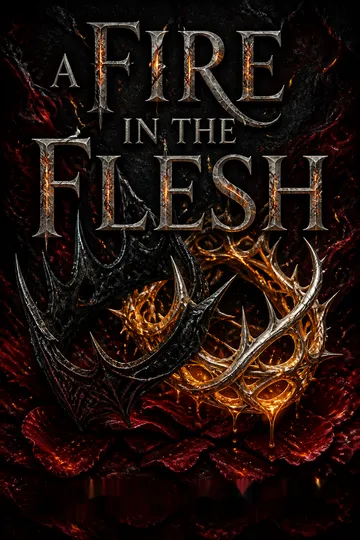
A Fire in the Flesh received mixed reviews. Many readers found it disappointing, citing repetitive content, slow pacing, and unnecessary length. Some criticized the separation of main characters and lack of plot development. However, fans praised the emotional depth, world-building, and character relationships. Several reviewers noted similarities to the author's other series. The book's ratings varied widely, with some giving it 5 stars for its romance and revelations, while others rated it low due to perceived filler content and recycled plot elements.
People Also Read



Characters
Seraphena Mierel
The unwilling chosen weaponKnown as Sera, she is a Lasanian princess raised in secrecy and trained to fulfill a dangerous bargain made before her birth. Her sharp temper, physical courage, and instinct to protect the vulnerable sit beside a deep hunger to be valued for herself rather than for her usefulness. Sera tends to act before she has a complete plan, but she is also unusually honest about fear and anger. Her central struggle is to distinguish chosen sacrifice from a duty imposed on her, especially as she grows close to Ash2 and begins to claim authority over the power inside her.
Nyktos
The guarded Primal of DeathUsually called Ash by Sera1, Nyktos rules the Shadowlands and carries the power of death. He is controlled, formidable, and practiced at keeping distance from people, partly because he fears that attachment can be used against them. Beneath that restraint, he is attentive to Sera’s1 needs and quietly protective of his people. His conflict is not a lack of feeling but a fear of what his feelings might make him capable of doing. With Sera1, he is forced to reconsider whether isolation truly protects anyone.
Kolis
The false King of GodsKolis claims the title of Primal of Life and rules Dalos through power, spectacle, and carefully managed fear. His fixation on Sotoria shapes how he treats Sera1, whom he believes to be the returned object of his longing. He can appear tender, apologetic, or charming, but he treats those gestures as substitutes for respecting another person’s choices. Kolis is driven by a need for absolute power and by a history he interprets as proof that he has been wronged. His shifting between vulnerability and cruelty makes him difficult to predict and dangerous to trust.
Attes
The wary Primal allyAttes is the Primal of War and Accord, a scarred ruler who favors charm and teasing but keeps his loyalties close to his chest. He knew Eythos6 and has carried knowledge of the embers for years, yet he withheld it from Ash2 because he feared the consequences of disclosure. Attes is pragmatic, politically alert, and shaped by losses he rarely discusses. His decision to protect Sera1 does not erase her distrust of him; their relationship remains a negotiation between past betrayal and the possibility of earned loyalty.
Callum
Kolis’s first RevenantCallum is Kolis’s3 most favored Revenant, marked by a painted golden mask and a composed, often patronizing manner. Unlike the other Revenants, he retains personality, desire, and emotional attachment, which makes his loyalty to Kolis3 deeply personal. He helps manage Sera’s1 captivity and sees her as a threat to the order he depends on. Callum’s insistence that he understands Kolis3 better than she does reflects both genuine history and his fear of being displaced.
Eythos
Ash’s absent fatherEythos was the former Primal of Life and Ash’s father6. His choices shape the present conflict, although much of his plan remains hidden from the people it affects. He is remembered as a creator with unusual insight and a close bond with his son2. Eythos’s attempt to protect the realms involved secrecy, risk, and decisions made on behalf of people who could not consent. His legacy forces Sera1 and Ash2 to examine whether benevolent intentions can justify controlling another person’s life.
Veses
The possessive Primal goddessVeses is the Primal Goddess of Rites and Prosperity, beautiful, sharp-tongued, and accustomed to pursuing what she wants. Her complicated feelings for Ash2 and Kolis3 make her loyalties difficult to read. She can be cruel and self-serving, yet she also understands the vulnerabilities created by unrequited love and power. Veses’s pride often disguises insecurity, and her desire to control the attention of others can turn affection into a contest she is determined not to lose.
Keella
The Primal of RebirthKeella governs rebirth and carries a calm, deliberate authority. She helped shape the circumstances surrounding Sotoria’s soul, and she understands more than most about the limits and risks of returning life. Keella is cautious about the Fates and the balance they enforce, but she does not use that caution to excuse every cruel act. Her measured interventions offer Sera1 and Ash2 a path through problems neither can solve by strength alone.
Nektas
The loyal draken guardianNektas is an ancient draken bonded to Ash2 and a steady presence in the Shadowlands. He can be fierce in battle, but he treats Sera1 with patience and concern, offering practical care without demanding that she hide her distress. His grief over those he has lost gives him a clear sense of life’s value. Nektas often speaks plainly when Ash2 and Sera1 are caught in emotion, reminding them that care can include both protection and honest preparation.
Rhain
Ash’s loyal thought-speakerRhain is a god and one of Ash’s most loyal allies. Reserved and perceptive, he can project thoughts, a talent he rarely advertises. His caution around Sera comes from loyalty to Ash and knowledge of the danger she once represented, not simple hostility. Rhain’s bravery is quiet and practical: he risks himself to find Ash and gives information when it may help others survive. His respect must be earned, but once given it is steadfast.
Bele
The newly risen huntressBele is a formidable warrior who becomes closely connected to the Hunt and Divine Justice. She is blunt, armed, and more comfortable showing concern through action than sentiment. Her bond with Aios12 gives her a private tenderness beneath her hard-edged manner. Bele respects strength but does not confuse strength with invulnerability, and she is quick to stand beside people she considers her own.
Aios
The rescued courtierAios is one of the gods whose experience under Kolis’s3 court informs Sera’s1 understanding of the dangers there. She is perceptive and guarded, having learned how survival can require silence. Her connection with Bele11 reveals a more intimate, trusting side. Aios represents the people who endure powerful rulers without being able to challenge them openly, and her presence matters to Sera1 because it turns abstract concern into personal responsibility.
Kyn
The vengeful PrimalKyn is the Primal of Peace and Vengeance and Attes’s twin brother13. His capacity for peace has been overtaken by a volatile appetite for retaliation, though he remains a shrewd military force. Kyn can act from genuine grief and from ambition at the same time, making his motives difficult to reduce to one grievance. His rivalry with Ash2 and his history with Attes4 place him at the center of an unstable political alliance.
Phanos
The sea-bound PrimalPhanos rules the skies and seas and commands the ceeren. He is proud, politically cautious, and capable of great force, yet he recognizes the cost of what Kolis3 demands from him. His choices reveal the uneasy space between obedience and responsibility. Phanos does not pretend that power is harmless, and his guarded manner reflects the risks of resisting a ruler whose authority reaches across several Courts.
Elias
The questioning royal guardElias serves as a guard within Kolis’s3 court but is not as unquestioning as his position might suggest. He offers Sera1 a warning about Kolis’s3 temper and later chooses where his loyalty belongs. Elias is practical, observant, and aware that surviving court politics requires caution. His actions show how smaller acts of allegiance can matter when a ruler demands that everyone else remain silent.
Ezmeria
Sera’s estranged motherEzmeria is Sera’s mother16 and a ruler whose relationship with her daughter1 has been shaped by grief, duty, and the bargain binding their family. Her distance has left Sera1 feeling unseen, but it is not simple indifference. Ezmeria struggles to face the resemblance between Sera1 and the husband she lost. Her role complicates Sera’s1 understanding of neglect, because pain can explain a parent’s withdrawal without making its effects disappear.
Saion
Ash’s longtime allySaion is a god of the Shadowlands and one of Ash’s2 trusted allies. He is direct, loyal, and willing to tease Ash2 when the Primal’s guarded manner needs challenging. His easy connection with Rhahar18 and his respect for Sera1 help make the Shadowlands feel like a community rather than only a Court.
Rhahar
Saion’s steadfast cousinRhahar is Saion’s cousin18 and another of Ash’s2 allies. He is dependable and observant, with a quieter manner than Saion’s17. Rhahar’s presence helps anchor the Shadowlands’ military and social ties, and his growing respect for Sera1 reflects how her conduct changes the way Ash’s2 people understand her.
Lailah
The sardonic Shadowlands godLailah is a god from Vathi who serves alongside Ash’s2 allies. She is composed, sharp-witted, and difficult to embarrass. Her teasing history with Attes4 hints at an independent life beyond the immediate conflict, while her loyalty to the Shadowlands remains clear.
Ector
Ash’s fallen confidantEctor is one of Ash’s2 trusted gods and among the first in the Shadowlands to see Sera1 beyond the danger attached to her. He is remembered for his loyalty, humor, and willingness to speak plainly. His presence represents the relationships Ash2 has built despite his fear of attachment.
Plot Devices
The Embers Of Life
Power that restores lifeThe true embers of life were hidden in Sera’s1 bloodline and gradually bond with her, allowing her to heal, compel, and wield Primal power. Their slow decline is connected to the Rot spreading through Lasania and beyond. Kolis3 wants them so he can become a Primal with dominion over life and death, while Ash2 believes taking them may be the only way to stop the collapse. The embers eventually prove inseparable from Sera’s1 identity, turning a hidden inheritance into an argument about whether she is a person or merely a source of power.
Sotoria’s Soul
A life trapped within SeraSotoria’s soul is placed inside Sera1 alongside the embers, but Sera1 is not simply Sotoria reborn. The distinction is crucial: Sera1 has her own identity, while Sotoria remains conscious enough to affect her and could become lost if Sera1 dies. Kolis3 mistakes Sera1 for the beloved he has pursued, creating both an opening for Sera1 to manipulate him and a danger if he learns the truth. The soul also gives the characters a separate life to protect, complicating the choice between saving Sera1 and preserving the realms.
The Star
A vessel for Primal powerThe Star is a rare diamond created by dragon fire and capable of holding Primal embers. Kolis3 hides it above Sera’s1 cage, where its surface conceals a record of what happened between him and Eythos6. When Sera1 touches it, she sees Eythos’s6 final confrontation with his brother3 and discovers that his soul is trapped inside the stone. The Star becomes both evidence and refuge: it can preserve Eythos’s soul6 and potentially hold other power, but its use demands dangerous decisions and the help of someone who understands souls.
Ancients’ Bones
Wards that imprison PrimalsThe bones of the Ancients are fashioned into weapons and wards strong enough to pierce gods, incapacitate Primals, and block escape. Kolis3 uses them to secure the cage and the Carcers, keeping Sera1 and Ash2 from simply using their powers to leave. Their limits are also important: only the true Primals of life and death can break the wards. When Sera1 claims the embers as hers, she can destroy the barriers and reach Ash2, turning the material that represented confinement into a test of her newly accepted power.
Ascension And The Rot
A failing cycle of lifeAscension is the transformation through which a god or chosen mortal can rise into a more powerful being, but it is dangerous and may kill the person undergoing it. The Rot in Lasania is connected to the failing embers of life and worsens as Sera1 nears her own Ascension. Kolis’s3 creation of Ascended and Revenants presents distorted versions of renewed life, while Sera’s1 eventual transformation restores the true Primal of Life. The device joins a physical deadline to the political struggle: saving Sera1, stopping the Rot, and maintaining the balance between life and death all become inseparable.
FAQ
Synopsis & Basic Details
What is A Fire in the Flesh about?
- Captivity and a False King: Sera and Nyktos are captured by Kolis, the false King of Gods, leading to Sera's imprisonment and a desperate fight for survival.
- A Battle for Power: Sera grapples with the power of the embers of life within her, while navigating Kolis's manipulative court and seeking to free Nyktos.
- Destiny and Sacrifice: The story explores themes of destiny, sacrifice, and the lengths one will go to for love and the greater good, as Sera faces her Ascension.
Why should I read A Fire in the Flesh?
- Intense Emotional Journey: The book offers a rollercoaster of emotions, exploring themes of love, betrayal, and sacrifice with depth and complexity.
- Complex Characters: Readers will be drawn to the multifaceted characters, each with their own motivations and secrets, creating a rich and engaging narrative.
- High-Stakes Fantasy: The story is filled with high-stakes action, political intrigue, and supernatural elements, making it a thrilling and captivating read.
What is the background of A Fire in the Flesh?
- Mythological and Primal: The story is set in a world with a complex mythology involving Primals, gods, and ancient powers, creating a rich and immersive setting.
- Political Intrigue: The narrative is interwoven with political tensions and power struggles between different realms and factions, adding layers of complexity to the plot.
- Supernatural Elements: The presence of the embers of life, shadowstone, and various supernatural abilities adds a fantastical element to the story, enhancing its appeal.
What are the most memorable quotes in A Fire in the Flesh?
- "I'm sorry I didn't get to you sooner, but I've got you now, liessa, and I won't let go. I'll never let go again.": This quote highlights Nyktos's fierce love and protectiveness towards Sera.
- "You think she belongs to you simply because you crowned her as your Consort? If she is who she claims to be, she was never yours to crown.": Kolis's words reveal his twisted obsession with Sotoria and his belief that he has a claim over Sera.
- "The moment you breached custom and faith, you started the war.": Ash's declaration underscores the central conflict and the consequences of Kolis's actions.
What writing style, narrative choices, and literary techniques does Jennifer L. Armentrout use?
- First-Person Perspective: The story is primarily told from Sera's point of view, allowing readers to experience her thoughts, emotions, and struggles intimately.
- Fast-Paced Plot: Armentrout employs a fast-paced narrative style, keeping readers engaged with constant action, twists, and turns.
- Emotional Depth: The author uses vivid descriptions and internal monologues to explore the characters' emotional complexities and relationships, creating a powerful and immersive reading experience.
Hidden Details & Subtle Connections
What are some minor details that add significant meaning?
- The Silver Wolf: The recurring image of a silver wolf, initially thought to be a hallucination, is later revealed to be Nyktos in his Primal form, foreshadowing his true nature and power.
- The Color Gold: The color gold, associated with Kolis and his court, symbolizes his false authority and the corruption of power, contrasting with the more authentic silver of Nyktos.
- The Stale Lilac Scent: The recurring scent of stale lilacs, associated with Kolis and the Revenants, hints at the unnatural and decaying nature of their existence.
What are some subtle foreshadowing and callbacks?
- The Imprint: The marriage imprint on Sera's hand, initially a symbol of her bond with Nyktos, becomes a source of conflict and manipulation, foreshadowing the challenges they face.
- The Embers' Power: The subtle hints of the embers' power, such as Sera's ability to influence others, foreshadow her eventual transformation into the Primal of Life.
- The Prophecy: The mention of the prophecy and the "One who is born of Blood and Ash" subtly hints at Sera's true destiny and the role she will play in the realms' future.
What are some unexpected character connections?
- Attes and Eythos: The revelation that Attes and Eythos were close, almost like brothers, adds a layer of complexity to Attes's motivations and his actions throughout the story.
- Callum and Sotoria: The connection between Callum and Sotoria, revealed through his knowledge of her appearance and mannerisms, hints at a deeper history and a shared past.
- Phanos and Saion/Rhahar: Phanos's past conflict with Saion and Rhahar, and his subsequent actions, reveal a complex web of relationships and rivalries among the Primals.
Who are the most significant supporting characters?
- Attes: As the Primal of War and Accord, Attes plays a crucial role in the political landscape and becomes an unexpected ally to Sera, offering guidance and support.
- Callum: As a loyal Revenant, Callum's actions and motivations are often shrouded in mystery, making him a significant player in the unfolding events.
- Rhain: As a loyal god of the Shadowlands, Rhain's capture and subsequent rescue highlight the stakes of the conflict and the importance of loyalty.
Psychological, Emotional, & Relational Analysis
What are some unspoken motivations of the characters?
- Kolis's Obsession: Kolis's obsession with Sotoria is driven by a deep-seated need for validation and control, stemming from his past traumas and insecurities.
- Attes's Guilt: Attes's actions are motivated by a sense of guilt and responsibility for the events that led to Eythos's death and the subsequent chaos in the realms.
- Sera's Self-Doubt: Despite her strength and determination, Sera grapples with self-doubt and the fear of not being worthy of her destiny, driving her to constantly prove herself.
What psychological complexities do the characters exhibit?
- Ash's Internal Conflict: Ash struggles with the loss of his kardia, which makes him incapable of love, and his desire to protect Sera, creating a complex internal conflict.
- Kolis's Instability: Kolis exhibits a volatile mix of charm and cruelty, revealing his unstable mental state and his inability to cope with loss and rejection.
- Sera's Trauma: Sera's past experiences with manipulation and abuse have left her with deep-seated trauma, which influences her actions and relationships.
What are the major emotional turning points?
- Sera's Betrayal: The betrayal that leads to Sera's capture is a major emotional turning point, forcing her to confront her vulnerability and the true nature of her enemies.
- Ash's Return: Ash's return and his subsequent battle with Kolis is a major emotional turning point, reigniting Sera's hope and strengthening her resolve.
- The Loss of the Ceeren: The sacrifice of the ceeren to save Sera is a major emotional turning point, highlighting the cost of her destiny and the weight of her responsibility.
How do relationship dynamics evolve?
- Sera and Nyktos: The relationship between Sera and Nyktos evolves from a bond of duty to a deep and passionate love, tested by betrayal and separation.
- Sera and Kolis: The dynamic between Sera and Kolis is characterized by manipulation, obsession, and a constant struggle for control, highlighting the dangers of unchecked power.
- Sera and Attes: The relationship between Sera and Attes evolves from distrust to a reluctant alliance, as they both seek to protect the realms from Kolis's tyranny.
Interpretation & Debate
Which parts of the story remain ambiguous or open-ended?
- The Nature of the Embers: The true nature and origin of the embers of life remain somewhat ambiguous, leaving room for further exploration in future installments.
- The Arae's Motives: The motivations and actions of the Arae, the Fates, are often shrouded in mystery, leaving readers to question their role in the events of the story.
- The Future of the Realms: The long-term consequences of Sera's Ascension and the defeat of Kolis remain open-ended, leaving readers to speculate about the future of the realms.
What are some debatable, controversial scenes or moments in A Fire in the Flesh?
- Sera's Bargain with Kolis: Sera's decision to strike a bargain with Kolis, sacrificing herself for Nyktos's freedom, is a controversial moment that raises questions about the morality of her actions.
- Kolis's Treatment of Sera: Kolis's manipulative and controlling behavior towards Sera, including his obsession with her and his attempts to break her spirit, is a controversial aspect of the story.
- The Use of Compulsion: Kolis's use of compulsion on Sera, stripping her of her free will, is a controversial moment that raises questions about the nature of power and control.
A Fire in the Flesh Ending Explained: How It Ends & What It Means
- Sera's Ascension: Sera's Ascension as the true Primal of Life marks a significant turning point, signifying her transformation and the beginning of a new era for the realms.
- Kolis's Defeat: Kolis's defeat, while not a complete end to the conflict, represents a major victory for Sera and Ash, highlighting the power of love and determination.
- The Unwritten Future: The ending leaves the future of the realms open-ended, with the promise of more challenges and adventures to come, as Sera and Ash navigate their new roles and responsibilities.
Flesh and Fire Series
About the Author
Other books by Jennifer L. Armentrout


Download PDF
Download EPUB
.epub digital book format is ideal for reading ebooks on phones, tablets, and e-readers.








