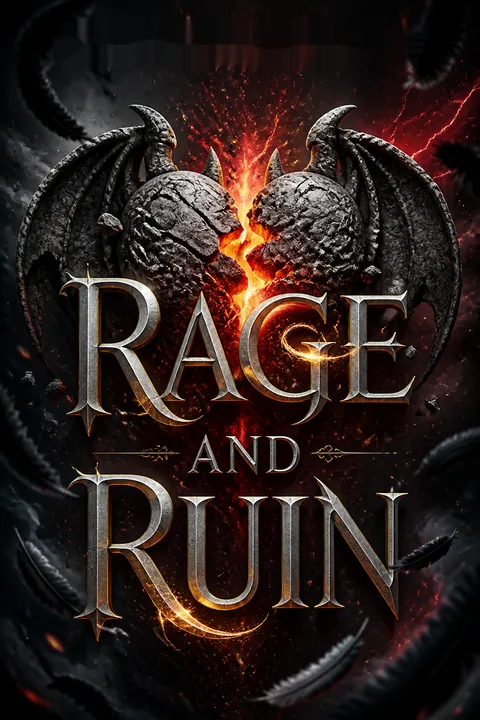


Plot Summary
Misha’s Last Betrayal
Trinity wakes in Zayne’s apartment after killing Misha, the Warden who had been her closest friend and Protector. She tells Peanut, the ghost who has shared her life for years, that Misha betrayed her, worked with demons, and helped set in motion her mother’s death.
Her father had known Misha was never meant to be bonded to her, yet did nothing; now Zayne has taken the bond, saving his life and becoming the partner Trinity was always supposed to have. The bond also binds their lives. Their attraction remains forbidden, so Trinity tries to lock away her feelings and grief. Instead, she focuses on the task her father assigned: find the Harbinger before its killings become an apocalypse.
The story begins with a victory that feels like a wound. Trinity has survived Misha’s betrayal, but the revelation that the bond was a mistake turns her memories into evidence she cannot fully trust. Her instinct is to file grief away and work, a strategy that preserves competence at the cost of intimacy. Zayne’s new bond offers safety while deepening the very desire she must suppress. Duty is not a simple calling here; it is the structure Trinity uses to avoid asking what she has lost.
A Demon on the Roof
On patrol in Washington, Zayne leaves Trinity behind to pursue a demon, intending to keep her safe. She spots a second Upper Level demon and follows him up a fire escape to a rooftop. Though her poor peripheral vision makes the climb dangerous, she tackles him and pins him with iron daggers.
When she flashes her grace, the demon recognizes her as a Trueborn and reveals that Misha had spoken with him about the Harbinger. Rather than risk the Harbinger’s retaliation, the demon impales himself on Trinity’s dagger and burns to ash. Zayne arrives furious, but he admits Trinity was right that he cannot sideline her. The demon’s fear suggests the Harbinger can control even powerful allies.
Trinity’s rooftop victory establishes both her formidable agency and its cost. She refuses to be treated as fragile, but her decision to chase the demon is also an expression of grief converted into motion. Zayne’s protective instinct is not malicious, yet it repeats a familiar pattern: others deciding what risks she may take. The demon’s self-destruction changes the threat from a hunt for clues into a confrontation with an unseen power whose control is stronger than fear of death.
A Blindfolded Lesson
Trinity asks Zayne to train her to fight despite her narrowing field of vision, since Misha had exploited that weakness. Zayne starts with a blindfold modified with tiny openings, giving her a controlled taste of the limited sight she may face later.
She initially misses him, but learns to track his warmth, movement, and breath. Roth, Hell’s Crown Prince, interrupts with Layla, his half-demon partner, and Stacey, Zayne’s longtime friend and former lover. Their easy familiarity unsettles Trinity, though she hides her jealousy.
The group examines plans found at Senator Fisher’s burned house, which appear to describe a school for sick children. Trinity and Zayne suspect the project conceals something sinister because Fisher has dealings with demons.
The blindfold turns an impairment into a practical problem rather than a moral test. Zayne’s small adaptation respects Trinity’s need for control while asking her to build new forms of attention. The lesson also anticipates the danger of treating independence as never needing help. Meanwhile, Stacey’s arrival makes Trinity feel like an outsider in a history she cannot see clearly, just as the school plans hint at a hidden structure beneath the city’s public life.
Rage in the Alley
During patrol, Trinity catches a Raver trying to seize a small dog and pursues it into a filthy alley. Once she knocks the demon down, anger overtakes her. She keeps striking long after it stops fighting, while memories of her mother, Misha, and Zayne’s near death flood back.
Zayne pulls her away and destroys the demon with a single dagger thrust, forcing her to face how grief has become violence. The bond carries desire as well as emotion, and their closeness nearly draws them into a kiss. Zayne instead makes her confront the need to kill quickly and protect herself from distraction. He also tells her that accepting help does not make her less independent.
The alley exposes the weakness in Trinity’s compartmentalizing: emotion does not disappear when denied, it returns through the body as uncontrolled force. Her fury feels morally justified because the Raver threatened an animal, yet the prolonged beating reveals that the immediate target has become a container for older pain. Zayne’s intervention is both practical and intimate. By naming assistance as compatible with autonomy, he offers Trinity a model of strength that does not depend on pretending she is unaffected.
The Dead Beneath DC
A cold sensation Trinity cannot identify leads her and Zayne into an abandoned factory, where they find a horde of infected humans waiting in an empty rehabilitation pool. They destroy the zombies, but a demon’s bait has drawn them away from the nearby Eastern Market. Warden Greene is found eviscerated and displayed there, murdered while they were occupied.
The deaths make the Harbinger’s presence feel deliberate and personal. That night, Trinity spots a spirit in Zayne’s apartment, a young man who appears and disappears before explaining himself. The strange coldness returns at the crime scenes, unlike the heat Trinity feels when demons are near, suggesting another kind of presence is moving around them.
The zombie attack turns an investigation into a question of manipulation. Trinity and Zayne do not merely arrive too late; someone has arranged a spectacle to redirect their attention and announce that their movements are known. The spirit’s unexplained appearance adds a second, quieter mystery to the physical violence. By separating the cold sensation from the familiar signs of demons, the story teaches Trinity and the reader that her supernatural perceptions are not yet a complete map.
Bambi’s Price
Roth collects the favor Trinity owes him and takes her to confront Faye, a witch who traded his familiar Bambi to her coven in exchange for a cure that saved Layla. The witches had also given Senator Fisher an enchantment that turned humans into weapons, helping set up the attack that nearly killed Zayne. Trinity refuses Roth’s demand to kill the coven outright and instead forces Faye to release Bambi.
When Faye attacks again, the Crone reveals that Faye acted against the coven’s rules and orders her to release the familiar. Faye then tries to stab Bambi. Trinity kills her with the Sword of Michael, a blade formed from her grace. The Crone warns Trinity that her power can be used for either good or ruin.
Roth’s demand makes vengeance sound like a service rendered, but Trinity’s refusal marks an important distinction between punishment and necessity. She does not arrive intending to kill Faye; she chooses lethal force only after the witch threatens Bambi again. That choice is still morally unsettling, especially because Trinity feels little remorse. The Crone’s warning reframes Trinity’s power as ethically unstable, not inherently virtuous. Her angelic origin does not absolve her from responsibility for what she does with it.
Dinner Beneath the Church
After leaving Trinity at Rock Creek Park, Roth warns her that her failing eyesight is not something she must hide or overcome alone. Zayne finds her, lends her his sunglasses, and insists that they spend the evening seeing the city rather than patrolling every available hour. Their dinner becomes a rare stretch of ordinary companionship, and they nearly kiss in an alley.
A scream cuts the moment short. Outside a church, they discover Warden Morgan pinned high on the structure with unfamiliar glowing spikes. Zayne and Trinity realize the Harbinger has killed again while they were distracted. The spikes are not known human or demonic weapons, and the death turns their private happiness into another source of guilt.
The dinner matters because it lets Trinity experience a life beyond her assigned function, and because Zayne chooses her time and vision over relentless duty. The interruption refuses to let that tenderness remain uncomplicated. Morgan’s body becomes a message about the price of inattention, whether or not the couple could actually have prevented his death. The scene also sharpens the conflict between being a person and being a weapon: Trinity needs ordinary experience, but the crisis keeps making ordinary pleasure feel culpable.
Sam’s Warning
The spirit returns and identifies himself as Sam Wickers, a friend of Zayne and Stacey. He leads Trinity to an ice cream parlor, where he finally reaches Stacey through her. Sam warns that more than a hundred ghosts are trapped at Heights on the Hill, Stacey’s summer school, and that Shadow People are gathering there.
He has heard that something is coming and knows someone at the school can communicate with the dead. Stacey first assumes Trinity is mocking her, then accepts the message when Zayne confirms Trinity’s gift.
Sam also reveals that he had been trapped in Hell after a Lilin impersonated him, leaving Stacey to grieve without knowing the truth. Trinity leaves with a genuine lead, but the encounter deepens the rift between her and Zayne.
Sam’s return gives grief a task without making it disappear. Stacey’s lost opportunity to understand what happened to him parallels Trinity’s own confusion about Misha, though the two losses are not interchangeable. The school becomes a pressure point where the dead are not simply remembered but actively contained and endangered. Trinity’s gift allows her to carry messages across an otherwise sealed boundary, yet using that gift places her inside Zayne’s private history and intensifies her fear that she does not belong there.
The Tunnel’s Second Trueborn
Trinity and Zayne scout the school grounds, where renovations conceal traces of the strange activity Sam described. A patch of soft earth gives way beneath Trinity, dropping her into a cold tunnel. An unseen attacker overpowers her in the dark, then reveals a grace of his own, forming a spear of angelic fire. He calls himself Sulien and says Trinity is not the only Trueborn.
Before he knocks her unconscious, she realizes he may be the Harbinger. Zayne follows the bond to find her and carries her to the Warden compound, where Jasmine treats her injuries. Trinity tells Zayne that the enemy is another Trueborn, a discovery that overturns everything she believed about her uniqueness and the source of the killings.
The tunnel makes Trinity’s sensory vulnerability a literal environment: she cannot see, cannot orient herself, and is forced to recognize that her training has taught her to delay her strongest defense. Sulien’s existence destabilizes the story’s spiritual hierarchy. Trinity has been raised as a singular answer to an apocalypse, but now she faces a counterpart shaped by a history she was never told. Zayne’s bond saves her, even as her own independence remains central to how she understands the attack.
The School’s Hidden Map
Thierry tells Trinity that earlier Trueborns once rebelled against Wardens, and that their human freedom could make immense power vulnerable to corruption. He admits the adults who raised her hid this history while teaching her to reserve her grace for emergencies.
At the compound, Gideon matches Fisher’s proposed school with renovation plans for Heights on the Hill; the construction company’s name rearranges into Harbinger. The site also sits over a major ley-line hub, while angelic wards in the tunnels can trap souls.
As Trinity and Zayne struggle through secrecy, jealousy, and a painful misunderstanding about what their intimacy means, they finally speak honestly and choose to be together. Their closeness gives them hope, but it also brings the old warnings about Trueborn and Protector bonds nearer.
The revelation about earlier Trueborns complicates the adults’ protection of Trinity: withholding history may have been meant to prevent corruption, but it has also left her without the knowledge needed to assess danger. The school’s anagram and ley-line position turn scattered clues into a designed system. At the same time, Trinity and Zayne’s emotional honesty challenges the same logic that has governed her upbringing. Their relationship is not an escape from duty; it becomes a choice made with awareness of its risks.
Sulien Names the Bait
After Trinity and Zayne begin a relationship, the human enemy appears on a rooftop and identifies himself as Sulien. He says he does not know how to break the school’s wards and claims he is protecting a plan involving Bael. He also reveals that Misha’s downfall began with envy: Misha wanted to believe the Harbinger had chosen him as special.
Sulien refuses to explain the plan and escapes by leaping from the roof. Zayne prevents Trinity from following, recognizing that Sulien previously lured her into the tunnel. They decide not to let him dictate their movements and consider destroying the school and its tunnels if they cannot remove the wards safely. The encounter gives Trinity a painful answer about Misha, but not the full truth.
Sulien’s account does not erase Misha’s past tenderness; it gives Trinity a motive without granting her certainty about what was real. Envy matters because it offers a human-scale explanation for a supernatural betrayal: the promise of being exceptional can distort loyalty from within. Zayne’s refusal to chase Sulien is strategic restraint, a counter to Trinity’s impulse to turn anger into action. Their new partnership depends on deciding when not to follow the enemy’s script.
Fisher’s Impossible Promise
With Cayman’s help, Trinity and Zayne break into Senator Fisher’s hotel suite and overpower his security. Fisher admits that Bael promised to restore his dead wife, Natashya, if he helped secure access to the school and arrange the witches’ enchantment. The Harbinger had first appeared to him looking angelic, then sent Bael to carry out the plan.
Cayman explains that the promise was a lie: the senator’s wife cannot simply be returned, despite the rare power of the Angel of Death. Fisher collapses under the knowledge that his crimes bought him nothing. Later, he is found dead after falling from the hotel, leaving Trinity and Zayne unsure whether he took his own life or the Harbinger silenced him.
Fisher is not excused by grief, but grief explains the shape of his surrender. He traded other people’s safety for a promise that answered his most private longing, then refused to ask what the school was for. His confession echoes Trinity’s fear that love can make a person reckless, while contrasting with her developing willingness to share fear rather than act alone. The uncertain death preserves the Harbinger’s reach and makes clear that understanding a motive does not undo its consequences.
Stars and a Cost
In their new apartment, Zayne gives Trinity a bedroom ceiling scattered with glow-in-the-dark stars, recreating the small comfort she misses from home. His thoughtfulness breaks through her emotional defenses, and they admit their love rather than treating their attraction as something merely physical.
They choose the Warden mating bond, sealing their commitment in Zayne’s true form. Afterward, Trinity’s fingernails leave scratches on his skin. They discover that Zayne’s normally stone-hard Warden body has become vulnerable like a human’s.
They suspect the change is the consequence of loving across a forbidden bond, though neither knows whether it will last. Trinity wants him to stay out of the coming school investigation until they understand the new danger.
The stars are more than a romantic gesture: Zayne has listened to what Trinity misses and built a small home around that knowledge. Their commitment makes private affection legible as an act with material consequences. The loss of Zayne’s hardened skin gives the rule against their relationship a brutal rationale, but does not establish that the rule is just. Love has become both strength and exposure, forcing them to negotiate protection without reducing either partner to a guarded object.
The Portal Below School
When the group returns to Heights on the Hill, Trinity persuades Zayne to remain outside because his newly vulnerable body is untested. With Roth and Cayman, she enters through the gym and finds ghosts and spirits already corrupted into something vicious.
Angelic wards cover the school, preventing the dead from leaving. In a hidden cavern beneath the old locker rooms, they discover a limestone archway forming a portal over the ley-line hub. Shadow People, Nightcrawlers, and lesser demons attack; Trinity uses her grace to destroy the Shadow People.
Then an archangel emerges and hurls Roth and Cayman aside. He identifies himself as Gabriel, the Harbinger, and names Sulien as his son. Gabriel plans to use the trapped souls and the portal to open a rift between Earth and Heaven.
The school’s ordinary purpose has been hollowed out and repurposed as spiritual infrastructure. Its trapped dead are not incidental casualties but stored energy within a system designed to breach the boundary between realms. Trinity’s refusal to exorcise every spirit earlier now matters: the wards have already corrupted them, so the moral choice has narrowed under time and manipulation. Gabriel’s revelation recasts the mystery from a demonic conspiracy into a revolt within Heaven itself.
The Harbinger’s True Face
Gabriel explains that he considers humanity undeserving of souls because people repeatedly use freedom to harm one another. His plan is to channel the school’s spiritual power through the portal, send Hell’s forces into Heaven, and force Heaven to close its gates to human souls. Trinity refuses to give him her blood and fights him with the Sword of Michael, but his strength and experience overwhelm her.
Gabriel breaks her limbs and leaves her near death. Zayne enters despite Trinity’s warning, kills Sulien to free himself from the attack, and charges Gabriel. The archangel then stabs Zayne through the heart with Trinity’s dagger, exploiting the lovers’ bond. Trinity loses consciousness as Zayne dies beside her and the bond snaps.
Gabriel’s argument is dangerous because it begins with recognizable evidence of human cruelty and turns observation into a license for extermination. Trinity counters not by claiming humanity is innocent, but by insisting that contradiction and capacity for care remain meaningful. Gabriel weaponizes the very attachment the lovers chose, making the climax a direct test of whether love is merely vulnerability. Zayne’s death is not a refutation of their choice; it is the consequence Gabriel deliberately exploits.
A Star Brings Zayne
Trinity spends days recovering as her body repairs shattered bones and the people around her mourn Zayne. She blames herself, then turns that grief toward action. Roth proposes seeking Lucifer’s help against Gabriel, while Trinity insists she will also find the Angel of Death and bring Zayne back, even if that means taking him from peace beyond life.
Before she can act, she escapes to Rock Creek Park, where she and Zayne once sat together. Under a clouded sky, she questions whether love gives her the right to retrieve him. A bright streak crosses the darkness. Then she feels wintermint and turns to find Zayne alive, radiant, and bearing feathered white-and-gold wings. He has returned not as a Warden, but as an angel.
Trinity’s recovery is not a clean passage from grief to resolve. She is still weighing her desire against the possibility that Zayne has found peace, and the question prevents her love from becoming simple possession. The star offers no clear instruction; its meaning is made by the choice Trinity is still preparing to face. Zayne’s return transforms the story’s rules again, ending this volume on revelation rather than resolution. Grief has not been cured, and Gabriel’s threat remains.
Analysis
Rage and Ruin asks what happens when protection becomes a form of control. Trinity has been raised to serve a destiny but denied the history that would help her understand it; even her training teaches her to distrust the power most suited to the threat she faces. Her failing vision makes this tension concrete. She must adapt to real limits without accepting other people’s assumption that limitation equals helplessness. The story’s strongest answer is relational rather than triumphant: Zayne’s support matters because he learns to treat Trinity as a partner, not a responsibility to manage.
The novel also refuses a clean division between celestial goodness and demonic evil. Roth can be loyal, Faye can be frightened and culpable, Fisher can be both grieving and destructive, and Gabriel can identify human cruelty while using it to justify mass harm. The point is not that moral distinctions disappear, but that origin and rhetoric do not settle them. Choices do. Trinity’s violence remains troubling even when it prevents worse harm, and her doubts about it matter because power without self-questioning is precisely what Gabriel embodies.
Love becomes the story’s most intimate political problem. The forbidden bond is meant to preserve duty by preventing attachment from competing with it. Yet the consequence of Trinity and Zayne’s love exposes the rule’s cruelty as well as its logic: the system protects its mission by making people vulnerable to punishment for caring. Their relationship does not remove risk; it gives them something worth choosing despite risk. The ending extends that choice into grief. Trinity considers whether bringing Zayne back would serve her need at his expense, so the promise of reunion arrives with an unresolved ethical question. The final image offers hope, not closure.
Review Summary
Rage and Ruin received mostly positive reviews, with readers praising the character development, romantic tension, and plot twists. Many found the relationship between Trinity and Zayne compelling, though some felt their arguments were frustrating. Readers enjoyed the world-building, pop culture references, and appearances of characters from previous series. The cliffhanger ending left many eagerly anticipating the next book. Some criticism was directed at pacing issues and unnecessary drama, but overall, fans of Armentrout's writing style found the book engaging and emotionally impactful.
People Also Read








Characters
Trinity
Half-angel demon hunterTrinity is a Trueborn, half human and half angel, raised among Wardens and trained to fight demons. She also sees ghosts and spirits, and her retinitis pigmentosa steadily narrows her vision. Quick to act, funny, stubborn, and prone to turning fear into momentum, she dislikes being treated as fragile or defined by her limitations. Her loyalty is fierce, but her habit of burying grief can turn pain into anger before she recognizes it. Trinity is driven by duty and by a deep need to make her own choices. Her struggle is not to become invulnerable, but to learn when independence means accepting help and when power demands restraint.
Zayne
Trinity’s Warden protectorZayne is a powerful Warden who becomes bonded to Trinity as her Protector. Intelligent, disciplined, and quietly funny, he has spent much of his life carrying expectations imposed by his clan and family. His instinct to protect can become controlling when fear persuades him that he alone should manage risk. Yet he respects Trinity’s skill and adapts his training to her vision rather than asking her to fit a standard. His former relationship with Layla and his complicated ties to the Wardens shape his caution around intimacy. Beneath his guardedness is a generous person who wants to save lives, make a home, and be valued beyond his usefulness as a fighter.
Roth
Crown Prince of HellRoth is an Upper Level demon and the Crown Prince of Hell, allied with Trinity and Zayne despite the ancient hostility between demons and Wardens. His wit and theatrical irreverence conceal a possessive, intensely loyal nature, especially toward Layla. He can be frighteningly ruthless, and he does not pretend that affection has made him harmless. Roth often recognizes uncomfortable truths before others do, though he may use that insight to manipulate people toward his aims. His uneasy friendship with Zayne challenges the assumption that allegiance follows species. He is motivated by love, power, and a fierce refusal to let others decide what matters to him.
Layla
Roth’s half-demon partnerLayla is half Warden and half demon, the daughter of Lilith, and Roth’s partner. Her history with Zayne remains important to both of them, but she works to build a life beyond that old attachment. Brave, direct, and compassionate, she has survived danger without mistaking endurance for invulnerability. Layla is willing to challenge Roth when his protectiveness becomes possessive, and she also recognizes when Trinity and Zayne need to make their own choices. Her experience gives her a practical understanding of forbidden love and the cost of rules imposed by powerful institutions.
Peanut
Trinity’s ghostly roommatePeanut is the ghost of a teenager who died in the 1980s and has remained close to Trinity for years. Dramatic, irreverent, and fond of dated slang, he gives her companionship without asking her to explain every supernatural oddity. His humor can intrude at the wrong moment, but it also gives Trinity a familiar voice when grief and danger make the world feel strange. He cares about being remembered and loved, even while pretending his needs are purely comic.
Misha
Trinity’s former ProtectorMisha was Trinity’s closest friend and Warden Protector in the Potomac Highlands community. Their shared routines and daily training gave Trinity a sense of safety and belonging. He is central to her emotional life because her memories of him do not vanish when she learns painful truths about his choices. His absence leaves her questioning whether affection can survive betrayal, and whether a person can ever fully know someone they love.
Sam Wickers
Spirit seeking StaceySam is a young spirit who knows Zayne and Stacey and persists in returning to the living world with a warning. Curious, talkative, and given to random facts, he uses humor to soften his uncertainty about death. His concern for Stacey is tender but complicated by the things he could not say while alive. Sam’s presence links personal grief to the danger gathering at the school.
Stacey
Zayne’s longtime friendStacey is a human friend of Zayne and Layla, with a history of closeness to Zayne that predates Trinity’s arrival. She is wary of Trinity at first, protective of her friends, and more perceptive than she lets on. Her grief over Sam complicates her efforts to return to ordinary life and finish school. Stacey’s bluntness can feel like a challenge, but it comes from loyalty and a desire not to be shut out of the truth.
Sulien
Enigmatic young strangerSulien is a young man with a cold presence and a pointed, sardonic manner. He knows more about Trinity’s past and the Harbinger’s plans than he is willing to explain, and he approaches danger with unnerving calm. His comments about loyalty, envy, and the role he believes he must play suggest a person shaped by inherited expectations as much as personal choice. He is not easy to read, even when he offers an apparent truth.
Gabriel
Archangelic messengerGabriel is an ancient archangel associated with prophecy, revelation, and the delivery of divine messages. His authority and confidence make him a formidable presence among both celestial and earthly beings. He regards humanity through a long historical lens and believes he understands what its repeated failures mean. Gabriel’s role in the heavenly order gives his convictions unusual reach, while his certainty raises a question the story keeps alive: when does moral judgment become a justification for domination?
Thierry
Warden elder and father figureThierry leads the Potomac Highlands Wardens and helped raise Trinity alongside his husband, Matthew. He is protective and affectionate, but his commitment to shielding her from dangerous knowledge has consequences. His long experience makes him a source of history and guidance, though he is capable of admitting when that guidance has failed. Trinity trusts him as family even when she challenges his decisions.
Matthew
Trinity’s Warden parentMatthew is Thierry’s husband and one of the Wardens who helped raise Trinity. He represents the steady, practical care of the community that became her home. Along with Thierry, he tried to protect her while preparing her for a dangerous destiny. His connection to Trinity is rooted in daily care rather than bloodline or celestial rank.
Nicolai
DC Warden clan leaderNicolai leads the Washington, DC, Warden clan and once stood close to Zayne’s family. He must balance the clan’s need for order with Zayne’s distrust of its traditions. Nicolai is cautious rather than blindly authoritarian, and he recognizes that secrecy can protect Trinity while also creating future danger. His leadership is shaped by the burden of keeping a fighting community intact.
Gideon
Warden researcher and hackerGideon is the clan’s technology specialist and researcher. He searches databases, cameras, historical texts, and construction records for patterns others might miss. His curiosity makes him valuable when the Harbinger’s weapons and methods fall outside familiar demon lore. He is meticulous, but the investigation repeatedly reminds him that not every clue can be solved by research alone.
Danika
Independent female WardenDanika is Jasmine’s sister and a Warden who refuses to remain safely confined to the compound. Her humor and confidence unsettle expectations about how a Warden woman should behave. She assists Gideon with the school investigation and is quick to see patterns in the evidence. Danika values freedom of action and does not confuse tradition with wisdom.
Cayman
Demon broker and allyCayman is a demon broker whose bargains can bind lives to spoken agreements. Stylish, irreverent, and commercially minded, he has ties to Roth and Layla and can manipulate human memories. His humor often lands badly, but he is capable of acting as a reliable ally when the danger becomes immediate. Cayman treats morality as complicated rather than exclusive to Heaven.
Faye
Witch with a stolen familiarFaye is a young witch whose coven deals with demons and trades in supernatural power. She wants a powerful familiar and has made decisions that expose others to danger. Her confidence is strongest when she believes she has leverage; under pressure, her fear and ambition become difficult to separate. Faye represents the consequences of treating power as a commodity without regard for the people harmed by its acquisition.
The Crone
Leader of Faye’s covenThe Crone is the ancient leader of Faye’s witch coven. She values balance and the coven’s rules, and she sees greed as a force that eventually brings its own punishment. Her insight into Trinity is sharp, though she offers more warning than explanation.
Senator Fisher
Politician in a demon’s bargainSenator Josh Fisher is a powerful politician whose public image of piety conceals private dealings with demons. He is driven by grief for his dead wife and by a desperate wish to recover the life they shared. His choices show how a real loss can be exploited by those who promise an impossible cure.
Jasmine
Warden medic and motherJasmine is a Warden, Dez’s wife, and the mother of young twins. She brings practical medical knowledge to the group and treats Trinity after a serious injury. Her care is direct, competent, and rooted in the daily work of keeping people alive.
Plot Devices
The Protector bond
Shared strength and feelingThe bond links Trinity to the Warden assigned to protect her, allowing them to sense each other’s presence and emotions and to draw strength from one another. It gives Trinity and Zayne a practical advantage in combat, but also makes distance, fear, and attraction difficult to keep private. Because their lives are connected, the bond gives every protective choice an intimate cost. The story uses it to test the difference between duty and love, and to make emotional attachment an element of physical survival.
Trinity’s grace
Heavenly fire made weaponTrinity can summon grace, the celestial power inherited from her angelic father. It can form the Sword of Michael and destroy threats ordinary weapons cannot defeat. The Wardens who raised her taught her to reserve it for emergencies, fearing that power could corrupt her. That restraint becomes a tactical weakness when she faces an enemy who knows how to use grace without hesitation. The sword is therefore both a weapon and a test of whether Trinity can claim her nature without surrendering judgment.
Trinity’s failing vision
A different way to fightRetinitis pigmentosa narrows Trinity’s vision and makes darkness, glare, and movement from the side especially dangerous. The condition shapes her training, patrol routes, and anxiety about independence. Zayne’s blindfold exercise helps her use warmth, sound, air movement, and touch to anticipate an opponent. The story does not treat adaptation as a cure or make Trinity’s vision the measure of her worth. Instead, it shows how practical accommodations and willing assistance can coexist with skill and autonomy.
Angelic wards and blades
A trap for soulsGlowing spikes marked with angelic writing kill a Warden, while similar writing on the tunnels and school forms wards that trap ghosts and spirits. The weapons and inscriptions do not match ordinary demon methods, signaling that the danger comes from a source connected to Heaven. The wards prevent the dead from leaving and leave them vulnerable to corruption. Their discovery links the school’s haunting to the Harbinger’s larger scheme and forces Trinity’s group to seek a solution that will not destroy every spirit inside.
The school’s ley-line hub
Power for a portalHeights on the Hill stands over a powerful junction of ley lines, where spiritual and earthly energies converge. Fisher’s hidden construction plans, the school’s renovation, the underground tunnels, and the trapped dead all converge at this location. Beneath the school, limestone channels that energy toward a portal. The site is not merely a haunted building; it is a designed mechanism capable of affecting the boundary between Earth and Heaven. Its ordinary school setting makes the supernatural engineering harder to recognize and more disturbing once uncovered.
The Harbinger Series Series
About the Author
Other books by Jennifer L. Armentrout






Download PDF
Download EPUB
.epub digital book format is ideal for reading ebooks on phones, tablets, and e-readers.








